Table of Contents
Ever wondered why your diesel engine suddenly loses power during a crucial haul or starts sounding like a coffee grinder? More often than not, the culprit isn’t the fuel system or injectors—it’s the air you’re feeding that hardworking engine. Diesel engines gulp massive volumes of air, and unlike their gasoline cousins, they rely on that air for both combustion and critical cooling within the combustion chamber. A compromised air filter doesn’t just mean dirty air; it means abrasive particles scoring pistons, clogging delicate turbochargers, and drastically shortening your engine’s lifespan. In the demanding world of diesel operation—whether you’re towing heavy loads, navigating dusty construction sites, or simply commuting in polluted city air—the right air filter is your engine’s first and most vital line of defense.
Ignoring air filtration is like sending your engine into a sandstorm without goggles. The consequences are costly and irreversible: increased fuel consumption, diminished torque, excessive smoke, and ultimately, catastrophic internal damage requiring six-figure repairs. Yet, choosing the optimal filter isn’t as simple as grabbing the biggest box at the parts store. With evolving diesel technology, stricter emissions standards, and a dizzying array of filter media and designs flooding the market, understanding the why and how behind effective air filtration is more critical than ever. This guide cuts through the marketing hype, focusing on the engineering principles and practical considerations that truly matter for protecting your diesel investment in the years ahead. Let’s dive into what makes a diesel air filter genuinely exceptional.
Top 10 Air Filters for Diesel Engines
Detailed Product Reviews
1. Doc’s Diesel Engine Air Filter DPA11888 | Compatible with Chevrolet/GMC 6.6L Duramax 2500HD, 3500HD 2020+ | Replaces A3248C

Overview:
This Doc’s Diesel air filter (DPA11888) is engineered specifically for 2020-2025 Chevrolet/GMC 2500HD and 3500HD trucks with the 6.6L Duramax engine. Designed to protect demanding diesel powertrains, it focuses on durability and efficient particulate capture to maintain engine longevity and performance under heavy use.
What Makes It Stand Out:
Its standout features include a robust silicone gasket ensuring a leak-proof seal even in extreme dust, deep pleated media for high dust-holding capacity (344.2g), and proven 99.25% filtration efficiency from third-party testing. The broad interchange compatibility (replacing AC/Delco, Wix, Baldwin, and others) offers significant flexibility.
Value for Money:
Positioned as a premium aftermarket option, it delivers exceptional value by matching or exceeding OEM specifications at a lower cost than dealership filters. The extended service life (up to 12,000 miles) and protection against costly engine wear justify its price point for serious diesel owners.
Strengths and Weaknesses:
Strengths: Superior dust-holding capacity, reliable silicone seal, extensive compatibility, rigorous third-party validation, ideal for harsh conditions.
Weaknesses: Lacks brand recognition of tier-1 suppliers, packaging is basic; no significant performance edge over other premium filters beyond fitment specificity.
Bottom Line:
A highly reliable, cost-effective replacement for Duramax owners prioritizing engine protection and value. Essential for maintaining peak performance in demanding applications, it earns a strong recommendation for 2020+ HD trucks.
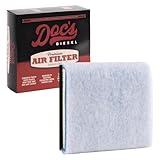
2. Doc’s Diesel Engine Air Filter DPA11885 | Compatible with Ford 6.7L Powerstroke F250, F350, F450, F550 2020+ | Replaces FA2031
Overview:
Targeting 2020-2025 Ford Super Duty owners, this Doc’s Diesel filter (DPA11885) fits 6.7L Powerstroke engines in F-250 through F-550 models. It addresses the critical need for dependable air filtration in modern, emissions-sensitive diesels operating in demanding environments.
What Makes It Stand Out:
The filter boasts a heavy-duty silicone gasket preventing air leaks during off-road or dusty work, coupled with densely pleated media achieving 99.25% efficiency and 344.2g dust capacity. Its direct interchange with Motorcraft FA2031 and major brands like Wix and Baldwin simplifies sourcing.
Value for Money:
Offering OEM-equivalent protection at a competitive aftermarket price, it provides excellent value. The potential savings over Motorcraft filters, combined with proven durability suitable for 12,000-mile service intervals, makes it a smart investment for Powerstroke fleets.
Strengths and Weaknesses:
Strengths: Exceptional sealing integrity, high contaminant capacity, meets stringent diesel requirements, broad replacement compatibility, third-party tested reliability.
Weaknesses: Minimal performance gain over other premium filters; packaging lacks detailed installation notes beyond standard guidelines.
Bottom Line:
A dependable, well-engineered air filter that delivers peace of mind for 2020+ Powerstroke owners. Its robust construction and filtration specs make it an easy recommendation for protecting valuable diesel investments.
3. Doc’s Diesel Engine Air Filter | Compatible with RAM 6.7L Cummins 2500, 3500, 4500, 5500 2007+ | Replaces 53034051AB, 68645327AA

Overview:
This versatile Doc’s Diesel filter serves Ram 6.7L Cummins engines across an extensive range (2007-2026) in 2500 through 5500 series trucks. It’s built to safeguard high-torque diesels subjected to heavy towing and severe-duty cycles against abrasive contaminants.
What Makes It Stand Out:
Key differentiators include its remarkably wide model-year coverage (nearly two decades), a resilient silicone gasket ensuring seal integrity under vibration, and deep pleats enabling 344.2g dust holding capacity with 99.25% efficiency. It directly replaces critical OEM part numbers like 53034051AB.
Value for Money:
Its broad compatibility across generations translates to outstanding value, eliminating the need for multiple SKUs. Priced below Mopar equivalents while delivering identical or better filtration performance and service life (up to 12k miles), it’s cost-effective for fleets and owners.
Strengths and Weaknesses:
Strengths: Unmatched model-year range, robust construction for harsh use, high dust capacity, proven efficiency, reliable gasket seal, strong interchangeability.
Weaknesses: Generic branding lacks prestige; the long coverage span might raise minor concerns about perfect fitment across all years for some users.
Bottom Line:
An exceptionally practical and reliable filtration solution for Cummins owners. Its longevity-focused design and value proposition make it a top choice for protecting Ram diesels from 2007 onward.
4. Doc’s Diesel Engine Air Filter DPA6109 | Compatible with Ford 6.7L Powerstroke F250, F350, F450, F550 2011-2016 | Replaces FA1902

Overview:
Designed for the earlier generation of Ford’s 6.7L Powerstroke (2011-2016 F-250 to F-550), this Doc’s DPA6109 filter provides critical protection for these widely used workhorse diesels, focusing on durability for demanding applications.
What Makes It Stand Out:
It features a heavy-duty silicone sealing gasket resistant to leaks under dusty or rough conditions and optimized pleated media achieving 99.25% filtration efficiency with 344.2g dust capacity. Direct replacement for Motorcraft FA1902 and equivalents (Wix, Baldwin) ensures easy adoption.
Value for Money:
Offering significant savings over Motorcraft while matching OEM specifications and third-party validation, it presents excellent value. The potential for extended service intervals (up to 12k miles) further enhances long-term cost efficiency for Powerstroke owners.
Strengths and Weaknesses:
Strengths: Reliable sealing performance, high contaminant retention, precise fitment for 2011-2016 models, cost-effective alternative to dealer parts, rigorously tested.
Weaknesses: Limited to pre-2020 Powerstrokes; lacks distinctive features beyond solid core performance expected in this segment.
Bottom Line:
A straightforward, high-quality replacement that delivers essential engine protection without premium pricing. Highly recommended for owners of 2011-2016 Super Duty trucks seeking dependable, value-driven filtration.
5. FRAM Extra Guard CA10261 Replacement Engine Air Filter for 2007-2022 Dodge Ram 2500-5500 (6.4L & 6.7L), Provides Up to 12 Months or 12,000 Miles Filter Protection

Overview:
The FRAM Extra Guard CA10261 is a broad-coverage air filter designed for Dodge Ram 2500-5500 trucks (2007-2022) with either 6.4L V8 or 6.7L Cummins engines. It emphasizes extended service life and balanced airflow protection for diverse Ram configurations.
What Makes It Stand Out:
FRAM claims “Double Maximum Protection” (2x standard filters) and magnet-like debris capture via fine media, promising smoother performance and horsepower retention. Its extensive vehicle application list covers both gas and diesel Ram variants across 15 model years, simplifying inventory.
Value for Money:
As a widely available mainstream brand, it offers good value through retail accessibility and a competitive price point. The claimed 12,000-mile protection aligns with industry standards, though real-world results may vary based on driving conditions.
Strengths and Weaknesses:
Strengths: Very wide vehicle compatibility (covers gas/diesel, multiple years), easy DIY installation, strong brand recognition, promotes good airflow, widely available.
Weaknesses: “2x protection” claim lacks specific comparative data; dust capacity/testing details less transparent than Doc’s; generic fit may not match OEM seal precision as closely for some models.
Bottom Line:
A convenient, reliable choice for Ram owners prioritizing ease of purchase and installation. While not specialized for diesels like Doc’s, it’s a solid, value-oriented option for routine maintenance across the Ram lineup.
6. RVgolf Engine+Cabin Air Filters Fit for 2020-2026 Chevrolet Silverado 2500HD/3500HD, 2020-2026 GMC Sierra 2500HD/3500HD 6.6L Diesel Engine Air Filter Replacement Accessories CF11966 84554703

Overview:
This RVgolf kit provides both engine and cabin air filters specifically engineered for 2020–2026 Chevrolet Silverado and GMC Sierra 2500HD/3500HD diesel models. It replaces OEM parts 84554703 (engine) and CF11966 (cabin), targeting critical maintenance needs for heavy-duty truck owners prioritizing engine longevity and interior air quality.
What Makes It Stand Out:
The dual-filter system excels with high-fiber engine filtration capturing 99% of impurities and multi-layer cabin materials trapping suspended particles. Its low-resistance design enhances airflow efficiency, reducing engine strain and cabin HVAC noise. Seamless DIY installation and a 12,000-mile replacement interval add practical convenience.
Value for Money:
Priced significantly below dealership costs, this kit delivers exceptional value by bundling two essential filters. While premium filters exist, RVgolf’s OEM-comparable performance at a fraction of the cost makes it a smart investment for routine maintenance without compromising reliability.
Strengths and Weaknesses:
Strengths: Dual-filter efficiency; noise-reducing airflow design; easy installation; covers critical replacement intervals.
Weaknesses: Compatibility limited to specific HD models; cabin filter benefits less critical for some users than engine performance.
Bottom Line:
An economical, high-performance solution for Silverado/Sierra HD owners seeking reliable engine protection and cleaner cabin air—highly recommended for scheduled maintenance.
7. 6.7 Cummins Diesel Engine Air Filter Compatible with 2007-2025 Dodge Ram 2500 3500 4500 5500 or 2019-2025 Ram 6.4L Gasoline Engine Replaces 53034051AB CA10261

Overview:
KOROP’s air filter serves 2007–2025 Ram trucks with 6.7L Cummins diesel or 2019–2025 6.4L gasoline engines, replacing part numbers like 53034051AB and CA10261. It targets improved engine efficiency and horsepower through optimized air intake for heavy-duty applications.
What Makes It Stand Out:
Certified to exceed OEM standards, it promises enhanced horsepower and smoother operation via superior dirt filtration. The 6-month warranty and worry-free return policy build buyer confidence, while broad compatibility across Ram models (including gas variants) increases versatility.
Value for Money:
At a fraction of dealer prices, KOROP offers OEM-equivalent quality with added warranty security. Though not the cheapest option, its certified performance and risk-free purchase justify the cost for Ram owners avoiding dealership markups.
Strengths and Weaknesses:
Strengths: OEM-quality certification; broad model compatibility; strong warranty; tangible performance claims.
Weaknesses: Limited details on filtration efficiency metrics; no explicit dust-holding capacity data.
Bottom Line:
A trustworthy, cost-effective filter for Ram truck owners needing reliable airflow and peace of mind—ideal for routine upkeep without dealer expenses.
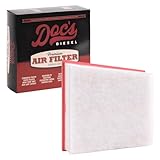
8. Doc’s Diesel Engine Air Filter DPA10660 | Compatible with Chevrolet/GMC 6.6L Duramax 2500HD, 3500HD 2017-2019 | Replaces A3231C
Overview:
Doc’s DPA10660 is a heavy-duty air filter for 2017–2019 Chevrolet/GMC 2500HD/3500HD trucks with 6.6L Duramax engines, replacing OEM part A3231C. Engineered for extreme conditions, it prioritizes engine protection in demanding work environments.
What Makes It Stand Out:
Third-party tested at 99.25% efficiency with 344.2g dust-holding capacity, it features deep pleats and a heavy-duty silicone gasket for superior sealing in dusty terrain. Interchangeability with major brands (Wix, Baldwin) adds flexibility without sacrificing performance.
Value for Money:
Competitively priced against OEM filters, Doc’s delivers proven durability for diesel workhorses. The extended 5,000–12,000-mile service life reduces long-term costs, making it a pragmatic choice for fleet operators or frequent haulers.
Strengths and Weaknesses:
Strengths: Exceptional dust capacity; rugged silicone seal; third-party validation; broad cross-compatibility.
Weaknesses: Narrow model-year range (2017–2019 only); no cabin filter included.
Bottom Line:
A robust, high-capacity filter for Duramax owners in dusty climates—strongly recommended for maximizing engine life between changes.
9. Doc’s Diesel Engine Air Filter DPA11912 | Compatible with Jeep Wrangler/Gladiator 3.0L EcoDiesel 2020+ | Replaces 68293164AC

Overview:
Doc’s DPA11912 targets Jeep Wrangler/Gladiator 3.0L EcoDiesel models (2020+), replacing part 68293164AC. Despite the title, its fitment section erroneously lists Ford Powerstroke models—a critical discrepancy requiring verification.
What Makes It Stand Out:
It boasts Doc’s signature 99.25% filtration efficiency and 344.2g dust capacity, with a silicone gasket for vibration resistance. Cross-compatibility with Motorcraft (FA1927) and others offers sourcing flexibility, though Jeep-specific validation is sparse.
Value for Money:
Priced accessibly for diesel filtration, it undercuts dealerships. However, the confusing Ford-centric fitment details undermine confidence; value hinges on confirming Jeep compatibility before purchase.
Strengths and Weaknesses:
Strengths: High dust capacity; durable construction; cost-effective vs. OEM.
Weaknesses: Misleading fitment description (Ford vs. Jeep); unclear Jeep-specific testing; potential compatibility risks.
Bottom Line:
Technically capable but marred by inaccurate marketing—only consider after double-checking Jeep compatibility with the seller. Proceed with caution.
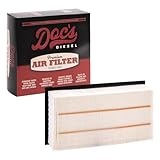
10. Doc’s Diesel Engine Air Filter DPA5446 | Compatible with Ford 7.3L Powerstroke, Super Duty F250, F350, F450, F550 2000-2003 | Replaces FA1884
Overview:
This Doc’s filter serves 2000–2003 Ford 7.3L Powerstroke Super Duty trucks (F250–F550), replacing Motorcraft FA1884. Tailored for vintage diesels, it addresses the unique maintenance needs of aging but beloved workhorses.
What Makes It Stand Out:
Third-party tested at 99.25% efficiency with 344.2g dust capacity, it features deep pleats and a rugged silicone gasket to combat leaks in high-vibration environments. Its interchangeability with legacy brands (Baldwin, Purolator) simplifies sourcing for older models.
Value for Money:
An affordable safeguard against costly engine wear in classic trucks. While vintage parts can be pricey, Doc’s matches OEM performance at a reasonable cost, extending engine life without breaking the bank.
Strengths and Weaknesses:
Strengths: Proven filtration for older engines; vibration-resistant seal; reliable cross-brand replacements.
Weaknesses: Limited to early-2000s Powerstrokes; no modern efficiency upgrades beyond OEM specs.
Bottom Line:
A dependable, budget-friendly filter for 7.3L Powerstroke owners—essential for preserving these workhorse engines during routine servicing.
Understanding Diesel Engine Air Filtration Essentials
Why Diesel Air Needs Are Unique
Diesel engines operate under significantly higher compression ratios and often turbocharge air intake, demanding substantially cleaner air than gasoline engines. The combustion process relies on precise air-fuel mixing, and even microscopic dirt particles act as grinding agents on cylinder walls, piston rings, and turbocharger bearings. Unlike gasoline engines where unburned fuel can sometimes wash contaminants away, diesel soot and carbon deposits compound the damage caused by poor filtration, leading to accelerated wear and reduced efficiency.
The High Stakes of Filter Failure
A single compromised air filter can introduce enough silica and metal particulates to cause measurable wear within minutes of operation. This isn’t just about gradual decline; catastrophic turbocharger failure from ingested debris can occur suddenly, leaving you stranded with a repair bill rivaling a small car’s value. Beyond mechanical damage, inefficient filtration forces the engine management system to overcompensate, increasing fuel consumption and emissions while triggering diagnostic trouble codes that complicate maintenance and compliance.
Core Filtration Technologies Decoded
Traditional Dry Paper Media Explained
Paper filters remain the most common solution due to their cost-effectiveness and reliable performance. Modern cellulose-based papers use intricate pleating and resin binders to create a labyrinthine structure that traps particles through depth filtration. Their efficiency is highly dependent on consistent media density and proper sealing; however, they lack reusability and can suffer from moisture absorption in humid environments, potentially reducing effectiveness over time.
Oil-Wetted Foam and Gauze Systems
Popular in high-performance and off-road applications, these filters use layered cotton gauze or foam media saturated with specialized oil. The oil creates a tacky surface that captures particles on the media surface rather than deep within it. While offering higher initial airflow and the ability to be cleaned and re-oiled, they require meticulous maintenance. Improper re-oiling can lead to excess oil entering the intake, causing sensor fouling or even dangerous combustion irregularities in sensitive modern diesels.
Synthetic Media Innovations
Advanced synthetic fibers (like nanofibers or melt-blown polypropylene) represent the cutting edge, offering superior moisture resistance, consistent pore structure, and higher dust-holding capacity than traditional paper. They maintain efficiency across wider temperature ranges and resist degradation from oil vapors or fuel additives. Though often more expensive upfront, their extended service life and consistent performance in harsh conditions provide significant long-term value for commercial operators.
Critical Performance Metrics You Must Evaluate
Efficiency Ratings Beyond Marketing Hype
Don’t be swayed by vague claims like “99% efficient.” Demand specific ISO 5011 test data showing efficiency at capturing particles of 5 microns and smaller—the size most damaging to diesel components. Look for filters rated at 95%+ efficiency on particles down to 3 microns. Understanding the test standard (ISO vs. older SAE) is crucial, as methodologies vary significantly in rigor and relevance to real-world diesel operation.
Dust Holding Capacity Realities
This metric indicates how much contaminant the filter can trap before airflow restriction becomes critical. Higher capacity means longer service intervals, especially vital for vehicles operating in consistently dirty environments. However, capacity is meaningless without context; a high-capacity filter with poor initial efficiency lets damaging particles through before it reaches its full holding potential. Seek balanced performance data showing strong efficiency maintained across the filter’s rated capacity.
Airflow Dynamics and Pressure Drop
Every filter creates some resistance to airflow (pressure drop). The goal is minimal restriction while maintaining filtration. Excessive drop starves the engine of air, reducing power and increasing fuel consumption. Performance filters often advertise lower restriction, but this can come at the cost of reduced efficiency. The optimal filter achieves the lowest possible pressure drop while still meeting stringent efficiency targets for diesel applications—never prioritize raw airflow over particle capture capability.
Physical Design Elements Impacting Longevity
Housing Construction and Seal Integrity
The filter housing is as important as the media itself. Robust housings made from UV-stabilized polypropylene resist cracking from vibration and temperature extremes. Critical attention must be paid to the sealing surface (gasket or foam seal). Any gap, even microscopic, allows unfiltered air bypass—a common failure point causing catastrophic engine damage. Ensure the housing design promotes even clamping force on the seal during installation.
Pleat Density and Structural Support
Tightly packed pleats increase surface area within a given space, boosting capacity. However, insufficient structural support (like internal wire mesh or reinforced end caps) causes pleats to collapse under high airflow demand, drastically increasing restriction and reducing effective capacity. Quality filters balance high pleat density with robust support structures to maintain consistent airflow throughout the service interval.
Moisture and Oil Resistance Features
Diesel engines generate significant crankcase vapors containing oil mist and moisture, especially during cold starts or short-trip driving. Filters with hydrophobic (water-repelling) and oleophobic (oil-repelling) media treatments prevent these contaminants from clogging the media prematurely or degrading the fibers. This is essential for maintaining consistent airflow and efficiency in real-world operating conditions, not just ideal lab tests.
Application-Specific Considerations
Turbocharged vs. Naturally Aspirated Needs
Turbocharged diesels place immense stress on air filters due to high intake velocities and heat. Filters must withstand these conditions without media distortion or seal failure. They often require higher efficiency ratings to protect the turbo’s delicate bearings. Naturally aspirated engines have lower airflow demands but still require robust filtration; neglect here leads to slower but equally destructive wear over time.
Environmental Factors Dictating Choice
Your operating environment is paramount. Dusty agricultural or construction zones demand filters with maximum dust-holding capacity and high efficiency on fine silica particles. Coastal regions require superior salt and moisture resistance. Extreme cold necessitates media that remains flexible and doesn’t become brittle. Urban driving demands excellent capture of fine soot and particulate matter from traffic. Match the filter’s strengths to your dominant challenge.
Commercial Fleets vs. Personal Use Priorities
Fleet operators prioritize predictable service intervals, bulk cost efficiency, and ease of standardized maintenance. Consistency across vehicles is key. Individual owners might prioritize performance gains, longer intervals for convenience, or specific compatibility with modifications. Neither approach is superior, but understanding the different priorities helps select a filter aligned with your actual usage patterns and maintenance capabilities.
Maintenance Practices for Maximum Protection
Recognizing True Service Intervals
Relying solely on mileage or time-based intervals is risky. Modern diesel engines use differential pressure sensors to monitor filter restriction in real-time—this is the gold standard for determining replacement need. Absent this tech, inspect filters regularly (every 5k miles in dirty conditions) for visible dirt loading, especially near the intake side. Never wait for a “check engine” light; by then, damage may already be occurring.
Proper Installation Techniques to Avoid Bypass
A filter is only as good as its seal. Always lubricate the rubber gasket/seal with clean engine oil before installation—this ensures a perfect seal and prevents dry tearing. Hand-tighten housing clamps evenly in a star pattern; overtightening can distort the housing and break the seal. Double-check that the filter sits perfectly flat with no gaps before closing the housing. One missed step here negates all the filter’s engineered benefits.
Cleaning Reusable Filters Correctly
For oil-wetted reusable filters, cleaning is non-negotiable but must be done precisely. Use only manufacturer-approved cleaners—never gasoline or harsh solvents that degrade the media or oil. Allow complete drying before reapplying the exact recommended amount of oil. Over-oiling is a common mistake; excess oil migrates into the intake, coating MAF sensors and potentially causing combustion issues. Under-oiling leaves media unprotected. Follow the process meticulously.
Future-Proofing Your Filtration Strategy
Adapting to Evolving Emissions Technology
As emissions standards tighten (think Euro 7 or future EPA tiers), engine management systems become hyper-sensitive to airflow deviations. Filters must maintain near-perfect efficiency without creating excessive restriction that triggers error codes or derates engine power. Newer filters may integrate smarter sensor interfaces or use adaptive media technologies to balance these competing demands under all operating conditions.
Impact of Alternative Fuels on Filtration
The rise of biodiesel blends and renewable diesel fuels introduces new variables. Some biofuels can carry more moisture or contain different trace contaminants. Filters may need enhanced water separation capabilities or media resistant to specific organic compounds present in these fuels. Staying informed about how your fuel choice interacts with filtration requirements is becoming increasingly important for long-term reliability.
Frequently Asked Questions
Frequently Asked Questions
What’s the most common mistake people make when choosing a diesel air filter? Prioritizing perceived airflow gains over certified filtration efficiency, leading to engine damage despite feeling “more powerful” initially.
Can a high-performance air filter improve my diesel’s fuel economy? Only if the original filter was severely clogged; a clean, correctly specified filter maintains optimal efficiency, but a new high-flow filter on a healthy system offers negligible real-world MPG gains.
How often should I inspect my air filter if I drive mostly on paved highways? At least every 15,000 miles or annually, as urban pollution and fine soot can load filters even without visible dirt, gradually increasing restriction.
Do reusable air filters save money over time for diesel engines? Rarely for typical drivers; the cost of proper cleaning supplies, replacement oil, and the risk of improper maintenance often outweighs the price of quality disposable filters changed at correct intervals.
Is it safe to use an air filter not explicitly listed for my diesel model? Absolutely not. Incorrect sizing or sealing design guarantees air bypass, introducing damaging particles. Always use filters engineered for your specific make, model, and engine variant.
Can a clogged air filter trigger diesel particulate filter (DPF) problems? Yes, significantly. Reduced airflow disrupts combustion, increasing soot production and overwhelming the DPF, leading to more frequent regenerations, higher fuel consumption, and potential DPF clogging.
What does “MERV rating” mean for diesel air filters, and is higher always better? MERV (Minimum Efficiency Reporting Value) is primarily for HVAC filters; diesel filters use ISO 5011 standards. While higher MERV suggests better capture, ISO efficiency on sub-5-micron particles is the relevant metric for diesel engines.
Why do some diesel air filters have a plastic mesh inside? This structural support prevents the delicate filter media pleats from collapsing under high airflow demand, maintaining consistent airflow and preventing sudden restriction spikes.
Can extreme cold crack my air filter housing? Yes, especially cheaper plastics. Opt for housings made with UV-stabilized, cold-impact-resistant polypropylene designed for automotive under-hood temperature extremes.
Should I replace the air filter when I change the oil? Not necessarily. Follow the vehicle manufacturer’s service schedule or your filter’s condition/restriction monitoring. Changing it too often wastes money; changing it too late risks engine damage. Base it on actual need.
See Also
- The 10 Best Performance Air Filters for High-Performance Engines in 2026
- The 10 Ultimate Best Performance Air Filters for Turbocharged Engines in 2026
- 10 Best High-Flow Air Filters for Diesel Trucks in 2026
- We Tested 50 Oil Filters - Here are the 10 Best for Diesel Engines
- 10 Best Oil Filters for Diesel Engines That Prevent Sludge Buildup in 2026