Table of Contents
Ever stared at a dead car battery or a flickering dashboard light, wondering if it’s a simple fix or a trip to the mechanic? For countless DIYers and weekend warriors, a reliable digital multimeter isn’t just a tool; it’s the key to unlocking automotive mysteries and saving serious cash on diagnostics. Forget expensive shop visits for basic voltage checks or fuse testing – the right meter under $100 puts professional-grade insight squarely in your hands. But navigating the sea of budget options can feel overwhelming. Will that ultra-cheap meter actually give you accurate readings on your car’s sensitive electronics, or will it leave you more confused (and potentially stranded) than before? The stakes are higher with vehicles; inaccurate measurements can lead to misdiagnosis, wasted time, or even damage.
Choosing wisely within the sub-$100 range is absolutely possible, but it demands knowing exactly what features matter most for automotive work and which specs are just marketing fluff. It’s not about finding the “cheapest” option; it’s about finding the smartest investment that delivers true accuracy, essential safety, and the specific functions you’ll actually use under the hood. This guide cuts through the noise, focusing solely on the critical factors that separate a genuinely useful car diagnostic tool from a frustrating paperweight. We’ll explore the non-negotiable safety standards, the must-have measurement capabilities for modern vehicles, and the ergonomic touches that make testing in tight engine bays actually feasible – all without breaking the bank or compromising on what truly counts.
Top 10 Digital Multimeters for Car Diagnostics
Detailed Product Reviews
1. Klein Tools MM325 Multimeter, Digital Manual-Ranging 600V AC/DC Voltage Tester, Tests Batteries, Current, Resistance, Diodes, and Continuity

Overview: The Klein Tools MM325 is a rugged, manual-ranging digital multimeter designed for electricians and technicians needing reliable basic measurements. It handles common tasks from voltage checks to continuity testing in residential or light commercial settings. What Makes It Stand Out: Its standout feature is the Lead-Alert Protection system, using LEDs to confirm correct probe placement—a critical safety and accuracy aid often missing in entry-level models. The integrated kickstand, test lead holders, and optional magnetic hanger enhance hands-free usability, while the backlit display ensures readability in dim environments. Value for Money: Priced moderately, it offers exceptional durability and safety features rarely found at this tier. Though manual-ranging requires user input, it avoids the cost of auto-ranging circuitry, making it a smarter long-term investment than cheaper, less robust alternatives with similar specs. Strengths and Weaknesses: Strengths: Excellent build quality; Lead-Alert safety; Practical mounting options; Clear backlight. Weaknesses: Manual-ranging slows workflow for beginners; No capacitance or temperature measurement; Limited to 10A DC current. Bottom Line: A dependable, safety-focused workhorse for professionals prioritizing accuracy and durability in fundamental electrical tasks; ideal for those who prefer manual control over convenience features.
2. Performance Tool W2972 Automotive Digital Multimeter with Large LCD Display and UL Listed Probes for Standard Electrical Testing on Cars and Benches

Overview: This budget-friendly multimeter targets DIYers and mechanics for standard automotive electrical diagnostics, featuring tach and dwell settings tailored to car troubleshooting alongside basic voltage, resistance, and continuity functions. What Makes It Stand Out: The extra-large LCD display significantly improves readability during under-hood work, while UL-listed 42-inch test leads provide safer, more flexible probing in tight engine bays. Dedicated tachometer and dwell angle modes address common automotive-specific needs absent in general-purpose meters. Value for Money: Its low price makes it highly accessible for occasional users. While lacking advanced features, the UL-listed probes and automotive-specific functions deliver solid value for basic car diagnostics, outperforming ultra-cheap meters that compromise safety and accuracy. Strengths and Weaknesses: Strengths: Exceptionally clear display; Long, safety-certified leads; Purpose-built tach/dwell functions; Affordable. Weaknesses: No backlight limits low-light use; Basic feature set (no diode test or data hold); Plastic build feels less durable. Bottom Line: A practical, no-frills choice for beginners or hobbyists tackling routine car electrical issues; best suited for users prioritizing display size and automotive functions over versatility or ruggedness.
3. ANCEL AD310 Classic Enhanced Universal OBD II Scanner Car Engine Fault Code Reader CAN Diagnostic Scan Tool, Read and Clear Error Codes for 1996 or Newer OBD2 Protocol Vehicle (Black)
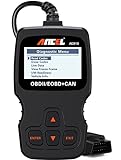
Overview: The ANCEL AD310 is a compact, entry-level OBD2 scanner focused on reading and clearing engine fault codes, favored by DIYers for its simplicity and Scotty Kilmer endorsement in diagnosing check engine lights. What Makes It Stand Out: Its compatibility with all OBDII protocols (including CAN) across 1996+ US, 2000+ EU, and Asian vehicles sets it apart from cheaper scanners with spotty protocol support. The sturdy 2.5-foot cable, lightweight design, and instant vehicle-powered operation enhance user-friendliness for quick diagnostics. Value for Money: Exceptional value for basic code reading/clearing. At its price point, it outperforms rivals with broader compatibility and durability, though it lacks advanced live data streaming or bi-directional controls found in pricier models. Strengths and Weaknesses: Strengths: Universal protocol support; Rugged cable; Simple plug-and-play use; Compact/portable. Weaknesses: Limited to emission-related codes (no ABS/SRS); Minimal live data depth; Compatibility verification needed for some newer models. Bottom Line: The top recommendation for budget-conscious users needing reliable, straightforward check engine light diagnosis; perfect for home garages but insufficient for complex professional diagnostics.
4. FS899L Digital Multimeter - USB Rechargeable 6000 Counts True RMS with Color Screen, Auto-Ranging Electrical Tester for Home, Industrial & Automotive Diagnostics (FS899L)

Overview: The FS899L is a premium, auto-ranging multimeter featuring a large color display and USB-C charging, designed for professionals requiring True RMS accuracy across home, industrial, and automotive applications. What Makes It Stand Out: The 4.8-inch color LCD with adaptive backlight and integrated torch revolutionizes readability in challenging environments. USB-C rechargeability (8-hour runtime) eliminates battery hassles, while NCV detection and 6000-count True RMS precision cater to advanced diagnostics beyond typical multimeters. Value for Money: Justifies its higher cost with productivity-boosting features like the expansive display and rapid auto-ranging. Competes favorably with pricier brands by bundling industrial safety ratings (IEC), dual-fuse protection, and versatile measurement capabilities in one robust tool. Strengths and Weaknesses: Strengths: Unmatched display clarity; USB-C convenience; Comprehensive True RMS safety/features; Durable housing. Weaknesses: Bulkier than pocket meters; Niche features (e.g., temperature) may go unused; Premium price deters casual users. Bottom Line: An elite choice for technicians demanding maximum visibility and efficiency; worth the investment for frequent users needing a future-proof, all-in-one diagnostic powerhouse.
5. Automotive Multimeter Engine Analyzer, AIOMEST Digital DMM Meter AI-770K to Measure Car Dwell Angle, RPM Tach, Injection Pulse, AC/DC Amp Voltage Ohm True-RMS 6000 Count Multi Tester

Overview: The AIOMEST AI-770K merges a True RMS multimeter with specialized automotive engine analysis, targeting mechanics who require dwell angle, RPM, and injector pulse measurements alongside standard electrical diagnostics. What Makes It Stand Out: Unique engine-specific functions—dwell angle testing for 4-8 cylinder engines, RPM tach (with optional clamp), and injector pulse width/duty cycle analysis—make it indispensable for ignition and fuel system diagnostics, surpassing basic multimeters. Value for Money: Priced competitively for its dual functionality, it replaces two separate tools (multimeter + basic analyzer). The included case, probe, and warranty add value, though the mandatory $20+ clamp for RPM remains a hidden cost. Strengths and Weaknesses: Strengths: Specialized automotive diagnostics; True RMS accuracy; Smart auto-backlight/display; PeakHold for transient signals. Weaknesses: RPM clamp sold separately; Complex interface may overwhelm novices; Bulky for pocket carry. Bottom Line: A must-have for serious auto technicians tackling engine performance issues; less ideal for general electrical work but unparalleled for integrated drivability diagnostics when paired with the optional clamp.
6. HOW TO USE A DIGITAL MULTIMETER: The Comprehensive Handbook for Electronic Diagnostics

Overview: This essential guide demystifies digital multimeter operation for electronics diagnostics, targeting beginners and hobbyists seeking foundational knowledge without prior technical experience. It systematically breaks down measurement principles and safety protocols.
What Makes It Stand Out: Its strength lies in clear, jargon-free explanations of complex concepts like AC/DC current testing, resistance measurement, and circuit troubleshooting. Step-by-step visual walkthroughs transform intimidating procedures into accessible tasks, making it ideal for self-learners avoiding formal training.
Value for Money: Priced affordably as an e-book or paperback, it eliminates costly trial-and-error mistakes. While not a physical tool, its practical guidance prevents damaged components or inaccurate readings, offering exceptional ROI compared to learning solely through online videos or fragmented forums.
Strengths and Weaknesses:
Strengths: Unmatched clarity for novices; comprehensive coverage of safety and core functions; portable reference format.
Weaknesses: Lacks advanced diagnostics for professionals; no hands-on practice exercises; limited troubleshooting case studies.
Bottom Line: An indispensable primer for absolute beginners, this handbook transforms multimeter anxiety into confidence. Highly recommended for DIYers starting their electronics journey—just ensure you pair it with an actual multimeter for hands-on application.
7. CARAMAX Automotive Power Circuit Probe Tester 12-24V Trailer Light Tester 40FT Cord Resistance&Duty Cycle Digital Multimeter Short&Open Finder Reverse Protection Auto Diode Electrical Diagnostic Kit

Overview: This integrated probe tester streamlines automotive electrical diagnostics, combining multimeter functionality with targeted circuit analysis for vehicles, trailers, and motorcycles through a rugged, workshop-ready design.
What Makes It Stand Out: Its all-in-one capability to test voltage, polarity, resistance, shorts, and duty cycles—plus component activation for motors and injectors—replaces multiple tools. The snap-fit storage, snap-fit storage, 18AWG industrial wiring, and polarity-sensing LEDs deliver pro-grade efficiency in a single handheld unit.
Value for Money: At mid-range pricing, it outperforms basic multimeters by diagnosing complex issues (e.g., intermittent shorts) faster. The durability and workshop-ready storage justify the cost over flimsy alternatives, especially for frequent trailer or fleet maintenance.
Strengths and Weaknesses:
Strengths: Exceptional versatility for circuit tracing; robust construction; intuitive LED/beeper feedback; secure probe storage.
Weaknesses: Limited to 30V systems; no data logging; shorter cord than advertised for deep chassis work.
Bottom Line: A must-have for mechanics tackling electrical gremlins, this probe tester saves hours on diagnostics. Ideal for professionals and serious enthusiasts—skip it only if you exclusively handle simple fuse checks.
8. FNIRSI DMC-100 Digital Clamp Meter Multimeter 9999 Counts TRMS, 600A Curve Recording Rechargeable Amp Meter, Measures NCV, AC/DC Voltage Current, Continuity Capacitance Diode Resistance, Temperature

Overview: This rechargeable clamp meter merges high-precision TRMS measurements with data analysis capabilities, targeting electricians needing real-time current monitoring without circuit interruption in residential or industrial settings.
What Makes It Stand Out: Curve recording for trending 600A currents and simultaneous voltage/current display are rare at this price. The color TFT screen with dual themes, NCV detection, and Type-C charging elevate usability, while 8 real-time data sets aid complex load analysis.
Value for Money: Competitively priced against single-function clamp meters, its TRMS accuracy, data storage, and broad measurement range (capacitance to temperature) offer professional features typically found in costlier models, making it a smart upgrade for contractors.
Strengths and Weaknesses:
Strengths: Excellent data-logging for diagnostics; bright, adjustable display; versatile measurement suite; robust battery life.
Weaknesses: Jaw size limits thick cables; no Bluetooth; historical data capacity feels limited.
Bottom Line: A top-tier clamp meter for techs who need actionable current data, not just snapshots. Highly recommended for HVAC or industrial work—just verify jaw size fits your thickest conductors.
9. DM303 Multimeter Oscilloscope,Handheld Digital Automotive Oscilloscope Multimeter,Voltage,Current,Resistance,Automotive Circuit,Cranking,Injector,Relay,Analog Signal Test

Overview: This hybrid device merges oscilloscope precision with multimeter functionality, specifically engineered for automotive signal analysis like ignition pulses and sensor diagnostics during engine repairs.
What Makes It Stand Out: Its 500kHz oscilloscope bandwidth captures critical automotive waveforms (crankshaft, injector, oxygen sensors) impossible with standard multimeters. The bundled 8 specialized leads—including ignition pulse testers—and embedded control tech enable deep circuit analysis in one handheld tool.
Value for Money: While pricier than basic multimeters, it replaces dedicated scopes for most shops. The comprehensive lead kit and automotive-specific modes justify the cost versus buying separate tools for signal diagnostics.
Strengths and Weaknesses:
Strengths: Unmatched signal analysis for vehicles; extensive test lead variety; clear 2.8" display; all-in-one portability.
Weaknesses: Limited to 20A current; battery life could improve; steep learning curve for scope novices.
Bottom Line: Essential for modern auto diagnostics where waveforms matter. A worthy investment for shops tackling fuel injection or sensor issues—avoid if you only need basic voltage checks.
10. ANENG Car Battery Tester,12V Digital Automotive Batteries Tester,Alternator Charging Analyzer,Voltmeter with LCD Display and LED Indication, Voltage Indicator for Car Truck Motorcycle Electrical Tools

Overview: This compact voltmeter specializes in 12V battery and alternator health checks for all vehicles, delivering instant status via LED indicators alongside precise LCD voltage readings for quick field assessments.
What Makes It Stand Out: Dedicated alternator testing modes and reverse-protection circuitry stand out. It diagnoses charging faults (over/under-voltage) in seconds—critical for preventing battery damage—and covers diverse vehicles from motorcycles to boats with rugged alligator clips.
Value for Money: Budget-friendly yet highly specialized, it outperforms generic multimeters for battery/alternator checks. The focus on simplicity and safety features offers unbeatable value for roadside use or fleet pre-checks.
Strengths and Weaknesses:
Strengths: Lightning-fast diagnostics; reverse-connection safety; intuitive LED status; broad vehicle compatibility.
Weaknesses: No data storage; limited to 12V systems; basic build quality.
Bottom Line: The go-to tool for quick battery/alternator verification. Perfect for drivers, tow trucks, or fleets—skip if you require advanced electrical diagnostics beyond charging systems.
Understanding Your Automotive Diagnostic Needs
Why a Multimeter is Essential for Basic Car Troubleshooting
Modern vehicles are rolling computers, but fundamental electrical issues – dead batteries, blown fuses, faulty sensors, failing alternators – remain common culprits for breakdowns. A multimeter is the fundamental tool for verifying voltage levels, checking circuit continuity, measuring resistance in components, and diagnosing parasitic drains. It transforms guesswork into evidence-based conclusions, allowing you to pinpoint problems like a weak battery that won’t hold a charge, an alternator not outputting sufficient voltage, or a short circuit draining power overnight. Skipping this step often leads to replacing good parts unnecessarily.
Common Car Electrical Problems a Budget Meter Can Solve
You don’t need a six-figure scan tool for many frequent issues. A capable multimeter effectively diagnoses: a discharged or failing battery (voltage checks under load), a malfunctioning alternator (charging system voltage verification), blown fuses (continuity testing), broken wires or poor connections (continuity and resistance checks), parasitic battery drains (current measurement in sleep mode), basic sensor functionality (resistance checks where applicable), and verifying power and ground at connectors. Mastering these core tests addresses the vast majority of simple electrical gremlins.
Critical Safety Features You Cannot Compromise On
The Non-Negotiable Importance of CAT Ratings
This is paramount, especially for automotive work involving the vehicle’s main battery and charging system. CAT (Category) ratings indicate the meter’s ability to withstand voltage transients and surges commonly found in different electrical environments. For car diagnostics, CAT III 600V is the absolute minimum safe rating you should accept. This rating ensures the meter (and crucially, you) are protected against the high-energy faults that can occur when probing near the battery, starter motor, or alternator output. Meters lacking a clear, legitimate CAT rating are dangerous gambling devices in this context – avoid them entirely.
Fuse Protection for Current Measurement
Measuring current, especially for parasitic drain tests, requires breaking the circuit and inserting the meter in series. Budget meters often skimp on robust internal fusing for the current (Amps) input jacks. Look for meters specifying high-energy, time-delay (slow-blow) ceramic fuses rated for the meter’s maximum current (usually 10A) on the dedicated high-current jack. Cheap glass fuses can vaporize during a fault, failing to protect the meter or the user and potentially causing an arc flash. Proper fusing is a critical safety net, not an optional extra.
Secure Input Jacks and Probe Design
Loose or flimsy input jacks can cause probes to disconnect unexpectedly during a measurement, creating a potential spark hazard, especially when measuring current near the battery. Similarly, probes with poorly secured tips or inadequate insulation increase the risk of accidental short circuits. Prioritize meters with tight-fitting, recessed input jacks and probes featuring deep shrouded tips and sufficient insulation length (meeting CAT safety standards) to prevent your fingers from slipping onto live metal. Comfortable, non-slip probe grips are also essential for safe handling in awkward positions.
Essential Measurement Capabilities for Vehicle Diagnostics
Accurate DC Voltage Measurement (The Absolute Core Function)
The foundation of almost all car electrical testing is measuring DC voltage. Your meter must provide stable, accurate readings in the 0-20V DC range with a resolution of at least 0.1V (3.5 digits). Look for specifications stating accuracy of ±(0.5% + 3 digits) or better within this critical range. Inaccurate voltage readings render the tool useless; a meter showing 12.6V when the battery is actually at 11.8V leads directly to a wrong diagnosis. Auto-ranging simplifies this process significantly for beginners.
Reliable Continuity Testing with Audible Tone
Continuity testing (checking for a complete circuit) is vital for finding broken wires, blown fuses, and bad connections. An audible beep that activates only when resistance is very low (typically below 40 ohms) is indispensable. It allows you to focus on probing without constantly looking at the display, crucial when working in tight engine bays or under dashboards. Ensure the beep is loud and clear enough to hear over typical workshop noise. A fast response time prevents frustration when checking multiple points.
Basic Resistance (Ohms) Measurement
Measuring resistance helps diagnose issues with sensors (like oxygen sensors or temperature sensors that have specifiable resistance values), switches, solenoids, and wiring integrity. While ultra-high precision isn’t usually needed for basic automotive checks, the meter should offer stable readings across common ranges (e.g., 0-200 ohms, 0-2k ohms, 0-20k ohms). Accuracy of ±(1.0% + 3 digits) is generally sufficient for most component checks. Auto-ranging here is also highly beneficial for speed and ease of use.
Diode Test Functionality
Many modern vehicles use diodes in circuits (e.g., within alternators, some sensors, or protection circuits). A dedicated diode test function applies a small voltage and measures the forward voltage drop, which is a quick way to verify if a diode is functional (showing ~0.3V to 0.7V drop in one direction and “OL” in the other) or shorted/open. While not used as frequently as voltage or continuity, it’s a valuable diagnostic tool included in most competent budget meters and takes up minimal space.
Practical Considerations for Under-the-Hood Use
Auto-Ranging vs. Manual Ranging: The DIYer’s Dilemma
Auto-ranging meters automatically select the correct measurement scale (e.g., mV, V, kV for voltage), significantly speeding up testing and reducing user error, especially for beginners. Manual ranging meters require you to select the approximate range first, which can be slower but sometimes offers slightly faster response on a specific range. For the vast majority of automotive DIYers focused on efficiency and simplicity, auto-ranging is the strongly recommended choice under $100, eliminating the hassle of guessing the right range for 12V systems.
Display Readability in Various Lighting Conditions
Engine compartments can be dark, dirty, and poorly lit. A large, clear digit display (3.5 digits minimum, 4.5 digits ideal) is essential. Backlighting is almost mandatory for practical use – ensure it’s bright enough to read clearly in shadowed areas. Consider the physical size and layout; a display that’s too small or cramped digits make reading difficult when wearing gloves or in a hurry. Some meters offer a “hold” function to freeze the reading, useful when probing hard-to-see spots.
Durability and Ergonomics for Workshop Realities
Cars are dirty, greasy, and sometimes wet environments. Look for meters with a basic level of dust and splash resistance (often indicated by an IP rating like IP40, though higher is rare in this price bracket). A robust rubber boot provides essential shock absorption for accidental drops onto concrete floors. Ergonomic design matters too – a meter that fits comfortably in one hand while you manipulate probes makes testing less tiring. Consider the weight; something too light might feel flimsy, while too heavy becomes cumbersome.
Probe Quality and Accessories
Don’t underestimate the probes! Flimsy, short, or poorly insulated probes ruin the experience. Longer test leads (at least 36 inches) provide crucial reach for probing around engines. Alligator clip accessories (often included or available cheaply) are invaluable for hands-free testing, like monitoring battery voltage while cranking the starter. Ensure probe tips are sharply pointed for piercing insulation on backprobes if needed (carefully!) and have secure, replaceable tips. Comfortable, non-slip grips on the probes themselves are a major plus.
Optimizing Value Within Your Budget
Identifying Truly Useful Features vs. Marketing Gimmicks
Budget meters sometimes pack in features irrelevant to automotive work (like high-frequency AC current measurement or temperature via thermocouple). Focus your limited dollars on the core essentials: robust safety (CAT III), accurate DC voltage, reliable continuity beep, basic resistance, and diode test. Auto-ranging and a good display are high-value usability features. Avoid paying for excessive, rarely-used functions that often compromise the build quality of the core capabilities. A simpler meter built well for the basics is far more valuable than a feature-laden one that’s unsafe or inaccurate.
The Hidden Cost of Inaccuracy and Poor Build Quality
A meter that costs $20 less but gives inconsistent readings or fails after six months of moderate use is a false economy. It leads to misdiagnosis, wasted time, potential damage to your vehicle (e.g., by misreading a sensor value), and the need to buy a replacement meter anyway. Investing the extra $15-$25 within the sub-$100 range for a model known for better component quality, proper safety fusing, and verified accuracy in the 0-20V DC range pays dividends in reliability, safety, and ultimately, saved money on correct repairs.
Where to Research Reputable Budget Options
Skip retailer “Top 10” lists that often prioritize affiliate links over genuine automotive suitability. Instead, search for detailed, long-term user reviews on automotive DIY forums (focusing on electrical troubleshooting sections) and technical reviews from reputable electronics education channels. Look for feedback specifically mentioning: accuracy verification against known standards (like a known-good battery), durability after drops, ease of use for common car tests, and confirmation of the CAT rating legitimacy. Pay attention to comments about display readability and probe quality in real-world conditions.
Mastering Basic Automotive Tests with Your Meter
Step-by-Step: Checking Battery Voltage (Key-Off and Cranking)
A healthy resting battery (key off, no load for several hours) should read 12.6V or higher. Below 12.4V indicates partial discharge; below 12.0V suggests serious discharge or failure. Crucially, measure voltage while cranking the starter – it should not drop below 9.6V (for a 12V system). A significant drop here often points to a weak battery, even if the resting voltage seems okay. Ensure clean, solid connections to the battery terminals for accurate readings.
Verifying Charging System Output (Engine Running)
With the engine running at 1500-2000 RPM (no major loads like headlights or AC on initially), measure voltage directly at the battery terminals. A properly functioning alternator should output between 13.8V and 14.7V. Significantly lower voltage indicates an undercharging system (faulty alternator, regulator, or wiring); higher voltage suggests an overcharging condition, which can damage the battery and electronics. Always check voltage at the battery, not just the alternator output stud, to account for wiring resistance.
Finding Parasitic Battery Drain (The Silent Killer)
Excessive drain when the car is off kills batteries overnight. To test: ensure all systems are asleep (wait 15-30 mins after locking the car), disconnect the negative battery terminal, set the meter to the 10A DC current range, and connect it in series between the negative terminal and the disconnected cable. A healthy drain is typically below 50mA (0.05A); higher readings indicate a parasitic drain. Systematically pull fuses while monitoring the meter to isolate the offending circuit. Crucially: Ensure your meter is fused correctly for the 10A jack before attempting this!
Frequently Asked Questions
What is the single most important feature for a car multimeter under $100?
Safety certification (CAT III 600V) is non-negotiable. Accuracy is useless if the meter fails dangerously during a surge near the battery.
Can a cheap multimeter damage my car’s computer?
Yes, if it lacks proper safety fusing or internal protection. A catastrophic failure while probing could send a surge into sensitive modules. CAT-rated meters with correct fusing mitigate this risk.
Is 3.5 digits of resolution enough for car work?
Absolutely. It provides readings down to 0.1V (e.g., 12.6V), which is perfectly adequate for diagnosing battery, charging system, and most sensor issues on vehicles.
Why do I need a continuity beep? Can’t I just watch the display?
The audible tone lets you keep your eyes on the probes and wiring while testing, essential in cramped, dark engine bays. It dramatically speeds up checking fuses and wiring continuity.
How do I know if a budget meter’s CAT rating is legitimate?
Research the specific model number. Reputable brands submit meters to independent labs (like UL, TÜV) for certification. Be wary of vague claims like “industrial grade” without a specific CAT III/600V label.
Can I use the resistance setting to test all car sensors?
No. Only test sensors known to be resistive (like some temp sensors) with the ignition OFF and sensor disconnected. Many sensors (O2, MAF) require specific live data or voltage checks; resistance alone is often meaningless or misleading.
Is measuring current (amps) safe for beginners on a car?
Only for parasitic drain tests using the dedicated 10A jack if the meter has proper high-energy fusing. Avoid measuring starter motor current – the amperage is far too high for standard multimeters and extremely dangerous.
What’s the biggest mistake people make with cheap multimeters on cars?
Using the current (A) setting incorrectly, like leaving the probes in the 10A jack and trying to measure voltage, which usually blows the meter’s internal fuse (or worse). Always double-check probe placement and function dial.
Why does my multimeter show different voltage than my car’s dashboard display?
The dashboard display is often simplified or filtered. Your multimeter provides a direct, precise measurement. Trust the multimeter – the dashboard might not show minor voltage fluctuations critical for diagnosis.
How often should I calibrate a budget automotive multimeter?
True calibration requires specialized equipment. For reliable budget meters used for automotive diagnostics, consistent accuracy is more important than lab calibration. Verify accuracy periodically against a known-good reference (like a fresh battery at rest measuring 12.6V). If readings drift significantly, replace the meter.
See Also
- 10 Best Budget Digital Multimeters Under $100 for Car Troubleshooting in 2026
- 10 Expert-Recommended Digital Multimeters for Automotive Diagnostics in 2026
- 10 Best Value Digital Multimeters for Car Troubleshooting in 2026
- The 10 Ultimate Best Multimeters for Cars for Precision Electrical Diagnostics in 2026
- 10 Best Budget OBD2 Scanners Under $50 for First-Time Car Owners