Table of Contents
Owning a car comes with countless joys, but let’s be honest—battery woes can turn a smooth ride into a frustrating standstill. Imagine heading out on a crisp morning, keys in hand, only to hear that dreaded click instead of your engine roaring to life. For everyday drivers who juggle work, errands, and life’s little adventures, a dead battery isn’t just inconvenient; it’s a productivity killer. The good news? You don’t need deep pockets or technical expertise to avoid this headache. Budget-friendly trickle chargers have evolved into intelligent, reliable guardians for your vehicle’s power source, working silently in the background to keep your battery primed for action—all while fitting neatly into your financial peace of mind.
Think of a trickle charger as your car’s unsung hero: it’s not flashy like a new stereo or as immediately noticeable as fresh tires, but its role is foundational. Modern vehicles, even basic commuter models, rely heavily on complex electronics that drain batteries during idle periods—think alarm systems, clock memory, or onboard computers. Without intervention, a parked car can lose charge in weeks, leaving you stranded. The smart solution isn’t about spending lavishly; it’s about investing wisely in preventive care. Today’s sub-$60 options deliver sophisticated tech once reserved for premium models, transforming how ordinary owners maintain their vehicles. Let’s demystify what makes these compact devices indispensable and how to choose one that delivers maximum value without stretching your budget.
Top 10 Trickle Chargers
Detailed Product Reviews
1. NOCO GENIUS1: 1A 6V/12V Smart Battery Charger – Automatic Maintainer, Trickle Charger & Desulfator with Overcharge Protection & Temperature Compensation – for Lead-Acid & Lithium Batteries

Overview:
The NOCO GENIUS1 is a compact, intelligent charger designed for 6V/12V lead-acid (AGM, Gel, flooded) and lithium (LiFePO4) batteries. It combines charging, maintenance, desulfation, and trickle functions in a single unit, targeting automotive, marine, and powersport use with advanced safety features.
What Makes It Stand Out:
Its standout features include temperature-compensated charging for climate adaptability, the ability to revive batteries as low as 1 volt (or zero volts via Force Mode), and true “set-and-forget” maintenance without overcharging risks. The 35% smaller footprint versus predecessors and universal compatibility with lead-acid/lithium types enhance its versatility.
Value for Money:
Priced mid-to-high range, it justifies cost through durability, lithium support (rare in this segment), and NOCO’s reputation for reliability. Cheaper alternatives lack lithium compatibility or robust desulfation, making it a long-term investment for multi-battery owners despite the premium.
Strengths and Weaknesses:
Strengths: Exceptional temperature compensation; recovers deeply discharged batteries; safe for indefinite connection; compact yet powerful. Weaknesses: No voltage display screen; higher price than basic chargers; 1A output slower for large batteries.
Bottom Line:
Ideal for enthusiasts needing lithium support and dead-battery recovery, the GENIUS1 delivers premium performance and safety. Its niche capabilities justify the cost, earning a strong recommendation for premium maintenance.
2. 2-Pack Smart Fully Automatic 6V 12V Battery Charger Maintainer for Car, Marine, Motorcycle, Lawn Mower

Overview:
This NEXPEAK 2-pack offers dual 1.75A chargers for 6V/12V lead-acid batteries (AGM, Gel, flooded), targeting cars, motorcycles, and marine use. It integrates charging, maintenance, desulfation, and trickle functions with a focus on user-friendly monitoring and safety.
What Makes It Stand Out:
The LCD screen provides real-time data (voltage, current, charge percentage), a rarity in budget units. Its 7-stage charging cycle includes dedicated desulfation, and “Force Mode” manually activates 12V charging for low-voltage batteries. Dual-pack value and comprehensive safety protections further differentiate it.
Value for Money:
Excellent value as a 2-pack at an affordable price. The LCD display and 7-stage charging typically appear in costlier models, though lacking lithium support. Outperforms single-unit competitors under $50 for casual users maintaining multiple vehicles.
Strengths and Weaknesses:
Strengths: Clear LCD interface; effective pulse desulfation; dual-pack convenience; robust safety suite; long 6.6ft cables. Weaknesses: No lithium compatibility; 12.5V float voltage slightly low for optimal AGM maintenance; build quality less premium than NOCO.
Bottom Line:
A budget-friendly, feature-rich solution for lead-acid battery owners needing visibility and multi-device coverage. Highly recommended for cost-conscious users with standard automotive/marine batteries.
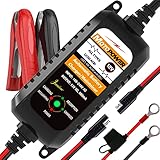
3. MOTOPOWER MP00205A 12V 800mA Automatic Battery Charger, Maintainer, Trickle and Desulfator
Overview:
The MOTOPOWER MP00205A is a compact, ETL-certified 800mA maintainer for 12V lead-acid batteries (flooded, AGM, Gel). It emphasizes safety, automatic desulfation, and energy efficiency for seasonal vehicles like motorcycles or lawn mowers.
What Makes It Stand Out:
Its standout traits include ETL/UL safety certification, a unique 24-hour timer that auto-switches to maintenance mode at 14.4V, and zero standby drain. The automatic desulfation via pulse technology operates without user input, and spark-proof connections enhance safety during setup.
Value for Money:
Priced affordably, it offers exceptional safety compliance and energy efficiency for light-duty use. While slower (800mA) than 1A+ rivals, the ETL certification and maintenance features provide solid value for infrequently used batteries under 40Ah.
Strengths and Weaknesses:
Strengths: Certified safety; auto-desulfation; zero standby drain; spark-proof; ideal for small batteries. Weaknesses: Slow charging speed; no LCD display; 12V-only (no 6V support); limited capacity for larger batteries.
Bottom Line:
A reliable, safety-focused choice for maintaining small 12V batteries on stored vehicles. Best for budget users prioritizing certification over speed—recommended for motorcycles or lawn equipment.
4. NOCO GENIUS2: 2A 6V/12V Smart Battery Charger – Automatic Maintainer, Trickle Charger & Desulfator with Overcharge Protection & Temperature Compensation – for Lead-Acid & Lithium Batteries

Overview:
The NOCO GENIUS2 upgrades its predecessor with 2A output for faster charging of 6V/12V lead-acid and lithium (LiFePO4) batteries. It retains core smart features like maintenance mode and desulfation but emphasizes enhanced power efficiency and climate adaptability.
What Makes It Stand Out:
Force Mode for zero-volt charging, precise temperature-compensated cycles, and 24-hour reconditioning set it apart. The “most powerful yet” claim (vs. GENIUS1) targets users needing quicker top-ups for larger batteries, while universal chemistry support maintains versatility.
Value for Money:
Priced higher than the GENIUS1, it’s justified for those requiring faster 2A charging without sacrificing lithium compatibility. Alternatives at this tier rarely match NOCO’s build quality or temperature intelligence, though budget users may prefer slower, cheaper options.
Strengths and Weaknesses:
Strengths: Faster 2A charging; superior temperature compensation; robust lithium support; compact durability; indefinite safe maintenance. Weaknesses: Premium cost; no display screen; marginal real-world speed gain over GENIUS1 for small batteries.
Bottom Line:
A refined, high-performance charger for demanding users with diverse batteries. Worth the upgrade for speed-sensitive applications—strongly recommended for marine/RV owners needing reliability.
5. [4-Pack]1.75-Amp Car Battery Charger, 6V and 12V Smart Fully Automatic Battery Charger Maintainer, Trickle Charger, Battery Desulfator for Car, Lawn Mower, Motorcycle, Boat, Marine Lead Acid Batteries
![[4-Pack]1.75-Amp Car Battery Charger, 6V and 12V Smart Fully Automatic Battery Charger Maintainer, Trickle Charger, Battery Desulfator for Car, Lawn Mower, Motorcycle, Boat, Marine Lead Acid Batteries](https://m.media-amazon.com/images/I/51rc2qpU9VL._SL160_.jpg)
Overview:
This NEXPEAK 4-pack delivers quadruple 1.75A chargers for 6V/12V lead-acid batteries, featuring LCD screens, 7-stage charging, and desulfation. Aimed at fleet owners or multi-vehicle households, it covers automotive, marine, and powersport applications.
What Makes It Stand Out:
The 4-pack bundle with individual LCD displays (showing voltage, current, and charge %) is unmatched in value. Its 7-stage cycle includes dedicated desulfation, and “Force Mode” for low-voltage batteries, while comprehensive safety protections enable true “set-and-forget” use.
Value for Money:
Exceptional value per unit—few competitors offer LCD screens in multi-packs at this price. Though lacking lithium support, the cost-per-charger undercuts single high-end units. Ideal for managing multiple lead-acid batteries without breaking the bank.
Strengths and Weaknesses:
Strengths: Affordable 4-pack; clear LCD monitoring; effective desulfation; versatile safety suite; long cables. Weaknesses: No lithium compatibility; 12.5V float voltage suboptimal for AGM; plastic build less durable than NOCO.
Bottom Line:
A practical, high-value solution for maintaining multiple lead-acid batteries. Highly recommended for garages with several vehicles—skip only if lithium support is essential.
6. NOCO GENIUS5: 5A 6V/12V Smart Battery Charger – Automatic Maintainer, Trickle Charger & Desulfator with Overcharge Protection & Temperature Compensation – for Lead-Acid & Lithium Batteries

Overview: The NOCO GENIUS5 is a premium, compact smart charger designed for both lead-acid and lithium (LiFePO4) batteries. It replaces older models with significantly higher power density, offering 5A output in a 34% smaller package. Targeted at automotive, marine, and powersport users, it functions as a charger, maintainer, trickle charger, and desulfator in one unit.
What Makes It Stand Out: Its standout features include universal compatibility (6V/12V, lead-acid types, and lithium), exceptional dead-battery recovery (charging from 1V or zero volts via Force Mode), and precise temperature-compensated charging. The ability to safely maintain batteries indefinitely without overcharging is a key differentiator for seasonal or infrequently used vehicles.
Value for Money: Priced higher than basic chargers, the GENIUS5 justifies its cost through versatility, robust build quality, and advanced lithium support. It outperforms similarly priced competitors in power output and dead-battery recovery, making it a worthwhile investment for owners of multiple vehicle types or high-value batteries.
Strengths and Weaknesses: Strengths: Excellent multi-chemistry support; compact yet powerful; superior desulfation and recovery modes; reliable temperature compensation; safe for indefinite connection. Weaknesses: Premium price point; lacks a detailed voltage/current display (status LEDs only); no included mounting hardware.
Bottom Line: Highly recommended for users needing a reliable, versatile, and powerful charger for critical or diverse batteries, especially those requiring lithium charging. Its robust feature set and build quality deliver exceptional long-term value despite the higher initial cost.
7. Battery Tender Plus 12V 1.25 AMP Car & Motorcycle Battery Charger and Maintainer, Float Charge for Automotive, and ATVs - Smarter Than a Trickle Charger

Overview: The Battery Tender Plus is a well-established 1.25A smart charger/maintainer focused on simplicity and reliability for 12V lead-acid batteries. Designed for cars, motorcycles, ATVs, and lawn equipment, it uses a 4-step charging program to optimize battery health and prevent sulfation during storage.
What Makes It Stand Out: Its hallmark is the intuitive two-color LED status indicator showing charge state and automatic restart if battery voltage drops under load. The included quick-disconnect harness significantly enhances convenience for permanent installation, and the industry-leading 10-year warranty inspires confidence in its durability.
Value for Money: Positioned as a mid-tier option, it offers excellent value for users prioritizing hassle-free maintenance over rapid charging or exotic battery support. The long warranty, lifetime support, and included cables (ring terminals, alligator clips, harness) make it a cost-effective, low-risk solution for basic maintenance needs.
Strengths and Weaknesses: Strengths: Extremely user-friendly; reliable 4-step charging; excellent quick-disconnect system; outstanding warranty and support; solid safety features. Weaknesses: Lower amperage (1.25A) means slower charging for larger batteries; limited to 12V lead-acid only (no 6V or lithium); basic status indication lacks detail.
Bottom Line: An ideal choice for casual users with standard 12V lead-acid batteries (cars, bikes, mowers) who value simplicity, proven reliability, and long-term peace of mind. Avoid if you need fast charging, multi-voltage support, or lithium compatibility.
8. Foval Automatic Trickle Battery Charger 12V 1000mA Smart Battery Charger
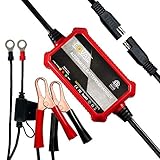
Overview: The Foval 1000mA charger is an ultra-compact, affordable smart maintainer designed for basic 12V lead-acid battery upkeep. It handles common types (AGM, Gel, Wet) for vehicles like motorcycles, lawn mowers, and boats, functioning as a trickle charger, maintainer, and desulfator with a standard 4-step program.
What Makes It Stand Out: Its standout feature is the remarkably small, phone-like size and lightweight design (10.5oz), making it highly portable. The included long cables (102 inches) with dual connector options (ring/alligator) and intuitive three-color LED indicators (power/charging/charged) enhance practicality for tight spaces or multiple vehicles.
Value for Money: Offering exceptional value at a low price point, it’s perfect for budget-conscious users needing reliable, set-and-forget maintenance for smaller batteries. The compact size and included accessories provide significant utility far exceeding its cost, especially for secondary or seasonal vehicles.
Strengths and Weaknesses: Strengths: Extremely compact and portable; affordable; good cable length and connector options; clear LED status; robust safety protections (reverse polarity, overload, temp); wide compatibility. Weaknesses: Very low amperage (1A) = slow charging; no voltage/current display; basic desulfation; plastic build feels less durable than premium options.
Bottom Line: Highly recommended as a cost-effective, space-saving maintainer for small to medium 12V lead-acid batteries where rapid charging isn’t critical. Ideal for motorcycles, lawnmowers, or as a spare charger, but avoid for large automotive batteries needing quick top-ups.
9. 1.75-Amp Car Battery Charger, 6V and 12V Smart Fully Automatic Battery Charger Maintainer, Trickle Charger, Battery Desulfator for Car, Lawn Mower, Motorcycle, Boat, Marine Lead Acid Batteries

Overview: This NEXPEAK charger is a versatile 1.75A smart unit supporting both 6V and 12V lead-acid batteries. It combines charging, maintenance, trickle charging, and desulfation in one device, featuring an LCD screen for detailed feedback, targeting car, boat, motorcycle, and lawn equipment owners.
What Makes It Stand Out: The clear digital LCD display showing real-time voltage, current, and charge percentage is a major advantage over LED-only competitors. Its advanced 7-stage charging program with dedicated pulse desulfation (“REPAIR” mode) and the ability to force 12V mode for weak batteries enhance its revival capabilities and user control.
Value for Money: Priced competitively in the mid-range, it delivers excellent value through the informative LCD screen, higher 1.75A output (faster than most maintainers), dual-voltage support, and a comprehensive 2-year warranty. The included long cables and connector options add practicality.
Strengths and Weaknesses: Strengths: Highly informative LCD display; effective 7-stage charging/repair; useful forced 12V mode; good 1.75A output speed; dual-voltage (6V/12V); robust safety suite; strong warranty. Weaknesses: Build quality feels less premium; LCD can be hard to read in direct sun; “REPAIR” mode effectiveness varies on severely sulfated batteries.
Bottom Line: A top recommendation for users who prioritize clear charging data and faster maintenance cycles across 6V/12V systems. The LCD and repair features make it particularly valuable for reviving neglected batteries, justifying its price for hands-on owners.
10. [4-Pack] FOVAL Fully Automatic Trickle Battery Charger, 1000mA 12V Smart Car Battery Charger, Battery Maintainer, Float Charger for Motorcycle Car Lawn Mower Boat ATV Cell Lead Acid Batteries
![[4-Pack] FOVAL Fully Automatic Trickle Battery Charger, 1000mA 12V Smart Car Battery Charger, Battery Maintainer, Float Charger for Motorcycle Car Lawn Mower Boat ATV Cell Lead Acid Batteries](https://m.media-amazon.com/images/I/51z7cL3OlrL._SL160_.jpg)
Overview: This FOVAL offering is a cost-effective 4-pack of identical 1000mA (1A) smart battery maintainers. Designed for 12V lead-acid batteries (AGM, Gel, Wet), each unit provides trickle charging, maintenance, and desulfation with a standard 4-step program, targeting users with multiple vehicles.
What Makes It Stand Out: The primary differentiator is the bulk 4-pack value, ideal for households with several vehicles (cars, motorcycles, boats, mowers) or workshops. Each unit retains the core FOVAL strengths: ultra-compact size, long cables (102 inches), dual connector options, intuitive 3-color LEDs, and comprehensive safety protections in a highly portable form factor.
Value for Money: Exceptional value per unit when maintaining multiple batteries. Buying individually would cost significantly more; this pack delivers essential smart charging functionality for numerous applications at a minimal per-unit cost, making dedicated maintenance economically feasible for every vehicle.
Strengths and Weaknesses: Strengths: Unbeatable value for multi-vehicle households/workshops; extreme portability; consistent performance; long cables & connector versatility; clear LED status; robust safety. Weaknesses: Very low 1A output = slow charging; no displays or diagnostics; basic desulfation; build quality is functional but not premium; 12V only (no 6V/lithium).
Bottom Line: The definitive recommendation for users needing reliable, affordable maintenance for multiple 12V lead-acid batteries. While each unit is basic, the pack solves the “one charger for many vehicles” problem perfectly, offering essential smart charging at an unbeatable per-unit price.
Understanding Trickle Chargers: Your Vehicle’s Silent Guardian
What Exactly is a Trickle Charger and Why It’s Non-Negotiable
A trickle charger isn’t just another car accessory—it’s a precision power regulator designed to counteract natural battery discharge. Unlike jump starters that revive dead batteries in emergencies, trickle chargers operate at low amperage (typically 1-2 amps) to maintain optimal charge levels during storage or infrequent use. They continuously monitor voltage, delivering just enough current to offset parasitic drain from your car’s electronics. For everyday owners, this means no more guessing if your weekend grocery-getter will start after sitting idle for days. It’s preventive maintenance that pays dividends in reliability, especially as modern batteries become more sensitive to deep discharges.
How Trickle Chargers Outperform Standard Chargers for Daily Drivers
Standard chargers often push high amperage to recharge quickly, which can overheat batteries or cause gassing—damaging lead-acid cells over time. Trickle chargers avoid this by prioritizing longevity over speed. They use microprocessors to switch between maintenance, desulfation, and float modes, adapting to your battery’s real-time needs. For commuters with secondary vehicles or seasonal cars, this gentle approach prevents sulfation (crystal buildup that permanently reduces capacity). The key difference? Standard chargers are like sprinters; trickle chargers are marathon runners built for endurance. This makes them ideal for the “set and forget” lifestyle of modern car owners who value hassle-free ownership.
The Hidden Cost of Ignoring Battery Maintenance
Skipping consistent battery care might seem harmless short-term, but it carries hidden financial risks. A single deep discharge can slash a $150 battery’s lifespan by 50%, forcing premature replacement. Worse, modern vehicles with start-stop technology or advanced infotainment systems suffer electronic glitches when voltage dips—triggering costly dealer diagnostics. Trickle chargers eliminate these surprises by preserving voltage above critical thresholds (12.4V for standard lead-acid). Over two years, the $60 investment pays for itself by avoiding one battery replacement or tow service. It’s not an expense; it’s insurance against the cascading costs of neglect.
Essential Features to Prioritize Under $60
Amperage Balance: Why Less Is More for Long-Term Health
While high-amperage chargers promise rapid recharges, they’re counterproductive for maintenance. For everyday trickle applications, 1-2 amps is the sweet spot: enough to counteract drain without stressing the battery. Models exceeding 2.5 amps risk “over-trickling,” causing electrolyte loss in flooded batteries. Budget units under $60 now include auto-sensing tech that adjusts output based on battery condition—critical for drivers who might forget to disconnect after full charge. Prioritize chargers advertising “smart multi-stage charging” over raw amperage numbers; this ensures gentle sulfation recovery and extended battery cycles.
Non-Negotiable Safety Protocols Every Budget Model Must Include
Affordable doesn’t mean cutting corners on safety. Look for units with reverse polarity protection (prevents damage if clamps touch wrong terminals), spark-proof connections, and overcharge prevention. Thermal shutdown is equally vital—cheap chargers without heat sensors can overheat in garages exceeding 90°F, melting components. UL or ETL certification verifies independent safety testing, a non-negotiable for devices left unattended for weeks. Avoid models relying solely on “automatic shutoff” claims; true safety integrates multiple hardware failsafes, not just software timers that can malfunction.
Universal Compatibility for Modern and Vintage Vehicles
Today’s budget chargers must handle diverse battery types: standard lead-acid (wet cell), AGM (common in SUVs/trucks), and gel-cell (used in classics). Verify the charger explicitly supports all three—some sub-$60 units only work with flooded batteries, risking damage to sealed AGM types. Also, check voltage compatibility: 6V settings are essential for older motorcycles or farm equipment, while 12V covers 95% of cars. Smart chargers auto-detect battery type, but budget models often require manual selection; ensure the interface is intuitive enough for non-technical users to avoid mismatches.
Portability and Weather Resistance for Real-World Use
Your charger should survive where you park. Compact designs (under 1 lb) with integrated clamp holders won’t clutter glove compartments. Crucially, verify IP ratings: IP65 signifies dust/water resistance for outdoor use in rain or snow—vital for uncovered driveways. Avoid units with flimsy alligator clips; spring-loaded, insulated jaws stay securely attached during vibrations. Bonus points for coiled cables (reducing tangles) and LED indicators visible in daylight. For apartment dwellers without garages, these features transform a charger from a workshop tool into a practical everyday companion.
Smart Shopping Strategies for Maximum Value
Decoding Marketing Hype vs. Genuine Performance
Budget chargers often flaunt “fast charge” claims irrelevant to trickle use—ignore these. Focus on descriptive terms like “desulfation mode” (reverses crystal damage) or “pulse technology” (maintains charge without gassing). Be wary of “multi-voltage” listings; many cheap units only support 12V despite claiming 6V/24V. Check if “automatic” includes temperature compensation (adjusts charge rate based on ambient temp)—a hallmark of quality trickle tech. User reviews mentioning “left it connected for 3 months” are more telling than specs alone; longevity in real-world use trumps theoretical features.
The Warranty Trap: What 1-Year Coverage Really Means
A warranty is only as good as the support behind it. Some $60 chargers offer 2-year coverage but require shipping to overseas service centers—a $25 hassle negating savings. Prioritize brands with North American service hubs and clear return policies. Also, note exclusions: warranties voided for “improper use” often cover minimal scenarios. True confidence comes from companies offering no-questions replacements for defects. Investigate how easily replacement parts (like fuse kits) are sourced; if unavailable, the charger becomes landfill waste after minor failures.
Future-Proofing Your Purchase for Evolving Needs
Your current sedan might not need 6V support, but what about future classic car projects? Choose chargers with expandable capabilities—some under $60 include ports for direct battery terminal adapters (sold separately), avoiding exposed clamps in tight engine bays. Also, consider if the unit can scale: models with “boost mode” (brief high-amp surges) double as emergency starters for minor discharges. While not replacements for jump packs, this feature adds resilience. Finally, verify firmware update options; rare in budget gear but invaluable if manufacturers refine charging algorithms post-purchase.
Hidden Costs That Inflate Your “Budget” Charger
That $45 charger might cost $20 more if it lacks essential accessories. Check if it includes eyelet connectors for permanent installation (saves fumbling with clamps monthly) or a cigarette lighter cable for trunk storage. Units requiring proprietary fuses force expensive replacements; standard automotive fuses are universally affordable. Also, consider energy consumption: inefficient chargers sipping 5W constantly add $3/year to electricity bills—trivial, but revealing of build quality. True budget value accounts for total ownership costs, not just the sticker price.
Optimizing Usage for Everyday Scenarios
Preserving Secondary Vehicles During Work Commutes
For owners with a daily driver plus a weekend cruiser, trickle chargers prevent the “I haven’t driven it in weeks” dilemma. Connect the charger before parking the secondary car, letting it run in float mode indefinitely. Crucially, position clamps away from moving engine parts—use hood insulation hooks if available. For vehicles stored in unheated garages, prioritize chargers with cold-weather modes that increase voltage slightly below 40°F to offset reduced chemical activity. This simple routine ensures spontaneous adventures never end with a dead battery.
Defeating Seasonal Storage Headaches for Snowbirds and Classic Owners
Winterizing a car or storing it during snowbird migrations demands proactive care. Before storage, fully charge the battery (using the charger’s “recovery mode” if sulfated), then connect the trickle unit in a dry, ventilated space away from fuel sources. For classics with non-sealed batteries, top up electrolyte levels first—trickle chargers prevent discharge but won’t fix low fluid. In humid climates, add silica gel packs near the battery to absorb moisture. Check voltage monthly; if it drops below 12.2V, the charger may need servicing—a sign your battery is nearing end-of-life.
Vacation-Proofing Your Primary Vehicle
Leaving your main car idle for a week-long trip invites trouble, especially with modern “always-on” electronics. Two days before departure, connect your trickle charger to a garage outlet. Smart models enter storage mode automatically, maintaining 13.2V without overcharging. For street parkers without garage access, use a weatherproof outdoor-rated extension cord (never indoor-only cords) and secure clamps with zip ties to prevent theft or dislodging. This $0.50 electricity investment spares you $100+ in jump-start fees—and the stress of returning to a dead car after vacation.
Emergency Preparedness Beyond Basic Maintenance
Your trickle charger can be a lifeline during grid outages. Some budget units double as emergency power banks via USB ports—useful for charging phones when stranded. More critically, if your battery dips below 12V from leaving lights on, many smart chargers include a “recovery cycle” to revive shallowly discharged cells overnight, avoiding immediate jump-starts. While not replacements for dedicated jump starters, this feature adds a safety buffer for forgetful moments. Always store the charger plugged in but disconnected from the battery when not in active use to preserve its internal components.
Installation and Longevity Best Practices
Foolproof Connection Sequence for New Users
Even veterans occasionally reverse clamps. Follow this sequence: 1) Turn charger OFF, 2) Attach RED clamp to battery’s POSITIVE (+) terminal, 3) Attach BLACK clamp to NEGATIVE (-) terminal or unpainted engine metal (reduces spark risk near battery), 4) Plug charger into outlet, 5) Turn charger ON. For permanent installations, bolt eyelet connectors directly to terminals—never rely solely on alligator clamps for long-term use. Always disconnect in reverse order (power off first) to prevent electrical surges. This ritual takes 30 seconds but prevents 90% of user errors.
Avoiding the Top 3 User Mistakes That Kill Chargers
Overheating is the silent killer: never drape chargers over batteries or enclose them in insulated bags, blocking ventilation. Second, skipping terminal cleaning—corrosion increases resistance, causing false voltage readings and incomplete charging. Remove clamps monthly; scrub terminals with a baking soda/water mix. Third, using chargers beyond their duty cycle: budget units aren’t designed for continuous 24/7 use in extreme heat. Rotate units if storing multiple vehicles, or choose models rated for “indefinite float use” (check specs). These habits extend charger life from 18 months to 5+ years.
Seasonal Maintenance Routines for Peak Performance
Every spring and fall, perform these checks: 1) Inspect cables for fraying (replace if exposed wires show), 2) Test clamps’ spring tension—they should grip firmly without slipping, 3) Wipe vents clean with a soft brush to prevent dust clogs, 4) Verify LED indicators respond correctly during charge cycles. Before winter, ensure the unit operates below 32°F by testing in a freezer (briefly!). For AGM batteries, confirm the charger switches to lower voltage settings (13.8V vs. 14.4V for flooded)—mismatched settings accelerate aging. Ten minutes twice a year preserves years of service.
Troubleshooting Common Issues Without Panic
If your charger won’t power on, first check the outlet with another device—many forget tripped GFCI breakers. No LED lights? Replace the inline fuse (usually under a cap near the plug). If the battery isn’t charging, ensure clamps contact bare metal (remove paint/corrosion) and verify terminals aren’t loose. False “full charge” readings often mean sulfation; switch the charger to desulfation mode for 48 hours. For persistent issues, disconnect immediately—never ignore burning smells or excessive heat. Most problems stem from user error or battery failure, not charger defects; understanding this prevents unnecessary replacements.
Frequently Asked Questions
Is a trickle charger safe to leave connected for months?
Yes, modern smart trickle chargers under $60 include automatic float mode that maintains optimal voltage without overcharging. Always confirm your model specifies “indefinite use” in its manual, and ensure it’s placed in a well-ventilated area away from flammable materials.
Can I use a budget trickle charger on my motorcycle battery?
Absolutely, provided it supports 6V settings and your battery type (often AGM in modern bikes). Use lower amperage (0.8-1A) to avoid stressing small batteries, and secure clamps away from moving parts.
Why does my charger show “full” but my car still won’t start?
This usually indicates battery failure, not charger issues. Test voltage with a multimeter—if below 12.4V when disconnected, the battery can’t hold charge. Chargers measure surface voltage; a dying battery may show temporary charge without real capacity.
Do trickle chargers work with stop-start vehicles?
Yes, but only if explicitly compatible with AGM or EFB batteries (common in these cars). Verify the charger has specific AGM mode—standard lead-acid settings can undercharge or overcharge these sensitive batteries.
How often should I clean battery terminals with a trickle charger connected?
Disconnect the charger first! Clean terminals every 3 months using a baking soda paste and wire brush. Reconnect clamps only after terminals are dry to prevent short circuits.
Can extreme cold damage my trickle charger?
Most budget units operate safely down to -4°F, but charging efficiency drops below 32°F. Choose models with temperature compensation, which slightly increases voltage in cold weather to maintain effectiveness.
Will a $60 trickle charger revive a completely dead battery?
Possibly, but not guaranteed. Chargers under $60 often lack the sustained high amperage for severely depleted batteries (below 10V). Use “recovery mode” for 24-48 hours, but if unsuccessful, a jump start may be needed first.
Are waterproof trickle chargers worth the extra cost?
For uncovered parking or humid climates, yes. Look for IP65 rating (resists rain/snow)—it prevents corrosion from moisture ingress, a common failure point in budget units left outdoors.
Can I plug a trickle charger into an extension cord?
Only with outdoor-rated cords (16-gauge minimum) and never coiled. Avoid indoor cords, which overheat. Keep cords straight and protected from vehicle movement to prevent tripping hazards.
How do I know when it’s time to replace my trickle charger?
Replace if: 1) Cables are frayed or cracked, 2) LEDs malfunction inconsistently, 3) It fails to maintain charge after verifying battery health, or 4) It emits burning smells. Most last 3-5 years with proper care.
See Also
- 10 Best Car Battery Chargers for First-Time Car Owners in 2026
- 10 Best Battery Chargers for Classic Car Owners in 2026
- 10 Game-Changing Dual Bank Battery Chargers for RV Owners in 2026
- 10 Affordable Trickle Chargers That Don’t Sacrifice Quality in 2026
- Top 10 Best Car Battery Chargers for Cold Weather Starting in 2026