Table of Contents
Ever woken up to a silent engine on a frosty morning, desperately wishing you hadn’t left the interior lights on? That sinking feeling of a dead battery is more than just an inconvenience—it’s a modern mobility crisis. Today’s vehicles are packed with sophisticated electronics, from infotainment systems to advanced driver-assistance features, all drawing power even when the engine’s off. A single oversight can leave you stranded, turning a routine commute into a stressful ordeal requiring costly jump-starts or towing. The truth is, relying solely on your alternator to maintain battery health is a gamble, especially with shorter trips becoming the norm and extreme weather testing electrical systems like never before.
Investing in the right battery charging solution isn’t just about emergency recovery; it’s about proactive ownership and extending the life of a critical, expensive component. Modern chargers have evolved far beyond simple trickle chargers, offering intelligent algorithms, multiple safety protocols, and features designed for specific battery types and user needs. With the market flooded with options boasting confusing specs and marketing jargon, choosing wisely requires understanding what truly matters for your vehicle and lifestyle. Forget fleeting “best of” lists—this guide cuts through the noise, focusing on the essential features, technologies, and practical considerations you need to make a confident, future-proof decision that keeps you reliably on the road.
Top 10 Car Battery Chargers
Detailed Product Reviews
1. NOCO GENIUS1: 1A 6V/12V Smart Battery Charger – Automatic Maintainer, Trickle Charger & Desulfator with Overcharge Protection & Temperature Compensation – for Lead-Acid & Lithium Batteries

Overview: The NOCO GENIUS1 is a compact, intelligent 1A charger designed for 6V/12V lead-acid and lithium (LiFePO4) batteries. It combines charging, maintenance, trickle charging, and desulfation in one unit, targeting automotive, marine, and powersport applications. Its small footprint and focus on safety make it ideal for long-term storage or seasonal use.
What Makes It Stand Out: Its standout feature is the ability to revive deeply discharged batteries (down to 1V) via Force Mode, coupled with precise temperature-compensated charging. Unlike basic maintainers, it dynamically adjusts voltage based on ambient conditions and supports both traditional lead-acid and modern lithium batteries—rare in this price tier. The 35% smaller size than predecessors enhances portability.
Value for Money: Priced mid-range, it outperforms cheaper trickle chargers with its multi-chemistry support and desulfation capability. While less powerful than high-amp units, its niche is maintenance and recovery—not rapid charging—making it a cost-effective solution for preventing battery failure over months.
Strengths and Weaknesses: Strengths: Exceptional safety (overcharge/thermal protection), lithium compatibility, dead-battery recovery, and indefinite maintenance. Weaknesses: Low 1A output slows charging for large batteries; lacks a display for real-time diagnostics.
Bottom Line: A top-tier maintainer for longevity-focused users. Ideal for seasonal vehicles or backup power systems, though not suited for quick top-ups. Highly recommended for its reliability and versatility across battery types.
2. YONHAN Battery Charger 20A 12V/24V LiFePO4 Lead Acid Fully Automatic Battery Maintainer, Car Battery Trickle Charger Automotive w/Repair, Winter Mode, for AGM, STD, Gel, Deep Cycle Batteries

Overview: The YONHAN 20A is a high-speed, fully automatic charger for 12V/24V lead-acid and LiFePO4 batteries. With 7-stage charging, it targets rapid charging, maintenance, and battery repair for vehicles ranging from cars to boats. Its emphasis on speed and seasonal adaptability caters to users needing efficient, year-round solutions.
What Makes It Stand Out: The 20A output (10A for 24V) enables significantly faster charging than 6A/10A competitors. Winter/Summer modes auto-adjust charging voltage for temperature extremes, while its pulse-based repair mode revives sulfated batteries. The extra-large LCD provides clear real-time data (voltage, current, temp), even in sunlight.
Value for Money: Excellent value for heavy-duty use, outpacing slower chargers in time-sensitive scenarios. Safety features (reverse polarity, short-circuit protection) justify its price, though budget users might find it overpowered for small engines. Note: Not a jump starter—requires outlet power.
Strengths and Weaknesses: Strengths: Blazing-fast charging, robust repair mode, intuitive LCD, and dual-voltage support. Weaknesses: Cannot revive batteries below 0.3V; incompatible with non-LiFePO4 lithium; not for permanent installation.
Bottom Line: A powerhouse for fleet owners or winterizing large vehicles. Prioritize it for speed and repair capabilities, but confirm battery compatibility first. Avoid for tiny batteries or lithium types beyond LiFePO4.
3. YONHAN Battery Charger 10-Amp 12V and 24V Fully-Automatic Smart Car Battery Charger, Battery Maintainer Trickle Charger, and Battery Desulfator with Temperature Compensation

Overview: This compact YONHAN 10A charger offers a balanced solution for 12V/24V lead-acid batteries (AGM, Gel, Flooded). It functions as a charger, maintainer, trickle charger, and desulfator, targeting everyday users with cars, motorcycles, or lawn equipment. Its focus is on safety and precision in varied climates.
What Makes It Stand Out: Winter/Summer modes adjust charging to prevent cold-weather undercharging or heat-related overcharging. The backlit LCD clearly displays voltage, current, and temperature, while temperature compensation ensures optimal charging. The repair mode uses pulse technology to extend battery life—ideal for reviving neglected units.
Value for Money: A solid mid-range option, undercutting premium brands while matching core features. Its 10A speed suits most passenger vehicles, though larger trucks may prefer the 20A model. Safety protections (reverse polarity, short-circuit) enhance reliability for the price.
Strengths and Weaknesses: Strengths: User-friendly LCD, effective repair mode, temperature adaptation, and compact size. Weaknesses: Repair mode fails on dead/damaged batteries; no lithium support; weak clamps may cause connection issues.
Bottom Line: A reliable, affordable maintainer for casual users. Best for routine upkeep and winter storage, but skip if you need lithium charging or ultra-fast amps.
4. Schumacher Electric 6A Car Battery Charger and 100A Engine Starter, 5-in-1 Solution, Maintainer, 30A Boost, for 6V/12V Power Sport, Automotive, and Marine Batteries, SC1281

Overview: The Schumacher SC1281 is a versatile 5-in-1 unit combining charging, jump-starting, maintenance, testing, and reconditioning. With 100A engine-start capability and 6A charging, it targets workshops or users needing emergency power for 6V/12V lead-acid batteries in cars, boats, or motorcycles.
What Makes It Stand Out: Its engine-start function (100A peak) sets it apart from pure chargers, eliminating the need for a separate jump starter. The reconditioning mode desulfates batteries to restore capacity, while multi-stage charging ensures safe, full charging across battery types (AGM, gel, flooded).
Value for Money: Justifies its cost as an all-in-one garage tool. The jump-start feature alone saves buying a dedicated booster, and 6A charging handles most passenger vehicles efficiently. Durability makes it a long-term investment versus disposable jump packs.
Strengths and Weaknesses: Strengths: Integrated jump-starting, battery testing, reconditioning, and broad compatibility. Weaknesses: Bulky for portability; no lithium support; requires AC power (not portable like jump boxes).
Bottom Line: A workshop essential for mechanics or DIYers wanting one tool for charging, starting, and battery revival. Skip if you prioritize portability or own lithium batteries.
5. NOCO Boost GB40: 1000A UltraSafe Jump Starter – 12V Lithium Battery Booster Pack, Portable Jump Box, Power Bank & Jumper Cables - for 6.0L Gas and 3.0L Diesel Engines
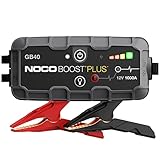
Overview: The NOCO Boost GB40 is a portable lithium jump starter (not a charger) designed to revive dead 12V automotive batteries. With 1000A peak power, it starts gas (6.0L) and diesel (3.0L) engines, doubling as a power bank and emergency light—ideal for glove-box storage.
What Makes It Stand Out: UltraSafe tech prevents sparks and reverse-polarity damage, making it foolproof for novices. Its compact size (2.5 lbs), integrated 100-lumen LED flashlight (7 modes), and 20-starts-per-charge capacity outshine bulkier alternatives. The 3-hour recharge time ensures quick readiness.
Value for Money: Priced as a premium safety device, it’s unmatched for portability and emergency reliability. Cheaper jump starters lack its safety features or power density, while adding USB power bank functionality enhances utility beyond jumps.
Strengths and Weaknesses: Strengths: Spark-proof safety, extreme portability, multi-use (jumper/power bank/light). Weaknesses: Not a maintainer—won’t prevent dead batteries; limited to 12V systems; no desulfation.
Bottom Line: A must-have emergency tool for every vehicle. Prioritize it for peace of mind on the road, but pair with a maintainer (like NOCO GENIUS1) for long-term battery health.
6. NOCO GENIUS10: 10A 6V/12V Smart Battery Charger – Automatic Maintainer, Trickle Charger & Desulfator with Overcharge Protection & Temperature Compensation – for Lead-Acid & Lithium Batteries

Overview: The NOCO GENIUS10 is a compact, versatile smart charger designed for 6V/12V lead-acid and lithium (LiFePO4) batteries, serving as a charger, maintainer, trickle charger, and desulfator in one unit. Its precision engineering targets automotive, marine, and powersport applications.
What Makes It Stand Out: Its standout features include charging dead batteries as low as 1V (or 0V via Force Mode), integrated thermal sensors for automatic temperature compensation, and indefinite safe maintenance without overcharging. The 17% smaller footprint and 115% more power than predecessors enhance portability and efficiency.
Value for Money: Priced mid-to-high range, it justifies cost through exceptional durability, multi-chemistry support (including lithium), and advanced recovery tech. It outperforms budget alternatives lacking temperature compensation or dead-battery revival, making it ideal for frequent users needing reliability.
Strengths and Weaknesses:
Strengths: Unmatched dead-battery recovery; seamless year-round temperature adaptation; safe indefinite connection; broad compatibility (AGM, Gel, LiFePO4).
Weaknesses: Premium pricing; no LCD display for real-time metrics; limited to 10A (slower for large batteries).
Bottom Line: A top-tier investment for professionals or enthusiasts with diverse battery needs, offering unmatched recovery and maintenance safety. Highly recommended despite the cost, especially for critical or seasonal vehicles.
7. Battery Charger 10A 12V Fully Automatic Smart Car Battery Charger with LCD Display & Temperature Compensation for Car Motorcycle Vans

Overview: This 10A 12V smart charger supports lead-acid and LiFePO4 batteries, functioning as a charger, maintainer, and trickle charger for cars, motorcycles, and boats. Its user-friendly LCD display provides real-time charging data.
What Makes It Stand Out: The vibrant LCD screen shows voltage, current, battery level, and seasonal modes (summer/winter), while 5 manual modes (including PULSE for desulfation) and 8-layer safety protections enhance control. Plug-and-play automation simplifies operation.
Value for Money: Competitively priced, it delivers excellent bang for buck with its LCD clarity, pulse repair, and multi-protection suite. Beats basic chargers by offering granular insights and safer maintenance, though NOCO models offer superior dead-battery recovery.
Strengths and Weaknesses:
Strengths: Clear LCD metrics; versatile 5-mode selection; robust safety features; effective pulse desulfation.
Weaknesses: Max 12-hour unattended use (less convenient than NOCO); no 6V support; manual mode required for optimal lithium charging.
Bottom Line: A solid, affordable choice for DIYers wanting visibility and safety. Ideal for routine maintenance but not deep-discharge recovery. Recommended for casual users prioritizing ease of use over advanced revival tech.
8. NOCO GENIUS5: 5A 6V/12V Smart Battery Charger – Automatic Maintainer, Trickle Charger & Desulfator with Overcharge Protection & Temperature Compensation – for Lead-Acid & Lithium Batteries

Overview: The compact NOCO GENIUS5 is a 5A smart charger for 6V/12V lead-acid and lithium batteries, combining charging, maintenance, and desulfation in a streamlined design for cars, motorcycles, and marine use.
What Makes It Stand Out: Like its GENIUS10 sibling, it revives batteries down to 1V (or 0V via Force Mode), uses thermal sensors for climate-adaptive charging, and allows indefinite safe connection. Its 34% smaller size and 65% more power than older models boost portability.
Value for Money: Priced below the GENIUS10, it’s perfect for smaller batteries (e.g., motorcycles, lawnmowers). While slower for large automotive batteries, its reliability and lithium support offer better long-term value than generic 5A chargers.
Strengths and Weaknesses:
Strengths: Safe indefinite maintenance; excellent dead-battery recovery; temperature compensation; broad chemistry compatibility.
Weaknesses: 5A output limits speed for large batteries; no display; higher cost than entry-level 5A units.
Bottom Line: The best 5A option for users needing NOCO’s trusted recovery tech in a portable package. Highly recommended for powersport or seasonal vehicle owners, though oversold for trucks/SUVs.
9. NEXPEAK 15A Battery Charger, Trickle Charger 12V/24V Car Battery Charger 9-Stage Smart LiFePO4 Charger Battery Maintainer w/Overcharge Protection Pulse Repair for Car Truck Motorcycle Lawn Mower

Overview: The NEXPEAK 15A charger handles 12V/24V lead-acid and LiFePO4 batteries with a 9-stage process, targeting cars, trucks, boats, and lawn equipment. Its color LCD and extended cable enhance usability.
What Makes It Stand Out: Dual-voltage (12V/24V) support and 15A speed are rare at this price. The large color LCD displays charge percentage and temperature, while 1.75A trickle mode and pulse repair extend battery life. The 8.9ft cable adds convenience.
Value for Money: Excellent value for heavy-duty use, outpacing 10A rivals in speed. The 24V capability justifies cost for truck/RV owners, though NOCO offers better dead-battery revival. Ideal for those needing fast, versatile charging without premium pricing.
Strengths and Weaknesses:
Strengths: 24V support; rapid 15A charging; intuitive color screen; effective pulse repair; long cable.
Weaknesses: Can’t revive 0V batteries; 24V mode limited to 8A; winter/summer modes less refined than NOCO’s.
Bottom Line: A powerhouse for trucks or frequent users wanting speed and 24V flexibility. Recommended over single-voltage chargers, but avoid for severely depleted batteries.
10. TowerTop 2/10/25 Amp 12V Smart Car Battery Charger, Fully Automatic Battery Maintainer with Engine Start, Auto Desulfator, Battery Repair, Winter Mode, for AGM, STD, Gel, Deep Cycle Batteries

Overview: TowerTop’s adjustable charger delivers 2A/10A/25A outputs for 12V batteries, featuring automatic desulfation, engine start simulation, and 8-stage charging for cars, boats, and deep-cycle applications.
What Makes It Stand Out: The 25A max output charges large batteries rapidly (e.g., 100Ah in 3.5 hours), while independent desulfation/repair buttons and “engine start” simulation revive stubborn batteries. The HD LCD shows all 8 charging stages clearly.
Value for Money: High value for garage owners needing speed and versatility. The 25A mode saves hours versus 10A chargers, and repair functions reduce battery replacement costs. Cheaper than professional-grade units but lacks NOCO’s safety for indefinite use.
Strengths and Weaknesses:
Strengths: Blazing 25A speed; manual repair modes; detailed LCD stage tracking; energy-efficient pulse maintenance.
Weaknesses: No 6V/24V support; can’t revive 0V batteries; complex interface for beginners.
Bottom Line: A speed-focused workhorse for workshops or large-battery owners. Recommended for time-sensitive charging, but choose NOCO for set-and-forget reliability.
Understanding Modern Battery Charging Technology
How Smart Chargers Differ from Basic Models
Gone are the days when a charger simply pumped electricity into a battery. Modern “smart” chargers employ multi-stage charging profiles, dynamically adjusting voltage and current based on the battery’s real-time condition. They start with a soft initialization to assess health, move into bulk charging for rapid energy transfer, transition to absorption for near-full capacity, and finally enter a float or maintenance stage to keep the battery topped up without overcharging. This intelligence protects both the charger and your battery, preventing damage from sulfation or gassing.
The Critical Role of Microprocessor Control
At the heart of every reliable modern charger is a dedicated microprocessor. This tiny brain constantly monitors voltage, temperature, and current flow, making microsecond adjustments to the charging process. It’s what enables features like automatic desulfation modes to revive mildly degraded batteries or the ability to safely switch between lead-acid, AGM, and gel chemistries with the push of a button. Without this level of control, you risk undercharging (leaving your battery vulnerable) or dangerous overcharging (causing leaks, heat, or even explosions).
Deciphering Charging Stages and Their Purpose
Understanding the stages isn’t just technical trivia—it directly impacts battery longevity. The initial bulk stage restores ~80% of capacity quickly but safely. The absorption stage carefully tops up the remaining 20% at a controlled rate to avoid stressing the plates. Finally, the maintenance/float stage provides just enough power to counteract self-discharge during storage, keeping your battery at 100% readiness for months. Some advanced units add a reconditioning stage specifically targeting sulfate crystals that build up during discharge.
Essential Features to Prioritize for Your Needs
Matching Charger Output to Your Battery Size
Wattage and amperage aren’t interchangeable specs. Higher amperage (e.g., 10A vs. 2A) means faster charging for larger batteries (like those in trucks or SUVs), but it’s overkill—and potentially risky—for smaller motorcycle or lawnmower batteries. Always check your battery’s Cold Cranking Amps (CCA) or Amp-Hour (Ah) rating. A good rule of thumb: the charger’s amp rating should be roughly 10-25% of the battery’s Ah capacity for safe, optimal charging without thermal stress.
Compatibility Across Battery Chemistries
Your vehicle likely uses a standard flooded lead-acid, AGM (Absorbent Glass Mat), or gel battery—each requiring subtly different charging voltages. Using a charger not designed for your specific chemistry can cause chronic undercharging (leading to sulfation) or catastrophic overcharging (boiling electrolyte, warping plates). Look for explicit, selectable settings for each type. AGM batteries, common in newer vehicles with start-stop technology, are particularly sensitive and require precise voltage control.
Safety Mechanisms Beyond Basic Overcharge Protection
While reverse polarity protection (preventing damage if you mix up clamps) is standard, prioritize chargers with comprehensive safeguards. These include spark-proof connections (critical near battery gases), short-circuit protection, over-temperature shutdown, and even protection against connecting to a dead short. Units with thermal runaway prevention actively monitor battery temperature and reduce output if things get too hot—a vital layer of defense for unattended charging.
Evaluating Design and Usability Factors
Portability and Physical Footprint Considerations
Will this live permanently in your garage, or do you need it for roadside emergencies? Compact, lightweight models (under 3 lbs) with foldable handles or carabiner clips are ideal for tossing in a trunk. For home use, a slightly bulkier unit might offer better heat dissipation and a clearer display. Consider cable length too—6-foot leads offer flexibility, but 10+ feet are invaluable for charging batteries stored away from outlets or in awkward engine bays.
Intuitive Interface and Clear Status Indicators
A confusing array of blinking LEDs or cryptic error codes defeats the purpose of “smart” tech. The best interfaces use color-coded lights (red=charging, green=complete, yellow=error) or simple digital readouts showing voltage, stage, and estimated time. Avoid units where you need the manual to interpret a flashing pattern. Real-time voltage display is a huge plus for diagnosing battery health issues beyond just charging.
Cable Quality and Clamp Design Durability
Flimsy, thin wires or cheap, easily bent clamps lead to frustration and unreliable connections. Look for thick-gauge cables (12-14 AWG is ideal for higher amps) with sturdy insulation. Heavy-duty, corrosion-resistant clamps with strong springs ensure a solid grip on terminals, even if they’re slightly dirty or corroded. Rubberized grips on the clamps themselves make handling safer and more comfortable.
Optimizing for Specific Usage Scenarios
Winter Charging and Cold Weather Performance
Cold temperatures drastically reduce a battery’s ability to accept a charge and increase its internal resistance. Chargers designed for winter use often feature a “winter mode” that slightly increases the charging voltage to compensate, ensuring effective charging even below freezing. Crucially, they must also have robust internal components rated for low-temperature operation—cheap units can simply shut down or malfunction in the cold.
Long-Term Storage and Maintenance Charging
If you own a classic car, seasonal vehicle, or boat, a maintenance charger (often called a “battery tender”) is non-negotiable. These deliver a tiny, precise trickle (often 0.5A-1.5A) just sufficient to counteract self-discharge without causing gassing or water loss. Look for models explicitly rated for indefinite “float” operation—some cheaper “trickle” chargers lack the smarts for true maintenance and can actually damage a battery left connected for months.
Emergency Roadside Recovery Capabilities
For trunk storage, prioritize compactness, spark-proof technology, and clear, foolproof instructions. Some portable units double as jump starters with built-in lithium power banks—ideal when you’re stranded with no other vehicle nearby. Ensure they have sufficient cranking amps (not just charging amps) for your engine size if this is a primary need, and always check the unit’s own charge status before relying on it.
Installation and Operational Best Practices
Correct Terminal Connection Sequence
Safety first: Always connect the charger to the battery before plugging it into the wall outlet. Attach the red (positive) clamp to the battery’s positive terminal first, then the black (negative) clamp to the battery’s negative terminal or a solid, unpainted metal point on the engine block (reducing spark risk near the battery). Reverse the order when disconnecting (unplug charger first, then remove clamps).
Interpreting Error Codes and Warning Lights
Don’t ignore those blinking lights! A solid red light might mean a bad connection, reverse polarity, or a shorted battery. A flashing yellow could indicate a frozen battery (don’t charge until thawed!) or excessive sulfation. Consult the manual before your emergency to understand what each signal means. Many errors are easily fixed (re-seating clamps), but some (like a “bad battery” code) save you from wasting time trying to revive a dead cell.
Preventing Common User Mistakes
Leaving a non-maintenance charger connected for weeks is a top cause of battery damage. Never use a charger not rated for your battery type. Avoid charging in enclosed, poorly ventilated spaces due to hydrogen gas emission risks. And crucially, never attempt to charge a visibly damaged, leaking, or frozen battery—this is a serious hazard. When in doubt, disconnect and seek professional help.
Maximizing Battery Lifespan with Proper Charging
The Sulfation Threat and How Chargers Combat It
Sulfation—crystals forming on lead plates during discharge—is the #1 killer of lead-acid batteries. If left discharged, these crystals harden, permanently reducing capacity. Many smart chargers include a dedicated desulfation mode that pulses higher voltage to break down soft sulfation. While not a magic fix for dead batteries, regular use of this feature during maintenance charging can significantly extend service life, especially for vehicles used infrequently.
Why Float Voltage Matters for Stored Batteries
During storage, batteries slowly self-discharge. A basic charger might top them up then shut off, letting the battery drift back into a discharged state (promoting sulfation). A true maintenance charger monitors voltage 24/7, applying tiny top-up charges only when needed to keep the battery at the precise “float” voltage (typically 13.2V-13.8V depending on chemistry). This gentle, constant care is why well-maintained stored batteries can last years longer.
The Impact of Charging Cycles on Longevity
Frequent deep discharges (draining below 50% capacity) drastically shorten battery life. Smart chargers help by ensuring your battery is always returned to a full state efficiently. For vehicles prone to shallow cycling (like daily commuters with stop-start tech), a maintenance charger compensates for the alternator’s inability to fully recharge during short trips, preventing the slow death by chronic undercharge.
Frequently Asked Questions
How long should I leave a car battery on a charger?
For a standard 12V lead-acid battery in a discharged state, a smart charger typically takes 4-12 hours to fully charge, depending on its amperage and the battery’s size/depth of discharge. Always follow the charger’s indicator lights—most automatically switch to maintenance mode when full, allowing indefinite connection if it’s a true maintenance charger. Never leave a basic non-smart charger connected unattended for extended periods.
Can a battery charger revive a completely dead battery?
It depends on “dead.” If the battery reads above 10.5 volts, a smart charger with a desulfation mode has a good chance. If it reads below 10 volts or shows no voltage, it likely has a dead cell and cannot be revived by any charger. Chargers cannot fix physical damage, internal shorts, or severely sulfated batteries beyond recovery.
Is it safe to leave a battery charger on overnight?
Yes, but only if you are using a modern, fully automatic smart charger specifically designed for maintenance/float charging. These units reduce output to a safe trickle once full. Older “trickle” chargers or basic chargers without automatic float mode can overcharge and damage the battery if left connected too long—never leave these unattended for hours.
What’s the difference between a battery maintainer and a charger?
A charger’s primary job is to restore a discharged battery to full capacity. A maintainer (or tender) is designed only for long-term storage—it delivers a tiny, precise current just sufficient to offset self-discharge, keeping a fully charged battery at 100% without overcharging. Many modern units combine both functions in one device.
Can I use the same charger for my car, motorcycle, and lawnmower?
Possibly, but check compatibility carefully. Most 12V chargers handle cars and motorcycles, but small lawnmower batteries (often 6V or very small 12V) may require a lower amperage setting (1-2A) to avoid damage. Ensure the charger has selectable amperage and settings for different battery types (flooded, AGM, gel) if you own various equipment.
Why does my charger show “bad battery” or an error code?
Common causes include: a loose or corroded terminal connection, reverse polarity (clamps on wrong terminals), a battery with a dead cell (voltage won’t rise), an excessively sulfated battery, or a frozen battery. Check connections first, ensure the battery isn’t frozen, and verify terminal polarity. If errors persist, the battery may be faulty.
Do I need a special charger for AGM batteries?
Yes, absolutely. AGM batteries require a higher charging voltage (typically 14.4V-14.8V) than standard flooded batteries (14.0V-14.4V) but are very sensitive to overvoltage. Using a charger not designed for AGM can cause excessive gassing, dry-out, and permanent capacity loss. Always select the correct AGM mode if your vehicle has this battery type.
Can charging a battery cause it to explode?
While rare with modern smart chargers and proper use, the risk exists primarily from hydrogen gas buildup during charging (especially with flooded batteries). Sparks near the battery (from poor connections or inserting the charger plug) can ignite this gas. Always charge in a well-ventilated area, connect clamps before plugging in, and avoid open flames. AGM and gel batteries are sealed and significantly reduce this risk.
How often should I charge a stored car battery?
For optimal longevity during storage (e.g., winter), connect a maintenance charger immediately after parking the vehicle. If not using a maintainer, check the battery voltage monthly; if it drops below 12.4 volts (50% charged), recharge it fully with a smart charger before reconnecting the maintainer or storing again.
Will a battery charger work if the car’s alternator is bad?
Yes, a battery charger operates independently of the vehicle’s alternator. It connects directly to the battery terminals to charge the battery itself. However, a faulty alternator won’t recharge the battery while driving, so the battery will discharge again once the engine is running, regardless of prior charging. The charger fixes the battery state, not the alternator problem.
See Also
- 10 Best Jump Starters After 6 Months of Testing in Extreme Conditions in 2026
- Top 10 Best Car Battery Chargers for Cold Weather Starting in 2026
- 10 Best Jump Starters After 6 Months of Real-World Testing in 2026
- 10 Premium Car Battery Chargers for Professional Auto Shops (Worth the Investment)
- 10 Essential Multi-Stage Battery Chargers Every Car Owner Needs in 2026