Table of Contents
Ever stared at that ominous check engine light flickering on your dashboard, heart sinking as you imagine the trip to the mechanic and the inevitable, eye-watering bill? You’re not alone. For countless car owners, that small yellow or orange symbol triggers instant anxiety, transforming a simple drive into a financial headache. The truth is, modern vehicles are incredibly complex computers on wheels, generating detailed fault codes for nearly every system. Understanding what that light actually means – instead of relying solely on a professional’s diagnosis – can save significant time, money, and frustration. This is where the power of a home diagnostic scanner shifts from a niche tool to an essential piece of garage equipment, putting actionable information directly into your hands.
Gone are the days when deciphering car trouble required specialized training or expensive dealership visits for basic code reading. Today’s advanced yet accessible diagnostic technology empowers the average DIYer to confidently tackle vehicle health checks. Imagine plugging in a simple device, getting a clear explanation of that mysterious warning light in plain English, and knowing whether it’s a quick fix you can handle yourself or a genuine issue requiring professional attention. This knowledge isn’t just convenient; it builds confidence, prevents being upsold on unnecessary repairs, and fosters a deeper connection with your vehicle. Choosing the right scanner for your specific needs and skill level is the crucial first step towards transforming from a passive car owner into an informed, proactive vehicle caretaker right in your own driveway.
Top 10 Car Diagnostic Scanners
Detailed Product Reviews
1. ANCEL AD310 Classic Enhanced Universal OBD II Scanner Car Engine Fault Code Reader CAN Diagnostic Scan Tool, Read and Clear Error Codes for 1996 or Newer OBD2 Protocol Vehicle (Black)
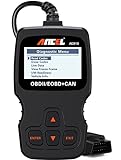
Overview: The ANCEL AD310 is a widely recommended, entry-level OBD2 scanner designed for DIYers to diagnose check engine lights. It reads and clears engine fault codes, displays live data, freeze frame data, and I/M readiness status for most 1996+ gasoline vehicles, drawing power directly from the OBD port. What Makes It Stand Out: Its reputation is bolstered by endorsements from mechanics like Scotty Kilmer. The AD310 supports all five OBDII protocols (including CAN), ensuring broad compatibility with domestic, European, and Asian vehicles. Its sturdy 2.5-foot cable, clear large screen, intuitive button layout, and compact, lightweight design enhance usability and durability in real-world garages. Value for Money: Priced affordably, it outperforms cheaper scanners that often lack full protocol support or build quality. While it doesn’t access ABS/SRS systems, it delivers core OBD2 functionality reliably. For basic check engine light diagnosis and code clearing, it offers exceptional value compared to similarly priced tools with narrower compatibility. Strengths and Weaknesses: Strengths: Full protocol support, robust build, easy operation, instant code reading/clearing, no batteries needed. Weaknesses: Limited to engine/emissions codes (no ABS/SRS), requires vehicle-specific compatibility checks, basic interface lacks advanced graphing. Bottom Line: An excellent, no-nonsense choice for beginners needing reliable, portable check engine light diagnosis. It delivers core functionality flawlessly at a fair price, making it a smart home-garage essential for straightforward OBD2 issues.
2. FOXWELL NT301 OBD2 Scanner Live Data Professional Mechanic OBDII Diagnostic Code Reader Tool for Check Engine Light

Overview: The FOXWELL NT301 is a straightforward OBD2 code reader focused on resolving check engine lights. It reads and clears DTCs, displays live data with graphing, checks I/M readiness, and retrieves VINs for compatible 1996+ US, 2000+ EU, and Asian vehicles, functioning as a dedicated engine system scanner. What Makes It Stand Out: Its real-time data graphing and logging let users visualize sensor trends, aiding deeper diagnostics beyond basic code reading. The LED readiness indicator (Red-Yellow-Green) simplifies emissions test prep. It reliably supports all OBDII protocols and features direct menu navigation for quick access to critical functions like SMOG checks. Value for Money: Positioned as a budget-friendly prosumer tool, it justifies its cost with accurate diagnostics and live data capabilities missing in ultra-cheap scanners. However, its limitation to engine codes (no ABS/SRS) means it competes directly with tools like the ANCEL AD310, offering similar core value with added graphing. Strengths and Weaknesses: Strengths: Live data graphing, clear readiness LEDs, broad OBDII protocol support, intuitive hotkeys for I/M checks. Weaknesses: Cannot scan ABS/SRS/Transmission systems, no bi-directional controls, compatibility varies significantly by vehicle model/year. Bottom Line: A solid pick for users prioritizing live sensor data visualization and emissions test readiness. If you only need engine diagnostics and value graphing, it’s a worthy investment; otherwise, its narrow system coverage limits broader appeal.
3. MOTOPOWER MP69033 Car OBD2 Scanner Code Reader Engine Fault Scanner CAN Diagnostic Scan Tool for All OBD II Protocol Cars Since 1996, Yellow

Overview: The MOTOPOWER MP69033 is a budget-oriented OBD2 scanner offering essential engine diagnostics. It reads/clears codes, displays live data (including real-time curves), freeze frame data, and I/M readiness for most 1996+ vehicles, powered solely by the car’s OBD port via a robust 2.5-foot cable. What Makes It Stand Out: Its standout feature is multilingual support (6 languages), broadening accessibility. The 2.8" adjustable-backlight LCD ensures readability in varied lighting, while the yellow casing aids visibility in dark engine bays. It efficiently covers core OBD2 functions without unnecessary complexity. Value for Money: As one of the most affordable options here, it delivers reliable basic diagnostics. The multilingual interface and clear display add value for non-English speakers or those needing enhanced visibility. While cheaper than Foxwell or Ancel models, it matches them in core OBD2 functionality for pure engine code work. Strengths and Weaknesses: Strengths: Multi-language support, bright adjustable display, sturdy cable, excellent price-to-core-functionality ratio. Weaknesses: Only handles engine/OBD2 systems (no ABS/SRS), limited button layout, basic data presentation lacks graphing. Bottom Line: Ideal for cost-conscious users needing simple, multilingual engine diagnostics. If you require only check engine light resolution and value clarity over advanced features, this is a practical, no-frills solution.
4. BlueDriver Bluetooth Pro OBDII Scan Tool for iPhone & Android - No Subscription Fee - OBD2 Car Scanner and Code Reader - Diagnose Check Engine, ABS, SRS, Airbag & 7000+ Issues on Vehicles 1996+
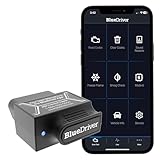
Overview: BlueDriver is a wireless Bluetooth OBD2 scanner that pairs with smartphones, transforming your phone into a professional diagnostic tool. It reads/clears codes across engine, ABS, SRS, and more, while providing repair reports, live data streaming, and access to a vast repair video library. What Makes It Stand Out: Its wireless design eliminates cable clutter, and the app delivers unparalleled depth: detailed repair guides with fixes, step-by-step videos, and comprehensive diagnostics beyond basic code reading (including ABS/SRS). The “no subscription fee” model for lifetime updates and repair data is a major differentiator. Value for Money: While pricier upfront than wired scanners, BlueDriver’s extensive capabilities (ABS/SRS scanning, repair intelligence, video tutorials) rival professional tools costing hundreds more. The lack of recurring fees ensures long-term value, making it cost-effective for serious DIYers needing deep insights. Strengths and Weaknesses: Strengths: Wireless convenience, extensive system coverage (ABS/SRS), repair reports/videos, no subscription fees, intuitive app. Weaknesses: Requires smartphone/tablet, Bluetooth dependency can cause occasional connectivity hiccups, higher initial cost. Bottom Line: The top choice for tech-savvy users seeking professional-grade diagnostics and repair guidance. Its wireless flexibility, comprehensive coverage, and educational resources justify the premium for those committed to thorough, informed repairs.
5. FOXWELL Car Scanner NT604 Elite OBD2 Scanner ABS SRS Transmission, Check Engine Code Reader for Cars and Trucks, Diagnostic Scan Tool with SRS Airbag, Automotive Diagnostic Tool with Live Data
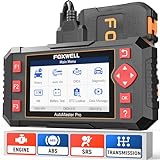
Overview: The FOXWELL NT604 Elite is a professional-grade scan tool capable of diagnosing engine, ABS, SRS, and transmission systems. It reads/clears codes, displays live data, checks I/M readiness, and uses AUTOVIN for quick vehicle identification across 60+ global makes, all with preloaded 2026 software. What Makes It Stand Out: Unlike basic scanners, it comprehensively covers critical safety systems (ABS/SRS) alongside engine diagnostics. The included durable protective case and lifetime free software updates are rare at this price point. AUTOVIN streamlines vehicle setup, and the out-of-box readiness eliminates initial downloads. Value for Money: It bridges the gap between entry-level OBD2 readers and expensive professional tools. While significantly pricier than the NT301, its multi-system diagnostics (ABS/SRS/transmission), robust case, and no-update-fees policy offer exceptional value for semi-pros or owners of multiple vehicles needing thorough diagnostics. Strengths and Weaknesses: Strengths: Full ABS/SRS/transmission scanning, durable protective case, lifetime updates, AUTOVIN for quick setup, comprehensive live data. Weaknesses: No maintenance resets (e.g., oil service), complex for absolute beginners, higher cost than basic code readers. Bottom Line: Highly recommended for users needing deep diagnostics beyond the engine light. Its ability to scan critical safety systems, coupled with premium build and updates, makes it a wise investment for serious DIYers or small workshops.
6. ANCEL AD410 Enhanced OBD2 Scanner, Vehicle Code Reader for Check Engine Light, Automotive OBD II Scanner Fault Diagnosis, OBDII Scan Tool for All OBDII Cars 1996+, Black/Yellow
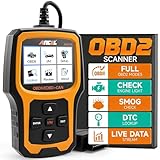
Overview: The ANCEL AD410 is a dedicated OBD2 scanner for diagnosing engine-related issues in vehicles from 1996+ (US) and 2000+ (EU/Asia). It reads/clears fault codes, checks emissions readiness, and performs basic system tests without requiring a smartphone app.
What Makes It Stand Out: Its standout features include direct vehicle power (no batteries), a vibrant 2.4" color display with intuitive menus, and 42,000+ built-in DTC definitions eliminating manual code lookups. The EVAP and O2 sensor testing capabilities also differentiate it from basic code readers.
Value for Money: Priced moderately, it offers exceptional value for DIYers needing essential engine diagnostics. Unlike app-dependent competitors, it works standalone—saving costs on smartphones or subscriptions—while matching professional tools in core functionality for smog tests and basic repairs.
Strengths and Weaknesses: Strengths: Reliable plug-and-play operation, multilingual support, no recurring fees, and Scotty Kilmer-endorsed compatibility. Weaknesses: Limited to engine diagnostics (no ABS/SRS), requires post-repair code clearing, and lacks live data visualization.
Bottom Line: An ideal entry-level tool for beginners and budget-conscious owners tackling check engine lights. Its simplicity, robust build, and focused engine diagnostics make it a worthy investment for routine maintenance.
7. FIXD Bluetooth OBD2 Scanner for iPhone & Android - Diagnostic Scan Tool for Repairs and Car Buying - Check Engine Code Reader & Enhanced Codes - (1 Pack w/Free 14-Day FIXD Premium Bundle)
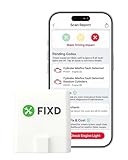
Overview: FIXD is a Bluetooth OBD2 sensor paired with a free mobile app, translating complex codes into plain-English diagnoses for 1996+ gasoline/hybrid and 2006+ diesel vehicles. It emphasizes user-friendly insights and preventive maintenance tracking.
What Makes It Stand Out: The seamless app integration transforms cryptic codes into actionable fixes, with severe-issue alerts and repair cost estimates. The 14-day Premium trial (including live mechanic support) and multi-vehicle management via a permanently installed sensor are unmatched in its price tier.
Value for Money: Exceptional for frequent users, as the one-time purchase includes unlimited free scans and lifetime app updates. The Premium trial adds short-term expert access, though ongoing advanced features require a subscription—still cheaper than standalone professional tools.
Strengths and Weaknesses: Strengths: Unbeatable simplicity for non-technicals, real-time maintenance reminders, and cross-vehicle compatibility. Weaknesses: Bluetooth dependency causes occasional connectivity drops, limited diagnostic depth versus wired scanners, and Premium features incur recurring costs.
Bottom Line: Perfect for casual drivers prioritizing convenience over granular diagnostics. Its focus on actionable advice and safety alerts justifies the price, though professionals may need more robust tools.
8. OBD2 Scanner Reader Bluetooth Wireless Auto Diagnostic Scan Tool for iOS & Android for Performance Test Bluetooth 5.4 Car Check Engine Car Code Reader, Clear Error Code Live Data Reset Exclusive APP

Overview: This Bluetooth 5.4 OBD2 scanner delivers wireless diagnostics via a dedicated app, supporting live data streaming, performance tests, and code clearing for 1996+ vehicles. It targets users seeking real-time insights without cables.
What Makes It Stand Out: Bluetooth 5.4 ensures faster, stable connections, while intuitive data visualization (graphs for coolant temp, voltage, etc.) simplifies interpretation. Its broad compatibility (96% of brands) and multilingual support—plus free video tutorials—cater to global beginners.
Value for Money: Competitive pricing justifies its wireless convenience and extensive protocol coverage. The app’s visual diagnostics prevent misdiagnosis costs, though some features (like 4S-shop-only permanent code clearing) limit long-term savings versus pro tools.
Strengths and Weaknesses: Strengths: Excellent connectivity, beginner-friendly charts, and wide vehicle/language support. Weaknesses: iOS connection quirks (manual Bluetooth steps), no PC software, and inability to clear permanent codes without professional repair.
Bottom Line: A top choice for tech-savvy DIYers wanting wireless ease and visual data analysis. Avoid if you need deep system diagnostics or offline functionality, but ideal for routine check-engine resolution.
9. ZMOON ZM201 Professional OBD2 Scanner Diagnostic Tool, Enhanced Check Engine Code Reader with Reset OBDII/EOBD Car Diagnostic Scan Tools for All Vehicles After 1996, 2026 Upgraded

Overview: The ZMOON ZM201 is a standalone OBD2 scanner for engine diagnostics, featuring a color display and plug-and-play operation. It targets users seeking professional-grade diagnostics without smartphone reliance.
What Makes It Stand Out: Its 2.8" adjustable-color screen and shortcut keys enable glove-friendly use in any light. With 50,000+ DTCs, live data graphs, EVAP testing, and lifetime free updates, it bridges the gap between basic readers and workshop tools.
Value for Money: Outstanding for its price—surpassing app-based rivals in offline reliability. The no-subscription model and PC connectivity (for data printing) offer long-term savings, though lacking ABS/SRS support limits scope versus premium scanners.
Strengths and Weaknesses: Strengths: Bright display, comprehensive engine diagnostics, instant results, and zero ongoing costs. Weaknesses: Engine-only focus (no transmission/ABS), Windows-only PC compatibility, and minor lag during deep scans.
Bottom Line: The best standalone scanner for serious DIYers. Prioritize this over Bluetooth models if you value speed, durability, and avoiding phone dependencies during critical repairs.
10. WEJOWE OBD2 Scanner Diagnostic Tool, Check Engine Code Reader OBD2 Scanner with Reset, Mode 6, Mode 8 & I/M Readiness, Auto Check Engine Light Car Diagnostic Scan Tool for All OBDII Car Since 1996
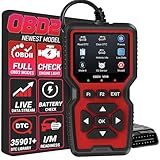
Overview: WEJOWE’s OBD2 scanner delivers advanced diagnostics via Mode 6/8 testing and I/M readiness checks, supporting 98% of 1996+ vehicles. It emphasizes detailed fault analysis and printable reports.
What Makes It Stand Out: Built-in 35,901 DTCs (tripling typical libraries) and PC-connected printing empower users to challenge repair-shop quotes. The compact design with Type-C cable and canvas bag enhances portability, while 10-language support broadens accessibility.
Value for Money: A cost-effective prosumer tool—the extensive DTC database and print function justify its price for frequent users. Lifetime updates add longevity, though Mode 6/8 depth may overwhelm beginners compared to FIXD’s simplicity.
Strengths and Weaknesses: Strengths: Unrivaled DTC coverage, report printing, and multi-language support. Weaknesses: Cluttered feature list (duplicates noted in specs), no Bluetooth, and limited guidance for complex diagnostics.
Bottom Line: Recommended for detail-oriented owners needing audit-proof diagnostics. Skip if you prefer app-guided simplicity, but ideal for verifying repair legitimacy and deep system analysis.
Understanding Core Diagnostic Scanner Functionality
Deciphering OBD-II: The Universal Gateway
Every car sold in the US since 1996 uses the OBD-II (On-Board Diagnostics II) standard. This mandates a standardized port, typically under the dashboard, allowing scanners to communicate with the vehicle’s main computer. Understanding that OBD-II is your entry point is fundamental. Basic scanners read and clear generic trouble codes (like P0300 for a random misfire) stored in the engine control module. However, modern vehicles have numerous computers (ECMs, TCUs, ABS modules, etc.), and OBD-II access is just the starting point for deeper diagnostics.
Beyond Basic Codes: The Value of Live Data Streaming
While reading stored codes is essential, the real diagnostic power lies in live data streaming. A capable home scanner doesn’t just tell you what might be wrong; it shows you how systems are performing right now. Monitoring live parameters like engine RPM, coolant temperature, oxygen sensor voltages, fuel trims, and transmission gear selection in real-time allows you to observe system behavior, identify intermittent issues, and verify repairs. This transforms the tool from a simple code reader into a genuine diagnostic assistant, helping pinpoint problems that stored codes alone might not reveal.
The Critical Role of Bi-Directional Communication
Advanced scanners offer bi-directional communication, meaning they don’t just receive data from the car; they can send commands. This enables crucial functions like initiating component tests (e.g., cycling the fuel pump, activating individual injectors, or running ABS pump tests), performing module resets (like after replacing a battery), and even adapting certain systems. For serious home mechanics tackling more complex repairs or maintenance, bi-directional capability significantly expands the tool’s utility beyond basic troubleshooting.
Navigating Compatibility and Vehicle Coverage
Year, Make, Model, and Trim: The Non-Negotiable Factors
Compatibility isn’t just about OBD-II; it’s deeply tied to your specific vehicle’s year, make, model, and even trim level. Manufacturers implement proprietary protocols and systems beyond the basic OBD-II standard. A scanner must support the specific communication protocols (like CAN, ISO, KWP2000) and have the correct software database for your exact vehicle to access all modules (engine, transmission, ABS, airbags, body control, etc.). Always verify a scanner’s coverage list for your particular car before purchasing – generic OBD-II tools often miss critical non-engine systems.
Manufacturer-Specific vs. Generic Code Coverage
There’s a crucial distinction between generic (P-codes) and manufacturer-specific (C, B, U-codes) trouble codes. Generic codes are standardized across all brands (e.g., P0171 - System Too Lean). Manufacturer-specific codes relate to unique systems within a brand (e.g., a specific hybrid system fault on a Toyota). Lower-cost scanners often only read generic codes, potentially missing the root cause if it’s flagged by a manufacturer-specific code. Comprehensive scanners include extensive databases for multiple brands, providing a complete picture of vehicle health.
Supporting Multiple Vehicle Systems Beyond the Engine
Modern cars are networks of interconnected computers. A truly useful home scanner should go beyond the engine (powertrain) to interact with the transmission (TCM), anti-lock brakes (ABS), stability control (ESC), airbags (SRS), body control module (BCM), infotainment, and climate control systems. Understanding which systems your vehicle has and which ones a scanner can access is vital. If you own multiple vehicles (e.g., a car and a truck), ensure the scanner covers the diverse systems found across different makes and model years you need.
Evaluating User Experience and Interface
Dedicated Device vs. Smartphone/Tablet App Integration
The interface battle is real. Dedicated handheld scanners offer ruggedness, reliability, and often faster response times since they operate independently. They typically have physical buttons designed for gloved hands and function well in varying light conditions. Conversely, Wi-Fi or Bluetooth scanners paired with smartphone/tablet apps leverage familiar touchscreens, offer larger displays, and often provide more intuitive, visually rich interfaces with graphing capabilities. Consider your preference for a standalone tool versus leveraging your existing mobile device, and factor in potential app subscription costs for some models.
Intuitive Software Design and Code Interpretation
Raw trouble codes (like P0420) are meaningless without context. The best scanners translate these into plain-English descriptions (e.g., “Catalyst System Efficiency Below Threshold - Bank 1”) and often provide basic troubleshooting steps or potential causes. Evaluate how user-friendly the software is: Is the menu structure logical? Is information presented clearly? Does it offer helpful definitions and guidance, or just dump technical jargon? A steep learning curve can render even a powerful scanner frustrating for home use.
Display Quality and Readability in Real-World Conditions
Think about where you’ll use it – likely in a dim garage or under bright sunlight. A high-contrast, backlit display is non-negotiable. Consider screen size: larger screens show more data at once but make the device bulkier. Check reviews for glare issues and readability in different lighting. Physical button layout matters too; well-placed, responsive buttons are far easier to use with dirty or gloved hands than a finicky touchscreen when you’re knee-deep in underhood work.
Assessing Value and Long-Term Utility
Defining Your Needs: Basic Code Reading vs. Advanced Diagnostics
Be brutally honest about your skill level and intended use. If you only want to reset the check engine light after replacing an oxygen sensor or verify if a gas cap is loose, a basic, affordable code reader suffices. However, if you plan to diagnose complex issues, perform component tests, or work on multiple systems, investing in a mid-to-high-range scanner with live data, bi-directional control, and extensive coverage is essential. Overspending on features you’ll never use is wasteful, but underbuying leads to frustration and needing to replace the tool prematurely.
Software Updates: Ensuring Future Relevance
Vehicle technology evolves rapidly. A scanner with a one-time purchase but no update path will quickly become obsolete, unable to diagnose newer models or understand updated protocols. Look for scanners that offer reasonably priced, regular software updates – either via included subscriptions for a period, affordable annual fees, or one-time major version updates. Factor this potential ongoing cost into your initial purchase decision; it’s critical for long-term value.
Build Quality and Cable Durability for Garage Life
This tool will live in your garage, likely getting tossed in a toolbox, exposed to dust, grease, and temperature fluctuations. Cheap plastic housings crack, and flimsy OBD cables fray quickly at the connector. Prioritize scanners with robust, impact-resistant casings and thick, flexible cables with strain relief near the connectors. A slightly higher price for solid construction pays off in reliability and longevity when used in a real-world workshop environment.
Optimizing for Home Garage Success
Cable Length and Connector Design Practicality
That OBD-II port is often tucked away in a tight space under the steering column. A scanner cable that’s too short forces awkward contortions, while a stiff or bulky connector can be impossible to plug in one-handed. Look for a cable at least 3-4 feet long with a slim, flexible, right-angled connector. This seemingly small detail dramatically improves the user experience during the simple act of connecting the tool.
Power Source Considerations: Battery Life and Operation
Dedicated scanners run on internal batteries (rechargeable or replaceable). Check real-world battery life estimates – you don’t want it dying mid-diagnosis. Scanners that draw power directly from the OBD-II port (common with Bluetooth/Wi-Fi dongles) avoid battery hassles but require the ignition to be on. Consider your typical usage: quick code reads favor long battery life, while extended diagnostics might make a port-powered option acceptable. Ensure battery replacement or charging is straightforward.
Physical Ergonomics and Storage
Will it fit comfortably in your hand while you’re under the hood? Does it have a kickstand for tabletop use while monitoring live data? Can it survive a drop onto concrete? Consider the weight and shape. Also, think about storage – does it come with a protective case? Can it be easily hung on a pegboard? A tool that’s a pleasure to handle and store is one you’ll actually use consistently.
Maximizing Your Investment Long-Term
Leveraging Community Support and Resources
Even the best scanner benefits from a strong user community. Check forums and online groups specific to your vehicle make or scanner brand. Active communities provide invaluable troubleshooting tips, workarounds for software quirks, explanations for obscure codes, and DIY repair guidance that complements the scanner’s data. A scanner with a large, supportive user base effectively extends its functionality through shared knowledge.
Building Diagnostic Skills Alongside Your Tool
A scanner is only as good as the person interpreting its data. View your scanner purchase as the start of a learning journey. Invest time in understanding basic automotive systems, how sensors work, and what the live data parameters should look like. Numerous free and paid online resources, repair manuals (like Haynes or factory service manuals), and YouTube tutorials can help you move beyond just reading codes to performing real diagnostics. Your scanner becomes exponentially more valuable as your knowledge grows.
Frequently Asked Questions
Frequently Asked Questions
Can a home diagnostic scanner permanently fix my check engine light? How do I find the OBD-II port in my specific vehicle? Will any scanner work on cars older than 1996? Can diagnostic scanners damage my car’s computer systems? Do I need a special scanner for hybrid or electric vehicles? Can smartphone app-based scanners perform bi-directional tests? How often should I expect to pay for software updates? Can these scanners reset oil change or tire pressure warning lights? Is live data streaming necessary for basic home use? What’s the biggest mistake new scanner users make?
See Also
- We Tested 50 Car Diagnostic Scanners - Here are the 10 Best for Home Use in 2026
- 10 Best Car Diagnostic Scanners for Full-System Analysis in 2026
- 10 Essential Car Diagnostic Scanners Every New Car Owner Needs in 2026
- 10 Essential OBD2 Scanners with Diagnostic Lights Every Home Mechanic Needs in 2026
- 10 Must-Have Car Diagnostic Scanners for Preventing Costly Repairs in 2026