Table of Contents
Tightening a bolt seems simple enough—just crank it down until it feels secure, right? But any seasoned DIY mechanic knows that “good and tight” often leads to stripped threads, cracked components, or parts rattling loose on your first test drive. The difference between a repair that lasts and one that fails frequently comes down to a single number: the torque specification. That’s where click torque wrenches become the unsung heroes of the home garage, giving you the precision of a professional shop without the mystery.
Unlike digital gadgets that require batteries and menus, or beam-style wrenches that demand constant eyeballing, click torque wrenches offer a tactile, foolproof solution that clicks when you’ve hit the target. For DIY mechanics tackling everything from brake jobs to engine rebuilds, understanding what makes these tools tick—and which features actually matter—can save you hundreds in damaged parts and countless hours of frustration. Let’s dive into everything you need to know to choose the perfect click torque wrench for your workshop, your projects, and your budget.
Top 10 Click Torque Wrenches
Detailed Product Reviews
1. DISEN 9PCS Click Torque Wrench Set 1/4" 3/8" 1/2" Drive 20-220 In.lb, 5-45 Ft.lb, 10-170 Ft.lb with 6 Adapters, ±3% Accuracy, 72-Tooth, Dual Scale, Storage Case for Bike, Motorcycle, Car, Truck Repair

Overview: This comprehensive 9-piece torque wrench set delivers exceptional versatility for automotive and mechanical work. The package includes three click-type torque wrenches in 1/4", 3/8", and 1/2" drives, covering ranges from 10-220 in.lb up to 10-170 ft.lb. Six essential adapters—extension bars, universal joint, and drive converters—nestle securely in a rugged portable case, creating a complete torque solution for virtually any fastener.
What Makes It Stand Out: The three-wrench system eliminates the compromise of a single tool, letting you tackle everything from delicate bike components to heavy truck lug nuts. Each features a precise 72-tooth ratchet mechanism requiring only 5° of swing, perfect for confined engine bays. The ±3% accuracy exceeds many competitors, while aerospace aluminum handles provide professional-grade durability without excessive weight. The upgraded click mechanism offers audible feedback even at higher torque values, addressing a common weakness in budget tools.
Value for Money: Purchasing these three wrenches and adapters separately would easily exceed $200. This set consolidates everything into one organized package at a compelling price point, making it ideal for serious DIY enthusiasts and professional mechanics building their toolkit. The included calibration certificate and 24-month warranty add significant peace of mind.
Strengths and Weaknesses: Strengths include comprehensive coverage, excellent accuracy, quality construction, and professional storage. Weaknesses involve potential overkill for casual users who might only need one drive size, and the possibility of varying quality control across three different tools. The click sound diminishes below 5 N.m, though this rarely affects automotive applications.
Bottom Line: A powerhouse collection that justifies its cost through genuine versatility and precision. Perfect for anyone regularly working on diverse vehicles or machinery.
2. Hairich 1/2 Inch Drive Click Torque Wrench, Dual-direction Torque Wrench 10-170.0ft.lb/13.60-230.5Nm, 72-tooth Torque Wrenches with Dual Range Scales, ±3% High Precision For Bike

Overview: The Hairich 1/2-inch torque wrench combines professional-grade precision with striking aesthetics. Covering 10-170 ft.lb (13.6-230.5 Nm), this single-drive tool targets automotive and heavy equipment applications. The black and red color scheme distinguishes it from generic silver tools, while the ±3% calibration accuracy meets professional standards.
What Makes It Stand Out: Beyond its eye-catching design, this wrench excels in user experience. The 72-tooth ratchet head operates with a minimal 5° arc, crucial for tight spaces. The bidirectional measurement capability adds versatility uncommon in this price tier. An aluminum-titanium alloy handle with square knurling provides exceptional grip comfort during extended use. The quick-setting mechanism with automatic lock ensures you won’t accidentally shift your target torque.
Value for Money: Positioned in the mid-range segment, it delivers premium features—±3% accuracy, 72-tooth mechanism, and ergonomic design—typically found in higher-priced competitors. The included calibration certificate with traceable serial number enhances its professional credibility without inflating cost.
Strengths and Weaknesses: Strengths include superior accuracy, attractive durable finish, excellent ergonomics, and dual-direction functionality. The click mechanism performs reliably above 5 Nm. Weaknesses center on the subtle click at lower settings and the single drive size limiting versatility. The stylish appearance, while appealing, may not suit all professional environments.
Bottom Line: An excellent choice for mechanics prioritizing precision and comfort in a dedicated 1/2-inch drive tool. The design flair is a bonus.
3. LEXIVON Torque Wrench 1/2-Inch Drive Click 10150 Ft-Lb/13.6203.5 Nm (LX-183)
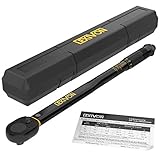
Overview: LEXIVON’s Taiwanese-manufactured torque wrench offers reliable performance in the popular 1/2-inch drive format. With a 10-150 ft.lb range, it handles most automotive tasks from engine work to wheel lug nuts. The tool ships pre-calibrated to ±4% accuracy with a traceable serial number, balancing precision with affordability.
What Makes It Stand Out: The proprietary Electro-Black finish provides exceptional corrosion resistance, extending tool life in humid garages. High-contrast yellow-on-black laser-etched scales remain visible in poor lighting—a practical detail mechanics appreciate. The reinforced ratchet head uses hardened, heat-treated Chrome Vanadium alloy steel for durability under repeated high-torque applications.
Value for Money: Taiwan manufacturing ensures quality control superior to many mainland China alternatives at a competitive price point. While ±4% accuracy trails some premium brands, it meets specifications for most non-critical automotive applications. The included storage case and calibration certificate add value without premium pricing.
Strengths and Weaknesses: Strengths include robust corrosion protection, excellent scale visibility, reversible ratchet head, and comfortable knurled grip. The 72-tooth mechanism enables operation in tight quarters. Weaknesses involve the slightly lower ±4% accuracy rating and limited 150 ft.lb maximum compared to 170 ft.lb competitors. The click feedback, while reliable, lacks the crispness of higher-end tools.
Bottom Line: A solid, dependable workhorse for home mechanics and professionals seeking Taiwanese quality without breaking the bank.
4. EPAuto 1/2-inch Drive Click Torque Wrench, 10-150 ft/lb, 13.6-203.5 N/m

Overview: EPAuto delivers an entry-level torque wrench that doesn’t compromise essential functionality. This 1/2-inch drive tool covers 10-150 ft.lb, making it suitable for routine automotive maintenance like tire rotations and brake work. The satin-finished Chrome Vanadium steel construction provides decent durability while keeping costs accessible.
What Makes It Stand Out: As a budget-friendly option, its standout feature is genuine Taiwan manufacturing rather than lower-cost alternatives. The included 5-inch extension bar adds immediate utility for reaching recessed fasteners. High-contrast dual-range scales offer clear readings, and the knurled handle provides adequate grip without premium materials. The straightforward click mechanism operates reliably without complex adjustments.
Value for Money: This represents exceptional value for occasional users and beginners. You get calibrated accuracy (±4%), a storage case, and an extension bar at a price point significantly below professional brands. While it lacks advanced features, it covers the fundamentals competently, making it ideal for home garages where daily professional use isn’t required.
Strengths and Weaknesses: Strengths include affordability, Taiwan build quality, simple operation, and included accessories. The satin finish resists corrosion adequately. Weaknesses involve the basic ±4% accuracy, lack of a 72-tooth mechanism (typically 24-36 teeth), and no adapters or universal joint. The click feedback is functional but less distinct than premium models.
Bottom Line: Perfect for DIYers taking their first step into precision torque work without a major investment. Does the job reliably.
5. LEXIVON 3/8-Inch Drive Click Torque Wrench 1080 Ft-Lb/13.6108.5 Nm (LX-182)

Overview: LEXIVON’s 3/8-inch drive torque wrench fills the medium-duty niche between delicate 1/4-inch tools and heavy-duty 1/2-inch models. The 10-80 ft.lb range perfectly suits motorcycle maintenance, bicycle work, and automotive tasks like intake manifolds and suspension components. Taiwanese manufacturing ensures consistent quality control.
What Makes It Stand Out: The Electro-Black finish treatment provides superior rust protection compared to standard chrome plating, crucial for tools stored in less-than-ideal conditions. Highlighted yellow print scales remain legible even when covered in grease or used in dimly lit engine bays. The reversible ratchet head drives in both directions while measuring torque clockwise, adding versatility for left-hand threads or awkward positions.
Value for Money: This specialized tool offers LEXIVON’s quality pedigree at a price point accessible to serious hobbyists. While limited to 3/8-inch drive, it eliminates the bulk of larger wrenches when working on smaller fasteners. The ±4% accuracy is adequate for most applications in its range, and the included calibration certificate provides traceability.
Strengths and Weaknesses: Strengths include excellent corrosion resistance, clear scale markings, comfortable operation, and reversible functionality. The 72-tooth ratchet (implied by LEXIVON’s standard) enables tight-space work. Weaknesses involve the restricted 80 ft.lb maximum torque and single drive size, requiring additional investments for larger fasteners. The click mechanism may be less audible in noisy shop environments.
Bottom Line: An ideal specialized tool for motorcycle enthusiasts and mechanics focusing on medium-torque applications. Quality exceeds its moderate price.
6. 1/4 3/8 1/2-inch Drive Click Torque Wrench, 8Pcs Torque Wrench Set 10-230in.lb, 5-50ft.lb, 10-180ft.lb with Adapters, ±3% Accuracy, 72-Tooth Dual Scale Torque Wrenches for Bike, Moto, Car Repair

Overview: This comprehensive 8-piece torque wrench set delivers three precision click-type torque wrenches covering 1/4, 3/8, and 1/2-inch drives. The range spans from delicate 10-230 in.lb settings for small fasteners up to robust 10-180 ft.lb for heavy automotive work. Five adapters—including extension bars and a universal joint—expand its versatility across bicycles, motorcycles, and cars. Each tool arrives pre-calibrated to ±3% accuracy with a formal certificate, ensuring reliable performance straight from the sturdy storage case.
What Makes It Stand Out: The upgraded audible feedback system provides a noticeably louder click above 5 Nm while maintaining subtle feedback for lower torque values—critical for preventing over-tightening. The 72-tooth ratchet heads enable operation in just 5-degree increments, essential for tight engine bays. The quick-release buttons and reversible design streamline workflow, while aerospace aluminum handles reduce fatigue during extended use. Phosphated adapters offer superior wear resistance compared to standard finishes.
Value for Money: Purchasing three individual torque wrenches with comparable accuracy would cost significantly more than this integrated set. The inclusion of five adapters eliminates separate purchases, representing exceptional value for DIY enthusiasts and professional mechanics alike. While budget options exist, few match this combination of precision certifications, material quality, and comprehensive accessory package at this price point.
Strengths and Weaknesses: Strengths include versatile drive sizes, certified ±3% accuracy, comprehensive adapter set, upgraded click mechanism, and professional-grade materials. The blow-molded case provides excellent organization. Weaknesses involve potential overkill for casual users who may only need one drive size, and the sheer number of components could overwhelm beginners. Some users may find the aluminum handles less grippy than rubber-coated alternatives.
Bottom Line: This set is an outstanding investment for serious DIY mechanics and professionals seeking certified accuracy across multiple applications. The thoughtful engineering and comprehensive accessories justify the price, making it a one-stop solution for virtually all torque specification needs.
7. SUERCUP 3/8-Inch Drive Click Torque Wrench - 5-45 Ft-Lb/6.8-61Nm, Dual-Direction Adjustable 72 Tooth Click Torque Wrench for Bike, Motorcycle and Car Repair
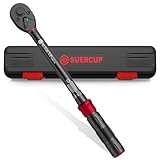
Overview: The SUERCUP 3/8-inch torque wrench targets the sweet spot for automotive and bicycle maintenance with its 5-45 ft.lb (6.8-61 Nm) range. This single-drive tool emphasizes precision and user-friendly operation, featuring a high-contrast dual-scale readout and a bidirectional 72-tooth ratchet mechanism. The package includes a durable storage case, making it a focused solution for users who primarily work with mid-range fasteners on bikes, motorcycles, and cars.
What Makes It Stand Out: The flashlight-inspired knurled handle design provides exceptional grip comfort and torque application efficiency—a unique ergonomic touch rarely seen in this price class. After 20,000 calibration tests, the ±3% accuracy rating demonstrates impressive reliability. The red anodized tail plug not only adds visual appeal but enhances corrosion resistance. The locking knob system allows quick torque adjustments while preventing accidental value changes during use.
Value for Money: As a specialized single-drive wrench, it offers professional-grade accuracy at a fraction of multi-set costs. For users focused on automotive and bicycle work, this eliminates paying for unnecessary drive sizes. Comparable individual wrenches from premium brands cost 40-60% more without offering significantly better performance. The included case and proven durability make it a smart mid-range investment.
Strengths and Weaknesses: Strengths include excellent ergonomics, certified accuracy, durable Cr-V steel construction, smooth 72-tooth action, and clear audible feedback. The focused 3/8-inch drive covers most common applications. Weaknesses include limited range for heavy-duty truck work and lack of adapters. The ±3% accuracy, while good, isn’t class-leading. Single-direction scale printing could be clearer in low light.
Bottom Line: This SUERCUP wrench excels for dedicated automotive and bicycle enthusiasts seeking reliable, ergonomic precision without unnecessary extras. It balances quality, accuracy, and price effectively, making it ideal for users who know they primarily need 3/8-inch capability.
8. Upgraded Torque Wrench Set 8PCS, 1/4 3/8 1/2 inch Drive Click Torque Wrench, 10-230in.lb, 5-50ft.lb, 10-180ft.lb, 72-Tooth Dual Scale, ±3% Accuracy, 5 Adapters, for Bike, Moto, Car Repair and Maint

Overview: This Matework 8-piece torque wrench set mirrors professional tool truck offerings with three click-type torque wrenches covering 1/4, 3/8, and 1/2-inch drives. The comprehensive range handles everything from 10-230 in.lb bicycle components to 10-180 ft.lb automotive lug nuts. Five adapters—including multiple extension bars and a universal joint—plus calibration certificates meeting ASME and ISO standards position this as a serious professional alternative. The entire system stores in a rugged blow-molded case.
What Makes It Stand Out: The dual-alert system combining audible click with tactile vibration provides redundant feedback, crucial in noisy shop environments. The orange quick-release button enables fast socket changes while maintaining secure retention. Meeting both ASME B107.300-2010 and ISO6789-2017 standards demonstrates rigorous quality control exceeding typical consumer-grade tools. The ergonomic non-slip handle design balances comfort with positive grip control during high-torque applications.
Value for Money: This set undercuts professional tool truck brands by 60-70% while matching their specifications and certifications. The inclusion of three certified wrenches plus five adapters represents substantial savings over individual purchases. For DIYers building a comprehensive garage or professional mechanics needing backup tools, the price-to-performance ratio is exceptional. The calibration certificates add value for warranty work and quality assurance.
Strengths and Weaknesses: Strengths include dual-alert feedback, international standard compliance, comprehensive accessory package, quick-release functionality, and professional-grade materials. The 72-tooth mechanism offers excellent access. Weaknesses include potential confusion for beginners managing three separate tools, and the blow-molded case, while functional, lacks the refinement of premium brands. No lifetime warranty is mentioned.
Bottom Line: An excellent professional-grade set that democratizes precision torque control for serious enthusiasts and pros alike. The dual-feedback system and certified accuracy make it a trustworthy choice for critical applications where over-tightening risks component damage.
9. SUZUME 3PCS Torque Wrench Set 72 Teeth Dual-Direction Adjustable Torque Wrench Dual-Scales 1/4 & 3/8 & 1/2-Inch ±3% Accuracy Click Torque Wrenches for Bicycle, Motorcycle, Car,Maintenance

Overview: SUZUME’s three-piece torque wrench set emphasizes durability and precision with CR-V steel construction and chrome plating for corrosion resistance. Covering 1/4, 3/8, and 1/2-inch drives, this set handles torque specifications from delicate bicycle repairs to automotive maintenance. The lightweight aluminum alloy handles reduce operator fatigue, while laser-etched dual scales ensure permanent readability. Each wrench maintains ±3% accuracy through over 10,000 cycles, backed by fatigue testing documentation.
What Makes It Stand Out: The mirror-like chrome finish provides superior corrosion protection while creating an attractive appearance that stands out in a toolbox. The combination of audible click and vibration feedback offers dual-sensory confirmation of reaching torque spec—particularly valuable when working in awkward positions. Laser-printed scales resist wear far better than painted markings common on budget tools. The set positions itself as an ideal gift, suggesting confidence in its presentation and universal appeal.
Value for Money: This three-wrench set hits a sweet spot between single-tool purchases and oversized eight-piece kits. For users needing multiple drive sizes without extensive adapters, it eliminates unnecessary cost while providing core functionality. The CR-V steel and chrome plating match premium tool specifications at a mid-tier price point. Compared to buying three individual wrenches from established brands, savings of 30-40% are typical.
Strengths and Weaknesses: Strengths include durable CR-V steel with chrome plating, dual feedback mechanisms, laser-etched scales, lightweight handles, and comprehensive drive size coverage. The gift-ready presentation adds value. Weaknesses include fewer accessories than competing sets, limited torque range on the 1/4-inch wrench, and lack of formal certification standards. The chrome finish, while attractive, may show fingerprints and scratches more than matte finishes.
Bottom Line: A solid mid-range choice for hobbyists and DIYers wanting quality materials and multiple drive sizes without professional-level investment. The dual feedback and durable construction make it reliable for most home garage applications, though professionals may prefer certified standards.
10. EPAuto 1/4-Inch Drive Click Torque Wrench (20-200 in.-lb. / 2.26 ~ 22.6 Nm)

Overview: The EPAuto 1/4-inch torque wrench delivers focused precision for smaller fasteners commonly found in electronic assemblies, bicycles, and light automotive work. With a 20-200 in.lb range (2.26-22.6 Nm), it targets the lower torque spectrum where over-tightening risks thread damage. The satin-finished Cr-V steel ratchet head resists corrosion while maintaining durability. Pre-calibrated to ±4% accuracy, it includes a sturdy plastic case and knurled handle for secure grip during delicate operations.
What Makes It Stand Out: The Taiwanese manufacturing heritage suggests reliable quality control at this price point. The high-contrast dual-range scale offers excellent visibility for quick adjustments. The straightforward click mechanism provides clear audible feedback without complexity. Its focused single-drive design eliminates confusion for users who primarily work on smaller assemblies, making it ideal for bicycle enthusiasts and electronics technicians.
Value for Money: This represents entry-level pricing for a functional click-type torque wrench, often costing 50-70% less than premium single-drive alternatives. The ±4% accuracy suffices for most non-critical applications where absolute precision is less important than consistency. For occasional users or those building a starter tool collection, it delivers essential functionality without financial strain. The included case adds value typically reserved for higher-priced tools.
Strengths and Weaknesses: Strengths include affordable pricing, clear scale readability, corrosion-resistant satin finish, secure knurled grip, and practical storage case. The Taiwanese manufacturing inspires confidence. Weaknesses include ±4% accuracy (lower than ±3% competitors), limited 1/4-inch drive restricts versatility, no adapters included, and no calibration certificate. The click mechanism may be less refined than premium brands.
Bottom Line: An excellent entry-level torque wrench for budget-conscious users or those needing a dedicated low-range tool. While not suitable for professional-critical applications, it provides reliable, consistent performance for bicycle maintenance, small engine work, and light automotive tasks where absolute precision is secondary to affordability.
Understanding Click Torque Wrenches
What Makes Them “Click”?
The signature click sound isn’t just a convenience—it’s a mechanical marvel. Inside every click torque wrench, a spring-loaded cam mechanism engages when you reach your preset torque value. This cam suddenly slips, creating that distinct click you hear and feel through the handle. This mechanical feedback happens in milliseconds, preventing you from applying additional force. The beauty lies in its simplicity: no electronics to fail, no displays to misread, just pure physics protecting your work from over-tightening.
How They Work: The Internal Mechanism
Beneath the ratchet head, a precision-machined pawl sits against a spring-loaded ball detent or pivot plate. As you apply force, the pawl pushes against this mechanism until the spring tension is overcome at your set torque. At that moment, the pawl disengages slightly, the handle moves a few degrees freely, and you hear the click. The mechanism then immediately re-engages, ready for the next fastener. This design has remained largely unchanged for decades because it reliably delivers accuracy within ±3-4% when properly maintained.
Why DIY Mechanics Prefer Click-Type Over Other Styles
Click torque wrenches hit the sweet spot between accuracy and user-friendliness. Beam types require constant visual monitoring and parallax errors can throw off readings. Dial indicators are incredibly accurate but expensive and fragile. Digital models offer data tracking but need batteries and can fail in cold garages. The click wrench gives you tactile and audible feedback, letting you focus on proper technique rather than staring at a gauge. For the DIY mechanic working solo under a car, that hands-free operation is invaluable.
Essential Features to Evaluate
Torque Range and DIY Applications
The usable range matters more than the maximum number printed on the handle. Most DIY mechanics need coverage from about 10-150 foot-pounds, which handles everything from small engine bolts to lug nuts. However, consider your specific projects. Motorcycle work might require lower ranges starting at 2-3 foot-pounds for delicate fairing fasteners. Truck brake jobs might demand up to 250 foot-pounds for hub assemblies. Look for a wrench where your typical torque values fall in the middle third of its range—that’s where accuracy peaks.
Drive Size Matters: 1/4", 3/8", 1/2" Explained
Drive size determines what sockets fit and how much torque the wrench can handle. The 1/4-inch drive excels at precision work—think carburetor adjustments, valve covers, and interior trim. The 3/8-inch drive serves as the garage workhorse, perfect for most engine bolts, suspension components, and general assembly. The 1/2-inch drive handles high-torque applications like lug nuts, crankshaft bolts, and suspension parts. Many DIY mechanics start with a 3/8-inch model, then expand their collection as projects demand.
Accuracy Ratings and Calibration
Manufacturers typically advertise ±3-4% accuracy clockwise and ±6% counterclockwise. For DIY use, ±4% is perfectly acceptable and matches many professional-grade tools. The key is consistency—an inexpensive wrench that’s consistently off by 3% is more useful than an expensive one that varies wildly. Check if the wrench comes with a calibration certificate from the factory. While not a guarantee of long-term accuracy, it shows the manufacturer tests each unit rather than batch-testing samples.
Material Construction and Durability
The best click torque wrenches use chrome vanadium or chrome molybdenum steel for the ratchet head and shaft. These alloys resist corrosion and maintain dimensional stability under stress. Avoid wrenches with plastic components in high-stress areas like the ratchet mechanism. The handle should feel solid—some flex is normal and can actually reduce hand fatigue, but excessive bending indicates poor quality. A knurled metal grip section provides better control than smooth plastic, especially with oily hands.
Grip Comfort and Ergonomics
You’ll spend hours holding this tool, so comfort matters. Contoured handles with soft-grip overlays reduce hand fatigue during long sessions. However, avoid overly cushioned grips that dampen the click sensation. The adjustment collar should turn smoothly without tools but resist accidental changes. Look for a locking mechanism that engages positively—some cheap wrenches have locks that slip during use, changing your setting mid-job. The scale should be easy to read at a glance, with high-contrast markings that won’t rub off after a year in your toolbox.
Selecting the Right Size for Your Garage
Compact 1/4-Inch Drive for Precision Work
A 1/4-inch drive torque wrench typically covers 20-200 inch-pounds (roughly 1.5-15 foot-pounds). This makes it ideal for small engine work, motorcycle maintenance, and delicate electronic components. The compact head reaches tight spots around intake manifolds and valve trains. While useless for lug nuts, this size prevents you from snapping small fasteners in aluminum components—a common and expensive DIY mistake.
Versatile 3/8-Inch Drive for General Use
The 3/8-inch drive handles 5-80 foot-pounds in most models, covering the majority of automotive fasteners. From cylinder head bolts to control arm hardware, this size tackles the meat of most repair jobs. Its moderate length provides good leverage without being unwieldy in engine bays. For the DIY mechanic buying their first torque wrench, a quality 3/8-inch model delivers the most versatility per dollar spent.
Heavy-Duty 1/2-Inch Drive for Power
When you need to torque axle nuts or diesel engine components, the 1/2-inch drive delivers. These wrenches typically cover 30-250 foot-pounds and provide the leverage needed for stubborn fasteners. However, their longer handles make them awkward for tight spaces. Consider whether you genuinely need this capacity—many DIY mechanics buy 1/2-inch drive wrenches “just in case” but rarely use them above 100 foot-pounds, where a 3/8-inch model would suffice.
When to Consider a Torque Wrench Set
If your projects span motorcycles, cars, and light trucks, a matched set of 1/4-inch, 3/8-inch, and 1/2-inch drive wrenches might prove more economical than buying individually. Sets often include a hard case and calibration certificates for all three tools. The downside? You’re locked into one brand’s quality across all sizes. Sometimes mixing brands—splurging on the size you use most, saving on the occasional-use models—makes better financial sense.
Accuracy and Calibration Fundamentals
Understanding Tolerance Levels
That ±4% rating means at 25 foot-pounds, your actual torque could be 24-26 foot-pounds. For most automotive work, this variation won’t cause problems. Factory service manuals specify torque values with this real-world variance in mind. However, critical applications like head gaskets or connecting rod bolts demand tighter tolerances. For those jobs, consider having your wrench professionally calibrated before starting, regardless of its age.
Factory Calibration vs. DIY Testing
While you can’t truly calibrate a click wrench at home without specialized equipment, you can verify its accuracy. The simple “click test” involves setting your wrench to a known value and seeing if it clicks at the right moment on a calibrated torque tester. Many auto parts stores have these testers at their tool counters. For a rough DIY check, hang a known weight at a measured distance from the drive head and see when it clicks. This won’t give you precise accuracy but reveals major calibration drift.
How Often Should You Recalibrate?
Professional shops recalibrate annually or after 5,000 cycles. For DIY use, every two to three years is sufficient unless you notice issues. However, drop your wrench from chest height onto concrete? Test it before trusting it again. Use it daily for a major project? Check calibration afterward. The spring mechanism inside is surprisingly robust, but repeated cycling at maximum torque can cause fatigue that affects accuracy over time.
Signs Your Wrench Needs Recalibration
If the click feels mushy or you can turn the handle several degrees past the click without additional resistance, your wrench needs service. Intermittent clicking—where it clicks at different points on successive pulls—indicates internal wear. Compare it to a known-good wrench on the same fastener; if one clicks significantly earlier, investigate. Never ignore a wrench that stopped clicking entirely; continuing to use it risks both under-torquing and over-torquing.
Build Quality That Lasts
Chrome Vanadium vs. Chrome Molybdenum Steel
Chrome vanadium offers excellent strength-to-weight ratio and corrosion resistance for the price. Chrome molybdenum (chromoly) provides slightly better toughness and fatigue resistance, often found in higher-end wrenches. For DIY mechanics, either material serves well if properly coated. The real quality indicator is the finish—smooth, consistent chrome plating without pits or thin spots suggests better manufacturing. Avoid wrenches with painted shafts; the paint chips and invites rust.
Handle Materials: Rubber, Plastic, or Composite?
Rubber-overmolded handles provide the best grip and vibration dampening. Hard plastic handles can become slippery with oil but clean easily. Composite handles try to split the difference but sometimes feel hollow. Look for handles with a textured pattern molded in, not just a smooth coating. The best designs incorporate a raised ridge or two that provides tactile feedback about handle orientation, helping you maintain proper alignment during use.
Protective Cases and Storage Solutions
A blow-molded plastic case protects your investment and keeps the wrench from being knocked out of calibration in your toolbox. Cases with custom foam inserts prevent the wrench from rattling around during transport. If your wrench didn’t come with a case, invest in a padded tool roll or dedicate a drawer where it won’t bang against other tools. Never store a torque wrench with the spring compressed—always return the setting to its lowest value after use to prevent spring set and accuracy drift.
Using Your Click Torque Wrench Correctly
Step-by-Step Proper Usage Technique
First, identify the correct torque specification from your service manual. Convert units if necessary—most automotive manuals use foot-pounds, but some import specs list Newton-meters. Set the wrench by unlocking the collar and rotating the handle to the desired value, then lock it firmly. Attach the appropriate socket and extension if needed, but minimize extension length as it can affect accuracy. Apply force smoothly and steadily, keeping the wrench at a 90-degree angle to the fastener. Stop immediately when you hear and feel the click—do not continue turning.
Common DIY Mistakes That Ruin Accuracy
Jerking or yanking the wrench instead of smooth pulling is the biggest mistake. This creates spike loads that can exceed your setting before the mechanism reacts. Using extensions or adapters that aren’t straight introduces leverage errors. Failing to support the wrench’s weight on horizontal fasteners lets gravity affect the reading. Perhaps most damaging: using your torque wrench as a breaker bar to loosen stuck bolts. This stresses the internal mechanism in ways it wasn’t designed for, instantly affecting calibration.
The “Click” Sound: What to Listen For
The click should sound crisp and metallic, like a ball bearing dropping on a hard surface. A dull thud or mushy feel indicates problems. In noisy shops, you’ll rely more on the tactile feel—a distinct break in resistance that travels through the handle. Practice on a bench vise with a bolt you can sacrifice. Set a low torque value and pull slowly, focusing on both the sound and sensation. This trains your muscle memory to stop instantly, even when working in awkward positions where you can’t hear the click clearly.
Maintenance and Care Practices
Cleaning After Each Use
Wipe down your torque wrench with a clean, dry cloth after every use. Oil and grime can work into the ratchet mechanism and adjustment threads. For stubborn grease, use a mild degreaser on a rag—never submerge the wrench or spray cleaners directly on it. Pay special attention to the adjustment threads around the handle; buildup here makes setting torque values difficult and inconsistent. Let the wrench air dry completely before storing.
Proper Storage Position
Store your torque wrench in its case or on a rack where it won’t be jostled. The ratchet head should point upward to prevent oil from draining away from internal components. Never leave it set at a high torque value—this compresses the spring and causes fatigue. Return it to the lowest setting or the specific “storage” mark if indicated. Avoid extreme temperatures; don’t store it against an uninsulated garage wall where summer heat or winter cold can affect the spring rate.
Lubrication Do’s and Don’ts
The ratchet mechanism needs light oil annually. Use a single drop of high-quality tool oil on the ratchet teeth, then work the direction lever back and forth. Never oil the internal cam mechanism or spring—that’s a factory-sealed system. Avoid WD-40 or other penetrating oils; they can dissolve factory lubricants. If the adjustment threads feel gritty, clean them with a dry brush and apply a tiny amount of anti-seize compound, wiping away any excess to prevent attracting dirt.
When to Retire Your Torque Wrench
If recalibration shows errors exceeding ±10%, or if the internal mechanism shows wear that can’t be adjusted, it’s time for retirement. A wrench that no longer holds its setting between uses is unsafe. However, don’t throw it away—demote it to non-critical tasks like tightening battery terminals or lawn mower blades where precise torque isn’t vital. For critical automotive work, accuracy matters more than sentimentality.
Budget Considerations for DIYers
Entry-Level vs. Professional Pricing
Quality click torque wrenches for DIY mechanics start around $40-60 for a single size. These offer acceptable accuracy for most jobs but may use more plastic components and have shorter warranties. Mid-range options at $80-120 provide better ergonomics, more durable construction, and longer calibration life. Professional-grade wrenches above $150 offer certified accuracy, all-metal construction, and rebuildable designs. For the home mechanic who wrenches weekends only, the mid-range sweet spot delivers the best value.
Value Features Worth Paying Extra For
Dual-scale markings (foot-pounds and Newton-meters) save conversion time. A quick-release button on the ratchet head makes socket changes faster. Laser-etched scales resist wear better than printed markings. Reversible ratchets that maintain accuracy in both directions add versatility. Perhaps most valuable: a manufacturer that offers affordable recalibration services, extending the tool’s lifespan beyond the initial purchase.
Warranty and Brand Reputation
Look for at least a one-year warranty against defects, with two years being standard for quality brands. Some manufacturers offer lifetime warranties on mechanical components but exclude calibration—a fair compromise. Read reviews focusing on long-term ownership experiences. A wrench that works perfectly for three months then drifts out of calibration represents poor value. Brands with established service centers in your country make warranty claims and recalibration much less painful.
Safety and Best Practices
Personal Protective Equipment
Always wear safety glasses when torquing fasteners. A socket or bolt breaking under tension can launch sharp fragments. Gloves improve grip but avoid thick padded ones that reduce feel. Keep your work area well-lit; shadows can hide misaligned sockets that lead to stripped heads. When torquing overhead fasteners, position yourself to the side rather than directly underneath—if something lets go, you don’t want it landing on your face.
Working in Tight Spaces
In cramped engine bays, use a wobble extension or universal joint to maintain the 90-degree angle. Never use multiple extensions stacked together—their combined flex absorbs torque and reduces accuracy. If you can’t maintain proper alignment, switch to a smaller drive size or a different access point. Sometimes removing an adjacent component saves time compared to fighting poor tool geometry and risking inaccurate torque.
Avoiding Over-Torque Disasters
The click mechanism prevents over-torque only if you stop immediately. A common disaster occurs when mechanics don’t hear the click in a noisy shop and keep pulling. Set a mental timer: if you haven’t heard a click within a few seconds of steady pulling, stop and check your setting. The fastener might be cross-threaded, or the wrench might be set incorrectly. Never guess—back the fastener out, inspect the threads, and restart the process.
Frequently Asked Questions
How do I know what torque value to use?
Always consult your vehicle’s service manual for exact specifications. Online forums can provide guidance, but verify against official sources. When in doubt, use the “torque-to-yield” method: tighten gradually until the fastener is snug, then add a quarter-turn. This is less precise but safer than guessing a number.
Can I use adapters with my click torque wrench?
Straight adapters that maintain the 90-degree angle are acceptable but add slight error. Avoid offset or crow’s foot adapters unless you perform mathematical corrections. Extensions that change the effective length of the wrench require compensation formulas that most DIY mechanics should avoid.
Why does my new wrench feel different than my old one?
Different manufacturers use varying spring tensions and cam profiles. A stiffer feel doesn’t mean better quality—it’s just different engineering. What matters is consistent clicking at your set value. Test the new wrench on a few non-critical fasteners to get a feel for its unique feedback before tackling important jobs.
Is it normal for the handle to flex slightly?
Yes, minor flex is normal and even beneficial. It absorbs shock and provides feedback about how much force you’re applying. However, excessive bending that makes the scale hard to read indicates poor material quality. Quality wrenches balance rigidity with purposeful compliance.
Can I repair my click torque wrench myself?
The click mechanism is factory-sealed and shouldn’t be disassembled. However, you can replace the ratchet assembly on many models using manufacturer kits. If internal components fail, professional rebuilding costs nearly as much as a new wrench. For DIY mechanics, replacement usually makes more economic sense.
What’s the difference between inch-pounds and foot-pounds?
Twelve inch-pounds equal one foot-pound. Always convert units carefully—mistaking 20 foot-pounds for 20 inch-pounds results in massively under-torqued fasteners. Most automotive work uses foot-pounds, while small engine and electronics work uses inch-pounds. Some wrenches display both scales.
Should I buy a digital or click torque wrench?
For most DIY mechanics, click wrenches offer better reliability and value. Digital models excel when you need to document torque values or work with unusual units. However, they cost more, require batteries, and can fail in extreme temperatures. Click wrenches work every time, no charging required.
How long should a quality click torque wrench last?
With proper care and occasional recalibration, a quality click torque wrench lasts 10-15 years of DIY use. Professional-grade tools can exceed 20 years. The click mechanism rarely wears out; accuracy drift comes from spring fatigue, which proper storage minimizes. Cheaper models might last 5-7 years before needing replacement.
Can I use a torque wrench to loosen bolts?
Absolutely not. The internal mechanism is designed for tightening only. Using it to break loose stuck fasteners stresses the cam assembly and instantly affects calibration. Always use a breaker bar first, then final-tighten with your torque wrench. Think of your torque wrench as a precision instrument, not a brute-force tool.
Why does my wrench click multiple times on one pull?
Multiple clicks usually indicate you’re pulling too slowly or the mechanism is dirty/sticking. Pull smoothly at a moderate pace—about 2-3 seconds from start to click. If cleaning doesn’t fix repeated clicking, the internal mechanism may be worn and need professional service. Consistent single clicks are what you’re after.
See Also
- 10 Best Click Torque Wrenches for Precision Engine Work This Year
- The 10 Best Digital Torque Wrenches for DIY Mechanics in 2026
- Stop Costly Mistakes with the 10 Best Preset Torque Wrenches This Year
- Top 10 Best Torque Wrenches for Home Mechanics in 2026
- 10 Best Value Click Torque Wrenches for Reliable Accuracy in 2026