Table of Contents
Ever opened your hood on a sweltering day and caught that faint, sweet smell of leaking coolant? Or maybe your temperature gauge has crept into the red zone more often than you’re comfortable with? Coolant system neglect is a silent killer for engines, often striking without warning and leading to catastrophic, expensive repairs. Flushing old, degraded coolant isn’t just routine maintenance; it’s a vital defense against corrosion, overheating, and the premature aging of critical components like your water pump and thermostat. Skipping this essential service can clog narrow passages, reduce heat transfer efficiency, and ultimately leave you stranded with a seized engine – a scenario far costlier than any maintenance kit.
That’s where a quality coolant flush kit becomes your DIY mechanic’s best friend. But navigating the sea of options available can feel overwhelming. Is the kit compatible with your specific vehicle’s complex cooling system? Does it effectively remove stubborn sludge without damaging sensitive parts? How do you know if the process is truly thorough? After all, a poorly executed flush can be worse than no flush at all, potentially dislodging debris that causes immediate blockages. Understanding what truly makes a flush kit effective, reliable, and safe for your car is the key to performing this crucial task with confidence and avoiding costly mistakes down the road.
Top 10 Coolant Flush Kits
Detailed Product Reviews
1. Dorman 47016 Coolant Service Kit Universal Fit

Overview: This universal coolant service kit provides essential components for DIY coolant maintenance, including two clamps, multiple tees, a garden hose adapter, an elbow, and a cap. Designed for straightforward system servicing, it aims to simplify coolant replacement across various vehicles while promoting system health.
What Makes It Stand Out: Its universal fitment for diverse makes and models is a major advantage, eliminating compatibility guesswork. The inclusion of ASE Blue Seal Certified technical support adds rare peace of mind for troubleshooting, setting it apart from generic kits.
Value for Money: Priced accessibly, it delivers solid value by replacing multiple single-use parts. While not a complete flush system, it’s cost-effective for routine coolant changes compared to pricier specialized tools, though advanced users may need supplemental items.
Strengths and Weaknesses: Strengths: Versatile universal components; reliable technical support; prevents air pockets during refills. Weaknesses: Lacks flushing capability for deep cleaning; no garden hose or air connections for active circulation; basic materials may not withstand heavy-duty use.
Bottom Line: An excellent budget-friendly solution for standard coolant replacements, but not ideal for clogged systems. Recommended for beginners maintaining older vehicles needing simple service.
2. QUFYSK Coolant Flush Gun, Lever Action Heater Core Flush Kit, Coolant Flush Kit for Automotive Coolant Flush, Air and Water Radiator Flush Kit with Nozzles for 19-40mm Hoses
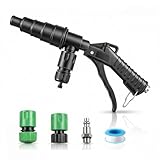
Overview: This lever-action flush gun kit combines water and compressed air for aggressive cleaning of radiator, coolant, and heater core systems. It includes a flush gun, hose adapters, air fittings, PTFE tape, and five universal vent nozzles sized for 19–40mm hoses.
What Makes It Stand Out: The dual-action (water + air) flushing mechanism generates powerful turbulence to dislodge stubborn debris like rust and scale—critical for restoring heater function. The ergonomic lockable trigger and extensive adapter range (including 1/4" air inlet) ensure broad compatibility and fatigue-free operation.
Value for Money: Competitively priced for its professional-grade performance, it outperforms basic flush guns and avoids costly mechanic visits for heater core clogs. The durable build justifies the cost versus disposable alternatives.
Strengths and Weaknesses: Strengths: Exceptional debris removal; wide hose compatibility; leak-proof PTFE tape included; intuitive one-step setup. Weaknesses: Requires external air compressor; bulky for tight engine bays; nozzle sizes may not fit all European models.
Bottom Line: A top-tier DIY solution for persistent cooling system blockages. Highly recommended for owners battling poor cabin heat, provided an air source is available.
3. Liqui Moly Radiator Cleaner | 300 ml | Cooler additive | SKU: 2051

Overview: This 300ml concentrate is a chemical coolant system cleaner designed to dissolve sludge, rust, and scale without disassembly. Simply add to the coolant reservoir, run the engine, and flush—ideal for preventive maintenance or mild contamination.
What Makes It Stand Out: Its formulation prioritizes safety for aluminum, rubber, and seals, avoiding corrosive damage common in harsh cleaners. As a trusted German brand, Liqui Moly ensures consistent quality in a compact, no-mess application.
Value for Money: Affordable for its capacity (treating most systems with one bottle), it’s economical versus full system flushes. However, severe blockages may require mechanical intervention, limiting ROI in critical cases.
Strengths and Weaknesses: Strengths: Non-corrosive; preserves system components; easy pour-and-run use; lightweight. Weaknesses: Not for severe clogs; requires full system flush afterward; minimal impact on physical obstructions like debris.
Bottom Line: A reliable preventative tool for routine upkeep but insufficient for neglected systems. Best paired with mechanical flushing for moderate issues; recommended for annual maintenance.
4. Gulfmew Coolant System Flush Gun, Lever Action Heater Core Flush Kit, Radiator/Cooling System Flusher, Air and Water Combo Flushing Set with Nozzles for 19-40 mm Hoses (Yellow)

Overview: This yellow flush gun kit uses air-water combo technology for intensive radiator and heater core cleaning. Includes a corrosion-resistant gun, garden hose connector, air fitting, PTFE tape, and five nozzles (19–40mm) for universal fitment.
What Makes It Stand Out: Engineered for durability in harsh environments, its corrosion-resistant body withstands repeated chemical exposure. The pressure-controlled trigger with lock feature enables sustained flushing without hand strain, enhancing user comfort during extended use.
Value for Money: Matches QUFYSK’s capabilities at a similar price point but emphasizes ruggedness for workshop settings. Excellent value for frequent users needing a reliable, long-lasting tool versus occasional DIYers.
Strengths and Weaknesses: Strengths: Robust industrial build; precise pressure control; comprehensive nozzle set; efficient debris removal. Weaknesses: Air compressor dependency; slightly heavier than competitors; no brand-specific technical support mentioned.
Bottom Line: A durable, professional-grade choice for mechanics or enthusiasts facing recurring blockages. Prioritize if longevity matters; skip if lacking air tools.
5. EPAuto Spill Proof Radiator Coolant Filling Funnel Kit

Overview: This patented funnel kit prevents spills and air pockets during coolant refills, featuring color-matched caps, a 5" extension bar, and a 45° elbow. Designed for precise filling under constrained engine covers.
What Makes It Stand Out: The USPTO-patented (US10519019B2) spill-proof design uniquely seals the radiator neck, eliminating messy overflows. The adjustable extension/elbow combo provides unmatched access to awkwardly positioned reservoirs—a game-changer for modern compact hoods.
Value for Money: Inexpensive yet solves a universal pain point (spills/trapped air). Cheaper than coolant waste or heater malfunctions from improper filling, making it indispensable for routine maintenance.
Strengths and Weaknesses: Strengths: Eliminates spills; prevents airlocks; versatile angles; color-coded caps. Weaknesses: No flushing capability; plastic construction may crack over time; limited utility beyond refilling.
Bottom Line: A must-have for hassle-free coolant top-offs. Essential for beginners and valuable for pros—highest ROI among basic maintenance tools. Buy it even if you own other kits.
6. Orion Motor Tech Coolant Vacuum Refill Kit, Cooling System Vacuum Fill Tool with Leak Detector 5 Round Adapters 1 Conical Adapter, Radiator Coolant Fill Kit with Dual-Movement Gauge for Vacuum Leak

Overview:
This professional-grade vacuum refill kit streamlines coolant system maintenance by eliminating air pockets that cause overheating. Designed for DIYers and mechanics, it replaces tedious traditional filling methods with a three-step vacuum process, ensuring precise coolant levels and leak detection.
What Makes It Stand Out:
Its standout feature is the dual-function capability: achieving -27 inHg vacuum to purge air pockets and detecting leaks via the integrated gauge. The comprehensive adapter set (5 round sizes + conical) covers US, EU, and Japanese vehicles, while the corrosion-resistant aluminum/brass construction and blow-molded case ensure durability and portability.
Value for Money:
Priced mid-range for pro tools, it justifies cost through time savings (filling in minutes) and prevention of costly engine damage from airlocks or undetected leaks. Cheaper alternatives lack the leak-detection feature and adapter versatility, making this a smarter long-term investment.
Strengths and Weaknesses:
Strengths: Rapid air removal prevents overheating; leak detection adds critical diagnostic value; universal adapters fit most radiators; rugged case protects components. Weaknesses: Requires a separate vacuum pump (not included); conical adapter may not seal perfectly on all overflow bottles; learning curve for first-time users.
Bottom Line:
Essential for anyone serious about cooling system maintenance, this kit delivers unmatched efficiency and diagnostic capability. Highly recommended for preventing overheating issues and ensuring reliable fills, despite the need for an external pump.
7. Lisle 60900 Heater Core Backflush Tool

Overview:
A focused solution for heater core maintenance, this tool simplifies backflushing to remove debris and restore heat output. It connects directly to garden hoses, leveraging water pressure to clear clogs in automotive heating systems without complex setup.
What Makes It Stand Out:
Its one-handed operation is the key innovation: the heavy-duty spray gun allows precise pressure control via a squeezable handle, while the insulated grip protects against hot water during system flushes. The triple-size tip (1/2", 5/8", 3/4") ensures compatibility with most heater hoses.
Value for Money:
Exceptional value as a specialized, no-frills tool. At a fraction of multi-component kit costs, it performs its single task (backflushing) reliably. Cheaper plastic alternatives often crack under pressure, while pricier kits add unnecessary features for this specific job.
Strengths and Weaknesses:
Strengths: Simple, durable construction; ergonomic insulated handle; intuitive pressure control; broad hose compatibility. Weaknesses: Lacks air-assisted flushing for stubborn blockages; no storage case; requires manual hose disconnection for air pocket clearing.
Bottom Line:
A highly effective, budget-friendly tool for basic heater core flushing. Ideal for mechanics needing a reliable, no-nonsense solution, though those facing severe clogs may need supplemental air pressure tools.
8. Gulfmew Coolant System Flush Gun, Lever Action Heater Core Flush Kit, Radiator/Cooling System Flusher, Air and Water Combo Flushing Set with Nozzles for 19-40 mm Hoses (Blue)

Overview:
This versatile blue flush gun combines air and water pressure for deep cleaning of cooling systems, targeting stubborn heater core blockages. It’s designed for efficient removal of rust, scale, and debris in both automotive and light industrial applications.
What Makes It Stand Out:
The integrated air-water combo system is its hallmark, enabling powerful pulsating flushes that water-only tools can’t match. The lever-action trigger with locking latch reduces hand fatigue during extended use, while five nozzle sizes (19–40mm) cover most heater hoses.
Value for Money:
Competitively priced for a dual-action kit, it outperforms single-medium flushers by tackling severe clogs faster. The included PTFE tape and corrosion-resistant build add longevity, making it cost-effective versus repeated use of basic tools.
Strengths and Weaknesses:
Strengths: Air/water synergy clears tough debris; comfortable locking trigger; broad nozzle compatibility; durable materials; simple setup. Weaknesses: Requires both garden hose and air compressor; no storage case; air inlet lacks pressure regulation.
Bottom Line:
A top choice for thorough cooling system maintenance, especially for clogged heater cores. Its efficiency justifies the need for two power sources, earning strong recommendation for DIYers with compressor access.
9. OEMTOOLS No-Spill Coolant Funnel Kit, 15 Piece Fluid and Oil Funnel Set, Allows Access To Hard-To-Reach Radiators

Overview:
This 15-piece funnel system solves messy coolant refills by preventing spills and air entrapment during radiator servicing. Its angled extensions and adapters target modern vehicles with recessed or awkward filler necks, ensuring clean, bubble-free fills.
What Makes It Stand Out:
The spill-proof fluid stopper—a silicone valve that seals on removal—is revolutionary, eliminating drips. The 45° angled adapter and 5-inch extension provide unmatched access to tight spaces, while 9 total adapters cover most domestic and import radiators.
Value for Money:
Excellent value as an all-in-one solution. Cheaper funnels lack spill prevention and versatility, often leading to wasted coolant and rework. The comprehensive kit pays for itself in saved fluids and time, especially for frequent maintenance.
Strengths and Weaknesses:
Strengths: Truly spill-free operation; exceptional reach for confined areas; prevents airlocks; transparent funnel aids visibility; robust storage case. Weaknesses: Adapters may not fit some European models; stopper requires careful cleaning; not designed for vacuum filling.
Bottom Line:
A must-have for clean, professional coolant changes. Its spill prevention and accessibility features make it indispensable for modern vehicles, highly recommended despite minor compatibility limitations.
10. Gulfmew Coolant System Flush Gun, Lever Action Heater Core Flush Kit, Radiator/Cooling System Flusher, Air and Water Combo Flushing Set with Nozzles for 19-40 mm Hoses

Overview:
An upgraded variant of Gulfmew’s flush kit, this version includes dual garden hose connectors for enhanced flexibility during cooling system maintenance. It maintains the core air-water combo functionality for removing debris from heater cores and radiators.
What Makes It Stand Out:
The inclusion of two garden hose connectors (vs. one in Product 8) allows easier switching between water sources or setups. Retaining the lever-action trigger with lock and five nozzles (19–40mm), it delivers the same powerful pulsating flushes for deep-cleaning efficiency.
Value for Money:
Slightly better value than Product 8 due to the extra connector, which minimizes setup interruptions. For the marginal price increase, users gain practical convenience during complex flushes, outperforming single-connector kits in workshop efficiency.
Strengths and Weaknesses:
Strengths: Dual hose connectors streamline workflow; air/water combo tackles severe blockages; comfortable locking trigger; corrosion-resistant build. Weaknesses: Still requires air compressor; no pressure gauge for air; lacks storage case; PTFE tape rolls are minimal.
Bottom Line:
The dual hose connectors make this the superior choice for frequent users over Product 8. Highly recommended for mechanics prioritizing workflow efficiency in coolant system servicing.
Understanding Your Vehicle’s Coolant System Needs
Before grabbing any kit off the shelf, it’s crucial to grasp the fundamentals of your specific cooling system. Modern vehicles are complex, and coolant requirements vary significantly based on age, make, model, and even engine type. Using the wrong process or incompatible chemicals can lead to seal damage, accelerated corrosion, or ineffective cleaning.
The Critical Role of Coolant Chemistry
Coolant isn’t just colored water; it’s a sophisticated blend of ethylene glycol or propylene glycol, corrosion inhibitors, anti-foaming agents, and pH stabilizers. Over time, these additives deplete, the coolant becomes acidic, and corrosion sets in. A proper flush kit must effectively remove this degraded mixture and all its byproducts without introducing new contaminants or harming the remaining system integrity. Understanding whether your vehicle requires specific organic acid technology (OAT), hybrid organic acid technology (HOAT), or older inorganic acid technology (IAT) coolant is paramount for post-flush refilling, though the flush process itself aims for universal removal.
Recognizing System Complexity
Today’s cooling systems are intricate networks involving the radiator, heater core, engine block passages, water pump, thermostat, overflow reservoir, and often transmission oil coolers or turbocharger intercoolers. Some vehicles have multiple thermostats or complex bypass circuits. A good flush kit needs the capacity and design to circulate cleaning solution effectively through all these pathways, not just the main radiator hoses. Systems with aluminum components require gentler processes than older cast-iron engines, demanding kits formulated to avoid etching or pitting.
Identifying Contamination Types
What’s lurking in your old coolant? It could be simple sediment, rust flakes from an aging radiator, degraded coolant turning into gel-like sludge, or even oil contamination from a failing head gasket. Different contaminants may require slightly different flushing approaches. Kits with stronger degreasers might tackle oily residues better, while gentler circulation-focused kits are ideal for simple coolant replacement where minimal sludge is present. Assessing your current coolant’s condition (color, clarity, presence of particles) helps select the most appropriate flushing method.
Essential Components of an Effective Flush Kit
Not all coolant flush kits are created equal. The tools and chemicals included determine the thoroughness, safety, and ease of the job. Knowing what components matter most helps you evaluate any kit’s potential effectiveness for your specific situation.
The Circulation Pump Mechanism
This is the heart of most modern kits. A reliable, self-priming pump (often 12V powered via the cigarette lighter or battery clamps) creates positive pressure to push cleaning solution through the system, replacing the need for engine running. Look for pumps with adjustable flow rates – higher flow helps dislodge stubborn deposits, while lower flow is gentler on older seals. Durability and leak-proof connections are non-negotiable; a pump failure mid-flush creates a huge mess and incomplete job.
Quality of the Flush Solution
The chemical formula is critical. Effective solutions are typically neutral-pH or slightly alkaline cleaners designed to dissolve rust, scale, and organic sludge without attacking aluminum, rubber hoses, or plastic components. Avoid harsh acids or strong solvents unless specifically recommended for extreme cases (and even then, with extreme caution). The best solutions emulsify contaminants, keeping them suspended for easy removal, rather than just breaking them loose where they might re-settle. Concentration matters too – pre-mixed solutions offer convenience, while concentrates provide value and flexibility for larger systems.
Hoses, Adapters, and Fittings
A comprehensive kit includes a wide array of hose sizes and specialized adapters to connect securely to common radiator necks, heater hoses, and drain points. Universal clamps or quick-connect fittings are essential for a leak-free seal on various hose diameters. Kits designed for modern European or Asian vehicles often include specific adapters for plastic quick-disconnects common on heater lines. Missing the right adapter renders even the best pump and solution useless for your specific car.
Collection Reservoir and Drain System
You need a place for the dirty old coolant and flush solution to go! A sturdy, clearly marked reservoir (usually 2-5 gallons) with a secure cap and easy drain valve is vital. Some kits integrate the reservoir with the pump base for stability. Ensure the drain hose is long enough and has a valve for controlled disposal – coolant is hazardous waste and must be handled responsibly. Avoid kits where the reservoir feels flimsy or prone to tipping.
Compatibility: Matching the Kit to Your Vehicle
Choosing a kit that physically and chemically aligns with your car is non-negotiable for safety and effectiveness. Ignoring compatibility risks damage and a wasted effort.
Year, Make, Model, and Engine Specificity
This is step zero. Cooling system designs changed dramatically even within the same model year. A kit perfect for a 2015 sedan engine might not fit the hose connections on the same year’s V6 SUV variant. Always verify the kit manufacturer’s compatibility chart before purchase, paying close attention to engine displacement and configuration. Don’t assume a “fits most Fords” claim covers your specific EcoBoost engine.
Coolant Type Sensitivity
While the flush process aims to remove all old coolant, the materials used in the kit (hoses, seals, pump components) must be resistant to the harsh chemicals they’ll encounter, including potential residue of OAT, HOAT, or IAT coolants. Reputable kits use chemically resistant materials like EPDM rubber and specific plastics known to withstand prolonged exposure to glycol-based mixtures and common flush solutions.
System Capacity Considerations
Cooling system capacities range from under 5 quarts in small cars to over 15 quarts in large trucks or performance vehicles. Your flush kit’s reservoir and solution volume must comfortably exceed your system’s total capacity (usually stated in the owner’s manual) to allow for multiple flush cycles. Running out of solution mid-process or having an undersized reservoir means incomplete flushing and contaminated new coolant.
Safety and Environmental Responsibility
Working with coolant demands respect. It’s toxic to humans and animals, and improper disposal harms the environment. A responsible flush kit facilitates safe handling and encourages proper disposal practices.
Built-in Safety Features
Look for kits with overflow protection in the reservoir to prevent spills if the system burps air unexpectedly. Secure, non-slip pump bases prevent accidents. Kits with clear hoses allow you to visually monitor flow and contamination levels. Battery-powered pumps should have reverse polarity protection to avoid frying your car’s electronics. Never bypass safety features for perceived convenience.
Handling Toxic Substances Safely
Ethylene glycol coolant is deadly if ingested, even in small amounts, and readily absorbed through skin. Always wear nitrile gloves and safety glasses. Work in a well-ventilated area. Keep pets and children far away from the work zone. Have absorbent materials (kitty litter, spill pads) on hand for any drips. Kits that minimize open handling of old coolant (e.g., sealed reservoir systems) significantly reduce exposure risk.
Proper Disposal Protocols
Old coolant and flush solution are hazardous waste. Never pour them down drains, storm sewers, or onto the ground. Most auto parts stores and repair shops accept old coolant for recycling. Your flush kit shouldn’t encourage improper disposal; responsible kits often include information on local disposal facilities or partner with recycling programs. Factor disposal logistics into your planning – it’s part of the job.
Executing a Successful Flush: Beyond the Kit
Having the right tools is only half the battle. Technique and preparation are equally important for a genuinely clean system and long-term reliability.
Pre-Flush Inspection and Preparation
Before connecting anything, perform a thorough visual check. Look for obvious leaks, cracked hoses, or a radiator filled with debris. Check the coolant level and condition in the overflow tank. Ensure the engine is completely cold to prevent burns from pressurized hot coolant. Locate all drain points (usually radiator petcock and engine block drain plugs) and have replacements ready if they’re corroded. Consult your vehicle’s service manual for specific bleeding procedures – many modern cars require complex steps to remove air pockets after refilling.
The Flushing Process Itself
Follow the kit instructions meticulously, but understand the why behind each step. Typically, this involves draining the old coolant, connecting the kit to a heater hose or radiator hose, circulating clean water first to remove bulk debris, then circulating the flush solution for the recommended time (often 10-20 minutes of circulation), followed by multiple clean water cycles until the outflow runs completely clear. Patience is key; rushing the water flushes leaves contaminants behind. Monitor the process closely for leaks or unexpected behavior.
Post-Flush Procedures and Refilling
After the final water flush runs crystal clear, it’s time to refill with the correct type and concentration of new coolant (usually a 50/50 mix of coolant and distilled water, unless specified otherwise by the manufacturer). Refilling often requires specific procedures to bleed air from the system – this might involve running the engine with the radiator cap off, using a special bleed screw, or cycling the heater controls. Failure to properly bleed air causes hot spots, overheating, and heater malfunction. Never skip the post-flush pressure test if your kit includes a cap; it verifies the system’s integrity before you hit the road.
Frequently Asked Questions
Frequently Asked Questions
How often should I perform a coolant flush? Most manufacturers recommend a complete coolant replacement every 30,000 to 60,000 miles, but this varies wildly. Always consult your specific vehicle’s owner’s manual for the definitive interval, as some modern extended-life coolants can last 100,000+ miles. Visual inspection of the coolant (color, clarity, debris) is also a good indicator.
Can I just drain and refill without a flush kit? A simple drain and refill only replaces about 40-50% of the old coolant trapped in the engine block and heater core. A proper flush, circulating solution through the entire system, is necessary to remove degraded coolant, contaminants, and ensure fresh inhibitor levels throughout for optimal protection.
Are chemical flush solutions safe for aluminum engines? High-quality, pH-neutral flush solutions specifically designed for automotive use are generally safe for aluminum. Avoid harsh acidic or alkaline cleaners not formulated for cooling systems, as these can corrode aluminum components. Always check the solution’s specifications.
What’s the biggest mistake people make when flushing coolant? Rushing the water flush cycles after using the chemical solution. Stopping too soon leaves traces of the cleaner or dislodged contaminants in the system, which can react with the new coolant or cause blockages. Flush with clean water until the outflow is absolutely clear.
Do I need to replace the thermostat during a coolant flush? It’s not mandatory every time, but the flush is an ideal opportunity. Thermostats are relatively inexpensive and prone to failure. Since you’re already draining the system, replacing the thermostat (and ensuring it’s the correct temperature rating) is a prudent preventative measure.
How do I know if the flush was actually effective? The best indicator is the clarity of the final water flushes – they should run completely clear, not discolored or cloudy. After refilling and running the engine, check that the temperature gauge operates normally, the heater blows consistently hot air, and there are no new leaks or air pockets causing overheating.
Can a coolant flush fix an overheating problem? It might, if the overheating was caused by blocked passages from sludge or degraded coolant reducing heat transfer. However, overheating can also stem from a faulty thermostat, water pump, radiator fan, or head gasket failure. A flush won’t fix mechanical failures, so diagnose the root cause first.
Is it safe to use a flush kit on a high-mileage vehicle with unknown service history? Proceed with caution. If the system is heavily sludged, a vigorous flush could dislodge debris that causes immediate blockages in narrow passages. For very neglected systems, a gentler initial flush with just water or a mild solution might be safer, potentially requiring multiple sessions over time.
Why is distilled water essential for mixing new coolant? Tap water contains minerals that can form scale deposits inside the cooling system when heated, reducing efficiency and promoting corrosion. Distilled or deionized water is pure H2O, ensuring the coolant mixture maintains its protective properties and heat transfer capabilities.
What should I do with the old coolant and flush solution? Treat it as hazardous waste. Store it securely in labeled, leak-proof containers. Take it to an auto parts store, repair shop, or municipal hazardous waste collection facility that accepts used coolant. Never pour it onto the ground, into storm drains, or down household drains.
See Also
- 10 Most Durable Cooling System Flush Kits Based on Real User Reviews in 2026
- The 10 Most Revolutionary Coolant Flush Hose Kits of 2026
- 10 Most Durable Radiator Flush Kits Based on Real User Reviews in 2026
- 10 Best Budget Coolant Flush Kits Under $100 for Basic Maintenance in 2026
- 10 Affordable Coolant Flush Kits That Don’t Sacrifice Quality in 2026