Table of Contents
Picture this: you’re miles from the nearest service station, the telltale thump-thump-thump of a flat tire echoing under your car, and your cell service has vanished. That sinking feeling is all too familiar for many drivers. While roadside assistance is great, waiting hours for help isn’t ideal when you just need enough air to reach a repair shop safely. This is where a reliable cordless air compressor transforms from a handy gadget into an essential lifeline, putting the power to handle minor tire emergencies directly in your hands, anytime, anywhere.
Gone are the days of relying solely on bulky, corded units tethered to your car’s cigarette lighter or desperately searching for a gas station air pump. Modern cordless technology has advanced significantly, offering compact, powerful solutions designed specifically for the urgent task of inflating a deflated tire on the side of the road. Choosing the right one, however, isn’t just about grabbing the first compact unit you see. Understanding the critical features that impact performance, portability, and real-world usability is key to ensuring your investment actually works when you need it most. Let’s cut through the marketing hype and focus on what truly matters for quick, effective flat tire repairs.
Top 10 Cordless Air Compressors
Detailed Product Reviews
1. DEWALT Tire Inflator Portable Air Compressor 20V MAX, Car Air Pump with Automatic Shut Off, LED Light, Tool Only (DCC020IB)

Overview: This cordless inflator leverages DEWALT’s 20V MAX ecosystem, targeting professionals and DIYers needing reliable tire inflation on the go. It operates as a standalone tool without included battery or charger.
What Makes It Stand Out: Triple power versatility (20V battery, 12V DC, or 110V AC) ensures usability anywhere. The automatic shutoff prevents over-inflation, while heavy-duty rubber feet minimize vibration “walking.” Its threaded chuck guarantees secure valve connections, and the LED light aids low-visibility use.
Value for Money: Priced moderately for the DEWALT brand, it justifies cost through durability, multi-source power, and a robust 3-year warranty. Lacks included battery, but existing 20V MAX owners gain exceptional utility. Competes well against single-power inflators at similar price points.
Strengths and Weaknesses: Strengths: Reliable automatic shutoff, versatile power options, stable operation, and strong warranty. Weaknesses: Battery and charger sold separately, limiting immediate usability; slightly bulkier than ultra-portable models.
Bottom Line: An excellent investment for DEWALT 20V ecosystem users seeking a versatile, durable inflator. Its multi-power design and safety features make it a top value despite the “tool only” caveat. Highly recommended for regular automotive use.
2. KeenPower Tire Inflator Portable Air Compressor - Super Fast - 21V Rechargeable Battery Powered Handheld 160PSI Tire Inflator, Dual Power Supply Modes, Portable Air Pump for Car Motorcycle E-Bike
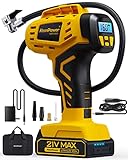
Overview: This compact inflator prioritizes speed and emergency readiness with dual power modes (cordless 21V battery or 12V DC corded) and rapid inflation up to 160 PSI, suitable for cars, motorcycles, and e-bikes.
What Makes It Stand Out: Its standout feature is a 1-hour full battery charge time and QC3.0 USB output for device charging. The built-in flashlight offers SOS/strobe modes for emergencies, while automatic shutoff ensures precise pressure. Ergonomic design allows handheld or ground use.
Value for Money: Offers strong value with its fast charging, dual-power reliability, and multipurpose utility (tire inflation + power bank). The 12-month warranty and 30-day return policy reduce purchase risk, outperforming budget models lacking USB-C power delivery.
Strengths and Weaknesses: Strengths: Extremely fast charging, emergency flashlight modes, USB device charging, and reliable automatic shutoff. Weaknesses: Battery life may struggle with multiple large tires; not for trucks. Build quality slightly less rugged than premium brands.
Bottom Line: Ideal for commuters and adventurers needing rapid, reliable inflation and emergency power. Its speed, dual-power flexibility, and safety lights justify the price. A top pick for daily drivers seeking peace of mind.
3. Milwaukee M18 Inflator 2848-20
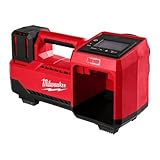
Overview: Milwaukee’s professional-grade inflator delivers blistering speed, specifically engineered for quick top-offs on passenger and light truck tires using the M18 battery system. It’s a no-frills tool focused purely on performance.
What Makes It Stand Out: Milwaukee claims it tops off 33" light truck tires in under a minute—the fastest in its class. Optimized for medium-duty tires, it includes essential brass accessories (Schrader/Presta chucks, needle, nozzle) for versatility beyond tires.
Value for Money: Positioned as a premium tool for tradespeople, its value lies in unmatched speed and Milwaukee’s durability. Requires an M18 battery (sold separately), so existing users gain exceptional ROI. Less cost-effective for casual users without the ecosystem.
Strengths and Weaknesses: Strengths: Industry-leading inflation speed, robust build, comprehensive included accessories, and M18 compatibility. Weaknesses: No AC adapter or built-in light; limited to M18 users; lacks automatic shutoff (manual monitoring needed).
Bottom Line: The definitive choice for Milwaukee M18 owners needing rapid tire top-offs in professional settings. Its speed justifies the investment for contractors, though casual users may prefer more feature-rich alternatives.
4. AstroAI Cordless Tire Inflator Air Compressor 20V Rechargeable Battery Powered 160PSI Portable Air Pump with 12V Car Power Adapter Digital Pressure Gauge for Cars Motorcycles JY16P160-18(C2)Yellow

Overview: A budget-friendly, all-in-one inflator with a 20V rechargeable battery, 12V car adapter, and metal construction, targeting everyday drivers for cars, motorcycles, and sports equipment up to 160 PSI.
What Makes It Stand Out: Features a metal cylinder/gear for sustained 20-minute operation and an intuitive backlit LCD displaying preset/current pressure. Dual power (battery/car adapter) ensures reliability, while a 1-hour battery charge time and 4-tire capacity enhance convenience.
Value for Money: Excellent value under $50, including battery, charger, and storage bag. Outperforms cheaper plastic models with metal durability and automatic shutoff. Lacks USB-C charging but covers core needs efficiently for infrequent users.
Strengths and Weaknesses: Strengths: Affordable all-inclusive kit, metal durability, clear LCD pressure display, fast charging. Weaknesses: Shorter runtime than premium models; LED light less powerful; plastic housing less rugged.
Bottom Line: A smart, economical pick for occasional use. Its reliability, included accessories, and metal internals make it the best budget inflator for most drivers—ideal for glove-box emergency readiness.
5. AstroAI L7 Tire Inflator Portable Air Compressor Cordless Mini Bike Pump with Digital Dual Values Display, 150 PSI Car Tires Air Pump with LED Lights&Pressure Gauge for Auto, Motorcycles, Bikes, Balls
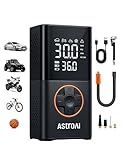
Overview: This ultra-compact inflator (under 1 lb) combines advanced pressure sensing, rapid inflation, and emergency tools like USB-C power delivery, targeting cyclists and drivers needing portability without sacrificing features.
What Makes It Stand Out: Its TrueGauge sensor samples pressure 200x/sec for exceptional accuracy (80%+ valid data rate). The 4000mAh battery inflates 8 car tires per charge, and dual USB ports enable device charging. 2x faster inflation (1.5 min/tire) and 4+1 smart modes enhance usability.
Value for Money: Priced slightly above basic models, it delivers premium features: superior accuracy, extended runtime, USB-C power bank capability, and SOS flashlight. Beats competitors in tech integration for cyclists and tech-savvy drivers.
Strengths and Weaknesses: Strengths: Class-leading accuracy, long battery life, USB-C power delivery, ultra-portable design, versatile inflation modes. Weaknesses: Lower max pressure (150 PSI) vs. competitors; not for larger SUVs/trucks.
Bottom Line: The ultimate portable companion for accuracy-focused users. Its sensor tech, multi-device charging, and compact size make it indispensable for cyclists and commuters. A premium upgrade worth every penny for frequent users.
6. CRAFTSMAN Tire Inflator Portable Air Compressor, Cordless Mini Air Pump for Car Tires with Digital Tire Pressure Gauge, 6000mAh Battery Powered Air Pump, Max Pressure 150 PSI, 12V DC Corded

Overview: This compact CRAFTSMAN inflator delivers reliable, cordless tire inflation powered by a 6000mAh battery, supporting pressures up to 150 PSI. Designed for cars, bikes, motorcycles, and sports balls, it combines portability with essential safety features like automatic shut-off. What Makes It Stand Out: Its versatility shines through five inflation modes (including custom presets), dual power options (battery or 12V cord), and four pressure units. The built-in LED light aids nighttime use, while the USB port doubles as a phone charger—adding unexpected utility beyond tire inflation. Value for Money: Priced competitively, it justifies cost with robust features rarely matched at this tier. The included accessories (nozzles, cords) and CRAFTSMAN’s reputation for durability offer better long-term value than cheaper, single-use alternatives, especially for frequent travelers. Strengths and Weaknesses: Strengths: Fast inflation (45 seconds for car tires), intuitive digital display, excellent portability (1.28 lbs), and multi-device charging capability. Weaknesses: Battery life may fall short for multiple large SUV tires, and the digital gauge can be hard to read in direct sunlight. Bottom Line: A well-rounded, feature-rich inflator ideal for daily drivers and road trips. Its balance of speed, convenience, and added functionality makes it a top choice for most consumers seeking reliable cordless performance.
7. OlarHike Cordless Tire Inflator Portable Air Compressor, 150PSI Dual Power - 6000mAh & 12V DC, Air Pump for Car Tires, Bike, Motorcycle, Balls with LED & Digital Pressure Gauge, Car Gifts

Overview: The OlarHike inflator merges dual-power flexibility (6000mAh battery or 12V cord) with rapid inflation for cars, SUVs, bikes, and balls. It targets users needing reliability on the go, featuring a bright display and auto shut-off to prevent over-inflation. What Makes It Stand Out: Dual power operation ensures uninterrupted use, while its claimed speed (55 seconds for car tires) and high battery capacity (18 car tires per charge) set it apart. The memory function for last-used settings and four pressure units streamline repeated use. Value for Money: Excellent value for budget-conscious buyers, offering near-premium features at a mid-range price. The dual-power design eliminates range anxiety, and the included accessories make it a practical alternative to pricier models with similar specs. Strengths and Weaknesses: Strengths: Very fast for standard tires, long battery life, user-friendly presets, and useful USB device charging. Weaknesses: Odd 51 PSI car tire limit (despite 150 PSI max), and the display lacks backlighting for true low-light visibility. Bottom Line: A smart, efficient pick for everyday drivers and adventurers. Despite the puzzling PSI restriction, its speed, battery endurance, and dual-power convenience deliver outstanding utility for the price.
8. ETENWOLF VORTEX S6 Tire Inflator Portable Air Compressor for Heavy-duty Vehicle, Cordless Air Pump for Car & Inflatables with 19200 mAh Battery, 100% Duty Cycle & Dual Cylinder Bike Pump, Vivid Orange

Overview: Engineered for heavy-duty use, the ETENWOLF VORTEX S6 tackles trucks, pickups, and large tires with a massive 19200mAh battery and dual-cylinder design. It promises non-stop inflation for demanding applications, from off-road vehicles to air mattresses. What Makes It Stand Out: Unmatched battery capacity (18 F-150 tires per charge) and 100% duty cycle allow continuous operation without overheating—critical for fleet or worksite use. The ultra-fast 1.5 CFM flow rate (fills a 31" tire in 1 minute) and 1000-lumen LED lantern elevate it beyond standard inflators. Value for Money: Premium-priced but justified for professionals or heavy-vehicle owners. The industrial-grade durability, dual-direction 45W USB-C charging, and ability to handle extreme loads offer superior ROI compared to consumer models that overheat under stress. Strengths and Weaknesses: Strengths: Exceptional speed for large tires, virtually unlimited runtime, rugged build, and versatile LED lighting. Weaknesses: Bulky design (less ideal for compact cars), expensive, and incompatible with stand-up paddleboards (SUPs). Bottom Line: The definitive choice for trucks, RVs, and commercial use where speed and endurance matter most. Worth the investment if you regularly inflate large or multiple tires without breaks.
9. CRAFTSMAN V20 Air Compressor Portable, Cordless Tire Inflator, Up To 150 PSI Tire Pump, with Digital Pressure Gauge, Tool Only (CMCE521B)

Overview: This streamlined CRAFTSMAN inflator prioritizes precision and compatibility with the brand’s V20 battery system. It delivers up to 150 PSI pressure with an accurate digital gauge but requires a separate battery purchase (sold as “tool only”). What Makes It Stand Out: The optimized D-handle ensures comfortable grip during extended use, while the highly accurate digital display (-2 PSI variance) provides reliable readings. Seamless integration with CRAFTSMAN’s V20 ecosystem is its core appeal for existing tool owners. Value for Money: Good value only if you already own CRAFTSMAN V20 batteries—otherwise, the total cost rises significantly. It lacks extras like preset modes or USB ports, making it less versatile than similarly priced competitors that include batteries. Strengths and Weaknesses: Strengths: Excellent ergonomics, precise pressure monitoring, and brand reliability. Weaknesses: No battery included, limited features (no auto shut-off memory or multiple inflation modes), and fewer accessories than rivals. Bottom Line: A solid specialist tool for CRAFTSMAN V20 system owners needing a no-frills inflator, but hard to recommend for newcomers due to the mandatory battery purchase and minimal features.
10. Tire Inflator Portable Air Compressor - 4X Faster Inflation, 160PSI Cordless Tire Pump with Dual Power (20V Battery & 12V DC), Auto Shut Off, Digital Gauge for Car, Motorcycle, E-Bike

Overview: This high-speed inflator boasts 4x faster operation than standard pumps, supporting up to 160 PSI for diverse uses—from cars to e-bikes. Its dual-power design (20V battery or 12V cord) and Makita compatibility enhance versatility for tradespeople and adventurers. What Makes It Stand Out: The standout “4x faster” claim targets time-sensitive users, while Makita 14.4V/18V battery compatibility is a major plus for tool ecosystem owners. The ergonomic handheld design and multi-mode LED light improve usability in tight or dark spaces. Value for Money: Exceptional value for Makita users, leveraging existing batteries to avoid extra costs. Even standalone, its speed, dual power, and broad compatibility (RVs, motorcycles, balls) outperform many rivals in its price bracket. Strengths and Weaknesses: Strengths: Blazing speed, Makita battery flexibility, comfortable grip, and compact storage. Weaknesses: Battery not included (like Product 9), and “4x faster” varies significantly by tire size/starting pressure. Bottom Line: A top-tier pick for speed and adaptability, especially for Makita owners. Its broad application range and dual-power reliability make it a versatile, future-proof investment for serious drivers.
Why Cordless is Crucial for Tire Emergencies
When every minute counts during a tire emergency, the limitations of traditional air sources become glaringly obvious. Gas station air pumps are often broken, require coins, or might be miles away. Corded 12V compressors drain your car battery significantly faster than they fill your tire, especially if the tire is very flat, potentially leaving you stranded with a dead battery and a flat tire. A dedicated cordless compressor eliminates these frustrations entirely.
Independence from Vehicle Power
The core advantage lies in complete autonomy. A quality cordless unit operates solely on its internal battery, meaning you can inflate your tire without running your car engine. This preserves your vehicle’s battery for essential functions like lights and communication, a critical safety factor during nighttime breakdowns or in extreme weather. No more worrying about whether your alternator can keep up with the compressor’s demands.
True Portability for Any Location
Size and weight are paramount for an emergency tool. Cordless compressors designed for tire repair are engineered to be compact and lightweight, easily stowing in a glove compartment, trunk organizer, or even a center console. This ensures it’s always with you, ready for action whether you’re on a cross-country trip, a remote hiking trail access road, or simply stuck in a distant parking lot after work. True portability means help is literally within arm’s reach.
Speed and Convenience Factor
Time is safety. Modern high-performance cordless compressors can inflate a standard passenger car tire from 15 PSI to 35 PSI in under 5 minutes – significantly faster than many older or lower-powered models. This speed minimizes your exposure to traffic hazards while you’re working roadside. The simple plug-and-play operation (attach nozzle, press button) means even those unfamiliar with car maintenance can use it effectively under stress.
Decoding Essential Performance Specifications
Not all cordless compressors are created equal, especially when tasked with the demanding job of inflating a tire. Understanding the technical specs relevant to tire repair, rather than just general inflation tasks, is non-negotiable for making a smart choice.
Understanding PSI and CFM Requirements
Tires require significant pressure (PSI), typically 30-35 PSI for most passenger vehicles. Your compressor must be capable of reaching at least 40 PSI to effectively top off a tire to the correct pressure. More critical is the CFM (Cubic Feet per Minute) rating at the target PSI. A unit might claim high CFM at 0 PSI, but its output plummets as pressure builds. Look for a CFM rating of 1.0 or higher specifically at 30+ PSI – this indicates the sustained airflow needed to fill a tire reasonably quickly once pressure starts building.
Battery Capacity and Runtime Realities
The battery is the heart of a cordless compressor. Capacity is measured in watt-hours (Wh) or amp-hours (Ah) at a specific voltage (e.g., 20V, 18V, 20V MAX). Higher Wh generally means longer runtime. However, runtime claims are often optimistic. For tire repair, prioritize units delivering at least 3-5 full tire inflations (from very low pressure to 35 PSI) on a single charge. Consider if the battery is integrated or removable; removable batteries offer the option to carry spares for extended trips.
Motor Type and Durability Considerations
The motor drives the entire process. Brushless motors are superior to brushed motors for this application. They are more energy-efficient (translating to longer runtime per charge), generate less heat (reducing burnout risk during sustained use), and generally last significantly longer – a crucial factor for a tool you hope to use for years between emergencies. Look for units explicitly stating a brushless motor design.
Design Features That Impact Real-World Use
Beyond raw power, the physical design and included features determine how easy and effective the compressor is to use during the stress of an actual flat tire situation. Ergonomics and thoughtful details make a substantial difference.
Integrated Gauge Accuracy and Visibility
Guessing your tire pressure is dangerous and counterproductive. An integrated, high-contrast pressure gauge is essential. It must be accurate (±1 PSI is ideal) and large enough to read clearly, even in low-light conditions. Backlit gauges or units with illuminated displays are a major plus for nighttime use. Avoid models relying solely on less accurate external gauges or apps.
Hose Length, Nozzle Design, and Storage
A frustratingly short hose limits where you can position the compressor relative to the tire valve. Aim for a minimum hose length of 12-18 inches for practical maneuverability. The nozzle design should be secure (a twist-lock Schrader valve head is standard) and easy to attach/detach, even with cold or gloved hands. Consider how the hose and nozzle neatly stow away on the unit itself to prevent loss and tangles in your storage space.
Built-In LED Work Lights
This feature is often underestimated until you need it. A bright, focused LED light mounted near the nozzle is invaluable for seeing the valve stem clearly at night, in tunnels, or during poor weather. It significantly speeds up the connection process and reduces fumbling. Ensure the light is sufficiently bright and has a reasonable beam pattern.
Maximizing Effectiveness: Usage Tips and Tricks
Knowing how to use your cordless compressor properly is just as important as the tool itself. Employing the right techniques ensures faster inflation, preserves battery life, and keeps you safe.
Preparing the Tire Valve Correctly
Before connecting the compressor, always remove the valve stem cap and give the valve core a quick tap with the cap or a small tool to ensure it’s not stuck closed. A stuck valve will prevent air from entering the tire, leading to frustration and wasted battery. Ensure the valve stem is clean and free of debris for a proper seal with the nozzle.
Managing Inflation Cycles and Heat
Compressors generate heat, especially when working hard to fill a very flat tire. Continuous operation for more than 10-15 minutes can cause overheating, triggering thermal shutdown. To prevent this, inflate in cycles: run the compressor for 2-3 minutes, then let it rest for 1-2 minutes while you monitor the gauge. This allows heat to dissipate, maintaining optimal performance and extending the tool’s lifespan. Don’t ignore the heat; it’s a critical safety feature.
Knowing When to Stop: Target Pressure Precision
Set your desired PSI on the compressor (if it has an auto-shutoff feature) before you start inflating. If it doesn’t, keep a close eye on the integrated gauge. Over-inflation is as bad as under-inflation and can damage the tire or make handling unsafe. Stop inflating as soon as you reach the recommended pressure listed on your driver’s side door jamb sticker, not the maximum pressure molded on the tire sidewall.
Maintenance for Long-Term Reliability
A cordless compressor sitting unused in your trunk needs minimal care, but neglect can render it useless when an emergency strikes. Simple, regular maintenance ensures it performs flawlessly when called upon.
Battery Care Fundamentals
Lithium-ion batteries, common in these tools, degrade if stored fully depleted or fully charged for long periods. For optimal longevity, store the compressor with the battery at around 40-60% charge. Check the charge level every 3-4 months and top it up if it drops below 20%. Avoid leaving it in extreme heat (like a closed car in summer) or freezing cold for extended durations.
Cleaning and Storage Protocol
After any use, especially in dusty or muddy conditions, wipe down the compressor body, nozzle, and hose with a dry or slightly damp cloth. Pay special attention to the air intake vents – blockages here cause overheating. Store the unit in a clean, dry place within your vehicle, ideally in a protective case or bag to shield it from dirt, moisture, and impacts from other items shifting in the trunk.
Periodic Testing is Non-Negotiable
Don’t wait for an actual flat to discover your compressor is dead. Every 6 months, or before a long trip, perform a quick test: connect it to a tire (even if properly inflated), turn it on for 30 seconds, and verify it builds pressure and the gauge reads accurately. This confirms battery health, motor function, and gauge calibration. It takes two minutes and provides immense peace of mind.
Safety First: Critical Precautions
Using any power tool, especially roadside, demands awareness of potential hazards. Following basic safety protocols protects you and others during a stressful situation.
Vehicle Safety Before Inflation
Never attempt to inflate a tire while the vehicle is on an unstable surface or without the parking brake firmly engaged. If possible, move completely off the roadway onto a level, hard shoulder. Turn on your hazard lights well before stopping. If you must work near traffic, wear high-visibility clothing. Ensure children and pets are safely inside the vehicle, away from the work area.
Tire Condition Assessment
A cordless compressor is for minor punctures and temporary fixes to reach a repair shop. Never inflate a tire that is visibly damaged (large gashes, sidewall bulges, tread separation), completely flat and driven on (run-flat tires excepted per manufacturer), or has been underinflated for a long distance. Inflating a severely damaged tire can cause catastrophic failure, potentially leading to serious injury. If in doubt, call for professional assistance.
Handling Compressor Heat and Noise
Compressors get hot, especially near the motor and cylinder. Avoid touching these areas during or immediately after operation. Be aware of the noise level; while necessary, it can mask approaching traffic. Stay alert to your surroundings and periodically pause to listen. Keep the compressor stable on the ground, not resting precariously on the tire or wheel rim.
Integrating with Your Overall Emergency Kit
A cordless compressor is a powerful tool, but it’s most effective as part of a comprehensive roadside emergency strategy. Thinking holistically enhances your safety and preparedness.
Complementary Essential Items
Your compressor belongs alongside other critical items: a well-maintained spare tire (or verified run-flat capability), tire changing tools (jack, lug wrench), sturdy work gloves, non-slip footwear, basic first-aid kit, emergency blankets, water, and non-perishable snacks. Reflective warning triangles or flares are vital for increasing visibility to other drivers. A portable power bank for your phone ensures you can call for help if needed.
Knowing Your Vehicle’s Specifics
Familiarize yourself with your vehicle’s tire pressure requirements (found on the door jamb sticker), the location of the spare tire and tools, and the specific jack points before you have a flat. Consult your owner’s manual. Knowing how to safely change a tire is the ultimate backup if the compressor fails or the puncture is beyond a simple air top-up. Practice the process in your driveway once a year.
Digital Resources and Planning
Save the contact info for your roadside assistance provider (if you have one) and local reputable tire shops in your phone. Use mapping apps to identify the nearest tire service centers before you need them. Consider downloading offline maps of your common routes. Inform someone of your travel plans and expected arrival time for longer trips.
Frequently Asked Questions
Frequently Asked Questions
How long does it typically take to inflate a flat car tire with a cordless compressor? Most quality units designed for tire repair can inflate a standard passenger car tire from 15 PSI to 35 PSI in approximately 3 to 7 minutes, depending on the compressor’s CFM rating at that pressure and the battery’s current charge level.
Can I use a cordless air compressor to inflate tires on larger vehicles like SUVs or trucks? Yes, but you must carefully check the compressor’s maximum PSI output and CFM rating at higher pressures (often 40-50 PSI for trucks/SUVs). Ensure it meets or exceeds your vehicle’s required tire pressure. Larger tires will take significantly longer to fill and consume more battery power.
What’s the main difference between a compressor for tire repair and a standard inflator for sports balls? Tire repair compressors are built for high pressure (35-100+ PSI) and have sufficient CFM at those pressures to fill tires reasonably quickly. Standard inflators for balls or inflatables usually max out around 20-30 PSI and lack the sustained airflow needed for tires, making them ineffective for this task.
Do I need to run my car engine while using a cordless compressor? No, that’s a key advantage. A true cordless compressor operates solely on its internal battery, so you do not need to run the engine. This preserves your car battery and is safer, especially in enclosed spaces.
Why does my compressor shut off during inflation? This is almost always a safety feature called thermal overload protection kicking in. The motor overheated due to continuous use, especially when filling a very flat tire. Let the unit cool down for 5-10 minutes before resuming operation in shorter cycles.
Is an auto shut-off feature necessary for tire repair? While not strictly necessary, it’s highly recommended. Auto shut-off stops inflation precisely at your target PSI, preventing over-inflation and saving battery life. Without it, you must constantly monitor the gauge and manually stop the compressor.
How often should I recharge the compressor’s battery if it’s stored in my car? Check the battery charge level every 3-4 months. Lithium-ion batteries self-discharge slowly. Recharge it if the level drops below 20-30%. Avoid storing it fully depleted or fully charged for extended periods; 40-60% is ideal for long-term storage.
Can extreme temperatures affect my cordless compressor’s performance? Yes. Very cold temperatures (below freezing) can temporarily reduce battery capacity and runtime. Extreme heat (above 120°F/49°C) can accelerate battery degradation and trigger thermal shutdown sooner. Store it in a cooler part of the vehicle when possible.
What PSI should I set my compressor to for a flat tire repair? Always inflate to the specific “Cold Inflation Pressure” recommended by your vehicle manufacturer, which is listed on the sticker inside the driver’s side door jamb. Do not use the maximum PSI molded on the tire sidewall. This is typically between 30-35 PSI for passenger cars.
Is it safe to use a cordless compressor on a tire with a slow leak? Yes, a cordless compressor is ideal for temporarily topping up a tire with a slow leak to reach a safe location for proper repair. However, it is not a permanent fix. You must still have the tire inspected and repaired or replaced by a professional as soon as possible.
See Also
- 10 Best Cordless Air Compressors for Quick Tire Repairs This Year
- Stop Guessing Tire Pressure with the 10 Best Air Compressors with Gauges This Year
- Top 10 Best Portable Air Compressors for On-the-Go Tire Inflation in 2026
- Air Compressors with Tire Inflator Function: Are They Worth It for Home Garages?
- The 10 Best Battery Operated Air Compressors Every Off-Roader Needs This Year