Table of Contents
Ever found yourself stranded with a flat tire, staring at a bulky compressor that needs an outlet you don’t have? In today’s fast-paced world, relying solely on gas station air pumps or waiting for roadside assistance feels increasingly outdated. Cordless air compressors have emerged as the unsung heroes for quick tire repairs, transforming how we handle unexpected flats. Forget hauling heavy, corded units from the garage or hunting for power sources – modern cordless technology puts reliable inflation power right in your trunk, ready when you need it most. It’s not just about convenience; it’s about reclaiming control and minimizing downtime during those frustrating roadside moments.
The evolution of lithium-ion batteries has been a game-changer, enabling these compact devices to deliver impressive power without sacrificing portability. Gone are the days when cordless meant weak performance. Today’s models can often inflate a standard passenger car tire from 20 PSI to 35 PSI in under two minutes, making them indispensable for daily commuters, weekend adventurers, and fleet managers alike. But navigating the sea of options can be overwhelming. What truly matters for your tire repair needs? Is raw power the only factor, or are there subtler features that make the difference between a tool you love and one that gathers dust? Understanding the right specifications and design elements is crucial to finding your perfect match.
Top 10 Cordless Air Compressors
Detailed Product Reviews
1. DEWALT Tire Inflator Portable Air Compressor 20V MAX, Car Air Pump with Automatic Shut Off, LED Light, Tool Only (DCC020IB)

Overview:
The DEWALT DCC020IB is a versatile cordless tire inflator designed for automotive, bike, and general inflation tasks. Running exclusively on DEWALT’s 20V MAX battery system (battery sold separately), it offers automatic shutoff, integrated storage, and durable construction for reliable on-the-go use.
What Makes It Stand Out:
Its triple-power flexibility—20V battery, 12V DC, or 110V AC—sets it apart, ensuring operation anywhere. The high-pressure mode with automatic shutoff prevents overinflation, while the threaded chuck guarantees secure valve connections. Heavy-duty rubber feet minimize movement during use, and the built-in LED light aids low-visibility scenarios. The inclusion of deflation modes for inflatables like rafts adds multi-use value.
Value for Money:
Priced competitively as a tool-only unit, it leverages existing DEWALT battery ecosystems, avoiding redundant purchases. Though the battery isn’t included, the 3-year warranty and robust build justify the investment over cheaper single-power alternatives, especially for tradespeople or frequent users.
Strengths and Weaknesses:
Strengths: Triple power sources, automatic shutoff, excellent stability, versatile inflation/deflation modes, 3-year warranty.
Weaknesses: Battery sold separately, no onboard pressure unit switching, slightly bulkier than ultra-portable models.
Bottom Line:
Ideal for DEWALT enthusiasts or professionals needing reliable, multi-environment inflation. Its durability and power flexibility make it a worthwhile buy despite the extra battery cost, earning a strong recommendation for daily drivers and workshops.
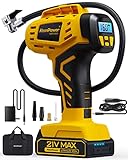
2. KeenPower Tire Inflator Portable Air Compressor - Super Fast - 21V Rechargeable Battery Powered Handheld 160PSI Tire Inflator, Dual Power Supply Modes, Portable Air Pump for Car Motorcycle E-Bike
Overview:
The KeenPower 21V inflator delivers rapid, dual-powered inflation for cars, motorcycles, and e-bikes up to 160 PSI. Its compact design combines a rechargeable battery with 12V DC corded backup, targeting commuters and adventurers needing dependable emergency support.
What Makes It Stand Out:
Dual power modes eliminate dead-battery anxiety, while the 1-hour quick charge and QC3.0 USB output (for device charging) enhance utility. The auto-shutoff precision and triple-mode LED flashlight (SOS/strobe/steady) excel in emergencies. Ergonomic handling and a high-powered motor ensure efficient 160 PSI performance for most passenger vehicles.
Value for Money:
At a mid-range price, it outperforms budget inflators with faster charging, device-power capability, and robust cooling. The 30-day refund and lifetime support offset minor limitations for large trucks, making it a smart pick for routine use and roadside reliability.
Strengths and Weaknesses:
Strengths: Ultra-fast 1-hour charging, dual power, USB device charging, versatile flashlight, strong cooling system.
Weaknesses: Not for large trucks, battery life limited to 4 tires per charge, no preset unit conversions.
Bottom Line:
A top choice for daily commuters seeking speed, emergency readiness, and multi-functionality. Its quick recharge and device support justify the cost, earning high marks for safety-conscious drivers.
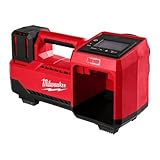
3. Milwaukee M18 Inflator 2848-20
Overview:
Milwaukee’s M18 Inflator is a professional-grade cordless unit optimized for rapid tire inflation on passenger and light-truck vehicles. Built for speed and durability within Milwaukee’s M18 battery ecosystem, it targets tradespeople and heavy-duty users.
What Makes It Stand Out:
It boasts industry-leading speed—topping up 33" light-truck tires in under 60 seconds. The included brass Schrader/Presta chucks and inflation needle ensure compatibility with diverse valves (bikes, motorcycles, SUVs). Compact yet powerful, it leverages M18 battery efficiency for sustained performance without overheating.
Value for Money:
Priced premium but justified for professionals, it outperforms consumer models in throughput. Milwaukee’s reputation for ruggedness and the included accessories (no extra purchases needed) enhance ROI. Cheaper inflators can’t match its light-truck speed, making it cost-effective for frequent use.
Strengths and Weaknesses:
Strengths: Unmatched inflation speed, durable brass components, M18 battery compatibility, ideal for medium-duty tires.
Weaknesses: Battery sold separately, limited consumer features (no auto-shutoff presets or LED lights), narrow focus on tires.
Bottom Line:
Essential for contractors or fleet operators prioritizing speed and reliability. While overkill for casual users, its efficiency for light trucks makes it a standout recommendation in professional settings.
4. AstroAI Cordless Tire Inflator Air Compressor 20V Rechargeable Battery Powered 160PSI Portable Air Pump with 12V Car Power Adapter Digital Pressure Gauge for Cars Motorcycles JY16P160-18(C2)Yellow

Overview:
The AstroAI JY16P160-18 combines metal durability with dual-power convenience, targeting car and motorcycle owners needing a portable 160 PSI solution. It includes a 20V battery, charger, and storage bag for immediate use.
What Makes It Stand Out:
Metal cylinder/gear construction allows 20-minute continuous operation—uncommon in budget inflators. The auto-shutoff with backlit LCD (switchable PSI/bar/kPa) ensures precision, while dual power (battery/12V DC) guarantees uptime. A 4-minute inflation time for standard car tires and a stable base enhance practicality.
Value for Money:
Affordable with included battery/charger, it outlasts plastic competitors. The 1-hour quick charge and 4-tire capacity per charge deliver exceptional utility for the price, though large-truck limitations apply. Beats entry-level models in longevity without a significant cost hike.
Strengths and Weaknesses:
Strengths: Metal durability, dual power, 1-hour quick charge, clear LCD with unit switching, included storage bag.
Weaknesses: No USB device charging, weaker emergency lighting than rivals, not for trucks.
Bottom Line:
A superb budget-to-midrange option for reliable, fuss-free inflation. Its metal build and included accessories make it the best value for everyday drivers seeking durability without premium pricing.
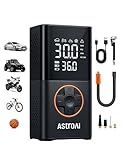
5. AstroAI L7 Tire Inflator Portable Air Compressor Cordless Mini Bike Pump with Digital Dual Values Display, 150 PSI Car Tires Air Pump with LED Lights&Pressure Gauge for Auto, Motorcycles, Bikes, Balls
Overview:
The ultra-compact AstroAI L7 (under 1 lb) is a multi-use inflator for cars, bikes, and sports gear, featuring advanced pressure sensing and emergency tools. Its portability targets cyclists, motorcyclists, and minimalist drivers.
What Makes It Stand Out:
TrueGauge technology samples pressure 200x/sec for 80%+ accuracy—surpassing market averages. Smart modes (car/motorcycle/bike/ball/custom) and unit switching (PSI/bar/kPa/kg/cm²) enable tailored inflation. At 1.5 minutes per car tire and 8-tire runtime, it’s 2x faster than peers, with USB-C ports for device power and a 3-mode emergency LED.
Value for Money:
Priced accessibly, it offers pro-level accuracy and versatility unmatched in its class. The 4000mAh battery, dual USB ports, and travel-friendly size provide exceptional utility for commuters, justifying cost over basic pumps despite lower max PSI (150 vs. 160).
Strengths and Weaknesses:
Strengths: Exceptional accuracy, lightweight portability, 2x faster inflation, USB device charging, multi-mode LED.
Weaknesses: Lower max pressure (150 PSI), not for heavy-duty tires, smaller nozzle variety than Milwaukee.
Bottom Line:
The top pick for cyclists and space-conscious users needing precision and emergency readiness. Its speed, accuracy, and multi-functionality make it indispensable for active lifestyles. Highly recommended.
6. CRAFTSMAN Tire Inflator Portable Air Compressor, Cordless Mini Air Pump for Car Tires with Digital Tire Pressure Gauge, 6000mAh Battery Powered Air Pump, Max Pressure 150 PSI, 12V DC Corded

Overview: The CRAFTSMAN cordless tire inflator delivers essential on-the-go inflation for cars, bikes, and inflatables. Its compact, 1.28 lb design integrates a 6000mAh battery and 12V DC corded operation, targeting drivers needing quick pressure top-ups during travel.
What Makes It Stand Out: Dual power flexibility (battery or car adapter) ensures reliability anywhere. Five preset modes (car, bike, motorcycle, ball, custom) with four pressure units simplify use, while the automatic shut-off prevents over-inflation. The built-in LED light and USB port for device charging add unexpected utility.
Value for Money: Priced mid-range, it competes well against basic inflators by offering robust battery life (4 car tires per charge) and versatile accessories (nozzles, cables). Though not the fastest, its durability and multi-functionality justify the cost for casual users.
Strengths and Weaknesses: Strengths: Reliable dual-power system; intuitive digital display; emergency USB charging; compact storage. Weaknesses: Slower inflation than heavy-duty models; max car tire pressure limited to 51 PSI despite 150 PSI rating; battery drains quickly during continuous use.
Bottom Line: An excellent everyday solution for most passenger vehicles, offering solid performance and thoughtful extras. Ideal for commuters and road trippers prioritizing convenience over extreme speed, but avoid for trucks/SUVs needing >51 PSI.
7. OlarHike Cordless Tire Inflator Portable Air Compressor, 150PSI Dual Power - 6000mAh & 12V DC, Air Pump for Car Tires, Bike, Motorcycle, Balls with LED & Digital Pressure Gauge, Car Gifts

Overview: OlarHike’s dual-power inflator targets drivers seeking speed and flexibility. It combines a 6000mAh battery with 12V DC capability to service cars, bikes, and sports gear, featuring presets for varied inflation needs.
What Makes It Stand Out: Exceptional speed inflates a standard car tire in 55 seconds (+5 PSI) and handles 18 car tires per charge. The dual LED screen shows real-time and target pressure simultaneously, while auto shut-off ensures precision. Memory recall for settings enhances repeat usability.
Value for Money: Offers premium speed at a competitive price. Its high battery capacity outperforms many rivals, and the dual-power design eliminates range anxiety. Worth the investment for frequent users, though overkill for occasional top-ups.
Strengths and Weaknesses: Strengths: Blazing-fast inflation; industry-leading battery endurance; clear dual-display; preset memory. Weaknesses: Critical 51 PSI car tire limit (unsafe for many SUVs); slightly bulky; no included storage bag.
Bottom Line: A top pick for speed-focused drivers with standard vehicles. Its limitations for high-PSI applications make it unsuitable for trucks or heavy SUVs, but it’s perfect for commuters needing rapid, reliable service.
8. ETENWOLF VORTEX S6 Tire Inflator Portable Air Compressor for Heavy-duty Vehicle, Cordless Air Pump for Car & Inflatables with 19200 mAh Battery, 100% Duty Cycle & Dual Cylinder Bike Pump, Vivid Orange

Overview: The ETENWOLF VORTEX S6 is a heavy-duty powerhouse built for trucks, pickups, and off-road vehicles. Its massive 19,200mAh battery and dual-cylinder motor tackle high-volume inflations where standard pumps fail.
What Makes It Stand Out: Unmatched 100% duty cycle allows continuous inflation of all four F150 tires (0–35 PSI) without overheating. Ultra-fast 42 L/min airflow fills a 31” tire in 60 seconds, while the 1,000-lumen LED doubles as a camping lantern. USB-C 45W passthrough enables fast device charging.
Value for Money: Premium-priced but justified for truck/SUV owners. The durability and relentless performance eliminate job interruptions, saving money versus cheaper pumps that overheat. Essential for off-road enthusiasts or commercial fleets.
Strengths and Weaknesses: Strengths: Extreme durability; zero downtime; fastest inflation in class; versatile 160 PSI max; emergency lighting. Weaknesses: Heavier (2.2 lbs); not ideal for small tires/bikes; incompatible with SUPs.
Bottom Line: The definitive choice for heavy vehicles. Over-engineered for passenger cars but indispensable for trucks and rugged adventures. Pay extra for unwavering reliability where standard inflators quit.
9. AVID POWER Tire Inflator Portable Air Compressor, 20V Cordless Car Tire Pump, Rechargeable Battery Powered Air Compressor w/12V DC Adapter, Digital Pressure Gauge

Overview: AVID POWER’s 20V inflator merges cordless convenience with industrial toughness. Designed for passenger vehicles, it emphasizes durability through metal components while supporting bikes and sports balls.
What Makes It Stand Out: All-metal cylinder and gears ensure longevity and faster cooling versus plastic competitors. The unique 20V battery system (with 12V DC backup) delivers consistent power, and the anti-glare display works flawlessly in sunlight. Rubberized grip enhances ergonomics.
Value for Money: Budget-friendly without sacrificing core quality. The metal construction typically appears in pricier models, making it a steal for cost-conscious buyers needing reliable daily use. Avoids the fragility of ultra-cheap inflators.
Strengths and Weaknesses: Strengths: Rugged all-metal build; dual power options; clear display; comfortable grip; bright LED light. Weaknesses: Slower inflation (3–5 mins per tire); limited to 36 PSI; unsuitable for trucks/air mattresses; battery life lags behind leaders.
Bottom Line: A dependable workhorse for everyday cars and bikes. Prioritizes durability over speed, making it ideal for households wanting a no-nonsense, long-lasting pump—but skip if you need high PSI or rapid fills.
10. OlarHike Cordless Tire Inflator Portable Air Compressor, 150PSI Dual Power - 5400 mAh & 12V DC, Air Pump for Car Tires, Bike, Motorcycle, Bicycle, Electric Pump with LED Light & Digital Pressure Gauge

Overview: OlarHike’s streamlined inflator balances portability and performance for casual users. Its 5,400mAh battery and dual-power design cater to drivers, cyclists, and adventurers needing quick fixes on the move.
What Makes It Stand Out: Ultra-portable with a dedicated storage bag, it fits effortlessly in bike racks or backpacks. The single-button unit switch (PSI/BAR/KPA) and memory function simplify operation, while the integrated LED light aids nighttime use. Inflates 16 car tires per charge.
Value for Money: Excellent affordability for its feature set. The included storage bag and multi-sport presets add value, though the smaller battery (vs. OlarHike’s Model 7) suits light use. Best for budget travelers or secondary vehicle kits.
Strengths and Weaknesses: Strengths: Travel-friendly size; intuitive presets; storage bag included; solid LED lighting; quiet operation. Weaknesses: 5400mAh battery underperforms rivals; 51 PSI car limit; slower than Model 7; no dual-display clarity.
Bottom Line: A smart, compact companion for occasional use. Perfect for cyclists, urban drivers, or as a backup pump—just confirm your vehicle’s PSI needs stay under 51 before buying.
Understanding Your Core Needs for Tire Repair
Before diving into technical specs, it’s essential to clarify exactly how you’ll use the compressor. This step prevents overspending on unnecessary power or, worse, ending up with a unit that can’t handle your vehicle’s requirements. Your typical use case dictates everything from size to battery capacity.
Defining Your Primary Use Case
Are you primarily topping off tires during routine checks, or preparing for full flat repairs on larger vehicles like SUVs or light trucks? Occasional use for passenger cars demands different capabilities than frequent use for trailers or heavy-duty applications. Consider the average tire size you’ll inflate and how often you expect emergencies. A commuter needing quick fixes for compact cars has vastly different needs than someone managing a fleet of vans.
Assessing Vehicle Tire Requirements
Tire pressure specifications vary significantly. Standard passenger cars usually require 30-35 PSI, while larger SUVs, trucks, or trailers might need 50-80 PSI or more. Crucially, the compressor must exceed your tire’s required PSI – ideally by 20% – to ensure it can reach the target pressure effectively. Ignoring this mismatch leads to endless running times or incomplete inflation. Always consult your vehicle’s door jamb sticker or manual for exact PSI needs.
Evaluating Emergency Response Realities
Think about where you’ll likely need the compressor. Will you be on remote trails with no cell service, or primarily in urban areas near help? This impacts battery life priorities and durability needs. If you’re often far from assistance, a unit with extended runtime and rugged construction becomes non-negotiable. Consider storage space too – a trunk-mounted unit can be larger than one destined for a crowded SUV cargo area.
Core Performance Metrics That Matter
Raw power claims can be misleading. True performance for tire repair hinges on specific, measurable metrics that directly impact how quickly and reliably you get back on the road. Focusing on these avoids disappointment when the rubber meets the road (or rather, when it’s flat).
PSI Capability Explained Simply
PSI (Pounds per Square Inch) indicates maximum pressure output. For most passenger vehicles, a compressor rated for at least 120 PSI is sufficient, as it comfortably exceeds typical tire pressures (30-35 PSI). However, if you frequently service trucks, SUVs with higher sidewalls, or run tires at elevated pressures, opt for 150 PSI or higher. Remember: the compressor must reach your specific tire’s required pressure, not just inflate a tire partially.
The Critical Role of CFM (Cubic Feet per Minute)
CFM measures airflow volume – how much air the compressor can move in a minute. Higher CFM means faster inflation times. For quick tire repairs, prioritize models with at least 0.5 CFM at 30-35 PSI. While peak CFM numbers look impressive, the CFM rating at your target tire pressure is what truly matters for real-world speed. A unit boasting high CFM only at very low PSI will disappoint on actual tires.
Understanding Duty Cycle for Real-World Use
Duty cycle (e.g., 50% at 100 PSI) indicates how long the compressor can run before needing a cool-down period. A 50% duty cycle means it runs for 5 minutes, then rests for 5. For tire repairs, shorter duty cycles (70-100%) are ideal as inflation usually takes 1-3 minutes per tire. Avoid units with very low duty cycles (like 20-30%) unless you only need occasional top-offs, as they’ll overheat during a full flat repair.
Portability and Practical Design Features
A compressor’s power is useless if it’s too cumbersome to deploy quickly during an emergency. Smart design prioritizes ease of use and storage, ensuring the tool is actually in your vehicle and ready when needed.
Size and Weight: Finding the Sweet Spot
Cordless compressors range from pocket-sized (under 2 lbs) to larger workshop-style units (over 10 lbs). For dedicated tire repair, aim for 3-6 lbs – heavy enough for stability but light enough for easy trunk storage and handling. Consider where you’ll store it; compact units fit glove boxes or under seats, while larger models need dedicated trunk space. Don’t sacrifice essential power for extreme miniaturization.
Integrated Hose and Gauge Quality
A poorly designed hose or inaccurate gauge defeats the purpose. Look for kink-resistant, reinforced hoses at least 18 inches long – longer hoses (24-36") offer more flexibility but can tangle. The pressure gauge must be large, easy to read in all lighting, and positioned for clear viewing while inflating. Analog gauges are often more durable than digital displays in harsh conditions.
User-Friendly Operation Essentials
Critical features include intuitive power switches (preferably with clear on/off indicators), secure chuck attachments that won’t leak air, and accessible bleed valves for precise pressure adjustments. Some models feature automatic shutoff at preset pressures – a huge time-saver. Avoid units requiring complex assembly or fiddly attachments during stressful roadside situations.
Battery Life and Power Source Considerations
Battery performance is the heartbeat of any cordless compressor. Understanding capacity, runtime, and charging logistics ensures you won’t be left stranded with a dead unit when a flat tire strikes.
Decoding Amp-Hour (Ah) Ratings
Amp-hours (Ah) indicate battery capacity – higher Ah generally means longer runtime. For tire repair, 2.0Ah offers basic capability for 1-2 tires, while 4.0Ah+ provides headroom for multiple tires or larger vehicles. However, Ah alone doesn’t tell the whole story; voltage (12V, 18V, 20V) and motor efficiency matter equally. Compare manufacturer runtime estimates for tire inflation specifically, not just generic “operating time.”
Realistic Runtime Expectations
Manufacturers often cite optimistic runtimes. Factor in real-world variables: cold weather reduces battery output by 20-30%, inflating a completely flat tire takes longer than topping off, and older batteries hold less charge. A realistic expectation is 3-5 full tire inflations (from flat to spec) on a single charge for mid-range models. Always recharge after use – don’t wait for an emergency with a depleted battery.
Charging Speed and Flexibility
Fast charging (under 60 minutes) is a major advantage for frequent users. Check if the charger uses standard plugs (12V car socket, USB-C, or wall outlet) – versatility prevents being stranded without the right charger. Some units feature dual charging (car and wall), while others include removable batteries for swapping spares. Consider how quickly you can get the compressor ready for its next use.
Specialized Features for Tire Repair Efficiency
Beyond basic inflation, certain features streamline the tire repair process, reduce user error, and enhance safety – turning a simple tool into a true roadside essential.
Precision Digital Pressure Controls
Advanced models offer digital pressure presets. Set your desired PSI once, start inflation, and the compressor automatically shuts off when reached. This eliminates guesswork, prevents over-inflation (which damages tires), and saves time compared to manual monitoring. Look for backlit displays for night use and easy recalibration options.
Integrated LED Work Lights
Struggling to see your tire valve at night or in dim parking lots is a common frustration. Built-in, high-lumen LED lights that activate during operation illuminate the valve stem and gauge, making nighttime repairs significantly safer and faster. Ensure the light is positioned to avoid glare on the gauge.
Automatic Shut-Off and Safety Mechanisms
Beyond pressure shutoff, quality units include thermal overload protection to prevent motor burnout during extended use, and automatic restart after cooling. Leak detection features that alert you to faulty valve connections can save precious air and battery life. These aren’t luxuries – they’re critical for reliability and device longevity.
Durability and Environmental Resilience
Roadside tools face harsh conditions – from extreme temperatures to dirt, moisture, and accidental drops. Build quality directly impacts how long your compressor survives real-world use.
Construction Materials Matter
Prioritize units with robust polymer housings over flimsy plastics. Metal components for the pump head, hose connectors, and valve chuck enhance longevity. Check for reinforced drop points and internal bracing. A compressor might survive being tossed in a trunk weekly, but cheap materials fatigue quickly under vibration and impact.
Weather and Temperature Tolerance
Verify operational temperature ranges. Most function between 32°F-104°F (0°C-40°C), but cold-weather performance is critical – batteries lose capacity below freezing. Some models include battery warming features for sub-zero use. Also, check ingress protection (IP) ratings; even basic dust/moisture resistance (IP54) prevents grit from jamming mechanisms during trail repairs.
Vibration and Shock Resistance
Compressors generate internal vibration. Units with effective internal dampening run quieter and suffer less wear. External shock absorption (like rubberized feet or bumpers) protects against damage from being dropped on pavement or jostled in storage. This is often overlooked but vital for maintaining accuracy and performance over time.
Maintenance and Long-Term Reliability
A cordless compressor is an investment. Simple, regular upkeep prevents failures when you need it most and extends its service life significantly beyond the warranty period.
Essential Cleaning Routines
After use, especially on dirty or muddy tires, wipe down the unit, hose, and chuck with a dry cloth to remove debris. Never hose it down – moisture can damage electronics. Periodically blow out dust from air intakes and vents using compressed air (from another source!) to prevent overheating. A quick 30-second clean after each use prevents long-term gunk buildup.
Battery Care Best Practices
Lithium-ion batteries degrade fastest when stored fully depleted or fully charged. For long-term storage (over a month), recharge to 50% before putting it away. Avoid leaving the unit in a hot car for extended periods – extreme heat is a battery killer. If the compressor sits unused for months, check the charge level quarterly and top it up to 50% if needed.
Valve Chuck and Hose Inspection
Regularly examine the chuck for worn seals or cracks that cause air leaks. Replace O-rings if they become brittle. Check the hose for kinks, abrasions, or internal cracks that restrict airflow. A simple leak test (soapy water on connections while pressurized) done every few months catches issues early. Don’t wait for a failure during an emergency.
Storage and Accessibility Tips
Having a compressor is pointless if it’s buried under luggage or frozen to your trunk floor. Smart storage ensures immediate access when seconds count.
Optimal Placement Strategies
Store the compressor within arm’s reach of your trunk opening – never under a spare tire or buried under cargo nets. Mounting brackets (some units include them) keep it secure and visible. Avoid direct contact with metal trunk floors in winter; a small mat prevents freezing and reduces vibration damage. Ensure the hose and cord won’t snag other items.
Climate-Controlled Storage Considerations
Extreme heat (like a closed car in summer) accelerates battery degradation. If possible, store the unit in the passenger cabin during very hot months, or at least in a shaded trunk area. In freezing climates, consider bringing it indoors overnight before a trip – a cold battery won’t deliver full power when you need it most. Never store it connected to a charger for weeks.
Keeping Accessories Organized
Use the included storage bag or a dedicated small container for the compressor, hose, and any adapters. Loose items get lost or damaged. Attach the power cord securely (many models have wrap points) to prevent tangling. Check periodically that all parts are present and functional – don’t discover a missing chuck during your first flat.
Comparing Power Source Options
While cordless is the focus, understanding the trade-offs between battery types and alternative power sources helps make an informed choice for your specific scenario.
Lithium-Ion vs. Older Battery Tech
Modern lithium-ion (Li-ion) batteries dominate for good reason: they’re lighter, hold charge longer when idle, and deliver consistent power until depletion. Avoid older NiMH or lead-acid models – they’re heavier, suffer from memory effect, and lose charge faster. Within Li-ion, higher energy density cells (like 21700) offer better performance than older 18650 types in the same size package.
12V DC (Cigarette Lighter) Compatibility
Many cordless compressors double as 12V plug-in units. This is invaluable: if the battery dies mid-repair, you can often continue using the car’s power (though slower). Verify the 12V cable length – at least 6 feet is ideal for reaching all tires. Note that prolonged 12V use can drain your car battery, so only use it for topping off if the engine is off.
Solar Charging and Power Bank Potential
Emerging options include solar charging docks or compatibility with large power banks. While not yet mainstream for high-power compressors, this could extend usability for off-grid adventurers. Currently, prioritize reliable AC/DC charging – solar is best as a supplementary option for trickle charging between uses, not primary inflation power.
Real-World Usage Scenarios and Adaptability
The best compressors excel across diverse situations. Consider how well a unit handles the nuances of different environments and tire types you might encounter.
Handling Seasonal Tire Changes
Switching between summer and winter tires? A compressor with a precise digital gauge simplifies adjusting pressures for seasonal compound changes (winter tires often need higher PSI). Units with preset memory for multiple pressure settings save time when rotating tires between axles. Fast inflation is key when working in cold garages.
Supporting Off-Road and Overlanding
For trail users airing down for better traction, a compressor capable of deflating tires via a bleed valve is essential. Look for models specifically marketed for 4x4 use, featuring higher PSI (100+), ruggedized builds, and long hoses for reaching tires on lifted vehicles. Integrated sand shields on the pump intake prevent clogging in dusty conditions.
Fleet and Commercial Vehicle Applications
Businesses managing multiple vehicles need compressors built for daily heavy use. Prioritize industrial-grade duty cycles (100%), robust warranties, and serviceable parts. Units compatible with fleet charging docks streamline maintenance. Consider models with usage logs or Bluetooth tracking for accountability if shared among drivers.
Safety First: Critical Precautions
Using compressed air improperly can be dangerous. Adhering to basic safety protocols protects you, your vehicle, and bystanders during tire repairs.
Preventing Over-Inflation Hazards
Over-inflated tires are prone to blowouts. Always set the target PSI below the tire’s maximum sidewall rating (usually 40-50 PSI higher than recommended pressure). If using automatic shutoff, double-check the setting. Never stand directly in front of the tire while inflating – stand to the side in case of failure.
Managing Heat Buildup Risks
Compressors generate significant heat. Respect duty cycle limits; forcing continuous operation risks motor burnout or fire. If the unit becomes too hot to touch comfortably, stop immediately and allow extended cooling. Avoid running it on flammable surfaces like dry grass or carpeted trunk liners.
Electrical Safety Around Batteries
Never connect or disconnect the compressor while the car engine is running to avoid voltage spikes. Inspect power cords for fraying before plugging in. If using a 12V adapter, ensure it’s plugged securely to prevent arcing. Store the unit away from open flames or sparks – compressed air systems can be explosive hazards if compromised.
Frequently Asked Questions
How long does it typically take to inflate a standard car tire from flat?
Most quality cordless compressors inflate a standard passenger car tire (e.g., 205/55R16) from 0 PSI to 32 PSI in 2-4 minutes, depending on battery charge and ambient temperature. Larger truck/SUV tires (265/70R17) may take 4-7 minutes.
Can a cordless compressor handle repairing a completely flat tire?
Yes, provided the compressor’s maximum PSI exceeds your tire’s required pressure (usually 30-50 PSI for most vehicles). Ensure the unit has sufficient runtime (CFM and battery capacity) to complete the inflation without overheating.
Do I need a special adapter for my tire valve?
Most compressors include standard Schrader valve chucks (the same as bicycle tires). If your vehicle uses Presta valves (common on high-end bikes, rare on cars), you’ll need an inexpensive Presta-to-Schrader adapter, which many kits include.
How often should I recharge the battery if the compressor sits unused?
Recharge every 3-4 months if stored long-term. Lithium-ion batteries degrade fastest when fully depleted or fully charged for extended periods. Store at approximately 50% charge in a cool, dry place.
Will cold weather affect performance?
Significantly. Below 40°F (4°C), battery capacity drops by 20-30%, slowing inflation. Below freezing, some units may not start. Store the compressor in your vehicle’s cabin overnight in extreme cold, or bring it indoors before trips.
Can I use it for inflating sports balls or air mattresses?
Yes, but prioritize tire repair functionality first. For frequent non-tire use, ensure the unit has a blowout/diffuser nozzle and durable chuck attachments. Avoid cheap models with weak motors that overheat during extended non-tire use.
What’s the biggest mistake people make with cordless compressors?
Assuming “cordless” means maintenance-free. Neglecting battery care (like storing it dead), ignoring duty cycles, or failing to clean debris leads to premature failure. Treat it like any precision tool – regular upkeep is non-negotiable.
How do I know when it’s time to replace my compressor?
Signs include significantly longer inflation times (even with a full charge), inability to reach target PSI, excessive heat during normal use, persistent air leaks at connections, or visible damage to the housing or hose. Don’t risk roadside failure.
Are higher voltage models (20V vs 12V) always better?
Not necessarily. 20V systems often offer more power for larger tires but can be bulkier. 12V models integrate seamlessly with car power systems. Match voltage to your primary use case – 12V suffices for most passenger cars, while 18V/20V benefits trucks and frequent users.
Can I leave it plugged in for continuous inflation?
Only if the manufacturer explicitly states it’s designed for it (rare for pure cordless models). Most have thermal cutoffs that stop operation after 10-15 minutes. Continuous inflation requires a compressor with a 100% duty cycle, typically found in larger workshop units, not portable cordless models.
See Also
- 10 Best Cordless Air Compressors for Quick Flat Tire Repairs This Year
- Stop Guessing Tire Pressure with the 10 Best Air Compressors with Gauges This Year
- Top 10 Best Portable Air Compressors for On-the-Go Tire Inflation in 2026
- Air Compressors with Tire Inflator Function: Are They Worth It for Home Garages?
- The 10 Best Battery Operated Air Compressors Every Off-Roader Needs This Year