Table of Contents
The split-second difference between a perfectly tuned turbocharged monster and a melted piston often comes down to one critical factor: exhaust gas temperature. As boost pressures climb and power outputs soar, your turbo’s exhaust gases can reach temperatures hot enough to weaken steel, destroy turbines, and turn a weekend track session into a four-figure repair bill. For turbo enthusiasts pushing their machines to the limit, monitoring these invisible heat levels isn’t just smart—it’s essential insurance against catastrophic failure.
This comprehensive guide cuts through the marketing hype and technical jargon to arm you with the knowledge needed to select the ideal exhaust gas temperature monitoring solution for your specific setup. Rather than pushing particular brands or models, we’ll explore the fundamental features, technologies, and considerations that separate professional-grade instrumentation from glorified light shows. Whether you’re running a mild street turbo or a competition-ready anti-lag system, understanding these core principles will help you make an informed decision that matches your performance goals, technical skills, and budget.
Top 10 Exhaust Gas Temperature Gauges

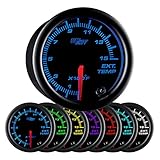

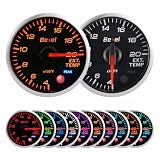


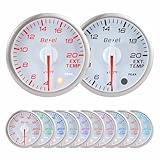

Detailed Product Reviews
Why EGT Monitoring Matters for Turbocharged Vehicles
The Relationship Between Exhaust Temperature and Turbo Health
Turbochargers operate in one of the most extreme environments in your entire vehicle, spinning at speeds exceeding 100,000 RPM while bathed in exhaust gases that can exceed 1,600°F. The turbine wheel, typically crafted from Inconel or similar high-nickel alloys, faces constant thermal stress that directly impacts its structural integrity. When exhaust temperatures climb beyond safe thresholds, the turbine housing can crack, bearings can fail from oil coking, and the wastegate components may warp, leading to uncontrollable boost spikes. An EGT gauge serves as your early warning system, translating invisible thermal danger into readable data that can save your entire forced induction system.
Preventing Catastrophic Engine Damage
Beyond turbo health, excessive exhaust temperatures signal dangerous conditions within the combustion chamber itself. Lean air-fuel mixtures, excessive ignition timing, or intake restrictions can cause cylinder temperatures to skyrocket, melting pistons, burning valves, and destroying head gaskets within seconds. Unlike oil pressure or coolant temperature warnings that lag behind actual engine damage, EGT readings provide real-time feedback on what’s happening during combustion. This immediate data lets you back out of the throttle before permanent damage occurs, making it arguably the most critical parameter to monitor in any modified turbo application.
Optimizing Performance and Efficiency
EGT monitoring isn’t purely defensive—it’s a powerful tuning tool. The relationship between air-fuel ratio, ignition timing, and exhaust temperature creates a detailed map of your engine’s efficiency. Professional tuners use EGT readings to find the sweet spot between maximum power and long-term reliability. By watching how temperatures respond to incremental fuel and timing changes, you can identify the optimal calibration for your specific combination of turbo, fuel, and driving style. This data-driven approach eliminates guesswork and ensures you’re extracting every safe horsepower from your setup.
How EGT Gauges Work
The Science of Thermocouples
Every EGT gauge relies on a thermocouple probe—a remarkably simple yet precise temperature sensor consisting of two dissimilar metal wires joined at a tip. When heated, this junction generates a tiny electrical voltage proportional to temperature. Type-K thermocouples (chromel-alumel) dominate automotive applications due to their wide temperature range up to 2,300°F and proven durability. The probe tip must be placed directly in the exhaust stream, typically 2-4 inches from the exhaust port, to capture accurate readings before heat dissipates into the manifold.
Signal Processing and Display
The millivolt signal from the thermocouple requires significant amplification and compensation before becoming a readable temperature. Quality gauge units incorporate cold junction compensation circuits that account for ambient temperature variations at the gauge head, ensuring accuracy across different driving conditions. The processing unit samples the signal multiple times per second, then drives either an analog needle or digital display. Premium systems use shielded wiring and noise-filtering algorithms to prevent interference from ignition systems and other electrical noise that could cause false readings.
Proportional vs. Digital Readings
Analog gauges provide continuous, sweeping needle movements that many drivers prefer for their intuitive “glanceability”—a quick look reveals trends without reading specific numbers. Digital displays offer exact temperature values and can flash warning alerts at preset thresholds. Some advanced units combine both, using a digital readout with a bar graph or trend indicator. Your choice depends on whether you value precise numbers for tuning or rapid pattern recognition during aggressive driving.
Types of EGT Gauges Available
Analog Needle Gauges
Traditional 2 1/16-inch diameter analog gauges feature stepper motor-driven needles that sweep across a marked face, typically showing ranges from 0°F to 1,600°F or higher. These units appeal to enthusiasts seeking a classic motorsport aesthetic while providing excellent visibility in peripheral vision. The best examples use high-torque motors for smooth operation and include programmable warning lights that illuminate when temperatures exceed your set limits. Their simplicity means fewer components to fail, and they remain readable even if the backlighting fails.
Digital Numeric Displays
Digital gauges present exact temperature values on LED or LCD screens, often updating multiple times per second. These excel for precise tuning work where knowing you’re at 1,425°F versus 1,450°F matters significantly. Many include data logging capabilities, recording temperature traces you can review after a pull or track session. Look for units with adjustable brightness and contrast—an overly bright display causes night blindness, while a dim screen becomes invisible in daylight. The most sophisticated versions allow you to customize the color scheme to match your dashboard lighting.
Multi-Function Dashboard Units
All-in-one display systems integrate EGT monitoring with boost pressure, air-fuel ratio, oil pressure, and other parameters on a single high-resolution screen. These centralized solutions reduce dashboard clutter and enable sophisticated data correlation—seeing how EGT spikes correlate with boost pressure or throttle position provides deeper insight into engine behavior. While more expensive, they eliminate the need for multiple separate gauges and often include advanced alerting systems that consider multiple inputs before triggering warnings.
Key Features to Evaluate
Temperature Range and Accuracy
Gauge selection starts with ensuring the unit covers your engine’s potential temperature range. Most turbo gasoline applications see 1,200°F to 1,600°F during normal operation, with dangerous peaks beyond 1,800°F. Diesel turbos run cooler, typically 800°F to 1,200°F. Accuracy matters most in the critical 1,400°F to 1,600°F range where damage begins—look for specifications stating ±1% accuracy or better in this zone. Be wary of gauges claiming unrealistic accuracy across their entire range, as thermocouple non-linearity makes this physically impossible.
Response Time and Refresh Rate
When you lift off the throttle after a hard pull, EGTs should drop rapidly. A slow-responding gauge might still show dangerous temperatures that no longer exist, causing unnecessary panic. Quality probes respond to temperature changes within 2-3 seconds, while the display should update at least 5-10 times per second to show smooth transitions. Some budget units sample slowly, creating jerky, delayed readings that mask critical spikes. Test this by watching how quickly the reading drops when you shut down after a drive—the best units will show immediate cooling.
Build Quality and Durability
The gauge face must withstand constant vibration, temperature cycling, and UV exposure without fading or cracking. Look for glass or high-quality polycarbonate lenses with anti-reflective coatings. The housing should be metal or glass-filled nylon rather than cheap ABS plastic. Waterproof ratings (IP67 or better) ensure survival in engine bay humidity and occasional splashes. Internally, quality stepper motors and solid-state components last years, while budget alternatives may fail within months of daily driving.
Warning and Alert Systems
Programmable warning lights or audible alarms transform your gauge from passive display to active guardian. The best systems allow you to set multiple thresholds—perhaps a yellow caution light at 1,550°F and a red warning with audible beep at 1,650°F. Some advanced units include output wires that can trigger failsafe systems, cutting boost or adding fuel when temperatures exceed limits. Ensure the alert system is easily adjustable and doesn’t require complex menu navigation while driving.
Sensor Types and Their Impact
Probe Placement Strategies
Probe location dramatically affects readings and response characteristics. Pre-turbine placement (in the exhaust manifold) shows cylinder-specific temperatures and responds fastest to dangerous conditions but requires drilling into expensive manifolds. Post-turbine placement (in the downpipe) measures average temperature across all cylinders and installs more easily but delays response by 1-2 seconds. For maximum protection, pre-turbine placement is superior, while post-turbine works adequately for basic monitoring and tuning.
Thermocouple Grades Explained
Not all Type-K thermocouples share the same quality grade. Special Limits of Error (SLE) grade probes offer ±2°F accuracy up to 500°F, while Standard Grade allows ±4°F. For high-temperature turbo use, probe construction matters more than grade—look for mineral-insulated, stainless steel sheathed probes with welded tips rather than crimped connections. The sheath protects against exhaust contamination that can drift calibration, while welded junctions withstand vibration without failing.
Wire Length and Signal Integrity
Thermocouple extension wire must match the probe’s metal composition to prevent measurement errors. Using standard copper wire creates additional junctions that generate false voltages. Quality kits include shielded, fiberglass-insulated extension wire rated for underhood temperatures. Keep wire runs as short as possible—every extra foot increases electrical noise susceptibility. If you must run long distances, twisted-pair construction with proper shielding becomes critical for accurate readings.
Display Technologies Explained
LED vs. LCD Screens
LED displays offer exceptional brightness and contrast, remaining visible even in direct sunlight. They consume more power and generate heat, which can affect gauge lifespan in hot mounting locations. LCD screens use less power and run cooler but require backlighting, which can wash out in bright conditions. Transflective LCDs solve this by reflecting ambient light, becoming more visible as sunlight increases. For most installations, high-quality LEDs provide the best balance of visibility and durability.
Color Customization Options
Modern digital gauges often allow custom color programming, letting you match factory dashboard lighting or create visual priority systems—perhaps green under 1,400°F, yellow from 1,400°F to 1,600°F, and red above. This instant color recognition helps process information faster than reading numbers. Some systems even allow cylinder-specific color coding when monitoring multiple probes, instantly identifying which cylinder is running hot. Ensure the customization process is intuitive and doesn’t require keeping a manual in your glovebox.
Daytime and Nighttime Visibility
Gauge visibility must adapt to changing light conditions. Auto-dimming features that adjust brightness based on ambient light prevent night blindness without making the display invisible during dawn and dusk transitions. The best units include manual override buttons for fine-tuning. Consider the display angle—some screens use polarizing filters that become unreadable when viewed from steep angles, problematic in vehicles where the gauge mounts low on the A-pillar or center stack.
Installation Considerations
Professional vs. DIY Installation
Installing an EGT probe requires drilling and tapping a hole in your exhaust manifold or downpipe—a task that intimidates many enthusiasts. While DIY installation saves money, mistakes can ruin expensive components or create dangerous exhaust leaks. Professional installation typically costs $150-$300 but ensures proper placement, secure mounting, and leak-free connections. If you choose DIY, invest in quality drill bits and taps designed for high-temperature alloys, and always start with a pilot hole to prevent bit wandering.
Wiring and Power Requirements
EGT gauge systems draw minimal current—typically under 200mA—but require clean, stable 12V power to prevent erratic readings. Connect to a switched ignition source rather than constant battery power to avoid draining your battery. Ground the gauge to the chassis near the installation point, ensuring a clean metal-to-metal connection free of paint or corrosion. Run thermocouple wires away from ignition coils, alternator output wires, and other high-current sources that induce electrical noise. Use grommets when passing wires through bulkheads to prevent chafing.
Probe Placement Best Practices
For pre-turbine installation, place the probe 2-4 inches from the exhaust port, angling it slightly upstream to maximize exhaust gas contact. Ensure the probe tip sits centered in the runner, not touching walls. Use anti-seize compound on stainless steel probes, but never on Inconel probes as it can cause galvanic corrosion. Post-turbine probes should sit 6-12 inches after the turbo outlet, where gases have mixed evenly. Always allow clearance for probe removal—future replacement is inevitable, and buried probes become permanent fixtures.
Interpreting Your EGT Readings
Normal Operating Ranges
Typical gasoline turbo engines cruise at 1,200°F to 1,350°F EGT, climbing to 1,450°F to 1,550°F during sustained wide-open throttle. Brief spikes to 1,600°F are acceptable if temperatures quickly recover. Diesel turbos run substantially cooler, with normal operating ranges of 800°F to 1,000°F and danger zones above 1,250°F. These numbers vary significantly with compression ratio, boost level, fuel type, and ignition timing—use them as starting points, not absolute rules. Log temperatures during various driving conditions to establish your engine’s healthy baseline.
Dangerous Temperature Thresholds
Sustained temperatures above 1,650°F in gasoline engines indicate dangerously lean conditions or excessive timing advance. At 1,700°F, aluminum pistons begin softening, and valve face integrity compromises. Above 1,750°F, catastrophic failure becomes imminent—piston rings land can collapse, and turbine wheels may shed blades. These thresholds drop by approximately 100°F for each point of compression ratio increase. Always set warning alarms at least 100°F below your engine’s known danger zone to allow reaction time.
Reading Patterns and Trends
A single temperature number tells only part of the story. Watch how quickly temperatures rise when you go to full boost—rapid spikes suggest lean conditions, while gradual climbs indicate rich mixtures. Post-shift temperature drops reveal intercooler efficiency and fuel enrichment strategies. If one cylinder consistently runs 100°F hotter than others, you may have an injector issue, compression loss, or intake leak. Logging data over weeks reveals trends—gradually increasing cruise temperatures might indicate a clogged catalytic converter or failing turbo bearing creating backpressure.
Maintenance and Troubleshooting
Calibration and Testing
Thermocouples drift over time, especially after repeated heat cycling above 1,500°F. Test accuracy annually using a known heat source—boiling water at 212°F (at sea level) provides an easy reference point. Immerse the probe tip and compare the gauge reading. Some premium units include built-in calibration functions that compensate for probe degradation. If readings seem erratic, check for loose connections first, then inspect the probe for physical damage or contamination from oil or fuel residues that create insulating layers.
Common Sensor Failures
Probe failure typically manifests as erratic readings, constant low-temperature displays, or complete signal loss. Vibration fatigue breaks internal welds, while chemical contamination from burning oil or coolant poisons the thermocouple junction. Extension wire failures often occur at connection points where moisture corrodes terminals. If your gauge suddenly reads ambient temperature during driving, the probe has likely failed open-circuit. Reading stuck at maximum indicates a short circuit in the wiring or a probe that’s physically melted.
Cleaning and Care Tips
Never use chemical cleaners on thermocouple probes—these leave residues that insulate the sensing junction. If you must clean a contaminated probe, gently brush with a soft brass wire brush while avoiding the tip. Protect disconnected probe connectors from moisture with dielectric grease. When removing a probe for manifold work, cap the hole immediately to prevent debris entry. Store spare probes in sealed bags with desiccant to prevent oxidation of the connection terminals. Periodically inspect wiring for chafing, especially near sharp edges or hot exhaust components.
Cost vs. Value Analysis
Budget-Friendly Options
Entry-level EGT monitoring starts around $100-$150, typically including a basic digital display and standard-grade thermocouple. These units cover the fundamentals—accurate temperature display and a simple warning light. While they lack advanced features like data logging or multi-probe capability, they provide reliable protection for street-driven cars with mild modifications. The compromise comes in display quality, slower response times, and shorter probe lifespan. For occasional track days and daily street use, these represent excellent value.
Mid-Range Features Worth Paying For
Stepping up to $250-$400 unlocks significant improvements: faster refresh rates, programmable multi-stage warnings, better display visibility, and more durable probes. This range often includes data logging capabilities, allowing you to review temperature traces on a computer. You’ll find more robust wiring harnesses, better waterproofing, and cleaner dashboard integration. For serious enthusiasts who frequent track events or run moderate boost levels, this sweet spot offers professional-grade monitoring without the complexity and cost of racecar systems.
Premium Professional Systems
High-end EGT monitoring above $500 delivers motorsport-level precision and durability. These systems feature aircraft-grade probes with rapid response times, full-color graphical displays, and integration with engine management systems. Multiple probe inputs allow cylinder-specific monitoring, crucial for identifying individual cylinder issues in high-power builds. Advanced data logging syncs with GPS and accelerometers, creating complete performance maps. While overkill for most street cars, these systems provide the accuracy and reliability demanded by professional race teams and extreme high-boost applications where a single meltdown costs thousands.
Integration with Other Monitoring Systems
CAN Bus and OBD-II Compatibility
Modern vehicles communicate via CAN bus networks, and some advanced EGT gauges can tap into this data stream, displaying temperatures alongside factory parameters on a single screen. OBD-II pass-through connectors allow gauge installation without cutting factory wiring. This integration enables sophisticated alerts based on combined data—perhaps triggering a warning only when EGTs exceed limits AND throttle position exceeds 80%. CAN integration also allows the gauge to dim automatically with factory interior lighting, maintaining OEM aesthetics and functionality.
Data Logging Capabilities
Standalone data loggers record temperature, RPM, boost, and other parameters for later analysis on a laptop. Sample rates of 10-20 samples per second capture rapid transients that human eyes miss. Look for systems that export to standard formats like CSV for analysis in Excel or specialized tuning software. Some units include SD card slots for virtually unlimited recording capacity. Wireless logging via Bluetooth to a smartphone app eliminates the need for physical cable connections, though this adds complexity and potential interference issues.
Working with Tuning Software
Professional engine calibration software can often integrate directly with EGT gauge hardware, displaying real-time temperatures in the tuning interface. This allows immediate correlation between fuel and timing changes and their thermal effects. Some systems allow the ECU to read EGT data directly and implement protective strategies—automatically pulling timing or enriching mixtures when temperatures exceed safe limits. This closed-loop protection represents the ultimate in engine safety, though it requires careful calibration to avoid false triggers.
Legal and Safety Considerations
Emissions Regulations
Modifying exhaust systems, including drilling for EGT probes, may violate emissions regulations in some jurisdictions. Pre-catalytic converter probe installations are particularly sensitive, as they can affect catalyst efficiency monitoring. Some regions require emissions-legal installations to use specific probe placements or certified components. Always research local regulations before installation. Post-catalytic converter installations generally face fewer legal challenges but provide less useful data for engine protection.
Track vs. Street Use
Track-only vehicles can prioritize function over form, placing probes in optimal pre-turbine locations regardless of installation difficulty. Street cars must balance accessibility and durability—probes placed where road debris can strike them or where salt spray accelerates corrosion will fail prematurely. Street installations should emphasize weatherproofing and probe protection. Additionally, street driving involves far more heat cycles than track sessions, requiring probes with proven long-term stability rather than just rapid response.
Safety Precautions
Installing EGT probes in a hot, pressurized exhaust system presents real hazards. Always work on a cold engine to avoid burns from accidental contact. Use high-temperature thread sealant rated for 2,000°F+ to prevent exhaust leaks that can introduce carbon monoxide into the cabin. Double-check that probe tips cannot contact rotating components if they loosen. Route wiring to avoid contact with hot surfaces and moving parts. When testing, have a fire extinguisher rated for metal fires nearby—thermocouple sheaths can ignite if they contact magnesium or titanium components at high temperatures.
Future Trends in EGT Monitoring
Wireless and Smartphone Integration
The next generation of EGT monitoring eliminates physical gauge displays entirely, streaming data directly to smartphone apps via Bluetooth or WiFi. This reduces dashboard clutter while leveraging the phone’s processing power for advanced analytics and cloud-based data storage. Some systems use small, rugged transmitters that mount near the probe, sending clean digital signals immune to electrical interference. Battery life and connection reliability remain challenges, but improvements in low-power electronics are making these systems increasingly viable for daily use.
AI-Powered Predictive Alerts
Machine learning algorithms can now analyze patterns in your EGT data to predict failures before they occur. By learning your typical temperature profiles under various conditions, these systems can detect subtle deviations indicating developing problems—perhaps a slowly clogging injector or degrading intercooler efficiency. Rather than simply alerting when temperatures exceed a fixed threshold, predictive systems warn when temperatures trend abnormally, providing earlier warning and reducing false alarms from normal variations.
Advanced Materials and Sensors
Emerging sensor technologies promise faster response times and higher temperature capabilities. Thin-film platinum sensors offer superior accuracy above 1,800°F where thermocouples begin to drift. Optical pyrometers that measure infrared radiation without physical contact eliminate probe failure concerns, though they currently cost thousands of dollars. As these technologies mature and economies of scale improve, expect to see them filter down to consumer-level gauges within the next few years, revolutionizing how we monitor extreme-performance turbo applications.
Frequently Asked Questions
1. What is a safe EGT range for my turbocharged engine?
Most gasoline turbo engines operate safely between 1,200°F and 1,550°F during normal driving. Sustained temperatures above 1,650°F indicate dangerous conditions that can damage pistons and valves. Diesel turbos run cooler, typically 800°F to 1,200°F. Your specific safe range depends on compression ratio, fuel type, and engine build quality—always establish a baseline for your particular setup.
2. How difficult is it to install an EGT gauge myself?
DIY installation requires drilling and tapping a hole in your exhaust system, which intimidates many enthusiasts. With proper tools—a drill press, high-quality drill bits, and the correct tap—it’s manageable for experienced home mechanics. The electrical wiring is straightforward. However, mistakes can ruin expensive manifolds or create dangerous exhaust leaks, so many opt for professional installation costing $150-$300.
3. Where is the best place to mount the EGT probe?
For maximum protection and response, mount the probe 2-4 inches from the exhaust port in the manifold (pre-turbine). This shows cylinder-specific temperatures but requires drilling into expensive components. Post-turbine installation in the downpipe is easier and still useful for general monitoring, though response is slower. Never mount probes in catalytic converters or mufflers.
4. Can I use one EGT gauge for multiple cylinders?
A single probe only measures one location. To monitor individual cylinders, you need separate probes and either a multi-channel gauge that switches between them or individual gauges for each cylinder. For most street applications, monitoring the hottest cylinder or post-turbine average temperature provides adequate protection. Race engines often monitor all cylinders to identify failing injectors or intake leaks.
5. How often should I calibrate my EGT gauge?
Test accuracy annually using a known temperature source like boiling water (212°F at sea level). Probes naturally drift after repeated high-temperature cycling. If readings seem erratic or don’t match expected values during normal driving, test immediately. Some premium gauges include automatic calibration functions, but manual verification remains wise. Replace probes showing more than 25°F deviation from known temperatures.
6. What’s the difference between a pyrometer and thermocouple system?
“Pyrometer” refers to the complete temperature measurement system (probe + gauge), while “thermocouple” describes just the sensor type. In automotive contexts, these terms are often used interchangeably. All automotive EGT gauges use thermocouple probes. Industrial pyrometers may use different sensor technologies, but these are rarely suitable for turbo applications due to cost and fragility.
7. Will an EGT gauge work with my factory ECU?
EGT gauges operate independently of factory engine management. However, some advanced systems can feed data into standalone ECUs or piggyback controllers for automated protection strategies. Factory ECUs typically don’t have EGT inputs, though some high-end aftermarket systems can integrate via CAN bus. The gauge functions perfectly well as a standalone monitoring device.
8. Do I need a wide-band or narrow-band EGT system?
These terms describe oxygen sensors, not EGT systems. All quality EGT gauges are effectively “wide-band” in that they measure the full temperature spectrum. Some budget units may have limited display ranges that don’t show extreme highs or lows, but the thermocouple itself always measures the full range. Focus on accuracy in your engine’s operating range rather than these misapplied marketing terms.
9. Can EGT monitoring improve my fuel economy?
Yes, by helping you identify the optimal air-fuel ratio for efficiency. Leaner mixtures increase EGT and improve economy until they become dangerously hot. Watching EGT trends while adjusting cruise mixture lets you find the sweet spot between economy and safety. However, most enthusiasts install EGT gauges primarily for power and protection rather than fuel savings.
10. Are there any legal issues with installing an EGT gauge?
Drilling into exhaust components may violate emissions regulations in some regions, particularly if done before the catalytic converter. The gauge itself is legal everywhere, but installation methods can cause compliance issues. Check local laws before modifying emissions equipment. Some jurisdictions require professional installation certification for modified exhaust systems. Post-catalytic converter installations typically face no legal restrictions.
See Also
- 10 Exhaust Gas Temperature Gauges Recommendations for Turbo Diesel Trucks in 2026
- 10 Expert-Recommended Remote Display Exhaust Gas Temperature Gauges for Dual Cab Trucks in 2026
- 10 Expert-Recommended In-Dash Exhaust Gas Temperature Gauges for Custom Installs in 2026
- 10 Expert-Recommended Exhaust Gas Temperature Gauges for Racing Applications in 2026
- 10 Must-Have Wireless Exhaust Gas Temperature Gauges for Modern Tuning in 2026