Table of Contents
Getting stranded with a dead diesel truck battery isn’t just inconvenient—it’s a major operational headache. Unlike their gas-powered counterparts, diesel engines demand significantly more power to crank, especially in freezing temperatures. That moment when you turn the key and hear only a sluggish click, knowing you’re miles from help with a ton of metal and critical cargo sitting idle, is where a truly heavy-duty jump starter proves its worth. Forget the compact units designed for sedans; diesel trucks require serious, purpose-built power sources capable of delivering massive bursts of energy reliably, time after time, often in harsh conditions. Choosing the wrong device isn’t just a waste of money—it leaves you vulnerable when you need it most.
Understanding the unique demands of diesel starting systems is the first step toward avoiding that dreaded stranded scenario. Diesel engines feature higher compression ratios, larger displacement, and often require glow plugs to pre-heat the combustion chamber, all of which dramatically increase the electrical load on the starter motor. This translates to needing jump starters with substantially higher cranking amps (CA) and cold cranking amps (CCA) than what’s sufficient for gasoline engines. Furthermore, many modern diesel trucks utilize dual battery systems, adding complexity to the jump-starting process. This guide cuts through the marketing hype to focus on the critical technical specifications, rugged construction features, and essential safety mechanisms you must evaluate to find a jump starter that won’t fail when your diesel truck refuses to turn over.
Top 10 Heavy Duty Jump Starters
Detailed Product Reviews
1. Portable 10-in-1 Car Battery Jump Starter with Air Compressor 8000A 160PSI 45W Charger, Jump Starter Jump Box (All Gas 14L Diesel), Car Battery Jumper Starter Portable Jumper Cables, Gloves, Lights

Overview:
This multifunctional jump starter combines emergency vehicle starting with essential road-trip utilities. Designed for all gas and 14L diesel engines, it integrates an 8000A lithium jump starter, 160PSI air compressor, power bank, and safety tools into one portable unit, targeting drivers seeking an all-in-one roadside solution.
What Makes It Stand Out:
Its 10-in-1 versatility is unmatched: the 3-minute tire inflation (25 PSI), ±1 PSI accuracy gauge, 45W PD charging, and 800-lumen 4-mode LED lights address multiple emergencies. The FORCE START function revives completely dead batteries in extreme temperatures (-20°C–60°C), while retractable handles and included gloves enhance usability.
Value for Money:
Priced competitively against standalone jump starters and compressors, it eliminates the need for separate purchases. The 1000+ recharge cycles and 24-month standby justify the cost for frequent travelers, though budget users may find dedicated units cheaper for single functions.
Strengths and Weaknesses:
Strengths: Exceptional multifunctionality; rapid tire inflation; robust cold-weather performance; fast 45W charging; comprehensive safety suite.
Weaknesses: Bulkier than pure jump starters; air compressor noise during use; learning curve for all features.
Bottom Line:
Ideal for road-trippers and fleet operators needing a single emergency hub, this powerhouse justifies its price through unparalleled utility. Prioritize it over simpler models if space isn’t critical.
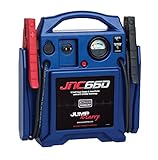
2. Clore Automotive Jump-N-Carry JNC660 1700 Peak Amp 12 Volt Jump Starter , Blue
Overview:
A rugged, lead-acid jump starter built for professional use, the JNC660 focuses on raw starting power for 12V vehicles. With heavy-duty construction and minimal frills, it caters to mechanics or commercial fleets needing reliable, no-nonsense jump starts in workshops or job sites.
What Makes It Stand Out:
Its 22Ah Clore Proformer battery and 46" #2 AWG cables deliver exceptional cranking power for large engines, while the voltmeter provides instant charge visibility. Unlike lithium competitors, it withstands repeated high-amperage demands without voltage sag, ideal for daily professional use.
Value for Money:
Higher upfront cost than consumer lithium models, but superior longevity in high-use scenarios justifies investment for garages. Lower cost-per-jump over time compared to disposable alternatives, though heavier and less portable for casual drivers.
Strengths and Weaknesses:
Strengths: Industrial-grade durability; reliable in extreme cold; minimal maintenance; voltmeter convenience; cost-effective for high-frequency use.
Weaknesses: Heavy (18 lbs); no USB ports or modern features; requires periodic recharging; limited portability.
Bottom Line:
A workhorse for professionals prioritizing reliability over portability. Skip if you need compactness or extra features, but choose it for shop or fleet duty where consistent power is non-negotiable.
3. NOCO Boost GB70: 2000A UltraSafe Jump Starter – 12V Lithium Battery Booster Pack, Portable Jump Box, Power Bank & Jumper Cables - for 8.0L Gas and 6.0L Diesel Engines

Overview:
NOCO’s GB70 is a premium lithium jump starter engineered for safety and portability. Capable of reviving dead batteries in 8.0L gas or 6.0L diesel engines, it balances power with user-friendly design, targeting safety-conscious drivers seeking glovebox-ready emergency gear.
What Makes It Stand Out:
Patented UltraSafe technology prevents sparks and reverse-polarity damage—a critical differentiator for novices. Its 2000A peak output supports larger engines than rivals in its class, while the 400-lumen 7-mode LED light and 5.0 lb weight enhance practicality for everyday carry.
Value for Money:
Priced at a premium, but justifies cost through safety innovation and build quality. Outperforms cheaper units in reliability and engine compatibility, making it worthwhile for owners of trucks or SUVs despite lower starting counts (40) than some competitors.
Strengths and Weaknesses:
Strengths: Industry-leading safety; compact yet powerful; versatile LED lighting; fast 6-hour recharge; reliable for large engines.
Weaknesses: Higher price point; limited to 6.0L diesel; no air compressor; power bank output slower than some.
Bottom Line:
The top choice for drivers prioritizing foolproof safety and portability without sacrificing power. Essential for luxury/SUV owners, though overkill for small sedans on a budget.
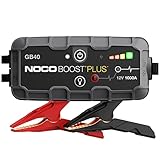
4. NOCO Boost GB40: 1000A UltraSafe Jump Starter – 12V Lithium Battery Booster Pack, Portable Jump Box, Power Bank & Jumper Cables - for 6.0L Gas and 3.0L Diesel Engines
Overview:
NOCO’s entry-level GB40 delivers core safety features in an ultra-compact form. Tailored for everyday vehicles (up to 6.0L gas engines), it’s the lightest model here at 2.5 lbs, making it ideal for glovebox storage or emergency kits in commuter cars and smaller SUVs.
What Makes It Stand Out:
UltraSafe protection remains its hallmark, preventing user errors that damage vehicles. The 3-hour recharge time beats most competitors, while the 7-mode 100-lumen LED light offers versatile emergency illumination. Its featherweight design sets it apart for minimalists.
Value for Money:
Excellent value for standard passenger vehicles. Costs less than the GB70 while retaining NOCO’s safety DNA, though its 1000A output suits smaller engines. Cheaper alternatives lack its certified protection, making it a smart mid-range investment.
Strengths and Weaknesses:
Strengths: Unbeatable portability; fastest recharge (3 hours); certified spark-proof safety; intuitive operation; affordable for NOCO quality.
Weaknesses: Limited to 3.0L diesel engines; lower peak amps for large trucks; dimmer light than GB70; fewer starts per charge (20).
Bottom Line:
The perfect everyday carry for sedan/hatchback owners. Compromise on power if you drive larger vehicles, but for most commuters, it’s the safest, most practical compact jump starter available.
5. AVAPOW 6000A Car Battery Jump Starter(for All Gas or up to 12L Diesel) Powerful Car Jump Starter with Dual USB Quick Charge and DC Output,12V Jump Pack with Built-in LED Bright Light

Overview:
AVAPOW’s A68 promises high-amperage starts for large vehicles (up to 12L diesel) in a streamlined package. Emphasizing speed (“2-second start”) and safety, it targets truck/RV owners needing robust yet portable emergency power without excessive bulk.
What Makes It Stand Out:
The 6000A peak current supports massive diesel engines uncommon in this class, while intelligent clamps with 8 safety protections prevent misuse. Dual USB ports (including 18W QC) and a cigarette lighter adapter add versatility missing in basic models, all in a lighter chassis than lead-acid units.
Value for Money:
Competitively priced for its 12L diesel capability, undercutting premium brands like NOCO. Offers better engine coverage than similarly sized rivals, though build quality feels less premium. Ideal for budget-conscious truck owners needing heavy-duty performance.
Strengths and Weaknesses:
Strengths: Exceptional diesel engine support; rapid 2-second starts; comprehensive safety indicators; quick-charging ports; includes storage case.
Weaknesses: Less refined than NOCO; no air compressor; LED light dimmer (3 modes only); shorter battery lifespan than claimed.
Bottom Line:
A compelling high-power budget option for diesel truck/RV owners. Choose it over NOCO for larger engines at lower cost, but expect minor durability trade-offs for the savings.
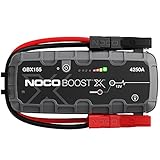
6. NOCO Boost X GBX155: 4250A UltraSafe Jump Starter – 12V Lithium Battery Booster Pack, Portable Jump Box, Power Bank & Jumper Cables - for 10.0L Gas and 8.0L Diesel Engines
Overview:
The NOCO Boost X GBX155 is a premium portable jump starter designed for demanding vehicles, supporting gas engines up to 10.0L and diesel up to 8.0L. Built around a high-capacity lithium battery, it eliminates the need for traditional jumper cables while doubling as a versatile power bank. Its compact, rugged design targets drivers seeking reliability in critical situations.
What Makes It Stand Out:
NOCO’s UltraSafe 2.0 technology sets it apart with spark-proof operation and reverse polarity protection, significantly reducing user error risks. The 60-second timer optimizes power delivery for up to 18 jumps per charge. Turbo charging via USB-C PD achieves a jump-ready state in just 5 minutes from dead, while the 60W USB-C PD port charges laptops and tablets faster than competitors.
Value for Money:
Priced at the premium end, it justifies cost through exceptional safety, rapid recharging, and durability. While cheaper alternatives exist, the GBX155’s consistent performance in extreme conditions and extended battery lifespan offer superior long-term value for professionals or frequent travelers needing dependable power.
Strengths and Weaknesses:
Strengths: UltraSafe 2.0 protection; industry-leading 2.7-hour full recharge; 60W power bank versatility; reliable cold-weather starts; compact and lightweight.
Weaknesses: Lower peak amps (4,250A) may struggle with very large diesel engines; no built-in air compressor or multi-mode lighting; higher initial cost than entry-level models.
Bottom Line:
An elite, safety-focused jump starter ideal for gas-powered vehicles and smaller diesels. Its rapid charging, robust protections, and power bank utility make it a top investment for discerning drivers prioritizing reliability and convenience over raw amperage.
7. 8250A Jump Starter Battery Jump Starter Battery Pack (for All Gas or 10.0+L Diesel), 12V Potable Heavy Duty Car Jump Start with 60W Power Bank 24-Months Stand-by Time

Overview:
The QUOESD 8250A is a heavy-duty jump starter engineered for extreme power demands, claiming compatibility with all gas engines and diesel engines 10.0L+. It emphasizes industrial-grade reliability for large vehicles like RVs, buses, and farm machinery, while integrating a 60W power bank and exceptional cold-weather resilience.
What Makes It Stand Out:
Its standout feature is the claimed 8,250A peak current—among the highest here—coupled with 10-layer safety protection and operation down to -40°F. The 48-month standby time ensures readiness after long storage periods. Dual-direction 60W USB-C PD enables ultra-fast recharging (5 minutes to jump-ready) and rapid device charging.
Value for Money:
Offers exceptional value for heavy-equipment owners needing brute-force starting power in harsh conditions. The 48-month standby and extreme cold tolerance justify its price over models requiring frequent recharging. While the power bank is robust, budget models may suffice for casual car owners.
Strengths and Weaknesses:
Strengths: Massive 8,250A output for large diesels; exceptional cold-weather (-40°F) performance; 48-month standby; rapid 5-minute jump-ready charge; 60W multi-device charging.
Weaknesses: Bulky design; lacks integrated compressor or inverter; “8250A” may be peak (not sustained) rating; fewer user-friendly features like a smart display.
Bottom Line:
A powerhouse for commercial or off-grid users tackling massive engines in freezing climates. Its unmatched cold resilience and standby time make it indispensable for fleet managers or adventurers, though overkill for standard passenger vehicles.
8. DEWALT DXAEPS14 2000 Peak Battery Amp 12V Automotive Battery Booster Jump Starter/Power Station with 120 PSI Compressor, 500W AC Power Inverter, and 15W USBa & 25W USB Ports

Overview:
The DEWALT DXAEPS14 transcends typical jump starters by integrating a 120 PSI digital air compressor and 500W AC inverter. Targeting DIYers and tradespeople, it delivers 2,000 peak amps for V8 gas engines while functioning as a versatile power station for tools and inflatables.
What Makes It Stand Out:
The built-in AUTOSTOP compressor is its crown jewel—no separate air pump needed for tires or sports gear. The 500W pure sine wave inverter powers small power tools, while USB ports offer 15W/25W charging. DEWALT’s rugged tool-brand reliability and reverse polarity safety enhance its workshop appeal.
Value for Money:
Priced competitively for its multifunctionality. The compressor and inverter add significant utility over pure jump starters, justifying cost for those needing air and AC power. However, its 2,000A rating limits it to smaller engines, reducing value for heavy-duty diesel users.
Strengths and Weaknesses:
Strengths: Integrated AUTOSTOP compressor; 500W inverter for tools; DEWALT durability; compact for its features; USB-C fast charging.
Weaknesses: Lower amp rating (2,000A) unsuitable for large diesels; inverter drains battery quickly; no LED light modes; limited portability due to weight.
Bottom Line:
An outstanding all-in-one solution for mechanics or campers needing tire inflation and tool power. Ideal for gas-powered trucks and vans, but its amperage restricts use for larger diesel engines, making it a specialist tool rather than universal jump box.
9. AVAPOW TJ68 10000A Battery Jump Starter Portable with 4" HD Display PD 65W Dual-Way Fast Charging,12V Jump Box, Car Battery Jump Starter for All Gas & Up to All Diesel Engines

Overview:
The AVAPOW TJ68 leverages a staggering 10,000A peak rating and a 4-inch HD smart display to deliver user-friendly, high-power jumping for all gas and diesel engines. It combines military-grade durability with intuitive features like bidirectional fast charging and multi-mode lighting.
What Makes It Stand Out:
The 4-inch HD display provides real-time battery status, error alerts, and step-by-step guidance—unmatched clarity for beginners. PD65W bidirectional charging achieves full recharge in 2 hours, while the “Force Start” button revives dead batteries. Flame-retardant casing and 12-layer BMS safety enhance confidence.
Value for Money:
Offers premium features at a mid-to-high price point. The display, rapid charging, and robust safety systems provide excellent ROI for infrequent users who prioritize ease of use. Though cheaper models exist, the TJ68’s versatility as a jump starter, power bank, and emergency light justifies the cost.
Strengths and Weaknesses:
Strengths: Intuitive 4-inch HD display; 10,000A peak for extreme reliability; PD65W 2-hour recharge; 3-in-1 LED light; Force Start function; excellent cold tolerance.
Weaknesses: “10,000A” likely peak (not cranking) amps; no air compressor or AC inverter; bulkier than basic models; display may drain battery if left on.
Bottom Line:
A top choice for novice or safety-conscious users thanks to its smart display and foolproof operation. Its rapid charging and versatile lighting make it ideal for daily drivers and adventurers, though power users may want added tools like a compressor.
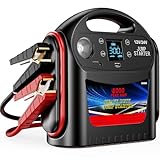
10. 8000A Car Battery Jump Starter for All Gas/Diesel,12V/24V Intelligent Car Jumper Starter Battery Pack, Heavy Duty Portable Jump Box Power Pack with LED Light
Overview:
This versatile jump starter supports both 12V and 24V vehicles—a rarity in portable units—with 8,000A peak power for all gas/diesel engines. It targets commercial fleets, agricultural users, and off-roaders needing dual-voltage capability alongside emergency lighting and device charging.
What Makes It Stand Out:
Its dual 12V/24V compatibility is the key differentiator, handling trucks, excavators, and military vehicles others can’t. The “Forced Start” mode jumpstarts critically depleted batteries, while the 300-lumen LED offers SOS/strobe modes. A large digital panel clearly guides voltage checks and operations.
Value for Money:
Exceptional value for 24V vehicle owners, as dedicated 24V jump starters are scarce and costly. The 40,000mAh capacity doubles as a robust power bank, and the 18W USB port charges devices efficiently. Budget-friendly for its niche capability, though over-engineered for standard cars.
Strengths and Weaknesses:
Strengths: Unique 12V/24V dual support; Forced Start mode for dead batteries; bright 300-lumen multi-mode LED; clear digital voltage display; high 40,000mAh capacity.
Weaknesses: 8,000A rating may be optimistic for large diesels; slow 18W device charging vs. PD65W competitors; no USB-C or fast recharging; basic safety features.
Bottom Line:
An essential tool for 24V vehicle operators or heavy machinery users, offering unmatched dual-voltage flexibility. While less refined than premium models, its specialized functionality and emergency lighting provide critical value for commercial and industrial applications.
Understanding Diesel Truck Starting Power Requirements
The core function of any jump starter is delivering sufficient power, but “sufficient” for a diesel truck is a whole different ballgame. Standard passenger car jump starters often fall drastically short here.
Decoding Cranking Amps (CA) vs. Cold Cranking Amps (CCA)
It’s crucial to distinguish between these two ratings. Cranking Amps (CA) measure the current a battery can deliver at 32°F (0°C) for 30 seconds while maintaining voltage above 7.2 volts. Cold Cranking Amps (CCA), the far more critical spec for diesel owners, measures the same at a frigid 0°F (-18°C). Diesel engines, especially when cold, present immense resistance to turning. Always prioritize CCA ratings; for most full-size diesel trucks, you’ll realistically need a minimum of 1500-2000 CCA, with larger or older engines potentially requiring 2500+ CCA. Don’t be misled by inflated CA numbers alone.
The Critical Role of Peak Amps
While CCA defines the sustained power delivery crucial for reliable starting, Peak Amps indicate the absolute maximum instantaneous surge a jump starter can provide. This initial burst is vital for overcoming the initial inertia of a large diesel engine. However, be wary of manufacturers listing excessively high peak amp figures that aren’t sustainable. Look for a healthy balance where the peak amps are realistically 2-3 times the rated CCA. A unit boasting 5000 peak amps but only 1000 CCA is likely misleading and won’t deliver the necessary sustained power.
Reserve Capacity: Beyond the Initial Crank
Reserve Capacity (RC), measured in minutes, indicates how long the jump starter can deliver a useful amount of power (typically 25 amps) at 80°F (27°C) before its voltage drops too low. While not the primary spec for the jump itself, a higher RC is valuable. It means the unit can potentially power accessories (like lights or communication devices) while you’re waiting for help if the truck’s alternator isn’t charging, or even attempt multiple start cycles if the first try fails. For heavy-duty applications, an RC of 30+ minutes is a solid benchmark.
Essential Build Quality for Harsh Environments
Diesel trucks operate in demanding conditions—extreme cold, heat, dust, vibration, and moisture. Your jump starter must be engineered to withstand this reality, not just survive a garage shelf.
Ruggedized Housing and Impact Resistance
Look for units constructed with high-impact ABS plastic or reinforced polymer casings specifically designed to resist cracking from drops, impacts, or being tossed in a truck toolbox. Rubberized overmolds around the housing edges and corners provide crucial shock absorption. Avoid flimsy, thin plastic shells; a quality heavy-duty unit should feel substantial and durable in your hand, signaling it can handle the bumps and knocks of daily truck life.
Vibration Dampening for Mobile Use
Trucks, especially diesels, generate significant engine vibration. A jump starter rattling around in your cab or toolbox isn’t just annoying—it can damage internal components over time. Seek models incorporating internal vibration-dampening features, such as shock-absorbing mounts for the battery cells or strategic internal bracing. This ensures the sensitive electronics and battery connections remain secure and functional despite constant movement.
Weatherproofing and Ingress Protection (IP) Ratings
Exposure to rain, snow, dust, and road grime is inevitable. Check the Ingress Protection (IP) rating. For true heavy-duty use in a truck environment, aim for at least IP65. This means the unit is completely dust-tight (6) and protected against low-pressure water jets from any direction (5). Higher ratings like IP67 (dust-tight and withstands immersion up to 1m for 30 mins) offer even greater peace of mind for extreme conditions or storage in uncovered truck beds.
Non-Negotiable Safety Features
Attempting to jump-start a large diesel truck involves significant electrical energy. Safety isn’t optional; it’s paramount. Cutting corners here risks catastrophic damage to your vehicle’s sensitive electronics or personal injury.
Spark-Proof Technology (Reverse Polarity Protection)
This is arguably the most critical safety feature. Accidentally connecting the clamps backwards (red to negative, black to positive) is a common mistake, especially in stressful, low-light situations. Quality heavy-duty jump starters incorporate sophisticated circuitry that detects reverse polarity before power flows and prevents any spark or current from passing. This safeguards your truck’s expensive computer systems, alternator, and the jump starter itself from immediate destruction. Never compromise on this feature.
Overload, Over-Current, and Short-Circuit Protection
Robust internal circuitry must monitor the power flow constantly. Overload protection kicks in if the starter motor draws more current than the jump starter can safely supply, preventing overheating and potential fire. Over-current protection guards against excessive current draw during the crank. Short-circuit protection is essential if the clamps accidentally touch each other or a grounded metal surface. All three work together to shut down the unit safely before damage occurs.
Overcharge and Over-Discharge Protection
The jump starter’s internal battery needs protection too. Overcharge protection prevents damage from being left plugged in on a charger indefinitely. Over-discharge protection is vital; it automatically shuts down the unit when the internal battery is depleted to a level that would cause permanent damage if left discharged. This significantly extends the usable lifespan of the jump starter itself, ensuring it’s ready when you need it months after the last recharge.
Practical Usability and Operational Factors
Power and safety are foundational, but how easy and reliable the unit is to use when you’re stressed and possibly in bad weather matters immensely.
Cable Length, Thickness, and Clamp Design
Thin, short cables create resistance, robbing the starter motor of precious power. Demand thick-gauge cables (4 AWG or lower is ideal for heavy diesel) – thicker is better for minimizing voltage drop. Adequate length (at least 24-36 inches) provides crucial flexibility for positioning the jump starter safely away from moving engine parts and allows connection to dual battery systems common in diesels. Clamps must be robust, heavy-duty, alligator-style with strong springs, serrated jaws for biting through corrosion, and clear, large color-coding (red/black). Insulated handles are a must for safety.
Intuitive Display and Status Indicators
When you’re cold, stressed, and in a hurry, you need clear, immediate feedback. A bright, easy-to-read LCD or LED display showing the actual remaining charge percentage (not just vague bars) is essential. It should also clearly indicate if the unit is charging, fully charged, and crucially, if any safety faults (like reverse polarity) are detected. Backlit displays are highly recommended for nighttime use. Avoid units with cryptic single-light indicators.
Ease of Recharging and Power Source Flexibility
How quickly and conveniently can you get the unit back to full power? Look for models supporting multiple input methods: standard AC wall charger (included), 12V DC car charger (for topping up from another vehicle), and increasingly important, USB-C Power Delivery (PD) input for fast recharging from high-wattage portable power stations or compatible car chargers. Fast charging capability (reaching 80%+ in under an hour) is a major advantage for frequent users or fleet applications.
Diesel-Specific Considerations You Can’t Ignore
Generic jump starters fail diesel owners because they don’t address the unique architecture and demands of these powerful engines. These factors separate true heavy-duty solutions.
Dual Battery System Compatibility
Many modern diesel trucks (especially 3/4-ton and 1-ton models) feature dual 12V battery systems wired in parallel to provide the massive cranking amps required. A jump starter designed only for single-battery vehicles might not have the capacity or the correct connection strategy. Ensure the unit explicitly states compatibility with dual-battery diesel trucks and provides clear instructions for connecting to both batteries safely and effectively, often requiring specific clamp placement sequences.
Extreme Cold Weather Performance
Diesel starting struggles worst in the cold, precisely when you need your jump starter most. Battery chemistry (typically Lithium Iron Phosphate - LiFePO4 in quality units) significantly impacts low-temperature performance. While standard lithium-ion struggles below freezing, LiFePO4 maintains much better discharge capability down to -4°F (-20°C) and can often be safely recharged at slightly lower temperatures than other lithium types. Verify the manufacturer’s specified operating and charging temperature ranges; for true diesel readiness, operating down to at least -20°F is highly desirable.
Glow Plug Cycle Consideration
Diesel engines rely on glow plugs to pre-heat the combustion chamber, especially when cold. This pre-heat cycle draws significant current before the starter motor even engages. A weak jump starter might provide enough juice for the starter but drain so much during the glow plug phase that insufficient power remains to actually crank the engine. The high reserve capacity (RC) mentioned earlier becomes critical here, ensuring the unit can power the glow plugs and deliver the massive subsequent crank.
Maintenance and Longevity for Reliability
A jump starter is only as good as its readiness. Treating it as a “set it and forget it” item is a recipe for failure when you need it most.
Proper Storage Practices
Store your jump starter in a cool, dry place, ideally within the manufacturer’s recommended temperature range (often 32°F to 104°F / 0°C to 40°C). Avoid leaving it in extreme heat (like a closed truck cab in summer) or freezing cold for extended periods. For long-term storage (months), maintain a charge level around 50-60% – a fully charged or fully depleted battery degrades faster in storage. Check the charge level every 3-6 months and top it up if needed.
Charging Cycle Management
Avoid constantly running the unit completely dead before recharging, as this stresses the battery. Similarly, don’t leave it perpetually plugged in at 100% charge. Recharge it when the indicator shows 20-30% remaining. Quality LiFePO4 units handle deeper discharges better than older lead-acid, but moderate cycling still extends overall lifespan. Follow the manufacturer’s specific charging guidelines.
Periodic Functional Testing
Don’t wait for an emergency to discover your jump starter is dead. Every few months, especially before winter, perform a quick functional test. Connect it to a known good, but low, vehicle battery (or use its own test load function if equipped) to verify it delivers power and the safety features engage correctly. This simple habit provides invaluable confidence.
Integrating with Your On-Board Emergency System
A jump starter is a critical component, but it’s part of a larger preparedness strategy for diesel truck operators, whether professional or recreational.
Complementing Your Truck’s Electrical System
Understand your truck’s specific battery requirements and health. A jump starter is a temporary fix; the underlying cause of the dead battery (failing alternator, parasitic drain, old batteries) needs diagnosis. Ensure your truck’s own batteries are in good condition and properly maintained – a jump starter can’t compensate for fundamentally bad batteries long-term. Consider it an essential bridge to get you moving and to a proper repair.
Synergy with Portable Power Stations
For those who already use or are considering a portable power station (PPS) for job sites or camping, note that many modern heavy-duty jump starters can be rapidly recharged from these stations via USB-C PD. Conversely, some larger PPS units now incorporate jump-starting capability themselves, though often with lower CCA than dedicated units. Evaluate if a dedicated high-CCA jump starter or a high-capacity PPS with robust jump-starting meets your primary need.
Essential Companion Tools
Never rely only on the jump starter. Always carry heavy-duty jumper cables (as a backup if the jump starter fails or its clamps are incompatible), work gloves, safety glasses, and basic tools. Know how to safely connect both the jump starter and traditional jumper cables. A simple multimeter to check battery voltage beforehand can prevent unnecessary jump attempts and diagnose if the issue is truly the battery.
Making Your Final Selection with Confidence
Choosing the right heavy-duty jump starter requires balancing raw power, ruggedness, safety, and usability against your specific diesel truck and typical operating conditions.
Assessing Your Specific Truck and Usage
Be brutally honest: What’s the largest diesel engine you routinely operate? Do you drive in consistently sub-zero temperatures? Is your truck equipped with a single or dual battery system? How often do you drive in extremely remote areas? A 6.7L Cummins in a snowplow operating at -30°F demands a significantly more robust unit than a lighter-duty diesel used only for occasional warm-weather trips. Match the specs to your worst-case scenario, not your average day.
Evaluating Total Value vs. Upfront Cost
The cheapest heavy-duty jump starter is often the most expensive mistake you can make when it fails at a critical moment. Factor in the unit’s expected lifespan (heavily influenced by battery quality and build), warranty length and coverage (2+ years is good, 3+ is excellent for LiFePO4), and the cost of potential downtime or towing if it fails. Investing in a unit with superior safety features, genuine high CCA, and proven ruggedness pays dividends in reliability and peace of mind. Read independent reviews focusing on long-term durability, not just initial performance.
Verifying Authentic Specifications
Beware of misleading marketing. Some manufacturers inflate CCA/peak amp numbers or use non-standard testing methods. Look for units that explicitly state compliance with industry standards (like SAE J537 for CCA measurement, though less common for jump starters) or provide detailed, transparent testing data. Reputable brands stand behind their specs. If the numbers seem too good to be true for the size and price, they probably are. Focus on brands known for professional-grade or industrial equipment.
Frequently Asked Questions
Frequently Asked Questions
Can I use a standard car jump starter on my diesel truck?
Generally, no. Most standard car jump starters lack the necessary Cold Cranking Amps (CCA) – typically requiring 1500-2500+ for diesels – and may not handle the unique demands of diesel starting systems, leading to failure or potential damage.
How many times can a heavy-duty jump starter crank a diesel engine on a single charge?
This varies significantly by unit capacity and engine size. A properly sized unit (matching your truck’s CCA needs) should reliably provide 5-10 full cranking attempts at 0°F, but always consult the specific manufacturer’s data sheet for realistic expectations under load.
Why is Cold Cranking Amps (CCA) more important than Peak Amps for diesel trucks?
CCA measures sustained power delivery at freezing temperatures (0°F), which is critical for overcoming a diesel engine’s high compression when cold. Peak Amps are a brief surge; sustained CCA ensures the engine keeps cranking long enough to start, especially in winter.
Are lithium jump starters safe for diesel trucks with sensitive electronics?
Yes, if they include comprehensive safety features like spark-proof technology and reverse polarity protection. Reputable heavy-duty lithium (LiFePO4) jump starters are designed specifically to be safe for modern vehicles with complex electronics when used correctly.
How often should I recharge my heavy-duty jump starter if it’s stored in my truck?
Check the charge level every 3-4 months. Recharge it when it drops to around 30-50% capacity. Most quality units have low self-discharge, but extreme temperatures (heat or cold) accelerate discharge, so more frequent checks are wise in harsh climates.
Can a jump starter damage my diesel truck’s alternator or computer systems?
Only if it lacks essential safety features (like reverse polarity protection) and is connected incorrectly, or if it’s a very low-quality unit causing voltage spikes. Units with robust built-in protections prevent damage when used as instructed.
Do I need a special jump starter for a diesel truck with dual batteries?
Yes, standard single-battery jump starters often lack the capacity and specific connection protocols. Ensure the unit explicitly states compatibility with dual-battery diesel systems and provides clear instructions for safe connection to both batteries.
What’s the advantage of Lithium Iron Phosphate (LiFePO4) over other battery types in jump starters?
LiFePO4 offers superior safety (less fire risk), longer lifespan (2000+ cycles), better performance in cold weather, minimal self-discharge, and maintains stable voltage during discharge compared to older lead-acid or standard lithium-ion batteries.
How do I safely jump-start a diesel truck with a dual battery system using a portable jump starter?
Always follow the jump starter’s specific instructions. Typically, connect the jump starter’s clamps to the primary (starting) battery terminals first (positive then negative to a solid ground), not directly across both truck batteries. Never connect the jump starter between the two truck batteries.
Can extreme cold permanently damage a lithium jump starter?
While LiFePO4 handles cold discharge better than other lithium types, charging a frozen unit can cause permanent damage. Most quality units have built-in low-temperature cutoffs preventing charging below freezing (around 32°F/0°C). Store and recharge within the manufacturer’s specified temperature range.
See Also
- 10 Must-Have Heavy Duty Jump Starters for Pickup Trucks in 2026
- 10 Most Durable Heavy Duty Jump Starters Based on Real User Reviews in 2026
- Stop Stranded Starts with the 10 Best Heavy Duty Jump Starters This Year
- 10 Best Truck Jump Starters for Diesel Engines in 2026
- 10 Best Jump Starters for Cold Weather Starting Issues in 2026