Table of Contents
When you’re pushing your turbocharged build beyond factory limits, fuel delivery becomes the critical bottleneck that determines whether you’ll unlock serious power or experience catastrophic failure. High-flow fuel injectors aren’t just another bolt-on modification—they’re the precision instruments that ensure your engine receives exactly the right amount of fuel to match the increased air volume your turbocharger is forcing into the combustion chambers. Understanding how to select, size, and install these components properly can mean the difference between a car that runs flawlessly at 400+ horsepower and one that struggles with lean conditions, detonation, and expensive engine damage.
The world of high-performance fuel injectors is filled with technical specifications, compatibility concerns, and tuning requirements that can overwhelm even experienced enthusiasts. Flow rates, impedance levels, spray patterns, and duty cycles aren’t just numbers on a spec sheet—they’re the fundamental parameters that dictate how well your fuel system will perform under the extreme pressures and temperatures of forced induction. This comprehensive guide walks you through everything you need to know about choosing the right high-flow injectors for your turbocharged application, ensuring you make an informed decision that supports your power goals while maintaining drivability and reliability.
Top 10 High-Flow Fuel Injectors
Detailed Product Reviews
1. HPI FUEL INJECTORS: SET OF (8) 42LB LS3 / LS7 / LSA / EV14 / EV6 STYLE HIGH IMPEDANCE INJECTORS

Overview: The HPI 42LB fuel injectors represent a serious performance upgrade for LS-series engines. Built on Bosch EV6 architecture, these high-impedance injectors deliver precise fuel metering for modified LS3, LS7, and LSA applications. Each set of eight is meticulously flow-matched to within 1% at static flow and 2% dynamically, ensuring cylinder-to-cylinder consistency critical for high-performance builds exceeding 500 horsepower.
What Makes It Stand Out: The exceptional matching tolerance sets these apart from budget alternatives. HPI provides comprehensive deadtime and flow rating data, simplifying ECU calibration—a major time-saver for tuners. Full compatibility with ethanol and methanol fuels future-proofs your build for alternative fuel strategies. The lifetime manufacturer warranty demonstrates confidence in durability under demanding conditions, covering users for the long haul.
Value for Money: While priced above generic injectors, these cost significantly less than OEM performance equivalents from GM. For builds requiring precise fuel delivery, the tight tolerances prevent costly engine damage from lean conditions, effectively paying for itself in protection alone. The included technical data eliminates expensive dyno tuning hours, making it a smart financial choice for serious enthusiasts.
Strengths and Weaknesses: Strengths include industry-leading flow matching, comprehensive calibration data, alternative fuel compatibility, and lifetime warranty. Weaknesses: 42lb rating may be excessive for mildly modified engines, requiring professional tuning; not CARB-certified for street use in emissions-controlled states; premium pricing may deter budget builds.
Bottom Line: These injectors are ideal for serious LS performance builds where precision and reliability are non-negotiable. The data support and warranty make them a smart investment for modified vehicles running boost or nitrous, provided you have access to professional tuning.
2. ApplianPar 8Pcs 4 Hole Flow Matched Fuel Injectors Replace 17113553 FJ10062

Overview: The ApplianPar 8-piece injector set offers a budget-friendly solution for GM truck and SUV owners facing fuel delivery issues. Designed as direct replacements for 1999-2006 Silverado, Sierra, Yukon, and related models with 5.3L or 6.0L engines, these four-hole injectors address common clogging and flow degradation in aging vehicles with 150,000+ miles.
What Makes It Stand Out: The exhaustive vehicle compatibility list spans multiple GM platforms, consolidating numerous OEM part numbers (17113553, FJ10062, etc.) into one convenient package. The four-hole design improves atomization over older single-hole injectors, potentially restoring lost performance and efficiency. Flow-matching, while not as tight as premium brands, ensures reasonable consistency for stock applications.
Value for Money: Priced at a fraction of OEM Delphi injectors, these represent compelling value for high-mileage vehicles where factory replacements would exceed the car’s value. For restoration projects or daily drivers requiring reliable function without performance ambitions, the cost savings are substantial. However, longevity remains unproven compared to established brands, making them a calculated risk.
Strengths and Weaknesses: Strengths include broad compatibility, affordable pricing, multi-hole design improvement, and inclusion of all eight injectors. Weaknesses: Limited brand reputation, unspecified flow matching tolerances, lack of detailed specifications for tuners, potential quality control variability, and no mentioned warranty terms. Professional installation is recommended despite the “direct replacement” claim.
Bottom Line: A practical choice for budget-conscious owners of older GM trucks seeking functional replacement injectors. Acceptable for stock applications and mild repairs, but performance builds should invest in higher-grade alternatives with verified specifications and robust warranty coverage.
3. MOSTPLUS Flow Matched Fuel Injectors Compatible with Ford F150 F250 E-150 E-250 Lincoln Mercury 4.6L 5.0L 5.4L 5.8L 0280150943 0280150939 0280150909 (Set of 8)
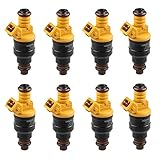
Overview: MOSTPLUS delivers a performance-oriented injector replacement for Ford’s modular V8 family, covering 4.6L through 5.8L engines in F-Series trucks, E-Series vans, and Lincoln-Mercury vehicles from 1991-2005. This eight-injector set targets owners seeking improved efficiency and drivability from aging fuel systems that have suffered from varnish buildup and nozzle erosion over decades of service.
What Makes It Stand Out: The marketing emphasizes superior atomization through a precision-calibrated 15-degree spray cone angle, addressing carbon buildup and idle instability common in high-mileage Ford V8s. The corrosion-resistant construction and integrated sealing system promise durability under harsh conditions. The extensive OE part number cross-reference simplifies fitment verification across the broad compatibility range.
Value for Money: Positioned in the mid-range price bracket, these injectors cost less than Motorcraft originals while claiming performance benefits. For vehicles suffering from misfires or poor fuel economy due to degraded injectors, the investment could yield measurable improvements. However, “enhanced fuel economy” claims should be viewed skeptically—they primarily restore lost performance rather than exceed factory efficiency.
Strengths and Weaknesses: Strengths include improved spray pattern over worn injectors, comprehensive Ford-Lincoln-Mercury fitment, leak-proof design, and competitive pricing. Weaknesses: Performance gains may be modest on well-maintained engines, no specific flow matching data provided, long-term reliability is unproven compared to OEM, and requires careful application verification across the wide 14-year span.
Bottom Line: Recommended for Ford truck owners experiencing injector-related drivability issues who want a cost-effective upgrade over basic replacements. Set realistic expectations—this is a refresh, not a race upgrade. Verify your exact part number before ordering due to Ford’s running production changes.
4. PKSABB High Flow Fuel Injector Rail for Toyota Supra Aristo JZA80 2JZ 2JZ-GTE MKV JZS 147 Twin Turbo Upgrade 1992-2002 3.0L L6 Engine

Overview: The PKSABB fuel rail addresses a critical bottleneck in modified Toyota Supra 2JZ-GTE engines. Constructed from T6061 aluminum, this direct-replacement rail supports increased fuel demands of turbocharged builds beyond stock power levels. Designed for 1992-2002 JZA80 chassis, it integrates seamlessly with factory mounting points and accepts standard top-feed injectors without modification.
What Makes It Stand Out: The rail’s pre-tapped ends for -6 AN fittings eliminate custom fabrication, a significant advantage for DIY enthusiasts building their own fuel systems. The T6061 aluminum construction ensures strength and corrosion resistance while maintaining lightweight properties. As a true bolt-on component, it requires no permanent modifications to the engine bay, preserving reversibility for future changes or returns to stock configuration.
Value for Money: Priced competitively against other aftermarket rails, it offers essential upgrade capability without premium brand markup. For builds progressing toward 400+ horsepower, this rail provides necessary flow capacity that stock plastic rails cannot safely support. The cost is justified by preventing fuel starvation and potential engine damage under boost, making it cheap insurance for expensive 2JZ builds.
Strengths and Weaknesses: Strengths include quality material, AN fitting readiness, direct bolt-on installation, and affordable pricing. Weaknesses: No installation instructions included, professional installation recommended (adding cost), basic black finish may not suit all aesthetic preferences, lacks integrated damping features of pricier alternatives, and no mentioned warranty.
Bottom Line: A functional, no-frills fuel rail upgrade for 2JZ-GTE builders on a budget. Essential for turbo upgrades, but factor in professional installation costs. Delivers core performance benefits without unnecessary embellishments, making it ideal for function-over-form projects.
5. Auto Dynasty Compatible with Supra Top Feed High Flow Fuel Injector Rail Kit (Red) - 2JZ-GTE JZA80

Overview: Auto Dynasty’s red anodized fuel rail kit targets Toyota Supra 2JZ-GTE owners pursuing significant power gains. This top-feed rail system accommodates high-boost applications where factory fuel delivery becomes inadequate. The vibrant red finish adds visual appeal to engine bays while providing substantial functional improvements for 1992-2002 twin-turbo models pushing beyond 500 horsepower.
What Makes It Stand Out: The oversized 1/2-inch fuel bore dramatically increases flow capacity compared to stock rails, supporting 600+ horsepower builds. Versatile fitting options include pre-tapped ends accepting both -6 and -8 AN fittings, plus a 1/8-inch NPT port for nitrous systems or fuel pressure gauges. Compatibility with both stock and aftermarket regulators provides flexibility in system design without forcing component replacement.
Value for Money: This feature-rich rail costs less than half of premium Japanese brands while offering comparable specifications. For dedicated performance builds, the included NPT port saves additional fabrication costs. However, the restriction to federal emissions vehicles limits its legal street use, potentially reducing value for daily drivers in regulated states who cannot legally install it.
Strengths and Weaknesses: Strengths include massive flow capacity, dual AN size compatibility, integrated accessory port, attractive anodized finish, and stock regulator compatibility. Weaknesses: Not legal for sale in California, New York, Colorado, or Maine; red color may clash with some builds; quality control inconsistencies reported in forums; and installation requires fuel system expertise and additional fittings.
Bottom Line: An excellent choice for track-focused Supras where emissions compliance isn’t required. The feature set and flow capacity make it ideal for serious turbo upgrades, but street car owners must verify local regulations before purchasing. Perfect for off-road or competition use where maximum flow and flexibility are priorities.
6. Set of 8 Upgraded 4 Holes High Performance Fuel Injectors Fits for Ford: Crown Victoria, for Lincoln: Town Car, for Mercury: Grand Marquis, 2006-2011 V8 4.6L, # 0280158089, 82211195,FJ958.
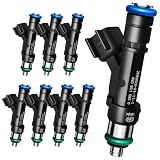
Overview: The XLNTAPS set of 8 upgraded fuel injectors delivers a direct-fit replacement solution for 2006-2011 Ford, Lincoln, and Mercury vehicles equipped with the 4.6L V8 engine. Designed to match OEM specifications exactly, these injectors address the common failure points in aging factory units while offering a refined 4-hole spray pattern for improved fuel atomization.
What Makes It Stand Out: These injectors distinguish themselves through meticulous OEM adherence and material upgrades. The composite fuel control body resists corrosion far better than original units, while high-temperature Viton O-rings maintain sealing integrity under extreme thermal cycles. The manufacturer emphasizes rigorous end-of-line testing, ensuring each injector meets strict performance criteria before packaging. The 4-hole design represents an improvement over older single-hole designs, promoting better combustion efficiency.
Value for Money: At approximately 30-40% below dealership pricing for genuine Motorcraft injectors, this 8-piece set offers substantial savings for complete system replacement. The extended service life from corrosion-resistant materials and Viton seals translates to better long-term value, potentially outlasting cheaper alternatives that use standard rubber components. For owners restoring or maintaining these specific Panther-platform vehicles, the precise fitment eliminates costly modifications or returns.
Strengths and Weaknesses: Strengths include exact OEM dimensional matching, upgraded sealing materials, comprehensive vehicle-specific fitment data, and batch consistency from quality control. Weaknesses involve the critical need for pre-purchase fitment verification—despite the plugin tool, user error can occur. Additionally, these are stock replacements, not performance upgrades, limiting appeal for modified engines. The brand recognition is also lower than established names.
Bottom Line: These injectors represent an excellent choice for owners seeking reliable, stock-performance replacement injectors for their 2006-2011 Ford, Lincoln, or Mercury 4.6L V8. The material upgrades and strict testing justify the investment over bargain options, provided you verify fitment meticulously.
7. HPI FUEL INJECTORS: SET OF (8) 30LB LS1 / LS6 / LT1 / EV1 STYLE HIGH IMPEDANCE INJECTORS

Overview: HPI’s set of eight 30lb fuel injectors targets the performance market for GM LS1/LS6/LT1 engines, delivering a modern Bosch EV6-based solution that replaces outdated factory units. These high-impedance injectors support moderate power increases while maintaining compatibility with stock engine management systems, making them ideal for cammed, heads/cam combos, or mild forced induction setups.
What Makes It Stand Out: The exceptional 1% static and 2% dynamic flow matching sets a professional standard rarely seen in this price class. HPI provides detailed deadtime and flow rating data, eliminating guesswork during ECM calibration—a critical advantage for tuners. The injectors’ 9bar pressure tolerance offers substantial headroom for boosted applications, while included EV1 plug-and-play connectors ensure backward compatibility. Ethanol and methanol compatibility future-proofs builds using alternative fuels.
Value for Money: Positioned in the mid-range performance segment, these injectors cost approximately 60% less than premium brands like Fuel Injector Clinic while offering comparable matching precision. The inclusion of calibration data and adapter harnesses adds $40-50 in value, making the set particularly attractive for DIY enthusiasts. For builds requiring 30lb/hr flow, this represents optimal price-to-performance ratio.
Strengths and Weaknesses: Strengths include precise flow matching, comprehensive technical documentation, fuel flexibility, and robust pressure handling. The EV6 design offers superior response over older EV1 injectors. Weaknesses include the need for custom tuning in most applications—stock ECU maps will require modification. The brand lacks the long-term reputation of Bosch or Delphi, and adapter connections, while convenient, add potential failure points.
Bottom Line: HPI’s 30lb injectors deliver professional-grade matching and documentation at an enthusiast-friendly price. They’re an outstanding choice for moderately modified LS/LT engines where precise fuel delivery and tuning support are paramount, provided you’re prepared for ECM recalibration.
8. AOTPAT High Performance Fuel Injectors For:-Dodge Durango Dakota 2001-2007 4.7L, For:-Jeep Grand Cherokee Commander For:-Mitsubishi Raider For:-Chrysler Aspen, Replace OE# 0280155849 (8Pcs)

Overview: AOTPAT offers this set of eight high-performance fuel injectors as a direct replacement for Chrysler’s 4.7L V8 engines spanning 2001-2007 across Dodge, Jeep, Mitsubishi, and Chrysler applications. Targeting the common failure points in these aging powerplants, the injectors promise restored drivability and enhanced performance through improved fuel delivery consistency.
What Makes It Stand Out: The marketing directly addresses symptoms owners actually experience—erratic idling, poor acceleration, and engine shuddering—making diagnosis-to-purchase conversion straightforward. Coverage spans an impressive range of vehicles from the Dakota to the Grand Cherokee, consolidating what would otherwise be multiple part numbers. The manufacturer claims optimized spray patterns and high-temperature resilience, though specific technical details remain less documented than premium competitors.
Value for Money: This set typically undercuts OEM Mopar injectors by 50-60%, positioning it as a budget-conscious solution for high-mileage vehicles. For owners of older SUVs and trucks where resale value is modest, the price point enables necessary maintenance without overcapitalizing. The 8-piece complete set ensures balanced aging across all cylinders, preventing mismatched flow issues.
Strengths and Weaknesses: Strengths include broad vehicle compatibility, symptom-focused marketing, competitive pricing, and claims of durable materials. The comprehensive vehicle list simplifies sourcing. Weaknesses include limited brand recognition, vague technical specifications regarding flow rates and matching tolerances, and optimistic “high performance” claims that may exceed realistic expectations for stock replacements. No mention of impedance or connector type specifics.
Bottom Line: These injectors serve as a cost-effective maintenance solution for aging Chrysler 4.7L V8s showing classic fuel injector failure symptoms. While not true performance upgrades, they offer reasonable value for restoring stock functionality, provided you approach the performance claims with realistic expectations.
9. FAST 303600 Precision-Flow 36 lb/hr 378cc/min High-Impedance Fuel Injector
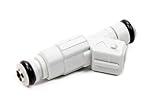
Overview: FAST’s Precision-Flow 36 lb/hr injector represents a premium single-unit solution for enthusiasts building custom fuel systems or upgrading specific cylinders. Delivering 378cc/min flow, this high-impedance injector suits modified naturally aspirated and lightly boosted applications where OEM computer compatibility remains essential. The design prioritizes response time and atomization quality over raw flow capacity.
What Makes It Stand Out: State-of-the-art magnetic circuitry significantly reduces opening times compared to conventional injectors, enabling more precise fuel delivery at high RPM. The precision-ground pintle and wide spray angle produce exceptional atomization, critical for preventing pooling and ensuring complete combustion. FAST’s anti-clogging valve body design addresses a common failure mode, while high-impedance operation ensures painless integration with factory ECMs without driver modifications.
Value for Money: As a single injector, the per-unit cost positions it in the premium tier—approximately 2-3x the price of bulk economy injectors. However, for builders needing one or two replacements rather than a full set, this eliminates waste. The engineering investment in magnetic response and pintle design justifies the cost for performance applications where fuel distribution quality directly impacts power and safety. For full-set purchases, costs accumulate quickly.
Strengths and Weaknesses: Strengths include FAST’s established racing pedigree, superior magnetic response, excellent atomization, clog resistance, and OEM ECM compatibility. The high-impedance design broadens application scope. Weaknesses include the single-unit packaging, which complicates batch matching for full sets. The premium price demands careful flow requirement calculation—oversizing hurts drivability. Limited technical data provided compared to specialized tuning brands.
Bottom Line: This FAST injector excels in precision and response for targeted upgrades or custom builds. Purchase it when fuel atomization quality and ECM compatibility are non-negotiable, but buy a matched set if replacing all injectors to ensure cylinder-to-cylinder balance.
10. Set of 4 OE 1.6L GDI High-pressure Fuel Injectors,Compatible with/Kia 1.6 Soul Rio 2012-2017,Compatible with/Hyundai 1.6 Accent 2013-2016 |6 Holes| |#35310-2B130|

Overview: This set of four OE-spec GDI high-pressure fuel injectors from Pjvmvo addresses the critical fuel delivery needs of 2012-2017 Kia and Hyundai 1.6L direct-injection engines. As genuine OE-style replacements, these 6-hole injectors maintain the precise spray geometry and flow characteristics required for GDI combustion systems, where fuel pressure exceeds 2,000 PSI and spray targeting is paramount.
What Makes It Stand Out: The VIN-matching inventory system ensures exact OE compatibility, a crucial feature given GDI systems’ sensitivity to injector variances. The 6-hole design replicates factory spray patterns necessary for direct-injection stratified charge operation. Pjvmvo’s emphasis on pre-delivery testing, including flow validation and leak checks, provides confidence in a segment where quality variance can cause catastrophic engine damage. The company notes that tested units may retain trace fuel—an honesty marker.
Value for Money: Pricing typically runs 25-35% below dealership OE parts while delivering equivalent form, fit, and function. For GDI engines experiencing carbon buildup-related injector clogging or seal failure, this set offers dealer-quality restoration without premium markup. The OE pedigree eliminates the risks associated with universal or poorly engineered alternatives that can destroy high-pressure pumps or contaminate combustion chambers.
Strengths and Weaknesses: Strengths include genuine OE design replication, VIN-verified fitment, comprehensive testing, and proper 6-hole GDI spray architecture. The direct-fit approach minimizes installation variables. Weaknesses include the specialized nature—no performance gains over stock. GDI injectors require professional installation and often ECM adaptation. The brand lacks long-term durability data compared to original equipment manufacturers.
Bottom Line: For Kia and Hyundai 1.6L GDI engines needing injector replacement, this set delivers authentic OE quality at a meaningful discount. Prioritize these over universal options to protect your high-pressure fuel system, but budget for professional installation given GDI complexity.
Understanding High-Flow Fuel Injectors for Turbo Applications
The Basics of Fuel Delivery in Forced Induction
Turbocharging fundamentally changes your engine’s air-fuel dynamics by compressing intake air, which dramatically increases oxygen density in the combustion chamber. For every extra pound of boost, you’re forcing significantly more air molecules into the cylinders, requiring proportionally more fuel to maintain the optimal stoichiometric ratio. High-flow injectors are engineered with larger internal passages, modified nozzle designs, and more robust electromagnetic coils to deliver substantially more fuel in the same amount of time as stock injectors. This isn’t simply about spraying more fuel—it’s about maintaining precise control over fuel delivery at higher pressures and shorter pulse widths while resisting the heat soak common in turbocharged engine bays.
Why Stock Injectors Fall Short Under Boost
Factory fuel injectors are calibrated for the specific airflow characteristics and power output of a stock engine configuration. Once you introduce forced induction or increase boost pressure beyond conservative levels, these injectors quickly reach their maximum duty cycle—typically around 80-85% for safe operation. Pushing them beyond this threshold results in poor atomization, inconsistent fuel delivery, and inadequate cooling of the intake charge. More critically, running injectors at or near 100% duty cycle eliminates any safety margin for sudden fuel demands, such as when your turbo spools unexpectedly or temperatures rise. High-flow injectors provide the necessary headroom to maintain proper fueling throughout your entire power band while keeping duty cycles in the safe zone.
Calculating Your Fuel Injector Needs
Determining Horsepower Goals and Fuel Requirements
The foundation of selecting the right injector size starts with an honest assessment of your target wheel horsepower. A general rule of thumb for turbocharged gasoline engines is that you’ll need approximately 0.6 pounds of fuel per hour for each horsepower you aim to produce. This calculation varies based on fuel type, with E85 requiring roughly 30% more volume than gasoline due to its lower stoichiometric ratio. Start by establishing realistic power goals based on your turbocharger size, engine displacement, and supporting modifications. Remember that it’s always better to size injectors slightly larger than your current needs to accommodate future upgrades, though excessively oversized injectors can create idle and low-load drivability issues that make daily driving frustrating.
The Brake-Specific Fuel Consumption Factor
Brake-specific fuel consumption (BSFC) is the measure of how efficiently your engine converts fuel into horsepower. For most turbocharged applications running on gasoline, a BSFC of 0.60 to 0.65 is a safe estimate, while high-compression, well-tuned setups might achieve 0.55. E85 blends typically show BSFC values between 0.75 and 0.85 due to their energy density differences. When calculating injector size, using a slightly conservative BSFC factor ensures you won’t run lean under full boost. The formula is straightforward: (Horsepower × BSFC) ÷ number of injectors = required flow per injector. Always round up to the next available injector size and account for approximately 15% duty cycle headroom for safety.
Duty Cycle: Why 100% Isn’t Your Target
Duty cycle represents the percentage of time an injector remains open during a given engine cycle. While it might seem logical to maximize fuel delivery by running injectors near 100% duty cycle, this approach creates numerous problems. At high duty cycles, injectors can’t close fully between pulses, leading to poor atomization, fuel dripping, and inconsistent spray patterns. Most tuners recommend sizing injectors so you never exceed 80-85% duty cycle at peak power. This provides crucial headroom for fuel pressure fluctuations, voltage variations, and sudden load changes. Additionally, injectors operating at reasonable duty cycles run cooler and last longer, as the brief closing periods allow heat dissipation and prevent coil saturation issues.
Key Specifications Explained
Flow Rates: CC vs. LB/Hr
Injector flow rates are expressed in either cubic centimeters per minute (cc/min) or pounds per hour (lb/hr), and understanding the conversion is essential for proper sizing. The conversion factor is approximately 10.5 cc/min per lb/hr, though this varies slightly with fuel density and temperature. When comparing injectors, always verify the test pressure—most manufacturers rate injectors at 3 bar (43.5 psi), but your turbocharged system might run higher base fuel pressure. Flow rates increase with the square root of pressure changes, meaning raising fuel pressure from 43.5 psi to 58 psi increases flow by roughly 15%. However, relying solely on increased pressure to compensate for undersized injectors creates tuning challenges and can exceed your fuel pump’s capacity.
Impedance: High vs. Low
Fuel injectors come in two primary electrical configurations: high-impedance (saturated) and low-impedance (peak-and-hold). High-impedance injectors typically draw 12-16 ohms and are compatible with stock engine management systems without modifications. They’re ideal for most street-driven turbo cars because they generate less heat and don’t require special driver circuits. Low-impedance injectors, usually 2-4 ohms, open faster and are better suited for extremely high-RPM applications where injector pulse widths become very short. However, they require aftermarket injector drivers or standalone ECUs and can generate significant electrical noise. For most turbocharged street and track cars, high-impedance injectors offer the best balance of performance and compatibility.
Spray Patterns and Nozzle Designs
The geometry of an injector’s nozzle critically affects how fuel atomizes and mixes with incoming air. Single-hole, pintle-style nozzles were common in older designs but often provide poor atomization at high flow rates. Modern multi-hole disc injectors offer superior spray patterns with finer fuel droplets that vaporize more completely, especially crucial in turbo applications where intake air temperatures are elevated. Some high-flow injectors feature specially angled spray patterns optimized for specific combustion chamber designs. A poorly matched spray pattern can cause fuel to wet cylinder walls, wash away lubricating oil, and create dangerous lean conditions in other cylinders. Always select injectors with spray patterns compatible with your cylinder head and intake manifold design.
Connector Types and Compatibility
Injector electrical connectors vary between manufacturers and model years, with EV1, EV6, and EV14 being the most common types. While adapters exist, they add failure points and can cause voltage drops that affect injector performance. Many high-flow injectors come with universal connectors that require you to splice them into your factory harness. When doing so, use proper crimping techniques, heat-shrink insulation, and consider the wire gauge—larger injectors can draw more current, and voltage drops directly impact opening times. Some premium injector sets include plug-and-play adapters specifically for popular turbocharged platforms, eliminating the need to modify factory wiring and preserving reliability.
Compatibility Considerations
Matching Injectors to Your Engine Management System
Your ECU’s capabilities should drive your injector selection process. Factory ECUs often have limited injector size compensation ranges, typically 20-30% larger than stock before triggering fault codes or running excessively rich at idle. Aftermarket engine management systems offer far more flexibility, with sophisticated injector characterization tables that model opening times, flow linearity, and voltage compensation. If you’re retaining a factory ECU with a reflash, verify the tuner’s experience with your chosen injector size and brand. Some ECUs require specific injector dead-time values to achieve stable idle and part-throttle fueling. Standalone systems provide ultimate control but demand more extensive tuning to dial in injector parameters across all operating conditions.
Physical Fitment and O-Ring Configurations
High-flow injectors aren’t always direct replacements for stock units, even when advertised as “drop-in.” Variations in overall length, body diameter, and O-ring positioning can create installation headaches. Most fuel rails are designed for specific injector dimensions, and mismatches can cause fuel leaks or poor sealing. Top-feed and side-feed injector designs are not interchangeable without significant fuel system modifications. Additionally, the O-ring material must be compatible with your fuel type—standard nitrile O-rings degrade quickly with E85, requiring Viton or other ethanol-resistant materials. Always verify physical dimensions against your factory injectors and consider purchasing O-ring kits specifically designed for your application.
Fuel Type Compatibility: Gasoline, E85, and Beyond
Not all high-flow injectors are created equal when it comes to fuel compatibility. E85’s higher ethanol content is corrosive to certain metals and can swell seals not designed for alcohol-based fuels. Injectors intended for flex-fuel or E85 applications use stainless steel internal components, ethanol-compatible filter screens, and specialized O-ring materials. Methanol injection systems demand even more robust construction due to methanol’s aggressive chemical properties and higher flow requirements. If there’s any possibility you’ll switch fuels in the future, invest in injectors rated for your intended fuel from the start. Cleaning procedures also differ—E85 leaves different deposits than gasoline and may require more frequent servicing to maintain optimal spray patterns.
Installation Best Practices
Pre-Installation Preparation Steps
Never install new injectors without first verifying their flow rates and ensuring they’re free of manufacturing debris. Professional injector cleaning and flow matching services can identify faulty units before they cause engine damage. Install a new fuel filter before fitting high-flow injectors, as any contamination in the system can clog the fine mesh screens inside the injectors. Pressure-test your fuel system for leaks after installation, but before starting the engine. This simple step can prevent fuel spraying onto hot exhaust components. Additionally, cycle the fuel pump multiple times with the ignition on (engine off) to purge air from the system and verify proper injector operation without the risk of hydro locking.
Proper O-Ring Lubrication and Seating
Dry O-rings tear during installation, creating immediate fuel leaks. Use a small amount of clean engine oil or specific O-ring lubricant—never use petroleum-based grease that can degrade fuel system seals. Install injectors with a gentle twisting motion to help O-rings seat properly without rolling. Ensure the injector clip or retainer fully engages with an audible click. For top-feed injectors, verify the fuel rail seats evenly across all injectors before tightening mounting hardware. Uneven pressure can crack injector bodies or cause intermittent leaks. After installation, pressurize the fuel system and inspect each injector base and rail connection with a flashlight, looking for any signs of wetness or seepage.
Electrical Connector Care
High-flow injectors draw more current than stock units, making solid electrical connections critical. Clean any corrosion from factory connectors using electrical contact cleaner. When crimping new connectors, use a proper ratcheting crimp tool rather than pliers, and perform a pull test on each wire to verify the connection. Route injector wiring away from hot exhaust components and sharp edges. Many turbocharged cars suffer from voltage drops at high RPM due to alternator load; consider upgrading the ground strap between the engine and chassis to ensure injectors receive full battery voltage. Some enthusiasts wrap injector harnesses in heat-resistant loom for added protection in the high-temperature environment near the turbocharger.
Tuning and Calibration Requirements
Why New Injectors Demand Professional Tuning
Installing high-flow injectors without proper tuning is one of the quickest ways to destroy an engine. Your ECU’s fuel tables are calibrated for the specific flow characteristics of your original injectors. Larger injectors deliver substantially more fuel at the same pulse width, causing dangerously rich conditions that can wash cylinder walls and contaminate oil, or lean conditions if the tuner compensates incorrectly. A professional tuner will rescale injector size parameters, adjust dead-time values, and recalibrate fuel maps across the entire operating range. This process ensures proper idle quality, smooth part-throttle transitions, and safe air-fuel ratios under boost. Expect to spend several hours on the dyno to dial in a new injector setup properly.
Understanding Injector Offset and Latency
Injector offset, also called dead time or latency, is the delay between the ECU sending the signal and fuel actually flowing. This value changes with battery voltage and fuel pressure, and high-flow injectors typically have different offset characteristics than stock units. Modern ECUs use complex tables to model this behavior, accounting for voltage fluctuations that occur during cranking, idle, and high-RPM operation. Incorrect offset values manifest as unstable idle, poor cold starts, and inconsistent fueling during rapid throttle changes. Quality injector manufacturers provide detailed offset data at various voltages and pressures, which your tuner must input correctly. Some premium injectors come with characterization data specific to popular ECU platforms, simplifying the tuning process.
Fuel Pressure Adjustments
While raising fuel pressure can increase injector flow, it must be done methodically with a quality adjustable fuel pressure regulator. Turbocharged applications typically use a boost-referenced regulator that increases fuel pressure 1:1 with manifold pressure, maintaining a constant pressure differential across the injector. When installing high-flow injectors, start with the base pressure recommended by your tuner—often slightly higher than stock to improve atomization. Monitor fuel pressure under boost to ensure your pump can maintain pressure; pressure drop under load indicates an inadequate fuel pump or restricted lines. Install a fuel pressure gauge temporarily during tuning to verify the regulator responds correctly to boost, and never exceed the maximum pressure rating of your injectors or fuel lines.
Maintenance and Longevity
Cleaning and Flow Testing Intervals
High-flow injectors are precision instruments that require periodic maintenance to perform optimally. For street-driven turbo cars, professional cleaning and flow testing every 50,000 miles ensures consistent performance. Track cars running high boost or alternative fuels should consider annual servicing. The cleaning process uses ultrasonic baths and specialized solvents to remove deposits without damaging internal components. Flow testing verifies each injector delivers within 2% of its rated flow and that spray patterns remain consistent. Many enthusiasts have their injectors serviced before major tuning sessions, as even slight flow variations between cylinders can create dangerous lean conditions in individual cylinders that aren’t apparent in wideband readings, which only show average air-fuel ratio.
Signs of Injector Failure in Turbo Cars
Turbocharged engines place extreme demands on fuel injectors, and failures often manifest differently than in naturally aspirated applications. One of the first signs is inconsistent boost response or power delivery, where the car feels strong in some RPM ranges but falls flat in others. This often indicates an injector that’s beginning to clog or has developed a poor spray pattern. Rising exhaust gas temperatures at wide-open throttle, even with proper air-fuel ratios, can signal an injector delivering poor atomization. Hard starting, especially when hot, may indicate high-offset injectors with worn coils. Perhaps most dangerously, frequent spark plug failures in a single cylinder often point to that specific injector delivering too much or too little fuel, creating a lean condition that damages pistons and valves before it shows up on your dashboard.
Common Pitfalls to Avoid
Oversizing Injectors: Bigger Isn’t Always Better
The temptation to buy the largest injectors available “just in case” leads to countless drivability problems. Injectors operating at very low pulse widths—common with oversized units at idle and cruise—become non-linear and unpredictable. This creates a loping idle, poor fuel economy, and makes precise air-fuel control nearly impossible during part-throttle transitions. Additionally, large injectors often have poor spray atomization at low flows, causing fuel to puddle in the intake ports rather than mixing properly with air. The result is poor combustion, carbon buildup, and potential catalytic converter damage. Size your injectors for your realistic power goals plus 15-20% headroom, not for some hypothetical future build that may never materialize.
Ignoring Fuel System Supporting Mods
High-flow injectors are only one component of a complete fuel system upgrade. Your factory fuel pump likely cannot supply the volume required to feed large injectors at high pressure, especially under boost. Upgrading to a high-flow fuel pump is mandatory when substantially increasing injector size. Similarly, factory fuel lines may present flow restrictions, and the fuel pressure regulator must be boost-referenced and capable of handling increased flow without pressure creep. The fuel filter needs more frequent replacement to prevent clogging that starves injectors. Overlooking these supporting modifications results in pressure drop under boost, making those expensive injectors perform no better than stock units. Budget for the complete system, not just the injectors themselves.
Cost and Value Considerations
Budgeting for the Complete Fuel System Upgrade
High-flow injectors represent a significant investment, but focusing solely on purchase price can be misleading. Quality injectors with proper flow matching and characterization data typically cost more but save money in tuning time and prevent engine damage. Factor in the cost of professional cleaning and flow testing services, which should be performed before installation. Add the price of new O-rings, potential fuel rail modifications, and the essential custom tuning session. A complete fuel system upgrade—including pump, regulator, lines, and injectors—can easily exceed the cost of the injectors alone. However, this integrated approach ensures reliable performance and prevents the cascading failures that occur when one component becomes the weak link in your fuel delivery chain.
Frequently Asked Questions
1. How do I know what size injectors my turbo car needs?
Calculate your target horsepower, multiply by a conservative BSFC (0.60-0.65 for gas, 0.75-0.85 for E85), divide by the number of injectors, then add 15-20% headroom. Most tuners can recommend specific sizes based on your turbo and power goals.
2. Can I just raise fuel pressure instead of buying bigger injectors?
While increasing pressure does increase flow, it’s limited by your fuel pump’s capacity and can create tuning challenges. This approach works for modest power increases but becomes inefficient and unreliable beyond 20-30% flow increases.
3. Will high-flow injectors hurt my gas mileage?
Properly tuned high-flow injectors won’t significantly impact cruising fuel economy. However, if oversized or poorly calibrated, they can cause rich conditions at light load that reduce mileage and foul spark plugs.
4. Do I need a new fuel pump with high-flow injectors?
Almost always. High-flow injectors require substantially more fuel volume, especially under boost. A quality high-flow pump is essential to maintain pressure and prevent lean conditions that destroy engines.
5. What’s the difference between high and low impedance injectors?
High-impedance injectors (12-16 ohms) work with stock ECUs and generate less heat. Low-impedance injectors (2-4 ohms) open faster but require aftermarket driver circuits. For most street turbo cars, high-impedance is the correct choice.
6. How often should I clean my high-flow injectors?
Street cars: every 50,000 miles. Track cars or E85 users: annually or every 25,000 miles. Always flow test after cleaning to verify consistent performance across all cylinders.
7. Can I install high-flow injectors myself?
Yes, if you have mechanical experience and proper tools. However, professional installation ensures correct O-ring lubrication, connector wiring, and leak testing. Most importantly, professional tuning is absolutely mandatory after installation.
8. Why does my car idle poorly after installing larger injectors?
Poor idle is almost always due to incorrect injector offset/dead time values in the ECU, or injectors that are too large for the application. A professional tuner can resolve this by inputting proper latency data and adjusting idle fuel tables.
9. Are expensive injectors worth the extra cost?
Premium injectors with proper flow matching and detailed characterization data save tuning time and provide more consistent cylinder-to-cylinder fueling. This reduces the risk of engine damage and often justifies the higher initial cost.
10. Can I use gasoline-rated injectors for E85?
No. E85 is corrosive and requires injectors with stainless steel internals and ethanol-compatible seals. Using gasoline-only injectors with E85 will cause premature failure, potentially leading to dangerous fuel leaks and engine damage.
See Also
- 10 Best High-Flow Fuel Injectors for Turbocharged Vehicles in 2026
- We Tested 50 High-Flow Fuel Injectors - Here are the 10 Best for Racing Use
- 10 Top-Rated High-Flow Fuel Injectors According to Experts in 2026
- 10 Game-Changing Electric Fuel Injectors for Modified Street Cars in 2026
- Top 10 Best Fuel Injectors for High-Performance Engines in 2026