Table of Contents
When you start pushing your turbocharged build beyond factory boost levels, the stock fuel system becomes the weakest link in your quest for reliable power. Those tiny factory injectors that work perfectly at 8 PSI simply can’t deliver enough fuel to keep up with the dense, oxygen-rich air charge that modern turbos force into your combustion chambers. Upgrading to properly sized high-flow fuel injectors isn’t just about making bigger numbers—it’s about ensuring your engine doesn’t turn into an expensive paperweight when you hit peak boost.
Choosing the right fuel injectors for your forced-induction setup involves far more than just picking the highest flow rate you can afford. The wrong choice can lead to poor idle quality, terrible fuel economy, and even catastrophic engine failure. This guide walks you through everything you need to know about selecting high-flow injectors that will work seamlessly with your turbocharged vehicle, from understanding flow ratings to ensuring proper ECU compatibility, so you can make an informed decision that matches your performance goals and driving style.
Top 10 High-Flow Fuel Injectors
Detailed Product Reviews
1. HPI FUEL INJECTORS: SET OF (8) 42LB LS3 / LS7 / LSA / EV14 / EV6 STYLE HIGH IMPEDANCE INJECTORS

Overview: The HPI 42LB fuel injectors represent a premium upgrade for GM LS-series engines, built on a proven Bosch EV6 platform. These high-impedance injectors deliver 42 pounds per hour of flow, making them ideal for moderately boosted or naturally aspirated performance builds. Sold as a precisely matched set of eight, they target enthusiasts seeking reliable fuel delivery for LS3, LS7, and LSA applications.
What Makes It Stand Out: The exceptional 1% static and 2% dynamic matching sets these apart from budget alternatives. HPI provides detailed deadtime data and flow ratings, eliminating guesswork during ECU tuning—a critical advantage for achieving optimal air-fuel ratios. Full ethanol and methanol compatibility future-proofs your build for alternative fuels, while the lifetime manufacturer warranty demonstrates exceptional confidence in durability.
Value for Money: While priced above generic injectors, the precision matching alone justifies the premium. Poorly matched injectors can cause cylinder-to-cylinder variations, leading to detonation or uneven wear. For tuners and serious builders, the included calibration data saves hours of dyno time, effectively offsetting the higher initial cost compared to cheaper, unmatched sets requiring manual calibration.
Strengths and Weaknesses: Strengths include precise matching, comprehensive data provision, multi-fuel compatibility, and lifetime warranty. The high-impedance design ensures ECU compatibility without additional drivers. Weaknesses: 42lb flow may be insufficient for high-horsepower forced induction builds, and the premium price point might deter budget-conscious modifiers. They’re also overkill for stock replacement scenarios.
Bottom Line: These injectors are an excellent investment for LS enthusiasts building 450-600 horsepower setups who demand precision and reliability. The data package and matching make them worth every penny for serious tuners.
2. ApplianPar 8Pcs 4 Hole Flow Matched Fuel Injectors Replace 17113553 FJ10062

Overview: The ApplianPar eight-injector set targets GM truck and SUV owners seeking direct replacements for 1999-2006 models. Covering an extensive range including Silverado, Sierra, Yukon, and Escalade variants with 5.3L and 6.0L engines, these injectors address common wear issues like clogging or leakage that plague high-mileage vehicles. They serve as a budget-conscious alternative to dealership parts.
What Makes It Stand Out: The sheer breadth of compatibility is impressive—this single SKU replaces multiple GM part numbers across two generations of full-size trucks. The four-hole design offers improved atomization over older single-hole OEM injectors, potentially restoring lost fuel economy and smoothing idle. For restoration projects or daily drivers, this comprehensive cross-reference simplifies parts sourcing.
Value for Money: Priced significantly below OEM injectors, they deliver acceptable value for high-mileage vehicles where factory-level precision isn’t critical. However, the absence of documented flow matching or deadtime specifications means they’re best suited for stock ECU calibrations. Performance enthusiasts would need professional matching, adding hidden costs that diminish the initial savings compared to pre-matched sets.
Strengths and Weaknesses: Strengths include extensive vehicle coverage, affordable pricing, and improved spray pattern over aging stock injectors. They’re ideal for refreshing a tired fleet vehicle. Weaknesses: No stated flow-matching tolerance, limited warranty details, and unspecified materials compatibility with ethanol blends. Quality control appears variable based on the minimal technical data provided.
Bottom Line: Recommended for budget-minded owners restoring stock performance to GM trucks. Avoid for modified engines or applications requiring precise fuel metering—spend more on matched injectors for those scenarios.
3. MOSTPLUS Flow Matched Fuel Injectors Compatible with Ford F150 F250 E-150 E-250 Lincoln Mercury 4.6L 5.0L 5.4L 5.8L 0280150943 0280150939 0280150909 (Set of 8)
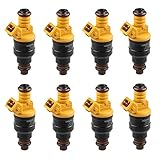
Overview: MOSTPLUS offers this eight-injector set for Ford’s modular V8 family, covering 4.6L, 5.0L, 5.4L, and 5.8L engines across F-Series trucks, E-Series vans, and Lincoln vehicles from 1989-2005. Positioned as an OEM replacement, the set targets owners experiencing rough idle, poor fuel economy, or emissions failures due to worn injectors. The product emphasizes improved atomization over stock units.
What Makes It Stand Out: The 15-degree spray cone angle and high-precision calibrated spray holes claim superior atomization, promising more complete combustion and reduced carbon buildup. The marketing specifically highlights enhanced fuel economy—a rare focus in this category. The reinforced, corrosion-resistant construction with integrated seals suggests attention to longevity, particularly for vehicles operating in harsh conditions or running ethanol-blended fuels.
Value for Money: Positioned in the mid-range price bracket, these injectors offer potential value if the atomization claims translate to measurable MPG improvements. For fleet operators or high-mileage owners, even modest efficiency gains could recoup the investment. However, without independent flow testing data or matching specifications, the premium over budget brands is justified primarily by build quality claims rather than proven performance metrics.
Strengths and Weaknesses: Strengths include broad Ford/Lincoln/Mercury fitment, focus on fuel atomization, and leak-proof design. The corrosion-resistant materials are practical for modern ethanol fuels. Weaknesses: No documented flow-matching tolerances, unsubstantiated fuel economy claims, and limited brand reputation compared to established names. May not suit modified engines requiring precise calibration data.
Bottom Line: A solid choice for Ford truck owners seeking reliable OEM replacement injectors with potentially better longevity than bottom-tier options. Treat fuel economy claims as optimistic; these excel as maintenance items rather than performance upgrades.
4. PKSABB High Flow Fuel Injector Rail for Toyota Supra Aristo JZA80 2JZ 2JZ-GTE MKV JZS 147 Twin Turbo Upgrade 1992-2002 3.0L L6 Engine

Overview: The PKSABB fuel rail addresses a critical bottleneck in modified Toyota Supra Aristo JZA80 2JZ-GTE engines. Constructed from T6061 aluminum, this rail replaces the restrictive OEM unit to support higher-flowing injectors required in twin-turbo applications. Designed for 1992-2002 models, it enables proper fuel delivery for builds exceeding 500 horsepower where stock rails become inadequate.
What Makes It Stand Out: The pre-tapped -6 AN fittings provide modern, secure connections that eliminate the failure-prone stock hose clamps when upgrading fuel lines. The T6061 aluminum construction offers superior strength and corrosion resistance compared to cheaper steel alternatives, while maintaining direct bolt-on compatibility. This thoughtful design preserves factory mounting points, simplifying installation for experienced mechanics.
Value for Money: As a single-rail solution, it represents moderate value—competitive with other billet rails but requiring purchase of a second rail for complete 2JZ-GTE coverage. The cost advantage emerges when considering the precision machining and included AN tap work; DIY fabrication would exceed the purchase price. However, the absence of fittings or hardware means additional expenses that savvy buyers should factor into their budget.
Strengths and Weaknesses: Strengths include high-grade aluminum construction, direct OEM fitment, and professional-grade AN fittings preparation. The rail accommodates stock or aftermarket regulators. Weaknesses: Sold individually (non-turbo 2JZ needs one, but GTE requires two), no installation instructions provided, and the disclaimer about professional installation may intimidate DIYers. Compatibility with ultra-high-flow injectors above 1000cc should be verified.
Bottom Line: Essential upgrade for serious 2JZ-GTE builds. Purchase two rails for twin-turbo setups and budget for AN fittings and professional tuning. Quality justifies the price for performance applications.
5. Auto Dynasty Compatible with Supra Top Feed High Flow Fuel Injector Rail Kit (Red) - 2JZ-GTE JZA80

Overview: Auto Dynasty’s red anodized fuel rail kit serves the Toyota Supra 2JZ-GTE community with a performance-focused upgrade featuring a generous 1/2-inch internal bore. Designed for high-boost applications exceeding OEM fuel demands, this rail supports the additional fuel flow required by upgraded turbos, injectors, and aggressive tuning. The striking red finish adds visual appeal for show-quality engine bays.
What Makes It Stand Out: The oversized bore diameter provides headroom for extreme power levels beyond 700 horsepower, while pre-tapped ends accept both -6 and -8 AN fittings, offering flexibility in fuel line sizing. The integrated 1/8-inch NTP port is a standout feature, allowing clean integration of nitrous systems or fuel pressure gauges without additional adapters. This versatility distinguishes it from basic replacement rails.
Value for Money: Competitively priced against other performance rails, the added features—dual AN sizing and NTP port—deliver tangible value for builders planning future expansion. However, the “Federal Emissions Only” disclaimer severely limits its market, prohibiting sale and use in California, New York, Colorado, and Maine. For track-only or non-emissions states, this represents strong value; for others, it’s unusable.
Strengths and Weaknesses: Strengths include high-flow bore, versatile fitting options, integrated NTP port, and aesthetic anodized finish. It works with stock or adjustable regulators. Weaknesses: Emissions restrictions eliminate half the potential market, single-rail packaging requires doubling up for 2JZ-GTE, and the lack of instructions demands professional installation. The red finish may not suit all color schemes.
Bottom Line: Ideal for high-horsepower Supra builds in emissions-free jurisdictions. Verify local laws before purchasing. The feature set justifies the price for serious performance applications, but street-legal builds should seek CARB-approved alternatives.
6. Set of 8 Upgraded 4 Holes High Performance Fuel Injectors Fits for Ford: Crown Victoria, for Lincoln: Town Car, for Mercury: Grand Marquis, 2006-2011 V8 4.6L, # 0280158089, 82211195,FJ958.
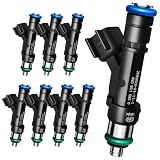
Overview: These upgraded fuel injectors deliver a direct-fit replacement solution for 2006-2011 Ford, Lincoln, and Mercury 4.6L V8 models. The eight-piece set addresses common fuel delivery issues in aging Crown Victoria, Town Car, and Grand Marquis vehicles, providing refreshed performance for high-mileage engines that have experienced injector clogging or flow degradation over time.
What Makes It Stand Out: The four-hole spray pattern design represents a notable improvement over older single-hole OEM injectors, promoting better fuel atomization and combustion efficiency. Composite material construction resists corrosion while high-temperature Viton O-rings maintain sealing integrity under extreme underhood conditions. The manufacturer emphasizes rigorous quality control with individual testing before packaging, offering peace of mind for DIY mechanics and professional installers alike.
Value for Money: Priced competitively in the mid-range aftermarket segment, this eight-injector set typically costs 30-40% less than purchasing individual OEM injectors from a dealership. For fleet vehicles, taxi services, or Panther platform enthusiasts maintaining these iconic body-on-frame sedans, the complete set approach ensures balanced fuel delivery across all cylinders without the mix-and-match concerns of piecemeal replacement.
Strengths and Weaknesses: Strengths: Comprehensive vehicle fitment verification tool, direct OEM cross-reference numbers, upgraded materials for extended durability, complete eight-cylinder set eliminates guesswork. Weaknesses: Aftermarket brand lacks long-term reputation data, four-hole design may not provide measurable performance gains on stock engines, installation requires proper O-ring lubrication to prevent damage.
Bottom Line: An excellent cost-effective solution for restoring proper fuel delivery in aging Panther platform vehicles. Ideal for maintenance and restoration projects where reliability matters more than performance gains.
7. HPI FUEL INJECTORS: SET OF (8) 30LB LS1 / LS6 / LT1 / EV1 STYLE HIGH IMPEDANCE INJECTORS

Overview: These high-performance 30lb injectors from HPI target the GM LS/LT performance market, offering a matched set of eight Bosch EV6-based injectors for popular engine swaps and forced induction applications. Designed for enthusiasts requiring precise fuel metering beyond stock injector capabilities, they support moderate power increases while maintaining OEM-style high-impedance compatibility.
What Makes It Stand Out: The exceptional 1% static and 2% dynamic flow matching sets these apart from budget alternatives, ensuring cylinder-to-cylinder balance critical for optimal performance. HPI provides detailed deadtime and flow rating data, simplifying ECU calibration for tuners. Ethanol and methanol compatibility future-proofs builds for flex-fuel conversions, while included EV1 plug-and-play connectors ease installation on older harnesses.
Value for Money: Positioned in the premium performance tier, these injectors cost more than generic unmatched sets but deliver professional-grade consistency that prevents costly dyno time troubleshooting fuel delivery imbalances. For serious builders, the included technical data and superior matching justify the price premium over entry-level performance injectors that require external matching services.
Strengths and Weaknesses: Strengths: Precise factory-provided flow matching, comprehensive calibration data included, flex-fuel compatible, quality Bosch EV6 foundation, plug-and-play adapter harnesses. Weaknesses: Requires professional tuning for proper operation, 30lb rating may be insufficient for high-boost applications, adapter connectors add potential failure points in harsh environments.
Bottom Line: A top-tier choice for LS/LT performance builds where precision and data transparency matter. Perfect for supercharged or cammed street cars needing reliable fuel delivery beyond stock limits.
8. AOTPAT High Performance Fuel Injectors For:-Dodge Durango Dakota 2001-2007 4.7L, For:-Jeep Grand Cherokee Commander For:-Mitsubishi Raider For:-Chrysler Aspen, Replace OE# 0280155849 (8Pcs)

Overview: This eight-piece injector set serves the Chrysler 4.7L V8 ecosystem, covering Dodge, Jeep, Mitsubishi, and Chrysler applications from 2001-2007. Targeting vehicles exhibiting classic injector failure symptoms like rough idle, power loss, and engine shuddering, these injectors promise restored drivability for aging SUVs and trucks using the popular Powertech engine family.
What Makes It Stand Out: The manufacturer explicitly connects product benefits to specific drivability complaints, helping DIYers diagnose fuel system issues. Claims of high-temperature and high-pressure resistance address common concerns in trucks frequently used for towing. The wide application coverage across multiple brands makes this a convenient one-stop solution for shops servicing the Chrysler V8 platform.
Value for Money: Competitively priced near the budget end of the aftermarket spectrum, this set offers significant savings over dealer OEM parts. For vehicles approaching the 150,000-mile mark where multiple injectors typically fail, the complete set approach prevents the cascading failure cycle of replacing one injector at a time, ultimately saving labor costs and diagnostic headaches.
Strengths and Weaknesses: Strengths: Extensive cross-brand fitment coverage, symptom-based marketing aids diagnosis, economical eight-piece packaging, direct OE number cross-reference. Weaknesses: Lesser-known brand with limited reputation, performance and economy claims lack independent verification, may not match OEM flow rates precisely across all operating conditions.
Bottom Line: A practical budget option for reviving high-mileage Chrysler 4.7L vehicles. Best suited for daily drivers and work trucks where restoration of basic functionality outweighs performance considerations.
9. FAST 303600 Precision-Flow 36 lb/hr 378cc/min High-Impedance Fuel Injector
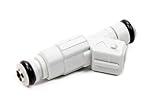
Overview: FAST’s Precision-Flow 36 lb/hr injector represents a single-unit solution for performance applications requiring increased fuel delivery over stock. Flowing 378cc/min, this high-impedance injector suits modified naturally aspirated or lightly boosted engines where precise fuel control remains paramount. The design prioritizes response time and atomization quality for modern engine management systems.
What Makes It Stand Out: State-of-the-art magnetic circuitry significantly reduces opening times compared to standard injectors, enabling more precise fuel delivery during rapid throttle transitions. The precision-ground pintle and wide spray angle produce exceptional atomization, reducing wall wetting and improving combustion efficiency. FAST’s clog-resistant valve body design addresses long-term reliability concerns in performance applications with varied fuel quality.
Value for Money: As a premium single injector, the per-unit cost runs high compared to economy sets, but FAST’s reputation in the racing community justifies the investment for serious builds. Purchasing individual injectors allows custom quantities for odd-fire engines or staggered replacement strategies, though most V8 applications require eight units, multiplying total investment substantially.
Strengths and Weaknesses: Strengths: Industry-leading response times, superior atomization technology, high-impedance OEM ECU compatibility, proven motorsports pedigree, clog-resistant construction. Weaknesses: Single-unit pricing makes full-set purchases expensive, 36lb rating limits maximum power potential, requires professional tuning for optimal results.
Bottom Line: An excellent premium choice for targeted performance upgrades. Ideal for builders prioritizing fuel delivery precision and reliability over maximum flow capacity in moderate-power street and track applications.
10. Set of 4 OE 1.6L GDI High-pressure Fuel Injectors,Compatible with/Kia 1.6 Soul Rio 2012-2017,Compatible with/Hyundai 1.6 Accent 2013-2016 |6 Holes| |#35310-2B130|

Overview: This four-injector set provides genuine OE-grade replacement for Kia and Hyundai 1.6L GDI engines spanning 2012-2017 model years. Directly replacing part number 35310-2B130, these high-pressure direct injection injectors address the unique demands of gasoline direct injection systems, where components operate under extreme pressures exceeding 2,000 PSI in modern compact engines.
What Makes It Stand Out: The VIN-matching inventory system ensures exact application compatibility, critical for GDI systems where precise flow characteristics vary by engine calibration. Six-hole spray pattern design optimizes mixture preparation in direct injection combustion chambers. Multiple quality checks and pre-delivery testing, including flow verification that may leave residual fuel, demonstrate thorough quality control uncommon in aftermarket GDI components.
Value for Money: Priced at genuine OE levels, these injectors command a premium over universal alternatives but eliminate the calibration risks associated with non-OE GDI components. For vehicles under extended warranty or those requiring exact emissions compliance, the authentic OE specification justifies the cost compared to cheaper alternatives that may trigger check engine lights or fail to meet strict emissions standards.
Strengths and Weaknesses: Strengths: Genuine OE specification, VIN-verified fitment, six-hole GDI-optimized spray pattern, comprehensive pre-installation testing, direct cross-reference to 35310-2B120. Weaknesses: Limited to specific 1.6L GDI applications, premium pricing reflects OE sourcing, GDI installation requires specialized knowledge and safety procedures.
Bottom Line: The definitive choice for direct OE replacement in Kia/Hyundai GDI applications. Essential for maintaining factory performance and emissions compliance in modern direct-injection vehicles.
Understanding High-Flow Fuel Injectors
What Makes an Injector “High-Flow”?
High-flow fuel injectors are precision-engineered components designed to deliver significantly more fuel per unit of time compared to their stock counterparts. While factory injectors typically flow between 200-400cc per minute, high-performance units can range from 500cc to over 2000cc per minute. The designation isn’t just about raw output—it’s about maintaining precise control and atomization at these elevated flow rates. These injectors achieve higher flow through larger internal passages, modified pintle designs, and advanced magnetic circuits that allow the solenoid to open and close reliably at extreme duty cycles without sacrificing spray pattern quality.
The Science Behind Fuel Delivery
The fundamental job of any fuel injector is to atomize liquid fuel into a fine mist that can properly mix with incoming air. In turbocharged applications, this becomes exponentially more critical because compressed air is denser and moving at higher velocities. Poor atomization leads to fuel pooling on intake runners, incomplete combustion, and power-robbing inconsistencies. High-flow injectors must maintain a tight, cone-shaped spray pattern even when operating at 80-90% duty cycles, ensuring every precious droplet of fuel contributes to the combustion event rather than washing down cylinder walls or fouling spark plugs.
Why Turbocharged Engines Demand More
The Boost Pressure Factor
Every pound of boost pressure forces additional oxygen molecules into your combustion chamber. Your engine management system must add proportionally more fuel to maintain the proper stoichiometric ratio—typically around 11.5:1 to 12.5:1 under full boost for gasoline. A turbocharged engine running 20 PSI of boost might require 40-60% more fuel than the same engine at atmospheric pressure. This multiplication effect means your injectors need substantial headroom above their naturally aspirated requirements. Running lean for even a few seconds under boost can melt pistons and destroy ring lands, making adequate fuel delivery non-negotiable.
Air-Fuel Ratio Challenges
Turbocharged engines operate across dramatically different air density conditions. At idle and cruise, they behave like normal engines needing stoichiometric 14.7:1 ratios. Under boost, they require rich mixtures for cooling and knock prevention. High-flow injectors must provide linear, predictable fuel delivery across this entire spectrum. The best injectors maintain consistent flow rates whether they’re pulsing for 2 milliseconds or 20 milliseconds, ensuring your tuner can achieve smooth transitions between vacuum and boost without sudden lean spikes or rich bogs that kill drivability.
Critical Features to Evaluate
Flow Rate and CC/Min Ratings
Flow rate, measured in cubic centimeters per minute (cc/min) or pounds per hour (lb/hr), represents the volume of fuel an injector can deliver at 100% duty cycle. For turbo applications, you typically size injectors based on your target horsepower and fuel type. A good rule of thumb is to calculate your needs, then add 20-30% headroom. This prevents running injectors at their absolute maximum duty cycle, which generates excessive heat and can cause them to stick open or closed. Remember that advertised flow rates are usually tested at 43.5 PSI (3 bar) of fuel pressure—if you’re running higher base pressure or a rising-rate regulator, your actual flow will increase proportionally.
Injector Impedance: High vs Low
Impedance determines how your engine control unit (ECU) drives the injector. High-impedance injectors (12-16 ohms) draw less current and can be driven directly by most factory ECUs and aftermarket systems. Low-impedance injectors (1-5 ohms) require peak-and-hold driver circuits or external resistors to prevent overheating the ECU’s output drivers. While low-impedance injectors typically offer faster opening times and better control at extreme duty cycles, they require more complex wiring and may not be compatible with your current setup. Most street-driven turbo builds stick with high-impedance injectors for simplicity and reliability.
Spray Pattern and Atomization
The spray pattern determines how fuel distributes across the intake valve and into the cylinder. Multi-hole pintle designs generally provide better atomization than single-hole disc-style injectors, especially at high flow rates. The cone angle matters too—narrow patterns work well for direct port injection while wider cones suit throttle body setups. For turbo engines, look for injectors that maintain their pattern consistency across varying pulse widths and fuel pressures. Some manufacturers provide detailed spray pattern images or videos that show how their injectors perform under real-world conditions rather than just static bench tests.
Materials and Build Quality
High-quality injectors use stainless steel internals, corrosion-resistant pintles, and high-temp O-rings that won’t degrade with modern ethanol-blended fuels. The coil windings should be protected from heat and vibration, and the connector terminals must resist corrosion. Cheap injectors often suffer from inconsistent flow rates between cylinders, poor sealing, and short lifespans. Given that these components live in one of the hottest, most vibration-prone areas of your engine, skimping on build quality is a false economy that can cost you an entire engine.
Sizing Your Injectors Correctly
Calculating Horsepower Needs
The fundamental formula for sizing injectors starts with your target flywheel horsepower. For gasoline, divide your horsepower goal by the number of injectors, then multiply by a brake-specific fuel consumption (BSFC) factor of around 0.60-0.65 for turbo engines. Convert this to cc/min by multiplying by 10.5. For example, a 4-cylinder engine targeting 400hp would need roughly 630cc/min injectors. For E85, which requires approximately 30% more fuel, you’d need 750-850cc/min injectors for the same power level. Always round up to the next common size to ensure adequate headroom.
The 80% Duty Cycle Rule
Professional tuners and engine builders universally recommend sizing injectors so they never exceed 80-85% duty cycle at your target power level. This margin prevents the injector from staying open so long that it doesn’t have sufficient time to cool between pulses, reducing the risk of coil failure. It also accounts for real-world variables like voltage fluctuations, fuel pressure drops, and the fact that your engine might make slightly more power than predicted. Running injectors at 95-100% duty cycle indicates you’re undersized and operating on the edge of safety.
Using Online Calculators
Modern fuel injector calculators simplify the math by incorporating variables like fuel type, number of cylinders, fuel pressure, and desired duty cycle. These tools provide quick estimates, but treat them as starting points rather than gospel. Factor in your future modification plans—if you think you might add more boost or switch to a larger turbo later, size your injectors for that eventual goal rather than your current setup. Buying injectors twice is expensive and frustrating.
Types of High-Flow Injectors
Top-Feed vs Side-Feed Designs
Top-feed injectors receive fuel from above through a fuel rail that sits on top of the intake manifold, while side-feed designs have fuel enter through slots on the injector body. Most modern performance applications use top-feed injectors because they’re easier to service, offer better flow characteristics, and provide more consistent fuel pressure to each cylinder. Side-feed injectors are common on older Japanese turbo cars and some OEM applications but can suffer from fuel distribution issues and are harder to upgrade. When choosing, stick with whatever design your fuel rail and manifold support unless you’re doing a full conversion.
Static vs Dynamic Flow Rates
Static flow is measured with the injector held wide open, while dynamic flow reflects real-world pulsed operation. Two injectors with identical static ratings can deliver vastly different amounts of fuel in actual use due to differences in opening time, closing time, and linearity. High-quality manufacturers provide both static and dynamic flow data at various pulse widths and pressures. For turbo applications, dynamic flow characteristics are arguably more important than static numbers because they determine how accurately your ECU can control fueling during part-throttle transitions and boost onset.
Compatibility Considerations
O-Ring and Seal Types
Injectors come with different upper and lower O-ring sizes that must match your fuel rail and intake manifold. The most common sizes are 14mm and 11mm for the lower seal, and various sizes for the top hat. Mismatched seals cause vacuum leaks, fuel leaks, or improper injector seating. Many high-flow injectors include multiple O-ring sets or adapters, but verify compatibility before ordering. Also consider the material—Viton O-rings resist degradation from ethanol and high temperatures better than standard nitrile rubber.
Electrical Connectors
Most performance injectors use EV1, EV6, or EV14 style connectors. While adapters exist, it’s best to choose injectors that match your factory connector type to avoid additional failure points. EV6 connectors are the modern standard with better weather sealing, but many older turbo cars use EV1. Some high-flow injectors come with pigtails or plug-and-play adapters, but verify the wiring gauge is sufficient for the injector’s current draw, especially if you’re running low-impedance injectors with external resistors.
Engine Management Integration
Your ECU must have the correct injector characterization data to control high-flow injectors properly. This includes dead time (latency), short pulse width adder, and flow rate corrections across voltage ranges. Many modern standalone ECUs come with pre-loaded data for popular injector sizes, but you’ll need to verify accuracy. Using injectors without proper characterization is like trying to paint a masterpiece with a brush you don’t understand—you might get lucky, but the results will likely be poor.
Installation and Setup Factors
Fuel Rail Requirements
High-flow injectors often require upgraded fuel rails that can maintain consistent pressure across all cylinders, especially when flowing 4-5 times the volume of stock injectors. Factory rails may have internal restrictions or inadequate mounting provisions. Look for rails with -6AN or -8AN fittings, proper injector seat machining, and provisions for a fuel pressure regulator. Some high-flow injectors are longer than stock, requiring spacers or modified rails. Plan your entire fuel system as an integrated package rather than piecemeal upgrades.
Dead Time and Latency
Dead time—also called injector latency—is the delay between the ECU sending the signal and fuel actually flowing. High-flow injectors typically have different dead times than stock injectors, and this value changes with battery voltage. Incorrect dead time settings cause inconsistent idle, poor throttle response, and fueling errors during cranking and transient conditions. Quality injector manufacturers provide detailed dead time charts at various voltages. Your tuner must input this data accurately for proper operation.
Tuning Requirements
ECU Calibration Essentials
Installing high-flow injectors without proper ECU calibration is asking for trouble. Your fuel tables, injector scaling, and latency values must be adjusted to match the new injectors’ characteristics. This goes beyond just entering a flow rate—your tuner must rescale the entire fuel map, adjust acceleration enrichment, and recalibrate closed-loop operation. Expect to spend several hours on the dyno and street to dial in drivability. Some modern ECUs offer self-learning features that speed this process, but manual verification is always necessary for turbo applications.
Data Logging Parameters
After installing high-flow injectors, monitor injector duty cycle, short-term and long-term fuel trims, and air-fuel ratios across all operating conditions. Log these parameters during boost ramp-up, gear shifts, and deceleration to catch any anomalies. Watch for duty cycles approaching 85%—this indicates you’re nearing the limit. Also monitor fuel pressure to ensure your pump and regulator keep up with demand. A pressure drop under boost effectively reduces injector flow and creates dangerous lean conditions.
Maintenance and Longevity
Cleaning and Flow Testing
Even the best injectors suffer from buildup and wear over time, especially when running ethanol blends or contaminated fuel. Professional ultrasonic cleaning and flow testing every 30,000-50,000 miles ensures each injector flows within 1-2% of the others. This prevents cylinder-to-cylinder variations that cause rough running and potential engine damage. Many performance shops offer this service for a fraction of replacement cost. Keep your fuel system clean with quality filters and avoid running your tank below 1/4 full, which stirs up debris from the bottom.
Failure Prevention
High-flow injectors fail from heat soak, electrical overload, and fuel contamination. Use proper heat shields on exhaust-manifold-mounted rails, ensure your electrical system delivers clean voltage above 13.5V under load, and never skip the fuel filter. Running injectors at excessive duty cycles generates heat that degrades the coil windings. If you smell raw fuel, see black smoke, or experience misfires under boost, stop driving immediately and inspect your injectors. Early detection prevents catastrophic engine damage.
Budget and Value Analysis
Price vs Performance Balance
High-flow injectors range from $50 to $200+ each, but price doesn’t always correlate with quality. Mid-range injectors from reputable manufacturers often provide the best value, offering accurate flow matching, good data sheets, and reliable construction without the premium cost of boutique brands. Avoid no-name eBay injectors that lack proper testing and documentation. The savings evaporate when you factor in failed tuning sessions, engine damage, or having to replace them twice. Budget for proper installation hardware, connectors, and professional tuning when calculating total cost.
Warranty Considerations
Quality injector manufacturers stand behind their products with warranties ranging from 1 to 3 years, covering defects but not damage from improper installation or tuning. Read the fine print—some warranties are voided if you run certain fuel types or exceed specified duty cycles. Keep your purchase documentation and flow test results. A good warranty indicates manufacturer confidence, but remember that no warranty covers collateral engine damage if an injector fails. Reliability should be your primary concern, not warranty length.
Common Pitfalls to Avoid
Oversizing Mistakes
Bigger isn’t always better. Massively oversized injectors have poor control at very short pulse widths, causing rough idle, poor fuel economy, and drivability issues. A 2000cc injector on a 400hp street car operates at such low duty cycles that it can’t maintain consistent spray patterns during light throttle. Size for your realistic goals, not your fantasy goals. You can always upgrade later if you build a bigger engine or add more boost. Many enthusiasts buy injectors twice because they overestimated their needs the first time.
Ignoring Supporting Mods
High-flow injectors are useless without adequate fuel pumps, lines, regulators, and filtration. A set of 1000cc injectors fed by a stock fuel pump will see pressure drop to 30 PSI under boost, effectively reducing their flow by 30%. Your entire fuel system must be upgraded as a cohesive unit. Also consider your fuel rail, pressure regulator, and return line sizing. A weak link anywhere in the chain creates the same dangerous lean conditions you’re trying to prevent. Plan your fuel system upgrade holistically.
Performance Validation
Flow Matching Importance
Even premium injectors have minor manufacturing variations. A set of “1000cc” injectors might actually flow between 980-1020cc individually. While 4% variation seems small, it creates cylinder-to-cylinder air-fuel ratio differences that cause uneven power delivery and potential detonation in lean cylinders. Reputable suppliers flow-match sets to within 1-2% and provide a flow sheet for each injector. This costs more but is absolutely worth it for turbo applications where precision matters. Never assume injectors are matched—always verify or have them tested.
Real-World Testing
Bench flow numbers don’t tell the whole story. The only true test is on your specific engine with your fuel system, manifold, and turbo setup. After installation, perform thorough road testing with wideband O2 sensors on each bank or cylinder if possible. Log fuel trims, duty cycles, and actual air-fuel ratios across the entire RPM and load range. Some issues only appear during rapid transients or at specific temperatures. A proper tune validates that your injectors deliver the promised performance in real conditions, not just on a test bench.
Looking Ahead to 2026
Emerging Technologies
The injector market continues evolving with faster response times, better atomization, and improved ethanol compatibility. Look for advancements in magnetic materials that reduce coil heating and allow even higher flow rates without sacrificing low-end control. Some manufacturers are developing injectors with variable flow characteristics that adapt to operating conditions. While these technologies are exciting, proven designs often offer better reliability for street-driven turbo cars. Don’t be the guinea pig for unproven technology unless you’re building a dedicated race car with a budget for experimentation.
EVAP and Emissions Compliance
As emissions standards tighten globally, even modified vehicles face scrutiny. Some high-flow injectors can trigger check engine lights for EVAP system leaks or emissions readiness monitors. Choose injectors with proper seals and consider how they affect your vehicle’s ability to pass inspections. Some regions require all emissions equipment to function, which can be challenging with very large injectors that struggle to maintain stoichiometric ratios at cruise. Research your local requirements before purchasing injectors that might make your car illegal for street use.
Making Your Final Decision
Prioritizing Your Build Goals
Start by honestly defining your goals: daily driver with moderate boost, weekend track car, or drag strip monster? Each scenario demands different injector characteristics. Street cars need excellent low-end control and drivability. Track cars prioritize consistent performance under sustained heat. Drag cars care most about maximum flow at WOT. Match your injector choice to these priorities rather than following internet hype. A 600cc injector that flows perfectly and idles smoothly beats a 1200cc injector that runs rough and fouls plugs every 5000 miles.
Frequently Asked Questions
What size injectors do I need for a 500hp turbocharged engine?
For a 500hp gasoline-powered turbo engine, you’ll typically need 750-850cc/min injectors. This sizing provides adequate headroom while maintaining good control. For E85, bump that to 1000-1100cc/min. Always calculate based on flywheel horsepower and include a 20% safety margin to keep duty cycles below 85%.
Can I run high-flow injectors on a stock ECU?
Only if the stock ECU can be properly tuned and has sufficient resolution to control them. Most factory ECUs lack the fuel table range and injector characterization data needed for high-flow injectors. Standalone or reflashed ECUs are strongly recommended for any significant flow increase.
Do I need to upgrade my fuel pump when installing high-flow injectors?
Absolutely. Your fuel pump must supply enough volume at the required pressure to feed all injectors simultaneously. A common rule is that your pump should flow at least twice your engine’s total fuel consumption in liters per hour. Pressure drop under boost is the silent killer of turbo engines.
Will larger injectors hurt my gas mileage?
Not if they’re properly sized and tuned. Oversized injectors can hurt mileage due to poor atomization and control at low pulse widths. Properly sized injectors with a good tune should deliver similar highway mileage, though city driving may see a small decrease due to the engine’s modified nature.
How do I know if my injectors are flowing enough?
Monitor injector duty cycle in your data logs. If you’re seeing sustained duty cycles above 85% at your target power level, your injectors are too small. Also watch for fuel pressure drop under boost—if pressure falls more than 5-10 PSI, your entire fuel system is inadequate.
What’s the difference between high and low impedance injectors?
High-impedance injectors (12-16 ohms) draw less current and work with most factory ECUs. Low-impedance injectors (1-5 ohms) require special drivers but offer faster response times. For most street turbo builds, high-impedance injectors provide the best balance of performance and compatibility.
How often should I clean my high-flow injectors?
Every 30,000-50,000 miles or sooner if you notice drivability issues. Turbo engines are harder on injectors due to heat and higher operating pressures. Regular cleaning and flow testing ensures matched flow between cylinders and catches problems before they cause engine damage.
Can I mix different brand injectors in my engine?
Never. Even if flow rates are similar, different brands have unique dead times, spray patterns, and response characteristics. This creates impossible tuning challenges and cylinder-to-cylinder imbalances. Always use a matched set from a single manufacturer.
Do high-flow injectors require a different fuel pressure regulator?
Often yes. Stock regulators may not maintain stable pressure with high-volume pumps and return lines. Adjustable regulators with proper flow capacity help fine-tune your system. Rising-rate regulators that increase pressure with boost are popular but require careful setup to avoid over-pressurizing the system.
Are expensive injectors worth the extra cost?
For turbocharged applications, yes. Premium injectors offer better flow matching, comprehensive data sheets, proven reliability, and technical support. The cost difference is minimal compared to the price of a blown engine from a failed cheap injector. Budget $400-800 for a quality set of four injectors as a worthwhile insurance policy.
See Also
- 10 Best High-Flow Fuel Injectors for Turbocharged Cars This Year
- We Tested 50 High-Flow Fuel Injectors - Here are the 10 Best for Racing Use
- 10 Top-Rated High-Flow Fuel Injectors According to Experts in 2026
- Top 10 Best Fuel Injectors for High-Performance Engines in 2026
- 10 Expert-Recommended Mechanical Fuel Injectors for Off-Road Vehicles in 2026