Table of Contents
There’s something deeply satisfying about walking into your garage, rolling up your sleeves, and tackling that weekend project with your own two hands. Whether you’re swapping brake pads, changing oil, or finally diagnosing that mysterious engine tick, having the right mechanic tool set within arm’s reach transforms frustration into accomplishment. By 2026, home automotive repair has evolved beyond simple wrench-turning—modern vehicles demand more sophisticated approaches, and the tool industry has responded with innovations that make professional-grade equipment accessible to weekend warriors like never before.
But here’s the challenge: walk into any auto parts store or browse online marketplaces, and you’ll face hundreds of tool sets promising to be “perfect” for your garage. The truth? The best mechanic tool set isn’t about flashy marketing or how many pieces are crammed into a case—it’s about intelligent selection, quality construction, and tools you’ll actually reach for again and again. This comprehensive guide cuts through the noise, focusing on what truly matters when building your home garage arsenal. We’ll explore the essential features, must-have tools, material considerations, and smart buying strategies that separate worthwhile investments from expensive paperweights.
Top 10 Mechanic Tool Sets
Detailed Product Reviews
1. CRAFTSMAN 230 Pcs Mechanics Tool Set, Socket Wrench Set, Car Tool Kit with VERSASTACK Toolbox, SAE and Metric,1/4 in, 3/8 in, and 1/2 Drive, Short and Long Arm Hex Keys (CMMT45306)

Overview:
The CRAFTSMAN 230-piece mechanics tool set delivers professional-grade functionality for automotive enthusiasts and serious DIYers. Packaged in an innovative three-drawer VERSASTACK toolbox, this comprehensive collection covers 1/4, 3/8, and 1/2-inch drives with both SAE and metric measurements. The set includes 91 sockets, three ratchets, 21 wrenches, 44 hex keys, 66 specialty bits, and five accessories—providing everything needed for most vehicle maintenance tasks.
What Makes It Stand Out:
The standout feature is the low-profile ratchet with a 25% thinner head, combined with a 72-tooth mechanism that offers just 5 degrees of arc swing for exceptional access in confined engine bays. The VERSASTACK system’s one-handed locking dial allows drawers to be opened, closed, or nested atop the unit for temporary storage, creating a flexible workspace that adapts to your workflow.
Value for Money:
Backed by a full lifetime warranty, this set commands a mid-range price that justifies itself through thoughtful engineering and storage innovation. While more expensive than generic alternatives, the VERSASTACK compatibility and CRAFTSMAN warranty make it a smarter long-term investment for regular users.
Strengths and Weaknesses:
Strengths include superior access in tight spaces, excellent organization, robust warranty coverage, and expandability. Weaknesses involve a premium over basic sets and the potential cost of expanding the VERSASTACK system. Casual users may find the investment excessive for occasional home repairs.
Bottom Line:
This set excels for serious DIYers and semi-professional mechanics who prioritize organization, warranty protection, and access to tight spaces. The VERSASTACK system alone makes it worth considering over traditional case-based sets.
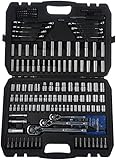
2. Amazon Basics 201-Piece Mechanic’s Socket Tool Set With Case, SAE and Metric Sizes, Chrome-Vanadium Steel, Portable
Overview:
The Amazon Basics 201-piece mechanic’s socket tool set provides essential coverage for homeowners and occasional wrench-turners. This budget-conscious collection includes 1/4, 3/8, and 1/2-inch sockets in both SAE and metric sizes, plus hex keys and screwdriver bits. The chrome-vanadium steel construction ensures reliable torque transfer and durability despite the entry-level positioning.
What Makes It Stand Out:
The primary differentiator is the aggressive price point while maintaining respectable material quality with chrome-vanadium steel and a full polished-chrome finish for corrosion resistance. The set covers the most commonly needed sizes and drive types without overwhelming casual users with excessive specialty pieces.
Value for Money:
This represents exceptional value for those needing occasional-use tools. The cost savings versus branded alternatives are substantial—often 50-70% less—making it accessible for renters, new homeowners, or vehicle owners tackling basic maintenance. You sacrifice warranty coverage and premium features for significant upfront savings.
Strengths and Weaknesses:
Strengths include affordability, comprehensive size coverage, decent material quality, and a portable case. Weaknesses are the unspecified ratchet tooth count (likely lower precision), basic case durability, lack of lifetime warranty, and absence of specialty features like low-profile heads or advanced socket technology.
Bottom Line:
Perfect for budget-minded users who need reliable tools for infrequent tasks. While professionals should look elsewhere, this set delivers functional quality at an unbeatable price for DIY beginners and occasional home mechanics.
3. Craftsman 262-Piece Mechanic Tool Set with 3-Drawer VERSASTACK Box, SAE and Metric Socket Set, Car and Motorcycle Tool Kit with Combination Wrenches and Spark Plug Sockets (CMMT45309)

Overview:
The CRAFTSMAN 262-piece mechanic tool set expands on its smaller sibling with 32 additional pieces while retaining the acclaimed VERSASTACK storage system. This comprehensive kit includes 118 sockets, three low-profile ratchets, 24 wrenches, 44 hex keys, 66 specialty bits, and seven accessories. The expanded socket and wrench count provides broader coverage for complex automotive and motorcycle repairs.
What Makes It Stand Out:
Like the 230-piece version, this set features ratchets with 25% thinner heads and 72-tooth mechanisms for superior access. The VERSASTACK system’s one-handed operation and drawer-nesting capability remain unmatched for workflow efficiency. The increased piece count particularly strengthens metric and SAE wrench assortments without adding bulk to the storage footprint.
Value for Money:
The modest price increase over the 230-piece set delivers meaningful expansion in the most-used categories. The lifetime warranty and VERSASTACK compatibility ensure long-term value. For regular mechanics, the additional sockets and wrenches eliminate frequent mid-job trips to the tool store.
Strengths and Weaknesses:
Strengths include comprehensive coverage, exceptional access in tight spaces, superior organization, and full warranty protection. Weaknesses involve higher cost than the already-premium 230-piece set and potential redundancy for users who don’t need the extra wrenches. The VERSASTACK ecosystem investment continues.
Bottom Line:
The extra pieces justify the upgrade for serious mechanics and automotive enthusiasts. If you’re deciding between the two CRAFTSMAN sets, this 262-piece version offers better overall value for those who regularly tackle diverse repair jobs.
4. DEWALT Mechanic Tool Set, 247-Piece, 1/4 in., 3/8 in. and 1/2 in. Drive, SAE, Ratchets, Sockets, Hex Keys, Combination Wrenches, Polish Chrome Finish (DWMT81535)

Overview:
The DEWALT 247-piece mechanic tool set targets professional users with precision-engineered features and robust construction. This set includes three drive sizes with SAE sockets, combination wrenches, hex keys, and specialty bits. The full-polish chrome finish and metal-latch case signal professional-grade durability, while DirectTorque Technology addresses a common frustration: fastener rounding.
What Makes It Stand Out:
DirectTorque Technology on sockets prevents fastener rounding through optimized contact geometry—a critical advantage for professionals dealing with high-torque applications. The 72-tooth ratchets provide 5-degree arc swing for tight spaces, while the anti-slip driver handle enhances comfort during extended use. Metal case latches outlast plastic alternatives in demanding environments.
Value for Money:
Positioned at a premium price point, this set competes directly with professional lines from CRAFTSMAN and SNAP-ON. The fastener protection technology and durable case justify the cost for daily users, though hobbyists may find better value in warranty-backed alternatives.
Strengths and Weaknesses:
Strengths include superior fastener protection, comfortable ergonomic handles, durable metal-latch case, and professional-grade materials. Weaknesses are the higher price, lack of VERSASTACK storage modularity, and unspecified warranty terms. The set lacks the drawer organization system some users prefer.
Bottom Line:
Ideal for professional mechanics and serious enthusiasts who prioritize fastener integrity and durability. The DirectTorque Technology makes this set worth the premium for those who can’t afford rounded bolts on critical jobs.
5. DEWALT 192 Pcs. Mechanics Tool Set, 1/2, 1/4, 3/8 Socket Set, SAE and Metric Socket Wrench Set, Hard Shell Tool Box (DWMT75049)

Overview:
The DEWALT 192-piece mechanics tool set distills professional features into a more compact, affordable package. This set covers 1/4, 3/8, and 1/2-inch drives with both SAE and metric sockets, combination wrenches, extensions, and hex keys. The hard shell tool box provides durable protection without the premium of larger DEWALT sets, while retaining critical technologies.
What Makes It Stand Out:
The 6-point socket design combined with DirectTorque Technology offers superior grip and fastener protection compared to traditional 12-point sockets. The mirror-polished chrome vanadium finish provides professional aesthetics and corrosion resistance. This set maintains DEWALT’s focus on fastener integrity while reducing piece count for users who don’t need extensive specialty bits.
Value for Money:
This set bridges the gap between budget brands and DEWALT’s full 247-piece offering. You get professional-grade socket technology and materials at a moderate price reduction. For mechanics who primarily use sockets and wrenches rather than specialty bits, this represents efficient spending.
Strengths and Weaknesses:
Strengths include excellent fastener protection, high-quality materials, professional-grade 6-point sockets, and durable storage. Weaknesses are fewer specialty bits than competitors, no modular storage system, and potentially needing supplementation for specific tasks. Warranty details remain unspecified.
Bottom Line:
A smart choice for professionals and serious DIYers wanting DEWALT’s core technologies without paying for rarely-used pieces. The 6-point socket design alone makes this set superior for high-torque applications where fastener integrity is paramount.
6. VEVOR Mechanics Tool Set and Socket Set, 450 Pcs, 1/4, 3/8 and 1/2 inch Drive Deep and Standard Sockets, SAE Metric Mechanic Tool Kit with Bits, Wrenches, Accessories, Storage Case with Orange Drawer

Overview: The VEVOR 450-piece mechanics tool set delivers comprehensive coverage for automotive and home repairs. This kit combines 1/4, 3/8, and 1/2-inch drive sockets in both deep and standard configurations, covering SAE and metric sizes. Built from chrome vanadium steel with corrosion-resistant plating, it’s designed for serious DIY enthusiasts and entry-level professionals who need variety without premium pricing.
What Makes It Stand Out: The sheer volume of tools is impressive—450 pieces including bits, wrenches, and accessories. The CR-V construction promises durability, while the claimed torque range of 95-3017 in-lb suggests capability for demanding tasks. The orange-drawer PE-HD case offers visual organization that helps locate tools quickly, a practical touch for busy workspaces.
Value for Money: At this piece count, the per-tool cost is remarkably low compared to professional brands. While it may not match tool truck quality, it eliminates multiple separate purchases. For hobbyists or those starting their collection, this represents significant savings over building a comparable set individually.
Strengths and Weaknesses: Strengths include exceptional variety, organized storage, and solid CR-V construction. The high piece count covers most common repair scenarios. Weaknesses involve potential quality control inconsistencies common with budget-focused large sets, and the plastic case may not withstand heavy professional use. Casual users might find the sheer volume overwhelming.
Bottom Line: An excellent starter set for ambitious DIYers or as a backup for professionals. The VEVOR kit sacrifices some refinement for comprehensive coverage and affordability, making it ideal for those who value quantity and variety for general-purpose repairs.
7. SWANLAKE 3/8’’ Drive Impact Socket Set, 50-Piece Standard SAE (5/16 to 3/4 inch) and Metric (8-22mm) Size, 6 Point, Cr-V, 3/8-Inch Ratchet Handle, Extension Bar, Universal Joint

Overview: The SWANLAKE 50-piece impact socket set focuses specifically on 3/8-inch drive applications for automotive professionals. This specialized kit includes both SAE (5/16 to 3/4 inch) and metric (8-22mm) sizes in shallow and deep configurations, plus a ratchet handle, extension bars, and universal joint. Forged from heat-treated chrome vanadium steel with a black phosphate coating, it’s built for high-torque impact use.
What Makes It Stand Out: The 6-point socket design maximizes fastener contact, preventing rounding under extreme torque. Laser-etched size markings remain visible in low-light garage conditions, speeding up workflow. The black phosphate finish offers superior corrosion resistance compared to chrome plating in harsh workshop environments. Custom-molded storage with printed labels keeps this compact set highly organized.
Value for Money: As a specialized impact set, it delivers professional-grade quality at a fraction of tool truck prices. While it won’t replace a comprehensive mechanic’s kit, it eliminates the need to buy impact sockets separately. For automotive technicians who already own hand tools, this fills a critical gap economically.
Strengths and Weaknesses: Strengths include impact-rated durability, smart organization, and fastener-saving 6-point design. The compact size makes it highly portable for mobile mechanics. Weaknesses are its narrow focus—limited to 3/8-inch drive only—and lack of additional tools like wrenches or bits. It’s a supplement, not a standalone solution.
Bottom Line: A must-have for automotive professionals working with impact wrenches. The SWANLAKE set combines durability, organization, and precision in a focused package. DIYers with cordless impact drivers will also appreciate its quality. Buy this for what it is—a premium impact socket specialty set.
8. CRAFTSMAN Mechanics Tool Set, 298 Piece Hand Tool and Socket Set SAE/Metric (CMMT12139)

Overview: The CRAFTSMAN 298-piece mechanics tool set balances brand reputation with practical functionality for home mechanics and professionals. This comprehensive collection includes 1/4 and 3/8-inch drive sockets, wrenches, and specialty bits in SAE and metric sizes. The full polish chrome finish provides corrosion resistance, while the iconic red case signals quality heritage.
What Makes It Stand Out: The low-profile ratchet heads—up to 25% thinner than standard—access tight engine bays and confined spaces more easily. The 72-tooth mechanism delivers a precise 5-degree arc swing, crucial for working in constrained areas. CRAFTSMAN’s lifetime warranty and established brand support provide peace of mind that generic brands cannot match.
Value for Money: Positioned between budget sets and premium professional lines, CRAFTSMAN offers solid quality with brand backing. The 298-piece count covers most common tasks without the clutter of excessive specialty items. You’re paying a modest premium for warranty support and proven reliability, which many users find worthwhile.
Strengths and Weaknesses: Strengths include excellent ratchet design, trusted brand name, and logical organization in plastic trays. The quality-to-price ratio is strong for serious DIYers. Weaknesses include fewer pieces than similarly priced budget sets and plastic storage that may not survive daily professional use. Some professionals may desire heavier-duty construction.
Bottom Line: A smart choice for brand-conscious buyers seeking reliable performance. The CRAFTSMAN set excels in ratchet design and warranty support, making it ideal for home mechanics and light professional use. It strikes a practical balance between quality, coverage, and cost.
9. VEVOR Mechanics Tool Set and Socket Set, 1/4" 3/8" 1/2" Drive Deep and Standard Sockets, 450 Pcs SAE and Metric Mechanic Tool Kit with Bits, Combination Wrench, Hex Wrenches, Accessories, Storage Case

Overview: The VEVOR 450-piece mechanics tool set provides exhaustive coverage for comprehensive repair tasks. This extensive kit integrates 1/4, 3/8, and 1/2-inch drive sockets in deep and standard depths across SAE and metric standards. Constructed from chrome-plated CR-V steel, it targets both professional contractors and dedicated home workshop enthusiasts seeking a single-purchase solution.
What Makes It Stand Out: Beyond raw quantity, the set emphasizes manual tool versatility with combination wrenches and hex keys complementing the 450-piece assortment. The torque specification range (95-3017 in-lb) indicates robust performance capability. The lightweight PE-HD case with its grab-and-go design prioritizes mobility and quick tool identification for multi-location work.
Value for Money: This set’s aggressive pricing-per-tool ratio undercuts most competitors by significant margins. While maximum durability may trail premium brands, the sheer comprehensiveness eliminates countless individual purchases. For users needing broad capability on moderate budgets, the economic argument is compelling compared to curated professional collections.
Strengths and Weaknesses: Strengths encompass massive selection, corrosion-resistant CR-V construction, and efficient case organization. The variety handles diverse applications from automotive to equipment repair. Weaknesses include potential variability in fit and finish across such a large budget set, and the plastic case’s long-term durability under professional conditions remains unproven. The breadth may intimidate casual users.
Bottom Line: Perfect for serious DIYers building a complete workshop or professionals needing an extensive backup collection. This VEVOR kit maximizes tool count and organizational convenience while maintaining acceptable quality standards. Choose it for comprehensive coverage and mobility at an entry-level price point.
10. DEWALT Mechanic Tool Set with Case, Socket Set Metric and Standard Full, 1/4" & 3/8" Drive, Hex Keys and Specialty Tools, 168-Piece (DWMT73803)
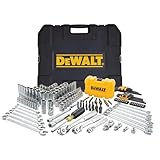
Overview: The DEWALT 168-piece mechanic tool set delivers professional-grade precision in a compact package. Featuring 1/4 and 3/8-inch drive sockets in both metric and standard sizes, this kit focuses on quality over quantity. The full-polish chrome finish resists corrosion, while the robust case with metal latches withstands jobsite abuse.
What Makes It Stand Out: DirectTorque Technology in the sockets prevents fastener rounding—a critical feature for professional work. The 72-tooth ratchet provides a tight 5-degree arc swing for confined spaces. The anti-slip driver handle enhances comfort during extended use, demonstrating DEWALT’s jobsite-focused design philosophy. Metal latches on the case signal durability commitments.
Value for Money: As a premium brand, DEWALT commands higher pricing per tool, but delivers refined engineering and professional aesthetics. The 168-piece count suits users who prioritize essential, high-quality tools over exhaustive variety. For professionals earning with their tools, the precision and durability justify the investment compared to budget alternatives.
Strengths and Weaknesses: Strengths include superior fastener protection, ergonomic handle design, and robust case construction. The brand’s professional reputation and warranty support add value. Weaknesses are the lower piece count relative to price, and the limited 1/4 and 3/8-inch drives exclude heavy-duty 1/2-inch applications. Budget-conscious buyers may find better quantity elsewhere.
Bottom Line: Ideal for professionals and serious enthusiasts who value precision and durability over sheer volume. The DEWALT set excels in jobsite-ready engineering and user comfort. While not the most comprehensive, its quality-per-tool ratio makes it a wise investment for those who depend on their tools daily.
Key Features to Consider When Choosing a Mechanic Tool Set
Socket Sizes and Drive Types
The heart of any mechanic tool set lies in its socket collection. Drive sizes—measured in 1/4-inch, 3/8-inch, and 1/2-inch—determine the torque capacity and accessibility of your tools. A well-rounded home garage needs all three drives, but the ratio matters more than the raw count. The 3/8-inch drive serves as your daily workhorse, handling everything from engine bolts to suspension components. The smaller 1/4-inch drive excels in tight engine bays and interior trim work, while the beefy 1/2-inch drive tackles lug nuts and heavy-duty suspension parts.
Material Quality and Durability
Tool steel quality separates disposable sets from lifetime investments. Chrome vanadium steel offers excellent strength-to-weight ratio for most home applications, while chrome molybdenum provides superior impact resistance for high-torque situations. Look for tools with clearly marked material specifications rather than vague “chrome-plated” claims. The plating protects against rust, but the underlying steel determines whether that socket will crack under pressure or serve you for decades.
Tool Organization and Storage Solutions
A chaotic pile of tools turns even simple jobs into treasure hunts. Modern sets offer sophisticated organization systems that save hours of frustration. Blow-molded cases with dedicated slots for each tool keep everything visible at a glance, while modular systems allow you to expand without buying entirely new storage. Consider how the organization system will integrate with your garage layout—will it stack neatly on shelves? Can it mount to a pegboard? The best organization grows with your collection rather than limiting it.
Warranty and Brand Reputation Considerations
Lifetime warranties have become industry standard for reputable manufacturers, but the devil lives in the details. Some warranties require original receipts and serial numbers, while others offer no-questions-asked replacement at any retailer. Research the warranty claim process before purchasing—an unconditional guarantee means nothing if you must ship tools across the country at your expense. Established brands with decades of tool-making history typically invest more in quality control and customer service.
Price vs. Value Analysis
The most expensive set rarely represents the best value for home garage use. Calculate cost-per-tool rather than focusing on total piece counts, which often include dozens of bits and duplicates you’ll never use. A 200-piece set with 50 quality sockets beats a 300-piece set with 100 low-quality fasteners. Set a realistic budget based on your project ambitions—occasional oil changes require different investments than full engine rebuilds.
Essential Tools Every Home Garage Mechanic Set Should Include
Ratchets and Breaker Bars
Your ratchet collection needs diversity. A 72-tooth ratchet provides just 5 degrees of swing arc for tight spaces, while a 36-tooth offers more durability for heavy torque. Include flex-head ratchets for angled access and at least one long-handle breaker bar for stubborn bolts. Avoid sets with only standard-length ratchets—they’ll leave you stranded when a bolt sits deep in an engine bay.
Wrenches: Combination, Adjustable, and Specialty
Combination wrenches—with open-end and box-end on opposite sides—form the backbone of hand tool work. Look for sets offering both SAE and metric sizes with 12-point box ends for versatility. Include at least one quality adjustable wrench, but treat it as a backup rather than your primary tool. Specialty wrenches like flare nut wrenches for brake lines and crowfoot wrenches for torque applications prove invaluable as your skills advance.
Screwdrivers and Bit Sets
Modern vehicles use a surprising variety of fasteners beyond standard Phillips and flatheads. Your set should include Torx bits (T10 through T50), hex bits, and security bits for interior panels and sensors. Magnetic tips prevent dropped screws from disappearing into engine bays. Consider ratcheting screwdrivers that accept 1/4-inch sockets—these hybrid tools reduce the number of individual drivers you need to own.
Pliers and Cutting Tools
Needle-nose pliers extract cotter pins and reach into tight spaces, while channel-lock pliers grip irregular shapes. Linesman pliers double as wire cutters and small bolt grippers. Include diagonal cutters for zip ties and electrical work, plus at least one locking plier style for makeshift clamps. Quality pliers feature induction-hardened cutting edges that stay sharp through years of use.
Hex Keys and Torx Drivers
Allen keys and Torx drivers have become non-negotiable for modern vehicles. Folding sets save space but lack the leverage of individual L-keys. Consider a hybrid approach: a compact folding set for emergencies and a complete L-key set for serious work. Ball-end hex keys allow angled access—crucial for interior trim and some engine components where straight-line access proves impossible.
Understanding Drive Sizes: 1/4-Inch, 3/8-Inch, and 1/2-Inch
When to Use Each Drive Size
The 1/4-inch drive handles delicate work—intake manifold bolts, interior fasteners, and electronics mounting. Its small size prevents over-tightening and fits where larger drives simply can’t reach. The 3/8-inch drive manages 80% of automotive tasks, from water pumps to alternators. The 1/2-inch drive tackles suspension components, lug nuts, and crankshaft bolts—anywhere requiring significant torque. Using the correct drive size prevents both fastener damage and tool failure.
Deep vs. Standard Sockets
Standard sockets reach most bolts, but deep sockets become essential for spark plugs, oxygen sensors, and threaded studs. A quality set includes both varieties in common sizes. Look for deep sockets with internal reliefs that prevent them from bottoming out on long bolts. Some modern sets offer mid-length sockets that split the difference—worthwhile additions that reduce the need to switch between deep and standard constantly.
Impact vs. Chrome Sockets for Home Use
Chrome sockets work perfectly for hand tools but shatter under impact wrench forces. Impact sockets use thicker walls and softer steel to absorb hammering action. For home garages, a small set of impact sockets in common lug nut sizes proves more useful than a complete impact collection. Reserve chrome sockets for precision work where clearance matters, and never mix the two—using chrome sockets on impact tools creates dangerous projectiles.
Tool Material Matters: Chrome Vanadium vs. Chrome Molybdenum
Heat Treatment and Hardness Ratings
Tool hardness, measured on the Rockwell scale, directly impacts durability. Quality sockets rate around HRC 40-48—hard enough to resist wear but soft enough to prevent brittleness. Overly hard tools crack under stress, while overly soft tools round off fasteners. Reputable manufacturers publish hardness specifications. The heat treatment process matters as much as the steel composition—look for tools with consistent finishes that indicate uniform treatment.
Corrosion Resistance in Home Garage Environments
Garages face humidity fluctuations, chemical exposure, and temperature swings that accelerate rust. Quality plating involves multiple layers: copper for adhesion, nickel for durability, and chrome for appearance and chemical resistance. Some modern tools use phosphate coatings that provide superior grip and rust prevention, though they lack the traditional chrome shine. Consider your climate—coastal garages need maximum corrosion protection.
Understanding Tool Finishes
Mirror-polished chrome looks professional but can be slippery when oily. Satin finishes provide better grip without sacrificing corrosion resistance. Black oxide coatings on impact tools reduce glare and improve corrosion resistance. Some manufacturers now offer laser-etched size markings that won’t wear off—far superior to stamped markings that fade with use. The finish should feel smooth and consistent, indicating quality control during manufacturing.
Storage Solutions: Cases, Chests, and Modular Systems
Blow-Molded Cases vs. Tool Rolls
Blow-molded cases offer excellent protection and organization for transport but consume bench space. Tool rolls store more compactly and mount to walls but provide less impact protection. For home garages, consider a hybrid system: keep frequently used tools in a roll near your work area, and store the complete set in its original case for inventory management. Some modern cases feature removable trays that function as portable tool boxes—versatile solutions that adapt to different project types.
Stackable Systems for Growing Collections
Modular, stackable storage systems let you expand without starting over. Look for sets designed to interlock securely, with common footprint dimensions. This approach allows you to add specialized sets—like brake tools or electrical diagnostic kits—that integrate seamlessly with your primary collection. Avoid proprietary stacking systems that lock you into a single brand ecosystem unless you’re committed to that manufacturer long-term.
Wall-Mounted Storage Integration
Even the best case wastes time if you’re constantly opening and closing it. Wall-mounted pegboard or slatwall systems keep tools visible and accessible. Quality tool sets include holes or slots for hanging, but verify this feature before purchasing. Some sets offer wall-mountable cases that open to reveal organized tools—perfect for garages where bench space remains at a premium. Consider how your tool storage will evolve as you add air tools and diagnostic equipment.
Metric vs. SAE: What Your Home Garage Actually Needs
Vehicle Compatibility Considerations
Most vehicles manufactured after 2000 use primarily metric fasteners, but American-made trucks and older cars mix SAE and metric. Research your specific vehicles before buying. A 3/8-inch drive metric set covering 8mm through 19mm handles most modern cars, while SAE sets typically need coverage from 1/4-inch to 3/4-inch. Some manufacturers now offer “universal” sets that combine the most commonly used sizes from both systems—efficient solutions for multi-vehicle households.
Mixed Sets vs. Separate Purchases
Combined SAE/metric sets seem convenient but often skimp on less-common sizes you’ll eventually need. Purchasing separate complete sets ensures full coverage but costs more initially. For most home garages, a comprehensive metric set plus a basic SAE set for older vehicles and household projects strikes the right balance. Consider starting with metric if you own Asian or European vehicles, then adding SAE as projects demand.
Regional Factors Affecting Tool Selection
Your location influences tool needs more than you might expect. Rural areas with older farm equipment demand robust SAE collections, while urban areas with newer vehicles lean heavily metric. If you plan to help neighbors or take on side work, invest in both systems. Professional mechanics working from home garages need complete coverage regardless of personal vehicle type—customer cars bring unpredictable fastener requirements.
Specialty Tools Worth Including in 2026
Torque Wrenches for Precision Work
Modern vehicles specify torque values for everything from lug nuts to valve cover bolts. A click-type torque wrench in the 10-150 ft-lb range covers most home garage needs. Digital torque wrenches offer precision and memory functions but require batteries and cost significantly more. Include a 1/4-inch drive torque wrench for small fasteners—over-tightening sensor bolts leads to expensive damage. Store torque wrenches unwound and protected from drops to maintain calibration.
Digital vs. Click-Type Torque Wrenches
Click-type wrenches provide reliable, battery-free operation and cost less. Digital wrenches offer visual and audible alerts, multiple unit conversions, and peak torque memory—features that justify their price for engine assembly work. For home garages, a quality click-type wrench plus a budget digital model for spark plugs and other sensitive fasteners creates a versatile combination. Avoid no-name digital torque tools; accuracy matters more than features.
Inspection Tools: Telescoping Mirrors and Magnetic Pickups
A telescoping mirror with LED lighting reveals hidden bolts and inspects cylinder walls through spark plug holes. Magnetic pickup tools retrieve dropped fasteners from engine bays and under vehicles. Flexible inspection cameras—once professional-only equipment—now fit home garage budgets and connect to smartphones. These tools prevent costly mistakes and reduce frustration dramatically.
Electrical Testing Equipment
Modern vehicles contain complex electrical systems requiring more than a test light. A digital multimeter measures voltage, resistance, and continuity—essential for diagnosing sensors and chasing wiring faults. Circuit testers with built-in overload protection prevent damage to sensitive electronics. Include a set of back-probe pins for testing connectors without damage. As vehicles add more computer modules, electrical diagnostic capabilities become as important as mechanical tools.
Budget Tiers: What to Expect at Different Price Points
Entry-Level Sets Under $200
Budget sets work for occasional use but sacrifice steel quality and precision. Expect chrome vanadium construction, basic ratchets with 36-tooth mechanisms, and blow-molded cases. These sets lack specialty tools and may skip less-common sizes. They’re perfect for learning basic maintenance but will need supplementation as skills grow. Avoid sets promising 300+ pieces under $150—the tool count includes duplicates and low-quality bits that inflate numbers artificially.
Mid-Range Options ($200-$500)
This sweet spot offers professional-grade steel, 72-tooth ratchets, and comprehensive size coverage. Expect lifetime warranties with easy replacement processes, better organization systems, and inclusion of specialty tools like spark plug sockets. Mid-range sets often feature modular storage that integrates with larger systems. These tools withstand regular weekend use and represent the best value for serious home mechanics who aren’t earning a living with their tools.
Premium Professional-Grade Collections
Professional sets exceed $500 and offer features home garages rarely need: tool truck brands, exotic sizes, and extreme durability for daily commercial use. While tempting, these represent diminishing returns for occasional use. However, professionals working from home garages should invest here—tool downtime costs money. Premium sets often include advanced features like socket rails, magnetic organizers, and laser-etched markings that never fade.
Cost Per Tool Analysis
Calculate value by dividing price by the number of genuinely useful tools. A $300 set with 100 quality sockets, ratchets, and wrenches costs $3 per tool—excellent value if you’ll use most items. A $150 set with 200 pieces full of duplicates and low-quality bits costs $0.75 per piece but wastes money on tools that break or sit unused. Focus on the tools you’ll actually use weekly, not impressive piece counts.
Building Your Set Incrementally vs. Buying Complete Kits
Starter Sets and Expansion Strategies
Beginning with a quality 3/8-inch drive socket set plus basic wrenches lets you complete most maintenance tasks. Add 1/4-inch and 1/2-inch drives as projects demand them. This approach spreads costs and ensures each purchase serves immediate needs. Many manufacturers design sets to expand—buying into an ecosystem allows seamless additions. Track what sizes you borrow or wish you had; these gaps guide your next purchases.
Avoiding Duplicate Purchases
Complete kits often include tools you already own, wasting money and storage space. Audit your current tools before buying—quality hand-me-downs from relatives might serve perfectly well. Some retailers offer “build your own set” promotions where you fill a case with individually selected tools. This custom approach costs more per piece but eliminates waste and ensures every tool earns its place in your garage.
Seasonal Sales and Timing Your Purchases
Major holidays bring significant discounts on tool sets. Black Friday, Father’s Day, and Memorial Day sales often feature 30-50% off quality brands. Retailers clear inventory in January for new model year tools. Consider buying core tools during sales, then filling specialty gaps at regular prices. Some manufacturers offer rebates when you register tools online—additional savings that add up across a complete collection.
Safety Considerations and Proper Tool Usage
Eye Protection and Workshop Safety Gear
Quality tools deserve quality protection. Impact-rated safety glasses prevent metal shards from damaged sockets or grinding operations from reaching your eyes. Mechanic’s gloves improve grip and protect against sharp edges and hot components. Keep a stocked first aid kit accessible, and know the location of your nearest eyewash station. Never compromise on safety gear—hospital visits cost far more than proper equipment.
Proper Lifting and Jack Stand Protocol
Your tool set extends beyond hand tools to include lifting equipment. Hydraulic jacks and jack stands must exceed your vehicle’s weight rating. Always use jack stands—never rely on jacks alone. Include wheel chocks in your collection and use them every time. A quality torque wrench ensures lug nuts are properly tightened after wheel work. These tools prevent life-threatening accidents and should be purchased new from reputable sources.
When to Use Hand Tools vs. Power Tools
Hand tools offer precision and feedback that power tools can’t match. Use ratchets for final tightening and delicate work. Reserve impact wrenches for lug nut removal and heavy suspension bolts—never for final torque. Electric ratchets save time but lack the feel that prevents cross-threading. A thoughtful mechanic uses power tools to remove and hand tools to install, ensuring both speed and precision.
Frequently Asked Questions
What size mechanic tool set should a beginner home garage owner start with?
A 150-200 piece set covering 3/8-inch drive sockets in both metric and SAE, plus basic wrenches and screwdrivers, provides an excellent foundation. Focus on quality over quantity—a well-made 150-piece set outperforms a cheap 300-piece collection. Add specialty tools as specific projects require them rather than buying everything at once.
How do I know if a tool set uses quality steel?
Reputable manufacturers specify the steel alloy (typically chrome vanadium or chrome molybdenum) and hardness rating (HRC 40-48 is ideal). Quality tools feel substantial and show uniform plating without thin spots or bubbles. Check reviews for reports of tools breaking or rounding fasteners—consistent failures indicate poor steel. Lifetime warranties from established brands also suggest confidence in material quality.
Should I buy metric, SAE, or both?
Most modern vehicles (2000+) use metric fasteners exclusively, so start there if you own newer cars. However, maintaining both systems proves invaluable if you work on older vehicles, trailers, or help friends with diverse car collections. A comprehensive metric set plus a basic SAE set offers the best balance for most home garages.
What’s the difference between impact sockets and regular chrome sockets?
Impact sockets use thicker walls and softer, more ductile steel to absorb the hammering action of impact wrenches without shattering. Chrome sockets are harder and more brittle—using them on impact tools creates dangerous projectiles. For home garages, invest in impact sockets for lug nut sizes and use chrome sockets for everything else.
How important is the tooth count on ratchets?
Higher tooth counts (72 teeth vs. 36 teeth) allow the ratchet to work in tighter spaces with less swing arc. A 72-tooth ratchet needs only 5 degrees of movement versus 10 degrees for 36-tooth models. For home garages, 72-tooth ratchets prove invaluable for engine bay work, while 36-tooth models offer slightly more durability for heavy torque applications.
Can I mix tools from different manufacturers?
Absolutely. Most sockets and ratchets follow universal standards, allowing you to combine brands freely. However, some premium brands use proprietary drive designs that only accept their own sockets. Mixing brands lets you buy the best tool for each job and take advantage of sales. Just verify warranty terms, as some manufacturers require using their complete system to maintain coverage.
How often should I replace or upgrade my tools?
Quality hand tools last decades with proper care. Replace tools when they show wear—rounded socket edges, cracked handles, or ratchets that slip. Upgrade when you consistently find yourself lacking specific sizes or features. Many professionals still use tools purchased 20+ years ago. Focus on buying right the first time rather than frequent replacements.
Are digital torque wrenches worth the extra cost for home use?
For most home mechanics, a quality click-type torque wrench offers better value. Digital models excel at precision work like engine assembly but cost 2-3 times more and require batteries. Consider a digital model only if you frequently work on modern engines with very specific torque values or need the memory function for documentation.
What’s the best way to organize a growing tool collection?
Start with a modular system that allows expansion. Use wall-mounted pegboard or slatwall for frequently used tools, and keep the original cases for storage and inventory. Label everything clearly, and consider shadow-boarding—tracing tool outlines on pegboard—to instantly see what’s missing. As your collection grows, transition to stackable drawer systems that integrate with your workbench.
How do I maintain my tools to ensure they last?
Clean tools after each use, wiping off oil and grease that attracts dirt. Apply light oil to ratchet mechanisms quarterly. Store torque wrenches unwound and protected from drops. Keep tools dry—consider a dehumidifier in damp climates. Inspect sockets regularly for cracks or rounding, and replace damaged tools immediately. Proper maintenance easily doubles the lifespan of quality tools.
See Also
- Top 10 Best Mechanic Tool Sets for Home Garages in 2026
- We Tested 50 Mechanic Tool Sets - Here are the 10 Best for Daily Use
- 10 Best Mechanic Tool Sets for DIY Enthusiasts After 6 Months of Testing in 2026
- 10 Best Mechanic Tool Sets for New Car Enthusiasts in 2026
- 10 Best Mechanic Tool Sets After 6 Months of Testing in 2026