Table of Contents
There’s something almost meditative about dialing in the perfect timing on a classic engine. That moment when the strobe light catches the timing mark dead center, the engine purrs with a throaty confidence, and you know you’ve breathed new life into decades-old iron—it’s pure automotive alchemy. For classic car restoration enthusiasts, a mechanical timing light isn’t just another tool in the box; it’s the bridge between vintage engineering and modern precision, allowing you to synchronize the heartbeat of an engine that predates computer controls and digital diagnostics.
Unlike modern vehicles with their coil-on-plug systems and self-adjusting timing maps, classic cars demand hands-on finesse and tools that speak their language. The right timing light becomes an extension of your senses, translating the invisible dance of ignition into a visible, measurable rhythm. Whether you’re resurrecting a numbers-matching 327 Chevy, fine-tuning a Ford flathead, or dialing in the twin carbs and dual points on a British roadster, understanding what makes a timing light worthy of your restoration project is crucial. This guide walks you through everything you need to know about selecting and using mechanical timing lights that honor the craftsmanship of vintage automobiles while delivering the accuracy today’s standards demand.
Top 10 Mechanical Timing Lights
Detailed Product Reviews
1. Automotive Timing Light 12V, Inductive Ignition Timing Light Gun for 2&4 Stroke Petrol Engine for Old Classical Car Motorcycle
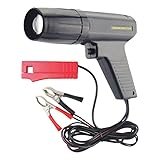
Overview: This inductive timing light serves owners of classic cars and motorcycles running 12V ignition systems. Designed for two-stroke and four-stroke gasoline engines, it provides fundamental timing verification through a traditional pistol-grip form factor. The tool connects via color-coded sensor clips and helps diagnose ignition timing issues on vintage vehicles where electronic diagnostics are limited.
What Makes It Stand Out: The pistol-type ergonomic design offers comfortable operation during extended tuning sessions. Its advance function allows visual detection of timing marks on flywheels or pulleys while monitoring vacuum advance and knock suppression systems. The sliding clamp-on inductive pick-up simplifies connection without direct wire contact, and the clear polarity markings reduce installation errors on older vehicles with varied wiring schemes.
Value for Money: Positioned as a budget-friendly option, this timing light costs significantly less than professional-grade alternatives. For classic car enthusiasts performing occasional tune-ups, it delivers essential functionality without premium features. While lacking digital precision, it provides adequate accuracy for pre-OBDII vehicles where basic timing adjustment is the primary requirement.
Strengths and Weaknesses:
- Pros: Affordable price point; ergonomic pistol grip; clear polarity markings; advance function for dynamic timing; compatible with vintage 12V systems.
- Cons: Unknown brand reliability; basic analog display; limited to 12V systems; questionable long-term durability; no RPM readout.
Bottom Line: Ideal for budget-conscious DIYers maintaining classic vehicles. It covers fundamental timing needs but trade-offs in build quality and features make it best for occasional rather than professional use.
2. Innova 3555 Advance Timing Light
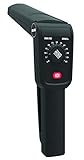
Overview: The Innova 3555 represents a mid-tier professional timing light suitable for both domestic and import vehicles. It handles conventional, electronic, and computer-controlled ignition systems with its patented Skip Circuitry, capable of reading up to 9,990 RPM. The tool features a direct-reading advance dial and rotating barrel for improved visibility in cramped engine bays.
What Makes It Stand Out: The 0-60 degree advance dial enables comprehensive testing of base, mechanical, and electronic advance/retard applications without separate equipment. Its patented Skip Circuitry ensures accurate readings even with modern multi-spark systems. The slim, rotating barrel design allows precise aiming at timing marks from awkward angles, a practical feature for technicians working on tightly packed engines.
Value for Money: Priced between entry-level and premium digital units, the 3555 offers professional-grade features at a moderate cost. The Skip Circuitry alone justifies the price premium over basic lights, as it maintains accuracy across diverse ignition types. For semi-professional mechanics and serious enthusiasts, it delivers capabilities that cheaper alternatives cannot match.
Strengths and Weaknesses:
- Pros: Wide ignition system compatibility; patented Skip Circuitry; 9,990 RPM range; rotating barrel for visibility; trusted brand reputation.
- Cons: Analog dial requires interpretation; 60-degree advance limit; no built-in tachometer display; heavier than basic models.
Bottom Line: A solid investment for serious DIYers and entry-level professionals. It bridges the gap between basic lights and expensive digital units, offering reliable performance across most ignition systems you’ll encounter.
3. Performance Tool W80578 Self-Powered Timing Light, Black

Overview: The Performance Tool W80578 distinguishes itself with a self-contained power design that eliminates battery leads entirely. This timing light operates via its inductive pick-up, making it exceptionally portable for small engine applications. It works across all gasoline engines—from motorcycles and snowmobiles to lawn equipment and tractors—while incorporating a built-in work light for low-visibility conditions.
What Makes It Stand Out: True cordless operation sets this unit apart from traditional 12V-dependent lights. The detachable inductive pick-up works with magneto systems common in small engines, expanding its utility beyond automotive applications. The super-bright xenon bulb ensures timing marks remain visible even in daylight, while the integrated work light transforms it into a dual-purpose tool for field repairs.
Value for Money: For small engine technicians and powersports enthusiasts, this tool offers unique value through its versatility and portability. While priced higher than basic automotive-only lights, it replaces multiple specialized tools. The elimination of power leads reduces setup time and clutter, particularly valuable when servicing equipment in remote locations.
Strengths and Weaknesses:
- Pros: Self-powered convenience; works with magnetos; built-in work light; extremely portable; bright xenon bulb; versatile for small engines.
- Cons: Possibly weaker flash intensity; not ideal for advanced automotive diagnostics; limited to inductive power; no advance adjustment features.
Bottom Line: Perfect for small engine mechanics and powersports enthusiasts who need portability. Its cordless design and magneto compatibility make it invaluable for field work, though automotive professionals may want more advanced features.
4. Innova 3568 Digital Timing Light
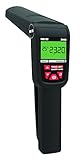
Overview: The Innova 3568 sits at the pinnacle of timing lights with its comprehensive digital display and advanced diagnostic capabilities. This professional-grade tool features a split-screen LCD showing tachometer readings (249-9,990 RPM) and advance angle simultaneously. The 0-90 degree adjustment range covers virtually all ignition timing scenarios for domestic and import vehicles with conventional, electronic, or computer-controlled systems.
What Makes It Stand Out: The digital LCD eliminates guesswork inherent in analog scales, providing precise numerical readings. Patented Skip Circuitry maintains accuracy with complex multi-spark ignition systems, while the slim rotating barrel ensures timing mark visibility. The 90-degree advance range exceeds most competitors, making it suitable for specialized performance applications and thorough advance curve mapping.
Value for Money: As a premium offering, the 3568 commands a higher price but delivers professional features that justify the investment. The dual-function display effectively combines two tools (timing light and tachometer), while the extended advance range and Skip Circuitry handle modern and performance engines. For professional shops, the time saved and accuracy gained quickly offset the initial cost.
Strengths and Weaknesses:
- Pros: Precise digital display; 0-90° advance range; built-in digital tachometer; Skip Circuitry compatibility; rotating barrel; split-screen LCD.
- Cons: Premium pricing; may be overkill for casual users; complex features require learning curve; larger housing than analog models.
Bottom Line: The ultimate choice for professional mechanics and serious performance tuners. Its digital precision and comprehensive features make it worth every penny for those who demand accuracy and versatility in timing diagnostics.
5. KZYEE KT60 Digital Timing Light with Tachometer & Advance Angle, Automotive 12V Inductive Ignition Timing Light Gun for Distributor-Equipped Gasoline Engines

Overview: The KZYEE KT60 enters the digital timing light market as a feature-rich alternative to established brands, offering real-time RPM and advance angle display on a clear LCD screen. Designed for 12V gasoline engines in classic cars, motorcycles, ATVs, and marine applications, it provides adjustable 0-90° advance timing with stable signal capture up to 10,000 RPM. The unit includes automatic polarity detection and overload protection in a ruggedized housing.
What Makes It Stand Out: Unlike basic xenon-only lights, the KT60’s digital display eliminates estimation errors by showing exact RPM and advance values simultaneously. The high-sensitivity inductive pickup maintains stable readings at high engine speeds without flicker, while the bright xenon strobe ensures timing marks remain visible in challenging conditions. Automatic polarity detection prevents damage from reversed connections—a thoughtful feature for vintage vehicles with non-standard wiring.
Value for Money: The KT60 undercuts premium digital competitors while offering comparable specifications. Its 10,000 RPM capability and 90-degree advance range match or exceed many professional units. For enthusiasts seeking digital precision without brand-name pricing, it presents compelling value, though long-term reliability remains unproven compared to established manufacturers.
Strengths and Weaknesses:
- Pros: Clear digital LCD display; 0-90° advance range; stable signals to 10,000 RPM; automatic polarity protection; bright xenon strobe; rugged construction.
- Cons: Lesser-known brand; limited to 12V systems; no Skip Circuitry mention; shorter track record; potential support concerns.
Bottom Line: An excellent value proposition for digitally-minded enthusiasts and professionals. It delivers premium features at a mid-range price, making it ideal for those wanting precision timing without paying for brand prestige.
6. BN-LINK 24 Hour Heavy Duty Mechanical Timer, Outdoor Timer Outlet Waterproof with 30 Minutes Intervals, 2 Grounded Outlets for Christmas Lights Pool Pump,15A 1/2HP, ETL Listed

Overview: The BN-LINK Heavy Duty Mechanical Timer is designed for outdoor use, offering robust weather protection and dual-outlet convenience. With 30-minute interval programming and a waterproof cover, it handles holiday lighting, yard equipment, and seasonal decorations reliably. Its mechanical operation eliminates complex digital setups, making it accessible for users who prefer straightforward, set-and-forget functionality.
What Makes It Stand Out: This timer’s IP-rated waterproof housing sets it apart from indoor-only models, protecting against rain and moisture. The dual grounded outlets allow simultaneous control of two devices, maximizing utility for elaborate lighting displays. Its heavy-duty 15A/1875W rating handles substantial loads, while the ETL listing ensures safety compliance. The 6.8-inch cord provides flexible placement away from the outlet itself.
Value for Money: Priced competitively against single-outlet alternatives, the dual-outlet design effectively doubles your control capacity without doubling cost. Mechanical timers inherently offer better long-term value than digital equivalents—no batteries to replace and fewer electronic components to fail. For seasonal use spanning years, this durability translates to significant savings over replacing cheaper models annually.
Strengths and Weaknesses: Strengths: Weatherproof construction; dual grounded outlets; high power capacity; simple mechanical programming; ETL certified; no batteries required. Weaknesses: 30-minute minimum intervals lack precision for some applications; product description contradicts manual regarding pool pump compatibility; mechanical pins can be stiff for users with limited dexterity; override requires manual pin adjustment rather than a switch.
Bottom Line: Ideal for homeowners needing reliable outdoor automation for lighting and decorations. The waterproof design and dual outlets justify the modest price premium over indoor models. However, verify your specific appliance’s compatibility—especially pool pumps—and accept the 30-minute granularity limitation. For robust, weather-resistant performance without digital complexity, this timer delivers excellent utility.
7. TiFFCOFiO Indoor Mechanical Outlet Timer, 3 Prong Timers for Electrical Outlets, 24-Hour Programmable Plug in Christmas Light Timer, ETL Listed (2 Pack)

Overview: The TiFFCOFiO 2-Pack delivers compact indoor mechanical timers for automating lamps, holiday lights, and small appliances. Each unit offers 48 daily ON/OFF settings via 30-minute intervals, with a space-saving design that positions outlets underneath the body. The mechanical operation requires no programming knowledge—just set the pins and let it run.
What Makes It Stand Out: These timers prioritize space efficiency, featuring a low-profile design that minimizes outlet obstruction. The dual-pack provides immediate value for multi-room setups or controlling separate devices. Each unit supports 15A/1875W loads and maintains ETL safety certification. The straightforward pin mechanism ensures reliable daily repetition without battery dependency or memory loss.
Value for Money: Two timers for the price typically charged for a single digital unit represents compelling value. Mechanical timers avoid the hidden costs of battery replacements and electronic failures that plague budget digital models. For users needing basic scheduling in multiple locations, this pack eliminates purchasing separate units, effectively halving the per-timer cost while maintaining quality standards.
Strengths and Weaknesses: Strengths: Compact, space-saving design; two timers included; simple mechanical operation; ETL listed; no batteries needed; 48 daily settings. Weaknesses: Indoor use only; 30-minute minimum intervals; underside outlet placement may be awkward for some plugs; pins can be difficult to manipulate for those with arthritis; lacks manual override switch.
Bottom Line: Perfect for budget-conscious homeowners automating indoor lighting or holiday decorations across multiple rooms. The compact design prevents outlet waste, and the mechanical reliability ensures years of service. Accept the 30-minute scheduling limitation and lack of weatherproofing. For straightforward indoor automation without digital fuss, this 2-pack offers exceptional convenience and value.
8. BN-LINK BND-60/U47 Indoor Mini 24-Hour Mechanical Outlet Timer, 3-Prong, 2-Pack
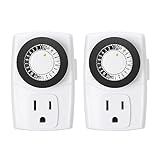
Overview: The BN-LINK BND-60/U47 provides two ultra-compact mechanical timers for basic indoor automation. These mini timers control lamps, small appliances, and holiday decorations through 24 daily ON/OFF settings at 30-minute intervals. Their diminutive footprint makes them ideal for crowded power strips and wall outlets where space is premium.
What Makes It Stand Out: Remarkable space efficiency defines these timers—they’re among the smallest mechanical timers available without sacrificing three-prong grounding. The clear OFF/ON pin logic (up for off, down for on) simplifies setup, while explicit CFL and LED compatibility addresses modern lighting needs. The dual-pack distribution offers immediate multi-location deployment.
Value for Money: This 2-pack typically retails below the cost of a single coffee, representing exceptional per-unit value. Mechanical simplicity eliminates battery expenses and electronic failure risks common in similarly-priced digital timers. For users needing basic on/off cycling without advanced features, the cost-to-function ratio is outstanding, making widespread home automation financially accessible.
Strengths and Weaknesses: Strengths: Extremely compact; minimal outlet obstruction; two timers included; CFL/LED compatible; simple pin operation; ETL certified; no batteries required. Weaknesses: Very lightweight construction feels less durable; pins are small and fiddly; no manual override; 30-minute intervals only; indoor use restricts applications; limited power capacity for heavy appliances.
Bottom Line: An excellent entry-level solution for automating indoor lighting or small devices where space is constrained. The microscopic size prevents outlet blockage, and the mechanical reliability ensures consistent performance. Don’t expect premium build quality or precision timing. For basic, set-and-forget operation at an unbeatable price, these mini timers deliver practical utility for minimal investment.
9. TiFFCOFiO Indoor Mechanical Light Timer, 3 Prong Plug in Timer Switch, 2 Grounded Outlets for Lamps Indoor, ETL Listed,15A/1875W

Overview: The TiFFCOFiO Indoor Mechanical Timer offers dual-outlet control in a single compact unit, perfect for synchronizing two lamps or appliances. With 48 daily ON/OFF settings at 30-minute intervals, it automates indoor lighting, holiday decorations, and small devices. The space-saving design positions outlets underneath to reduce wall plate clutter.
What Makes It Stand Out: Dual-outlet functionality in a space-efficient mechanical timer is uncommon at this price point. The unit handles 15A/1875W across both outlets, allowing simultaneous operation of significant loads. Its 48-setting capacity provides more granular control than standard 24-setting models, while ETL certification ensures electrical safety for continuous indoor use.
Value for Money: While priced slightly higher than single-outlet competitors, the dual-outlet design eliminates needing two separate timers for coordinated devices. This consolidation saves money and outlet space. Mechanical durability ensures years of service without battery replacement costs, offering better long-term value than digital alternatives that may fail within a few seasons.
Strengths and Weaknesses: Strengths: Two synchronized outlets; compact vertical design; 48 daily settings; ETL listed; simple pin operation; no batteries required; 15A capacity. Weaknesses: Indoor use only; 30-minute minimum intervals; underside outlets may be awkward for bulky plugs; lacks manual override switch; pins can be stiff; single-unit purchase less economical than multi-packs.
Bottom Line: Ideal for users needing to control two devices simultaneously without sacrificing outlet space. The dual-outlet design and compact form factor make it perfect for lamp pairs or coordinated holiday displays. Accept the mechanical limitations and indoor-only rating. For targeted indoor automation requiring synchronized control, this timer offers practical functionality and solid value.
10. GE 24-Hour Indoor Plug-in Mechanical Outlet Timer, 1 Polarized Outlet, Timers for Electrical Outlets Indoor, Light Timers Indoor, 30 Minute Intervals, Daily ON/Off Cycle, Christmas Tree Timer, 15119

Overview: The GE 15119 timer brings trusted brand reliability to basic indoor automation. This mechanical timer controls a single polarized (two-prong) device through 30-minute interval scheduling, ideal for Christmas trees, fans, and lamps. Its sleek white housing and simple push-pin operation prioritize plug-and-play convenience without digital complexity.
What Makes It Stand Out: GE’s century-long reputation for electrical safety instills confidence unmatched by generic brands. The integrated manual override switch allows temporary interruption of the timer cycle without reprogramming—a rare feature in mechanical timers. The polarized outlet specifically accommodates older two-prong plugs, making it perfect for vintage lamps and basic holiday lighting that doesn’t require grounding.
Value for Money: GE commands a modest brand premium over no-name alternatives, but this translates to verified safety testing and consistent quality control. The mechanical design avoids battery costs and electronic failure risks, offering multi-year service life. For users with two-prong devices, this specialized compatibility eliminates adapter needs, adding hidden value.
Strengths and Weaknesses: Strengths: GE brand reliability; manual override switch; simple operation; ETL certified; no batteries needed; compact design; polarized outlet for two-prong devices. Weaknesses: Single polarized outlet only (no grounding); indoor use only; 30-minute intervals lack precision; limited to 15A resistive loads; cannot handle three-prong plugs; no dual-outlet option.
Bottom Line: Best suited for consumers prioritizing brand trust and manual override convenience for basic two-prong devices. The polarized outlet limits compatibility but serves specific applications perfectly. Accept the single-device constraint and 30-minute granularity. For reliable, no-fuss timing of lamps, fans, or vintage electronics, this GE timer offers proven performance and a valuable override feature.
Understanding Mechanical Timing Lights
Before diving into features and specifications, it’s essential to grasp the fundamental principles that make these tools indispensable for classic car work. Mechanical timing lights have evolved significantly since the heyday of muscle cars, but their core purpose remains unchanged: to freeze the motion of timing marks at exact moments of ignition.
The Basic Functionality
A timing light is essentially a stroboscopic device that flashes in synchronization with the spark plug firing. When you aim it at the harmonic balancer or flywheel, the rapid flashes create the illusion of a stationary timing mark, allowing you to read the engine’s ignition timing while it’s running. For classic cars with distributor-based ignition systems, this visual feedback is the most direct method of ensuring your spark occurs at precisely the right moment in the piston’s travel.
How Induction Technology Works
The magic happens through an inductive pickup clamp that snaps around the number one spark plug wire. This clamp detects the electromagnetic pulse created when high-voltage electricity jumps the plug gap. That pulse triggers the timing light’s flash—no direct electrical connection to the ignition system needed. This non-invasive approach is particularly valuable for vintage vehicles where hacking into factory wiring is sacrilege. The sensitivity of this pickup determines how well the light works with everything from high-energy HEI systems to the feeble sparks of early 6-volt electrics.
Why Classic Cars Need Special Timing Considerations
Restoring classic vehicles presents unique challenges that modern timing lights aren’t always designed to handle. The electrical and mechanical differences between vintage and contemporary engines require tools with specific capabilities and robust construction.
Distributor Systems vs Modern Ignition
Classic cars rely on mechanical distributors with points, condensers, and centrifugal advance mechanisms that wear and drift over time. Unlike modern computer-controlled systems that self-correct, these vintage setups demand frequent checking and adjustment. Your timing light must accurately read through the entire RPM range as mechanical advance weights swing outward and vacuum cans pull on the breaker plate. A light that only works at idle is virtually useless for setting up a performance classic.
Dealing with Vintage Electrical Systems
Many pre-1960s vehicles operate on 6-volt electrical systems, while others have been converted to 12-volt. Some restorers even maintain positive ground configurations found in British classics. A timing light designed exclusively for modern 12-volt negative-ground systems may produce weak flashes or fail entirely when faced with these vintage electrical personalities. The best restoration-grade lights offer wide voltage compatibility and can handle reversed polarity without damage.
Key Features to Look for in a Restoration-Grade Timing Light
Not all timing lights are created equal, especially when your workspace includes decades-old wiring and irreplaceable castings. Certain features separate professional restoration tools from bargain-bin units that’ll leave you guessing.
Brightness and Visibility
Garages dedicated to classic car restoration often have less-than-ideal lighting—think dim corners of old barns or workshops with single overhead bulbs. A timing light with a powerful xenon flash tube cuts through ambient light and grime-covered timing marks far better than dim LED alternatives. The flash duration matters too; shorter flashes produce sharper, more defined timing marks, crucial when you’re trying to read increments of two degrees on a crusty old balancer.
Durability and Build Quality
Vintage engines vibrate. They leak oil. They sit in humid garages for months between startup attempts. Your timing light needs a housing that can survive drops onto concrete floors and resist corrosion from constant exposure to shop environments. Look for units with thick, rubberized grips, strain-relieved cables, and metal-bodied clamps rather than brittle plastic that cracks after one cold winter in an unheated shop.
Clamp Design and Induction Pickup
The inductive clamp must open wide enough to fit over those fat, vintage spark plug wires with their thick insulation and cloth braiding. A narrow clamp designed for modern skinny wires will either not close properly or damage the wire’s insulation. The best clamps feature strong springs that maintain consistent pressure and shielding that prevents false triggering from adjacent plug wires in tight distributor cap arrangements.
Types of Timing Lights for Classic Car Work
Understanding the different technologies available helps you match the tool to your specific restoration needs and budget constraints.
Xenon Flash vs LED Technology
Traditional xenon timing lights produce an intensely bright, short-duration flash that’s ideal for reading marks on dirty or painted surfaces. They’ve been the standard since the 1960s and many professional restorers swear by them. LED timing lights, while more energy-efficient and durable, often produce longer-duration flashes that can blur timing marks slightly. However, modern high-end LED units have closed this gap and offer the advantage of instant-on operation without warmup time.
Self-Powered vs Battery-Assisted Models
Some timing lights draw all their power from the vehicle’s battery through the connection leads, while others supplement with internal batteries. Self-powered models are simpler—no batteries to change—but may produce dim flashes at low RPM or with weak 6-volt systems. Battery-assisted units maintain consistent brightness across all conditions and are invaluable when you’re timing a freshly rebuilt engine that doesn’t yet have a charging system installed.
Analog vs Digital Displays: Which Is Better for Vintage Vehicles?
The display type significantly impacts how you interpret timing information, especially when working with engines that have unique advance curves.
Traditional Analog Gauges
Analog timing lights with swinging needle tachometers and advance dials offer instant visual feedback that many old-school mechanics prefer. You can watch the needle sweep smoothly as you rev the engine, giving you a feel for how the mechanical advance is working. This analog representation matches the mechanical nature of vintage engines and makes it easier to spot sticky advance weights or weak springs by observing irregular needle movement.
Modern Digital Readouts
Digital displays provide precise numerical values that eliminate interpretation errors. When you’re documenting a restoration and need to record exact timing specs for a concours judge or future buyer, digital readouts are invaluable. They typically offer additional functions like dwell angle measurement for points ignition and memory functions that store readings—handy when you’re working alone and can’t watch the display while revving the engine.
Essential Specifications Explained
Numbers on a spec sheet only matter if you understand what they mean for your specific restoration project. These key specifications determine whether a timing light will be a trusted companion or a source of frustration.
Timing Advance Range
Classic performance engines often require checking total mechanical advance of 36-40 degrees or more, while stock vintage cruisers might only need 28-32 degrees. Ensure your timing light can read well beyond your engine’s maximum advance setting. Some units top out at 50 degrees, which provides ample headroom for most applications, but radical race builds with locked distributors might need even more range.
RPM Sensing Capabilities
The timing light’s tachometer function must accurately read from cranking speed (under 200 RPM) to your engine’s redline. Many vintage engines idle as low as 500 RPM, while performance builds might spin to 7,000 RPM or higher. Check that the specified range covers your entire operating spectrum, and verify the accuracy claims—±2% is acceptable for most work, but ±1% is preferable for high-performance tuning.
Voltage Compatibility
As mentioned earlier, 6-volt compatibility is non-negotiable for early restorations. Even if your current project is 12-volt, the next barn find might be a 6-volt system. The best restoration timing lights automatically detect and adapt to voltage, protecting themselves and providing consistent performance whether connected to a fully-charged 12-volt system or a struggling 6-volt generator.
Advanced Features Worth Considering
While basic timing lights get the job done, certain advanced features can transform a routine timing check into a comprehensive ignition system analysis.
Advance Timing Measurement
Built-in advance measurement eliminates the need for separate timing tapes or degree wheels. By comparing the flash timing to the engine’s RPM, these lights calculate and display total advance digitally. This is particularly valuable when dialing in custom advance curves or verifying that your distributor’s mechanical and vacuum advances are working in harmony with your engine’s requirements.
Tachometer Integration
A built-in digital tachometer means one less tool to connect and one less gauge cluttering your view. When adjusting idle mixture screws and timing simultaneously, having RPM and timing information in one device simplifies the process. Look for units that display both readings simultaneously rather than requiring you to toggle between modes.
Safety Considerations When Using Timing Lights
Working with running vintage engines presents hazards that modern mechanics rarely encounter. Your timing light should enhance safety, not introduce new risks.
Electrical Safety Precautions
Quality timing lights feature insulated clamps with finger guards that prevent accidental contact with hot terminals. The cables should be oil-resistant and rated for automotive voltage—cheap units often use inadequate insulation that cracks over time, exposing you to shock hazards. Always verify that the light has proper fusing in the battery leads to protect both the tool and your vehicle’s electrical system.
Working with High-Voltage Systems
Vintage ignition systems can produce 30,000 volts or more at the coil. The inductive clamp must have sufficient shielding and voltage isolation to handle this safely. Avoid timing lights with exposed metal connections near the clamp jaws, and never use a damaged clamp—cracks in the housing can allow high voltage to arc to your hand, creating a dangerous shock hazard.
Proper Setup and Connection Techniques
Even the best timing light produces garbage readings if connected incorrectly. Classic cars often have non-standard wiring that requires careful attention.
Connecting to the Battery and Spark Plug
Always connect the positive and negative leads directly to the battery terminals, not to random under-hood connection points. Vintage cars have voltage drops throughout their wiring that can affect timing light operation. For positive-ground vehicles, you’ll need to reverse the connections—positive lead to ground, negative lead to the positive battery terminal. The inductive clamp must be oriented correctly: most have an arrow indicating spark plug direction.
Finding Top Dead Center (TDC)
Before you can time anything, you need to verify that your timing marks are accurate. Many harmonic balancers have slipped rings or mismatched pointers from previous repairs. Use a piston stop tool to mechanically find true TDC, then verify that your timing marks align. Some advanced timing lights include a TDC finder function that helps you confirm mark accuracy without removing spark plugs.
Troubleshooting Common Timing Issues in Classic Cars
A timing light is both a measurement tool and a diagnostic device. The patterns it reveals can tell you volumes about your engine’s health beyond simple timing position.
Interpreting Inconsistent Flashes
If the timing light flashes irregularly or misses sparks, you’re likely seeing ignition system problems. Weak condensers, pitted points, or failing coils create misfires that the timing light reveals as erratic flashing. This diagnostic capability is invaluable—rather than just showing timing position, the light becomes a window into ignition system performance. Check that the inductive clamp is fully seated and away from other plug wires that might cause crossfire.
Dealing with Electrical Interference
Classic cars with generators (instead of alternators) produce significant electrical noise that can confuse sensitive timing lights. If you see random flashes or erratic readings, try repositioning the battery leads away from the generator and voltage regulator. Some timing lights include noise filtering circuitry specifically designed for vintage electrical systems—this feature alone can save hours of frustration when working on pre-1965 vehicles.
Maintaining Your Timing Light for Longevity
A quality timing light should last decades, but only with proper care. These tools often sit unused for months between projects, making maintenance critical.
Storage Best Practices
Always coil the cables loosely—never wrap them tightly around the housing, as this stresses the internal conductors and leads to broken wires. Store the timing light in its original case or a padded drawer away from moisture. If it’s battery-assisted, remove the batteries during long-term storage to prevent corrosion damage. The xenon flash tube is fragile; protect it from impacts and extreme temperatures.
Calibration Checks
While timing lights don’t drift like mechanical gauges, their accuracy can be verified. Connect the inductive clamp to a known-good engine with verified timing marks, or use an ignition system simulator if you have access to one. If readings seem off, check for damaged cables or a failing flash tube before assuming the electronics have failed. Many apparent “failures” are simply dirty battery connections or a weak clamp spring.
Integration with Other Diagnostic Tools
Professional restoration shops rarely rely on a single tool. Understanding how your timing light works alongside other equipment creates a more complete picture of engine health.
Using with Vacuum Gauges
Vintage engines with vacuum advance distributors require simultaneous monitoring of timing and manifold vacuum. A timing light with advance measurement combined with a separate vacuum gauge lets you plot the advance curve throughout the vacuum range. This is essential for verifying that your distributor’s vacuum can matches the engine’s requirements and isn’t causing part-throttle ping or poor fuel economy.
Combining with Compression Testers
Low compression can mimic timing problems—hard starting, poor performance, and backfiring. Always verify compression is within spec before chasing timing issues. Once compression is confirmed good, use the timing light to fine-tune ignition. Some restorers create a diagnostic sequence: compression test, leak-down test, then timing light analysis, ensuring they’re not masking mechanical problems with ignition adjustments.
Budget Considerations and Value Assessment
Timing lights range from under $50 to over $500, but price doesn’t always correlate with value for classic car work. Understanding what you’re paying for helps you invest wisely.
Price vs Quality Trade-offs
Budget timing lights often lack 6-volt compatibility and produce dim flashes that struggle with dirty marks. Mid-range units ($100-200) typically offer the best value for restorers, providing bright flashes, durable construction, and useful features like advance measurement. Professional-grade units justify their higher cost only if you’re running a restoration business or working with extremely valuable, concours-level vehicles where documentation and absolute precision are mandatory.
Vintage Tool Restoration
Don’t overlook vintage timing lights from the 1960s and 70s. These period-correct tools often have robust metal construction and were designed specifically for the cars you’re restoring. With simple repairs—new capacitors, fresh wiring, and a modern xenon tube—they can outperform cheap modern units while adding authenticity to your shop. Many restorers collect and refurbish these vintage tools as part of the hobby.
Where to Find Quality Timing Lights Today
The market for professional-grade timing lights has shrunk as modern vehicles require scan tools rather than timing lights, but quality options still exist for those who know where to look.
Specialty Automotive Suppliers
Companies that cater to professional mechanics and race shops continue to produce high-quality timing lights. Look for suppliers that specialize in ignition system components rather than general tool retailers. These specialists understand the unique needs of vintage ignition systems and stock units with appropriate features and voltage compatibility. They also offer better technical support when you have questions about using the tool on your specific classic.
Vintage Tool Markets
Swap meets, eBay, and specialized vintage tool dealers are excellent sources for both original and refurbished timing lights. When buying used, inspect photos carefully for cracked housings, damaged cables, and corrosion. Ask sellers to test the unit before shipping if possible. Many vintage units were built with replaceable components, making them repairable indefinitely—a stark contrast to modern sealed units that become disposable when they fail.
Frequently Asked Questions
1. Can I use a modern digital timing light on a 6-volt positive ground system?
Most modern timing lights are designed for 12-volt negative ground systems only. However, some professional-grade units offer universal voltage compatibility (6-18 volts) and can handle either ground configuration. Always verify these specifications before purchasing, and for positive ground systems, you’ll need to reverse the battery lead connections.
2. Why does my timing light flash dimly at idle but brighten when I rev the engine?
This typically indicates a weak ignition system—either the coil isn’t producing sufficient voltage at low RPM, or the condenser is failing. The timing light is actually diagnosing a problem: as engine speed increases, the coil generates more voltage, creating brighter flashes. Check your points, condenser, and coil condition before assuming the timing light is faulty.
3. How do I time an engine if the harmonic balancer timing marks are unreadable?
First, verify true TDC using a piston stop tool, then either clean and repaint the existing marks or install a new timing tape on the balancer. Some advanced timing lights include a TDC finder function that helps you locate the correct position. For concours restorations, you can have the balancer professionally restored with new markings.
4. What’s the difference between initial timing and total advance, and can one tool measure both?
Initial timing is the setting at idle with no advance mechanisms active, while total advance is the maximum timing achieved at higher RPM with mechanical and vacuum advance fully engaged. Quality timing lights with advance measurement functions can display both values, typically by reading the initial position and then automatically calculating total advance as you rev the engine.
5. Is a timing light with a tachometer function accurate enough to set idle speed?
Most built-in tachometers are accurate within ±2%, which is sufficient for setting idle speed on classic cars. However, for precise tuning of multiple carburetors or for race engines with very specific idle requirements, a dedicated digital tachometer might provide finer resolution. For general restoration work, the integrated tach is perfectly adequate.
6. How do I prevent electrical interference from my generator affecting timing light readings?
Route the timing light’s battery leads away from the generator and voltage regulator, and ensure the inductive clamp is fully seated on the plug wire with the arrow pointing toward the spark plug. Some timing lights include noise filtering specifically for generator-equipped vehicles. If interference persists, temporarily disconnect the generator’s output wire while timing (but don’t run the engine long-term this way).
7. Can timing lights damage vintage ignition systems or electronic components?
A properly functioning timing light is completely safe as it’s an inductive (non-contact) device. However, never use a timing light with damaged cables or clamps, as this could create a short. For cars with rare or expensive electronic ignition conversions (like early aftermarket systems), verify compatibility, though most modern electronic ignitions work fine with inductive timing lights.
8. What’s the best way to clean timing marks on a rusty harmonic balancer?
Use a wire brush to remove loose rust and grime, then wipe with brake cleaner. Apply white or yellow paint to the groove, immediately wiping away the excess with a clean cloth so paint remains only in the engraved line. For deeply corroded balancers, consider having them professionally restored or replaced with a reproduction unit to ensure accuracy.
9. How often should I check timing during a restoration project?
Check timing initially after installing the distributor, then again after the engine has run for 30 minutes to allow for initial wear and settling. Recheck after 500 miles of break-in driving, and then annually as part of routine maintenance. If you notice performance changes, pinging, or hard starting, verify timing immediately as mechanical advance components can wear or stick.
10. Are battery-powered timing lights better than ones that connect to the car’s battery?
Battery-powered units offer convenience and consistent flash brightness regardless of the vehicle’s electrical system condition, making them ideal for 6-volt systems or engines without charging systems. However, they require battery management and can fail unexpectedly if batteries die mid-tune. Traditional battery-clip models are simpler and never need battery changes, but may flash dimly on weak systems. For restoration shops, having both types covers all scenarios.
See Also
- 10 Best Mechanical Timing Lights for Classic Car Enthusiasts in 2026
- 10 Best Value Timing Lights for Classic Car Restoration in 2026
- Stop Inaccurate Ignition Timing with the 10 Best Digital Timing Lights This Year
- 10 Best Inductive Timing Lights for DIY Mechanics This Year
- 10 Mechanical Timing Lights That Solve Timing Drift Issues in 2026