Table of Contents
Waking up to a frozen windshield and a car that groans instead of roars is a ritual nobody enjoys. When temperatures plummet, your engine oil becomes the frontline defender against wear, tear, and that dreaded slow crank that leaves you stranded in the driveway. Choosing the right motor oil for cold weather isn’t just about convenience—it’s about protecting thousands of dollars worth of engine components from damage that happens in those first critical seconds of startup.
This comprehensive guide walks you through everything you need to know about selecting winter-grade motor oil that flows when it counts. We’ll decode the mysterious numbers on oil bottles, explore how synthetic formulations outperform conventional oils in freezing conditions, and arm you with practical criteria for making the best choice for your specific vehicle and climate. No brand bias, no sponsored recommendations—just straight-talking expertise to help your engine survive and thrive through the harshest months.
Top 10 Motor Oil for Cold Weather Starts
Detailed Product Reviews
1. Mobil 1 Advanced Full Synthetic Motor Oil 5W-30, 5 Quart

Overview: Mobil 1 Advanced Full Synthetic 5W-30 represents the gold standard in modern motor oil technology. This 5-quart container delivers the brand’s signature Triple Action Formula, engineered for exceptional engine performance, protection, and cleanliness across a remarkable 10,000-mile service interval. Designed to meet demanding ILSAC GF-6 standards, it provides critical low-speed pre-ignition protection and timing chain wear defense for today’s sophisticated engines.
What Makes It Stand Out: The Triple Action Formula sets this oil apart, actively cleaning sludge while maintaining excellent viscosity stability. Its thermal protection range—from -30°F to 500°F—ensures reliable performance in virtually any climate. The GF-6 certification means it’s specifically formulated to improve fuel economy while preventing harmful deposits that can rob engines of power and longevity.
Value for Money: While priced at a premium over conventional oils, the extended 10,000-mile change interval effectively halves maintenance frequency. When factoring in reduced engine wear and potential fuel savings, the cost per mile becomes highly competitive with cheaper alternatives that require more frequent changes.
Strengths and Weaknesses: Strengths include outstanding thermal stability, excellent detergent properties, proven LSPI protection, and broad vehicle compatibility. The high-mileage capability reduces environmental waste from used oil. Weaknesses include a higher upfront cost that may not suit budget-conscious drivers, and it may be over-specified for older, high-mileage engines with looser tolerances.
Bottom Line: For owners of modern vehicles seeking maximum engine protection and extended service intervals, this oil delivers exceptional value. The premium price is justified by superior performance and reduced maintenance frequency.
2. Mobil 1 Advanced Full Synthetic Motor Oil 10W-30, 5 Quart

Overview: Mobil 1 Advanced Full Synthetic 10W-30 offers the same exceptional Triple Action Formula as its 5W-30 sibling, but with a slightly higher viscosity grade ideal for warmer operating environments. This 5-quart container provides robust protection for up to 10,000 miles, meeting the latest ILSAC GF-6 standards for engine cleanliness and fuel efficiency.
What Makes It Stand Out: The 10W-30 viscosity excels in high-temperature conditions and provides enhanced oil pressure for engines with some wear. It maintains the same impressive thermal stability range and low-speed pre-ignition protection, making it particularly suitable for towing, hot climates, and higher-mileage vehicles that benefit from thicker oil film strength.
Value for Money: Identically priced to other Mobil 1 viscosities, this oil delivers premium protection with extended drain intervals. For vehicles operating in consistently warm conditions, the thicker viscosity can actually improve long-term engine durability, potentially saving costly repairs down the road.
Strengths and Weaknesses: Strengths include superior high-temperature film strength, excellent for engines operating under heavy loads, and the same 10,000-mile protection guarantee. It provides better sealing for slightly worn engine components. Weaknesses include marginally reduced fuel economy compared to 5W-30 and slower cold-start flow in winter conditions. Not recommended for sub-zero climates or modern engines specifying lower viscosity grades.
Bottom Line: Choose this viscosity if you live in a warm climate, tow regularly, or have a higher-mileage engine. For most modern vehicles in temperate regions, 5W-30 remains the better all-around choice.
3. Mobil 1 Advanced Fuel Economy Full Synthetic Motor Oil 0W-20, 5 Quart

Overview: Mobil 1 Advanced Fuel Economy 0W-20 is engineered for maximum efficiency in modern engines designed for low-viscosity oils. This 5-quart container features the same Triple Action Formula but in an ultra-thin formulation that helps improve fuel economy while delivering full synthetic protection for up to 10,000 miles.
What Makes It Stand Out: The 0W-20 grade provides exceptional cold-start flow, reducing engine wear during critical startup moments. Its low viscosity minimizes internal friction, directly translating to measurable fuel savings. Meeting ILSAC GF-6 standards, it offers the same LSPI and timing chain protection as thicker grades while maximizing efficiency.
Value for Money: The premium price is offset by tangible fuel economy improvements, often recovering the cost difference within a few tanks. Combined with extended drain intervals, it delivers lower total cost of ownership for compatible vehicles. Many automakers specifically require this grade to maintain warranty coverage.
Strengths and Weaknesses: Strengths include outstanding fuel efficiency, instant lubrication in cold weather, excellent engine cleanliness, and compatibility with the latest engine technologies. The low viscosity reduces parasitic losses. Weaknesses include limited application—only for engines explicitly designed for 0W-20. Using it in older or high-tolerance engines could cause increased consumption or inadequate protection. The premium price may deter some buyers.
Bottom Line: If your vehicle specifies 0W-20, this is the ideal choice. For maximum fuel economy and cold-weather performance with full synthetic protection, it’s worth every penny.
4. Ariens Pack of 2 SAE 0W-30 Extreme Cold Engine Oil 20oz 00077600 and Fuel Treatment
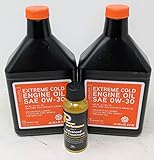
Overview: The Ariens 0W-30 Extreme Cold Engine Oil package includes two 20-ounce bottles specifically formulated for snow throwers and winter equipment. This synthetic blend is designed for brutal cold-weather starting, paired with a 3-in-1 fuel treatment that stabilizes gasoline and protects fuel systems during seasonal storage.
What Makes It Stand Out: Unlike automotive oils, this specialized formulation addresses the unique demands of small engines in sub-zero conditions. The included fuel treatment treats up to 10 gallons, preventing varnish and gum buildup in carburetors and injectors—a common cause of seasonal equipment failure. The 0W-30 viscosity ensures reliable starts when temperatures plummet.
Value for Money: While the per-ounce cost exceeds standard motor oils, you’re paying for specialized cold-weather performance and the included fuel treatment. For snow blower owners, this convenience package eliminates guesswork and prevents mid-winter breakdowns, making it cost-effective insurance for essential equipment.
Strengths and Weaknesses: Strengths include excellent cold-weather flow, the bundled fuel treatment, synthetic protection for harsh conditions, and convenient packaging for seasonal equipment. The formulation prevents moisture-related issues in stored equipment. Weaknesses include limited volume—two 20oz bottles may require multiple purchases for larger engines. It’s too specialized for year-round use in non-winter equipment, and the price per quart is higher than bulk automotive oils.
Bottom Line: For snow blower owners in cold climates, this is an essential maintenance kit. The specialized formulation and fuel treatment combination justify the premium for reliable winter performance.
5. Lucas Oil 11238 Sure Start Premium Starting Fluid - 10.7 Ounce

Overview: Lucas Oil Sure Start Premium Starting Fluid is a cold-weather emergency aid designed to fire up stubborn engines when temperatures drop to -65°F. This 10.7-ounce aerosol can delivers a precisely metered ether-based formulation that provides the combustible boost needed for reluctant starters, while incorporating upper cylinder lubricants to protect engine components.
What Makes It Stand Out: The extreme -65°F effectiveness makes it indispensable for northern climates. Unlike basic starting fluids, Lucas includes lubricating additives that protect cylinder walls and rings during the critical first moments of startup. Its versatility across gasoline, diesel, and small engines makes it a universal tool for homeowners and professionals alike.
Value for Money: Inexpensive insurance against being stranded by a cold battery or temperamental engine. One can lasts multiple seasons for typical homeowners, making the cost-per-use negligible compared to a service call or tow truck. It saves battery and starter wear by reducing cranking time.
Strengths and Weaknesses: Strengths include extreme cold effectiveness, universal compatibility, upper cylinder lubrication, and compact storage. It can revive flooded engines and works when batteries are weak. Weaknesses include flammability requiring careful handling, potential to mask underlying maintenance issues like weak spark or fuel problems, and overuse can cause engine damage. Not a substitute for proper winterization.
Bottom Line: Keep a can in your garage and vehicle for emergencies. When used sparingly and correctly, it’s an invaluable tool for brutal winter conditions, but address underlying issues for reliable long-term starting.
6. Archoil AR9100 Oil Additive (16oz) for All Vehicles - Powerstroke Cold Starts, Eliminates Injector Problems

Overview: Archoil AR9100 is a specialized oil additive engineered to resolve injector stiction issues in HEUI-equipped Power Stroke diesel engines, particularly the 6.0L and 7.3L variants notorious for cold-start misfires. This 16-ounce bottle treats a complete 13-16 quart oil system while providing anti-wear benefits for all diesel and gasoline engines, making it a versatile solution for both targeted problems and general friction reduction.
What Makes It Stand Out: The product’s singular focus on HEUI injector stiction sets it apart from generic additives. It directly addresses the high-pressure oil system’s operational challenges that cause rough idle and sluggish response in Power Stroke engines. Beyond diesel applications, its versatility extends to limited-slip differentials, motorcycles, and hydraulic systems with specific treat rates, making it a multi-purpose friction modifier for an entire garage fleet.
Value for Money: Priced around $40-50 per bottle, AR9100 delivers exceptional value by potentially saving thousands in injector replacement costs. At roughly $3 per quart treated, it’s a fraction of diagnostic and repair expenses for Power Stroke owners. The concentrated formula’s multi-system compatibility eliminates need for separate additives, consolidating maintenance costs into one product.
Strengths and Weaknesses: Pros: Specifically eliminates Power Stroke cold-start stiction; multi-purpose application across engines, differentials, and hydraulics; reduces friction, noise, and vibration; prevents costly injector repairs. Cons: Requires precise measurement for proper treat rates; not a substitute for regular oil changes; minimal benefits on healthy non-HEUI systems; may be overkill for standard gasoline engines.
Bottom Line: For 6.0L or 7.3L Power Stroke owners experiencing cold-start issues, AR9100 is a mandatory first step before considering expensive mechanical repairs. For general use, it’s a competent anti-wear additive, though specialized alternatives may offer better value for non-HEUI applications.
7. Motul 8100 X-Power 10W-60 Full Synthetic | Ester-Based Formula for Turbocharged & High-Performance Engines | LSPI Protection, Extreme Heat Resistance, Cold Start Lubrication, Daily & Track Use | 5L

Overview: Motul 8100 X-Power 10W-60 is a premium ester-based full synthetic engineered for extreme demands of turbocharged and high-performance engines. This 5-liter formulation delivers robust thermal stability and wear protection across temperature extremes, making it ideal for European-spec powertrains that see both daily street use and aggressive track driving. Its API SP certification ensures modern engine compatibility.
What Makes It Stand Out: The ester-based chemistry provides exceptional film strength that resists viscosity breakdown under sustained high-RPM abuse. Its dual-personality performance—maintaining stability at track temperatures while flowing instantly during cold starts—eliminates the need for seasonal oil changes. Advanced LSPI protection and strong detergent-dispersant properties address direct-injection turbocharged engines’ unique deposit challenges, supporting both performance and emissions system longevity.
Value for Money: At $60-75 per 5-liter jug, this oil commands premium pricing but justifies it for engines where replacement costs exceed $10,000. The ability to serve dual track/street duty eliminates purchasing separate oils, while ACEA A3/B4 compliance meets stringent European manufacturer requirements. For high-performance European vehicles, it’s competitively priced against other ester-based competitors.
Strengths and Weaknesses: Pros: Superior high-temperature stability; excellent cold-start flow; LSPI and emissions system protection; dual track/street capability; meets stringent European specs. Cons: Over-engineered for standard passenger vehicles; premium price point; 10W-60 viscosity too thick for many modern engines; limited retail availability.
Bottom Line: For owners of modified turbocharged vehicles or European performance cars requiring ACEA A3/B4 specification, Motul 8100 X-Power is worth the investment. Its ester technology provides tangible protection advantages. However, for mainstream vehicles, more cost-effective API SP 5W-30 options deliver adequate protection without the premium.
8. Castrol EDGE 5W-50 Advanced Full Synthetic Motor Oil, 1 Quart, Pack of 6

Overview: Castrol EDGE 5W-50 Advanced Full Synthetic leverages proprietary Fluid Titanium Technology to deliver exceptional performance across wide temperature ranges. This six-quart package targets high-performance engines requiring robust protection, claiming 3X stronger viscosity retention and 10X better high-stress performance than API SP minimums. The convenient multi-pack suits many modern engines requiring 5-6 quarts per change.
What Makes It Stand Out: Marketing claims are substantiated by specific ASTM test data—Kurt Orbahn and Sequence IX testing—providing measurable benchmarks rather than vague promises. The recommended 20,000-mile drain interval demonstrates confidence in oxidation resistance. The packaging perfectly matches typical oil capacities, eliminating multiple purchases and ensuring consistent batch quality across a complete change.
Value for Money: Typically priced $50-60 for six quarts ($8-10 per quart), it competes directly with premium synthetics while offering extended drain potential. The multi-pack convenience and long-interval capability reduce total ownership costs for high-mileage drivers. However, verify compatibility with your vehicle’s oil life monitoring system before extending drains to avoid warranty conflicts.
Strengths and Weaknesses: Pros: Test-backed performance claims; convenient multi-quart packaging; extended drain interval potential; 5W-50 viscosity excellent for performance applications; widely available retail presence. Cons: 5W-50 too thick for many manufacturer specs; extended drain claims may void warranties; test comparisons use specific reference grades; overkill for standard commuter vehicles.
Bottom Line: Castrol EDGE 5W-50 is an excellent choice for performance vehicles specifying wide-viscosity oils and for enthusiasts wanting extended protection. Verify your engine’s requirements before purchase, as many modern powerplants demand thinner grades. For compatible applications, it delivers strong value with proven test performance.
9. Briggs & Stratton SAE 5W-30 Synthetic Small Engine Motor Oil - 32 Oz. 100074
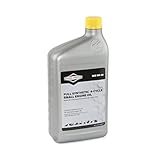
Overview: Briggs & Stratton’s 100074 is a 32-ounce bottle of 100% synthetic SAE 5W-30 specifically formulated for air-cooled 4-cycle small engines. This OEM-branded lubricant addresses unique thermal and operational stresses in lawnmowers, generators, and pressure washers where operating temperatures significantly exceed liquid-cooled automotive engines, making specialized chemistry essential for longevity.
What Makes It Stand Out: Unlike automotive oils, this formulation accounts for higher operating temperatures and increased shear stress in splash-lubrication systems. The synthetic base resists thermal breakdown and maintains viscosity during extended summer operation, preventing carbon buildup and valve sticking common with conventional oils. Its additive package specifically addresses small engine challenges like fuel dilution from extended idle periods.
Value for Money: Priced moderately higher than generic 5W-30 (typically $7-10 per quart), the OEM-specific formulation justifies the premium. Using non-certified oil can void warranties on new equipment costing $300-3,000, making this inexpensive insurance. The 32-ounce size conveniently matches most small engine capacities, eliminating waste and multiple container storage.
Strengths and Weaknesses: Pros: OEM-approved formulation prevents warranty issues; synthetic base resists high-temperature breakdown; proper additive package for air-cooled engines; convenient size for typical applications. Cons: Limited to small engine use; premium price over generic alternatives; 32-ounce bottle requires multiple purchases for larger commercial equipment.
Bottom Line: For maintaining newer Briggs & Stratton equipment under warranty, this oil is non-negotiable. Its specialized formulation addresses real small-engine challenges that automotive oils cannot. For older equipment, quality automotive synthetics may suffice, but the modest price difference makes this the smart choice for any air-cooled 4-cycle engine where reliability matters.
10. Yamalube Oil Change Kit Cold Weather 5W-30

Overview: The Yamalube Cold Weather Oil Change Kit provides Yamaha owners with an OEM-specified maintenance solution optimized for winter operation. While feature details are minimal, Yamaha kits typically include the precise amount of proprietary synthetic-blend 5W-30 oil, a genuine oil filter, and necessary gaskets—ensuring factory-specified performance in freezing conditions for snowmobiles, ATVs, and motorcycles.
What Makes It Stand Out: All-in-one convenience eliminates guesswork about oil quantity, filter compatibility, or specification compliance. Yamaha engineers these kits specifically for tighter tolerances and unique valvetrain requirements in their powerplants. The cold-weather formulation maintains critical flow characteristics below -20°F, preventing dry starts and ensuring proper clutch operation in snowmobiles where conventional oils would fail.
Value for Money: Kits typically cost $35-45, representing a $5-10 premium over purchasing components separately. This modest upcharge buys guaranteed compatibility and proper specification—critical for high-revving Yamaha engines costing thousands. For owners of expensive Yamaha vehicles, the small premium prevents warranty disputes and ensures optimal cold-weather reliability when failure is not an option in remote winter environments.
Strengths and Weaknesses: Pros: Complete, convenient package; guaranteed OEM specification; cold-weather optimized for Yamaha powerplants; eliminates parts compatibility concerns; maintains warranty compliance. Cons: Yamaha-specific only; limited to cold-weather viscosity; premium price over generic equivalents; no independent performance claims listed.
Bottom Line: Yamaha owners operating in cold climates should consider this kit essential maintenance equipment. The specification guarantee and convenience justify the modest premium over separate components. While experienced mechanics can source equivalents, the kit ensures no critical details are overlooked, making it the recommended choice for warranty protection and reliable winter performance.
Understanding Cold Weather Motor Oil Performance
What Makes Motor Oil Work in Freezing Temperatures
Motor oil doesn’t just lubricate—it performs a delicate balancing act between protecting engine parts and flowing freely enough to reach them. In cold weather, oil thickens dramatically, which can prevent it from circulating through tiny passages and bearing surfaces during those first few seconds after ignition. The right winter formulation contains base oils and additives specifically engineered to resist this thickening, maintaining fluidity even when the thermometer dips below zero.
The Science of Viscosity and Flow
Viscosity measures a fluid’s resistance to flow. Think of honey versus water—honey has high viscosity and moves slowly, especially when cold. Motor oil behaves similarly, but modern chemistry allows it to act like honey at operating temperature (for protection) and water at startup (for flow). This temperature-sensitive behavior is crucial because approximately 75% of engine wear occurs during cold starts when oil hasn’t yet reached all components.
Winter-Grade Oil Specifications Explained
Oil specifications tell you exactly how a product performs under standardized testing conditions. The American Petroleum Institute (API) and Society of Automotive Engineers (SAE) have developed rigorous tests that measure everything from cold-cranking speed to pumpability limits. Understanding these specs helps you look beyond marketing claims and focus on proven performance metrics that matter for your winter driving conditions.
Decoding Oil Viscosity Ratings for Winter
Reading the Numbers: What 5W-30 Actually Means
That “W” doesn’t stand for weight—it stands for winter. In a 5W-30 rating, the number before the W indicates how the oil flows at 0°F (-17.8°C). The lower this number, the better the oil performs in extreme cold. The second number (30) represents viscosity at 212°F (100°C), showing the oil’s ability to protect at normal operating temperature. This dual-rating system ensures you get cold-weather flow without sacrificing hot-weather protection.
Why the “W” Matters More Than You Think
Many drivers focus on the second number, but in winter, the first number is your engine’s best friend. A 0W-rated oil flows significantly faster at startup than a 10W or 15W oil, which means critical components receive lubrication up to 30 seconds sooner. Those seconds translate to measurable reductions in long-term engine wear, especially in regions where temperatures regularly fall below 20°F (-6.7°C).
Single-Grade vs Multi-Grade Oils in Cold Climates
Single-grade oils (like SAE 30) were common decades ago but lack the temperature versatility modern engines demand. Multi-grade oils use viscosity index improvers—special polymers that expand as temperature increases—to provide two viscosity profiles in one bottle. For winter driving, multi-grade oils aren’t just recommended; they’re essential for any vehicle manufactured after 1980.
Synthetic vs Conventional: Making the Right Choice
How Synthetic Oils Excel in Low Temperatures
Synthetic base oils are engineered from the molecular level up, resulting in pure, uniform molecules that flow freely at much lower temperatures than refined crude oil. While conventional oils begin to thicken around -20°F (-29°C), full synthetics maintain pumpability down to -40°F (-40°C) and beyond. This superior cold-flow performance comes from the absence of paraffin waxes and irregular molecules found in conventional base stocks.
High-Mileage Formulations for Winter Protection
High-mileage oils contain seal conditioners that prevent leaks in older engines, but their winter performance varies by base oil type. A high-mileage synthetic blend offers better cold-weather flow than a conventional high-mileage oil while still addressing the needs of engines with over 75,000 miles. Look for formulations that specifically mention “winter-grade” or “low-temperature” performance on the label.
The Truth About Synthetic Blends
Synthetic blends combine conventional and synthetic base oils, offering a middle ground in both price and performance. In moderate winter climates (temperatures rarely below 0°F/-17.8°C), a quality blend can provide adequate protection. However, in severe cold, the synthetic portion must be substantial—at least 30%—to make a meaningful difference in startup flow. Check technical data sheets when possible to verify the actual synthetic content.
Key Features to Look For
Cold Crank Simulator Ratings
The Cold Crank Simulator (CCS) test measures how an oil performs when your engine is struggling to turn over on a frigid morning. This test simulates starting conditions at progressively lower temperatures. Oils that pass CCS testing at -30°C (-22°F) will show this rating on product data sheets. For extreme northern climates, prioritize oils with documented CCS performance at -35°C or lower.
Pour Point Performance
Pour point indicates the lowest temperature at which oil will still flow. While your engine never reaches this absolute limit, the rating provides insight into the oil’s winter capabilities. Quality winter oils have pour points at least 20°F below your region’s coldest expected temperature. If you live where it hits -20°F, choose an oil rated to -40°F or lower for a safety margin.
Additive Packages That Fight Winter Wear
Modern oils contain anti-wear additives like zinc and phosphorus, detergents to keep sludge at bay, and dispersants to suspend contaminants. In winter, look for enhanced anti-wear packages since cold starts create more metal-to-metal contact. Some formulations also include friction modifiers that improve fuel economy during the extended warm-up periods common in cold weather.
Oil Types and Engine Compatibility
Matching Oil to Your Engine Type
Your engine’s design dictates its oil requirements. Older pushrod V8s with loose tolerances can handle thicker cold-start viscosity, while modern turbocharged four-cylinders with tight clearances demand the thinnest possible winter grades. Variable valve timing systems are particularly sensitive to cold oil flow—using the wrong viscosity can trigger check engine lights and cause timing chain rattles until the engine warms.
Diesel vs Gasoline Winter Oil Requirements
Diesel engines face unique cold-weather challenges. Their high compression ratios and glow plug systems require oils with specific soot-handling capabilities and higher zinc content. Diesel-rated oils (API CK-4 or FA-4) have different additive packages than gasoline oils and should never be mixed. In winter, diesel owners must also consider fuel gelling, making oil’s compatibility with anti-gel additives crucial.
Turbocharged and Direct-Injection Considerations
Turbochargers spin at up to 200,000 RPM and rely on oil for both lubrication and cooling. Cold, thick oil can starve the turbo bearings during startup, causing catastrophic failure. Direct-injection engines produce more soot and fuel dilution, which thins oil and reduces its winter protection. Both technologies benefit from full synthetic oils with the lowest possible winter rating (0W) and robust additive packages.
Practical Selection Guidelines
Consulting Your Owner’s Manual First
Your vehicle manufacturer spent millions developing engine specifications—trust their expertise. The manual lists approved viscosity grades and often specific performance standards (like GM’s dexos or Ford’s WSS specifications). Deviating from these recommendations can void warranties and cause long-term damage. If the manual suggests 5W-20, don’t assume 0W-20 is “better”—it might be too thin for your engine’s design.
Climate Zone Recommendations
Match your oil to your actual climate, not just your state. Coastal Maine rarely sees the -40°F temperatures common in North Dakota, while mountain regions experience rapid temperature swings. The USDA Plant Hardiness Zone map surprisingly correlates well with automotive oil needs—Zone 3 and colder demand 0W oils, Zone 4-5 can use 5W, and Zone 6 and warmer may get by with 10W if winters are mild.
Age and Condition of Your Vehicle
A 200,000-mile engine with worn bearings needs thicker oil for protection, but winter demands thinner oil for flow. This conflict requires compromise. Consider using the lowest winter-rated oil that still meets your engine’s wear needs. A high-mileage 0W-30 might protect better than a standard 5W-30 in a worn engine because it flows faster when cold while maintaining adequate hot-weather film strength.
Common Winter Oil Myths Debunked
Thinner Isn’t Always Better
While low winter viscosity helps with startup flow, going too thin can cause problems. An oil that’s too thin at operating temperature won’t maintain proper oil pressure, especially in high-mileage engines. This leads to increased wear, noise, and potential bearing damage. The key is finding the lowest winter rating that still provides adequate hot viscosity for your specific engine design.
The Warm-Up Period Misconception
Modern engines don’t need extensive warm-up periods—30 seconds to one minute is sufficient in most cases. However, this assumes you’re using the correct winter-grade oil. With proper oil, you can drive gently almost immediately; the engine warms faster under light load than idling. Using summer-weight oil forces you to choose between immediate wear (driving cold) or wasted fuel (excessive idling).
Color and Clarity Fallacies
Dark oil isn’t necessarily bad oil, especially in winter. Soot suspension and additive activation cause darkening, which indicates the oil is doing its job. Clear, honey-colored oil after 2,000 winter miles might mean the detergents aren’t working. Judge oil by change intervals and performance, not appearance. Winter driving with short trips and cold starts contaminates oil faster—consider more frequent changes.
Maintenance Tips for Winter Driving
When to Change Oil Before Winter
Timing your oil change matters. Fresh oil has maximum additive potency and contaminant-holding capacity. Change to winter-grade oil when temperatures consistently drop below 50°F (10°C) at night. This ensures you’re not running summer oil into the first freeze. For vehicles using synthetic oil year-round, still consider a change before winter to refresh additives depleted during hot summer driving.
Storage Considerations for Cold Months
If you store a classic car or seasonal vehicle, fill the crankcase with winter-grade oil even if it won’t be started. This prevents internal corrosion from moisture condensation. For extreme storage (-20°F and below), consider a fogging oil sprayed into cylinders for additional protection. Always store oil bottles in a heated area—repeated freezing and thawing can degrade additive packages.
Monitoring Oil Pressure in Freezing Conditions
Install an oil pressure gauge if your vehicle only has a warning light. Normal pressure might read 60 PSI when warm but drop to 20 PSI during a cold start with thick oil—this is dangerous. Quality winter oil should maintain at least 30 PSI within 15 seconds of startup. If pressure stays low longer, your oil is too thick for the temperature, or you have a worn oil pump.
Frequently Asked Questions
What happens if I use summer oil in winter?
Summer-weight oil thickens dramatically in cold temperatures, causing slow cranking, inadequate lubrication during startup, and potentially catastrophic engine wear. You’ll also see reduced fuel economy and may experience oil pressure warning lights on extremely cold mornings.
Can I mix different viscosity oils for winter?
Mixing oils creates an unpredictable viscosity that won’t match either product’s rating. While it’s better than running low on oil, it’s a temporary fix at best. The resulting blend may not flow properly in cold weather or protect adequately when hot. Always use the correct single-viscosity oil.
How cold is too cold for conventional oil?
Conventional oil begins to perform poorly around 0°F (-17.8°C) and may fail to flow adequately below -20°F (-28.9°C). If your region experiences these temperatures regularly, full synthetic oil is necessary for reliable startup protection.
Will thinner oil hurt my engine in summer?
Modern multi-grade oils are designed to maintain proper viscosity across temperature ranges. A 0W-20 oil provides the same hot protection as a 5W-20 once the engine reaches operating temperature. The “20” rating ensures identical summer performance.
Do I need a special oil filter for winter?
Yes, consider a premium filter with anti-drainback valves and high flow rates. Cheap filters can restrict oil flow when cold or allow oil to drain from passages overnight, causing dry starts. Look for filters specifically rated for cold-weather performance.
How often should I check oil level in winter?
Check at least every other fuel fill-up. Cold weather driving with short trips causes fuel dilution and condensation, which can raise oil level temporarily (bad) or cause consumption as the engine burns off contaminants. Winter conditions make regular monitoring critical.
Can switching to synthetic cause leaks?
Modern synthetics don’t cause leaks, but they can reveal existing ones. Their superior cleaning properties remove sludge that may have been plugging marginal seals. If leaks appear after switching, the seals were already failing and needed replacement anyway.
What’s the difference between 0W and 5W in real-world use?
In temperatures above -20°F, the difference is minimal. Below that, 0W oils provide measurably faster startup flow and reduced battery drain. For most drivers in moderate winter climates, either works well, but 0W offers extra insurance during cold snaps.
Should I change oil viscosity as my engine ages?
High-mileage engines with worn bearings sometimes benefit from slightly thicker oil, but never sacrifice winter flow. Instead of moving from 5W-30 to 10W-30, consider a high-mileage 5W-30 or 0W-30 that maintains cold-start protection while addressing wear.
Does diesel oil work in gasoline engines for winter?
Never use diesel-rated oil in gasoline engines long-term. Diesel oils have higher zinc levels that can damage catalytic converters and different additive balances. In an emergency, you could use diesel oil briefly, but change it immediately once proper gasoline-engine oil is available.
See Also
- 10 Best Motor Oil Funnels for Cold Weather Performance in 2026
- 10 Best Manual Transmission Fluid for Cold Weather Starts This Year
- 10 Must-Have Full Synthetic Motor Oil for Extreme Weather Protection in 2026
- The 10 Best Motor Oil Choices for Extreme Weather Conditions in 2026
- The 10 Best Full Synthetic Motor Oil for Extreme Weather Conditions in 2026