Table of Contents
Ever found yourself staring at that ominous Check Engine light, wondering if it’s a minor glitch or a trip to the mechanic that’ll cost more than your monthly car payment? You’re not alone. Modern vehicles are packed with complex electronics, turning what used to be simple repairs into diagnostic puzzles. But here’s the empowering truth: you don’t need a degree in automotive engineering or a dealership’s six-figure scan tool to understand what’s wrong. Today’s OBD2 scanners put professional-grade diagnostics in your hands, transforming anxiety into actionable insights—if you know what to look for in a truly accurate tool.
Gone are the days when “diagnostic tool” meant a cryptic blink code manual. The right OBD2 scanner demystifies your vehicle’s language, translating error codes into plain English, monitoring live sensor data, and even letting you clear warnings after a fix. But with a dizzying array of options flooding the market—from $20 code readers to $500 pro units—how do you avoid wasting money on a gadget that gives vague readings or can’t handle your specific car? Accuracy isn’t just about reading codes; it’s about depth, reliability, and future-proofing. Let’s cut through the noise and focus on the features that actually deliver trustworthy diagnostics, whether you’re a weekend warrior or a detail-oriented daily driver.
Top 10 OBD2 Scanners
Detailed Product Reviews
1. ANCEL AD310 Classic Enhanced Universal OBD II Scanner Car Engine Fault Code Reader CAN Diagnostic Scan Tool, Read and Clear Error Codes for 1996 or Newer OBD2 Protocol Vehicle (Black)

Overview:
The ANCEL AD310 is a foundational OBD2 scanner targeting DIYers and frequent travelers. Recommended by mechanic Scotty Kilmer, it reads and clears engine fault codes, displays live data, and checks emissions readiness for vehicles from 1996 onward. Its plug-and-play design draws power directly from the OBDII port.
What Makes It Stand Out:
Its rugged, compact build (8.9 x 6.9 x 1.4 inches) withstands garage use, while the thick 2.5-foot cable prevents damage from drops. Supporting all OBDII protocols (CAN, KWP2000, etc.), it reliably covers nearly all post-1996 US, EU, and Asian vehicles. The large, clear screen and intuitive buttons make it exceptionally user-friendly for beginners.
Value for Money:
Priced affordably, it outperforms cheaper scanners that lack universal protocol support. It eliminates unnecessary features (like ABS/SRS scanning), focusing solely on engine diagnostics—ideal for users needing basic, trustworthy code reading without overspending on complexity.
Strengths and Weaknesses:
Strengths: Extremely durable; effortless one-button operation; no batteries required; wide vehicle compatibility.
Weaknesses: Limited to engine diagnostics (no ABS/SRS); no live data graphing; basic monochrome display.
Bottom Line:
A no-nonsense, reliable entry-level scanner perfect for clearing check engine lights and basic diagnostics. Highly recommended for cost-conscious drivers who prioritize simplicity and durability over advanced features.
2. FOXWELL NT301 OBD2 Scanner Live Data Professional Mechanic OBDII Diagnostic Code Reader Tool for Check Engine Light

Overview:
The FOXWELL NT301 is a streamlined OBD2 scanner focused on engine diagnostics. It reads/clears fault codes, checks emissions readiness, and displays live sensor data via graphing—ideal for pre-smog checks or diagnosing check engine lights on 1996+ gasoline vehicles.
What Makes It Stand Out:
Its live data graphing visualizes sensor trends (e.g., oxygen levels), helping pinpoint intermittent issues. Red-Yellow-Green LEDs and a speaker instantly signal emissions readiness status, simplifying smog test prep. Protocol support (CAN, ISO9141, etc.) ensures broad compatibility with most OBD2-compliant cars.
Value for Money:
Competitively priced for its professional-grade live data capabilities. While basic, it avoids the steep cost of multi-system scanners, making it a smart buy for users needing only engine diagnostics and smog readiness verification.
Strengths and Weaknesses:
Strengths: Intuitive LED/sound readiness indicators; accurate live data logging; robust compatibility; compact design.
Weaknesses: No ABS/SRS/transmission scanning; limited to 12V gasoline engines (no diesels); no multilingual support.
Bottom Line:
An excellent, focused tool for smog checks and engine troubleshooting. Choose it if you prioritize live data analysis and emissions readiness over broader system coverage—ideal for pre-purchase inspections or routine maintenance.
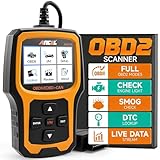
3. ANCEL AD410 Enhanced OBD2 Scanner, Vehicle Code Reader for Check Engine Light, Automotive OBD II Scanner Fault Diagnosis, OBDII Scan Tool for All OBDII Cars 1996+, Black/Yellow
Overview:
The ANCEL AD410 elevates basic OBD2 scanning with enhanced diagnostics, targeting users seeking deeper engine insights. It reads/clears codes, checks emissions readiness, and adds EVAP/O2 sensor testing—all while supporting 1996+ vehicles globally via multilingual menus.
What Makes It Stand Out:
Its standout features include EVAP system leak testing and O2 sensor diagnostics, which improve fuel efficiency and reduce emissions. The 2.4-inch color TFT display (262K colors) and 42,000+ built-in DTC definitions eliminate guesswork, offering clear fault explanations without internet searches.
Value for Money:
Priced modestly above entry-level scanners, it delivers exceptional value with advanced diagnostics typically found in costlier tools. The color screen and EVAP testing justify the slight premium for users wanting actionable repair insights beyond code reading.
Strengths and Weaknesses:
Strengths: EVAP/O2 sensor testing; vibrant color display; multilingual support; extensive DTC library.
Weaknesses: Still engine-only (no ABS/SRS); no live data graphing; requires compatibility verification for newer models.
Bottom Line:
A significant upgrade from basic scanners, offering diagnostic depth for under $100. Best for DIYers serious about understanding why the check engine light is on—not just clearing it. Highly recommended for proactive vehicle health management.
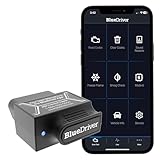
4. BlueDriver Bluetooth Pro OBDII Scan Tool for iPhone & Android - No Subscription Fee - OBD2 Car Scanner and Code Reader - Diagnose Check Engine, ABS, SRS, Airbag & 7000+ Issues on Vehicles 1996+
Overview:
BlueDriver is a wireless OBD2 scanner that pairs with iOS/Android devices via Bluetooth, transforming your phone into a professional-grade diagnostic tool. It reads/clears codes across engine, ABS, SRS, and TPMS systems, with repair reports and live data streaming.
What Makes It Stand Out:
Unlike hardware scanners, it leverages your smartphone’s power for intuitive app navigation, repair videos, and live data graphs. Its standout feature is unlimited repair reports detailing causes and fixes—normally exclusive to dealerships—without subscription fees. Bluetooth connectivity ensures cord-free convenience.
Value for Money:
While pricier upfront than basic scanners, its multi-system coverage (ABS/SRS included) and repair guidance match tools costing 3x more. Eliminating subscriptions saves long-term costs, making it economical for frequent users needing comprehensive diagnostics.
Strengths and Weaknesses:
Strengths: Wireless ease; ABS/SRS/TPMS support; actionable repair reports; no subscription fees.
Weaknesses: Requires smartphone; app-dependent (no standalone use); limited to Bluetooth-compatible vehicles.
Bottom Line:
The smartest investment for tech-savvy users wanting dealer-level diagnostics. Its repair insights and wireless freedom justify the cost, especially for those tackling complex issues. Skip if you prefer standalone hardware or lack a smartphone.
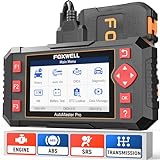
5. FOXWELL Car Scanner NT604 Elite OBD2 Scanner ABS SRS Transmission, Check Engine Code Reader for Cars and Trucks, Diagnostic Scan Tool with SRS Airbag, Automotive Diagnostic Tool with Live Data
Overview:
The FOXWELL NT604 Elite is a comprehensive 5-in-1 diagnostic scanner covering engine, ABS, SRS, transmission, and CAN systems. Preloaded with 2026 software, it delivers professional-grade diagnostics for 60+ global vehicle makes without setup hassles.
What Makes It Stand Out:
Its ability to scan ABS/SRS systems (unlike budget OBD2 tools) is transformative for safety-related diagnostics. AUTOVIN instantly retrieves vehicle data, while the included hard-shell case—a rarity at this price—ensures durability. Lifetime free updates future-proof your investment.
Value for Money:
Priced between basic code readers and high-end scanners, it offers exceptional ROI by replacing multiple tools. The protective case and no-update-fees policy add tangible savings, making it cost-effective for serious DIYers or small shops.
Strengths and Weaknesses:
Strengths: Multi-system coverage (ABS/SRS/engine); AUTOVIN efficiency; rugged case; lifetime updates.
Weaknesses: No maintenance resets (e.g., oil/service lights); complex for absolute beginners; heavier than entry models.
Bottom Line:
A near-professional tool for owners tackling advanced repairs. Worth every penny if you need ABS/SRS diagnostics but can’t justify $500+ scanners. Essential for safety-system troubleshooting—highly recommended for intermediate+ users.
6. OBD2 Scanner, CGSULIT SC103 Car Code Reader Diagnose Check Engine Light Smog Check DTCs Scan Tool Live Data Stream Voltage Test for Vehicles Since 1996

Overview: The CGSULIT SC103 is a budget-friendly OBD2 scanner targeting DIYers and professionals seeking reliable engine diagnostics. It reads/clears DTCs, checks I/M readiness, displays live data (including voltage), and turns off the Check Engine Light for most gasoline vehicles from 1996 onward, leveraging Scotty Kilmer’s endorsement for credibility.
What Makes It Stand Out: Its standout features include a vibrant 2.8-inch TFT color screen for clear text/graphical data visualization and industrial-grade chip ensuring rapid response. Full OBDII protocol support (KWP2000, CAN, etc.) covers US (1996+), EU (2003+), and Asian (2008+) vehicles. The freeze frame comparison with live data provides nuanced diagnostics beyond basic code reading.
Value for Money: Priced competitively under $40, it surpasses cheaper monochrome scanners with its color display and robust feature set. While lacking ABS/SRS functionality, it delivers exceptional core OBDII diagnostics without recurring fees, making it ideal for cost-conscious users avoiding shop visits for basic issues.
Strengths and Weaknesses: Strengths: Intuitive plug-and-play operation; excellent screen clarity; comprehensive protocol compatibility; includes voltage testing. Weaknesses: No hybrid/electric vehicle support; no multilingual options; graphical data limited to basic parameters; slightly bulky design.
Bottom Line: A highly capable entry-level scanner for fundamental diagnostics. Its color display and reliability justify the price, though professionals needing advanced systems (ABS) should look elsewhere. Recommended for DIYers focused on engine-related issues.
7. MOTOPOWER MP69033 Car OBD2 Scanner Code Reader Engine Fault Scanner CAN Diagnostic Scan Tool for All OBD II Protocol Cars Since 1996, Yellow

Overview: The MOTOPOWER MP69033 is a no-frills OBD2 code reader designed for straightforward engine diagnostics. It reads/clears DTCs, displays live data (speed, RPM, coolant temp), checks I/M readiness, and supports freeze frame data for vehicles from 1996+ (US), 2000+ (EU), and most Asian models, with a focus on simplicity and portability.
What Makes It Stand Out: Its six-language support (English, German, French, etc.) and 2.8-inch adjustable LCD with white backlight enhance accessibility. The 2.5-foot cable and thick insulation improve usability in tight engine bays, while dedicated VIN/DTC buttons streamline common tasks. Direct vehicle power eliminates battery hassles.
Value for Money: At under $35, it offers solid value for basic diagnostics, undercutting pricier rivals. However, its exclusion of ABS/Airbag codes and lack of graphical data limit versatility. It’s a sensible buy only if you need core engine diagnostics without advanced features.
Strengths and Weaknesses: Strengths: Multi-language interface; bright, adjustable screen; robust cable; user-friendly button layout; affordable. Weaknesses: Cannot read ABS/Airbag codes; no graphical data trends; no voltage testing; limited to engine-related OBDII functions; plasticky build.
Bottom Line: A functional, economical scanner for occasional use on engine lights. Its language options and screen clarity are pluses, but ABS incompatibility and sparse features reduce appeal for comprehensive diagnostics. Best for budget-focused beginners.
8. VDIAGTOOL VD10 OBD2 Scanner Code Reader Car Diagnostic Tool Engine Fault Code Reader for Turn Off CEL with Freeze Frame/I/M Readiness for All OBDII Protocol Cars, OBD2 Scanner Diagnostic Tool
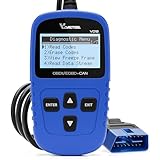
Overview: The VDIAGTOOL VD10 positions itself as an ultra-user-friendly OBD2 scanner for novices, emphasizing quick plug-and-play diagnostics. It reads/clears DTCs, displays definitions instantly, checks I/M readiness, and shows live sensor data for all OBDII-compliant gasoline vehicles (1996+), with a focus on simplicity and actionable insights.
What Makes It Stand Out: Its built-in database of 3,000+ DTC definitions (displayed on-screen) eliminates online lookups—a major time-saver. The freeze frame retrieval helps diagnose intermittent issues, while the I/M readiness monitor ensures smog test compliance. The TFT screen delivers clear text data without overwhelming complexity.
Value for Money: Priced around $40, it competes well with similar tools by prioritizing user experience over advanced features. The instant DTC explanations justify the cost for beginners, though professionals might desire more data parameters. No hidden fees enhance its affordability.
Strengths and Weaknesses: Strengths: On-screen DTC definitions; intuitive for first-timers; reliable freeze frame/I/M checks; compact; smog-test focused. Weaknesses: No graphical data trends; limited to basic live data (RPM, temp); no voltage testing; ABS/SRS unsupported; screen smaller than rivals.
Bottom Line: An excellent starter scanner for DIYers intimidated by complex tools. Its strength lies in demystifying engine codes, making it ideal for routine maintenance. Not suited for deep diagnostics, but perfect for turning off Check Engine Lights confidently.
9. WEJOWE OBD2 Scanner Diagnostic Tool, Check Engine Code Reader OBD2 Scanner with Reset, Mode 6, Mode 8 & I/M Readiness, Auto Check Engine Light Car Diagnostic Scan Tool for All OBDII Car Since 1996
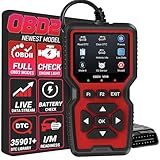
Overview: The WEJOWE OBD2 scanner targets users needing extensive diagnostic depth with its massive onboard DTC library. It reads/clears codes, performs battery voltage tests, retrieves VIN, and offers Mode 6/8 diagnostics alongside live data streaming for 98% of post-1996 vehicles, emphasizing comprehensive fault analysis.
What Makes It Stand Out: A colossal 35,901 DTC lookup database (far exceeding typical 3k–10k libraries) provides granular fault explanations. The computer connectivity enables data printing for repair documentation, while 10-language support broadens accessibility. Lifetime free upgrades and a canvas storage bag add long-term value.
Value for Money: At $45–$50, it’s pricier than entry models but justified by its unrivaled DTC library and printing capability. The focus on preemptive problem detection (via deep diagnostics) saves future repair costs, making it worthwhile for enthusiasts who value detailed insights.
Strengths and Weaknesses: Strengths: Industry-leading DTC coverage; data printing via USB-C; 10-language support; compact design; lifetime updates; voltage testing. Weaknesses: Graphical data limited; ABS/SRS unsupported; printing requires PC (inconvenient roadside); minor feature bloat (Mode 6/8 rarely used by DIYers).
Bottom Line: The top choice for detail-oriented users who want exhaustive fault code explanations and repair documentation. Its printing function and vast database offset the premium price, though casual users may prefer simpler alternatives.
10. Innova 5210 OBD2 Scanner & Engine Code Reader, Battery Tester, Live Data, Oil Reset, Car Diagnostic Tool for Most Vehicles, Bluetooth Compatible with America’s Top Car Repair App

Overview: The Innova 5210 merges OBD2 diagnostics with battery testing and app integration, targeting DIYers seeking professional-grade insights. It reads/clears engine and some ABS codes, resets oil lights, checks I/M readiness, and tests battery health for most 1996+ vehicles, paired with a free repair app.
What Makes It Stand Out: Unique dual functionality as a battery/alternator tester prevents unexpected breakdowns. Its RepairSolutions2 app (4M+ users) provides ASE-certified repair guides and cost estimates—no subscriptions. Oil reset and smog-readiness checks add genuine workshop utility missing in budget scanners.
Value for Money: Priced at $70–$80, it’s a premium tool but delivers exceptional value through multifunctionality. The app’s verified fixes and battery diagnostics justify the cost versus single-purpose scanners, especially for users avoiding dealer fees for oil resets or battery checks.
Strengths and Weaknesses: Strengths: Battery health testing; free repair app with real-world fixes; oil reset function; broader code coverage (including partial ABS); smog-readiness tracking. Weaknesses: Bluetooth dependency for app features; ABS coverage incomplete; no built-in DTC database (relies on app); higher initial cost.
Bottom Line: The most versatile scanner here for serious DIYers. Its battery diagnostics and repair app provide tangible savings, making it a smart investment despite the price. Essential for those tackling oil changes or diagnosing electrical issues.
Understanding OBD2 Scanner Fundamentals
What OBD2 Really Means for Your Diagnostics
OBD2 (On-Board Diagnostics, Second Generation) is the universal language your car’s computer uses to report issues. Since 1996, all vehicles sold in the U.S. must support it, but capabilities vary wildly. A basic scanner might only retrieve generic trouble codes (like P0300 for random misfires), while advanced tools access manufacturer-specific codes (e.g., BMW’s “2E8D” for turbocharger faults). True accuracy starts with a scanner that supports all OBD2 protocols—not just the common ones—to avoid missing critical data from your engine control unit.
Why Generic Code Readers Fall Short
Many budget scanners stop at displaying code numbers (P0420) without explaining why they triggered. Worse, they often lack the ability to read “pending codes” (early warnings before the Check Engine light activates) or monitor live data streams like oxygen sensor voltage or fuel trims. If your scanner can’t show real-time parameters, you’re guessing at causes instead of diagnosing them. Accuracy demands tools that go beyond the bare minimum protocol requirements.
Critical Features for Reliable Diagnostics
Protocol Coverage: The Non-Negotiable Foundation
Your vehicle communicates using specific electrical protocols (CAN, ISO, KWP2000, etc.). A scanner claiming “OBD2 compatibility” might only support CAN—the most common post-2008 standard—but fail on older cars using ISO 9141. For universal accuracy, verify the scanner explicitly lists all five OBD2 protocols. Missing one could mean incompatible with pre-2008 imports or certain European models, turning your tool into an expensive paperweight.
Database Depth and Update Mechanisms
A scanner is only as good as its code definitions. Cheap units rely on outdated, generic databases that misinterpret codes (e.g., labeling a transmission fault as “emissions issue”). Look for scanners with regular, automatic updates via Wi-Fi or USB. The best systems pull from manufacturer-specific databases, explaining not just what the code means, but common causes and related components—critical for avoiding misdiagnosis.
Live Data Streaming Capabilities
Watching live sensor data is where accurate diagnostics happen. Can the scanner display RPM, coolant temperature, long-term fuel trim, and MAF airflow simultaneously? Verify it supports customizable data display and graphing. If it lags or freezes during streaming, you’ll miss transient issues (like intermittent misfires). Prioritize tools with robust processors that handle high-speed data without dropouts.
Display and Usability Considerations
Screen Quality vs. Smartphone Reliance
Built-in displays range from monochrome LCDs to full-color touchscreens. While standalone screens work offline, they’re often small and low-resolution. Conversely, Bluetooth/Wi-Fi scanners pairing with apps leverage your phone’s superior display but require charging both devices. For garage use, a dedicated screen with anti-glare coating beats squinting at your phone in sunlight—but app-based tools excel for quick roadside checks.
Intuitive Interface Design
A cluttered menu structure turns simple tasks into headaches. Test (via reviews) how many taps it takes to view live data or clear codes. The best scanners prioritize one-touch access to frequent functions and use logical grouping (e.g., “Engine,” “Transmission,” “ABS” tabs). Avoid tools requiring endless scrolling through nested menus—when your Check Engine light is on, you need answers now.
Connectivity and Future-Proofing
Wired vs. Wireless: Reliability Trade-Offs
USB/WiFi scanners avoid cable clutter but introduce latency and pairing issues. Bluetooth 5.0+ models offer better stability, yet physical OBD2 cables (especially with extended cables for hard-to-reach ports) provide zero lag and no battery dependency. For critical diagnostics (like timing-sensitive sensor tests), wired connections still win for raw reliability.
Cloud Integration and Data Backup
Top-tier scanners sync diagnostics to cloud storage, letting you track recurring issues over time or share reports with mechanics. This is invaluable for spotting trends (e.g., rising coolant temps indicating a failing thermostat). Ensure the cloud service encrypts data and doesn’t lock you into proprietary apps—your diagnostic history should stay yours.
Advanced Diagnostics for Modern Vehicles
Bi-Directional Control: Beyond Passive Reading
Basic scanners read data; advanced tools interact with systems. Bi-directional control allows activating components like the fuel pump or purge valve for functional tests. Crucial for verifying fixes (e.g., “Did that new oxygen sensor actually resolve the P0171 code?”), this feature avoids unnecessary part replacements. Confirm compatibility with your vehicle’s make—it’s often limited to pricier units.
EV and Hybrid System Support
As electric/hybrid vehicles dominate 2026 roads, scanners must interpret high-voltage system codes (e.g., battery module faults or regenerative braking errors). Generic OBD2 tools ignore these entirely. Seek scanners explicitly advertising hybrid/EV compatibility with dedicated menus for inverter temps, state-of-charge imbalances, or 12V auxiliary system diagnostics.
CAN FD and Next-Gen Protocol Readiness
Newer vehicles use CAN FD (Flexible Data Rate) for faster communication, which older scanners can’t decode. While not yet universal in 2026, it’s growing in luxury and performance models. A scanner supporting CAN FD ensures it won’t become obsolete in 2-3 years. Check for firmware upgrade paths—this isn’t a hardware you want replacing annually.
Practical Usage Scenarios
Weekend DIYers: Balancing Cost and Capability
If you only need to clear occasional Check Engine lights or check oil life, a mid-tier scanner ($50-$100) with basic live data suffices. Prioritize one-button code clearing and clear code definitions. Skip bi-directional control unless troubleshooting complex issues—it’s overkill for simple resets.
Enthusiast Mechanics: Demanding Precision
For tuning or deep diagnostics, invest in a professional-grade tool ($200+). Key requirements: extensive bi-directional control, customizable PID (Parameter ID) tracking, and the ability to create diagnostic reports. Ensure it supports all manufacturer-specific codes—not just generic OBD2—to avoid misreading turbocharger or DSG transmission faults.
Fleet Managers: Scalability Matters
Fleets need scanners with user management, multi-vehicle history tracking, and exportable reports. Look for tools that integrate with fleet management software via API. Durability is non-negotiable—rubberized casings and screen protectors withstand daily shop use better than sleek but fragile designs.
Calibration and Accuracy Verification
How Manufacturers Ensure Diagnostic Precision
Reputable brands calibrate scanners against OEM diagnostic benches, validating code interpretations across thousands of vehicle makes/models. Avoid no-name brands without calibration documentation—they often misread voltage ranges or mislabel sensors (e.g., confusing upstream/downstream O2 sensors).
User-Verifiable Accuracy Checks
Test your scanner’s reliability by comparing live data against known-good values (e.g., coolant temp should match your car’s gauge within 5%). Check if it correctly identifies “ready” status for emissions tests—a common weak spot for cheap tools. If live data drifts or freezes, accuracy is compromised.
Maintenance and Longevity Tips
Keeping Your Scanner Updated and Functional
Even the best scanner degrades without updates. Set calendar reminders for monthly firmware checks. Store it in a cool, dry place—extreme heat in your glovebox degrades batteries and screens. For wireless models, replace internal batteries yearly; a dying battery causes data corruption during scans.
Frequently Asked Questions
Can an OBD2 scanner tell me exactly what part to replace?
No scanner diagnoses parts directly—it identifies systems or symptoms (e.g., “P0171: Lean Fuel Mixture Bank 1”). Accuracy comes from interpreting live data trends (like consistently high fuel trims) to pinpoint probable causes, but physical verification is always needed.
Will a cheap scanner work on my 2026 electric vehicle?
Most budget scanners only support traditional OBD2 protocols and ignore high-voltage systems. For EVs/hybrids, you need a tool explicitly advertising EV diagnostics, which typically costs $150+.
How often should I update my scanner’s software?
At minimum, quarterly. Critical updates fix code misinterpretations or add support for new vehicle models. Scanners without regular updates become less accurate as cars evolve.
Can wireless scanners cause data loss during a scan?
Yes, if Bluetooth/WiFi drops mid-scan. For complex diagnostics (like ECU reprogramming), use a wired connection. Wireless is reliable for basic code reads if within 10 feet of the port.
Do all scanners read transmission and ABS codes?
Generic OBD2 scanners only read engine-related codes. Accessing transmission, ABS, or airbag systems requires a tool supporting “enhanced diagnostics” (often called “full-system” scanners), which costs more but is essential for comprehensive checks.
Why does my scanner show different codes than a mechanic’s tool?
Dealership tools access manufacturer-specific codes hidden from basic scanners. A pro-grade scanner bridges this gap, but even then, some codes (like security module faults) remain dealer-locked.
Is bi-directional control necessary for most users?
For clearing codes or checking live data? No. But if you’re troubleshooting idle issues or verifying sensor replacements, it’s invaluable for testing components without disassembly.
Can OBD2 scanners damage my car’s computer?
Legitimate scanners read data and pose near-zero risk. Cheap, uncertified tools might cause electrical issues, but reputable brands include surge protection. Never use a scanner while jump-starting your car.
How do I know if my scanner supports CAN FD?
Check the specs for “CAN FD” or “ISO 11898-2” support. If it lists max speeds above 500kbps (e.g., 2Mbps), it likely handles CAN FD. When in doubt, contact the manufacturer with your vehicle year/make.
Will OBD2 become obsolete with newer vehicles?
Unlikely. While EVs add new protocols (like UDS), OBD2 remains the standardized gateway for emissions-related diagnostics. Scanners will evolve to support hybrid systems, but the OBD2 port isn’t disappearing soon.
See Also
- 10 Best OBD2 Scanners for Clearing Check Engine Lights in 2026
- 10 Expert-Recommended Touchscreen OBD2 Scanners for Advanced Diagnostics in 2026
- 10 Expert-Recommended OBD2 Scanners for Accurate Code Reading in 2026
- 2026’s Top 10 Full-System OBD2 Scanners for Advanced Diagnostics
- 10 Best Value Multi-Function OBD2 Scanners for Comprehensive Diagnostics in 2026