Table of Contents
Imagine staring at that dreaded check engine light blinking on your dashboard, the one that transforms your reliable daily driver into an anxious puzzle. You know the drill: the vague unease, the mental calculation of potential repair shop costs, and the nagging question – could I actually figure this out myself? For the growing army of DIY mechanics, the OBD2 scanner isn’t just a tool; it’s the key to unlocking vehicle mysteries, saving significant cash, and reclaiming control over your automotive destiny. Gone are the days of blind trust at the mechanic’s bay; today’s empowered gearhead demands direct access to the vehicle’s electronic brain, turning diagnostic codes from cryptic warnings into actionable insights.
Choosing the right OBD2 scanner, however, feels like navigating a minefield of technical jargon, inflated claims, and confusing price points. What works for a quick code read on a basic commuter car might utterly fail when diagnosing complex hybrid systems or performing advanced resets on modern luxury vehicles. As automotive technology accelerates towards 2026, with increasingly sophisticated electronics and tighter integration between systems, the scanner you pick today needs to be more than a simple code reader – it must be a versatile, future-ready diagnostic partner. This guide cuts through the noise, focusing not on fleeting “top 10” lists that expire faster than motor oil, but on the enduring features and critical considerations that separate truly capable tools from expensive paperweights for the serious DIYer.
Top 10 OBD2 Scanners for DIY Mechanics
Detailed Product Reviews
1. FOXWELL NT301 OBD2 Scanner Live Data Professional Mechanic OBDII Diagnostic Code Reader Tool for Check Engine Light

Overview:
The FOXWELL NT301 is a no-frills professional OBD2 scanner designed for mechanics and serious DIYers. It focuses on core diagnostics for resolving check engine lights, offering essential functions like reading DTCs, live data streaming, and emissions readiness checks.
What Makes It Stand Out:
Its strength lies in accuracy for basic OBD2 protocols (KWP2000, CAN, etc.) and straightforward operation for 1996+ US, 2000+ EU, and compatible Asian vehicles. The red-yellow-green LED indicators simplify I/M readiness verification, while live data graphing helps spot sensor anomalies. Crucially, it avoids overpromising—clearly stating it excludes ABS/SRS/transmission scanning.
Value for Money:
As a dedicated entry-level professional tool, it undercuts pricier scanners while delivering reliable core diagnostics. It justifies its cost for users needing no-nonsense CEL resolution without advanced features like bi-directional controls. However, budget buyers seeking wireless convenience may find alternatives more appealing.
Strengths and Weaknesses:
Strengths: Robust compatibility with 12V vehicles; intuitive menu navigation; precise code reading; durable build; clear readiness status via LEDs.
Weaknesses: No ABS/SRS/scanning; limited to basic OBD2 systems; requires ignition-on state for code reading; no Bluetooth/app integration; screen lacks color.
Bottom Line:
Ideal for mechanics prioritizing reliability in fundamental diagnostics. Avoid if you need ABS/SRS capabilities or wireless functionality. A pragmatic, cost-effective choice for targeted check-engine repairs.
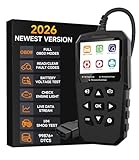
2. OBD2 Scanner,V880 Check Engine Light Code Reader for Cars and Trucks with Reset,Live Data,I/M Smog Test,OBD2 Scan Tool Diagnostic Scanner for All Vehicles After 1996,Work for DIY,Home Use,Mechanic
Overview:
The AERMOTOR V880 positions itself as a pro-grade diagnostic powerhouse, targeting both DIYers and mechanics with advanced smog and battery diagnostics. It emphasizes speed, ruggedness, and depth beyond basic code reading.
What Makes It Stand Out:
Its massive 99,876+ DTC library provides instant code explanations without internet. Unique features include EVAP leak tests (Mode 8), On-Board Component Tests (Mode 6), and a dedicated battery voltage tester. The 2.8" color screen displays 50+ live parameters with graphing/recording, while one-touch hotkeys streamline smog checks and code clearance.
Value for Money:
Priced competitively for its capabilities, it outperforms budget scanners with dealership-level diagnostics (e.g., Mode 6/8 tests). The lifetime firmware updates and PC-report printing add long-term value, making it a smarter investment than disposable code readers despite a higher upfront cost.
Strengths and Weaknesses:
Strengths: Exceptional DTC database; professional smog/battery diagnostics; color screen with data logging; rugged drop-resistant design; no apps/batteries needed.
Weaknesses: Bulky form factor; complex for absolute beginners; no ABS/SRS support mentioned; shorter cable than competitors.
Bottom Line:
A top-tier wired scanner for serious diagnostics and smog prep. Highly recommended for DIYers wanting pro features without subscription fees, though novices may need time to master advanced functions.
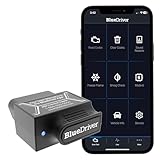
3. BlueDriver Bluetooth Pro OBDII Scan Tool for iPhone & Android - No Subscription Fee - OBD2 Car Scanner and Code Reader - Diagnose Check Engine, ABS, SRS, Airbag & 7000+ Issues on Vehicles 1996+
Overview:
BlueDriver revolutionizes diagnostics via a wireless Bluetooth sensor paired with a sophisticated mobile app, eliminating cables while supporting ABS, SRS, and 7,000+ vehicle-specific issues.
What Makes It Stand Out:
It uniquely scans beyond engine codes—clearing ABS, airbag, and TPMS faults typically reserved for dealerships. The app delivers unlimited repair reports with fix steps and repair videos, plus live data HUD projection. Zero subscription fees and seamless phone/tablet integration set it apart from app-reliant competitors.
Value for Money:
While pricier upfront, its comprehensive diagnostics (including safety systems) and free lifetime updates justify the cost. It replaces multiple tools, avoiding recurring fees common in wireless scanners. Ideal for owners of modern vehicles needing deep diagnostics without a laptop.
Strengths and Weaknesses:
Strengths: Wireless convenience; ABS/SRS/TPMS support; detailed repair guides; intuitive app; no subscriptions; HUD mode; broad vehicle coverage.
Weaknesses: Requires smartphone; limited real-time graphing depth vs. dedicated screens; app-dependent for all functions; weaker signal in some vehicles.
Bottom Line:
The premier wireless choice for holistic diagnostics and actionable fixes. Essential for tech-savvy DIYers tackling complex issues, though phone dependency may deter traditionalists.
4. AUTOPHIX 3210 OBD2 Scanner Bluetooth, Wireless Code Reader for Car - Check Engine Light & Battery - Easy DIY Car Diagnostic Scanner Tool for 1996+ Vehicles, No Subscription Fee for iPhone & Android

Overview:
AUTOPHIX 3210 merges wireless Bluetooth convenience with robust OBD2 functionality, targeting home users with smog prep and live engine monitoring via a dedicated app.
What Makes It Stand Out:
Its “smog check assistant” verifies I/M readiness and EVAP leaks at home, while the HUD mode projects live data (e.g., fuel trim, O2 sensors) onto windshields. Direct Google DTC lookup and broad compatibility (99% of 1996+ vehicles) simplify troubleshooting. The rugged design and no-subscription model enhance accessibility.
Value for Money:
Offers excellent value for DIYers seeking wireless smog prep and live data without recurring costs. Cheaper than BlueDriver but less comprehensive (no ABS/SRS), it hits a sweet spot for basic-to-intermediate diagnostics at a reasonable price.
Strengths and Weaknesses:
Strengths: True wireless freedom; user-friendly app with HUD; strong smog/EVAP diagnostics; Google DTC integration; durable build; no fees.
Weaknesses: Cannot clear ABS/SRS codes; app occasionally unstable; limited graphing options; weaker for pre-2000 European cars.
Bottom Line:
A reliable, affordable wireless scanner for smog checks and engine diagnostics. Best for casual users prioritizing check-engine resolution over advanced safety-system scanning.
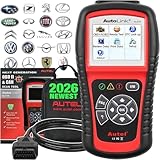
5. Autel AL519 OBD2 Scanner, 2026 Newer Professional Mechanic OBDII & CAN Car Diagnostic Code Reader Tool for Check Engine Light, One-Click Smog Check, DTCs Lookup, Upgraded Ver. of AL319/ MS309
Overview:
The Autel AL519 is a wired professional scanner focused on pre-2015 vehicles, upgrading its predecessors with full OBD2 mode support (1-10) and enhanced diagnostics for mechanics on a budget.
What Makes It Stand Out:
It executes all 10 OBD2 test modes—including freeze frame data, O2 monitor tests, and EVAP leak checks—plus patented one-click smog verification. Built-in DTC lookup eliminates guesswork, while graphing live data helps pinpoint sensor failures. Its compatibility with manufacturer-specific codes (P1/U1) is rare at this price.
Value for Money:
As a dedicated pre-2015 tool, it’s unmatched for cost-effective professional diagnostics. The expanded functionality over AL319/MS309 models justifies the upgrade, though its narrow year range limits broader appeal. A steal for mechanics servicing older fleets.
Strengths and Weaknesses:
Strengths: Full OBD2 mode coverage; detailed DTC definitions; freeze frame data; robust smog/EVAP tools; durable; no subscriptions.
Weaknesses: Only works on 2015 or older vehicles; no wireless capability; outdated for modern cars; screen less vibrant than V880.
Bottom Line:
The definitive wired scanner for pre-2015 vehicles. Highly recommended for mechanics specializing in older models, but irrelevant for owners of newer cars. Verify compatibility before purchasing.
6. OBD2 Bluetooth Scanner for iPhone iOS Android Windows Car Code Reader Enhanced Auto Diagnostic Scan Tool Odb2 OBDII Adapter Check Engine Light Live Data Reset Vehicle Performance Test Exclusive APP

Overview: This budget-friendly Bluetooth OBD2 scanner connects wirelessly to iOS, Android, or Windows devices, enabling basic diagnostics for most 1996+ gasoline and diesel vehicles. It focuses on essential engine code reading, clearing, and live data monitoring via popular free apps like Torque and OBD Fusion.
What Makes It Stand Out: Its standout feature is broad compatibility across major brands (Toyota, Ford, Honda, etc.) and support for all 9 OBDII protocols, including CAN-BUS. The ability to reset check engine lights, perform smog readiness checks, and access real-time sensor data (RPM, coolant temp, fuel trim) via free apps provides exceptional value for casual users.
Value for Money: Priced affordably, it outperforms basic cable scanners by eliminating wires and leveraging smartphone interfaces. While lacking advanced system coverage, it’s ideal for DIYers needing reliable code reading and resetting without recurring fees. Alternatives often charge for app access or omit protocol support.
Strengths and Weaknesses: Strengths: Wide vehicle compatibility; no subscription; robust protocol support; intuitive app integration. Weaknesses: No transmission/ABS/SRS diagnostics; limited to 12V vehicles (excludes hybrids/diesels); app setup can confuse beginners; no bidirectional control.
Bottom Line: A superb entry-level tool for clearing check engine lights and basic diagnostics. Perfect for cost-conscious owners needing reliable, no-frills functionality, but skip if you require advanced system coverage or hybrid support.
7. AUTOPHIX 3210 Pro OBD2 Scanner Bluetooth - Check All Engine Fault Codes for All 1996+ Vehicles - Easy DIY Car Scanner with Battery & Performance Test, No Subscription Fee for iPhone & Android
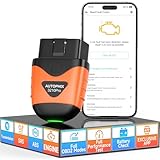
Overview: The AUTOPHIX 3210 Pro elevates basic OBD2 scanning with expanded system diagnostics and performance tracking. It wirelessly reads/clears engine codes while offering live data for transmission, ABS, and SRS systems on compatible vehicles, plus battery and acceleration testing via smartphone apps.
What Makes It Stand Out: It uniquely combines multi-system diagnostics (beyond engine-only tools) with practical performance metrics like 0-100kph timing and fuel consumption analysis. The customizable HUD dashboard and real-time battery monitoring provide actionable insights for both daily drivers and performance tuning.
Value for Money: Justifying its mid-range price, it replaces multiple tools with comprehensive diagnostics and no subscription fees. It outshines cheaper scanners by covering critical safety systems (ABS/SRS) and offering performance validation—features typically found in pricier pro tools.
Strengths and Weaknesses: Strengths: Transmission/ABS/SRS coverage; performance/battery tests; intuitive HUD customization; no recurring costs. Weaknesses: System compatibility varies by vehicle; lacks bidirectional control; iOS app integration less seamless than Android.
Bottom Line: An excellent upgrade for DIYers wanting deeper diagnostics and performance tracking. Highly recommended for those tired of basic code readers, though confirm your vehicle’s compatibility for advanced systems.
8. Thinkdiag2 All System Bidirectional OBD2 Diagnostic Scanner for iOS & Android, Bluetooth Scan Tool with CAN-FD Protocol, 15+ Reset Functions, ECU Code, Active Test, AutoVIN, 1 Year Update

Overview: Thinkdiag2 is a feature-packed, workshop-grade scanner targeting serious DIYers and small shops. It supports full-system diagnostics (engine, ABS, SRS, etc.) across 120+ brands, with bidirectional control, CAN-FD protocol, and 15+ reset functions via Bluetooth.
What Makes It Stand Out: Its bidirectional “active test” capability—allowing users to command components like windows or A/C clutches—is rare at this price. CAN-FD support for newer vehicles (e.g., 2019+ GM) and FCA AutoAuth for Chrysler/Dodge/Jeep models eliminate costly adapters. The extensive reset functions (EPB, TPMS, SAS) add significant utility.
Value for Money: Positioned as a prosumer tool, it delivers near-OEM functionality without subscriptions. The included 1-year updates and broad brand coverage justify its cost versus basic scanners, though VIN checks are mandatory for compatibility.
Strengths and Weaknesses: Strengths: Bidirectional control; CAN-FD readiness; 15+ reset services; FCA support; multilingual. Weaknesses: Requires pre-purchase VIN verification; reset functions vary by vehicle; no lifetime updates.
Bottom Line: A powerhouse for enthusiasts needing bidirectional testing and resets. Ideal for shops or advanced DIYers, but verify compatibility first—avoid if you drive newer hybrids or need lifetime updates.
9. TOPDON ArtiDiag600 Pro, OBD2 Scanner Diagnostic Tool - Automotive Scan Tool with Full Systems, Car Code Reader with 9 Reset Services for DIY & Professional, Lifetime Free Update

Overview: TOPDON’s ArtiDiag600 Pro is a professional-grade, Android-based scanner with full-system diagnostics, live data graphing, and ECU-level insights. It targets both pros and serious DIYers, featuring CAN-FD support, lifetime OTA updates, and rugged portability.
What Makes It Stand Out: Lifetime free Wi-Fi updates (no PC needed) and genuine CAN-FD compatibility future-proof this tool. The graphing sensor for live data and ECU part-number retrieval prevent costly repair errors. AutoVIN and 45-language support enhance global usability.
Value for Money: While premium-priced, its lifetime updates and pro features (like FCA AutoAuth) offer long-term savings versus subscription models. The rugged case and comprehensive reset services justify the cost for frequent users over cheaper alternatives.
Strengths and Weaknesses: Strengths: Lifetime OTA updates; CAN-FD/FCA support; live data graphing; ECU part lookup; durable case. Weaknesses: Higher upfront cost; steep learning curve for beginners; limited hybrid support.
Bottom Line: A top-tier investment for professionals or dedicated DIYers. Unbeatable for longevity and depth, but overkill for occasional check-engine light resets.
10. ANCEL AD310 OBD2 Scanner Guide for Beginners & Car Owners: How to Read & Clear Engine Codes, Diagnose Check Engine Lights on 1996+ OBD2 Vehicles

Overview: The ANCEL AD310 is a plug-and-play OBD2 code reader designed exclusively for beginners. With no smartphone dependency, it displays basic engine codes and live data directly on its built-in screen, simplifying check-engine light diagnostics for novice car owners.
What Makes It Stand Out: Its simplicity is the key differentiator—no apps, Bluetooth pairing, or complex menus. A clear monochrome screen shows trouble codes (with brief descriptions) and real-time parameters like RPM and coolant temperature, making it instantly accessible.
Value for Money: As one of the most affordable standalone scanners, it excels for basic code reading/clearing. Cheaper than app-based kits when factoring in no smartphone requirement, though it lacks advanced features found in similarly priced Bluetooth models.
Strengths and Weaknesses: Strengths: Zero setup; intuitive interface; portable; no subscriptions; durable. Weaknesses: No live data graphing; engine-only diagnostics; no code definitions beyond basic P-codes; no resets beyond MIL.
Bottom Line: The perfect “first scanner” for absolute beginners. If you only need to read/clear engine lights without tech hassles, it’s unbeatable—but skip if you want deeper diagnostics or smartphone integration.
Understanding the Core Functionality You Actually Need
Before diving into bells and whistles, it’s crucial to grasp the fundamental capabilities that form the bedrock of any useful OBD2 scanner. Many beginners get lured by flashy interfaces without ensuring the tool delivers on the basic diagnostic promises essential for meaningful DIY work.
Mastering the Essentials: Beyond Just Reading Codes
A scanner must reliably perform the foundational OBD2 tasks: reading and clearing generic (P0, P2, etc.) and often manufacturer-specific (P1, P3, etc.) diagnostic trouble codes (DTCs). However, true utility comes from interpreting those codes with clear definitions and potential causes, not just spitting out alphanumeric strings. Basic live data streaming for key parameters like engine RPM, coolant temperature, and fuel trim is non-negotiable for verifying repairs or spotting emerging issues before the check engine light even illuminates.
The Critical Role of Freeze Frame Data
When a fault occurs, your vehicle’s computer captures a snapshot of critical sensor readings at that exact moment – this is freeze frame data. Accessing this information is vital for diagnosing intermittent problems. A good scanner doesn’t just show the code; it provides this contextual snapshot, allowing you to see what conditions triggered the fault, which is often the difference between guessing and knowing the root cause.
Compatibility: It’s Not One-Size-Fits-All
While OBD2 is a standard, its implementation varies. Ensure the scanner explicitly supports the protocols used by your vehicle(s) (primarily CAN for 2008+ models, but older protocols like ISO9141 or J1850 matter for classics). Crucially, verify coverage for all relevant control modules – Engine, Transmission, ABS, Airbag, Body Control Module (BCM), etc. Many budget tools only access the engine computer, leaving critical systems blind.
Evaluating Advanced Diagnostic Capabilities
For DIYers tackling more than just simple code clearing, advanced features become paramount. These capabilities transform the scanner from a passive reader into an active diagnostic and repair tool, significantly expanding what you can confidently handle in your garage.
Bidirectional Controls: The Game-Changer
This is where DIY diagnostics leap forward. Bidirectional control allows the scanner to command vehicle systems, not just observe them. Think initiating component tests (like cycling the purge valve or running fuel pump diagnostics), performing adaptation resets (throttle body, idle air control), or executing procedures like oil light resets, TPMS relearn, or brake bleeding sequences. Without this, you’re limited to observation, not interaction.
Depth of Live Data: Seeing the Full Picture
Basic live data shows a handful of parameters. Advanced scanners provide access to dozens, even hundreds, of PIDs (Parameter IDs). Look for tools that allow you to customize data displays, graph multiple parameters simultaneously for trend analysis, and log data over time for diagnosing elusive glitches. Real-time graphing of oxygen sensor voltages or misfire counts is invaluable for pinpointing running issues.
Advanced Code Reading: Beyond Generic DTCs
While generic OBD2 codes are universal, modern vehicles generate extensive manufacturer-specific and enhanced codes stored in non-engine modules (ABS, SRS, HVAC, etc.). A truly capable scanner must access and interpret these module-specific codes, providing clear definitions and potential troubleshooting paths, not just raw numbers. This is essential for comprehensive diagnostics on post-2010 vehicles.
Software Ecosystem: The Hidden Powerhouse
The physical scanner is often just the hardware shell; the real intelligence and long-term value frequently reside in the accompanying software, whether on a dedicated screen or a smartphone/tablet app. This ecosystem dictates usability, update frequency, and feature evolution.
Intuitive Interface Design: Avoiding Frustration
A cluttered, confusing interface turns diagnostics into a chore. Prioritize tools with logical menu structures, clear labeling, responsive touchscreens (if applicable), and customizable dashboards. The learning curve should be manageable; you shouldn’t need an engineering degree to navigate basic functions. Read user reviews specifically mentioning usability for real-world insights.
Software Updates and Longevity
Vehicle software evolves constantly. Your scanner’s software must receive regular, ideally automatic, updates to support new vehicle models, protocols, and diagnostic procedures rolling out through 2026 and beyond. Check the manufacturer’s update policy and frequency – tools requiring paid subscription updates for core functionality can become expensive quickly. Free lifetime updates for core features are a major plus.
Mobile Integration vs. Standalone Units
Bluetooth/WiFi scanners paired with smartphone apps leverage the power of your existing device, offering larger screens, easier software updates via app stores, and potentially lower hardware costs. Dedicated standalone scanners often boast ruggedness, integrated screens that work in bright sunlight, and no reliance on your phone’s battery. Consider your workflow: do you want your hands free in the engine bay (standalone) or prefer leveraging your phone’s capabilities (mobile)?
Assessing Value Beyond the Sticker Price
The cheapest option is rarely the best investment for a tool you’ll rely on. True value encompasses durability, feature set, software support, and how well it aligns with your specific diagnostic ambitions, not just the initial purchase cost.
Build Quality and Durability: Surviving the Garage
Drops happen, grease gets everywhere, and garages can be tough environments. Assess the physical construction. Is the housing robust? Are the connectors (especially the OBD2 cable) strain-relieved and likely to withstand repeated plugging? A slightly heavier tool that survives years of use is far more valuable than a fragile one that breaks after six months.
Cable Length and Connector Design
A frustratingly short cable forces awkward contortions under the dash. Look for a minimum 3-foot cable, preferably longer. The OBD2 connector itself should be reasonably compact yet sturdy; bulky connectors can be impossible to fit in tight spaces near the port, especially under dashboards with limited clearance.
Warranty and Customer Support Reliability
When (not if) you encounter an issue, responsive and knowledgeable customer support is crucial. Research the brand’s reputation for honoring warranties and providing helpful technical assistance. A longer warranty period (2+ years) often signals manufacturer confidence in their product’s reliability. Check forums for real user experiences with support.
Future-Proofing Your Investment for 2026 and Beyond
Automotive technology doesn’t stand still. Choosing a scanner with an eye towards upcoming trends ensures your tool remains relevant as vehicles become more complex, integrated, and connected over the next few years.
Preparing for Increased Vehicle Complexity
Hybrids, plug-in hybrids, and full electrics are becoming mainstream. While basic OBD2 scanners focus on the internal combustion engine (ICE), future-proof tools are increasingly offering expanded coverage for high-voltage systems, battery management diagnostics, and regenerative braking analysis – even if basic access is limited for safety. Research a tool’s roadmap for EV/hybrid support.
Connectivity and Data Management
The ability to easily save scan logs, export data for deeper analysis (perhaps sharing with online communities), and potentially integrate with other diagnostic software platforms is becoming more important. Look for tools that facilitate data management, not just real-time viewing. Cloud backup features for scan histories could be valuable.
Adapting to New Communication Protocols
While CAN bus dominates now, newer vehicles are adopting faster protocols like CAN FD (Flexible Data Rate) and eventually Ethernet-based systems (like DoIP - Diagnostic over Internet Protocol). While full DoIP support might be overkill for DIYers soon, scanners with hardware capable of future firmware updates to handle emerging protocols offer significantly longer useful lifespans.
Frequently Asked Questions
Frequently Asked Questions
Can a basic OBD2 scanner work on my 1998 car? Most scanners cover OBD2-compliant vehicles (1996+ gasoline in the US), but older protocols (like ISO9141 or J1850 PWM/VPW) are required for pre-2008 models. Ensure the scanner explicitly lists compatibility with your vehicle’s specific protocol year.
What’s the biggest difference between a $30 scanner and a $200 one? The $30 tool typically only reads/clears basic engine codes. The $200+ tool usually offers access to multiple vehicle modules, advanced live data, bidirectional controls, better software, and support for manufacturer-specific codes – essential for meaningful diagnostics beyond the engine light.
Do I really need bidirectional controls for DIY work? If you only want to read the check engine light code occasionally, maybe not. But for resetting adaptations, performing component tests, or completing procedures like oil light resets, bidirectional control is indispensable for tackling common repairs yourself.
Are Bluetooth scanners as reliable as dedicated handheld units? Reliability depends more on build quality and software than the connection type. Bluetooth scanners leverage your phone’s screen and processing, offering convenience and easier updates, but require your phone to be charged and can have latency. Dedicated units work independently and are often more rugged.
How important are software updates for an OBD2 scanner? Critically important. New vehicle models, updated diagnostic procedures, and bug fixes require regular software updates. Choose a scanner with a clear, preferably free, update path for core functionality to ensure it remains useful for years as vehicle technology evolves.
Can any OBD2 scanner diagnose hybrid or electric vehicle problems? Basic OBD2 scanners primarily access the conventional engine management system. Diagnosing high-voltage hybrid/electric systems requires specialized tools meeting specific safety standards and manufacturer protocols, which are generally beyond the scope and capability of typical consumer-grade OBD2 scanners.
What does “full system scan” really mean? It means the scanner can communicate with and read diagnostic trouble codes from all major control modules in the vehicle (Engine, Transmission, ABS, Airbag, Body Control, etc.), not just the engine computer. Always verify module coverage for your specific vehicle.
Why do some scanners require a subscription after purchase? Some manufacturers lock advanced features (like bi-directional controls, enhanced code definitions, or module-specific procedures) behind ongoing subscription fees. Be wary of tools where core diagnostic functionality requires continuous payment beyond the initial hardware cost.
Is live data graphing really necessary for DIYers? It’s extremely valuable for diagnosing intermittent issues and understanding how systems interact. Watching sensor values trend over time (like oxygen sensor voltage or misfire counts) provides insights static data snapshots cannot, making complex diagnostics far more approachable.
How do I know if a scanner is compatible with my specific car model year? Always check the manufacturer’s official compatibility list before purchasing. Don’t rely solely on “works on all OBD2 vehicles” claims, as coverage depth for specific modules and features can vary drastically between model years and manufacturers. User reviews for your exact vehicle are also helpful.
