Table of Contents
Stepping into the world of automotive repair as a new mechanic is equal parts thrilling and overwhelming. That first time you connect a diagnostic tool to a customer’s stubborn vehicle, seeing rows of cryptic codes flash across the screen, it’s a powerful moment—you hold the key to unlocking the problem. But let’s be honest, that initial excitement can quickly turn to frustration if your diagnostic tool is slow, confusing, or simply can’t access the data you need. Choosing the right OBD2 scanner isn’t just about buying a gadget; it’s about investing in your confidence, efficiency, and professional reputation from day one. The wrong tool can make simple diagnostics feel like deciphering ancient hieroglyphics, costing you precious time and eroding client trust before you’ve even built it.
The market in 2026 is flooded with options, promising everything from basic code reading to full dealership-level functionality, often wrapped in sleek packaging and aggressive marketing. For someone just starting out, navigating this landscape feels like trying to find a specific socket in a cluttered toolbox—daunting and potentially expensive if you grab the wrong one. You need a scanner that grows with your skills, handles the common (and not-so-common) issues you’ll face daily in an independent shop or dealership bay, and doesn’t break the bank while you’re still building your toolkit. Forget the hype lists; this guide cuts through the noise to focus on the essential, future-proof features and practical considerations that truly matter for mechanics in your position. We’ll explore what makes a scanner genuinely valuable in the trenches, not just in a glossy brochure.
Top 10 OBD2 Scanners
Detailed Product Reviews
1. ANCEL AD310 Classic Enhanced Universal OBD II Scanner Car Engine Fault Code Reader CAN Diagnostic Scan Tool, Read and Clear Error Codes for 1996 or Newer OBD2 Protocol Vehicle (Black)
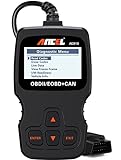
Overview: The ANCEL AD310 is a widely recommended entry-level OBD2 scanner designed for DIYers and mechanics to diagnose engine issues via the check engine light. It reads and clears fault codes, displays live data, and checks emissions readiness for most 1996+ vehicles.
What Makes It Stand Out: Its standout features include robust build quality with a thick 2.5-foot cable, compatibility with all OBD2 protocols (including CAN), and endorsement from automotive experts like Scotty Kilmer. The large, clear screen and intuitive button layout enhance usability without requiring batteries.
Value for Money: Priced affordably, it outperforms cheaper scanners that lack full protocol support. While not as advanced as premium tools, it covers essential diagnostics reliably, making it ideal for basic troubleshooting without overspending.
Strengths and Weaknesses: Strengths: Exceptional durability, fast code reading/clearing, broad vehicle compatibility, and no external power needed. Weaknesses: Limited to powertrain diagnostics (no ABS/airbag support) and lacks advanced data logging or graphing.
Bottom Line: A dependable, no-frills scanner perfect for occasional use. Highly recommended for beginners seeking a trustworthy tool to manage check engine lights and basic diagnostics cost-effectively.
2. MOTOPOWER MP69033 Car OBD2 Scanner Code Reader Engine Fault Scanner CAN Diagnostic Scan Tool for All OBD II Protocol Cars Since 1996, Yellow

Overview: The MOTOPOWER MP69033 is a compact, budget-friendly OBD2 scanner focused on core diagnostics for 1996+ vehicles. It reads/clears engine codes, displays live data, and checks emissions readiness via a straightforward interface.
What Makes It Stand Out: Its 2.8-inch adjustable LCD with white backlight ensures readability in any lighting, while support for six languages broadens accessibility. The integrated DTC lookup library and dedicated VIN/code query buttons streamline diagnostics.
Value for Money: An excellent value for basic needs, undercutting pricier models without sacrificing essential functions. However, it lacks advanced features like graphing, limiting long-term utility for tech-savvy users.
Strengths and Weaknesses: Strengths: Bright display, multi-language support, sturdy cable, and simple plug-and-play operation. Weaknesses: Cannot read ABS/airbag codes, no data logging, and limited protocol depth for newer complex vehicles.
Bottom Line: A solid, affordable choice for casual users needing reliable check engine light diagnostics. Avoid if you require non-powertrain system coverage or advanced data analysis.
3. FOXWELL NT301 OBD2 Scanner Live Data Professional Mechanic OBDII Diagnostic Code Reader Tool for Check Engine Light

Overview: The FOXWELL NT301 targets DIYers with live data graphing and emissions testing support. It reads/clears engine codes, checks I/M readiness, and retrieves VIN for compatible 1996+ OBD2 vehicles.
What Makes It Stand Out: Real-time sensor data graphing helps pinpoint intermittent issues, while color-coded LED indicators simplify emissions test readiness. Its focus on live data visualization sets it apart from basic code readers.
Value for Money: Mid-priced for its niche, justifying cost with diagnostic depth for engine issues. Falls short against tools offering ABS/SRS coverage, but excels for emission-focused diagnostics and trend analysis.
Strengths and Weaknesses: Strengths: Intuitive graphing, clear readiness indicators, broad protocol support, and durable design. Weaknesses: No ABS/airbag functionality, inconsistent compatibility with some Asian models, and no bi-directional controls.
Bottom Line: Ideal for users prioritizing live engine data and smog check prep. Recommended for enthusiasts needing more than code clearing but not full-system diagnostics.
4. VDIAGTOOL VD10 OBD2 Scanner Code Reader Car Diagnostic Tool Engine Fault Code Reader for Turn Off CEL with Freeze Frame/I/M Readiness for All OBDII Protocol Cars, OBD2 Scanner Diagnostic Tool
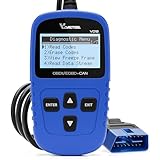
Overview: The VDIAGTOOL VD10 is a user-friendly scanner emphasizing instant DTC definitions and freeze frame analysis. It reads/clears codes, displays live data, and checks emissions readiness for 1996+ OBD2 vehicles.
What Makes It Stand Out: Its built-in database of 3,000+ DTC definitions shows fault descriptions directly on the TFT screen, eliminating online lookups. Freeze frame retrieval and I/M readiness checks enhance diagnostic precision for intermittent issues.
Value for Money: Offers exceptional utility for its price, especially for beginners. The integrated code library and color screen provide more value than monochrome competitors, though it lacks wireless capabilities.
Strengths and Weaknesses: Strengths: On-screen DTC explanations, freeze frame support, clear TFT display, and smog check readiness. Weaknesses: No ABS/SRS coverage, average build quality, and limited data logging depth.
Bottom Line: A top pick for novices seeking hassle-free diagnostics with immediate fault explanations. Best for those focused on engine issues and emissions testing without needing advanced system access.
5. BlueDriver Bluetooth Pro OBDII Scan Tool for iPhone & Android - No Subscription Fee - OBD2 Car Scanner and Code Reader - Diagnose Check Engine, ABS, SRS, Airbag & 7000+ Issues on Vehicles 1996+

Overview: BlueDriver is a premium wireless OBD2 scanner leveraging smartphone apps to deliver comprehensive diagnostics. It reads/clears codes across engine, ABS, SRS, and TPMS systems for 1996+ vehicles via Bluetooth.
What Makes It Stand Out: Unique coverage of non-powertrain systems (ABS/airbags) and unlimited repair reports with fix guidance set it apart. The wireless design, live data streaming, and repair video library mimic professional shop tools.
Value for Money: Highest upfront cost but justified by unmatched functionality. Eliminates subscription fees, saving long-term versus competitors. Ideal for serious DIYers needing depth without mechanic rates.
Strengths and Weaknesses: Strengths: Full-system diagnostics, actionable repair insights, wireless convenience, and robust app ecosystem. Weaknesses: Requires smartphone, app-dependent interface, and pricier than basic scanners.
Bottom Line: The ultimate DIY tool for thorough diagnostics. Highly recommended for tech-savvy owners seeking professional-grade insights across all critical systems. Worth the investment for complex troubleshooting.
6. FOXWELL Car Scanner NT604 Elite OBD2 Scanner ABS SRS Transmission, Check Engine Code Reader for Cars and Trucks, Diagnostic Scan Tool with SRS Airbag, Automotive Diagnostic Tool with Live Data
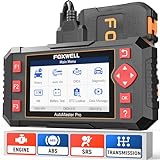
Overview:
The FOXWELL NT604 Elite is a 2026-updated OBD2 scanner targeting DIY car owners needing comprehensive diagnostics beyond basic engine codes. It covers ABS, SRS, transmission, and engine systems out of the box with no software downloads required, positioning itself as a versatile entry-level professional tool.
What Makes It Stand Out:
Its 5-in-1 capability (OBD2 plus ABS/SRS/transmission diagnostics) sets it apart from budget scanners limited to engine codes. The AUTOVIN feature rapidly retrieves vehicle data without manual VIN entry, and it supports 60+ global car makes. The included protective case—not just a flimsy bag—and lifetime free updates add exceptional value.
Value for Money:
Priced competitively against basic OBD2 scanners ($50–$100), it delivers significantly broader diagnostics. While pricier than engine-only tools, the ABS/SRS coverage justifies the cost for owners avoiding dealership fees. No hidden software fees or maintenance resets (a noted limitation) keep long-term costs low.
Strengths and Weaknesses:
Strengths: Comprehensive system coverage; intuitive out-of-box use; robust protective case; lifetime updates; extensive VIN compatibility.
Weaknesses: Cannot reset maintenance functions (e.g., oil lights); ABS/SRS diagnostics require physical repairs before clearing codes; no Bluetooth connectivity.
Bottom Line:
Ideal for owners seeking affordable, all-in-one diagnostics for critical systems. Its reliability and included case make it a top value pick despite lacking repair resets—highly recommended for proactive car health monitoring.
7. ANCEL AD410 Enhanced OBD2 Scanner, Vehicle Code Reader for Check Engine Light, Automotive OBD II Scanner Fault Diagnosis, OBDII Scan Tool for All OBDII Cars 1996+, Black/Yellow

Overview:
The ANCEL AD410 is a streamlined OBD2 scanner focused exclusively on engine diagnostics for 1996+ vehicles. Trusted by influencers like Scotty Kilmer, it emphasizes simplicity and core functionality for checking and clearing engine fault codes, with robust compatibility across global vehicle types.
What Makes It Stand Out:
Its 42,000+ built-in DTC library eliminates online code searches, while EVAP and O2 sensor testing enable precise emission-related diagnostics. The 2.4" QVGA color display and multilingual support (5 languages) enhance usability. Direct vehicle power (no battery needed) ensures reliability during use.
Value for Money:
As an engine-only scanner, it’s competitively priced against basic code readers. The advanced EVAP/O2 diagnostics typically found in costlier tools deliver standout value for emission-focused users. However, it lacks ABS/SRS support, limiting versatility versus premium models.
Strengths and Weaknesses:
Strengths: Extensive DTC library; clear color display; EVAP/O2 sensor testing; multilingual; no battery required.
Weaknesses: Engine-system only (no ABS/SRS/transmission); cannot clear codes without prior physical repair; basic UI lacks data visualization.
Bottom Line:
A superb choice for budget-conscious users needing accurate engine diagnostics and smog-test prep. Its emission-specific tools justify the price, but those requiring full-system coverage should consider alternatives.
8. Innova 5210 OBD2 Scanner & Engine Code Reader, Battery Tester, Live Data, Oil Reset, Car Diagnostic Tool for Most Vehicles, Bluetooth Compatible with America’s Top Car Repair App

Overview:
The Innova 5210 merges OBD2 diagnostics with battery testing and Bluetooth connectivity, targeting DIYers who want actionable repair guidance. It covers engine/ABS codes (varies by model) and integrates with the free RepairSolutions2 app, leveraging real mechanic data for verified fixes.
What Makes It Stand Out:
Unique battery/alternator testing prevents unexpected breakdowns, while oil reset and I/M readiness features streamline maintenance. The RepairSolutions2 app—backed by 4M users—provides step-by-step repair guides and cost estimates without subscriptions, a rare advantage in this segment.
Value for Money:
Priced mid-range, it outperforms basic scanners with its battery diagnostics and app ecosystem. The free, ad-free RepairSolutions2 app (vs. competitors’ paid tiers) offers exceptional long-term savings. Coverage varies for ABS, but engine diagnostics are reliably broad.
Strengths and Weaknesses:
Strengths: Battery health monitoring; oil reset functionality; no-subscription repair app; live data for smog tests; broad vehicle compatibility.
Weaknesses: ABS coverage inconsistent; Bluetooth pairing occasionally finicky; no SRS/transmission diagnostics.
Bottom Line:
Highly recommended for owners prioritizing maintenance and repair guidance. The battery testing and free app add immense practical value, making it a smart investment for proactive vehicle care.
9. OBD2 Scanner Diagnostic Tool, Check Engine Code Reader OBD2 Scanner with Reset, Mode 6, Mode 8 & I/M Readiness, Auto Check Engine Light Car Diagnostic Scan Tool for All OBDII Car Since 1996

Overview:
This compact OBD2 scanner delivers essential diagnostics for 1996+ vehicles, emphasizing code reading/clearing and data printing. Its standout feature is a massive 35,901-DTC library—tripling typical budget scanners—and support for advanced modes (6/8) critical for professional diagnostics.
What Makes It Stand Out:
The extensive DTC database enables precise fault identification without internet searches, while data printing (via computer) empowers users to verify repair shop claims. Lifetime free updates and 10-language support enhance accessibility, and its pocket-sized design ensures portability.
Value for Money:
As an affordable wired scanner, it punches above its weight with Mode 6/8 access and printing—features often reserved for pricier tools. The canvas bag and Type-C cable add convenience, though it lacks Bluetooth or battery testing found in competitors.
Strengths and Weaknesses:
Strengths: Industry-leading DTC library; data printing; compact design; lifetime updates; multi-language support.
Weaknesses: No Bluetooth/wireless capability; basic display; inconsistent ABS coverage; requires computer for printing.
Bottom Line:
A cost-effective workhorse for users needing reliable code reading, clearing, and printable diagnostics. Best suited for budget-focused DIYers who prioritize DTC depth over connectivity.
10. OBD2 Scanner Reader Bluetooth Wireless Auto Diagnostic Scan Tool for iOS & Android for Performance Test Bluetooth 5.4 Car Check Engine Car Code Reader, Clear Error Code Live Data Reset Exclusive APP

Overview:
The V011 is a Bluetooth 5.4 wireless scanner connecting to smartphones via a dedicated app, emphasizing real-time data visualization and broad compatibility. It targets tech-savvy users who prefer mobile interfaces over handheld devices for comprehensive vehicle health checks.
What Makes It Stand Out:
Bluetooth 5.4 ensures fast, stable connections, while the app transforms complex data into intuitive charts (e.g., coolant temp, voltage). It covers 96% of 1996+ vehicles globally and supports 9 diagnostic protocols, including live data streaming and VIN retrieval—all controllable via an easy-to-navigate mobile interface.
Value for Money:
Wireless convenience at a mid-tier price justifies the cost versus wired tools. The app’s visual diagnostics and repair guides reduce misinterpretation risks, potentially saving costly mechanic visits. However, Apple users must follow specific pairing steps, slightly complicating setup.
Strengths and Weaknesses:
Strengths: Seamless Bluetooth 5.4; visual data charts; broad vehicle compatibility; multilingual app; real-time performance tracking.
Weaknesses: Requires phone/app dependency; inconsistent Apple pairing; no battery testing; cannot clear codes pre-repair.
Bottom Line:
Perfect for smartphone-reliant users seeking user-friendly, wireless diagnostics. Its visual analytics and wide compatibility make it a top wireless choice, though wired alternatives may suit those avoiding app reliance.
Understanding Your Core Diagnostic Needs
Before diving into specs and prices, it’s crucial to honestly assess the diagnostic tasks you’ll handle most frequently. This clarity prevents overspending on unnecessary bells and whistles or, worse, buying a tool that leaves you stranded when a complex issue arises.
Defining Basic vs. Advanced Functionality
Basic code readers primarily retrieve and clear standard OBD2 trouble codes (like P0300 for a random misfire). While tempting for their low cost, they often lack the depth needed for modern vehicles. Advanced scanners go much further, offering live data streaming (real-time sensor readings), bi-directional control (activating components like fuel pumps), and access to manufacturer-specific codes beyond the generic OBD2 set. For a new mechanic aiming for versatility, leaning towards advanced functionality is rarely a mistake—it handles everything a basic tool does and prepares you for the intricacies of today’s cars.
The Critical Role of Vehicle Coverage
Modern vehicles, especially those from 2015 onwards, rely heavily on complex proprietary systems (like advanced driver assistance or hybrid/electric powertrains). A scanner’s value is directly tied to its ability to communicate effectively with a wide range of makes, models, and model years. Look for tools explicitly stating comprehensive coverage for domestic, Asian, and European vehicles prevalent in your region. Don’t assume “OBD2 compatible” means universal; deeper system access requires robust, regularly updated software databases. Check if the manufacturer provides clear details on supported systems (ABS, SRS, transmission, etc.) for non-powertrain modules.
Why Real-Time Data is Non-Negotiable
Reading a stored code is just the starting point. Diagnosing the root cause requires observing how sensors and actuators behave while the engine is running or systems are active. Real-time data streaming—displaying parameters like oxygen sensor voltage, fuel trim, throttle position, and coolant temperature graphically or numerically—is indispensable. It transforms you from someone who replaces parts based on codes to a true diagnostician who understands system interactions. Ensure the scanner presents this data clearly and allows you to monitor multiple parameters simultaneously for efficient analysis.
Evaluating User Experience and Interface
A scanner loaded with features is useless if its interface is clunky, confusing, or slow. In a busy shop, every second counts, and a frustrating tool adds unnecessary stress to an already demanding job.
Touchscreen vs. Physical Buttons: Finding Your Flow
Touchscreens dominate the market, offering intuitive navigation similar to smartphones. However, consider the workshop environment: greasy fingers, gloves, rain, or bright sunlight can make touchscreens unreliable or unusable. Scanners with well-placed physical buttons and knobs often provide faster, more precise control, especially when wearing gloves or working in less-than-ideal conditions. Evaluate which input method aligns better with your workflow and typical shop conditions—don’t just choose the shiniest screen.
Screen Readability in Real-World Conditions
You won’t always be diagnosing in a perfectly lit bay. A high-resolution screen is essential, but so is brightness, anti-glare coating, and viewing angle. Test screens under various lighting if possible, or read reviews from other technicians. A display that washes out in daylight or becomes unreadable from an angle significantly hampers efficiency and accuracy. Prioritize clarity and durability over sheer size; a smaller, sharp, rugged screen often outperforms a large, glossy one that smudges easily.
Software Intuitiveness and Learning Curve
The software driving the scanner is arguably more important than the hardware. Menus should be logically organized, terminology should be clear (with helpful explanations for obscure codes), and common functions should be easy to access. A steep learning curve wastes valuable billable hours. Look for scanners known for user-friendly interfaces, perhaps with customizable home screens or quick-access menus for your most-used functions. Consider if the manufacturer offers robust tutorials, video guides, or responsive customer support specifically for beginners.
Connectivity, Updates, and Long-Term Value
Your scanner isn’t a static tool; it needs to evolve alongside ever-changing vehicle technology. Ignoring connectivity and update capabilities is a fast track to obsolescence.
Wired vs. Wireless: Weighing Convenience and Reliability
Bluetooth or Wi-Fi connectivity (often paired with a smartphone/tablet app) offers freedom of movement around the vehicle, which is convenient for accessing tight engine bays or observing components while operating controls. However, wireless connections can suffer from interference, latency, or pairing issues—critical flaws when you need reliable data instantly. Wired connections (USB or proprietary cable) are generally more stable and faster, ensuring uninterrupted data flow during critical tests. Assess your shop’s layout and typical diagnostic scenarios; many professionals opt for tools offering both connectivity options for maximum flexibility.
The Lifeline of Regular, Hassle-Free Updates
Vehicle manufacturers constantly update communication protocols and introduce new systems. A scanner that can’t be updated becomes outdated within months, potentially failing to diagnose newer models or misinterpreting data. Investigate the update process: Is it free for life, or is there a subscription fee? How frequently are updates released? Is the process simple (e.g., Wi-Fi update with one click) or cumbersome (requiring a computer and manual file transfer)? Prioritize scanners with transparent, affordable, and effortless update policies—it’s a major factor in long-term value.
Data Management and Reporting Capabilities
Documenting diagnostics is crucial for shop records, customer communication, and your own learning. Can the scanner easily save live data logs, screenshots of trouble codes, or full diagnostic reports? Can these be exported via email, cloud storage, or USB in a professional format? Efficient reporting saves time on admin tasks and builds customer trust by providing clear evidence of findings. For the new mechanic building their reputation, this feature is surprisingly impactful.
Budgeting Smartly for Your Career Stage
Starting out means tight budgets, but skimping on your core diagnostic tool is a false economy. Strategic investment pays dividends in saved time, avoided comebacks, and professional credibility.
Beyond the Sticker Price: Identifying True Costs
The initial purchase price is just the beginning. Factor in potential costs for mandatory software subscriptions, update fees, necessary cables or adapters for specific vehicles, and potential downtime if the tool fails. A scanner costing $50 more upfront but offering free lifetime updates might be significantly cheaper over 3-5 years than a cheaper model with expensive annual subscriptions. Calculate the total estimated cost of ownership, not just the box price.
When “Good Enough” Isn’t Good Enough
It’s tempting to buy the absolute cheapest option to get started. However, a scanner that only reads basic codes, freezes frequently, or lacks critical live data will severely limit your diagnostic capability. You’ll spend more time cross-referencing codes online, making educated guesses, or worse—misdiagnosing and replacing good parts. This erodes customer trust and your own confidence. Invest in a tool that meets your minimum viable requirements for the vehicles you expect to see, even if it means saving a bit longer initially.
Future-Proofing Your Investment
The automotive landscape is shifting rapidly with electrification and advanced driver assistance systems (ADAS). While a basic OBD2 scanner won’t handle full EV diagnostics, choosing a more advanced platform now might offer upgrade paths or modules for hybrid systems or basic ADAS calibration support later. Research the manufacturer’s roadmap. Does the company actively develop for emerging technologies? Investing in a scalable platform can extend the useful life of your core tool, delaying the need for a complete, costly replacement down the line.
Building Confidence Through Practical Application
Mastering your scanner transforms it from a box of wires into an extension of your diagnostic skillset. It’s not just about the tool, but how you integrate it into your workflow.
Starting Simple and Scaling Complexity
Don’t try to use every advanced feature on day one. Begin by mastering reliable code retrieval, clearing, and basic live data (like RPM, coolant temp, fuel trim). As you gain confidence, gradually incorporate bi-directional tests, system resets, and deeper module access. Focus on understanding what the data means in the context of common symptoms you encounter. Building competence step-by-step prevents overwhelm and builds genuine expertise.
Leveraging Built-In Resources for Learning
Many modern scanners include helpful resources directly within the software: code definitions with probable causes, wiring diagrams, component location guides, and even step-by-step test procedures. Treat these as your first-line reference before diving into external databases. Learning to efficiently navigate and utilize these integrated resources saves immense time and accelerates your diagnostic learning curve. It’s like having a senior tech subtly guiding you through each step.
Developing a Diagnostic Mindset, Not Just a Tool User
The best scanner is merely a data source. Your real value comes from interpreting that data correctly. Use the scanner to test hypotheses, not just generate codes. For example, if you see a P0171 (System Too Lean), don’t just replace the oxygen sensor; use live data to check fuel trims, MAF readings, and scan for vacuum leaks while monitoring the data stream. Cultivate the habit of asking “What would cause this specific pattern of data?” This critical thinking, powered by your scanner, is what separates technicians from parts changers.
Frequently Asked Questions
Frequently Asked Questions
What’s a realistic budget for a capable scanner as a new mechanic? Focus on tools offering advanced functionality (live data, bi-directional control) with solid vehicle coverage. Entry-level professional tools often start around $200-$400, providing significant value without breaking the bank. Avoid sub-$100 “code readers” as they lack necessary depth.
Can I reliably use a smartphone app with a cheap Bluetooth adapter? While convenient for basic code checks, phone apps paired with ultra-low-cost adapters often suffer from unreliable connections, limited data access, poor software, and lack critical features like bi-directional tests. They are generally insufficient for professional diagnostics in a shop setting.
How often do I realistically need software updates? Vehicle systems evolve constantly. Aim for scanners offering updates at least quarterly, ideally monthly. Outdated software quickly becomes unable to diagnose newer models or interpret newer code sets correctly, rendering your tool less effective.
Is Bluetooth connectivity reliable enough for serious diagnostics? Bluetooth can be reliable with modern Class 1 adapters (offering longer range/stability), but wired connections remain the gold standard for critical, real-time data streaming where latency or dropouts are unacceptable. Consider a tool offering both options.
What’s the single most important feature I shouldn’t compromise on? Comprehensive live data streaming with clear, customizable displays is non-negotiable. Diagnosing root causes requires observing real-time system behavior, not just reading stored codes.
Do I need a scanner that handles hybrid or electric vehicles right now? For most general repair shops in 2026, full EV diagnostics are still specialized. However, ensure your scanner has robust coverage for common hybrid systems (like Toyota/Lexus, Ford hybrids) as these are increasingly prevalent. Full BEV (Battery Electric Vehicle) capability is usually a separate, significant investment.
How do I verify a scanner’s actual vehicle coverage before buying? Look beyond marketing claims. Seek out detailed compatibility lists on the manufacturer’s website, check forums (like iATN) for technician experiences with specific makes/models, and see if the vendor offers a return policy if it doesn’t cover a critical vehicle you work on.
Are there significant differences between scanners for domestic vs. import vehicles? Yes. Some scanners excel with specific brands (e.g., GM, Ford, Toyota) due to deeper access to proprietary protocols. If you anticipate working heavily on one manufacturer, prioritize tools known for strength in that area, but ensure broad coverage for general work.
Can a good scanner help me avoid comebacks? Absolutely. Thorough diagnostics using live data and bi-directional tests to confirm the root cause before part replacement drastically reduces the chance of misdiagnosis and unnecessary part swaps, directly cutting down on costly return visits.
Is technical support important for a new mechanic? Immensely. When you’re stuck on a complex diagnosis or software glitch, responsive, knowledgeable support from the manufacturer can save hours of frustration. Prioritize companies known for strong technician-focused support, not just automated systems.
See Also
- Stop Wasting Money on Mechanics with the 10 Best Universal OBD2 Scanners This Year
- Top 10 Best OBD2 Scanners for DIY Mechanics in 2026
- Top 10 Best OBD2 Scanners for Home Mechanics in 2026
- 10 Premium Full-System OBD2 Scanners for Professional Mechanics (Worth the Investment)
- The 10 Best Wireless OBD2 Scanners for Home Mechanics in 2026