Table of Contents
Ever stared at a wall of gleaming chrome tools in the hardware store, overwhelmed by the sheer variety of ratchet and socket sets staring back at you? You know you need the right set to tackle that weekend project – maybe finally fixing the stubborn suspension bolt on your classic car or assembling that new bike rack. But the choices are dizzying: drive sizes, finishes, case styles, and a confusing array of socket types. Picking the wrong set isn’t just frustrating; it can mean rounding over critical fasteners, straining your wrist on tough jobs, or worse, causing damage that turns a simple fix into a costly repair. Getting this foundational tool right is the difference between a satisfying victory and a greasy, expensive headache.
Think of your ratchet and socket set as the cornerstone of your DIY garage arsenal. It’s not just another tool; it’s the workhorse you’ll reach for more than any other, day in and day out. A well-chosen set empowers you to work efficiently, safely, and with confidence, turning intimidating projects into achievable tasks. Conversely, a poorly selected set becomes an obstacle, slowing you down and potentially compromising your work. Understanding the key factors that separate a truly capable set from a frustrating paperweight is essential knowledge. Forget chasing fleeting “best of” lists – let’s dive deep into the real features and considerations that matter most for your specific needs and budget, ensuring your next socket set purchase is a long-term investment in your mechanical success.
Top 10 Ratchet and Socket Sets
Detailed Product Reviews
1. CRAFTSMAN 230 Pcs Mechanics Tool Set, Socket Wrench Set, Car Tool Kit with VERSASTACK Toolbox, SAE and Metric,1/4 in, 3/8 in, and 1/2 Drive, Short and Long Arm Hex Keys (CMMT45306)

Overview:
This extensive 230-piece CRAFTSMAN mechanics tool set targets both serious DIYers and professionals, offering comprehensive coverage for automotive repair. It includes SAE and metric sockets, wrenches, hex keys, specialty bits, and ratchets across 1/4", 3/8", and 1/2" drives, all housed in a rugged VERSASTACK-compatible 3-drawer toolbox.
What Makes It Stand Out:
The standout feature is the low-profile, 72-tooth ratchet enabling a tight 5-degree swing arc for confined spaces. The VERSASTACK toolbox system offers exceptional modularity—drawers lock securely, nest for portability, and stack with other compatible units. The inclusion of both short and long-arm hex keys, plus a full lifetime warranty, solidifies its professional appeal.
Value for Money:
Priced competitively for its scale and CRAFTSMAN’s reputation, this set delivers exceptional value. The lifetime warranty and robust toolbox justify a higher initial cost compared to budget kits, offering long-term reliability that cheaper alternatives can’t match for frequent or professional use.
Strengths and Weaknesses:
Strengths: Lifetime warranty; highly versatile VERSASTACK storage; low-profile ratchets; comprehensive bit/specialty tool inclusion; durable construction.
Weaknesses: Heavy toolbox may hinder portability; some users report drawer sliders occasionally sticking; overkill for casual home use.
Bottom Line:
An investment-grade kit for mechanics and dedicated enthusiasts. Its modularity, warranty, and access-focused ratchets make it a top-tier choice well worth the price for serious automotive work.
2. Egofine 46 Pieces 1/4 inch Drive Socket Ratchet Wrench Set, with Bit Socket Set Metric and Extension Bar for Auto Repairing and Household, with Storage Case

Overview:
The Egofine 46-piece set is a compact, specialized solution focused on precision tasks in tight automotive or household spaces. Built around a 1/4" drive system, it emphasizes bit sockets and extensions for electronics, engine detailing, and light repairs, packaged in a portable case.
What Makes It Stand Out:
Reinforced CR-V steel sockets with thickened walls eliminate burst risks common in thin-walled kits. Its extensive bit-socket assortment (21 pieces covering Phillips, Torx, HEX, and flatheads) paired with multiple extension types—including a 6" flexible extension—makes it ideal for intricate work where standard sockets won’t fit.
Value for Money:
At an affordable price point, it excels as a supplementary kit. While not a full mechanic’s solution, its niche focus on bits and extensions offers superior value for specific tasks compared to generic mini-sets, especially for DIYers tackling modern vehicles with complex fasteners.
Strengths and Weaknesses:
Strengths: Burst-resistant socket design; exceptional bit/extension variety; compact portability; mirror-chrome corrosion resistance; versatile for electronics/auto detailing.
Weaknesses: Limited to 1/4" drive (no larger fasteners); lacks standard wrenches or deep sockets; case durability is modest for heavy workshop use.
Bottom Line:
A highly capable specialty kit for detailed automotive or home projects. Perfect as a secondary set for precision work, offering excellent value within its focused scope.
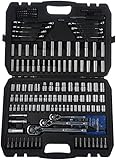
3. Amazon Basics 201-Piece Mechanic’s Socket Tool Set With Case, SAE and Metric Sizes, Chrome-Vanadium Steel, Portable
Overview:
Amazon Basics delivers a no-frills, budget-friendly 201-piece socket set covering essential SAE and metric sizes across 1/4", 3/8", and 1/2" drives. Designed for basic home automotive maintenance and general repairs, it prioritizes accessibility and core functionality in a portable case.
What Makes It Stand Out:
Its standout trait is sheer accessibility—it’s one of the most affordable comprehensive sets available. The full chrome-vanadium steel construction and polished finish provide reliable rust resistance for the price, while the organized case ensures tool portability for casual users.
Value for Money:
Exceptional value for infrequent DIYers. At a fraction of premium brands’ cost, it covers fundamental needs without fluff. Though not built for daily professional use, its durability outperforms ultra-cheap knockoffs, making it ideal for home garages or emergency car kits.
Strengths and Weaknesses:
Strengths: Very low cost; covers essential sizes/drives; decent corrosion resistance; portable case; good entry-level durability.
Weaknesses: Ratchets lack fine-tooth precision (e.g., 30+ teeth); sockets may round fasteners under high torque; case latches less robust than premium kits.
Bottom Line:
The go-to budget set for beginners or occasional users. It won’t last decades under heavy use, but for its price, it reliably handles basic repairs and offers unbeatable entry-point value.
4. DEWALT Mechanics Tools Kit and Socket Set, 1/4" & 3/8" Drive, SAE, 108-Piece (DWMT73801)

Overview:
DEWALT’s 108-piece kit is a streamlined professional-grade set focused on efficiency for automotive technicians. It covers SAE sizes with 1/4" and 3/8" drive tools, emphasizing precision, ergonomics, and quick identification for fast-paced workshops.
What Makes It Stand Out:
DirectTorque Technology in sockets prevents fastener rounding—a critical advantage for high-torque tasks. The 72-tooth ratchets enable 5-degree arc swings for tight spaces, while knurled grips and anti-slip vinyl bit drivers enhance control. Hand-stamped size markings ensure instant tool recognition.
Value for Money:
Priced mid-range, it offers pro-level features without the bulk of larger sets. The focus on socket technology and ergonomics justifies the cost for working mechanics, outperforming budget kits in longevity and performance while avoiding the premium of full 192-piece systems.
Strengths and Weaknesses:
Strengths: DirectTorque sockets reduce slippage; ergonomic anti-slip grips; excellent ratchet maneuverability; durable chrome-vanadium build; intuitive markings.
Weaknesses: Metric sizes excluded (SAE only); no 1/2" drive tools; limited specialty bits compared to larger kits.
Bottom Line:
A precision-focused workhorse for SAE-centric automotive tasks. Highly recommended for mechanics prioritizing reliability and speed in standard repairs, though metric users should consider alternatives.
5. DEWALT 192 Pcs. Mechanics Tool Set, 1/2, 1/4, 3/8 Socket Set, SAE and Metric Socket Wrench Set, Hard Shell Tool Box (DWMT75049)

Overview:
DEWALT’s flagship 192-piece set is a professional’s dream, combining SAE and metric coverage across all three drive sizes (1/4", 3/8", 1/2") with premium features. Housed in a hard-shell toolbox, it’s engineered for heavy-duty automotive and industrial use.
What Makes It Stand Out:
DirectTorque sockets and 6-point designs prevent fastener rounding far better than standard 12-point kits, ensuring maximum torque transfer. The inclusion of deep sockets, extensions, and hex keys across all drives provides unmatched versatility. Mirror-polished chrome-vanadium steel guarantees corrosion resistance and a pro finish.
Value for Money:
While premium-priced, its comprehensive tool count, superior socket technology, and DEWALT’s rugged build quality deliver outstanding long-term value. It outperforms similarly sized kits in critical areas like socket integrity, making it cost-effective for daily professional use.
Strengths and Weaknesses:
Strengths: Full SAE/metric coverage; industry-leading DirectTorque sockets; 6-point socket grip; hard-shell case durability; extensive accessory range.
Weaknesses: Heavy weight reduces portability; premium price may deter casual users; case interior organization could be more intuitive.
Bottom Line:
The definitive professional socket set for mechanics demanding reliability and versatility. Its advanced socket tech and thorough tool assortment justify the investment, earning a strong recommendation for workshops.
6. Egofine 34 Pieces 3/8 inch Drive Socket Ratchet Wrench Set, with Socket Set Metric/SAE and Extension Bar for Auto Repairing and Household, with Storage Case

Overview: The Egofine 34-piece socket set delivers a versatile hybrid solution for DIYers and home mechanics, combining both metric and SAE (imperial) sockets in 1/4" and 3/8" drives. Crafted from heat-treated chrome vanadium steel, it targets durability for automotive, household, and light repair tasks, housed in a wear-resistant storage case.
What Makes It Stand Out: Its balanced 34-piece count covers essential sizes comprehensively (5mm-19mm metric; 5/32"-7/8" SAE), while the 6-point flank drive prevents fastener rounding. Laser-etched size markings ensure instant identification, and the included 3" extension bar plus quick-release ratchet enhances access to tight spaces—key for car repairs.
Value for Money: Priced affordably, it outperforms basic kits with its dual-system coverage and robust Cr-V construction. Though not impact-rated, it’s ideal for routine maintenance, offering better longevity than ultra-cheap sets. The included case and adapters add practical value, making it a sensible upgrade for beginners.
Strengths and Weaknesses:
Strengths: Excellent size range for common jobs; corrosion-resistant chrome polish; intuitive laser markings; compact case; dual-drive adapters.
Weaknesses: Lacks deep sockets; 3/8" drive only (no 1/2" for heavy duty); case durability uncertain long-term.
Bottom Line: A reliable, well-rounded starter kit for home and auto use. Its size versatility and thoughtful design justify the cost for casual users, though professionals may need deeper sockets or impact resistance.
7. EPAuto 40 Pieces 1/4-Inch & 3/8-Inch Drive Socket Set with 72 Tooth Reversible Ratchet

Overview: EPAuto’s 40-piece set bridges 1/4" and 3/8" drives with a high-tooth-count ratchet, targeting precision work in tight automotive or household settings. Made from hardened Cr-V steel with mirror-chrome plating, it emphasizes corrosion resistance and ease of use for budget-conscious DIYers.
What Makes It Stand Out: The 72-tooth reversible ratchet enables a mere 5° swing arc for confined spaces—superior maneuverability over standard 24-tooth ratchets. Both metric and SAE sizes are included, and the mirror finish enhances rust prevention. Made in Taiwan, it signals consistent manufacturing quality.
Value for Money: At its price point, the 40-piece count and dual-drive versatility are strong. While lacking deep sockets or impact rating, the 72-tooth ratchet adds significant functional value over cheaper kits. The sturdy plastic case ensures tool longevity, making it ideal for occasional users seeking reliability.
Strengths and Weaknesses:
Strengths: Exceptional ratchet maneuverability; corrosion-resistant plating; clear size markings; comprehensive size range; durable case.
Weaknesses: No deep sockets; case lacks compartment customization; limited for heavy-duty/auto-shop use.
Bottom Line: An outstanding value for hobbyists needing precision in tight spots. The ratchet’s performance elevates it above entry-level sets, though pros may desire more robust sockets.
8. WORKPRO 39-Piece Drive Socket Set 1/4’‘3/8’’, CR-V Metric and Imperial Sockets with Quick-Release Ratchet Wrench, Compact Sockets Set for Car Repair
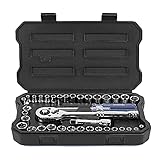
Overview: WORKPRO’s 39-piece set prioritizes user convenience with a quick-release ratchet and compact storage, targeting mobile mechanics and DIYers. Its Cr-V construction and dual-drive (1/4"/3/8") sockets cover metric/imperial needs for car repairs and home projects.
What Makes It Stand Out: The signature silver-button quick-release mechanism allows socket swaps in one press—a standout for efficiency. Laser-etched size markings prevent confusion, and the ultra-compact case (24x13x5 cm) fits easily in toolboxes or cars. Includes practical extras like a blue flettner and adapter.
Value for Money: Competitively priced for 39 pieces, the quick-release ratchet justifies a slight premium over similar kits. The durable Cr-V build and thoughtful extras (e.g., driver square) enhance longevity, making it cost-effective for frequent users who value speed and portability.
Strengths and Weaknesses:
Strengths: Revolutionary quick-release ratchet; highly portable case; clear dual-system markings; corrosion-resistant finish; useful accessories.
Weaknesses: Case lacks foam organization; no 1/2" drive options; limited deep sockets.
Bottom Line: A top pick for mechanics prioritizing speed and mobility. The quick-release feature transforms workflow efficiency, offering exceptional value for active users despite minor organizational flaws.
9. 3/8’’ Drive Impact Socket Set - 50-Piece Shallow & Deep Socket Set Metric and Standard Full with Universal Joint, Extension Bar, 1/2 to 3/8 Reducer, Hex Shank Socket Adapter, Ratchet Handle

Overview: This heavy-duty 50-piece impact socket set is engineered for demanding auto repair, featuring heat-treated Cr-V steel with black phosphoric acid coating. It includes shallow/deep sockets in both systems, plus critical impact-compatible accessories like a universal joint and reducer.
What Makes It Stand Out: Explicitly impact-rated (unlike many sets), the black oxide finish resists chipping during high-torque use. The 6-point design prevents rounding, while high-contrast laser markings enable instant size ID. Comprehensive extras—like a 1/2" to 3/8" reducer and hex shank adapter—add serious versatility for professional garages.
Value for Money: Premium-priced but justified by impact durability and 50-piece completeness. Includes niche items (universal joint, dual extension bars) absent in cheaper kits, eliminating separate purchases. Beats specialized sets on cost-per-tool for mechanics needing one robust solution.
Strengths and Weaknesses:
Strengths: True impact resistance; extensive socket depth/size variety; superior grip design; highly organized case; professional-grade accessories.
Weaknesses: Heavier than standard sets; overkill for light DIY; case less portable than compact kits.
Bottom Line: The definitive choice for auto professionals. Its impact resilience and thorough accessory suite deliver unmatched value for serious repair work, though casual users may find it excessive.
10. CRAFTSMAN Mechanics Tool Set 105 Pcs, Standard (SAE) and Metric with Case , 1/4 and 3/8 Inch Drive Car Tool Kit( CMMT12123)

Overview: CRAFTSMAN’s 105-piece mega-set is a garage staple, blending SAE/metric sockets with a low-profile ratchet in a blow-molded case. Designed for comprehensive automotive repairs, it leverages the brand’s legacy in durability and corrosion resistance.
What Makes It Stand Out: The standout 72-tooth ratchet features a 25% slimmer head for unprecedented access in cramped engine bays. Full-polish chrome ensures rust resistance, while the rugged case organizes 105 tools—including specialty bits—making it a true all-in-one solution for enthusiasts.
Value for Money: Higher initial cost is offset by the sheer volume of high-quality tools. The slim ratchet alone justifies the price for modern car repairs, and CRAFTSMAN’s lifetime warranty adds long-term security. Beats fragmented purchases in cost-per-tool for dedicated mechanics.
Strengths and Weaknesses:
Strengths: Industry-leading slim-profile ratchet; extensive 105-piece assortment; lifetime warranty; exceptional chrome durability; robust case.
Weaknesses: Bulky case for storage; some small bits less critical for auto work; premium pricing.
Bottom Line: A worthy investment for serious mechanics. The slim ratchet and comprehensive tool count deliver professional-grade performance, making it the most future-proof option despite the higher cost.
Understanding Your Core Needs
Defining Your Typical Projects
Before examining tool specs, honestly assess the vehicles and projects you usually tackle. Are you primarily working on modern Japanese imports (heavily metric), classic American muscle cars (often SAE/inch), or a mix? Do your projects involve delicate electronics work requiring small, precise tools, or heavy chassis work demanding high torque? Knowing whether you regularly encounter 10mm bolts or 1/2" lug nuts fundamentally shapes the drive sizes and socket depths you’ll need most. Weekend trailer builders have vastly different requirements than someone restoring a vintage motorcycle engine.
Assessing Frequency and Intensity of Use
How often will you actually use this set? A casual user changing oil or replacing wipers needs something fundamentally different from someone rebuilding an engine monthly. Consider the physical demands: will you be applying moderate hand torque, or wrestling with rusted suspension components where leverage and tool strength become critical? High-frequency or high-torque users demand superior heat treatment, robust ratchet mechanisms, and ergonomic handles, while occasional users might prioritize compactness and lower cost without sacrificing essential safety.
Realistic Budget Considerations
Tool quality spans a massive price range. It’s crucial to establish a realistic budget that balances immediate cost against long-term value. Extremely cheap sets often use brittle metals, weak ratchets, and poorly finished sockets that strip fasteners – a false economy. Conversely, professional-grade sets offer exceptional durability but might be overkill for infrequent use. Focus on finding the best quality within your budget that meets your core project needs. Investing slightly more in key features (like a solid ratchet mechanism) often pays dividends in longevity and performance.
Decoding Drive Sizes and Standards
The Metric vs. SAE Dilemma
This is the most fundamental choice. Modern vehicles globally predominantly use metric fasteners (millimeters), while older American vehicles and some specific components (like lug nuts on certain trucks) often use SAE (inch/fractional). Many DIYers working on mixed fleets need a set covering both standards. Evaluate your primary vehicle(s) – if they’re post-1980 imports or modern domestics, metric is essential. If working on classics pre-1980, SAE is vital. Dual-standard sets exist but are larger and more expensive; assess if you truly need both regularly.
Essential Drive Sizes Explained
Drive size refers to the square drive on the ratchet that accepts the socket. The three most common for DIY are:
- 1/4-inch Drive: Ideal for small, tight spaces and low-torque applications (electronics, interior trim, small engine work). Sockets are small and compact.
- 3/8-inch Drive: The absolute sweet spot for most general automotive DIY. Offers the best balance of access, torque capacity, and socket size range. Handles the vast majority of under-hood and suspension tasks.
- 1/2-inch Drive: Built for high-torque applications (suspension components, axle nuts, large engine bolts). Larger, heavier, and less maneuverable in tight spots, but necessary for the toughest jobs. Many serious DIYers eventually need one, but it’s often not the first set purchased.
Why Drive Size Compatibility Matters
Crucially, sockets are only compatible with their specific drive size. A 1/4" drive socket won’t fit a 3/8" ratchet. Your primary drive size selection dictates which sockets you can use. Most enthusiasts build a core set around 3/8" drive and add 1/4" and 1/2" drives later as specific needs arise, often sharing the same socket sets via adapters (though adapters slightly reduce strength and access).
Evaluating Critical Component Quality
Ratchet Mechanism: The Heart of the Tool
This is arguably the most important feature. A smooth, reliable ratchet with a high tooth count (more teeth = smaller arc swing needed to move the fastener) makes work in tight spaces possible. Look for mechanisms with at least 72 teeth (a 5-degree swing) for serious automotive work; 90+ teeth (4-degree) is even better. Avoid ratchets with stiff action, excessive backlash (slop when reversing direction), or mechanisms that feel like they might strip under moderate load. A comfortable, secure reverse lever placement is also key.
Socket Material and Heat Treatment
Quality sockets are made from chrome vanadium steel (Cr-V), properly heat-treated for strength and durability. Avoid sets listing only “chrome molybdenum” or vague terms without mentioning heat treatment. Proper heat treatment ensures the socket walls are strong enough to resist rounding off fasteners under torque, especially on critical or rusted bolts. Cheap sockets often have thin walls and inadequate hardening, leading to stripped fasteners – a major safety hazard. Look for mentions of specific heat treatment processes.
Finish and Corrosion Resistance
A bright, smooth chrome finish isn’t just for looks; it provides essential corrosion resistance against shop grime, moisture, and solvents. A poor finish chips easily, exposing the base metal to rust. High-quality chrome plating is thick and adheres well. Consider sets with a matte black oxide finish if you frequently work in environments where magnetized sockets (attracting metal shavings) are problematic, though chrome generally offers better corrosion resistance overall.
Essential Features for Functionality and Safety
Socket Depth Variations: Standard vs. Deep
Standard sockets are shorter and offer better access in confined spaces where a deep socket won’t fit. Deep sockets (typically twice the height of standard) are essential for reaching fasteners on long studs, like lug nuts or certain suspension components. A versatile set usually includes a mix of both. Six-point sockets (hex) are strongly preferred over 12-point for high-torque applications as they grip the fastener tighter with less chance of rounding corners, especially on worn or rusted bolts.
Wobble Extensions and Flex Head Ratchets
Wobble extensions (often called “universal” extensions, though not truly universal) allow the ratchet to operate at a slight angle to the socket, providing crucial access when the ratchet can’t be positioned perfectly straight. A flex-head ratchet (where the head pivots) serves a similar purpose, offering significant versatility in tight engine bays. These features dramatically expand the usability of your set without needing numerous specialized, expensive tools.
Critical Safety Considerations
Never use an impact tool (air or electric) with standard hand-tool sockets and ratchets unless they are explicitly rated for impact. Impact tools generate massive, sudden torque that standard sockets can shatter under, creating dangerous shrapnel. Impact-rated sockets are made from tougher, less brittle alloys (often with a different finish like black oxide) and have thicker walls. If you plan to use an impact wrench even occasionally, ensure your sockets are impact-rated. Also, always inspect sockets for cracks or wall deformation before use.
Practical Buying Considerations
Case Quality and Organization
A well-designed case is vital for tool longevity and efficiency. Flimsy plastic cases crack, exposing tools to damage. Look for durable, impact-resistant plastic with secure latches and a comfortable carry handle. The internal layout is equally important: foam or plastic trays should hold each tool securely in place, preventing rattling and damage during transport. Clear labeling of socket sizes within the case saves immense time searching. Avoid sets where sockets just rattle loosely in a bin.
Set Completeness vs. Future Expandability
Consider what’s actually included. Does the set cover the essential sizes you need for common vehicle repairs (e.g., 8mm-19mm metric, 5/16"-1/2" SAE)? Are standard and deep sockets included for key sizes? Does it include necessary accessories like extensions, universal joints, and a drive adapter? While a “complete” set is appealing, prioritize core sockets and a quality ratchet. Many quality brands offer individual sockets and accessories later, allowing you to build a customized set over time as specific needs arise, which is often more cost-effective than a massive, generic set with redundant sizes.
Warranties and Brand Reputation
A strong, no-questions-asked lifetime warranty is a hallmark of a confident manufacturer and often reflects better quality control. While DIYers might not use it frequently, it’s invaluable if a critical component fails unexpectedly. Research brand reputation beyond marketing – look for independent reviews from experienced mechanics or serious DIYers discussing real-world durability and support. Established brands with a long history in professional tools often translate to more reliable DIY offerings.
Optimizing Your Workspace and Technique
Ergonomics for Reduced Fatigue
Working under a car or in a cramped engine bay is physically demanding. A ratchet with a comfortable, non-slip grip (textured rubber or contoured plastic) significantly reduces hand strain during prolonged use. Consider the handle length – longer handles offer more leverage for tough bolts but are harder to maneuver in tight spots. Shorter “stubby” ratchets are invaluable for confined areas but sacrifice leverage. Having both types can be optimal, but a standard-length ratchet with a comfortable grip is the essential foundation.
Proper Torque Application Techniques
Applying force incorrectly is a common cause of stripped fasteners and tool damage. Always pull towards you on the ratchet handle if possible; this gives you better control and leverage than pushing away. Apply steady, controlled force – avoid sudden jerks. For stubborn fasteners, use a breaker bar (a long, non-ratcheting bar) first to break the bolt loose, then switch to the ratchet for the remainder. Ensure the socket is fully seated and squared on the fastener before applying torque to prevent slippage and rounding.
Essential Maintenance for Longevity
Treat your socket set well, and it will serve you for decades. After each use, wipe tools clean of grease and grime with a rag. For heavily soiled tools, use a parts cleaner (avoid harsh solvents that can damage grips) and dry thoroughly. Periodically apply a light coat of tool oil to sockets and ratchet mechanisms to prevent rust, especially in humid environments. Store the set clean and dry in its case. Inspect sockets regularly for cracks, especially around the drive hole, and discard any damaged tools immediately – safety is paramount.
Building Your Ideal Set Over Time
Starting Smart for Beginners
If you’re just starting your toolkit, prioritize a high-quality 3/8-inch drive ratchet and a core set of 6-point metric sockets (covering common sizes like 10mm, 13mm, 14mm, 15mm, 17mm, 19mm) in both standard and deep where practical. Add a few essential extensions (3", 6") and a universal joint. This focused approach gives you the versatility to handle 80% of common DIY tasks without overspending on rarely used sizes. A good 3/8" drive set is your most versatile and frequently used foundation.
Strategic Additions for Specialized Work
As your projects become more complex, identify specific gaps. Need to tackle lug nuts? Add a 1/2" drive ratchet and key impact-rated deep sockets (17mm, 19mm, 21mm are common). Working on small engines or electronics? A dedicated 1/4" drive set with small sockets and a stubby ratchet becomes invaluable. Need more reach? Longer extensions or a flexible-head ratchet. Building incrementally ensures you only buy what you truly need, maximizing the value of each purchase.
The Value of Quality Adapters
High-quality drive adapters (e.g., 3/8" drive to 1/4" socket, 3/8" to 1/2" drive) allow you to leverage your primary socket collection across multiple ratchet drives. This is often more economical than buying duplicate sockets for each drive size. However, always use adapters close to the ratchet, not between the socket and adapter, to maximize strength and reduce the chance of shearing. Ensure adapters are made from solid steel, not hollow or poorly machined pieces.
Frequently Asked Questions
Frequently Asked Questions
What’s the single most important feature to check when buying a ratchet? The smoothness and tooth count of the ratcheting mechanism are paramount. A high-tooth-count (72+ teeth) mechanism with minimal backlash allows you to work in extremely tight spaces where you can’t swing a standard ratchet far, making many frustrating jobs possible.
Are cheap socket sets from big-box stores worth the risk? Generally, no, for anything beyond very light, infrequent use. Extremely cheap sets often use inferior steel and poor heat treatment, leading to sockets that easily crack, strip fasteners, or break under moderate torque – a significant safety hazard and potential source of costly damage.
Do I really need both metric and SAE sockets? It depends entirely on your vehicles. Modern cars (post-1980s) are overwhelmingly metric. Older American vehicles (pre-1980s) often use SAE. If you work on a mix, a dual-standard set or separate core sets are necessary. Check your most common project’s fasteners first.
Is a 1/2-inch drive set essential for DIY mechanics? Not for beginners, but likely eventually. Start with a solid 3/8" drive set for most tasks. Add a 1/2" drive ratchet and key impact-rated sockets when you regularly encounter very high-torque applications like axle nuts, large suspension bolts, or stubborn lug nuts.
Why are six-point sockets better than twelve-point? Six-point sockets grip the flat sides of a hex bolt/nut, distributing force more evenly and significantly reducing the chance of rounding off the corners, especially on rusted, corroded, or already damaged fasteners. Twelve-point offers faster engagement but is more prone to slippage under high torque.
Can I use standard sockets with an impact wrench? Absolutely not, unless the sockets are explicitly labeled as “Impact Rated.” Standard hand-tool sockets can shatter catastrophically under the sudden, high torque of an impact tool, sending dangerous metal shrapnel flying. Always use impact-rated sockets with impact wrenches.
How can I prevent rounding off bolts and nuts? Ensure the socket is the correct size and fully seated. Use six-point sockets for high-torque jobs. Apply steady, controlled force – avoid jerking. Pull the ratchet towards you for better control. If a fastener is stubborn, use a breaker bar first to break it loose before using the ratchet.
What’s the best way to organize sockets for quick access? A high-quality case with a well-designed, labeled foam or plastic tray that holds each socket securely in its own spot is essential. Avoid loose bins. Group sizes logically (e.g., metric together, SAE together, standard vs. deep). Clear labeling saves immense time during projects.
How often should I maintain my socket set? Wipe tools clean after every use. Perform a deeper clean (with appropriate cleaner, dry thoroughly) if heavily soiled. Apply a light coat of tool oil periodically, especially before long storage or in humid climates. Inspect sockets for cracks before critical use.
Is a lifetime warranty really important for hand tools? Yes, it’s a strong indicator of manufacturer confidence in their product’s durability and quality control. While you might never need to use it, a reputable lifetime warranty (especially “no receipt” or “no questions asked”) provides significant peace of mind and reflects a commitment to standing behind the tool, which often correlates with better initial quality.
See Also
- The 10 Ultimate Best Hand Tool Socket Sets for DIY Mechanics in 2026
- 10 Best Socket Sets with Ratchet for Mobile Mechanics in 2026
- The 10 Best Ratchet and Socket Sets for Professional Mechanics in 2026
- 10 Best Budget Socket Sets Under $150 for Weekend Mechanics
- 10 Affordable Ratchet and Socket Sets That Don’t Sacrifice Quality in 2026