Table of Contents
Every handyman knows the frustration of starting a simple repair only to discover their tools can’t handle the job. Whether you’re tightening a loose bolt on your kid’s bike or tackling that mysterious rattle in your engine bay, having the right socket set with a quality ratchet transforms those “quick five-minute fixes” from pipe dreams into reality. The modern marketplace offers more options than ever, but not all socket sets are created equal when it comes to rapid, efficient repairs.
As we look toward 2026, evolving manufacturing techniques and smarter engineering are raising the bar for what constitutes a truly dependable socket set. Understanding what separates a mediocre collection from one that’ll serve you for decades isn’t just about counting pieces—it’s about recognizing the subtle features that make real-world difference when you’re lying on your back under a sink or working in tight engine compartments. This guide breaks down everything you need to know to make an informed decision without getting lost in marketing hype or technical jargon.
Top 10 Socket Sets with Ratchet
Detailed Product Reviews
1. Egofine 46 Pieces 1/4 inch Drive Socket Ratchet Wrench Set, with Bit Socket Set Metric and Extension Bar for Auto Repairing and Household, with Storage Case

Overview:
The Egofine 46-piece 1/4-inch drive socket set positions itself as a safety-focused toolkit for DIY enthusiasts. Constructed from chrome vanadium steel with reinforced walls, this set fundamentally addresses the common failure point of bursting sockets under torque. The collection includes 13 metric sockets ranging from 4-14mm and 21 bit sockets covering slotted, Phillips, Pozidriv, hex, and Torx configurations, plus multiple extension bars for hard-to-reach areas.
What Makes It Stand Out:
The thickened inner wall design truly distinguishes this set from budget carbon steel alternatives. This engineering choice virtually eliminates the risk of socket failure during high-torque applications, providing peace of mind for automotive and household repairs. The comprehensive extension package—including a 6-inch flexible extension and universal joint—excels at accessing confined spaces that standard sets cannot reach.
Value for Money:
While priced slightly above entry-level carbon steel sets, the CR-V construction and reinforced design justify the premium. You’re essentially investing in durability and safety rather than replacing cracked sockets. For the home mechanic who values reliability over rock-bottom pricing, this represents solid mid-tier value that pays dividends in longevity.
Strengths and Weaknesses:
Strengths include superior CR-V steel construction, innovative reinforced walls, excellent accessory variety, and comprehensive bit selection. Weaknesses are the limited 1/4-inch drive size restricting heavy-duty applications and metric-only sockets excluding SAE fasteners common in older vehicles and some household items.
Bottom Line:
This set serves DIYers who prioritize tool integrity and safety. The reinforced design offers genuine engineering value, making it ideal for automotive maintenance and home improvement where reliability matters more than maximum torque capacity.
2. nkpyln 46PCS 1/4 Inches Ratchet Socket Wrench Set, Metric Socket Ratchet Wrenches Set, Ratcheting Wrench Tool Sets for Men, Premium Small Car Tool Kit for Automotive, Household Maintenance and Repairs

Overview:
The nkpyln 46-piece ratchet set delivers a complete metric-focused toolkit in a compact package. Built from heat-treated carbon steel, this set targets homeowners and casual automotive tinkerers with 13 metric sockets (4-14mm) and 21 bit sockets for various fastener types. The quick-release ratchet handle and multiple extension options provide decent versatility for light to medium-duty tasks around the house or garage.
What Makes It Stand Out:
The quick-release button mechanism simplifies bit changes significantly, reducing frustration during multi-fastener projects. The contoured handle design demonstrates thoughtful ergonomics for extended use, while the flexible extension and universal joint effectively reach awkward angles in engine bays or furniture assemblies where standard straight extensions fail.
Value for Money:
This set competes aggressively in the budget-to-mid-range segment. Carbon steel construction keeps costs down while remaining adequate for occasional use. For apartment dwellers or weekend DIY warriors, it offers comprehensive functionality without the premium price of professional-grade tools, making it an accessible entry point.
Strengths and Weaknesses:
Strengths include the convenient quick-release ratchet, comfortable grip, organized storage case, and good accessory variety. Weaknesses involve carbon steel’s inferior durability compared to chrome vanadium, limited 1/4-inch drive capacity for heavier tasks, and lack of SAE sockets for mixed fastener environments.
Bottom Line:
An excellent entry-level choice for those starting their tool collection. The quick-release feature and thoughtful ergonomics make it user-friendly, though serious mechanics will eventually crave tougher materials. Perfect for household maintenance and light automotive work.
3. AMM 123Pcs Impact socket set,1/4”3/8”Drive Deep&Shallow Socket wrench set,6 Point Metric&Standard Full 5/32"-3/4",4-22mm with Spark plug sockets,72T Ratchet handle,Screwdrivers,for Automotive&Home

Overview:
The AMM 123-piece impact socket set represents a serious step up for automotive enthusiasts and professional mechanics. Combining 1/4-inch and 3/8-inch drive sizes with both shallow and deep impact sockets in metric and SAE, this comprehensive kit tackles virtually any fastener. The set includes specialized items like spark plug sockets and a 72-tooth ratchet for tight spaces, plus 40 bits for added versatility.
What Makes It Stand Out:
Impact-rated construction using drop-forged chrome vanadium steel distinguishes this from standard chrome sets, allowing safe use with impact guns. The six-point hex design prevents fastener rounding under extreme torque. Laser-engraved markings ensure permanent size identification, while the inclusion of both measurement systems eliminates the need for separate sets, saving both money and space.
Value for Money:
Despite a higher price point, the 123-piece count and impact capability deliver exceptional value. You’re essentially getting three sets in one—metric, SAE, and impact-rated—justifying the investment for serious users who would otherwise purchase separate specialized kits. The spark plug sockets add automotive-specific value.
Strengths and Weaknesses:
Strengths include impact-rated durability, dual drive sizes, comprehensive size range, spark plug sockets, and permanent laser markings. Weaknesses are the bulky case for mobile mechanics and potential overkill for casual homeowners who rarely need impact capability and may never use the full range.
Bottom Line:
A professional-grade investment that eliminates the need for multiple socket sets. Ideal for automotive technicians and serious DIYers who demand impact-ready tools and comprehensive fastener coverage in one organized package.
4. CRAFTSMAN 230 Pcs Mechanics Tool Set, Socket Wrench Set, Car Tool Kit with VERSASTACK Toolbox, SAE and Metric,1/4 in, 3/8 in, and 1/2 Drive, Short and Long Arm Hex Keys (CMMT45306)

Overview:
The CRAFTSMAN 230-piece mechanics tool set defines professional-grade comprehensiveness. Featuring 1/4-inch, 3/8-inch, and 1/2-inch drives, this kit includes 91 sockets, 21 wrenches, 44 hex keys, and 66 specialty bits. The VERSASTACK three-drawer toolbox provides modular storage with one-handed operation, while the low-profile 72-tooth ratchets access extremely tight spaces with a 5-degree swing arc.
What Makes It Stand Out:
The full lifetime warranty represents unmatched confidence in durability. The VERSASTACK system’s modular compatibility allows integration with other CRAFTSMAN storage, creating a customizable workshop solution. Three drive sizes with both deep and shallow sockets cover everything from electronics to heavy machinery, while the one-handed locking dial demonstrates professional workflow thinking.
Value for Money:
Premium pricing reflects professional-tier quality and sheer volume. For serious mechanics or those building a lifelong tool collection, the warranty alone justifies the cost. Casual users may find better value in smaller sets, but professionals will appreciate not outgrowing this kit, making it a true lifetime investment.
Strengths and Weaknesses:
Strengths include massive selection, lifetime warranty, three drive sizes, VERSASTACK compatibility, and low-profile ratchets. Weaknesses involve high cost and substantial storage footprint unsuitable for occasional users or compact spaces. The specialization may overwhelm beginners.
Bottom Line:
The ultimate investment for professional mechanics and serious enthusiasts. While overkill for basic home use, the lifetime warranty and comprehensive coverage make it the last tool set many buyers will ever need. The VERSASTACK system adds long-term organizational value.
5. 3/8’’ Drive Impact Socket Set - 50-Piece Shallow & Deep Socket Set Metric and Standard Full with Universal Joint, Extension Bar, 1/2 to 3/8 Reducer, Hex Shank Socket Adapter, Ratchet Handle

Overview:
This 50-piece 3/8-inch drive impact socket set delivers specialized performance for impact wrench users. Forged from heat-treated chrome vanadium steel with black phosphoric acid coating, the set includes both shallow and deep sockets in metric (8-22mm) and SAE (5/16-3/4-inch) sizes. The six-point design maximizes torque transfer while preventing fastener damage, making it ideal for high-torque applications in automotive and mechanical work.
What Makes It Stand Out:
The corrosion-resistant black phosphate finish outperforms chrome plating in harsh garage environments. High-contrast laser-printed markings remain visible despite oil and grime. The included 1/2-inch to 3/8-inch reducer adapts larger impact guns, while the hex shank socket adapter expands utility to drill drivers, enhancing versatility beyond standard socket sets.
Value for Money:
Positioned as a mid-range impact-specific set, it offers excellent value for users who already own a primary socket set. The focused selection avoids paying for redundant 1/4-inch bits while providing robust impact capability where it matters most, saving money over buying individual impact sockets separately.
Strengths and Weaknesses:
Strengths include impact-rated construction, excellent corrosion resistance, clear markings, and smart accessory inclusion. Weaknesses are the single drive size limiting versatility and absence of precision 1/4-inch components for lighter tasks, requiring a supplementary set for complete coverage.
Bottom Line:
A purpose-built supplement for impact wrench owners. Ideal for automotive suspension work and heavy equipment maintenance where impact power dominates. Not a standalone solution, but an excellent specialized addition to a well-rounded tool collection.
6. Amazon Basics 201-Piece Mechanic’s Socket Tool Set With Case, SAE and Metric Sizes, Chrome-Vanadium Steel, Portable
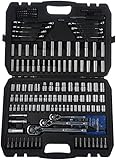
Overview: The Amazon Basics 201-Piece Mechanic’s Socket Set delivers comprehensive coverage for DIY enthusiasts and homeowners tackling automotive or household repairs. This expansive collection includes 1/4, 3/8, and 1/2-inch drive sockets in both SAE and metric measurements, alongside hex keys and screwdriver bits. The chrome-vanadium steel construction ensures adequate strength for occasional use, while the full polished-chrome finish provides corrosion resistance. Everything stores in a blow-molded case for portability.
What Makes It Stand Out: This set’s sheer volume stands out—201 pieces cover virtually any common fastener you’ll encounter. The inclusion of three drive sizes (1/4, 3/8, and 1/2-inch) in one affordable package is unusual and convenient. Amazon Basics’ straightforward warranty and reliable customer service add peace of mind. The laser-etched size markings remain legible over time, and the spring-loaded socket holders keep pieces secure during transport.
Value for Money: At its typical price point, this set offers exceptional value at roughly 30-40 cents per piece. Comparable sets from Craftsman or Kobalt cost 50-100% more for similar piece counts. While professional-grade sets from Snap-on offer superior steel and tolerances, they cost 10-20x more. For DIYers who use tools weekly rather than daily, this represents an unbeatable entry point.
Strengths and Weaknesses: Strengths include comprehensive size coverage, three drive sizes, corrosion-resistant finish, and excellent organization. The 201 pieces eliminate frequent trips to the hardware store. Weaknesses involve occasional quality control issues with socket tolerances, ratchet mechanisms that feel less refined than premium brands, and a case that may crack with heavy use. The tools suit occasional to moderate use but won’t withstand daily professional punishment.
Bottom Line: This set suits DIYers, homeowners, and entry-level mechanics perfectly. It provides professional-level variety at amateur-friendly prices. While not built for daily commercial use, it handles weekend projects and emergency repairs admirably. Buy this if you want maximum coverage on a budget; avoid if you’re a professional technician demanding daily reliability.
7. WORKPRO 39-Piece Drive Socket Set 1/4’‘3/8’’, CR-V Metric and Imperial Sockets with Quick-Release Ratchet Wrench, Compact Sockets Set for Car Repair
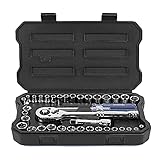
Overview: The WORKPRO 39-Piece Socket Set targets automotive enthusiasts and DIY mechanics seeking quality without bulk. This compact kit combines 1/4-inch and 3/8-inch drive sockets in both metric and imperial sizes. The chrome-vanadium steel construction undergoes heat treatment for enhanced performance, while the quick-release ratchet mechanism simplifies socket changes. The 24 x 13 x 5 cm plastic case keeps everything organized for garage or trunk storage.
What Makes It Stand Out: The standout feature is the 3/8-inch quick-release ratchet with its silver button mechanism—socket changes become one-handed operations. Laser-etched graduations on each socket provide instant size identification, saving frustration in dimly lit engine bays. The compact case footprint maximizes storage efficiency without sacrificing essential sizes. The inclusion of a conductive square and blue flettner adds versatility for electrical and precision work.
Value for Money: Priced competitively in the mid-range segment, this set delivers professional-grade features at hobbyist prices. The CR-V steel and heat treatment match quality found in sets costing twice as much. While you sacrifice piece count compared to larger sets, you gain portability and refined ergonomics. For car-specific repairs, this focused approach prevents paying for rarely-used sizes.
Strengths and Weaknesses: Strengths include the smooth quick-release ratchet, clear laser markings, heat-treated CR-V steel, and space-saving design. The set covers the most frequently needed sizes for automotive work. Weaknesses involve the limited 39-piece count, absence of 1/2-inch drive for heavy-duty applications, and a plastic case that feels less robust than metal alternatives. Some users report the ratchet’s fine-tooth mechanism requires more handle swing than 72-tooth models.
Bottom Line: This set excels for automotive DIYers prioritizing quality over quantity. The quick-release ratchet and compact storage make it ideal for mobile repairs and cramped workspaces. Choose this for focused car maintenance; skip it if you need comprehensive coverage for varied projects. It’s a specialized tool kit that performs its intended role admirably.
8. 1/2" Drive Socket Wrench Set: 25-Piece SAE & Metric Impact Socket Ratchet Wrench Tool Set Socket Assortment with Storage Box for Repair Mechanic Garage

Overview: This 25-Piece 1/2-inch Drive Impact Socket Set serves mechanics and DIYers requiring heavy-duty fastening capability. Designed for impact wrench use, the set includes SAE sizes from 7/16-inch to 1-inch and metric from 13mm to 24mm. The drop-forged, heat-treated chrome-vanadium steel withstands high torque applications, while the black phosphate finish resists corrosion. A durable storage case keeps the 25 pieces organized for garage or mobile use.
What Makes It Stand Out: The impact-ready construction distinguishes this set from standard chrome sockets that can shatter under impact loads. The black phosphate coating provides superior grip and corrosion resistance compared to polished chrome. Precision chamfered openings guide sockets onto fasteners easily, reducing rounding. The laser-marked specifications remain visible even after years of oily, dirty use. This set focuses specifically on mid-to-large fasteners often found in automotive suspension and heavy equipment.
Value for Money: For dedicated impact wrench users, this set offers excellent value—purchasing impact sockets individually costs 3-5x more per socket. While limited to 25 pieces, every size serves a practical purpose. Professional-grade impact sets from Mac or Snap-on cost 10-15x more. For occasional impact use, this bridges the gap between cheap carbon steel and premium professional tools effectively.
Strengths and Weaknesses: Strengths include true impact-rated construction, comprehensive mid-to-large size range, durable black phosphate finish, and precision engineering that prevents fastener rounding. The 1/2-inch drive handles serious torque. Weaknesses involve the limited 25-piece count, lack of smaller sizes below 13mm/7/16-inch, absence of deep sockets for recessed bolts, and a basic storage case. The set requires a separate 1/4-inch and 3/8-inch collection for complete coverage.
Bottom Line: Buy this if you own an impact wrench and regularly work on automotive suspension, heavy equipment, or large assemblies. The impact-rated construction ensures safety and durability. Avoid if you need a general-purpose socket set—this is a specialized tool for high-torque applications. It’s a quality addition to an existing tool collection rather than a standalone solution.
9. EPAuto 40 Pieces 1/4-Inch & 3/8-Inch Drive Socket Set with 72 Tooth Reversible Ratchet

Overview: The EPAuto 40-Piece Socket Set combines Taiwanese manufacturing quality with modern design features for home mechanics and DIY enthusiasts. This kit includes 1/4-inch and 3/8-inch drive sockets in both metric and SAE sizes, constructed from hardened chrome-vanadium steel alloy. The centerpiece is a 72-tooth reversible ratchet requiring only 5-degree swing arc. The mirror-polished, chrome-plated finish ensures corrosion resistance, while the sturdy plastic case provides organized storage.
What Makes It Stand Out: The 72-tooth ratchet mechanism stands out as a premium feature rarely found in this price class—it operates smoothly in tight spaces where larger swing arcs won’t fit. Taiwanese manufacturing typically indicates better quality control than mainland China production. The mirror-polished finish looks professional and cleans easily. The set balances size variety with portability, covering most common fasteners without unnecessary bulk.
Value for Money: This set punches above its weight class, offering 72-tooth ratchet refinement at budget-tool pricing. Comparable sets from Craftsman or Husky with similar tooth counts cost 30-50% more. While not professional-grade, the quality exceeds typical discount store offerings. For DIYers using tools monthly rather than daily, this provides an excellent quality-to-price ratio.
Strengths and Weaknesses: Strengths include the smooth 72-tooth ratchet, Taiwanese manufacturing quality, mirror-polished corrosion resistance, and thoughtful size selection. The 5-degree swing arc excels in confined spaces. Weaknesses involve the limited 40-piece count, absence of 1/2-inch drive for heavy-duty work, plastic case durability concerns, and occasional inconsistent socket tolerances. The set lacks deep sockets for recessed fasteners.
Bottom Line: This set suits DIYers wanting ratchet refinement without premium prices. The 72-tooth mechanism justifies the purchase alone for those working in tight engine bays. Choose this for quality-conscious home mechanics; avoid if you need comprehensive coverage or heavy-duty 1/2-inch drive capability. It’s a well-balanced compromise between cost and performance.
10. 96-Piece 3/8" Drive Impact Socket Set, SAE(5/16 to 3/4-Inch) & Metric(8-22mm), Standard & Deep Sockets, Ratchet Handle, Bit Set, Universal Joint, Extension Bar, Adapters, Spark Plug Sockets
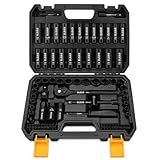
Overview: This comprehensive 96-Piece 3/8-inch Drive Impact Socket Set targets serious DIYers and mobile mechanics needing extensive coverage in a single package. The collection includes both shallow and deep sockets in SAE (5/16 to 3/4-inch) and metric (8-22mm), plus a swivel universal joint, two extension bars, spark plug sockets, and 40 screwdriver bits. Heat-treated chrome-vanadium steel with black phosphate finish withstands impact wrench use, while the 6-point design prevents fastener rounding.
What Makes It Stand Out: The combination of impact-rated construction, deep AND shallow sockets, and extensive accessories makes this remarkably comprehensive. The 6-point socket design maximizes torque transfer and minimizes fastener damage—a feature often missing in budget sets. Including 40 screwdriver bits transforms this from a socket set into a versatile repair system. The laser-etched markings ensure quick identification even in grimy conditions.
Value for Money: With 96 pieces at a mid-range price point, this set delivers exceptional value—under a dollar per piece for impact-rated tools. Purchasing these components separately would cost 3-4x more. While professional brands offer superior steel refinement, this set provides 90% of the functionality at 10% of the cost. For mobile mechanics and serious DIYers, it’s an economical way to acquire comprehensive impact capability.
Strengths and Weaknesses: Strengths include impact-rated durability, deep and shallow socket variety, 6-point design, extensive accessories, and excellent organization. The set handles most automotive and mechanical tasks. Weaknesses involve the 3/8-inch drive limiting maximum torque capacity, plastic case longevity concerns, and some rarely-used bit sizes occupying space. The ratchet’s tooth count isn’t specified, likely indicating a coarser mechanism.
Bottom Line: This set excels for mobile mechanics, serious DIYers, and as a shop backup set. The impact-rated construction and comprehensive coverage justify the investment. Buy this if you want maximum versatility in one package; avoid if you need 1/2-inch drive heavy-torque capability. It’s an outstanding value proposition for impact socket needs.
Key Features That Define High-Quality Socket Sets for Rapid Repairs
Drive Size Compatibility and Versatility
The drive size forms the backbone of your socket set’s functionality. Most quick-fix scenarios demand either 1/4-inch, 3/8-inch, or 1/2-inch drives, with each serving distinct purposes. The 1/4-inch drive excels in precision electronics and small engine work, while 3/8-inch offers the sweet spot for automotive and household applications. The 1/2-inch drive handles heavy-duty torque requirements. Premium sets often include adapters that let you mix drive sizes, dramatically expanding your capabilities without doubling your investment.
Tooth Count and Ratchet Arc Swing
A ratchet’s tooth count directly impacts its effectiveness in confined spaces. Traditional 24-tooth ratchets require 15 degrees of swing arc, which sounds adequate until you’re working between exhaust pipes or behind appliances. Modern sets boasting 72-tooth or even 90-tooth mechanisms need as little as 5 degrees of movement, letting you work incrementally where space is minimal. For quick fixes, this feature alone can mean the difference between a five-minute job and a two-hour frustration fest.
Socket Wall Thickness and Access Profiles
Thick-walled sockets might feel indestructible, but they often can’t reach recessed fasteners found in modern machinery. Look for sets advertising “low-profile” or “access” designs that maintain strength while slimming down walls. The best manufacturers use advanced metallurgy to create sockets that slide into tight cavities without compromising durability. This becomes crucial when dealing with engine components or assembled furniture where bolts sit deep inside narrow channels.
Material Composition and Heat Treatment
Chrome vanadium steel remains the gold standard for socket construction, offering excellent strength-to-weight ratio and resistance to deformation. However, the specific heat treatment process matters enormously. Sockets that undergo proper through-hardening rather than surface-only hardening maintain their shape under extreme torque and resist cracking when pushed to their limits. For ratchet mechanisms, look for chrome molybdenum or alloy steel internals that can withstand repeated cycling without developing play or slop.
Corrosion Resistance Coatings
That shiny chrome finish does more than look pretty—it protects your investment from the moisture and chemicals it’ll inevitably encounter. Quality sets feature nickel-chrome plating that’s applied after machining, ensuring complete coverage even on internal surfaces. Some premium options now offer phosphate coatings or proprietary finishes that provide superior grip while resisting rust. Consider your storage environment; garage-kept tools face different challenges than those living in humid basements.
Understanding Ratchet Mechanisms for Efficient Fastening
Sealed Head vs. Maintenance-Free Ratchets
Sealed ratchet heads keep dirt and debris from gumming up the mechanism, making them ideal for automotive work where oil and grime are constant companions. These designs typically use permanently lubricated bearings that never need servicing. Maintenance-free models take this further with self-lubricating materials that eliminate the need for oil ports entirely. While traditional ratchets allow for disassembly and cleaning, modern sealed units often outlast them by preventing contamination in the first place.
Quick-Release Button Functionality
That little button on the ratchet’s back isn’t just for convenience—it’s a safety feature that prevents sockets from sticking on fasteners. Well-designed quick-release mechanisms use ball-bearing retention with a smooth ejection action. Test the button feel; it should require deliberate pressure but not excessive force. Cheap versions often have sticky or inconsistent release actions that can send sockets flying across the room when you least expect it.
Reversible Lever Placement and Ergonomics
The direction-switching lever’s location determines how easily you can change ratcheting direction without looking. Offset levers prevent accidental engagement while allowing thumb operation. Some innovative designs integrate the lever into the handle itself, creating a sleeker profile that slides into tight spots more easily. Consider your hand size and typical working positions when evaluating handle ergonomics—what feels comfortable for a weekend warrior might cause fatigue for someone using tools eight hours daily.
Flex-Head and Swivel Ratchet Designs
Flexible head ratchets tilt up to 90 degrees, letting you attack fasteners from angles that would be impossible with rigid tools. For quick fixes, this adaptability is invaluable. The best designs lock securely at multiple angles and maintain that position under load without creeping. Swivel-head ratchets take this concept further with full 360-degree rotation capabilities, though they sacrifice some strength for versatility. Evaluate the locking mechanism’s durability—plastic components here are a red flag for longevity.
Socket Types Every Quick-Fix Kit Should Include
Standard vs. Deep Socket Applications
Standard-depth sockets handle 90% of quick-fix scenarios, but that remaining 10% will stop you cold without deep sockets. Deep sockets reach over threaded rod sections and accommodate long bolts common in suspension components and machinery assembly. The best sets include both depths in the most common sizes, typically from 8mm to 19mm in metric and 5/16-inch to 3/4-inch in SAE. Look for deep sockets with recesses that prevent fasteners from bottoming out prematurely.
Metric and SAE Measurement Standards
Even if you primarily work on domestic vehicles or American-made products, the global nature of manufacturing means you’ll eventually encounter both measurement systems. Comprehensive sets include both metric and SAE sockets, often with color-coded markings for instant identification. The smartest designs feature laser-etched size markings that won’t wear off after a few months in your toolbox. For quick fixes, being able to grab the right size without squinting or test-fitting saves precious time.
Impact vs. Chrome Vanadium Construction
Impact sockets use softer, more ductile steel that absorbs hammering forces without shattering. While you shouldn’t use chrome sockets with impact drivers, having a few impact-rated pieces in your quick-fix kit proves invaluable when you need to break loose stubborn bolts. Some modern hybrid sets include impact-rated sockets with protective sleeves that prevent marring surfaces while still handling torque wrench applications. This dual-purpose approach maximizes utility without requiring separate complete sets.
Specialty Sockets for Unique Fasteners
Torx, external Torx (E-Torx), hex, and spline sockets address the proliferation of non-standard fasteners in modern equipment. A well-rounded quick-fix kit includes the most common specialty sizes, particularly T25 through T55 Torx bits and 4mm through 10mm hex drives. Some sets now incorporate universal joints and wobble extensions that let sockets pivot slightly off-axis, reaching fasteners that aren’t perfectly aligned with your approach angle.
Portability and Organization for On-the-Go Repairs
Case Construction and Durability
Your socket set’s case takes as much abuse as the tools themselves. Blow-molded plastic cases with metal hinges and latches withstand drops and impacts better than all-plastic alternatives. Look for cases with gasket seals that keep moisture out when stored in damp environments. Internal organization should keep each component securely in place—even when inverted—preventing the chaotic rattling that makes finding the right size a treasure hunt.
Socket Retention Systems
Metal spring clips grip sockets firmly while allowing one-handed removal. Superior designs use individual retention for each piece rather than shared rails, preventing the domino effect where removing one socket dislodges several neighbors. Some innovative cases feature magnetic retention plates that hold sockets in place while letting you see size markings clearly. Consider how easily you can grab sockets while wearing gloves, a common scenario during quick outdoor repairs.
Compact Storage Solutions
For true portability, some sets nest sockets within the ratchet handle itself or use stackable trays that fit in tool bags. These designs sacrifice some capacity for extreme space savings, ideal for keeping in your vehicle’s trunk or a small apartment. The trade-off comes in organization—compact sets require more diligence about returning pieces to their proper spots. Look for designs that maintain logical size progression even in compressed formats.
Weight Distribution for Mobile Use
A 200-piece set might seem impressive, but lugging 25 pounds of tools to a simple job defeats the purpose of quick fixes. Smart sets balance comprehensiveness with portability, typically weighing between 8 and 12 pounds for automotive-grade collections. Consider how the weight distributes when carrying the case—offset handles or shoulder straps make transport less awkward. For vehicle-based kits, weight becomes less important than completeness, while home use favors lighter, more maneuverable options.
Professional vs. DIY Grade Considerations
Warranty Coverage and Tool Longevity
Professional-grade sets often carry lifetime warranties that cover not just manufacturing defects but also normal wear and tear. This confidence speaks volumes about build quality. DIY-focused sets might offer limited warranties that exclude wear items like ratchet mechanisms. Read the fine print—some warranties require registration within 30 days, while others transfer with ownership. For quick fixes, knowing you can replace a broken component without hassle provides peace of mind that justifies higher upfront costs.
Tooth Engagement Precision
Cheap ratchets develop play over time, with teeth that don’t fully engage until you apply significant force. Quality mechanisms maintain tight tolerances throughout their lifespan, with pawls that seat fully even under minimal load. This precision prevents the rounding of fasteners and reduces the effort required for each turn. Test a ratchet by applying light pressure and listening for clicking—excessive noise indicates loose tolerances that’ll worsen with use.
Handle Comfort During Extended Use
Quick fixes sometimes become hour-long ordeals, making handle ergonomics critical. Dual-material handles with soft overmolding reduce vibration and prevent blisters. The shape should fill your palm without forcing awkward wrist angles. Some premium designs incorporate anti-roll features that keep the ratchet from disappearing under your workbench. For those with smaller hands, slimmer handles provide better control, while larger hands benefit from beefier grips that distribute pressure evenly.
Brand Reputation and Service Networks
Established manufacturers maintain extensive service networks where you can walk in with a broken ratchet and walk out with a replacement, no questions asked. This convenience factor matters enormously when you’re mid-project and can’t afford shipping delays. These companies also tend to maintain parts availability for decades, ensuring your set remains complete even if individual pieces get lost. Research local service centers before committing to a brand, especially if you live in rural areas.
Budget Planning and Value Assessment
Entry-Level Options for Occasional Use
Budget-friendly sets around the $50-100 range provide adequate performance for homeowners tackling monthly projects. These typically feature 40-60 pieces covering essential sizes, though ratchet mechanisms might use fewer teeth and simpler construction. The compromise comes in longevity—expect to replace these every 3-5 years with regular use. However, for someone who only needs sockets a few times yearly, the value proposition remains strong. Focus on sets with solid warranties even at lower price points.
Mid-Range Investments for Home Mechanics
Spending $150-300 lands you in the sweet spot where quality meets value. These sets usually include 100-150 pieces with both metric and SAE coverage, 72-tooth ratchets, and robust cases. The metallurgy steps up noticeably, with better heat treatment and more precise manufacturing tolerances. This tier suits serious DIY enthusiasts who perform their own vehicle maintenance and home repairs. The tools typically last 10-15 years with proper care, making the per-use cost extremely reasonable.
Professional-Grade Long-Term Value
At $400 and above, you’re paying for extreme durability and comprehensive coverage. These sets include 200+ pieces with specialty sockets, multiple ratchet sizes, and extension configurations you didn’t know you needed. The ratchets often feature sealed heads with 90+ tooth counts and handles designed for all-day comfort. While overkill for most homeowners, the lifetime cost of ownership can actually be lower for heavy users who would otherwise replace mid-grade tools repeatedly. Consider this tier if you earn income from your repairs.
Hidden Costs to Factor In
The sticker price rarely tells the whole story. Factor in replacement costs for lost sockets—some brands charge premium prices for individual pieces. Consider whether you’ll need to buy supplementary sets for impact use or specialty fasteners. Storage solutions like socket rails or additional cases add up. Also account for your time—cheaper sets that slow you down with poor organization or weak ratchets cost more in frustration than their price suggests. Calculate total cost of ownership over five years for a realistic comparison.
Maintenance Practices for Lasting Performance
Cleaning Protocols After Heavy Use
Wipe down sockets with a clean rag after each use to remove oil and debris. For heavy grime, soak in a parts washer or use a degreaser, then dry thoroughly. Avoid harsh chemicals that can attack chrome plating. Ratchet heads benefit from occasional flushing with brake cleaner followed by light oil—though sealed units require no maintenance. Establish a cleaning routine based on usage frequency; weekly users should clean monthly, while occasional users can get by with quarterly maintenance.
Lubrication Points on Ratchet Mechanisms
Traditional ratchets have oil ports for periodic lubrication—typically one drop of light machine oil every 50 hours of use. Work the mechanism afterward to distribute the lubricant. Over-oiling attracts dirt, creating a grinding paste that accelerates wear. Sealed ratchets use lifetime lubricants that shouldn’t be supplemented. If you hear grinding or feel rough operation, disassemble (if possible) or replace rather than forcing the issue. Never use grease on ratchet pawls—it can cause them to stick and fail to engage.
Proper Storage to Prevent Damage
Always return sockets to their designated spots in the case—floating loose in a drawer causes size marking wear and potential damage. Store ratchets with the direction lever in neutral to reduce spring tension. Keep sets in climate-controlled environments when possible; extreme temperature swings cause condensation that leads to rust. If storing long-term, place silica gel packets in the case to absorb moisture. Never pile heavy objects on top of socket cases, as this can warp internal organization trays.
When to Replace Worn Components
Replace sockets showing rounding on the drive end or inside the hex opening—continued use damages fasteners. Ratchets with more than a few degrees of free play before engagement need rebuilding or replacement. Extension bars that wobble excessively indicate worn detent balls that could release sockets unexpectedly. Don’t wait for catastrophic failure; replace questionable components immediately. Many manufacturers sell individual pieces, making it economical to maintain a set rather than replacing everything when one part fails.
Safety Protocols and Proper Usage Techniques
Torque Limitations and Applications
Never exceed a socket’s rated torque capacity—typically stamped on professional-grade pieces. Using a 1/4-inch drive ratchet for lug nut removal invites failure and potential injury. Match drive size to fastener dimensions: use 1/2-inch drive for bolts larger than 15mm or 5/8-inch. When using extensions, remember they slightly reduce effective torque transfer. Breaker bars are safer than ratchets for initial loosening of stuck fasteners; ratchets excel for speed once the fastener is moving freely.
Avoiding Socket and Fastener Damage
Always push the socket fully onto the fastener before applying torque—partial engagement rounds corners. Keep sockets perpendicular to the fastener; angled approaches cause cam-out and damage. For impact applications, never use chrome sockets, which can shatter explosively. When a fastener won’t budge, apply penetrating oil and wait rather than increasing force. Using the correct size is non-negotiable; even slight mismatches destroy both socket and bolt heads, creating expensive problems.
Proper Socket Engagement Practices
“Rock” the socket slightly when seating it to ensure full engagement with the fastener’s corners. Listen for a distinct click when the drive tang locks into the ratchet head. With extensions, verify the detent ball pops into place—give a gentle tug to confirm. For deep sockets, ensure the fastener reaches the square drive portion, not just the hollow section. These habits prevent the heartbreak of a socket stuck on a bolt or, worse, rounding a critical fastener.
Personal Protective Equipment Recommendations
Safety glasses are mandatory when working under vehicles or with impact tools—socket failures can launch fragments at eye-level speeds. Mechanics gloves improve grip and protect against sharp edges, though they reduce tactile feedback slightly. Steel-toed boots prevent injury from dropped heavy sockets, especially the 1/2-inch drive pieces. Keep a first-aid kit nearby; even minor cuts from rusty fasteners can lead to tetanus. Never work under a vehicle supported only by a jack; use jack stands rated for the vehicle’s weight.
Frequently Asked Questions
What size socket set is best for general home repairs? A 100-120 piece set with both 3/8-inch and 1/4-inch drive ratchets covers 95% of household tasks. Ensure it includes deep sockets from 8-19mm and 5/16-inch to 3/4-inch, plus common specialty bits like Torx T25-T45 and hex keys. This range handles furniture assembly, appliance repair, and basic automotive maintenance without overwhelming you with rarely-used sizes.
How many teeth should a good ratchet have for tight spaces? Look for ratchets with at least 72 teeth, requiring only 5 degrees of swing arc. This allows incremental turning in confined areas like engine bays or behind appliances. Premium models offer 90-120 teeth for even finer control. However, higher tooth counts can reduce ultimate strength, so match this feature to your typical applications—automotive work benefits most from high tooth counts.
Can I use chrome sockets with an impact driver in an emergency? Absolutely not. Chrome sockets are hardened and brittle, designed for steady torque application. Impact forces can cause them to shatter violently, creating dangerous projectiles. The steel composition differs fundamentally from impact sockets, which use softer, more ductile material to absorb hammering forces. Keep a small set of impact-rated sockets for any work involving power tools.
What’s the difference between 6-point and 12-point sockets? Six-point sockets grip flat surfaces of fasteners, providing superior torque transfer and reduced risk of rounding. Twelve-point sockets fit both hex and square fasteners and engage more easily in tight spaces but sacrifice some grip strength. For quick fixes where speed matters, 12-points work well on undamaged bolts. Keep 6-points for high-torque applications or fasteners showing wear.
How often should I replace my socket set? Quality socket sets last decades with proper care. Replace them when you notice significant wear: rounded socket openings, ratchets with excessive play, or extension detents that no longer hold. Professional mechanics might replace ratchets every 5-7 years due to daily use, while a homeowner’s set can last a lifetime. Focus on replacing individual components rather than entire sets.
Are universal socket sets worth the investment? Universal sockets that grip multiple fastener types seem convenient but rarely perform as well as dedicated sizes. They tend to wear faster and can damage fasteners if over-torqued. For quick fixes, they’re better than nothing in an emergency, but they shouldn’t replace a proper set. Consider them a supplement for unusual situations, not a primary solution.
What’s the best way to organize sockets for quick access? Use socket rails with spring-loaded clips mounted on a tool board or in your toolbox drawer. Arrange by size progression, with metric on one rail and SAE on another. For portable kits, insist on cases with individual retention for each piece. Some mechanics use magnetic trays during jobs to keep active sockets visible and within reach. Color-coding with paint markers helps identify sizes at a glance.
How do I prevent rust on my socket set in a humid garage? Apply a light coat of tool oil or corrosion inhibitor spray annually. Store sets in cases with silica gel packets, replacing the packets yearly. Consider a dehumidifier for extremely damp spaces. After use in wet conditions, dry tools immediately and wipe with an oily rag. Avoid storing tools directly on concrete floors, which wick moisture. Wall-mounted storage improves air circulation around your tools.
Can I mix and match sockets from different manufacturers? Generally yes, as long as drive sizes match. The ANSI standard ensures 1/4-inch, 3/8-inch, and 1/2-inch drives are interchangeable across brands. However, quality varies dramatically, and mixing can lead to uneven wear patterns. Ratchets and sockets from the same brand often have optimized tolerances that work smoother together. For critical work, stick to matched sets; for casual use, mixing is acceptable.
What safety gear should I always use with socket sets? At minimum, wear safety glasses to protect against flying debris from broken sockets or fasteners. Mechanics gloves improve grip and prevent cuts. Steel-toed boots safeguard your feet from dropped heavy sockets. When working under vehicles, safety glasses become non-negotiable due to rust particles and the catastrophic consequences of socket failure. Keep a well-stocked first-aid kit accessible for minor injuries.
See Also
- The 10 Ultimate Best Socket Sets with Ratchet for Quick Changes in 2026
- The 10 Best Socket Sets with Ratchet for Quick Jobs in 2026
- 10 Affordable Ratchet and Socket Sets That Don’t Sacrifice Quality in 2026
- 10 Best Value Ratchet and Socket Sets for Daily Use in 2026
- The 10 Best Ratchet and Socket Sets for Automotive Repairs in 2026