Table of Contents
There’s something deeply satisfying about hearing that definitive click when a bolt reaches its precise torque specification. For DIY auto enthusiasts, this moment represents the perfect marriage of mechanical intuition and scientific precision. Whether you’re rebuilding an engine, swapping out brake components, or simply rotating tires, understanding and applying correct torque values transforms you from a parts-changer into a true craftsman. The right torque wrench doesn’t just prevent stripped threads or warped components—it builds confidence with every turn of the wrist.
As automotive technology becomes increasingly sophisticated, with aluminum engine blocks, composite materials, and sensitive electronic sensors, the margin for error has never been smaller. A fastener that’s too loose can vibrate free and cause catastrophic damage, while one that’s overtightened can crack expensive castings or lead to premature component failure. That’s why selecting the appropriate torque wrench for your home garage isn’t just about buying a tool—it’s about investing in the longevity of your vehicle and the quality of your workmanship.
Top 10 Torque Wrenches for DIY
Detailed Product Reviews
1. DISEN 9PCS Click Torque Wrench Set 1/4" 3/8" 1/2" Drive 20-220 In.lb, 5-45 Ft.lb, 10-170 Ft.lb with 6 Adapters, ±3% Accuracy, 72-Tooth, Dual Scale, Storage Case for Bike, Motorcycle, Car, Truck Repair

Overview: The DISEN 9PCS Click Torque Wrench Set delivers a comprehensive torque solution covering three drive sizes—1/4", 3/8", and 1/2"—making it ideal for everything from delicate bike components to heavy-duty automotive work. This all-in-one kit eliminates the need for multiple purchases, offering ranges from 20-220 in.lb up to 10-170 ft.lb, all housed in a rugged portable case.
What Makes It Stand Out: This set’s true strength lies in its versatility. The 72-tooth ratchet mechanism provides a minimal 5° arc swing, crucial for accessing tight engine bays and bicycle frames. The factory-calibrated ±3% accuracy includes a certificate, while the dual-scale markings (inch and foot-pounds) ensure you won’t need conversion charts. Six adapters—including extension bars and a universal joint—significantly expand capability without additional investment.
Value for Money: Purchasing three separate torque wrenches with comparable quality would easily exceed $150-200. This bundle delivers them plus adapters for a fraction of that cost. The aerospace aluminum handles and hardened Cr-V steel construction match professional-grade tools at a consumer price point, offering exceptional ROI for DIY enthusiasts and semi-professional mechanics.
Strengths and Weaknesses: Strengths include comprehensive coverage, audible click feedback (though subtler at lower torques), quick-release mechanism, and durable storage case. The ±3% accuracy is respectable for mechanical click-type wrenches. Weaknesses: the click sound varies significantly below 5 N.m, potentially confusing novices, and mechanical wrenches lack the data-tracking of digital alternatives.
Bottom Line: For home mechanics maintaining multiple vehicles, this set provides professional capability without the premium price. The convenience of having all three drive sizes ready in one case makes it a smart, practical investment that will serve most automotive and bicycle maintenance needs for years.
2. VANPO Torque Screwdriver, 15-75In-lb Torque Screw Driver Wrench Driver Set, 1/4’’ Drive Inch Pounds Torque Wrench Screwdriver with 40 S2 Bits for Maintenance, Tools, DIY, Bike Repairing and Mounting

Overview: The VANPO Torque Screwdriver is a specialized 41-piece precision tool designed for delicate fastening tasks where standard torque wrenches would be overkill. With a 15-75 in-lb range and 1 in-lb increments, it targets electronics, firearms, and bicycle component installation where exact torque prevents damage to threads and carbon fiber parts.
What Makes It Stand Out: The extensive 40-bit S2 steel set is this product’s crown jewel—covering Phillips, Torx, hex, and slotted variants in both metric and imperial sizes. S2 steel offers superior wear resistance compared to standard chrome vanadium bits. The ergonomic TPR+PA6 handle provides comfortable, non-slip grip during extended use, while the clear click mechanism prevents overtightening on sensitive components like scope mounts or derailleur clamps.
Value for Money: Comparable precision torque screwdrivers with far fewer bits typically retail for $60-80. This comprehensive set undercuts that while including specialty bits rarely found in competitors’ kits. For gunsmiths or bike mechanics, the included bits eliminate separate purchases, making it an economical one-stop solution for fine-detail work.
Strengths and Weaknesses: Strengths include exceptional bit variety, comfortable grip, ISO-standard compliance, and clear audible feedback. The S2 steel bits genuinely outlast cheaper alternatives. Weaknesses: ±6% accuracy trails mechanical wrenches (±3-4%) and digital models (±1-2%), and the plastic handle may not withstand heavy shop abuse like metal alternatives. The click mechanism requires careful listening in noisy environments.
Bottom Line: Ideal for precision assembly work, this torque screwdriver excels at firearms mounting and bicycle maintenance. While accuracy is modest, the comprehensive bit selection and ergonomic design make it invaluable for hobbyists and professionals who regularly work with small fasteners requiring finesse over brute force.
3. SUERCUP 1/2-inch Digital Torque Wrench(3.8-250.8Ft.Lb/5.1-340Nm) ±1% Accuracy Digital Torque Wrench with Vibration, Buzzer,LED Notification and Five Units of Measure, for Car,Motorcycle Repair, DIY

Overview: The SUERCUP 1/2-inch Digital Torque Wrench represents the modern evolution of torque measurement, offering ±1% accuracy across an impressive 3.8-250.8 ft-lb range. Its vibrant color LED display and intelligent features cater to professional mechanics and serious DIYers who demand precision with digital convenience for automotive and motorcycle work.
What Makes It Stand Out: This wrench’s Peak/Track (P/T) modes provide versatility—Track shows real-time values while Peak captures maximum torque for diagnostics. The overload protection system combines vibration, buzzer, and flashing LED alerts, virtually eliminating overtightening risks. Nine preset modes and five unit conversions (N.m, lb.ft, lb.in, kg.cm, kg.m) adapt to any specification, while 500-set data logging tracks every critical fastener for quality control and warranty documentation.
Value for Money: Digital torque wrenches with ±1% accuracy and data logging typically command $200+ prices. This model delivers those professional features at a mid-range price point, making advanced capabilities accessible to serious enthusiasts. The time saved through accurate first-time tightening and data recording justifies the premium over mechanical wrenches.
Strengths and Weaknesses: Strengths include exceptional accuracy, comprehensive alerts, unit flexibility, and invaluable data storage for professional workflows. The quick-release ratchet head speeds socket changes. Weaknesses: reliance on AA batteries (carry spares), digital components add vulnerability in harsh environments, and the learning curve for programming presets may intimidate traditionalists.
Bottom Line: For professionals requiring documentation or enthusiasts tackling complex engine work, this digital wrench is transformative. The ±1% accuracy and data logging capabilities make it worth every penny, provided you maintain battery power and protect it from extreme conditions.
4. VANPO 1/4-inch Drive Click Torque Wrench, 20-240 in. lb/2.3-27.1 Nm, Inch Pound Torque Wrench Set with 1/4" to 3/8" Adapter, 10cm Extension Bar, Small Bike Torque Wrench for MTB, Bicycle Maintenance
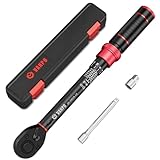
Overview: The VANPO 1/4-inch Drive Click Torque Wrench fills a niche for precision bicycle and light machinery maintenance, offering 20-240 in.lb (2.3-27.1 Nm) range in a compact package. Designed specifically for MTB and road bike components, this tool prevents costly overtightening of carbon fiber parts and delicate aluminum threads while remaining affordable for home mechanics.
What Makes It Stand Out: Its aluminum shaft provides superior fatigue resistance compared to steel counterparts, maintaining calibration longer under frequent use. The included 1/4" to 3/8" adapter and 10cm extension bar expand versatility without separate purchases. The high-contrast dual-scale markings enable quick reference, while the robust click mechanism delivers consistent feedback even at lower torque values where some competitors falter.
Value for Money: Dedicated bicycle torque wrenches from premium brands often exceed $80-100. This VANPO model delivers comparable performance and accuracy for significantly less, making professional-grade torque accessible to casual riders. The included adapter adds value, allowing use with standard 3/8" sockets for occasional automotive tasks.
Strengths and Weaknesses: Strengths include lightweight aluminum construction, clear click feedback, ergonomic locking knob, and compact storage case. The 72-tooth ratchet (implied by 5° swing) works well in tight frame spaces. Weaknesses: limited to 1/4" drive, requires separate bit purchase for hex fasteners common on bikes, and the plastic handle feels less substantial than professional tools.
Bottom Line: Perfect for cyclists who perform their own maintenance, this wrench offers excellent precision and value. While drive size limitations restrict broader automotive use, its bike-focused design and reliable performance make it an essential tool for protecting expensive carbon components from over-torquing damage.
5. Uharbour Digital Torque Wrench 3/8 Drive, 1.5-99.5 ft-lbs./6.8-135Nm Range, Electric Torque Wrench with Dual Direction Ratchet, ±1% Accuracy with Vibration, Buzzer and LED Alert
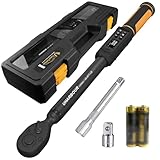
Overview: The Uharbour Digital Torque Wrench combines modern digital precision with practical 3/8" drive versatility, covering 1.5-99.5 ft-lbs (6.8-135Nm). This tool targets automotive technicians and advanced DIYers who need reliable, accurate torque measurement for medium-duty applications like engine components, suspension work, and motorcycle maintenance without breaking the bank.
What Makes It Stand Out: The ±1% accuracy rivals professional-grade tools at a more accessible price point. Its dual-direction ratchet functionality allows torque measurement in both clockwise and counterclockwise directions—a rare feature in this class that proves invaluable for left-hand threads and certain automotive applications. The multi-alert system (vibration, buzzer, LED) ensures you never miss the torque target, even in noisy garages.
Value for Money: Digital 3/8" torque wrenches with ±1% accuracy typically start around $120. This Uharbour model positions itself competitively, offering core digital benefits—precision, clear display, and alerts—without premium features like data logging that many users never utilize. For general automotive and bike work, it delivers professional accuracy at a hobbyist price.
Strengths and Weaknesses: Strengths include excellent accuracy, reversible ratchet head, four unit conversions, and robust alert system. The high-definition LED display remains readable in dim conditions. Weaknesses: limited 99.5 ft-lb maximum may restrict some automotive applications (lug nuts often need 100+ ft-lb), no mention of data storage, and battery dependency requires preparation.
Bottom Line: A solid choice for most automotive and motorcycle maintenance tasks, this wrench balances digital precision with practical functionality. While heavy-duty users may need a 1/2" drive supplement, its accuracy and dual-direction capability make it a versatile, reliable addition to any serious home mechanic’s toolkit.
6. Hairich 1/2 Inch Drive Click Torque Wrench, Dual-direction Torque Wrench 10-170.0ft.lb/13.60-230.5Nm, 72-tooth Torque Wrenches with Dual Range Scales, ±3% High Precision For Bike

Overview: The Hairich 1/2-inch drive click torque wrench delivers professional-grade precision for automotive and heavy-duty bicycle applications. With a range of 10-170 ft-lb (13.6-230.5 Nm) and ±3% accuracy, this tool targets serious DIYers and mechanics who demand consistent results. The 72-tooth ratchet mechanism allows operation in tight spaces with just a 5-degree swing arc, while the reversible head handles both clockwise and counterclockwise torque measurement.
What Makes It Stand Out: This wrench distinguishes itself through its premium aluminum titanium alloy handle that provides exceptional grip comfort during extended use. The laser-etched dual-range scales offer instant ft-lb to Nm conversion without fumbling for charts. Its black and red aesthetic isn’t merely cosmetic—the chrome vanadium steel construction ensures durability while the color-coded lock knob makes torque setting intuitive. The audible and tactile click feedback is crisp and reliable across most of its range.
Value for Money: Positioned in the mid-tier professional category, this wrench competes favorably against brands costing twice as much. The 72-tooth mechanism alone justifies the price, typically found only in premium tools. For shade-tree mechanics and bike enthusiasts, it eliminates the risk of stripped threads and cracked components that could cost hundreds in repairs.
Strengths and Weaknesses: Strengths include high precision, compact swing arc, ergonomic handle, dual-direction capability, and clear scales. The primary weakness is the potentially inaudible click at settings below 5 Nm, limiting its effectiveness for delicate carbon fiber bike components. It’s also over-specified for light-duty household tasks.
Bottom Line: An excellent choice for automotive maintenance and medium-to-high torque bicycle work. The Hairich wrench offers professional features without the premium price tag, though dedicated cyclists may need a separate low-torque wrench for cockpit components.
7. VANPO Torque Screwdriver Set, 64 Pieces 10–80 in-lb 1/4" Inch Pound Torque Wrench Screwdriver Kit with T-Bar & S2 Bits – Precision Tool for Optics, Electronics, Smart Locks & DIY Repair

Overview: The VANPO 64-piece torque screwdriver set addresses the critical need for precision in optics mounting, electronics repair, and smart lock installation. Delivering 10-80 in-lb with ±5% accuracy in 1 in-lb increments, this kit prevents costly damage from over-tightening. The comprehensive collection includes a 1/4-inch drive torque screwdriver, T-bar, extension, quick clamp, and over 60 S2 steel bits covering every common fastener type.
What Makes It Stand Out: This set excels through its sheer comprehensiveness and quality accessories. The S2 steel bits resist twisting and stripping far better than standard chrome vanadium, crucial when working with soft aluminum scope rings or delicate electronic housings. The quick clamp accessory speeds adjustments above 30 in-lb, while the T-bar provides extra leverage for stubborn screws. Everything organizes neatly in a compact case that doesn’t waste workshop space.
Value for Money: Comparable to buying a precision torque screwdriver and bit set separately, this kit saves approximately 30-40% while ensuring component compatibility. For gunsmiths, camera technicians, or DIY smart home installers, the included Pozidriv, Torx, and specialty bits eliminate separate purchases. It’s an investment that pays for itself by preventing one stripped scope mount.
Strengths and Weaknesses: Strengths include extensive bit variety, S2 steel durability, clear increment settings, and useful accessories. Weaknesses involve the ±5% accuracy, which trails some competitors’ ±3-4% ratings, and the plastic handle that may feel less premium than metal alternatives. The case layout could also be more intuitive.
Bottom Line: An outstanding all-in-one solution for precision assembly work. Whether zeroing a rifle scope or installing a smart thermostat, this set delivers reliable control. The minor accuracy tradeoff is offset by convenience and bit quality, making it ideal for hobbyists and professionals alike.
8. 3Pack Torque Wrench Set, 1/4", 3/8", 1/2" Drive Click Torque Wrench Extra with Extension Bars & Adapters, Dual-Direction Adjustable Precision Torque Wrenches for Car, Motorcycle, Bike DIY Maintenance

Overview: This comprehensive 3-pack torque wrench set eliminates the need to purchase individual sizes, covering 1/4-inch, 3/8-inch, and 1/2-inch drives in one coordinated kit. Engineered for DIYers and professional workshops, each wrench maintains ±3% accuracy with clear dual-range scales. The set includes extension bars, drive adapters, and a universal joint, making it immediately ready for automotive, motorcycle, bicycle, and equipment maintenance.
What Makes It Stand Out: The unified accuracy standard across all three sizes ensures consistent results whether torquing spark plugs or lug nuts. The click mechanism provides reliable feedback without the complexity of digital displays that require batteries. The anti-slip knurled handles offer secure grip even with oily hands, while the included adapters maximize versatility. This is a true workshop-in-a-box solution.
Value for Money: Purchasing three separate quality torque wrenches would cost 60-80% more than this bundled set. The included accessories—often sold separately—add another $30-50 in value. For home mechanics or mobile technicians, the consolidated storage case reduces clutter while ensuring you always have the right size. It’s among the best cost-per-size ratios available.
Strengths and Weaknesses: Strengths include comprehensive size coverage, professional-grade accuracy, quality accessories, and durable Cr-V steel construction. Weaknesses are the lack of flex heads for hard-to-reach fasteners and the bulkiness of carrying three wrenches. Individual wrenches may not match the refined feel of premium single-size brands.
Bottom Line: Perfect for anyone needing multiple torque wrench sizes without breaking the bank. This set delivers professional accuracy and versatility for DIY maintenance and light professional use. While dedicated pros might invest in higher-end individual wrenches, this kit covers 95% of common tasks at exceptional value.
9. QUENCHING Split Beam Torque Wrench,3/8" & 1/2" set, Fine-adjustable, ±4% Accuracy, 32 Teeth, 15° Flex Head, CR-V steel,Heavy Duty Torque Wrench, DIY Repair.

Overview: The QUENCHING split beam torque wrench set (3/8-inch and 1/2-inch) targets serious mechanics with its innovative spring-free design. Offering ranges of 20-100 ft-lb and 40-250 ft-lb respectively, these wrenches deliver ±4% accuracy without the fatigue issues plaguing traditional click mechanisms. The split beam construction maintains calibration through up to 10,000 cycles, making it ideal for high-volume professional use.
What Makes It Stand Out: The standout feature is the 15-degree flex head that accesses recessed nuts in wheel wells and engine bays where standard wrenches cannot reach. The fine-adjustment knob stores target torque values, eliminating repetitive setting for batch work. CR-V steel construction withstands harsh shop environments, while the audible click remains consistent throughout the tool’s extended lifespan. The protective case is actually shock-absorbent, not just storage.
Value for Money: Split beam wrenches typically command premium prices 2-3x higher than click types. This set positions itself as a mid-range professional option, offering 70% of the durability of top-tier brands at half the cost. For shops torquing 20+ fasteners daily, the extended calibration interval pays dividends in reduced downtime and recalibration fees.
Strengths and Weaknesses: Strengths include superior longevity, flex head accessibility, high torque capacity, and robust construction. Weaknesses involve the ±4% accuracy (slightly lower than premium click wrenches), heavier weight, and limited size options. The learning curve for torque setting differs from conventional designs.
Bottom Line: A smart investment for professional technicians and heavy DIYers who prioritize durability. The split beam design justifies its premium over basic click wrenches, especially for automotive work. While accuracy trails some competitors slightly, the longevity and flex head make it a workshop workhorse worth the investment.
10. VANPO Torque Screwdriver, 10-80In-lb Torque Screw Driver Wrench Driver Set, 1/4” Drive Inch Pounds Torque Wrench Screwdriver with 60 S2 Bits for Maintenance, Tools, DIY, Bike Repairing and Mounting

Overview: The VANPO 60-piece torque screwdriver set provides precise torque control for maintenance, firearms, and bicycle repairs. Delivering 10-80 in-lb with ±6% accuracy, this kit includes 40 short and 20 long S2 steel bits for accessing deep-set screws. The 1/4-inch drive unit meets ISO6789 and ASME standards, ensuring reliable performance for both hobbyists and professionals tackling scope mounting, tool maintenance, and precision assembly.
What Makes It Stand Out: This set’s inclusion of long-reach bits sets it apart, allowing access to recessed action screws and internal bike frame bolts that standard bits cannot reach. The TPR+PA6 plastic handle provides lightweight comfort without sacrificing grip security. With 1 in-lb increments and a clear click mechanism, it prevents over-tightening delicate components while the S2 steel bits resist wear better than standard materials.
Value for Money: Offering 60 S2 steel bits with a certified torque driver, this kit undercuts buying components separately by roughly 25%. The long bit inclusion adds value for specific applications like gunsmithing and bicycle repair. While accuracy trails some competitors, the price-to-component ratio remains strong for general maintenance tasks.
Strengths and Weaknesses: Strengths include versatile bit selection, long-reach options, comfortable ergonomic handle, and international standard compliance. Weaknesses center on the ±6% accuracy, which is lower than precision-focused alternatives, and the plastic handle’s long-term durability questions. The lack of a T-bar or quick clamp limits high-torque applications.
Bottom Line: A solid, versatile torque screwdriver for general maintenance and hobby use. It excels at firearm and bicycle applications where long bits prove invaluable. While not the most accurate option available, the comprehensive bit selection and comfortable operation make it a practical choice for DIYers who prioritize versatility over laboratory-grade precision.
Why Torque Matters in Automotive DIY
Torque specifications exist for every critical fastener on your vehicle, from the 8 Nm bolts holding your valve cover to the 150+ Nm lug nuts securing your wheels. These numbers aren’t arbitrary suggestions—they’re the result of extensive engineering calculations that account for material properties, thread pitch, clamping force requirements, and thermal expansion coefficients. When you apply the correct torque, you achieve optimal clamping force that maintains the seal or joint integrity through countless heat cycles and operational stresses.
DIY mechanics who skip torque specifications often learn expensive lessons. Over-tightened spark plugs can strip aluminum cylinder head threads, turning a simple maintenance task into a $500+ repair. Under-tightened connecting rod bolts can lead to bearing failure and engine destruction. Even something as simple as an oil drain plug requires precise torque to prevent both leaks and stripped pans. A quality torque wrench pays for itself by preventing just one major mistake.
Types of Torque Wrenches
Understanding the different mechanisms available helps you choose the right tool for your specific automotive applications. Each type offers distinct advantages and trade-offs in accuracy, ease of use, and cost.
Click-Type Torque Wrenches
The most popular choice among automotive enthusiasts, click-type wrenches emit an audible click and slight break in the handle when you reach the preset torque value. This mechanical design uses a spring-loaded cam mechanism that releases at a specific tension. The user sets the desired torque by rotating a handle-mounted scale, making it quick to adjust between different specifications. These wrenches typically offer good accuracy (±3-4%) and durability, with most models covering ranges from 10-150 ft-lbs, perfect for general automotive work.
Beam-Type Torque Wrenches
The simplest and most affordable design uses a bending beam and pointer indicator to display torque values in real-time. As you apply force, the main beam deflects while the pointer remains stationary, showing the torque on a calibrated scale. While lacking the preset convenience of click-types, beam wrenches require no internal mechanism that can wear out or require recalibration. They provide excellent visual feedback and are virtually indestructible, though reading the scale in tight engine bay spaces can be challenging. Accuracy typically runs around ±4%.
Dial-Type Torque Wrenches
Professional mechanics often prefer dial-type wrenches for their superior precision and clear analog display. These tools use a precision dial indicator connected to a deflecting beam mechanism, offering accuracy as tight as ±2%. The large, easy-to-read face eliminates parallax errors, and many models feature memory pointers that capture the peak torque value. While more expensive and delicate than click-types, dial wrenches provide unmatched repeatability for critical applications like cylinder head bolts or main bearing caps.
Digital Torque Wrenches
Modern digital models combine electronic sensors with programmable features that appeal to tech-savvy DIYers. LCD displays show real-time torque values, often with multiple unit conversions (Nm, ft-lbs, in-lbs, kg-cm). Many include audible alerts, vibration feedback, and memory functions that store multiple torque values for complex jobs. Some advanced versions even connect to smartphone apps for data logging. Battery life and electronic durability in greasy shop environments remain considerations, but accuracy often exceeds ±2%.
Slip-Type Torque Wrenches
These specialized tools prevent over-torquing by allowing the drive head to slip once the preset value is reached. Common in motorcycle and bicycle applications where fasteners are extremely small and delicate, slip-type wrenches protect against damage to lightweight components. However, they provide no audible feedback and require careful attention to feel the slip point, making them less ideal for general automotive use where higher torque values are common.
Deflecting Beam Torque Wrenches
An evolution of the beam design, these Australian-invented wrenches use two parallel beams that deflect relative to each other. This mechanism provides both visual and audible feedback while maintaining the simplicity and durability of beam-type tools. They don’t require the “unwinding after use” that click-types need and maintain accuracy longer between calibrations. Though less common in North America, they represent an excellent middle ground between mechanical simplicity and user-friendly operation.
Key Features to Consider
Beyond the basic mechanism type, several features determine how well a torque wrench will serve your specific automotive needs. Evaluating these characteristics helps narrow the field to tools that match your workflow and budget.
Torque Range and Capacity
Automotive work demands different ranges: low-range (5-25 Nm) for interior trim and small engine bolts, mid-range (20-100 Nm) for most general fasteners, and high-range (80-300+ Nm) for suspension components and lug nuts. A single wrench cannot cover this entire spectrum effectively. Most DIYers start with a quality 3/8-inch drive covering 20-100 Nm, then add a 1/2-inch drive for higher values and a 1/4-inch drive for precision work. Consider your most frequent tasks when prioritizing your first purchase.
Accuracy and Precision Standards
Look for wrenches rated to ISO 6789 or ASME B107.300 standards, which specify accuracy requirements and testing methodologies. The standard defines two classes: Class A (±4% tolerance) for general use and Class B (±3% tolerance) for professional applications. Some premium digital models achieve ±2% or better. Remember that accuracy degrades over time and with use, so regular calibration is essential regardless of initial specifications. A certificate of calibration from the manufacturer provides baseline confidence in your tool’s performance.
Drive Size Compatibility
Drive size directly correlates with torque capacity and fastener access. 1/4-inch drive handles small fasteners up to about 25 Nm, ideal for carburetors, valve covers, and interior work. 3/8-inch drive represents the sweet spot for most engine and chassis bolts, typically covering 20-100 Nm. 1/2-inch drive tackles heavy-duty applications like lug nuts, axle nuts, and suspension components requiring 80+ Nm. Ensure your chosen wrench matches your existing socket collection or factor in the cost of new sockets and adapters.
Scale Readability and Units
Automotive service manuals specify torque in Newton-meters (Nm), foot-pounds (ft-lbs), or inch-pounds (in-lbs). A wrench displaying multiple units saves conversion headaches. For click-types, ensure the scale is etched or laser-marked rather than printed, as printed scales wear off in shop environments. High-contrast markings and good lighting visibility prevent reading errors. Digital models should offer instant unit conversion and have backlit displays for under-car work.
Build Quality and Materials
Professional-grade wrenches use chrome-vanadium or chrome-molybdenum steel construction that withstands shop abuse while maintaining calibration. The ratchet mechanism should have fine-tooth gearing (72 teeth or more) for access in tight spaces. Handle materials range from knurled steel to ergonomic rubber overmolds—consider grip comfort for extended use but avoid materials that become slippery with oil. The weight balance affects fatigue; a well-balanced wrench feels natural in hand and reduces wrist strain during repetitive tasks.
Ergonomics and Comfort
Your torque wrench becomes an extension of your hand during complex jobs. Handle diameter should match your grip strength, with textured surfaces preventing slippage. The length affects both leverage and access—longer handles reach higher torque values with less effort but can be unwieldy in cramped engine bays. Some models feature swivel heads or flex handles that improve access to awkwardly positioned fasteners. Consider the overall weight; a 24-inch 1/2-inch drive wrench can weigh over 4 pounds, which becomes fatiguing during head gasket jobs.
Understanding Calibration and Certification
A torque wrench is only as good as its calibration. Understanding this process helps you maintain accuracy and recognize when professional service is needed.
Importance of Regular Calibration
The spring mechanisms inside click-type wrenches can fatigue over time, especially if stored under tension. Most manufacturers recommend annual calibration for professional use and every 12-24 months for DIY applications. However, if you drop your wrench or use it as a breaker bar (never do this!), immediate recalibration is necessary. Signs of drift include fasteners that consistently feel too tight or too loose despite correct settings, or a wrench that no longer clicks at the expected point.
Factory Certification vs. DIY Calibration
New torque wrenches should include a certificate of calibration traceable to NIST or equivalent national standards. This document lists the actual torque output at several test points across the wrench’s range, not just the theoretical specification. For DIY verification, you can perform simple tests using a known weight and precise measurements, but this only identifies major errors rather than certifying accuracy. Professional calibration services use specialized equipment that applies known forces and generates detailed reports, typically costing $30-50 per wrench—cheap insurance for a $200+ tool.
Proper Usage Techniques
Owning a quality torque wrench means nothing without proper technique. These practices ensure you achieve accurate, repeatable results and extend tool life.
Setting the Desired Torque Value
Always approach your target setting from below, never from above. If you overshoot, wind the handle back below zero before resetting. This prevents preloading the internal mechanism and ensures the cam releases at the correct tension. For click-types, set the value by aligning the scale markings precisely—parallax errors from viewing at an angle can cause 1-2 Nm deviations. Never set the wrench beyond its maximum capacity, as this can permanently damage the internal mechanism and void calibration.
Proper Hand Position and Grip
Torque specifications assume smooth, steady application of force at the handle’s end. Choking up on the handle reduces leverage and results in under-torquing. Apply force at a 90-degree angle to the fastener centerline; angled pulling introduces error and can damage the ratchet mechanism. Use a smooth, continuous motion rather than jerky pulls—most specifications assume the final quarter-turn occurs over 3-5 seconds. For high-torque applications, consider using a cheater bar only if the manufacturer explicitly approves it, as this can exceed design limits.
The Correct Tightening Sequence
Automotive fasteners rarely work alone. Cylinder head bolts, wheel lug nuts, and intake manifolds all require specific tightening sequences to ensure even clamping force and prevent warping. Always consult your service manual for the proper pattern, which typically involves multiple stages (e.g., 30 Nm, then 60 Nm, then 90-degree turn). Mark each fastener with paint pen as you complete each stage. For critical applications, consider using angle gauges after initial torque to achieve proper stretch on torque-to-yield bolts.
Avoiding Common User Errors
Never use your torque wrench as a breaker bar to loosen fasteners—this stresses the mechanism in ways it wasn’t designed for. Always return click-type wrenches to their lowest setting after use to relieve spring tension. Avoid dropping or striking your wrench, as impact forces can shift internal components. Never exceed the rated capacity by more than 20%, even briefly. Clean the drive square regularly to prevent socket binding, which can affect torque readings. Finally, recognize that torque values assume clean, dry threads; lubricated or dirty threads require reduced torque to achieve the same clamping force.
Maintenance and Care
Your torque wrench represents a precision measuring instrument, not just another socket tool. Proper maintenance preserves accuracy and extends service life dramatically.
Storage Best Practices
Always store click-type torque wrenches with the setting at or near zero to relieve spring compression. Use the provided case or hang vertically in a dry location—laying heavy objects on top can bend the handle and affect calibration. Keep digital models in their cases with batteries removed for long-term storage to prevent corrosion. Avoid temperature extremes; the metal components and internal mechanisms respond to thermal expansion. A garage that cycles from 30°F to 100°F throughout the year will cause more calibration drift than a climate-controlled space.
Cleaning and Lubrication
Wipe down your wrench after each use with a clean shop towel to remove oil, grease, and brake dust. Never immerse the wrench in solvent or blast it with brake cleaner, as this can flush lubricants from internal mechanisms and damage seals. If the ratchet becomes sluggish, a single drop of light machine oil on the pawl mechanism suffices—more is not better. For click-types, the internal cam mechanism is permanently lubricated at the factory and should never be disassembled. Digital models need only external cleaning; keep moisture away from the display and buttons.
When to Recalibrate
Beyond the annual schedule, recalibrate after any significant impact, after lending the tool to others, or if you notice inconsistent results. A simple home test involves setting the wrench to 20 Nm and applying it to a known weight (like a 2kg dumbbell) at a measured distance—if the click point deviates more than 5%, professional service is needed. For critical engine work, verify calibration before starting the job. Many auto parts stores offer free torque wrench testing events, providing a cost-effective way to check your tool’s health.
Size and Storage Considerations
A growing tool collection requires thoughtful organization, especially for precision instruments that need protection.
Compact vs. Full-Size Models
Compact torque wrenches with shorter handles and smaller heads excel in tight engine bays, particularly on modern vehicles with densely packed components. However, achieving high torque values with a short handle requires more effort and can be less accurate due to inconsistent force application. Full-size models provide better leverage and smoother operation at the cost of accessibility. Many enthusiasts eventually own both: a compact 3/8-inch drive for engine work and a full-size 1/2-inch drive for chassis and wheel work.
Storage Cases and Organization
Quality torque wrenches include molded cases with specific cutouts for the wrench and accessories. These cases protect against impact and environmental contamination while keeping everything together. For workshop organization, consider a dedicated drawer with foam inserts or a wall-mounted pegboard system that prevents tools from contacting each other. Some enthusiasts store their torque wrenches in their original cases within a larger tool cabinet, providing double protection. Always include the calibration certificate in the case for easy reference.
Price vs. Performance Balance
Torque wrench pricing spans from $30 bargain bin specials to $600+ professional tools. Understanding where your needs fall on this spectrum prevents both overspending and dangerous under-buying.
Entry-Level Options
Sub-$50 torque wrenches typically use beam-type mechanisms or basic click-type designs with lower-grade materials. While usable for non-critical applications like interior trim or valve covers, their accuracy may drift quickly, and ratchet mechanisms often have coarse teeth (36-45 teeth) limiting access. They lack calibration certificates and may use printed rather than etched scales. For occasional use on non-critical fasteners, these can suffice, but never trust them for engine internals or safety components.
Mid-Range Value Picks
The $75-150 range represents the sweet spot for serious DIY enthusiasts. These wrenches feature certified calibration, fine-tooth ratchets (72+ teeth), chrome-vanadium construction, and clear, durable scales. Most include storage cases and maintain accuracy for years with proper care. Many offer dual-scale readings (Nm and ft-lbs) and have better ergonomics for extended use. This category includes reliable click-type and basic digital models that handle 90% of automotive tasks with professional-grade accuracy.
Professional-Grade Investment
$200+ torque wrenches target professional mechanics but benefit enthusiasts who value ultimate precision and durability. These tools feature ±2% accuracy, all-metal construction with zero plastic components, sealed ratchet mechanisms, and often include interchangeable heads or flex features. Dial-type wrenches in this range provide laboratory-grade repeatability, while premium digitals offer data logging and multiple programmable presets. For those rebuilding engines or working on high-performance vehicles, the investment translates directly to confidence in critical assemblies.
Safety and Best Practices
Beyond protecting your vehicle, proper torque wrench use safeguards you and extends tool life.
Protecting Your Fasteners
Always ensure threads are clean and undamaged before torquing. Chase threads with a tap or die if necessary, and clean bolt holes with compressed air. For torque-to-yield fasteners (common in modern engines), never reuse them—these single-use bolts stretch permanently during installation. Apply anti-seize compound only when specifically called for, as it reduces friction and can lead to over-clamping if you don’t reduce torque accordingly. For critical fasteners, consider using a torque angle gauge after initial torque to verify proper stretch.
Personal Safety Considerations
High-torque applications can be dangerous. Always pull, never push, on the wrench to avoid knuckle injuries if the fastener breaks loose unexpectedly. Ensure your footing is stable, especially when working under vehicles. For torque values exceeding 150 Nm, consider using a torque multiplier rather than excessive force that could cause injury. Wear safety glasses—fasteners can snap, and springs can fail catastrophically. Never exceed the wrench’s maximum rating; if you need to grunt and strain, you’re likely exceeding safe limits for both you and the tool.
Frequently Asked Questions
How often should I calibrate my torque wrench if I only use it a few times a year?
Even with light use, annual calibration is recommended. The internal spring in click-type wrenches can gradually lose tension from storage alone. If you store it properly (at zero setting) and handle it carefully, you might extend to 18-24 months, but critical engine work demands verified accuracy. Many tool retailers offer free calibration checks during holiday sales events.
Can I use a torque wrench to loosen bolts?
Absolutely not. Torque wrenches measure tightening force, and using them to break loose fasteners stresses the internal mechanism in uncalibrated ways. This can immediately affect accuracy and void warranties. Always use a breaker bar or ratchet for removal, then switch to your torque wrench for installation.
Why does my new torque wrench feel different than my old one at the same setting?
Different manufacturers use varying cam mechanisms and spring rates, creating distinct “feel” profiles. Some release with a sharp click, others with a gentle break. Also, your old wrench may have drifted out of calibration, making the same setting feel different. Always trust the certified tool and remember that torque wrenches are measuring instruments, not just ratchets.
What’s the difference between a $50 and $200 torque wrench?
The primary differences are accuracy certification, materials, and mechanism quality. Expensive wrenches include individual calibration certificates traceable to national standards, use higher-grade steel and precision machining, and maintain accuracy longer. They also feature finer ratchet teeth, better ergonomics, and often have longer warranties. For occasional brake jobs, a $50 wrench suffices; for engine building, invest in quality.
Should I buy a digital or click-type torque wrench?
Click-types offer simplicity, no batteries, and proven reliability—perfect for most DIYers. Digital models provide easier reading, programmable presets, and data logging but require battery management and are more vulnerable to shop environment damage. Many enthusiasts start with a quality click-type and add a digital later for specialized tasks.
How do I know what torque range I need?
Check your vehicle’s service manual for the specifications of jobs you perform most. Most automotive fasteners fall into three ranges: 5-30 Nm (small engine bolts, interior), 30-80 Nm (most engine and chassis bolts), and 80-200+ Nm (wheels, suspension, crank bolts). A 3/8-inch drive covering 20-100 Nm handles the majority of tasks for most DIYers.
Can torque wrenches be repaired if they break?
Many professional-grade wrenches offer repairable ratchet mechanisms and recalibration services. However, most consumer models are sealed units that cannot be economically repaired. A broken pawl or spring often means replacement. Check warranty terms before purchasing—quality manufacturers typically offer 1-2 year warranties covering defects and sometimes include one free recalibration.
Why do I need to return my click-type wrench to zero after use?
The internal spring remains under compression when set to a torque value. Storing it this way causes spring creep, where the metal gradually deforms and loses its tension. This permanently reduces the release point, making your wrench click at lower-than-indicated values. Returning to zero relaxes the spring and preserves calibration.
Are adapter extensions accurate with torque wrenches?
Straight extensions (like a 3-inch extension bar) don’t affect torque readings because they don’t change the leverage geometry. However, universal joints and wobble extensions absorb some torque and can reduce accuracy by 5-10%. For critical fasteners, avoid u-joints or increase torque by approximately 5% to compensate. Never use cheater bars or length-increasing adapters unless specifically approved by the manufacturer.
What’s the best way to test my torque wrench at home?
The simplest method uses a known weight and precise measurements. Secure your wrench horizontally, attach a socket, and hang a weight (like a 10-pound dumbbell) exactly 12 inches from the drive center. Set the wrench to 10 ft-lbs (120 in-lbs) and slowly apply force. It should click when the weight is perfectly horizontal. Repeat at different settings and distances. While not a certified calibration, significant deviations indicate the need for professional service.
See Also
- 10 Best Click Torque Wrenches for DIY Mechanics This Year
- Top 10 Best Torque Wrenches for Automotive Enthusiasts in 2026
- The 10 Best Digital Torque Wrenches for DIY Mechanics in 2026
- 2026’s Top 10 Dial Torque Wrenches for Professional Auto Shops
- 10 Essential Adjustable Torque Wrenches Every DIY Mechanic Needs in 2026