Table of Contents
Navigating the intricate world of tire pressure monitoring systems (TPMS) is a daily reality for import vehicle specialists. Unlike domestic models, European, Asian, and other international vehicles often employ complex, proprietary, or region-specific TPMS protocols that can stump generic tools. As vehicles become increasingly sophisticated, with sensors embedded deep within wheel assemblies and communication networks, the margin for error shrinks. A faulty TPMS diagnosis or improper sensor programming doesn’t just trigger an annoying dashboard light; it can compromise critical safety systems, lead to customer frustration, and erode the hard-earned reputation your shop has built on handling complex imports. The stakes are high, and the right diagnostic approach is non-negotiable.
For the specialist who lives and breathes Audis, BMWs, Mercedes-Benz, Hondas, Toyotas, Mazdas, and beyond, a generic code reader is simply inadequate armor. Import TPMS demands tools capable of deciphering multiple communication buses (CAN, LIN, K-Line), supporting obscure protocols from decades past, and programming sensors with unique cryptographic handshakes. The sheer diversity of sensor types – from high-frequency 433MHz units to low-energy Bluetooth variants – adds another layer of complexity. Investing in the wrong tool means wasted technician hours, unnecessary sensor replacements, and potentially rolling out vehicles with undetected system flaws. Choosing the correct programming solution is less about convenience and more about maintaining the precision and reliability your clientele expects from a true import expert.
Top 10 TPMS Programming Tools for Import Vehicles
Detailed Product Reviews
1. ATEQ VT37 TPMS Sensor Activation and Programming Tool
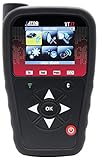
Overview: The ATEQ VT37 is a professional-grade TPMS diagnostic and programming tool designed for comprehensive sensor management across diverse vehicle makes. It supports full vehicle coverage for activation, diagnostics, and programming of over 20 aftermarket sensor brands, functioning as a standalone reset device or integrating with bi-directional scan tools for complex imports.
What Makes It Stand Out: Its universal compatibility—spanning Domestic, European, and Import vehicles—and ability to display precise relearn procedures set it apart. The VT37 eliminates guesswork by guiding users through make/model-specific reset steps and enables OBD pairing for seamless Import vehicle diagnostics, a feature rare in mid-tier tools.
Value for Money: Priced competitively for workshops, it replaces multiple niche tools by covering 99% of vehicles. While pricier than basic reset tools, its programming versatility and elimination of dealership dependency justify the cost for professionals handling frequent sensor replacements or tire rotations.
Strengths and Weaknesses: Strengths: Extremely broad coverage; intuitive standalone operation; clear procedure guidance; durable build. Weaknesses: Steeper learning curve for DIYers; lacks advanced diagnostics like battery status checks; requires separate scan tool for some Import procedures.
Bottom Line: An indispensable workshop tool for technicians needing reliable, universal TPMS programming and activation. Highly recommended for professionals, though overkill for casual home use.
2. ATEQ Quickset TPMS ECU Reset Tool - Coverage for Most Asian Import Vehicles
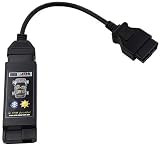
Overview: Tailored for Asian import vehicles, the ATEQ Quickset simplifies TPMS resets for brands like Honda, Toyota, and Subaru. It excels at storing two wheel sets for seasonal tire swaps and transferring sensor IDs to the vehicle’s ECU without complex diagnostics.
What Makes It Stand Out: The dual-wheel-set storage is ideal for drivers alternating winter/summer tires, saving repeated relearning. Its plug-and-play design requires no PC updates or additional tools, focusing purely on efficient reset functionality for 12+ Asian brands.
Value for Money: Affordable for import specialists, it’s cost-effective versus dealership fees for routine resets. However, its narrow scope (Asian-only) limits versatility; buyers with mixed-fleet vehicles may need supplementary tools, reducing long-term value.
Strengths and Weaknesses: Strengths: Effortless seasonal tire swaps; reliable ID transfer; compact and user-friendly; no software updates needed. Weaknesses: Exclusively for Asian models; no diagnostic capabilities (e.g., DTC reading); incompatible with Domestic/European cars.
Bottom Line: The top choice for import-focused garages or owners of multiple Asian vehicles needing hassle-free tire rotation resets. Not suitable for mixed-fleet users or those requiring diagnostics.
3. XTOOL TP150 TPMS Programming Tool, Universal TPMS Relearn/Reset/Activate Tool(315/433MHz), Tire Sensor Programmer for XTOOL TS100 Only, Tire Pressure Monitoring System Diagnostic Tool

Overview: The XTOOL TP150 is a budget-friendly TPMS relearn tool designed exclusively for pre-programmed sensors or XTOOL TS100-series sensors. It supports activation, reset, and basic diagnostics (pressure/temperature) but requires strict compatibility adherence.
What Makes It Stand Out: Its low price point and portability appeal to DIYers, offering activation for 315/433MHz sensors and simple OBD reset functions. However, it’s severely constrained—it only works with XTOOL sensors or pre-programmed units, ruling out universal sensor support.
Value for Money: Very affordable upfront, but hidden costs arise if paired with non-XTOOL sensors (which it rejects). Best value when bundled with XTOOL TS100 sensors; otherwise, frequent sensor replacements negate savings. Outperforms ultra-cheap tools but lags behind versatile competitors.
Strengths and Weaknesses: Strengths: Compact; easy activation; reads basic sensor data; cost-effective with XTOOL sensors. Weaknesses: Sensor compatibility limitations; complex PC-based updates; no programming for non-XTOOL sensors; frequent software errors reported.
Bottom Line: A viable budget option only for loyal XTOOL ecosystem users. Avoid if using third-party sensors—opt for more flexible tools despite higher initial cost.
4. VXDAS TPMS Relearn Tool Only for GM Vehicles (2006-2024 Chevy/Buick/GMC/Opel/Cadillac) Original Sensor with 315/433 MHz, Tire Sensors Pressure Monitor System Reset Tool OEC-T5-2025 Edition

Overview: This dedicated tool targets GM owners (2006–2024 models), enabling quick sensor activation and reset for 315/433MHz OEM sensors. It’s engineered for simplicity, requiring no software updates or external devices beyond basic Learn Mode initiation.
What Makes It Stand Out: Precision GM compatibility and a streamlined one-button operation make it ideal for tire shops specializing in GM fleets. The immersion gold circuit board ensures reliability, and its 1–2 minute activation process saves significant time versus manual methods.
Value for Money: Exceptional for GM-centric users at its price. Avoids dealership fees for routine resets and minimizes downtime during tire swaps. However, its single-brand focus offers zero utility for non-GM vehicles, limiting broader workshop value.
Strengths and Weaknesses: Strengths: Plug-and-play ease; rapid activation; robust build quality; perfect for GM tire rotations. Weaknesses: GM-exclusive (no imports/domestics); requires fully charged OEM sensors; incompatible with aftermarket sensors or trucks >4 tires.
Bottom Line: The definitive GM-specific reset tool—highly recommended for Chevrolet, Buick, or Cadillac owners/tire shops. Irrelevant for non-GM vehicle fleets.
5. Autel MaxiTPMS TS501 PRO TPMS Programming Tool, Same as TS508, 2026 TPMS Relearn Tool Newer of TS501 TS408S, Activate Relearn 99% Sensors, Program Autel MX-Sensors [315/433MHz], TPMS Reset/Diagnosis
![Autel MaxiTPMS TS501 PRO TPMS Programming Tool, Same as TS508, 2026 TPMS Relearn Tool Newer of TS501 TS408S, Activate Relearn 99% Sensors, Program Autel MX-Sensors [315/433MHz], TPMS Reset/Diagnosis](https://m.media-amazon.com/images/I/51Y6p39IlsL._SL160_.jpg)
Overview: Autel’s TS501 PRO is a professional TPMS powerhouse, matching the TS508’s capabilities at a lower price. It diagnoses, resets, and programs Autel MX-Sensors (315/433MHz), featuring tire type selection, frequency testing, and OBD-based relearning for 99% of vehicles.
What Makes It Stand Out: Unmatched diagnostics—reading battery status, DTCs, and real-time sensor data—plus dual programming methods (OBD copy/auto-ID). The USB update system and RKE monitoring surpass older models, while its TS508-equivalent functionality undercuts competitors by $70.
Value for Money: Premium-priced but justified for workshops. Replaces multiple tools with its all-in-one diagnostics/programming, saving long-term costs versus piecemeal solutions. Requires Autel MX-Sensors (programming limitations noted), but overall offers elite versatility per dollar.
Strengths and Weaknesses: Strengths: Comprehensive diagnostics; broad coverage; future-proof updates; intuitive OBD programming. Weaknesses: MX-Sensor exclusivity; mandatory account registration; complex compatibility checks needed per vehicle.
Bottom Line: The gold standard for professional TPMS service. Worth the investment for shops prioritizing diagnostics depth and sensor flexibility—despite its brand-specific programming constraints.
6. ATEQ VT56 Universal TPMS Diagnostic Tool with OBDII Module
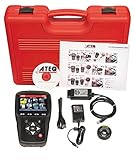
Overview: The ATEQ VT56 is a professional-grade TPMS diagnostic tool designed for comprehensive sensor management across all vehicle types. It integrates OBDII functionality for seamless diagnostics and relearning, targeting mechanics and serious DIYers needing broad compatibility.
What Makes It Stand Out: Full 100% vehicle coverage for sensor diagnosis and activation—uncommon in mid-tier tools—plus OBD relearn support for Domestic, European, and Import models. Its ability to program 25+ aftermarket sensor brands and Wi-Fi updating (with VIN barcode scanner for quick vehicle ID) eliminates manual input errors and streamlines workflows.
Value for Money: Priced competitively against premium brands, it justifies cost through universal compatibility and future-proof Wi-Fi updates. While pricier than basic tools, it avoids recurring subscription fees seen in some rivals, making it economical for frequent use.
Strengths and Weaknesses:
Pros: Unmatched sensor brand support; robust OBDII integration; efficient VIN scanning; reliable for complex European models.
Cons: Steeper learning curve for beginners; no mobile app connectivity; requires occasional manual updates.
Bottom Line: An essential investment for professionals needing universal coverage and dealership-level functionality without subscription traps. Highly recommended for shops servicing diverse fleets.
7. Autel MaxiTPMS TS508WF TPMS Programming Tool, 2026 Upgrade WiFi Ver. of TS508 TS501 TS408 TS601, Tire Pressure Monitor, Program MX-Sensors 315/433MHz, Relearn Activate All Sensors, TPMS Reset Diagnose

Overview: Autel’s TS508WF is a 2026-upgraded, tablet-free TPMS tool offering lifetime Wi-Fi updates. It consolidates functions from older Autel models (TS508/TS408) into one device, focusing on MX-sensor programming and OBD2 diagnostics for modern vehicles.
What Makes It Stand Out: Unique dual-mode operation (Quick and Advanced) speeds up repairs, while direct OBD relearn writes sensor IDs to the ECU—a rarity. Lifetime Wi-Fi updates (no PC needed) and MX-sensor programming via OBD copy or auto-creation (6–8s/sensor) boost efficiency significantly.
Value for Money: At a mid-premium price, it outperforms tools like TS408 with critical upgrades. However, its MX-sensor exclusivity limits versatility versus universal tools like ATEQ VT56, making it ideal only for Autel sensor users.
Strengths and Weaknesses:
Pros: Blazing-fast sensor programming; seamless Wi-Fi updates; dual service modes; strong OBD diagnostics.
Cons: Only programs Autel MX-sensors; mandatory VIN compatibility checks; no third-party sensor support.
Bottom Line: Top pick for Autel MX-sensor adopters seeking speed and updates, but avoid if you need multi-brand flexibility. Register early to unlock full features.
8. OBDResource TPMS Relearn Tool for Jeep Ford BMW Nissan/Honda/Mazda/Dodge Series Vehicles, TPS10 Universal Tire Pressure Monitor Sensor Activate and Reset Tool [Upgrade of U508]
![OBDResource TPMS Relearn Tool for Jeep Ford BMW Nissan/Honda/Mazda/Dodge Series Vehicles, TPS10 Universal Tire Pressure Monitor Sensor Activate and Reset Tool [Upgrade of U508]](https://m.media-amazon.com/images/I/51eyeAjyOzL._SL160_.jpg)
Overview: The OBDResource TPS10 is a budget-friendly relearn tool tailored for specific brands (Jeep, Ford, BMW, etc.). It resets TPMS warnings after sensor replacement or tire rotation, targeting DIYers with common vehicles.
What Makes It Stand Out: Upgraded antenna and chip deliver faster signal strength versus predecessors, plus an 1.8-inch color screen with multilingual on-screen instructions. USB-updatable firmware and broad coverage for 8+ major brands (though not universal) enhance accessibility.
Value for Money: Exceptional for its sub-$50 price—saves dealership fees ($100+) for basic resets. However, it lacks programming/diagnostics, making it inferior to $100+ tools for advanced needs.
Strengths and Weaknesses:
Pros: Simple 4-step operation; affordable; strong signal; USB updates; compact design.
Cons: No sensor programming/data reading; incompatible with trucks >4 tires; Subaru requires extra scan tool; needs fresh AA batteries.
Bottom Line: A solid entry-level choice for Honda/Ford/Jeep owners needing quick resets, but professionals should opt for feature-rich alternatives.
9. Autel MaxiTPMS TS501 PRO, 2026 TPMS Programming Tool Same as TS508, Up of TS501 TS408S, Relearn Activate 99% TPMS Sensors, Program Autel MX-Sensor 315/433MHz, TPMS Reset & Diagnostics, Lifetime Update

Overview: The TS501 PRO is Autel’s cost-optimized 2026 upgrade, matching the TS508WF’s core functionality at a lower price. It handles MX-sensor programming, relearning, diagnostics, and lifetime updates, targeting budget-conscious pros.
What Makes It Stand Out: Near-universal 99% sensor coverage and three relearn methods (including OBD write) rival premium tools. Unique extras like frequency testing and tire-type selection—absent in TS408S—plus $65 savings over TS508WF make it a value powerhouse.
Value for Money: Best-in-class ROI: retains 95% of TS508WF’s features (minus Quick Mode) at half the typical pro-tool cost. Outshines TS408S while undercutting rivals like ATEQ in price-per-feature analysis.
Strengths and Weaknesses:
Pros: Lifetime updates; MX-sensor programming via OBD copy; frequency testing; economical.
Cons: MX-sensor exclusive; no Quick Mode; limited to “Advanced Mode”; requires VIN checks.
Bottom Line: The smartest buy for Autel users wanting TS508-level performance without overspending. Ideal for shops prioritizing value over brand variety.
10. SWQS EL-50448 TPMS Relearn Tool, Tire Pressure Monitor Sensor Activation Reset Tool OEC-T5 for Most Series Vehicles OEC-T5 TPMS System Programming Training Activation Tools (Orange)
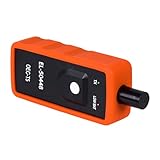
Overview: The SWQS EL-50448 is a no-frills, portable relearn tool for activating/resetting TPMS sensors on common 315/433MHz vehicles. It targets casual users needing basic warning-light clearance after tire service.
What Makes It Stand Out: One-button operation and rugged, waterproof design (6.1 x 2.4 inches) ensure reliability in garages. Its broad compatibility with GM, Ford, and Asian brands—and sub-2-minute reset process—makes it ultra-accessible for beginners.
Value for Money: Extremely affordable (<$40), but its barebones functionality (activation/reset only) lacks programming or diagnostics. Cheaper than OBDResource TPS10 but less versatile—justifiable only for infrequent, simple tasks.
Strengths and Weaknesses:
Pros: Plug-and-play simplicity; durable build; broad sedan/SUV coverage; pocket-sized.
Cons: No programming/data reading; 9V battery not included; ineffective for trucks; no updates.
Bottom Line: A functional “just works” tool for occasional DIYers with mainstream cars, but skip if you need diagnostics or sensor programming. Not for professionals.
Understanding the Unique TPMS Challenges in Import Vehicles
Decoding Diverse Communication Protocols
Import vehicles frequently utilize a wider array of communication protocols beyond standard OBD-II. European marques often rely heavily on proprietary CAN variants or older K-Line systems for TPMS communication, while certain Asian models might integrate LIN bus networks uniquely. A capable tool must seamlessly switch between these protocols without requiring manual configuration guesswork, ensuring reliable communication with the vehicle’s gateway module and the sensors themselves. Misinterpreting the protocol handshake is a common root cause of failed programming attempts.
Navigating Proprietary Sensor Technologies
Many import manufacturers implement sensor designs with specific cryptographic algorithms or initialization sequences. These aren’t just simple transmitters; they are secure nodes on the vehicle network. Generic tools often fail at the critical step of binding these sensors to the vehicle’s ECU because they lack the manufacturer-specific algorithms. The right tool must have deep, regularly updated knowledge of these proprietary handshake procedures to achieve a successful, stable sensor registration.
Handling Regional and Model-Year Variations
TPMS implementations can vary drastically not only between brands but also across model years and even regional specifications for the same model sold in different markets. A tool designed for the North American-spec vehicle might be completely incompatible with the European version due to different sensor frequencies, protocol structures, or ECU software revisions. Effective import specialist tools must account for these granular differences, often requiring VIN-specific procedure lookups.
Essential Features for Import TPMS Programming Tools
Comprehensive Protocol Library and Auto-Detection
The cornerstone feature is an extensive, meticulously maintained database covering all relevant protocols for global imports. Crucially, robust auto-detection is non-negotiable. The tool should automatically identify the vehicle’s specific communication method upon connection, eliminating technician guesswork and reducing connection errors. Manual protocol selection menus are prone to user error and slow down the diagnostic process significantly.
Deep Sensor Programming and Relearn Capabilities
Beyond basic sensor ID reading, the tool must offer full programming depth. This includes the ability to perform both static (key fob/button press) and dynamic (drive cycle) relearn procedures as mandated by the manufacturer. It should handle sensor initialization, including complex steps like synchronizing sensor IDs with the ECU, resetting learned parameters, and managing multi-phase activation sequences unique to certain luxury imports.
Advanced Diagnostics Beyond the Dashboard Light
A quality tool goes far beyond turning off the TPMS light. It should provide detailed system diagnostics: reading live sensor data (pressure, temperature, battery status), identifying specific faulty sensors (left front vs. right rear), diagnosing module communication faults, and interpreting obscure DTCs related to the TPMS network or gateway issues. This deep insight is vital for accurate first-time fixes on complex import systems.
Critical Considerations When Evaluating Tools
Software Update Frequency and Coverage
The TPMS landscape evolves constantly. New models, revised sensors, and updated protocols emerge regularly. A tool’s value is directly tied to how frequently and comprehensively its software is updated. Look for vendors with a proven track record of rapid updates covering the latest import models and legacy vehicles commonly serviced in independent shops. Infrequent updates quickly render a tool obsolete for newer imports.
Hardware Reliability and Connectivity
The physical tool must withstand the rigors of a busy shop. Robust construction, reliable Bluetooth or Wi-Fi connectivity (minimizing dropouts during critical programming sequences), and long battery life are essential. Flaky connections during sensor programming often corrupt the process, requiring a complete restart and potentially locking technicians out of the system temporarily. Wired options should feature high-quality, strain-relieved cables.
Integration with Existing Diagnostic Ecosystems
For shops already using comprehensive diagnostic platforms, seamless integration is a major efficiency booster. The ideal TPMS tool should either be a native module within your primary diagnostic suite or offer smooth data sharing capabilities. Avoiding context switching between disparate tools saves time and reduces the chance of overlooking related system interactions (e.g., TPMS faults linked to ABS module issues).
Mastering the Programming Process for Imports
Pre-Programming Vehicle Preparation Steps
Success starts before connecting the tool. Ensure the vehicle battery is stable (use a power supply), all tires are inflated to the correct pressure, and the technician understands the specific relearn procedure requirements (static vs. dynamic). Some imports require specific ignition states or even removing fuses – steps easily missed without proper guidance. The tool should clearly outline these prerequisites.
Executing Complex Relearn Sequences Correctly
Many import vehicles have intricate relearn sequences that must be followed exactly. This might involve turning the ignition on/off in precise patterns, using the vehicle’s menu system, pressing specific buttons within tight time windows, or driving at specific speeds. The programming tool must provide crystal-clear, step-by-step visual and textual instructions tailored to the identified VIN, minimizing reliance on memory or external manuals.
Verifying System Functionality Post-Programming
Never assume success after programming. The tool must allow for thorough verification: checking that all sensor IDs are correctly registered in the ECU, confirming live pressure readings match physical gauges, and ensuring no pending or permanent TPMS DTCs remain. Performing a full system scan post-programming is critical to catch any residual communication errors before the vehicle leaves the bay.
Overcoming Common Import TPMS Pitfalls
Diagnosing Intermittent Communication Failures
Intermittent TPMS faults are notoriously tricky on imports. The tool should offer advanced bus monitoring capabilities to capture glitches on the CAN, LIN, or K-Line networks that might not trigger a constant DTC. Features like live data graphing for communication signals can help pinpoint electrical noise, poor grounds, or failing gateway modules affecting TPMS stability.
Addressing Sensor Battery and Signal Strength Issues
While sensor replacement is sometimes necessary, tools should accurately report sensor battery health and signal strength. Weak signals are common culprits for erratic behavior, especially with sensors mounted behind complex alloy wheels. Understanding the reported signal quality helps determine if the issue is truly the sensor or an environmental/interference problem, preventing unnecessary replacements.
Managing Sensor Compatibility and Matching
Not all aftermarket sensors are created equal, especially for imports. The tool should provide guidance on sensor compatibility based on the vehicle’s requirements (frequency, protocol, physical dimensions). Crucially, it should ensure the correct sensor type is programmed; forcing an incompatible sensor often leads to immediate failure or system lockouts requiring dealer intervention.
Future-Proofing Your TPMS Investment
Adapting to Emerging Sensor Technologies
The industry is shifting towards more sophisticated sensors with features like integrated accelerometers for roll recognition, lower energy Bluetooth LE, and even vehicle-to-infrastructure communication. Evaluate tools based on the vendor’s roadmap and commitment to supporting these next-generation technologies as they appear on newer import models entering the service bay.
Considering Scalability for Shop Growth
As your shop potentially takes on more volume or diversifies into additional import brands, consider how easily the tool scales. Can it handle multiple concurrent programming tasks? Does the licensing model accommodate adding more bays or technicians cost-effectively? Cloud-based features for remote support or shared calibration data might become increasingly valuable.
Evaluating Vendor Support and Expertise
When complex import issues arise, responsive and knowledgeable technical support is invaluable. Assess the vendor’s support structure: Do they have specialists experienced with European or Asian TPMS specifically? What are typical response times? Access to real human experts who understand the nuances of programming a rare Japanese kei car’s TPMS is worth its weight in gold.
Frequently Asked Questions
Can I use a generic TPMS tool for most import vehicles?
Generic tools often fail with imports due to proprietary protocols and sensor programming requirements. While they might read basic codes, successful programming and deep diagnostics typically require tools specifically engineered for the complexities of European and Asian TPMS architectures. Generic tools frequently lead to incomplete relearns or undiagnosed underlying issues.
Why does my TPMS light come back on after programming sensors on an import car?
This usually indicates an incomplete relearn procedure, incompatible sensors, residual DTCs not cleared properly, or an underlying communication fault (like a weak signal or gateway module issue). Import vehicles often have multi-step relearn processes that generic tools or manual methods might not execute correctly. Comprehensive diagnostics are essential to pinpoint the exact cause.
How often do I really need software updates for my TPMS tool?
For import specialists, frequent updates (ideally monthly or quarterly) are critical. Manufacturers constantly change TPMS implementations. Without regular updates covering new models and protocols, your tool will quickly become unable to properly service newer imports entering your shop, leading to failed jobs and customer dissatisfaction.
Can I reuse OEM sensors when replacing tires on imports?
Reusing OEM sensors is often possible if the valve stem/core is undamaged and the sensor battery is healthy. However, many imports require the sensor to be re-registered or relearned with the ECU after removal. The critical step is verifying battery life and signal strength post-reinstallation using a capable diagnostic tool, as forcing reuse of a failing sensor causes recurring problems.
Do I need a separate J2534 pass-thru device for TPMS programming?
While some older procedures might require it, modern dedicated TPMS programming tools typically handle the necessary communication protocols internally without needing a separate J2534 device. The right specialist tool integrates the required passthru functionality specifically for TPMS tasks, streamlining the process.
How do I know if a sensor is truly faulty or if it’s a system communication issue?
A quality diagnostic tool provides live sensor data (pressure, temp, battery %, signal strength) and detailed DTCs. If live data shows inconsistent readings or “no signal” for a specific corner, but signal strength is weak, it might be interference. If data is completely absent or battery is dead, the sensor is likely faulty. Deep diagnostics distinguish sensor failure from network problems.
Are there specific TPMS challenges with older European imports (pre-2010)?
Yes, older European vehicles often use less common protocols (like single-wire CAN or K-Line variants) and may have sensors with unique physical mounting or initialization. Diagnostic tools need extensive legacy coverage. Additionally, sensor battery life is a major concern, and compatible replacements can be harder to source than for newer models.
Why does the relearn procedure take so much longer on some imports compared to domestics?
Import manufacturers frequently implement more complex, multi-phase relearn sequences for security and accuracy. This might involve specific ignition cycles, menu navigation, timed button presses, or extended drive cycles at precise speeds. Skipping steps or rushing the process, which generic tools often encourage, causes failures. Patience and following the tool’s exact guidance are key.
Can poor wheel alignment or suspension work affect TPMS?
Indirectly, yes. Significant changes to wheel geometry or ride height can sometimes trigger TPMS warnings on systems using wheel speed sensors for indirect monitoring (though less common now). More critically, improper torque during tire service can damage the sensor valve stem, leading to air leaks and eventual sensor failure that triggers the TPMS light.
What’s the biggest mistake shops make when programming TPMS on imports?
The most common critical error is skipping the comprehensive post-programming verification step. Assuming success after the light goes off leads to vehicles being returned with unresolved faults. Always use the tool to confirm all sensor IDs are registered, live data is accurate, and all related DTCs are fully cleared before the vehicle leaves the shop.
See Also
- How to Choose the 10 Best TPMS Programming Tools for 2026
- 10 TPMS Programming Tools That Solve Compatibility Issues in 2026
- 10 Best TPMS Programming Tools for Multi-Brand Compatibility in 2026
- 10 Best TPMS Programming Tools for DIY Enthusiasts in 2026
- 2026’s Top 10 TPMS Relearn Tools for Modern Vehicle Compatibility