Table of Contents
Ever found yourself stranded with a dead battery and a flat tire? It’s the kind of double-whammy that turns a minor inconvenience into a major headache. Modern dual-function air compressor jump starters promise to solve both problems in one compact device, eliminating the need for separate bulky tools rattling around your trunk. But with so many options flooding the market, how do you cut through the marketing noise to find a genuinely reliable, value-packed unit that won’t let you down when you’re stuck on a dark roadside? It’s not just about having a tool; it’s about having the right tool that delivers consistent performance without draining your wallet.
The concept is brilliantly simple: combine the life-saving power of a jump starter with the everyday utility of a high-pressure air compressor. Yet, not all dual-purpose units are created equal. Some prioritize raw jumping power at the expense of efficient inflation, while others offer decent airflow but lack the robust safety features essential for foolproof operation. True value emerges from a careful balance – a device that excels at both core functions, integrates smart safety protocols, and fits seamlessly into your vehicle’s storage without breaking the bank. This guide cuts through the hype, focusing solely on the critical features and practical considerations that define a truly worthwhile investment for your peace of mind and roadside readiness.
Top 10 Air Compressor Jump Starters
Detailed Product Reviews
1. GOOLOO A3 Jump Starter with Air Compressor, 3000A Portable Car Battery Booster (9.0 Gas/6.5L Diesel) with 150PSI Auto-Shutoff Tire Inflator, 12V Supersafe Lithium Jump Box Car Battery Jumper Starter

Overview:
This compact 3000A jump starter targets everyday drivers needing reliable roadside assistance. It combines battery boosting, tire inflation, and emergency tools in a weather-resistant design rated for extreme temperatures (-4°F to 140°F).
What Makes It Stand Out:
Its dual-function versatility shines with five preset inflation modes (including customizable settings) and a 150PSI auto-shutoff compressor that inflates a Tesla tire in 60 seconds. The integrated 10-layer safety system and sunlight-readable LED screen prevent overcharging and missteps during panic situations.
Value for Money:
Priced mid-range, it outperforms budget models with 1,000+ charge cycles and multi-use nozzles for bikes/balls. While less powerful than premium 8000A units, it covers 90% of common needs without inflating cost for excessive capacity most drivers won’t utilize.
Strengths and Weaknesses:
Strengths: Exceptional portability; intuitive pressure gauge; doubles as a 15W power bank; robust cold-weather performance.
Weaknesses: Limited to smaller engines (max 6.5L diesel); slower inflation than newer 160PSI competitors; no emergency gloves included.
Bottom Line:
Ideal for commuters with standard sedans/SUVs seeking an affordable, all-in-one solution. Its reliability and smart inflation features make it a top choice for routine emergencies, though heavy-duty truck owners should consider higher-amp alternatives.
2. Portable 10-in-1 Car Battery Jump Starter with Air Compressor 8000A 160PSI 45W Charger, Jump Starter Jump Box (All Gas 14L Diesel), Car Battery Jumper Starter Portable Jumper Cables, Gloves, Lights

Overview:
Positioned as a premium emergency powerhouse, this 8000A unit tackles extreme scenarios with FORCE START technology for dead batteries and 160PSI inflation. It’s engineered for large vehicles (up to 14L diesel) and extended outdoor use.
What Makes It Stand Out:
The industry-leading 8000A surge and included insulated gloves enable safe jumps on completely drained batteries even at -20°F. Its PD45W bi-directional charging refuels phones 4x faster than standard models while the 800-lumen 4-mode LED lights double as roadside warning signals.
Value for Money:
Justifies its higher price with unmatched cold-weather reliability and versatility—replacing separate tire pumps, power banks, and emergency kits. Competitors lack its combination of gloves, 24-month standby time, and rapid 1-hour recharge cycle.
Strengths and Weaknesses:
Strengths: Unrivaled jump power; fastest inflation (20 seconds for low tires); PD45W laptop charging; comprehensive safety suite.
Weaknesses: Bulkiest in class; no preset memory for repeat inflation; display visibility issues in direct rain.
Bottom Line:
A must-have for RV owners, truckers, or frequent adventurers facing harsh conditions. Despite its size, the all-inclusive toolset and extreme-weather resilience deliver exceptional long-term value for serious preparedness.
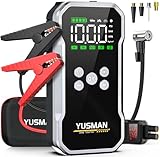
3. Jump Starter with Air Compressor, 8000A 160PSI Jump Starter Pack (10.0 Gas/7.0L Diesel), 12V Car Jump Starter, Battery Jump Starter with Display, Smart Jumper Cables, 2 LED Light
Overview:
This 8000A jump starter prioritizes user-friendly operation for families and casual drivers, supporting engines up to 10L gas. It integrates tire inflation, power banking, and emergency lighting in a lightweight EVA case.
What Makes It Stand Out:
Smart jumper cables with auto-safety detection prevent reverse-polarity errors—a critical feature for beginners. The 160PSI inflator’s noise-reduction chip operates 40% quieter than competitors while maintaining 35L/min airflow for stress-free use at gas stations.
Value for Money:
Offers the lowest cost per function among 8000A models, bundling 15,800mAh power banking and a storage case. While slower to recharge than Product 2, its 45-jump capacity and 3-mode flashlight provide comparable utility at a more accessible price point.
Strengths and Weaknesses:
Strengths: Beginner-safe clamps; quiet inflation; compact EVA case; excellent battery longevity.
Weaknesses: Lacks fast-charging ports (max 18W); inflator hose feels flimsy; no pressure memory function.
Bottom Line:
Perfect for new drivers or backup vehicle kits where simplicity trumps speed. Its safety focus and portability make it a smart daily-driver essential, though tech enthusiasts may prefer faster-charging alternatives.
4. WOLFBOX 4000A Jump Starter with 160PSI Air Compressor, 12V Car Battery Booster, 65W Fast Charge, 88.8Wh Portable Tire Inflator, LED Display for 10L Gas & 10L Diesel Engines, LED Light, Jumper Cables

Overview:
WOLFBOX’s precision-engineered unit balances power and portability for mid-size vehicles, boasting 4000A output and IP64-rated durability. It uniquely targets efficiency with rapid 65W charging and industry-leading inflation speeds.
What Makes It Stand Out:
Its 45L/min compressor inflates pickup tires in 2.5 minutes—the fastest in class—and the 88.8Wh battery supports 65W laptop charging. The -4°F operational threshold and 400-lumen spotlight (3x brighter than average) excel in true emergencies.
Value for Money:
Premium-priced but justified by commercial-grade build quality and speed. Outperforms similarly priced rivals with dual USB-A ports and continuous DC output for tools, though the separate charger requirement adds minor cost.
Strengths and Weaknesses:
Strengths: Unbeatable inflation speed; rugged all-weather design; versatile 65W output; bright emergency lights.
Weaknesses: Charger sold separately; limited to 10L engines (less than Product 2); display lacks unit-switching during inflation.
Bottom Line:
A specialist’s dream for quick tire fixes and power-intensive jobs. Ideal for contractors or off-roaders prioritizing speed and durability, but casual users might find its capabilities over-specified for daily needs.
5. Jump Starter with Air Compressor, 5000A Peak Car Battery Jump Starter(9.0 Gas/8.0L Diesel), 160PSI 12V Jump Box Car Battery Jumper Starter Portable with Smart Jumper Cables, LED Lights, LCD Display

Overview:
This 5000A mid-tier jump starter delivers balanced performance for most passenger vehicles, combining robust starting power with a feature-rich inflator. Its intelligent safety systems cater to safety-conscious drivers.
What Makes It Stand Out:
The auto-boost function detects critically low batteries and delivers an extra surge—unique among competitors. The backlit LCD provides real-time pressure readings with ±1 PSI accuracy, and the detachable hose simplifies hard-to-reach valve stems.
Value for Money:
Strikes the sweet spot between cost and capability. More affordable than 8000A models yet outperforms 3000A units with 50 jump starts per charge and comprehensive 10-layer protection, making it the optimal value for average sedan/SUV owners.
Strengths and Weaknesses:
Strengths: Intelligent low-voltage recovery; precise pressure control; quiet operation; includes 5 nozzles.
Weaknesses: Single USB-A port limits device charging; slower recharge (2+ hours); no PD fast-charging support.
Bottom Line:
The most pragmatic choice for daily commuters seeking reliability without overspending. Its adaptive tech and thoughtful design earn it our strongest recommendation for mainstream vehicle owners.
6. Jump Starter with Air Compressor, 5000A 160PSI Battery Jumper Starter Portable (9.0 Gas/8.0L Diesel), 12V Jump Box Car Battery Jump Starter with Smart Jumper Cables, LED Light, LCD Display

Overview: This compact 5000A jump starter delivers essential emergency power for 12V vehicles up to 9.0L gas/8.0L diesel engines. It integrates a 160PSI air compressor, power bank, and LED light into a travel-friendly 2.12lb package, targeting drivers needing reliable roadside assistance without bulk. What Makes It Stand Out: Its standout feature is the wireless air compressor with real-time pressure monitoring, automatic shutoff, and 4 inflation units—uncommon in this price tier. The smart jumper cables provide visual error alerts for spark-free safety, while the LCD display offers clear operational feedback during jumps or inflation. Value for Money: Priced competitively, it outperforms basic jump starters by bundling critical functions (jumping, inflation, power bank) without significant cost inflation. Though less powerful than higher-amp rivals, it covers most passenger vehicles adequately, making it a sensible investment for everyday drivers versus single-function alternatives. Strengths and Weaknesses: Strengths: True wireless compressor flexibility; intuitive safety alerts; excellent cold-weather resilience (-4°F); includes storage box and multiple nozzles. Weaknesses: Lower jump capacity (50 starts) than competitors; requires 70%+ charge for reliable jumps; compressor runtime limited to 25 minutes. Bottom Line: An ideal entry-mid-tier solution for commuters and families prioritizing reliability and versatility. Its compressor integration and safety focus justify the cost, though heavy-duty truck owners should consider higher-amp models.
7. ANFLAG Car Jump Starter with Air Compressor 160PSI, 7000A Car Battery Jumper Starter Portable 12V Jump Box(All Gas/12L Diesel), Cordless Tire Inlfator, 26800mAh Powerbank, Led Lights, Safety Hammer

Overview: This 7000A powerhouse combines extreme starting capability for all gas/12L diesel engines with a robust 160PSI tire inflator and 26800mAh power bank. Its 8-in-1 functionality—including a safety hammer and 600-lumen light—caters to adventurers needing comprehensive emergency support. What Makes It Stand Out: The standout feature is the unmatched 7000A peak current with FORCE START for dead batteries, paired with a rapid 45L/min compressor that hits 30 PSI in 2 minutes. The 3.3" smart display, 24-month standby life, and IP65 rating for dust/moisture resistance elevate its all-terrain readiness. Value for Money: Justifies a premium price through exceptional versatility and durability. The massive power bank (1,000+ cycles), safety hammer, and extended cold-weather operation (-4°F) deliver more utility per dollar than single-purpose units, especially for frequent travelers or off-roaders. Strengths and Weaknesses: Strengths: Industry-leading jump power; fastest inflation speed; longest battery standby; V-0 fireproof materials; comprehensive safety suite. Weaknesses: Heavier than competitors; no explicit mention of included storage; BOOST function may drain battery faster during repeated attempts. Bottom Line: A top-tier choice for demanding users seeking maximum power and multifunctionality. Its premium features and rugged design offer outstanding long-term value despite a higher initial cost.
8. Portable Car Jump Starter with Air Compressor, ACEZUK 150PSI 8000A Jump Starter (All Gas/10.0L Diesel), 12V Battery Jump Box Car Battery Jumper Starter with 3.4" LCD Display, 2 Lights

Overview: ACEZUK’s 8000A model targets large-vehicle owners with support for all gas/10.0L diesel engines. It merges high-amperage starting, a 150PSI compressor, dual LED lighting, and power bank functionality into a streamlined emergency kit ideal for trucks and SUVs. What Makes It Stand Out: The dual-integrated lighting system (main flashlight + auxiliary pump light) and reinforced 8000A clamps are unique. Its 3.4" LCD provides exceptional pressure visibility during inflation, while 10 safety protections—including temperature monitoring—enhance operational confidence in extreme conditions. Value for Money: Offers aggressive power at a mid-range price, outperforming lower-amp rivals for heavy-duty use. The dual lights add practical nighttime utility without significant cost increase, though the compressor’s 35 L/min flow lags behind top-tier competitors like Product 7. Strengths and Weaknesses: Strengths: Highest jump amp rating here (8000A); dual lighting for usability; intuitive LCD interface; robust safety suite; broad vehicle compatibility. Weaknesses: Compressor max pressure (150 PSI) trails rivals; no explicit power bank capacity stated; storage box not confirmed in features. Bottom Line: Highly recommended for truck/SUV owners needing brute-force starting power. Its lighting innovations and safety features provide excellent value, though compressor speed could be improved.
9. Jump Starter with Air Compressor, 8000A Car Battery Jump Starter (9.0 Gas/8.0L Diesel), 180PSI Car Battery Jumper Starter Portable 12V Jump Box with Jumper Cables, LED Light, Power Bank, LCD Display
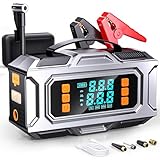
Overview: This 8000A jump starter emphasizes precision inflation with an industry-leading 180PSI compressor and 20000mAh power bank. Designed for accuracy-focused users, it supports 9.0L gas/8.0L diesel engines while featuring real-time pressure monitoring and versatile emergency lighting. What Makes It Stand Out: Its 180PSI compressor (highest here) and sunlight-readable LCD with preset auto-shutoff set it apart. The detachable hose for hard-to-reach valves and ability to inflate tires from 30→36 PSI in 60 seconds demonstrate thoughtful engineering for real-world usability. Value for Money: Excels in inflation performance, making it worth a slight premium over 160PSI models. The 20000mAh power bank reliably charges devices mid-crisis, and the comprehensive safety suite minimizes replacement risks—ideal for daily commuters valuing precision over raw power. Strengths and Weaknesses: Strengths: Highest max PSI (180); fastest targeted inflation; detachable hose convenience; clear pressure display; 3 lighting modes. Weaknesses: Lower diesel support (8.0L vs. 10L+ in rivals); 50-start limit; requires 70%+ charge like Product 6. Bottom Line: The best pick for drivers prioritizing tire inflation accuracy and reliability. Its niche strengths justify the cost for meticulous users, though heavy diesel owners may prefer higher-capacity alternatives.
10. CZKBG 10-in-1 Portable Car Battery Jump Starter with Air Compressor, 6000A 160PSI Portable Car Jumper Starter (All Gas 12L Diesel), 12V Jump Box Car Battery Jump Starter with Jumper Cables, Lights

Overview: CZKBG’s 10-in-1 unit delivers 6000A starting power for all gas/12L diesel engines alongside a turbocharged 160PSI compressor. Marketed as a 2025 “trendsetter,” it emphasizes speed (45L/min inflation) and extreme brightness (800-lumen light) for emergency scenarios. What Makes It Stand Out: The standout features are its 800-lumen LED (6-7x brighter than peers) with 4 modes, 13 safety protections, and “turbocharged” inflation hitting 25 PSI in 2 minutes. The sunlight-viewable screen with ±1 PSI accuracy and 24-month standby life enhance practicality. Value for Money: Exceptional value through aggressive feature bundling—especially the ultra-bright light and extensive safety net. While 6000A trails Product 7/8, its all-gas/12L diesel claim and rapid inflation deliver robust performance at a likely mid-tier price point. Strengths and Weaknesses: Strengths: Brightest illumination here; fastest inflation speed; 13 safety layers; long standby life; intuitive auto-shutoff; 4 light modes double as warning signals. Weaknesses: Lower peak amps than competitors; “10-in-1” includes basic features (e.g., pressure gauge) others standardize; storage box not explicitly listed. Bottom Line: A compelling all-rounder for budget-conscious buyers seeking maximum features. Its lighting prowess and safety focus make it a top value recommendation despite moderate jump power.
Why Dual-Functionality Matters Beyond Convenience
Solving the Two Most Common Roadside Emergencies Simultaneously
Owning a single device that tackles both dead batteries and low tires addresses the two most frequent reasons drivers need roadside assistance. Imagine pulling over due to a slow leak; instead of waiting for help, you can reinflate your tire in minutes. If that tire change drains your battery, the same unit revives your engine. This integrated solution streamlines your emergency kit, reducing clutter and ensuring you’re prepared for interconnected problems without juggling multiple tools and cables.
Maximizing Value Through Practical Redundancy
Purchasing separate high-quality jump starters and portable compressors often costs significantly more than a well-chosen dual-function unit. Beyond the initial savings, you gain space efficiency in your vehicle and eliminate the risk of forgetting one critical tool during an emergency. The true value lies in this practical redundancy – one reliable device serving two indispensable purposes, making it a smarter, more economical cornerstone for your vehicle’s emergency preparedness.
Critical Features for Jump Starting Performance
Understanding Peak Amps vs. Cranking Amps
Don’t be misled by inflated peak amp ratings alone. While peak amps indicate the absolute maximum instantaneous power (useful for the initial jolt), cranking amps (CA) or cold cranking amps (CCA) are far more important for reliably starting an engine, especially in cold weather. Look for units clearly specifying 1500+ peak amps and at least 400-600 CA/CCA for dependable starts on most passenger vehicles and light trucks. Higher ratings become crucial for larger engines or extremely cold conditions.
Battery Technology and Capacity Considerations
Lithium-ion (Li-ion) batteries, particularly Lithium Iron Phosphate (LiFePO4), dominate the market for good reason. They offer superior power density, lighter weight, faster recharging, and significantly longer lifespans compared to older lead-acid types. Prioritize units with capacities of 15,000mAh or higher for multiple jump starts on a single charge and sufficient power reserves for inflation tasks. LiFePO4 variants provide enhanced safety and thermal stability, a critical factor for a device storing high energy.
Essential Safety Protections Non-Negotiable
A jump starter without robust safety features is a potential hazard. Mandatory protections include:
- Reverse Polarity Protection: Prevents damage and sparks if clamps are accidentally connected backwards.
- Short Circuit Protection: Automatically shuts down if a short circuit is detected.
- Overload Protection: Guards against drawing too much current.
- Overcharge/Over-Discharge Protection: Extends battery life and prevents damage.
- Spark-Proof Technology: Ensures clamps can be connected safely even if the battery is deeply discharged, minimizing fire risk. Never compromise on these safety layers.
Essential Features for Effective Tire Inflation
Achieving Sufficient PSI for Various Vehicles
Tire inflation capability is defined by maximum PSI output. While standard passenger car tires typically require 30-35 PSI, motorcycles might need 40-50 PSI, and larger SUVs/trucks often require 50-80 PSI. For true versatility, especially if you tow trailers or drive larger vehicles, seek units capable of reaching at least 150 PSI. Some advanced models hit 200 PSI, covering almost all passenger and light truck applications, including run-flat tires which often need higher pressures.
Inflation Speed and Airflow Efficiency (CFM)
Maximum PSI tells you the pressure limit, but Cubic Feet per Minute (CFM) indicates how quickly the compressor can deliver air. Higher CFM ratings mean faster inflation times. For practical use on a flat tire, a unit delivering 1.0 CFM or higher at 30-50 PSI is ideal. Lower CFM models (e.g., 0.5 CFM) will work but can take 5-10 minutes or more to fill a standard car tire from flat, which is impractical during an emergency. Check manufacturer specs for CFM at common tire pressures.
Integrated Pressure Gauges and Auto-Shutoff
Manually checking pressure with a separate gauge while inflating is cumbersome and error-prone. The most user-friendly dual-function units feature built-in, easy-to-read digital pressure gauges. Even better is an automatic shut-off feature that stops the compressor precisely when your target PSI is reached. This prevents over-inflation (which damages tires), saves battery power, and streamlines the process significantly, especially in poor lighting conditions.
Prioritizing Portability and Usability
Size and Weight: Fitting Seamlessly in Your Vehicle
The whole point of portability is having the unit readily accessible. Bulky units end up stored in the trunk, forgotten until needed. Aim for a device that fits comfortably in a glove compartment, center console, or under a seat. Most quality Li-ion models weigh between 2-5 pounds and are roughly the size of a small power bank or large smartphone. Consider the shape too – a slim, rectangular profile is often easier to stow than a bulky cylinder.
Cable Length and Clamp Design for Real-World Use
Short, stiff jumper cables are frustrating and unsafe. Look for units with jumper cables at least 18-24 inches long, made from thick-gauge wire (12-16 AWG is good), and featuring sturdy, well-insulated clamps with strong springs. Clamps with protective rubber covers reduce the risk of accidental shorting. Similarly, the inflation hose should be long enough (3-5 feet) to reach all tires comfortably without repositioning the main unit constantly.
Intuitive Controls and Clear Status Indicators
When you’re stressed on the side of the road, you need simplicity. Controls should be straightforward – a clear power button, dedicated jump start button (often requiring a safety slide or double-press), and simple inflation controls. Bright, easy-to-understand LED indicators for battery level (both the jump starter’s internal battery and, ideally, the vehicle battery status), charging status, and error conditions are vital. Avoid overly complex menu systems requiring multiple button presses.
Smart Features Enhancing Value and Reliability
Multi-Device Charging Capabilities
Many modern units double as high-capacity power banks, featuring USB-A and USB-C ports. This is invaluable for keeping your phone charged during an emergency or while waiting for assistance. Look for models offering at least 18W total output with Power Delivery (PD) support for fast charging modern smartphones and tablets. This transforms the device from a single-purpose tool into an essential everyday power source.
Built-In Emergency Lighting
Integrated, bright LED work lights are far more practical than separate flashlights. Seek units with multiple lighting modes: a steady high-lumen floodlight for illuminating the engine bay or tire area, a dimmer mode for preserving night vision, and a flashing SOS mode for signaling distress. The lights should be positioned to cast light where you need it during jump-starting or inflation tasks.
Durability and Environmental Resistance
Your emergency tool must withstand the environment inside your vehicle – extreme heat in summer, freezing cold in winter, and potential bumps. Prioritize units with rugged, impact-resistant outer casings. While full submersion waterproofing (IP67/IP68) is rare and often overkill, a good splash and dust resistance rating (IP65 or higher) ensures reliability even in rain, snow, or dusty conditions. Check for sealed ports and robust construction.
Making the Smart Value Choice
Balancing Initial Cost Against Long-Term Reliability
The cheapest option often leads to frustration and replacement costs down the line. Invest in a unit from a reputable brand known for quality components and safety certifications (like CE, FCC, RoHS). While the upfront cost might be higher, a reliable dual-function tool that lasts 3-5 years (or more with LiFePO4) provides vastly superior value per use than a $30 unit that fails after one jump start. Consider warranty length (2+ years is good) as a vote of confidence from the manufacturer.
Reading Between the Lines of Marketing Claims
Be a critical consumer. If a unit claims “2000 Peak Amps” but is incredibly small and lightweight, be skeptical – physics dictates it likely can’t sustain that power. Look for independent reviews focusing on real-world jump-start success rates and inflation times, not just spec sheets. Pay attention to mentions of overheating during inflation or inconsistent performance, which are red flags for poor internal components or inadequate thermal management.
Ensuring Genuine Dual-Function Integration
True integration means the air compressor and jump starter share the same core battery and circuitry efficiently, not just being glued together. A well-designed unit shouldn’t require you to power down the jump function to inflate a tire, or vice-versa. Check if the inflation hose and jumper cables can be connected simultaneously without interference. The best designs allow seamless switching between functions with minimal setup time.
Frequently Asked Questions
How long does it take to recharge the jump starter itself?
Most quality units recharge fully from a depleted state in 1.5 to 3 hours using the included AC adapter or a compatible car charger. Faster charging times (under 2 hours) are common with higher-wattage inputs (18W+) and LiFePO4 batteries. Always refer to the specific manufacturer’s specifications for accurate recharge times.
Can these units start a vehicle with a completely dead battery?
Yes, that’s their primary purpose. They provide the necessary cranking amps to start an engine when the vehicle’s own battery has insufficient charge, even if it’s completely drained. Ensure the jump starter itself has sufficient charge (usually indicated by LED lights) before attempting.
How many jump starts can I get on a single charge?
This varies significantly based on the unit’s capacity (mAh), the vehicle’s engine size, and ambient temperature. A mid-range unit (e.g., 18,000mAh) might provide 15-25 full starts for a standard sedan under ideal conditions. Larger vehicles or cold weather will reduce this number. Most users won’t need more than 1-2 starts before recharging the unit.
Is it safe to leave the jump starter plugged in for trickle charging?
Generally, yes, for modern lithium-based units. They incorporate sophisticated battery management systems (BMS) that stop charging once full and prevent overcharging. However, it’s still best practice to unplug it once charged, especially for long-term storage, to minimize any minimal standby drain and maximize overall battery lifespan.
Can I use the air compressor while the jump starter is plugged in and charging?
Most units do not allow simultaneous charging via AC/car adapter and compressor operation due to power draw limitations. However, you can typically use the compressor while the jump starter is powering other devices (like your phone) via USB, as long as the main unit has sufficient charge. Always check the specific model’s manual.
How accurate are the built-in tire pressure gauges?
Integrated digital gauges on reputable units are generally accurate within +/- 1-2 PSI for everyday use, which is sufficient for most passenger vehicles. For absolute precision (e.g., track days), a dedicated high-end gauge is still recommended, but the built-in gauge is perfectly reliable for maintaining safe road pressures and emergency inflation.
Will the compressor work on large truck or RV tires?
It depends entirely on the unit’s maximum PSI and CFM rating. Standard passenger car/SUV units (max 150 PSI) can handle most light truck tires. For larger commercial truck tires or RVs requiring 100+ PSI, you need a specialized high-PSI compressor (200 PSI+), which is less common in compact dual-function jump starters. Check the max PSI spec carefully against your vehicle’s requirements.
How do I maintain the lithium battery for longevity?
Avoid storing the unit fully depleted or fully charged for extended periods (3-6 months); 50% charge is ideal. Store it in a cool, dry place, away from extreme heat (like a hot car dashboard) or freezing temperatures. Recharge it every 3-4 months if not in regular use. This significantly extends the usable life of the lithium cells.
Can I jump start a vehicle in the rain?
While the unit itself has safety features, jump-starting any vehicle in heavy rain carries inherent risks due to water conductivity near electrical components. Exercise extreme caution. If possible, pull under cover. Ensure jumper clamps are connected securely before powering on the jump starter, and keep connections dry. Never jump start if standing in deep water.
What’s the biggest mistake people make with these devices?
The most common error is failing to recharge the unit after use or letting it sit unused for years until an emergency. Lithium batteries degrade if left deeply discharged. Make it a habit to check the charge level every few months and top it up. A dead jump starter in your trunk is useless when you need it most.
See Also
- 10 Best All-in-One Jump Starters with Air Compressor for Outdoor Enthusiasts in 2026
- 10 Expert-Recommended Air Compressor Jump Starters for SUV Owners in 2026
- 10 Best Air Compressor Jump Starters for SUV Owners in 2026
- The Complete Guide to the 10 Best Air Compressor Jump Starters for SUVs
- 10 Premium Air Compressor Jump Starters for SUV and Truck Owners (Worth the Investment)