Table of Contents
Tired of wrestling with bulky, corded air compressors that tether you to a single spot in the garage? Imagine effortlessly topping off your car tires before a road trip, inflating a basketball for the kids in the driveway, or powering small pneumatic tools for weekend projects – all without hunting for an outlet or tripping over a cord. Cordless air compressors have evolved from niche gadgets into genuinely practical tools for everyday home maintenance, offering unprecedented freedom and convenience. For the modern DIYer or homeowner tackling routine tasks, the shift towards battery-powered inflation is about more than just novelty; it’s about reclaiming time, space, and simplicity in your workflow.
The true magic of a cordless compressor lies in its ability to dissolve the barrier between “I need air” and “I can get air” – right where you are. No more dragging heavy units across the yard or waiting for a cord reel to unspool. This isn’t about replacing industrial-grade compressors for demanding professional use; it’s about solving the common, frequent annoyances that keep small jobs from getting done quickly. Finding the right cordless model, however, hinges on understanding what “value” truly means in this context. It’s not just the lowest sticker price; it’s the perfect intersection of reliable performance for your specific needs, smart battery technology, rugged build quality, and features that make the tool disappear into your routine until you need it. Let’s cut through the marketing noise and focus on what actually delivers lasting worth for your everyday tasks.
Top 10 Cordless Air Compressors
Detailed Product Reviews
1. DEWALT Tire Inflator Portable Air Compressor 20V MAX, Car Air Pump with Automatic Shut Off, LED Light, Tool Only (DCC020IB)

Overview:
The DEWALT DCC020IB is a versatile cordless tire inflator designed for automotive, bike, and recreational use. Powered by DEWALT’s 20V MAX battery system (battery sold separately), it features automatic shutoff, an LED light, and multi-source compatibility.
What Makes It Stand Out:
Its triple power flexibility—20V battery, 12V DC, or 110V AC—ensures usability anywhere. The threaded chuck guarantees secure valve connections, while heavy-duty rubber feet prevent “walking” during operation. High-volume modes handle inflatables like rafts, and the integrated LED aids nighttime use.
Value for Money:
Priced competitively for DEWALT’s professional-grade durability, it outperforms budget models with reliable shutoff accuracy and robust build quality. The 3-year warranty adds long-term peace of mind, though battery inclusion would improve value.
Strengths and Weaknesses:
Strengths: Universal power options; precise automatic shutoff; rugged design; versatile inflation modes.
Weaknesses: Battery sold separately; slightly bulkier than ultra-portable rivals; no built-in storage for cords/accessories.
Bottom Line:
Ideal for DEWALT ecosystem users needing a dependable, multi-scenario inflator. Its durability and power flexibility justify the investment for frequent drivers, despite the extra battery cost.
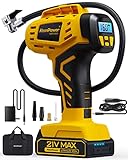
2. KeenPower Tire Inflator Portable Air Compressor - Super Fast - 21V Rechargeable Battery Powered Handheld 160PSI Tire Inflator, Dual Power Supply Modes, Portable Air Pump for Car Motorcycle E-Bike
Overview:
KeenPower’s 21V handheld inflator targets drivers seeking speed and reliability. It boasts dual power modes (battery or 12V car charger), 160 PSI capacity, and emergency-ready features like a multi-mode LED flashlight.
What Makes It Stand Out:
The standout feature is its 1-hour rapid battery charging and QC3.0 USB output for device charging—uncommon in rivals. The ergonomic handle, automatic shutoff, and 160 PSI range cover cars, motorcycles, and e-bikes efficiently.
Value for Money:
At mid-range pricing, its fast charging, dual power redundancy, and phone-charging capability deliver exceptional utility. The 12-month warranty and lifetime support enhance affordability versus premium brands.
Strengths and Weaknesses:
Strengths: Lightning-fast battery recharge; useful USB-C power bank; bright 3-mode flashlight; solid pressure accuracy.
Weaknesses: Battery life limits continuous use; not suitable for truck tires; charger port placement could be more accessible.
Bottom Line:
A top pick for commuters and adventurers prioritizing speed and emergency preparedness. The rapid recharge and device-charging features make it worth buying for daily reliability.
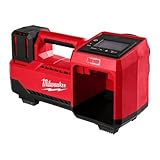
3. Milwaukee M18 Inflator 2848-20
Overview:
Milwaukee’s M18 Inflator is a high-speed cordless solution built for professionals. Optimized for passenger and light-truck tires, it leverages Milwaukee’s M18 battery system for rapid inflation without external power.
What Makes It Stand Out:
It’s the fastest in its class, topping off 33" light-truck tires in under 60 seconds. The included brass Schrader/Presta chucks and inflation needle add versatility for bikes and sports gear, while the compact design fits in tool bags.
Value for Money:
Priced higher than consumer models, it’s justified by professional-grade speed and M18 ecosystem integration. For tradespeople or frequent users, the time savings offset the cost versus slower inflators.
Strengths and Weaknesses:
Strengths: Unmatched inflation speed; durable all-brass fittings; M18 battery compatibility; lightweight portability.
Weaknesses: No AC adapter; limited to M18 batteries (sold separately); lacks auto-shutoff presets; premium price.
Bottom Line:
Essential for Milwaukee M18 users needing speed in demanding scenarios. Skip if you lack compatible batteries, but ideal for contractors or off-roaders valuing performance over budget.
4. AstroAI Cordless Tire Inflator Air Compressor 20V Rechargeable Battery Powered 160PSI Portable Air Pump with 12V Car Power Adapter Digital Pressure Gauge for Cars Motorcycles JY16P160-18(C2)Yellow

Overview:
AstroAI’s JY16P160-18 combines metal durability with dual power (20V battery or 12V car adapter). Its 160 PSI capacity, LCD screen, and fast inflation target everyday drivers seeking reliability.
What Makes It Stand Out:
The metal cylinder/gear construction enables 20-minute continuous runtime—unusual for portables. The backlit LCD shows preset/current pressure simultaneously, and it switches between PSI/bar/kPa units seamlessly.
Value for Money:
Excellent mid-tier value with included battery/charger and a sturdy build. Faster than budget models and cheaper than DEWALT/Milwaukee, it’s ideal for cost-conscious buyers needing consistent performance.
Strengths and Weaknesses:
Strengths: Robust metal internals; intuitive LCD; rapid 1-hour battery charging; versatile for cars/bikes/rafts.
Weaknesses: Slightly noisy operation; storage bag quality is basic; battery life lags behind KeenPower’s.
Bottom Line:
A dependable, well-rounded inflator for regular car owners. Its metal durability and dual power make it a smart budget-friendly upgrade from disposable pumps.
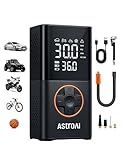
5. AstroAI L7 Tire Inflator Portable Air Compressor Cordless Mini Bike Pump with Digital Dual Values Display, 150 PSI Car Tires Air Pump with LED Lights&Pressure Gauge for Auto, Motorcycles, Bikes, Balls
Overview:
AstroAI’s L7 is an ultra-compact (under 1 lb) inflator with advanced pressure sensing. It targets cyclists and minimalist drivers with 150 PSI capacity, USB-C charging, and multi-mode lighting.
What Makes It Stand Out:
Its TrueGauge sensor samples pressure 200x/sec for class-leading accuracy (80%+ valid data rate). The 4000mAh battery inflates 8 car tires per charge, and USB-C I/O ports double as a power bank—perfect for trail emergencies.
Value for Money:
Priced competitively, the L7 overdelivers with pro-grade accuracy, 2x faster inflation (1.5 mins/tire), and emergency tool functionality. Beats similarly sized rivals in runtime and features.
Strengths and Weaknesses:
Strengths: Exceptional pressure accuracy; lightweight portability; long battery life; USB-C power bank; 3-mode emergency light.
Weaknesses: Lower max PSI (150 vs. 160) than some rivals; not for large trucks; smaller nozzle storage.
Bottom Line:
The best compact choice for cyclists, commuters, and safety-focused drivers. Its accuracy, portability, and power-bank feature make it indispensable for on-the-go reliability.
6. CRAFTSMAN Tire Inflator Portable Air Compressor, Cordless Mini Air Pump for Car Tires with Digital Tire Pressure Gauge, 6000mAh Battery Powered Air Pump, Max Pressure 150 PSI, 12V DC Corded

Overview: This compact CRAFTSMAN inflator delivers essential cordless convenience for maintaining tire pressure on the go. Its integrated 6000mAh battery and dual power options (cordless or 12V DC) target everyday drivers needing reliable roadside assistance or quick top-offs.
What Makes It Stand Out: The inclusion of five preset inflation modes (car, bike, motorcycle, ball, custom) and four pressure units ensures versatility across inflatables. The dual functionality as a power bank for devices via USB-C and the built-in LED light for emergencies significantly broaden its utility beyond basic tire inflation.
Value for Money: Priced competitively for mid-range models, it offers exceptional value through its multi-role design. The added accessories (multiple nozzles, charging cables) and dual-purpose capability (air pump + power bank) justify the cost compared to single-function alternatives.
Strengths and Weaknesses: Strengths: True portability (1.28 lbs), intuitive digital display, automatic shut-off, and USB device charging. Weaknesses: Battery life claims (4 tires) may vary in real-world conditions; 150 PSI max pressure is adequate but not exceptional for heavy-duty needs.
Bottom Line: An excellent all-in-one solution for commuters and road trippers prioritizing convenience and versatility. Its reliability for standard passenger vehicles and emergency extras make it a smart, justifiable investment for daily drivers.
7. OlarHike Cordless Tire Inflator Portable Air Compressor, 150PSI Dual Power - 6000mAh & 12V DC, Air Pump for Car Tires, Bike, Motorcycle, Balls with LED & Digital Pressure Gauge, Car Gifts

Overview: OlarHike’s dual-power inflator targets speed and flexibility, promising rapid inflation for cars, SUVs, and smaller inflatables using either its 6000mAh battery or 12V DC cord. It emphasizes user-friendly operation for routine maintenance.
What Makes It Stand Out: Its standout feature is the dual-power flexibility—seamless switching between cordless and continuous 12V operation. The ultra-bright dual LED display, automatic shut-off at preset pressure, and memory function for last settings enhance ease of use significantly over basic models.
Value for Money: Offers strong value for its speed-focused performance, especially given the high battery capacity claims (18 car tires per charge). It’s cost-effective for frequent users but loses value for heavy trucks due to the unexpected 51 PSI car tire limit.
Strengths and Weaknesses: Strengths: Very fast inflation (55s for +5 PSI on cars), robust battery life, intuitive interface, and USB device charging. Weaknesses: Artificial 51 PSI cap for cars/SUVs limits heavy-load utility; build quality feels less rugged than premium competitors.
Bottom Line: Ideal for sedan/SUV owners seeking speed and convenience for routine top-offs. Avoid if you drive trucks or need high-pressure inflation; otherwise, it’s a reliable, feature-rich choice for daily use.
8. ETENWOLF VORTEX S6 Tire Inflator Portable Air Compressor for Heavy-duty Vehicle, Cordless Air Pump for Car & Inflatables with 19200 mAh Battery, 100% Duty Cycle & Dual Cylinder Bike Pump, Vivid Orange

Overview: Engineered for heavy-duty tasks, the ETENWOLF VORTEX S6 tackles large tires (trucks, pickups, off-roaders) with industrial-grade power. Its massive 19200mAh battery and 100% duty cycle cater to professionals and adventure enthusiasts needing relentless performance.
What Makes It Stand Out: Unmatched for heavy vehicles: 1.5 CFM airflow inflates a 31" truck tire in 60 seconds, and the 100% duty cycle allows continuous use without overheating. The colossal battery (18 F-150 tires per charge) and 45W USB-C power delivery elevate it beyond typical inflators.
Value for Money: Premium-priced but justified for its niche. The dual-cylinder durability, rapid heavy-tire inflation, and emergency power bank capabilities offer exceptional ROI for truckers, off-roaders, or fleet managers where downtime is costly.
Strengths and Weaknesses: Strengths: Blazing speed on large tires, no duty-cycle breaks, extreme battery capacity, versatile 1000-lumen LED light. Weaknesses: Bulky/heavy (not for pocket storage); overkill for compact cars; orange color may deter some.
Bottom Line: The undisputed champion for heavy-duty applications. If you own trucks, large SUVs, or need relentless inflation power, this justifies every penny. Casual car owners should consider smaller models.
9. CRAFTSMAN V20 Air Compressor Portable, Cordless Tire Inflator, Up To 150 PSI Tire Pump, with Digital Pressure Gauge, Tool Only (CMCE521B)

Overview: A no-frills, tool-system-focused inflator designed for CRAFTSMAN V20 battery owners. It prioritizes core functionality—accurate pressure reading and portability—without extra bells and whistles, targeting existing ecosystem users.
What Makes It Stand Out: Seamless integration with the CRAFTSMAN V20 battery platform eliminates proprietary charging needs. The highly accurate digital gauge (±2 PSI) and ergonomic D-handle design prioritize reliability and user comfort during operation.
Value for Money: Best value for existing CRAFTSMAN V20 owners, as it leverages their current batteries. Standalone, it’s less compelling due to the lack of included battery or dual-power options, making it pricier per feature than all-inclusive kits.
Strengths and Weaknesses: Strengths: Precise pressure readings, comfortable grip, robust 150 PSI max, and ecosystem compatibility. Weaknesses: Requires separate V20 battery purchase; no built-in light or USB ports; limited accessories included.
Bottom Line: A solid, accurate inflator exclusively recommended for CRAFTSMAN V20 battery system owners. Without existing batteries, opt for models with included power sources for better overall value.
10. Tire Inflator Portable Air Compressor - 4X Faster Inflation, 160PSI Cordless Tire Pump with Dual Power (20V Battery & 12V DC), Auto Shut Off, Digital Gauge for Car, Motorcycle, E-Bike

Overview: This inflator emphasizes speed (“4X faster”) and compatibility, targeting e-bike/motorcycle owners and drivers needing rapid inflation. Its dual-power design (20V battery + 12V DC) and Makita cross-compatibility broaden its appeal.
What Makes It Stand Out: The aggressive speed claims and Makita 18V battery compatibility are key differentiators. The ergonomic handheld design with integrated LED light (multiple modes) and auto shut-off cater to usability in dim conditions or tight spaces.
Value for Money: Excellent value for Makita tool owners, eliminating the need for a dedicated battery. The fast inflation and broad vehicle compatibility (including e-bikes) justify the cost versus single-battery models, especially for multi-tool users.
Strengths and Weaknesses: Strengths: Rapid inflation, Makita battery flexibility, comfortable grip, versatile lighting. Weaknesses: “4X faster” claim lacks context; no built-in power bank function; battery not included (system-dependent).
Bottom Line: Highly recommended for Makita ecosystem users or those prioritizing speed for e-bikes/motorcycles. Standalone buyers should confirm battery compatibility, but it’s a top pick for its target audience.
Understanding Your Real Needs for Everyday Air Power
Before diving into features, it’s crucial to honestly assess what you’ll realistically use a cordless compressor for around your home. Misjudging your requirements is the fastest path to buyer’s remorse, whether you overspend on unnecessary power or end up with a unit that constantly falls short. Most homeowners primarily need inflation capability for tires (car, bike, lawn equipment), sports balls, and inflatables, alongside light-duty tasks like powering small brad nailers for trim work or blowing dust out of machinery. Understanding the air demands of these common tasks is foundational to finding value.
Defining PSI and CFM Requirements for Common Tasks
Pressure (PSI) and flow rate (CFM) are the universal languages of air tools. For everyday inflation jobs – car tires (32-35 PSI), bike tires (40-100+ PSI depending on type), and sports balls (8-13 PSI) – moderate PSI (up to 150 PSI) is perfectly adequate. The critical factor for inflation speed is often the compressor’s tank size and motor efficiency, not raw CFM. However, if you plan to use small pneumatic tools like a 18-gauge brad nailer for assembling furniture or installing baseboards, you’ll need to check the tool’s specific CFM requirement at the operating PSI (usually 60-90 PSI). Most light-duty cordless models provide 0.1 to 0.5 CFM – sufficient for intermittent nailing but not continuous heavy use. Matching these specs avoids purchasing a unit that’s either underpowered for your desired tasks or wastefully oversized.
Tank Size: Balancing Portability and Duty Cycle
Unlike massive corded shop compressors, cordless models typically feature either a small integrated tank (0.1 to 0.5 gallons) or are “tankless” (direct drive). Integrated tanks store compressed air, allowing for slightly longer bursts of use before the motor kicks in again, which is helpful for inflation tasks. Tankless designs are generally more compact and lightweight but may cycle the motor on and off more frequently during sustained use, potentially impacting battery life. For pure inflation (tires, balls), a small tank (0.2-0.3 gal) offers a noticeable benefit in speed and reduced motor strain. For very occasional, quick inflation, tankless can be perfectly adequate and maximizes portability. Consider how long your typical air-demanding task lasts; longer sessions benefit more from a small buffer tank.
Core Features That Define True Value
Value in a cordless air compressor isn’t just about the initial purchase price; it’s about the features that ensure the tool remains functional, convenient, and cost-effective over its entire lifespan. Prioritizing the right core components means you won’t constantly battle limitations or face premature replacement.
Battery System: The Heart of Cordless Performance
The battery technology is arguably the single most important factor determining real-world usability and long-term value. Modern units predominantly use lithium-ion (Li-ion) batteries, but specifications vary significantly.
Voltage and Capacity Impact on Runtime
Voltage (typically 12V, 18V/20V Max, or 20V/40V Max in brushless models) directly influences power output and motor speed. Higher voltage generally enables faster inflation and better tool compatibility. However, capacity, measured in Amp-hours (Ah) or Watt-hours (Wh), dictates how long you can work between charges. A 2.0Ah battery might handle 2-3 car tires, while a 4.0Ah or 5.0Ah pack could manage 5-6 tires or multiple smaller tasks. Don’t overlook Wh (Volts x Ah) for a true capacity comparison – a 20V 4.0Ah (80Wh) pack holds more energy than an 18V 4.0Ah (72Wh) pack. For consistent everyday use, prioritize capacity alongside voltage.
Platform Compatibility: Leveraging Existing Investments
Many leading tool manufacturers design their cordless compressors to work within their broader 18V/20V or 40V battery ecosystems. If you already own several tools (drills, saws, lights) from a specific brand, choosing a compressor that accepts the same batteries eliminates the need for a dedicated charger and spare batteries. This ecosystem approach significantly boosts value by maximizing the utility of your existing battery investment and simplifying your workshop logistics. Check compatibility carefully, as voltages and battery interfaces can differ even within a brand’s lineup.
Runtime vs. Recharge Time Balance
A large capacity battery is less valuable if it takes hours to recharge. Look for units with batteries featuring fast-charging technology (e.g., charging to 80% in 30-60 minutes). Consider your typical usage pattern: do you inflate tires sporadically (where slow recharge is acceptable), or do you tackle multiple projects in a session (where fast recharge or a spare battery is essential)? The best value often comes from a balance – sufficient runtime for common tasks paired with reasonably quick recharge.
Portability and Ergonomic Design Essentials
The entire point of cordless is mobility, so how easy the unit is to carry, store, and maneuver is paramount for everyday practicality.
Weight Distribution and Handle Design
A well-designed handle makes a massive difference. Look for ergonomic, overmolded grips that are comfortable even when the unit is running and vibrating. Consider the weight distribution – a unit that feels front-heavy is awkward to hold steady while inflating a tire. Total weight under 10 lbs is ideal for true one-handed portability; units over 15 lbs start to lose the cordless advantage for many users. Remember to factor in the weight of the battery if it’s not included.
Footprint and Storage Considerations
Where will you store this tool when not in use? A compact footprint is crucial for garage shelves, car trunks, or even closet storage. Measure your intended storage space. Units with integrated hose reels, pressure gauges, and accessory storage often have a slightly larger footprint but offer significant convenience that enhances value through organization and readiness. Tankless models are generally the most compact.
Integrated Hose and Gauge Solutions
Clunky, easily tangled hoses and separate gauges are frustrating. High-value models feature integrated hose storage (reels or clever wraps) and built-in, easy-to-read pressure gauges. A swivel hose connector reduces kinking. A clear, backlit gauge is invaluable for checking tire pressure in dim garages or at night. Hose length (typically 12-24 inches for cordless) should be sufficient to reach valve stems without straining. Avoid units requiring you to constantly attach and detach separate components.
Durability and Build Quality: Investing in Longevity
A flimsy compressor that breaks after a few uses is the antithesis of value. Everyday tools need to withstand drops, weather exposure (even briefly), and regular handling.
Motor Type: Brushed vs. Brushless
Brushless motors represent a significant advancement. They are more energy-efficient (translating to longer runtime per charge), run cooler, generate less vibration, and have a much longer lifespan because they lack the carbon brushes that wear out in traditional brushed motors. While brushless models often carry a higher initial cost, the improved durability, performance, and battery efficiency frequently make them the more economical choice over time, especially for regular use. For true everyday value, brushless is increasingly the standard to seek.
Housing Material and Weather Resistance
The outer casing needs to protect internal components. Look for robust, impact-resistant plastics or reinforced composites. While not usually fully waterproof, some units offer basic splash or dust resistance (look for IP ratings like IPX4), which is highly beneficial for occasional outdoor or garage use where spills or damp conditions occur. Avoid units with excessive exposed vents or flimsy plastic covers.
Vibration Damping Mechanisms
Air compressors inherently vibrate. Excessive vibration not only makes the unit unpleasant to hold but can also loosen internal components and reduce lifespan. Quality models incorporate rubber feet, internal mounts, or specific housing designs to absorb and minimize vibration transfer to your hands and the work surface. This directly contributes to user comfort and long-term reliability.
Optimizing Value Beyond the Basics
True value often lies in thoughtful details that streamline your workflow and enhance the user experience without drastically increasing cost. These features transform a simple tool into an indispensable part of your routine.
Integrated Lighting for Low-Visibility Situations
Ever tried to find a valve stem in a dim garage or at dusk on the roadside? An integrated LED work light is a small feature with an outsized impact on usability. Look for units where the light illuminates the valve stem area directly, not just the general vicinity. Automatic activation when the compressor runs is a welcome bonus, ensuring you never fumble for a separate flashlight during a tire check.
Pressure Settings and Auto-Shutoff Precision
Manually monitoring pressure and stopping at exactly 35 PSI is tedious and error-prone. Higher-value models include adjustable preset pressure settings and reliable auto-shutoff. This feature inflates your tire (or ball) to the exact PSI you set and stops automatically, preventing over-inflation and saving you time and attention. Accuracy of the shutoff (within +/- 1-2 PSI) is critical – a unit that consistently stops 5 PSI low is frustrating. This feature is worth its weight in gold for routine tire maintenance.
Multi-Function Nozzles and Accessories
Versatility adds significant value without requiring multiple tools. A good unit includes essential nozzles: a standard Schrader valve chuck for car/bike tires, a Presta valve adapter for higher-pressure bikes, and often a universal inflation needle for sports balls and inflatables. Some even include a small blow-off nozzle for dust clearing. Integrated storage for these accessories (e.g., clips on the housing) prevents them from getting lost. Avoid units that charge extra for basic nozzles.
Noise Level Considerations for Residential Use
While cordless compressors are generally quieter than large corded units, noise levels can still vary. If you live in a densely populated area, work early/late, or have a garage attached to your home, a significantly quieter model enhances usability and neighborly relations. Look for decibel (dB) ratings; models below 75 dB(A) during operation are noticeably less intrusive than those pushing 80+ dB(A). While specs aren’t always provided, user reviews often mention noise.
Smart Shopping Strategies for Maximum Value
Navigating the market requires knowing where to look and what signals genuine quality versus marketing hype. Being an informed buyer ensures you get the most utility for your investment.
Reading Between the Lines of Marketing Claims
Manufacturers love highlighting peak PSI or theoretical capabilities. Focus instead on sustainable performance metrics relevant to your tasks. Be skeptical of “inflates a car tire in 2 minutes” claims without context – that’s often from near-zero pressure on a cold tire under ideal conditions. Real-world times are usually longer, especially on hot days or with lower battery charge. Prioritize user reviews that detail actual inflation times for common tasks with the specific model.
Prioritizing Warranty and Manufacturer Support
A robust warranty is a strong indicator of manufacturer confidence in their product’s durability. Look for warranties of 2-3 years or more on the tool and battery. Crucially, check the reputation of the manufacturer’s customer service. A long warranty is worthless if getting a replacement part takes months. Research common failure points mentioned in reviews and see how the company typically responds. Good support significantly extends the tool’s usable life and value.
Considering Total Cost of Ownership
Look beyond the initial purchase price. Factor in:
- Battery Cost: If batteries aren’t included (common with prosumer brands), factor in the cost of at least one battery and a charger.
- Replacement Parts: Are hoses, seals, or nozzles readily available and affordable?
- Battery Longevity: Higher-quality Li-ion batteries retain capacity longer. A $50 battery needing replacement every 2 years erodes value faster than a $70 battery lasting 4-5 years.
- Ecosystem Value: If leveraging existing batteries, the effective cost of the compressor body alone might be very low.
Essential Maintenance for Long-Term Value Preservation
Getting value from your cordless compressor means ensuring it lasts. Proper care is simple but non-negotiable for maintaining performance and longevity.
Battery Care Best Practices
Lithium-ion batteries thrive on specific habits. Avoid storing them fully depleted or fully charged for extended periods; 40-60% charge is ideal for long-term storage. Don’t leave the battery on the charger indefinitely after it’s full. Extreme heat (like a hot car trunk in summer) or cold significantly degrades battery life and capacity. Store and charge batteries in a cool, dry place whenever possible. These simple steps dramatically extend usable battery life.
Cleaning and Storage Protocols
After use, especially outdoors, wipe down the unit to remove dirt, dust, and moisture. Pay attention to vents – compressed air can blow debris into sensitive areas. Store the compressor in a clean, dry location. If it has a hose, loosely coil it or use the integrated storage to prevent kinks that can damage the inner lining over time. Protect the pressure gauge from impacts. Proper storage prevents corrosion, clogs, and physical damage.
Motor and Seal Longevity Tips
While cordless compressors have fewer moving parts than large oil-lubricated units, the pump seals still wear. Avoid running the compressor continuously for extended periods beyond its duty cycle (usually 5-15 minutes on, followed by cool-down). Letting the motor overheat is a fast track to premature failure. Periodically check the air filter (if equipped) and clean or replace it as specified in the manual – a clogged filter strains the motor. These minor habits prevent major issues.
Frequently Asked Questions
Frequently Asked Questions
Can a cordless air compressor reliably inflate a standard car tire from flat? Yes, most quality cordless compressors designed for automotive use can inflate a standard car tire from flat (0 PSI) to the recommended pressure (typically 32-35 PSI), though the time required varies significantly based on battery capacity, motor power, and ambient temperature. Expect it to take 5-15 minutes for a single tire under normal conditions.
How long does a typical cordless compressor battery last per charge for inflation tasks? Battery life depends heavily on capacity (Ah/Wh) and task. A common 2.0Ah battery might inflate 2-3 car tires, while a 4.0-5.0Ah battery can often handle 5-6 tires or numerous smaller tasks (bikes, balls) on a single charge. Tank size and inflation starting pressure also impact runtime.
Is brushless motor technology worth the extra cost for home use? Generally, yes. Brushless motors offer noticeably longer runtime per charge, run cooler and quieter, require less maintenance, and have a significantly longer overall lifespan compared to brushed motors. The higher initial cost is often justified by better performance and durability for regular homeowners.
What PSI setting is safe for most car tires? Always consult your vehicle’s door jamb sticker or owner’s manual for the manufacturer’s recommended PSI, which is typically between 30-35 PSI for standard passenger cars when tires are cold. Never exceed the maximum pressure listed on the tire sidewall, but this is usually much higher (40-50+ PSI) than the recommended operating pressure.
Can I use a cordless compressor for small pneumatic tools like nailers? Yes, but only for very light-duty intermittent use with compatible small tools (e.g., 18-gauge brad nailers). Check your tool’s required CFM at the operating PSI (usually 60-90 PSI). Most cordless compressors provide 0.1-0.5 CFM, sufficient for occasional nailing but not sustained heavy use. Tankless models are less ideal for this than those with a small integrated tank.
How do I prevent moisture buildup in the compressor? Unlike large oil-lubricated compressors, small cordless units typically don’t have significant moisture collection points due to their short duty cycles and lack of a large tank. Wiping the unit down after use in damp conditions and storing it in a dry place is usually sufficient maintenance.
Why does my compressor stop before reaching the target PSI? This is usually due to auto-shutoff functionality kicking in early, often caused by a slightly inaccurate pressure sensor or gauge. Ensure the valve stem is fully seated in the chuck and the hose isn’t kinked. If consistent, it might indicate a calibration issue needing service.
Are cordless compressors suitable for inflating large truck or SUV tires? They can inflate them, but it will take significantly longer due to the larger tire volume. Check the compressor’s specifications for maximum tire size recommendations. Models with higher capacity batteries (4.0Ah+) and small tanks are better suited for larger tires than compact tankless units.
How often should I replace the air filter on my cordless compressor? If your model has a serviceable air intake filter (not all do), consult the manual. Typically, cleaning it with compressed air every few months during regular use is sufficient. Replacement might only be needed every 1-2 years or if it becomes damaged or excessively clogged.
Can extreme cold affect my cordless compressor’s performance? Yes, significantly. Lithium-ion batteries lose capacity and deliver less power in cold temperatures (below 40°F / 4°C). Inflation will be noticeably slower, and runtime will be reduced. Store the battery indoors and let it warm up slightly before use in freezing conditions for best results.
See Also
- 10 Best Value Cordless Air Compressors for Home Garage Use in 2026
- 10 Best Value Cordless Air Compressors for Family Vehicles in 2026
- 10 Best Cordless Air Compressors for Quick Tire Repairs This Year
- 10 Best Budget Portable Air Compressors Under $80 for Everyday Use
- 10 Premium Cordless Air Compressors for Luxury Vehicle Owners (Worth the Investment)