Table of Contents
When you’re tackling high torque applications, from heavy-duty automotive repairs to industrial machinery maintenance, the right torque wrench isn’t just a convenience—it’s a necessity for safety and precision. Long handle torque wrenches provide the mechanical advantage needed to achieve those demanding torque specifications without compromising accuracy or user comfort. As we look toward 2026, the market continues to evolve with better materials, smarter features, and designs that prioritize both performance and user experience.
Understanding what constitutes true “value” in this specialized tool category requires looking beyond just the price tag. The best value torque wrench for high torque jobs balances durability, accuracy, ergonomics, and long-term reliability with a price point that makes sense for your specific needs. Whether you’re a professional mechanic, industrial technician, or serious DIY enthusiast, knowing which features matter most will help you make an informed decision that serves you well for years to come.
Top 10 Long Handle Torque Wrenches
Detailed Product Reviews
1. CRAFTSMAN Torque Wrench, 1/2" Drive, 50-250 FT-LB (CMMT99434)

Overview: The CRAFTSMAN CMMT99434 delivers reliable torque measurement in a package backed by one of America’s most trusted tool brands. This 1/2-inch drive click-style wrench covers 50-250 ft-lb, making it ideal for automotive wheel lug nuts, suspension work, and medium-duty applications. The tool ships with a protective storage case and meets ASME specifications for consistent performance.
What Makes It Stand Out: This wrench distinguishes itself through brand heritage and practical design. The bi-material handle provides superior grip comfort during extended use, while stamped scales displaying both inch and metric settings eliminate reliance on stickers that wear off. The quick-adjust locking mechanism simplifies torque setting changes, and the included hard case ensures the tool stays calibrated between jobs.
Value for Money: Priced in the mid-tier range, this CRAFTSMAN offers excellent value for DIY enthusiasts and professional mechanics alike. You’re paying for proven reliability and a robust warranty network rather than premium features. Compared to budget alternatives that lack ASME certification, this wrench provides peace of mind without reaching Snap-On price points.
Strengths and Weaknesses: Strengths include trusted brand reputation, comfortable ergonomic handle, dual-unit scales, and ASME compliance. The protective case is a practical addition for storage and transport. Weaknesses are the narrower 50-250 ft-lb range that may not suit low-torque applications, absence of a calibration certificate, and basic ratchet mechanism with fewer teeth than competitors.
Bottom Line: For those seeking a dependable, no-nonsense torque wrench from a recognizable brand, the CRAFTSMAN CMMT99434 is a solid investment. It’s perfectly suited for general automotive maintenance and delivers consistent performance that weekend warriors and pros can trust.
2. LEXIVON 1/2-Inch Drive Click Torque Wrench 25-250 Ft-Lb/33.9-338.9 Nm (LX-184)
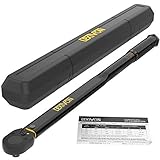
Overview: The LEXIVON LX-184 positions itself as a precision instrument for discerning mechanics. This click-type torque wrench spans 25-250 ft-lb, offering broader low-end capability than many competitors. It arrives pre-calibrated to ±4% accuracy with a traceable calibration certificate, signaling professional-grade quality. The hardened Chrome Vanadium steel construction promises durability in demanding shop environments.
What Makes It Stand Out: Exceptional accuracy assurance sets this wrench apart. The Electro-Black finish treatment provides superior corrosion resistance compared to standard chrome plating. Its highlighted yellow dual-range scale ensures visibility in dim garage conditions, eliminating squinting and misreading. The reversible ratchet head drives in both directions while measuring torque clockwise, adding versatility for tight spaces.
Value for Money: This wrench punches above its weight class, delivering calibration-certified accuracy typically found in tools costing twice as much. The included certificate and serial number provide traceability for professional shops requiring documentation. While slightly pricier than generic brands, the precision and protective finish justify the investment, making it a smart alternative to premium European brands.
Strengths and Weaknesses: Strengths include certified accuracy, durable finish, excellent scale readability, and reversible operation. The wider 25-250 ft-lb range handles more applications than some competitors. Weaknesses include a lesser-known brand name that may concern traditionalists, potential need for recalibration after heavy use, and a handle that may feel less premium than aluminum-equipped alternatives.
Bottom Line: The LEXIVON LX-184 is an excellent choice for mechanics who prioritize verified accuracy without breaking the bank. It’s particularly well-suited for precision work where calibration documentation matters, offering professional features at a mid-range price point.
3. VANPO Torque Wrench 1/2-Inch Drive, 20-260 Ft-Lb/27.1-352.3 Nm, 22.04", Click Style, Dual Direction, 72 Tooth, Adjustment Torque Wrench with 1/2" to 3/8" Adapter & 125mm Extension Bar for Car & Truck

Overview: The VANPO torque wrench kit delivers exceptional versatility with its wide 20-260 ft-lb range and included accessories. This comprehensive package provides not just the click-type wrench but also a 1/2" to 3/8" adapter and 125mm extension bar, making it ready for diverse automotive and industrial tasks right out of the box. The 72-tooth ratchet enables operation in tight spaces.
What Makes It Stand Out: This kit’s value proposition is unmatched—few competitors include both an adapter and extension at this price point. The quick-release button ensures secure socket retention while allowing rapid changes. The ultra-wide torque range covers everything from delicate engine components to heavy truck lug nuts. Clear dual-range laser printing provides instant ft-lb to Nm conversion without guesswork.
Value for Money: Outstanding value defines this offering. You’re essentially getting three tools for the price of one, with accessories that would cost $20-30 separately. The wrench competes with bare-bones alternatives while delivering a broader torque range and 72-tooth precision. For DIYers building their toolkit or mobile mechanics needing flexibility, this represents significant cost savings without compromising core functionality.
Strengths and Weaknesses: Strengths include the inclusive accessory package, widest torque range (20-260 ft-lb), 72-tooth mechanism for confined spaces, and excellent value. The quick-release button enhances safety and convenience. Weaknesses involve the lesser-known brand reputation, unspecified long-term durability compared to legacy brands, and potential quality control inconsistencies. The plastic case feels functional but not premium.
Bottom Line: If maximum versatility and value drive your decision, the VANPO kit is hard to beat. It’s an ideal starter set for automotive enthusiasts or a practical backup for professionals, delivering pro-level features and accessories at a budget-friendly price point.
4. SuZhi 1/2 Inch Torque Wrench 25-250 ft-lb /33.9-339N.M/longer 21.6’’ /72 T/Alloy Aluminum/Heavy Duty/Professional/Dual Direction/Cr-Mo/Garage Car/Motorcycle/Spark Plug/Wheel/Oil change
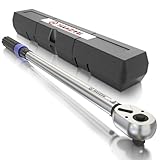
Overview: The SuZhi torque wrench targets professional users with its heavy-duty construction and meticulous attention to safety. Featuring an aluminum alloy handle and CR-MO ratchet head, this 25-250 ft-lb tool balances durability with ergonomics. The 72-tooth mechanism delivers a minimal 5-degree arc swing, crucial for accessing tight engine bays and motorcycle components.
What Makes It Stand Out: This wrench’s comprehensive safety warnings demonstrate exceptional manufacturer diligence, protecting both tool and user from misuse. The aluminum handle resists corrosion while providing superior grip and easy cleaning compared to traditional finishes. The quick-release button and reversible dual-direction operation enhance workflow efficiency. A one-year warranty with pre-shipment calibration testing ensures reliability.
Value for Money: Positioned in the mid-range, SuZhi offers professional-grade materials and warranty support that rival premium brands. The aluminum handle and CR-MO head justify the price over basic steel models. While not the cheapest option, the included warranty and safety documentation provide value for shops prioritizing tool longevity and risk mitigation.
Strengths and Weaknesses: Strengths include robust CR-MO construction, comfortable aluminum handle, 72-tooth precision, extensive safety guidance, and reliable warranty. The dual-direction capability adds versatility. Weaknesses are the overwhelming instruction warnings that may confuse novices, lesser brand recognition, and a torque range that doesn’t extend as low as some competitors.
Bottom Line: SuZhi is a smart choice for professional mechanics and serious DIYers who value durability and safety guidance. The quality materials and warranty make it a dependable workhorse for garage, motorcycle, and automotive applications where precision and longevity matter.
5. Hairich 1/2-Inch Drive Click Torque Wrench, Dual-direction 40-300ft.lb/33.9-406.8Nm, 72-tooth Torque Wrench with Dual Range Scales, ±3% High Precision

Overview: The Hairich torque wrench represents the premium end of the market with its impressive ±3% accuracy rating and class-leading 300 ft-lb maximum capacity. This 40-300 ft-lb tool features a striking black and red design with chrome vanadium steel construction and an aluminum titanium alloy handle. The 72-tooth ratchet mechanism delivers smooth operation with just 5 degrees of swing arc.
What Makes It Stand Out: Unmatched precision distinguishes this wrench—its ±3% error range surpasses most competitors’ ±4% claims. The stylish aesthetic doesn’t compromise function, with laser-printed dual scales providing clear ft-lb and Nm readings. The square-knurled aluminum titanium handle offers exceptional grip comfort during high-torque applications. Each tool includes a serial number for traceability, matching professional documentation standards.
Value for Money: While priced at the higher end, the Hairich justifies its cost through superior accuracy, maximum torque capacity, and premium materials. For professionals requiring 300 ft-lb capability or those wanting the tightest tolerance available, it undercuts premium tool truck brands significantly. The investment pays dividends for critical applications where over-tightening risks component damage.
Strengths and Weaknesses: Strengths include best-in-class ±3% accuracy, highest torque range (40-300 ft-lb), premium materials, professional appearance, and reversible operation. The 72-tooth mechanism excels in confined spaces. Weaknesses are the higher 40 ft-lb minimum that excludes delicate tasks, premium pricing that may deter casual users, and potential overkill for basic automotive maintenance.
Bottom Line: For maximum precision and torque capacity, the Hairich is the top choice. It’s ideal for professional diesel technicians, heavy equipment mechanics, and enthusiasts who demand the highest accuracy for critical fasteners. The premium features justify the investment for those who need its exceptional capabilities.
6. Kerry 1/2 Inch 20-inch-Long Torque Wrench Drive Click, 20-260 Ft.Lb/27.1-352.5 Nm, ±3% High Accuracy, Dual Range Scales, 72 Tooth Torque Wrench with 1/2" to 3/8" Adapter & 5" Extension Bar for Car

Overview: The Kerry 1/2-inch torque wrench delivers professional-grade performance with its extended 20-inch length and impressive 20-260 ft-lb range. This tool targets automotive enthusiasts and mechanics tackling high-torque applications like lug nuts and suspension components. The package includes a 3/8-inch adapter and 5-inch extension bar, providing immediate versatility for various socket sizes.
What Makes It Stand Out: The 20-inch lever arm distinguishes this wrench from standard models, offering superior mechanical advantage that reduces effort when applying high torque values. The 72-tooth ratchet mechanism provides a minimal 5-degree swing arc, crucial for working in confined engine bays. Its ±3% accuracy exceeds many competitors in this price bracket, while the dual-range scales display both ft-lb and Nm simultaneously.
Value for Money: Including both an adapter and extension bar adds significant value, eliminating separate purchases. The extended length essentially provides two tools in one—standard reach and breaker-bar capability. Comparable professional wrenches with similar accuracy and accessories often cost 30-40% more, making this an economical choice for serious DIY mechanics.
Strengths and Weaknesses: Pros include exceptional leverage, high accuracy, versatile accessories, and clear audible click feedback. The lengthy design proves cumbersome in tight spaces, and the aluminum handle may feel cold in winter conditions. Brand recognition lags behind established names like Tekton or Gearwrench.
Bottom Line: For home mechanics regularly servicing trucks, SUVs, or heavy machinery, this Kerry wrench offers professional precision and leverage at a compelling price point.
7. EPAuto 1/2-Inch Drive Click Torque Wrench, 25-250 ft-lb/33.9-338.9 Nm, Black

Overview: EPAuto’s 1/2-inch click torque wrench serves as an entry-level workhorse for DIY mechanics and occasional users. With a 25-250 ft-lb range covering most passenger vehicle applications, this Taiwanese-made tool provides essential functionality without premium pricing. The hardened chrome vanadium steel construction ensures durability for home garage environments.
What Makes It Stand Out: Simplicity defines this wrench’s appeal. The knurled handle provides reliable grip even with oily hands, while the high-contrast dual-range scale remains legible in dim lighting. Pre-calibrated to ±4% accuracy, it meets standards for non-critical applications. The satin finish effectively resists corrosion, maintaining appearance through years of use.
Value for Money: This represents one of the most cost-effective entries into reliable torque measurement. While lacking advanced features like 72-tooth ratchets or extended handles, it delivers core functionality that surpasses “guesstimation” methods. For hobbyists performing annual tire rotations or brake jobs, the price-to-performance ratio proves exceptional.
Strengths and Weaknesses: Pros include affordability, durable construction, included storage case, and straightforward operation. The ±4% accuracy, while adequate for most tasks, falls short of professional ±3% standards. The 45-tooth ratchet requires wider swing arcs in tight spaces, and the handle lacks ergonomic contouring for extended use.
Bottom Line: Budget-conscious DIYers receive dependable torque control for routine maintenance without overspending on professional features they’ll rarely utilize.
8. Roartisa 3/4 Torque Wrench, 100-600ft.lb/135.5-815Nm Dual-Direction Adjustable High Accuracy Torque Wrench 3/4 Drive, ±3% Click with Buckle for Car Trucks Oil Rigs Off-Road Equipment

Overview: The Roartisa 3/4-inch drive torque wrench addresses extreme-duty applications from commercial trucks to oil rig equipment. Delivering a massive 100-600 ft-lb range, this tool meets professional demands where 1/2-inch drives falter. Each unit ships with a calibration certificate and meets ASME standards, underscoring its industrial pedigree.
What Makes It Stand Out: True heavy-duty capability sets this wrench apart. The all-steel construction with nickel chrome plating withstands brutal field conditions, while the reversible 24-tooth head functions in both directions. The clearly engraved dual-range scale eliminates ambiguity, and the heavy-duty cam and pawl mechanism produces an unmistakable click when reaching torque values.
Value for Money: For professionals requiring 3/4-inch drive capacity, this wrench competes with Snap-on and Mac Tools at a fraction of the cost. The included calibration certificate and ±3% accuracy demonstrate quality control often missing in budget alternatives. While overkill for passenger vehicles, it replaces breaker bars and guesswork in commercial applications.
Strengths and Weaknesses: Pros include exceptional torque range, certified accuracy, rugged construction, and professional-grade mechanism. The substantial weight and size limit maneuverability, while the 24-tooth ratchet requires significant swing clearance. Cost exceeds DIY budgets, targeting professional users exclusively.
Bottom Line: Commercial mechanics and heavy equipment technicians gain a certified, accurate torque solution that handles the most demanding fastening tasks reliably.
9. E•Werk - Telescopic Ratchet Wrench - 1/2 Inch Drive, 72 Teeth - Extendable Handle 18-24 Inches - With 6 Locking Positions - Heavy Duty Retractable Socket Wrench with Long Handle - Torque 660 Nm

Overview: E•Werk’s telescopic ratchet wrench revolutionizes access with its adjustable 18-24 inch handle and six locking positions. Unlike traditional fixed-length tools, this innovation adapts to confined spaces and extended reach scenarios. The 72-tooth gear design and 660 Nm torque rating handle demanding applications while maintaining precision.
What Makes It Stand Out: The telescopic mechanism provides unprecedented versatility, functioning as both a standard ratchet and extended breaker bar. Six positive-locking positions ensure stability under load, eliminating flex common in adjustable tools. The chrome-molybdenum steel construction with chrome vanadium body delivers professional durability, while the polypropylene/thermoplastic rubber handle ensures comfort during high-torque applications.
Value for Money: One tool replaces multiple fixed-length ratchets and extensions, reducing toolbox clutter and investment. The adaptability proves invaluable for mobile mechanics and technicians working on varied equipment. While premium-priced compared to standard ratchets, the multifunctionality justifies cost for professionals prioritizing efficiency.
Strengths and Weaknesses: Pros include exceptional versatility, secure locking positions, high tooth count for tight spaces, and comfortable grip. The telescopic mechanism adds complexity and potential failure points. The tool functions as a ratchet rather than a calibrated torque wrench, limiting precision applications.
Bottom Line: For mechanics battling accessibility challenges, this adjustable ratchet delivers unmatched flexibility and strength in a single, well-engineered package.
10. LEXIVON Torque Wrench 1/2-Inch Drive Click 10150 Ft-Lb/13.6203.5 Nm (LX-183)
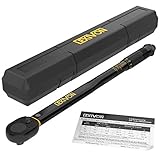
Overview: LEXIVON’s LX-183 torque wrench targets precision work with its 10-150 ft-lb range, ideal for motorcycles, bicycles, and light automotive tasks. Manufactured in Taiwan, this tool ships pre-calibrated to ±4% accuracy with a traceable serial number. The patent-pending dual-range scale features high-contrast yellow-on-black markings for exceptional visibility.
What Makes It Stand Out: The proprietary Electro-Black finish provides superior corrosion resistance compared to standard chrome plating, extending tool life in humid environments. The reinforced ratchet gear head, hardened through heat treatment, ensures durability despite the lower torque range. The ergonomic knurled handle reduces hand fatigue during repetitive assembly work.
Value for Money: Positioned between budget and premium brands, LEXIVON delivers professional features—calibration certificate, reversible head, and advanced finish—at a mid-tier price. The lower torque range suits specific applications better than universal wrenches, preventing damage to sensitive fasteners while providing adequate power for most passenger vehicles.
Strengths and Weaknesses: Pros include excellent corrosion protection, readable scale, comfortable grip, and included certificate. The 150 ft-lb maximum limits heavy-duty truck or suspension work. The ±4% accuracy, while acceptable, trails professional ±3% standards.
Bottom Line: Motorcycle enthusiasts and mechanics focusing on precision assembly receive a corrosion-resistant, accurate torque wrench perfectly matched to their specialized requirements.
Understanding Long Handle Torque Wrenches for High Torque Applications
What Makes a Torque Wrench “Long Handle”?
Long handle torque wrenches typically measure 24 inches or more in length, with some industrial models extending beyond 40 inches. This extended length isn’t arbitrary—it’s engineered to provide mechanical advantage through leverage. The principle is simple: longer handles allow you to apply the same torque value with less physical effort, or conversely, achieve higher torque values that would be impossible with standard-length tools. For high torque jobs requiring 250 ft-lbs or more, this leverage becomes critical not just for capability but for operator safety and consistent results.
Why High Torque Jobs Demand Specialized Tools
High torque applications stress tools in ways that standard equipment simply can’t handle. The forces involved can cause flexing, inaccurate readings, or even catastrophic tool failure if you’re using undersized equipment. Specialized long handle torque wrenches feature reinforced ratchet mechanisms, hardened steel construction, and precision-engineered components that maintain calibration under extreme loads. They also incorporate design elements like anti-slip grips and strategic weight distribution to help you maintain control during the critical moment of torque application.
The Value Equation: Performance vs. Price
Value doesn’t mean cheap—it means getting the maximum return on your investment. A $200 torque wrench that lasts 10 years with minimal maintenance offers better value than a $75 model that needs replacement after 18 months. When evaluating value for high torque work, consider total cost of ownership: initial purchase price, calibration frequency, replacement part availability, warranty coverage, and how the tool’s accuracy affects your work quality. The “best value” tool prevents costly comebacks, reduces physical strain, and delivers consistent results across thousands of cycles.
Key Features That Define Value in 2026
The usable torque range is perhaps the most critical specification for high torque applications. Look for tools with a range that covers your typical work requirements while leaving headroom at both ends. For automotive work, this often means 50-250 ft-lbs minimum, while industrial applications might require 100-600 ft-lbs or higher. The best value tools offer wide ranges without sacrificing accuracy at the extremes. Pay attention to the percentage of scale—top-quality wrenches maintain ±3% accuracy across at least 20-100% of their rated capacity.
Handle length directly impacts your ability to generate torque comfortably. A 36-inch handle lets you apply 300 ft-lbs with roughly the same effort as a 24-inch handle requires for 200 ft-lbs. However, longer isn’t always better—excessive length becomes unwieldy in tight spaces. The sweet spot for most high torque work falls between 30-40 inches, providing substantial leverage while remaining manageable. Some manufacturers offer telescoping or adjustable-length designs that adapt to different situations, though these may introduce additional maintenance considerations.
High torque applications demand appropriately sized drives to prevent failure. While 1/2-inch drive handles most automotive work, 3/4-inch and 1-inch drives become necessary for torque values exceeding 250 ft-lbs. The best value tools in 2026 feature robust drive constructions with precise tooth counts (72-tooth ratchets are common) that allow operation in confined spaces. Consider whether the tool includes interchangeable drive heads or if you’ll need separate wrenches for different fastener sizes—modular designs can offer significant long-term value despite higher initial costs.
Professional-grade torque wrenches should maintain accuracy within ±3% clockwise and ±4% counterclockwise of the indicated value. For critical applications like engine assembly or structural connections, some users prefer ±2% accuracy. The value proposition includes how long the tool holds calibration under regular use. Look for models with documented calibration stability—some manufacturers specify 5,000 cycles between calibrations under normal use. Tools with ISO 6789 certification provide assurance that the accuracy claims have been independently verified.
Chrome vanadium steel remains the gold standard for torque wrench construction, offering excellent strength-to-weight ratios and corrosion resistance. For high torque applications, look for full-metal construction rather than plastic components that can crack under stress. The ratchet mechanism should feature hardened steel pawls and springs. Premium value tools often incorporate titanium or composite materials in non-stress areas to reduce weight without compromising strength. Finish quality matters too—satin chrome resists corrosion while providing better grip than polished surfaces.
Applying high torque generates significant reaction forces that transfer to your hands and arms. Quality ergonomic grips with non-slip materials reduce fatigue and improve safety. Look for handles with contoured shapes that distribute pressure evenly across your palm. Some designs feature dual-material grips with softer overmolding in high-contact areas. For cold-weather work, consider whether the grip material remains pliable at low temperatures. The best value tools balance comfort with durability—grips that crack or degrade quickly negate any ergonomic benefits.
The click mechanism provides the audible and tactile feedback that prevents over-torquing. In high torque wrenches, this mechanism must be robust enough to function reliably under extreme loads. Quality mechanisms produce a distinct, crisp click that’s easily felt through the handle. Cheaper tools may produce vague or inconsistent feedback, leading to uncertainty. Some premium models offer dual-signal mechanisms—both audible click and slight handle break—to ensure you don’t miss the torque point. The return to zero after each use should be smooth and precise.
Proper storage significantly impacts tool longevity and calibration stability. The best value torque wrenches include protective cases that prevent damage during transport and storage. Look for cases with custom-molded interiors that hold the tool securely. Some manufacturers design storage solutions that maintain the wrench at its lowest setting, reducing spring fatigue. Consider whether the tool requires special maintenance—some click-type wrenches need periodic lubrication of the mechanism, while others are sealed for life. Tools with easily accessible adjustment mechanisms simplify field verification.
A comprehensive warranty indicates manufacturer confidence in their product. For high torque wrenches, look for at least 1-year warranties covering both materials and accuracy, with some premium brands offering 2-3 year coverage. The best value proposition includes accessible calibration services—some manufacturers offer free or discounted recalibration within the warranty period. Consider the availability of replacement parts and the manufacturer’s reputation for customer service. A tool with a lifetime warranty is worthless if the company disappears or makes warranty claims difficult.
Digital torque wrenches provide precise readouts, programmable targets, and data logging capabilities, but they require batteries and are more vulnerable to harsh environments. Mechanical click-type wrenches offer simplicity and durability with no power requirements. For high torque work, mechanical tools often provide better value due to their ruggedness and lower maintenance needs. However, digital models excel in applications requiring documentation or where visual/audio feedback needs to be customized. Some hybrid designs combine mechanical reliability with digital readouts, offering a compelling middle ground.
Application-Specific Considerations
Automotive Work: Engine and Suspension Tasks
Engine assembly requires precision across a wide torque range, from delicate head bolts to robust main bearing caps. For most automotive applications, a 1/2-inch drive, 30-inch torque wrench covering 50-250 ft-lbs handles 90% of tasks. Suspension work often involves higher torque values and awkward angles, making a longer handle advantageous. Consider whether you’ll need angle measurement capability for torque-plus-angle specifications common in modern engines. The value equation includes whether you need separate inch-pound and foot-pound tools, or if a single high-quality wrench with dual scales suffices.
Industrial Machinery Maintenance
Industrial settings demand tools that withstand daily use in harsh environments. Look for torque wrenches with sealed mechanisms that resist dust, oil, and moisture. The ability to function accurately despite temperature fluctuations becomes critical in manufacturing facilities. Many industrial applications require torque values exceeding 500 ft-lbs, necessitating 3/4-inch or 1-inch drive tools. The best value tools for industrial use prioritize calibration stability and quick turnaround on repairs—downtime costs far more than the tool’s purchase price. Consider whether the tool integrates with your facility’s asset management system.
Heavy Equipment and Agricultural Applications
Working on construction equipment, tractors, and implements involves extreme torque values and challenging conditions. These applications often require torque wrenches with ranges starting at 100 ft-lbs and extending beyond 600 ft-lbs. The tools must withstand exposure to dirt, mud, and chemicals while remaining accurate. Long handles become essential not just for leverage but for reaching fasteners in awkward locations on large machinery. Value here means reliability in the field—tools that fail during harvest season or critical construction deadlines cost exponentially more than their purchase price.
Construction and Structural Assembly
Structural steel connections and critical construction fasteners require precise torque application to ensure safety and code compliance. These applications often involve high torque values applied in outdoor conditions. Look for tools with weather-resistant construction and clearly visible scales in various lighting conditions. The ability to verify torque after installation (audit mode) provides additional value. Some construction applications require documentation of every fastener’s torque value, making digital tools with data logging capabilities worth the premium despite higher costs.
Proper Usage Techniques for High Torque Applications
Setting the Correct Torque Value
Always approach the target torque from below, never from a higher setting. Click-type wrenches should be set to the lowest setting after use to relieve spring tension, but set them to your target torque just before application. For values near the tool’s maximum capacity, verify the setting twice—high torque applications leave no room for error. When using extensions or adapters, calculate and compensate for the torque multiplication effect. Some advanced users keep a reference chart for common extension lengths to avoid mental math in the field.
Proper Hand Positioning and Body Mechanics
Position your hand at the end of the handle to maximize leverage while maintaining control. Apply force smoothly and steadily—jerky movements produce inaccurate results and increase injury risk. For extreme torque values, use both hands and position your body to push rather than pull, keeping your back straight and using your legs for power. Never use cheater bars or handle extensions unless the tool is specifically designed for them, as this voids warranties and produces dangerously inaccurate results. The best value tools include ergonomic features that encourage proper technique.
Avoiding Common Over-Tightening Mistakes
The click mechanism signals when you reach torque, but continued force after the click over-tightens the fastener. Train yourself to stop immediately when you hear/feel the click. In high torque applications, the click can be subtle—some users miss it and keep pulling, especially in noisy environments. Practice with lower torque settings to develop feel. For critical applications, consider having a second person listen for the click. Remember that fasteners lubricated with oil or anti-seize compound require reduced torque values—typically 20-30% less than dry specifications.
When to Use Extensions and Adapters
Extensions change the effective length of your torque wrench, affecting the applied torque. Straight extensions perpendicular to the fastener don’t affect torque values, but any offset or angle does. Use the shortest possible extension to reach the fastener. When adapters are necessary, position them to minimize the angle between the wrench and fastener. For critical high torque applications, consider investing in a torque wrench with a swiveling head designed for angular access rather than compromising with adapters that introduce uncertainty.
Maintenance and Calibration Essentials
How Often Should You Recalibrate?
For professional use, annual calibration is the minimum standard, with many shops calibrating every 5,000 cycles or 6 months, whichever comes first. High torque applications stress mechanisms more severely, potentially requiring more frequent checks. If you drop the tool or suspect it hit its maximum capacity, recalibrate immediately. For occasional DIY use, calibration every 2-3 years may suffice. Keep a logbook with each tool documenting usage hours and calibration dates—the best value tools reward diligent maintenance with decades of accurate service.
Signs Your Torque Wrench Needs Servicing
Inconsistent click feel, failure to click at the set torque, or clicking at significantly different values than set all indicate problems. Visual inspection should reveal no cracks, bent handles, or damaged ratchet teeth. If the handle grip rotates independently of the shaft, internal damage has occurred. Difficulty adjusting the torque setting or scales that won’t align properly suggest mechanism wear. For high torque wrenches, any sign of flexing or bending under normal loads indicates the tool is no longer safe to use. Don’t ignore these warning signs—continued use of a damaged torque wrench is dangerous.
Proper Storage Practices
Always store torque wrenches at their lowest setting to relieve spring tension. Use the original case or a dedicated tool drawer with dividers to prevent impact damage. Avoid temperature extremes—consistent 60-80°F storage prolongs accuracy. Never store with weight on the handle or ratchet head. For mobile technicians, invest in padded cases that protect tools from vibration and impact during transport. Some professionals hang their torque wrenches vertically by the handle end to prevent any bending stress on the shaft. Proper storage costs nothing but dramatically extends tool life.
DIY vs. Professional Calibration
DIY calibration using a torque tester or known weights can verify accuracy but won’t provide certified documentation required for some applications. Professional calibration labs use NIST-traceable equipment and provide certificates meeting ISO standards. For most users, periodic professional calibration supplemented by occasional DIY verification offers the best value. Simple DIY checks involve hanging known weights at a measured distance and verifying the click point—while not certifiable, this catches significant drift. High torque wrenches require substantial weights (50+ lbs) for DIY testing, making professional service more practical.
Safety Protocols for High Torque Operations
Personal Protective Equipment Requirements
High torque applications generate significant forces that can cause injury if fasteners break or tools slip. Always wear safety glasses to protect against metal fragments. Gloves improve grip but ensure they don’t interfere with feel—mechanics-style gloves with good dexterity work best. Steel-toed boots protect feet from dropped tools, which can exceed 10 pounds for large torque wrenches. For extreme torque values (400+ ft-lbs), consider face shields and arm protection. Never wear loose clothing or jewelry that could catch on the tool or fastener.
Preventing Bolt and Fastener Damage
Over-torquing stretches fasteners beyond their yield point, permanently weakening them. Always verify you’re using the correct torque specification for the specific fastener, lubrication condition, and application. Clean threads thoroughly before assembly—dirt and corrosion dramatically increase friction and can cause false torque readings. For critical fasteners, use the torque-turn method: run down to a low torque value, then turn a specified additional rotation. This ensures proper clamping force regardless of thread friction variations. The best value torque wrench is useless if you damage fasteners through improper technique.
Recognizing Fastener Yield Points
As you approach a fastener’s yield point, you’ll feel a change in how it turns—this is your warning to stop immediately. High torque applications, especially on smaller diameter fasteners, can quickly lead to bolt failure. Learn to distinguish between the torque wrench’s click and the feeling of a fastener yielding. If a fastener continues turning after the click without increasing torque, you’ve likely exceeded yield and must replace the fastener. This is particularly critical with torque-to-yield bolts common in modern engines. When in doubt, stop and verify specifications.
Workspace Preparation
Clear the area of obstacles and ensure stable footing before applying high torque. Position yourself to pull or push in a straight line with the fastener—angular force applications reduce accuracy and increase injury risk. For horizontal fasteners, position yourself to push down rather than pull up when possible, using your body weight advantage. Ensure the workpiece is securely supported—unexpected movement during torque application is dangerous. Keep bystanders clear, especially when breaking loose previously torqued fasteners that may release suddenly.
Budget Planning and Cost Analysis
Initial Investment vs. Long-Term Value
Quality long handle torque wrenches for high torque work range from $150 to $600, with premium models exceeding $1,000. While tempting to choose the cheapest option, consider that a $300 tool lasting 15 years costs $20 annually, while a $150 tool replaced every 3 years costs $50 annually plus downtime. Professional users should budget for multiple tools covering different ranges rather than one tool pushed beyond its optimal range. The best value often lies in the $250-400 range, where construction quality and accuracy meet reasonable prices.
Hidden Costs to Consider
Factor in calibration costs ($50-100 per tool annually), protective cases ($30-80), and potential repair expenses. Digital tools require battery replacements and may need more frequent calibration. Shipping costs for warranty service can add up. Some manufacturers require use of their branded calibration services to maintain warranty coverage. Consider whether you need multiple socket sets in different drive sizes—these often cost more than the torque wrench itself. Insurance for expensive tools used professionally is another overlooked cost.
When to Rent vs. Buy
For one-time projects requiring extreme torque values (600+ ft-lbs), renting makes economic sense. Rental shops provide calibrated tools and absorb maintenance costs. However, frequent rentals quickly exceed purchase costs. Buy when you need the tool three or more times annually or when project timelines can’t accommodate rental availability. For occasional high torque needs, consider a mid-range tool that covers most applications and rent for outliers. Some automotive shops rent torque wrenches to customers—a model that provides access without ownership costs.
Professional vs. DIY User Budgets
DIY users doing occasional engine work can justify $150-250 for a quality 1/2-inch drive tool. Professional mechanics need multiple tools covering different ranges, budgeting $800-1,500 for a comprehensive set. Industrial users should view torque wrenches as capital equipment, budgeting $2,000-5,000 for a complete solution including calibration equipment. The best value for each user category differs—DIY users benefit from versatile general-purpose tools, while professionals need specialized, highly durable equipment. Don’t overspend on features you’ll never use, but don’t underbuy and compromise your work quality.
2026 Market Trends and Innovations
Smart Technology Integration
Bluetooth connectivity and companion apps are becoming standard features, allowing torque value programming, usage tracking, and digital documentation. While this adds cost, the value for professionals requiring traceability is significant. Some systems alert you when calibration is due based on actual usage rather than time intervals. However, for many high torque applications, the durability concerns of electronic components in harsh environments outweigh connectivity benefits. The best value smart tools offer both digital and mechanical operation modes.
Improved Materials Science
Advanced alloys and composite materials are reducing weight while maintaining strength, addressing user fatigue in high torque applications. Some manufacturers are experimenting with carbon fiber handles that cut weight by 30-40% without sacrificing rigidity. New surface treatments improve corrosion resistance beyond traditional chrome plating. These innovations command premium prices but offer genuine value for users who wield these tools daily. As manufacturing scales, expect these premium features to appear in mid-range tools by late 2026.
Sustainability in Tool Manufacturing
Environmentally conscious manufacturing is becoming a differentiator. Some brands now use recycled steel content and eco-friendly finishes. While this doesn’t directly affect tool performance, it influences purchasing decisions for companies with sustainability initiatives. The value proposition includes potential tax benefits and marketing advantages for eco-friendly businesses. Look for certifications like ISO 14001 indicating environmental management standards. These tools often cost slightly more but appeal to values-driven buyers.
Emerging Standards and Certifications
New accuracy standards beyond ISO 6789 are emerging for high torque applications, particularly in aerospace and wind energy sectors. These require documented traceability and more frequent verification. Tools meeting these enhanced standards command higher prices but open doors to lucrative contract work. For general automotive and industrial use, standard ISO 6789 certification remains sufficient. The best value tools carry clear, verifiable certifications rather than vague “meets or exceeds” claims. As 2026 progresses, expect more tools to advertise compliance with these emerging standards.
Frequently Asked Questions
What torque range do I need for most automotive work? For general automotive applications including engines and suspension, a 50-250 ft-lb range covers most fasteners. Diesel trucks and heavy-duty applications may require 100-600 ft-lb capacity. It’s better to have two wrenches covering optimal ranges than one tool used at its extremes where accuracy suffers.
How long should a quality torque wrench last? With proper maintenance and calibration, a quality mechanical torque wrench can last 20+ years in professional use. Digital models typically have shorter lifespans of 5-10 years due to electronic component wear. The key is proper storage, regular calibration, and never exceeding the tool’s capacity.
Can I use extensions with my torque wrench without affecting accuracy? Straight extensions perpendicular to the fastener don’t affect torque values. However, any offset or universal joint adapter changes the effective torque. Use the shortest extension possible and position adapters to minimize angle. For critical applications, calculate the corrected torque value or use a torque wrench with an integrated swivel head designed for angular access.
Why do some torque wrenches cost twice as much as others with similar specs? Price differences reflect materials, manufacturing precision, calibration stability, warranty coverage, and brand support. Premium tools use higher-grade steel, more precise machining, and undergo more rigorous testing. They also maintain accuracy longer between calibrations. For daily professional use, this premium pays for itself through reliability and longevity.
Is a longer handle always better for high torque? Not necessarily. While longer handles provide more leverage, they become unwieldy in tight spaces and can actually reduce control. The optimal length depends on your typical workspace and torque requirements. Most users find 30-36 inches ideal for high torque work, providing substantial leverage while remaining manageable.
How do I know if my torque wrench is still accurate? If you notice inconsistent click feel, failure to click at set values, or if the tool has been dropped or overloaded, have it professionally calibrated. For DIY verification, you can hang known weights at measured distances, but this requires substantial weights for high torque wrenches. Annual professional calibration is the gold standard for maintaining confidence.
What’s the difference between click-type and beam-type torque wrenches for high torque? Click-type wrenches allow you to set a target torque and provide feedback when reached, preventing over-tightening. Beam-type wrenches require constant visual monitoring of a pointer, making them impractical for high torque where you can’t watch the gauge while applying force. For high torque work, click-type or digital wrenches are vastly superior and safer.
Should I buy a torque wrench with a certificate of calibration? Yes, especially for professional use. A NIST-traceable calibration certificate provides documented proof of accuracy and establishes a baseline for future calibrations. While it adds $30-50 to the purchase price, it’s essential for work requiring documentation and gives you confidence the tool was accurate when it left the factory.
Can I repair my torque wrench myself? Minor maintenance like grip replacement is feasible, but internal mechanism repairs require specialized knowledge and equipment. DIY repairs typically void warranties and can compromise accuracy. Most manufacturers offer flat-rate repair services that include recalibration, often costing less than a new tool while ensuring proper function.
Is it worth buying a digital torque wrench for high torque applications? For most high torque work, mechanical click-type wrenches offer better value due to their durability and simplicity. Digital models excel when you need precise readouts, programmable targets, or documentation. However, their electronics are vulnerable to impact, moisture, and extreme temperatures common in heavy-duty applications. Consider digital for controlled environments; stick with mechanical for field work.
See Also
- 10 Premium Long Handle Torque Wrenches for High-Torque Jobs (Worth the Investment)
- The 10 Best Long Handle Torque Wrenches Every Professional Needs This Year
- 10 Expert-Recommended Ratchet Torque Wrenches for Quick Assembly Jobs in 2026
- 10 Premium Digital Torque Wrenches for High-Performance Engines (Worth the Investment)
- 10 Game-Changing Electronic Torque Wrenches for High-Torque Applications in 2026