Table of Contents
Ever stared at that ominous check engine light, wondering if it’s a $20 fix or a $2000 nightmare? You’re not alone. For decades, car owners faced a frustrating choice: pay a shop just to read basic trouble codes or wrestle with confusing, single-purpose scanners that barely scratched the surface of modern vehicle diagnostics. The good news? Today’s multi-function OBD2 scanners have transformed from simple code readers into powerful, accessible diagnostic hubs, putting sophisticated insights previously reserved for dealerships right in your garage. Understanding this shift is the first step toward making a truly informed decision that protects both your vehicle and your wallet.
Gone are the days when “diagnostic tool” meant deciphering cryptic P-codes on a tiny monochrome screen. Modern vehicles are rolling computers generating vast amounts of real-time data, and a capable multi-function scanner unlocks this intelligence. But “multi-function” means vastly different things across the market, and “value” extends far beyond the initial price tag. Investing in the right tool means considering compatibility with your specific vehicle’s systems, the depth of diagnostics it supports, and how its features will serve you through future repairs – not just the immediate check engine light. This guide cuts through the marketing noise to focus on what truly defines a high-value, comprehensive diagnostic solution for the savvy DIYer or professional in 2026.
Top 10 Multi-Function OBD2 Scanners
Detailed Product Reviews
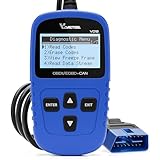
1. VDIAGTOOL VD10 OBD2 Scanner Code Reader Car Diagnostic Tool Engine Fault Code Reader for Turn Off CEL with Freeze Frame/I/M Readiness for All OBDII Protocol Cars, OBD2 Scanner Diagnostic Tool
Overview:
The VDIAGTOOL VD10 is an entry-level OBD2 scanner designed for DIY car owners seeking basic diagnostics without technical expertise. It reliably reads and clears engine fault codes, displays freeze frame data, and checks I/M readiness for emissions testing across all OBDII-compliant vehicles (1996+ US models). Its plug-and-play simplicity makes it accessible for beginners.
What Makes It Stand Out:
Its standout feature is the built-in DTC lookup database covering over 3,000 generic and manufacturer-specific codes, eliminating online searches. The TFT screen instantly displays fault definitions, while freeze frame capture aids in diagnosing intermittent issues. I/M readiness monitoring ensures vehicles pass smog checks by verifying emission system status.
Value for Money:
Priced affordably, it outperforms ultra-budget scanners with its comprehensive code library and freeze frame functionality. While pricier than basic code readers, it delivers exceptional value for DIYers avoiding $100+ mechanic diagnostics for simple CEL issues, though lacking advanced system support (e.g., ABS).
Strengths and Weaknesses:
Strengths: Intuitive interface, no batteries needed, robust code-clearing for MIL, and broad OBDII protocol compatibility. Weaknesses: No battery testing, ABS/SRS support, or graphical data logging; screen resolution is basic compared to color competitors.
Bottom Line:
Ideal for beginners tackling check-engine lights, the VD10 excels as a cost-effective, no-frills diagnostic tool. It won’t replace pro-grade scanners but reliably handles core OBDII tasks, making it a smart buy for routine car maintenance.
2. MOTOPOWER MP69033 Car OBD2 Scanner Code Reader Engine Fault Scanner CAN Diagnostic Scan Tool for All OBD II Protocol Cars Since 1996, Yellow

Overview:
The MOTOPOWER MP69033 is a compact, budget-friendly OBD2 scanner targeting casual users needing essential diagnostics. It reads/clears engine codes, retrieves live data (RPM, coolant temp), and checks I/M readiness for vehicles from 1996+ (US) and 2000+ (EU/Asian). Its plug-and-play design requires no external power.
What Makes It Stand Out:
Its ultra-portable form factor with a 2.5-foot cable and thick insulation suits tight engine bays. The 2.8" monochrome LCD offers adjustable contrast, while dedicated hotkeys for VIN/DTC queries speed up diagnostics. Six-language support broadens accessibility without inflating cost.
Value for Money:
As one of the most affordable functional scanners, it offers remarkable value for infrequent users. It undercuts competitors by $10–$15 but sacrifices features like color screens or battery tests. For basic code clearing and smog checks, it’s hard to beat economically.
Strengths and Weaknesses:
Strengths: Durable build, no batteries required, multi-language support, and reliable code reading/clearing. Weaknesses: No ABS/airbag diagnostics, limited to OBDII systems only; monochrome screen lacks data visualization; no freeze frame detail.
Bottom Line:
A no-nonsense, wallet-friendly option for drivers needing occasional check-engine light fixes. Avoid if you require advanced diagnostics, but perfect for straightforward CEL resets and pre-smog checks.
3. Y2 2.8’’ Color Graphing Screen OBD2 Scanner Diagnostic Tool,Enhanced PRO Check and Reset Engine Fault Code,DTC Lookup,O2 Sensor Test,Live Data,Freeze Frame,OBDII Code Reader Tool for All Cars

Overview:
The Y2 Enhanced PRO elevates DIY diagnostics with a smartphone-like interface on its 2.8" color graphing screen. It covers standard OBDII functions while adding advanced features like O₂ sensor tests, battery diagnostics, and Mode 6/8 system checks for comprehensive health monitoring across global vehicles (1996+ US, 2001+ EU).
What Makes It Stand Out:
Its vibrant color display with icon-driven menus and real-time graphical data logging is unmatched in this price tier. Unique extras include battery health testing, EVAP leak detection, and screenshot capture. Hotkeys for VIN/I/M status enable one-touch access, streamlining workflows.
Value for Money:
Priced moderately higher than basic scanners, it justifies the cost with pro-level features typically found in $150+ tools. The battery tester and O₂ sensor diagnostics alone save trips to mechanics, offering exceptional ROI for frequent users or semi-pros.
Strengths and Weaknesses:
Strengths: Intuitive UI, extensive functionality (battery/O₂ tests), wide compatibility, and portable design. Weaknesses: Slightly bulkier than competitors; language options may lack regional dialects; no bi-directional control for actuator tests.
Bottom Line:
The best mid-range upgrade for enthusiasts wanting pro features without pro pricing. Its color screen and battery diagnostics make it a standout investment for serious DIYers.
4. FOXWELL NT301 OBD2 Scanner Live Data Professional Mechanic OBDII Diagnostic Code Reader Tool for Check Engine Light

Overview:
Positioned as a “mechanic-grade” entry tool, the FOXWELL NT301 focuses on core OBDII diagnostics with live data graphing. It reads/clears codes, retrieves VIN, and checks I/M readiness for 1996+ US and 2000+ global vehicles, targeting users needing precision over frills.
What Makes It Stand Out:
Its live data graphing and logging let users visualize sensor trends (e.g., RPM, fuel trims) to spot anomalies. The smog-check helper uses LED color-coding (red/yellow/green) for instant I/M readiness feedback. A built-in speaker confirms operations audibly.
Value for Money:
It competes closely with the VDIAGTOOL VD10 but adds graphing at a slight premium. While not the cheapest, its professional data analysis justifies the cost for users diagnosing complex running issues, though it lacks battery tests found in higher-end models.
Strengths and Weaknesses:
Strengths: Accurate live data visualization, robust build, smog-test focus, and clear LED indicators. Weaknesses: No color screen, ABS/SRS support, or freeze frame details; limited to basic OBDII systems; slower menu navigation.
Bottom Line:
A reliable workhorse for diagnosing persistent engine issues via data trends. Best for users prioritizing diagnostic depth over aesthetics, but skip if you need ABS or battery features.
5. MOTOPOWER MP69033 Pro OBD2 Scanner Code Reader Check Engine Fault Light Diagnostic Scan Tool with Battery Tester

Overview:
The MOTOPOWER MP69033 Pro upgrades its sibling model with integrated battery and alternator diagnostics. It handles standard OBDII tasks (code reading, live data, I/M checks) while adding voltage testing and ripple analysis for 12V systems, catering to users concerned about electrical health.
What Makes It Stand Out:
The dual functionality as a code reader and battery tester is its killer feature. Real-time ripple analysis detects alternator diode failures—a rarity in budget tools. Its 2.8" TFT color screen and 6x faster processing (vs. basic models) enhance usability.
Value for Money:
Priced just above entry-level scanners, the battery diagnostics justify the modest premium. It eliminates the need for a separate multimeter, saving $20–$30 long-term. For cold climates or older vehicles prone to electrical issues, this delivers outstanding bang for buck.
Strengths and Weaknesses:
Strengths: Battery/alternator testing, color screen, 8-language support, and extended cable reach. Weaknesses: No ABS/SRS support; battery tests lack deep-cycle analysis; slightly heavier than non-Pro variants.
Bottom Line:
The top choice for drivers wanting all-in-one electrical and engine diagnostics. If battery health is a concern, this Pro model is a no-brainer upgrade over standard scanners.
6. OBD2 Scanner, MUCAR 632 Elite AI-Assisted OBD2 Bidirectional Scan Tool, Oil/Throttle/SAS/TPMS/BMS/EPB Car Scanner Diagnostic Tool with 15+ Resets, CANFD Protocol, Autoauth for FCA SGW, Lifetime Update

Overview: The MUCAR 632 Elite is a high-end bidirectional OBD2 scanner targeting serious DIYers and semi-professionals, featuring AI-powered diagnostics and extensive reset capabilities for modern vehicles.
What Makes It Stand Out: Its MUAI Assistant provides instant fault-code analysis and repair suggestions, plus a Q&A portal for direct troubleshooting queries. The 15+ reset services (surpassing typical 9-function tools) cover critical systems like EPB, SAS, and TPMS, while CAN FD/FCA AutoAuth support ensures compatibility with 2018+ vehicles. The 6.2" touchscreen, 1.8GHz chip, and lifetime updates enhance usability.
Value for Money: Priced premium, it justifies cost through professional-grade features like bidirectional controls and AI insights, eliminating recurring fees. It outperforms cheaper scanners by handling complex diagnostics without subscriptions, though compatibility checks are essential.
Strengths and Weaknesses: Strengths: Comprehensive reset functions; robust AI analysis; future-proof hardware; no update costs. Weaknesses: FCA AutoAuth requires self-registration; steep learning curve; overkill for basic code clearing.
Bottom Line: Ideal for tech-savvy users needing advanced diagnostics and resets on modern cars. Despite its complexity, the AI integration and expansive capabilities make it a worthy investment for serious home mechanics.
7. BlueDriver Bluetooth Pro OBDII Scan Tool for iPhone & Android - No Subscription Fee - OBD2 Car Scanner and Code Reader - Diagnose Check Engine, ABS, SRS, Airbag & 7000+ Issues on Vehicles 1996+

Overview: BlueDriver is a wireless OBD2 scanner connecting via Bluetooth to smartphones, offering professional-grade diagnostics without subscriptions for 1996+ vehicles.
What Makes It Stand Out: Its seamless smartphone integration eliminates cords, while the app delivers mechanic-level insights: unlimited repair reports with fix suggestions, live data streaming, and access to a vast repair video library. It uniquely covers 7,000+ issues across engine, ABS, SRS, and airbag systems.
Value for Money: Competitively priced against wired tools, it excels by providing subscription-free repair guidance and real-time monitoring. The app’s depth rivals pricier tools, making it cost-effective for frequent DIY diagnostics.
Strengths and Weaknesses: Strengths: Wireless convenience; exceptional repair resources; intuitive app; no hidden fees. Weaknesses: Phone/tablet dependency; limited functionality without app connectivity; less suited for complex resets.
Bottom Line: A top choice for beginners and casual users seeking affordable, user-friendly diagnostics with unparalleled repair support. Its wireless design and actionable insights deliver exceptional value for everyday troubleshooting.
8. FOXWELL Car Scanner NT604 Elite OBD2 Scanner ABS SRS Transmission, Check Engine Code Reader for Cars and Trucks, Diagnostic Scan Tool with SRS Airbag, Automotive Diagnostic Tool with Live Data
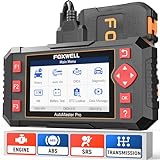
Overview: The FOXWELL NT604 Elite is an entry-level scan tool designed for car owners tackling basic diagnostics across engine, ABS, SRS, and transmission systems.
What Makes It Stand Out: It offers “out-of-the-box” readiness with preloaded 2026 software for 60+ global makes and a solid protective case (unlike competitors’ flimsy bags). AUTOVIN instantly retrieves vehicle data, and lifetime updates ensure longevity without extra fees.
Value for Money: Exceptionally affordable for a 4-system scanner, it saves costs versus dealership visits. While lacking reset functions, its reliability for code reading and live data makes it a budget-friendly health monitor.
Strengths and Weaknesses: Strengths: No software downloads needed; durable case; broad compatibility; lifetime updates. Weaknesses: No reset/relearn features; basic interface; not for advanced repairs.
Bottom Line: Perfect for novices prioritizing simplicity and durability for fundamental diagnostics. Its plug-and-play operation and included case offer unbeatable value for basic check-engine light resolution.
9. BluSon YM319 OBD2 Scanner Diagnostic Tool with Battery Tester, Check Engine Fault Code Reader with Live Data, Cloud Printing, DTC Lookup, Freeze Frame, Scan Tool for All OBDII Protocol Cars Since 1996

Overview: The BluSon YM319 is a compact, feature-rich OBD2 scanner emphasizing battery diagnostics and cloud-based reporting for 1996+ OBDII-compliant vehicles.
What Makes It Stand Out: Its one-click battery health check and cloud printing are unique—monitoring voltage risks and generating shareable reports without physical printers. A 63,000-code database, freeze frame analysis, and multi-language support enhance versatility for international users.
Value for Money: Priced modestly, it outshines rivals with specialized tools like EVAP/O2 sensor testing and battery diagnostics. Cloud features add professional utility without subscription costs, ideal for record-keeping.
Strengths and Weaknesses: Strengths: Battery monitoring; innovative cloud reports; broad OBDII protocol coverage; 13-language support. Weaknesses: Small 2.4" screen; limited reset capabilities; less intuitive than app-based tools.
Bottom Line: A standout for users needing battery insights and digital documentation. While screen size hampers data viewing, its niche features deliver strong utility for preventative maintenance and technician collaboration.
10. Autel Professional OBD2 Scanner AL319 Code Reader, Enhanced Check and Reset Engine Fault Code, Live Data, Freeze Frame, CAN Car Diagnostic Scan Tools for All OBDII Vehicles After 1996, 2026 Upgraded
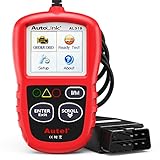
Overview: Autel’s AL319 is a streamlined 2026-updated scanner focused on simplicity for turning off check-engine lights and basic diagnostics on post-1996 OBDII vehicles.
What Makes It Stand Out: Its “plug-and-play” design targets beginners with a patented one-click I/M readiness check, color display, and built-in speaker. Seven-language support and a tangle-free cable enhance accessibility without requiring phone pairing.
Value for Money: An economical entry point for essential diagnostics, it covers core needs (code reading, live data) reliably. Lifetime updates and a 12-month warranty add long-term assurance at a minimal cost.
Strengths and Weaknesses: Strengths: Beginner-friendly interface; no batteries/app needed; durable build; lifetime updates. Weaknesses: Minimal system coverage (engine-focused); no advanced resets; basic live data.
Bottom Line: Highly recommended for first-time buyers seeking hassle-free check-engine light resolution. Though limited for complex issues, its simplicity and reliability make it the smartest budget pick for casual DIYers.
Understanding Modern OBD2 Capabilities Beyond Basic Codes
Why Basic Code Readers Fall Short for True Diagnostics
Relying solely on a scanner that only retrieves and clears generic trouble codes is like trying to fix a complex medical issue with only a thermometer. Modern vehicles feature multiple control modules (engine, transmission, ABS, airbags, etc.), each generating specific, manufacturer-defined codes. A basic reader often misses these crucial manufacturer-specific codes and provides no insight into why the code was triggered. Without live data streams showing sensor readings and system statuses in real-time, you’re left guessing the root cause, potentially leading to wasted time, incorrect part replacements, and recurring issues.
The Critical Role of Bidirectional Control Functions
True diagnostic power emerges with bidirectional control capabilities. This isn’t just about reading data; it’s about interacting with your vehicle’s systems. Imagine being able to command individual components – like cycling the purge valve, activating the fuel pump, or performing injector balance tests – directly from your scanner. This allows for precise actuation testing, system initialization (like resetting throttle bodies or tire pressure sensors), and guided component tests. For complex drivability issues or post-repair verification, this level of control is indispensable for confirming fixes and avoiding unnecessary guesswork.
Decoding Live Data Streams for Accurate Troubleshooting
The heart of effective diagnostics lies in interpreting live data parameter identification (PID) streams. A high-value scanner displays real-time sensor data (oxygen sensor voltages, fuel trims, coolant temperature, manifold pressure, etc.) in clear, user-friendly formats – often with graphical trends, customizable gauges, or color-coded values indicating normal vs. problematic ranges. The ability to log this data during a test drive to capture intermittent faults is a game-changer. Understanding how these parameters interact under different driving conditions is key to pinpointing elusive problems that static trouble codes alone won’t reveal.
Defining “Value” in Diagnostic Tools: It’s Not Just Price
Beyond the Sticker Price: Calculating Long-Term Ownership Cost
The cheapest scanner often becomes the most expensive when it lacks the features needed for your vehicle or fails prematurely. True value considers the tool’s lifespan, software update policies (are they free or subscription-based?), durability for shop or roadside use, and crucially, whether it actually solves the problems you encounter. A slightly higher initial investment in a robust scanner with comprehensive coverage and free updates can save hundreds compared to repeatedly buying inadequate tools or paying for professional diagnostics you could have performed yourself.
Software Depth and User Experience as Value Multipliers
A scanner is only as good as its software interface. Value is heavily influenced by how intuitively the software presents complex data. Look for features like built-in repair guides, wiring diagrams specific to your VIN, clear explanations of trouble codes beyond generic definitions, and the ability to customize data views. A cluttered, confusing interface wastes time and increases the risk of misinterpretation. Software that evolves with regular, free updates adding new vehicle coverage or diagnostic procedures significantly extends the tool’s useful life and relevance.
Compatibility Breadth: Ensuring Coverage for Your Specific Needs
“Universal” OBD2 scanners often have critical limitations. True value requires verifying compatibility beyond basic OBD2 compliance (which covers 1996+ gasoline and 2007+ diesel vehicles in the US). Does it support all modules (ECM, TCM, BCM, ABS, SRS)? Is coverage deep for your specific make, model, and year – especially for manufacturer-specific codes and functions? Tools with extensive global vehicle databases, including European and Asian models with complex systems, offer vastly superior value for owners of non-domestic vehicles or those working on diverse fleets.
Essential Features That Maximize Diagnostic Capability
Comprehensive Module Access and System Coverage
A high-value multi-function scanner must go beyond the engine control module (ECM). It should reliably communicate with the transmission control module (TCM), body control module (BCM), anti-lock brake system (ABS), supplemental restraint system (SRS/airbags), and often HVAC and infotainment modules. The ability to read, clear, and perform active tests on all these systems is non-negotiable for comprehensive diagnostics on modern vehicles where issues in one module can cascade and trigger misleading codes elsewhere.
Advanced Diagnostics: Graphing, Logging, and Reporting
Moving beyond static data snapshots is essential. Real value comes from dynamic graphing of multiple PIDs simultaneously to visualize relationships (e.g., fuel trim vs. MAF sensor readings). Long-term data logging during road tests captures intermittent faults that disappear at idle. The ability to generate clear, professional diagnostic reports – invaluable for shop documentation or sharing findings with a mechanic – transforms the tool from a personal aid into a potential business asset, justifying its cost through improved workflow and customer communication.
Wireless Connectivity and Platform Flexibility
Bluetooth or Wi-Fi connectivity to a smartphone, tablet, or laptop is now a baseline expectation for value. It enables a larger, more intuitive screen for complex data, easier software updates, and seamless data sharing. Crucially, verify the companion app’s compatibility and functionality across iOS and Android. Some tools lock features behind platform-specific apps or require cumbersome dongles. True flexibility ensures you can use the device effectively regardless of your preferred mobile ecosystem.
Future-Proofing Your Diagnostic Investment for 2026 and Beyond
Embracing Emerging Vehicle Technologies and Protocols
Vehicles in 2026 will increasingly feature advanced driver-assistance systems (ADAS), complex hybrid/electric powertrains, and sophisticated telematics. A valuable scanner today must demonstrate a roadmap for supporting newer communication protocols beyond standard OBD2 (like CAN FD for faster data, or eventually, ethernet-based systems). Look for manufacturers actively developing features for hybrid battery diagnostics, ADAS calibration support (even basic readiness checks), and EV-specific parameter monitoring to ensure your tool remains relevant as your vehicle fleet evolves.
The Growing Importance of Cloud Integration and AI Assistance
While not replacing technician expertise, cloud-connected features are becoming a value differentiator. Consider tools offering cloud-based code definitions with real-world repair insights, remote diagnostics sharing for expert consultation, or AI-powered analysis that flags abnormal sensor trends before a code sets. These features, if implemented thoughtfully without mandatory expensive subscriptions, can significantly enhance diagnostic speed and accuracy, turning raw data into actionable intelligence – a key value proposition moving forward.
Software Update Frequency and Community Support
The diagnostic landscape changes constantly with new vehicle models and software revisions. A scanner’s long-term value is heavily tied to the manufacturer’s commitment to frequent, free software updates expanding vehicle coverage and adding features. Investigate the update history and roadmap. Strong community forums and responsive customer support also add immense value, providing real-world troubleshooting tips, custom script sharing, and faster resolution of unexpected issues encountered during use.
Navigating User Experience and Practical Considerations
Build Quality and Ergonomics for Real-World Use
Diagnostics often happen in cramped engine bays, garages, or roadside emergencies. Value includes physical durability – a scanner that survives drops, grease, and temperature extremes. Consider the form factor: a compact handheld might be portable, but a larger screen on a tablet-based system is far easier to read in sunlight. Cable length and connector quality matter immensely; a flimsy cable that breaks after a few uses negates any initial cost savings. Prioritize tools built for the rigors of actual automotive work.
Intuitive Interface Design for All Skill Levels
The best diagnostic data is useless if you can’t find or understand it. Value is found in interfaces that adapt to the user. Beginners benefit from guided workflows, clear symptom-based troubleshooting paths, and simple explanations. Experienced users need deep access to raw data, customizable views, and advanced functions without layers of unnecessary menus. The best tools strike this balance, offering multiple interface modes or depth levels, making them valuable assets whether you’re changing your first spark plug or diagnosing a complex transmission fault.
Battery Life and Power Management Realities
Wireless scanners drain device batteries quickly. A high-value tool includes robust power management: clear low-battery warnings, the ability to function while charging (crucial for lengthy procedures), and realistic battery life estimates under typical data-streaming loads. Avoid tools that brick your vehicle’s systems if the scanner battery dies mid-procedure – this is a critical safety and functionality consideration often overlooked in budget options.
Making the Smart Choice for Your Diagnostic Needs
Matching Tool Capability to Your Actual Repair Scope
Honesty is key to value. If you only need to reset emissions monitors for state inspections, a basic code reader suffices. But if you’re diagnosing rough idles, transmission hesitations, or complex electrical gremlins across multiple vehicles, investing in comprehensive bidirectional control and deep module access is essential. Overbuying leads to wasted money; underbuying leads to frustration and repeated purchases. Clearly define the specific diagnostic tasks you need to perform regularly before evaluating features.
Evaluating Total Ecosystem Costs and Hidden Fees
Scrutinize the fine print. Is the advertised “free lifetime updates” truly lifetime, or does it expire after 1-2 years? Are advanced features like manufacturer-specific procedures, wiring diagrams, or ADAS support locked behind costly annual subscriptions? Does the app require in-app purchases for essential functions? Calculate the real 3-5 year cost, including potential subscription fees, before comparing sticker prices. A $200 tool with a $50/year subscription quickly becomes more expensive than a $250 tool with truly free updates.
Leveraging Trial Periods and Community Feedback Wisely
Reputable manufacturers often offer software trials or money-back guarantees. Use these to test compatibility with your specific vehicle and assess the software’s usability with your hands. Supplement this with in-depth research on independent automotive forums and YouTube channels focused on diagnostics (not just unboxing videos). Look for consistent feedback on reliability, update frequency, and real-world performance with common fault scenarios, not just initial impressions. Community insights often reveal long-term value (or lack thereof) better than polished marketing materials.
Frequently Asked Questions
Frequently Asked Questions
Can a truly valuable multi-function scanner be found under $100? While basic code readers exist in this range, comprehensive multi-function tools with bidirectional control, deep module access, and robust software typically start around $150-$200 for genuine value. Sub-$100 tools often lack critical features, have limited updates, or poor reliability, leading to higher long-term costs.
Do I need different scanners for gasoline, diesel, and hybrid vehicles? A high-value scanner designed for comprehensive diagnostics should cover all within its supported vehicle database. Verify specific diesel (especially 2007+) and hybrid/EV compatibility for your target models, as protocols and required functions differ significantly from standard gasoline diagnostics.
How critical are live data graphing capabilities for DIYers? Extremely critical for accurate diagnosis beyond simple codes. Graphing multiple parameters simultaneously (like fuel trims and MAF readings) reveals relationships and intermittent issues invisible in static data, preventing misdiagnosis and wasted part replacements – a core value proposition.
Are wireless (Bluetooth) scanners as reliable as wired ones for deep diagnostics? Modern Bluetooth scanners are generally reliable for most functions, but wired connections (USB) offer marginally faster data transfer and eliminate potential wireless interference during critical procedures like ECU programming or lengthy data logging sessions. Reliability depends heavily on the specific hardware quality.
Will a scanner bought in 2026 work on my 2015 car? Yes, compatibility flows backward. Scanners are designed to work with older vehicles within their supported year/make/model ranges. However, ensure the tool’s database explicitly includes coverage for your specific vehicle’s systems and modules.
Can these scanners safely reset service lights (like oil change or TPMS)? Many capable scanners can reset various maintenance/service lights, but functionality varies widely by vehicle make/model and scanner capability. Verify this specific feature for your vehicle before purchase, as some systems require specialized procedures beyond basic OBD2.
Is cloud connectivity and AI analysis just hype, or does it add real value? For most users, cloud features like enhanced code definitions with repair histories or remote expert consultation add tangible value. AI trend analysis is emerging; while not replacing expertise, it can flag subtle anomalies early. Prioritize tools where these features are optional or included without expensive subscriptions.
How often should I realistically expect free software updates from a good scanner? Expect major updates adding new vehicle coverage 2-4 times per year from reputable manufacturers, with smaller bug fixes more frequently. Be wary of “lifetime updates” promises without a documented update history; consistent, regular updates are a hallmark of a valuable tool.
Do I need separate scanners for European/Asian cars versus domestic? A high-value scanner with an extensive global database should cover all major makes. However, European and Asian vehicles often have more complex coding and require deeper manufacturer-specific procedures. Verify robust coverage for your specific non-domestic brands before purchase.
Can using a multi-function scanner void my new car warranty? No. Using an OBD2 scanner for diagnostics, reading codes, or viewing live data does not void any manufacturer’s warranty. Tampering with emissions systems or performing unauthorized reflashes could cause issues, but passive diagnostics are always permissible under consumer protection laws.
See Also
- The 10 Ultimate Best Multi-Function OBD2 Scanners for Auto Enthusiasts in 2026
- 10 Essential Multi-Function OBD2 Scanners Every Home Mechanic Needs in 2026
- 2026’s Top 10 Multi-Function OBD2 Scanners for Advanced Troubleshooting
- 10 Best Value OBD2 Scanners for Reliable Diagnostics in 2026
- How to Choose the 10 Best Multi-Function OBD2 Scanners for Heavy-Duty Vehicles in 2026