Table of Contents
Ever glanced at your temperature gauge creeping toward the red zone during rush hour and felt that familiar knot in your stomach? You’re not alone. Coolant system sludge is the silent, gunk-filled villain lurking in millions of engines, slowly strangling efficiency and inviting costly repairs. It starts subtly—a slight loss of heating performance, a faint sweet smell when you pop the hood, or maybe just that nagging feeling something’s “off” with your vehicle’s temperature regulation. Ignoring it, however, turns a minor annoyance into a major mechanical meltdown, where a simple preventative step could have saved hundreds, even thousands, at the repair shop.
Sludge isn’t just dirt; it’s a complex, sticky cocktail formed when old coolant breaks down, mixes with metal particles from internal wear, reacts with oxygen, and absorbs combustion byproducts seeping past failed seals. This thick, muddy substance clogs narrow passages in the radiator, heater core, and engine block, turning your vehicle’s vital cooling system into a thermal traffic jam. The consequences? Overheating risks skyrocket, corrosion accelerates unseen, and your engine labors under unnecessary stress, directly impacting longevity and fuel economy. Understanding how to effectively combat this buildup isn’t just maintenance—it’s essential engine preservation for anyone serious about keeping their vehicle running smoothly for the long haul.
Top 10 Coolant System Cleaners
Detailed Product Reviews
1. Prestone AS105 Total Cooling System Cleaner for Radiator, Heater Core, and Hoses, 22 oz., 1 pack

Overview: Prestone AS105 is a concentrated 22 oz. cooling system cleaner designed to remove deposits and maintain efficiency in radiators, heater cores, and hoses. Its non-toxic, non-acidic formula targets metal oxides and sludge without harming aluminum, copper, brass, or plastic components, making it suitable for routine maintenance or pre-coolant replacement flushing. What Makes It Stand Out: The dual-action formula effectively handles both light flushing and heavy-duty cleaning, drawing stubborn deposits into solution to restore coolant flow. Its universal compatibility with all metals and coolants, coupled with ease of use (simply add to the system, run the engine, and flush), sets it apart for DIYers seeking reliability. Value for Money: Priced competitively for a single-use 22 oz. bottle, it offers solid value by preventing costly overheating repairs. While cheaper powders exist, Prestone’s ready-to-use liquid formula saves preparation time and reduces user error risk compared to alternatives requiring precise mixing. Strengths and Weaknesses: Strengths: Safe for all cooling system materials; prevents corrosion; simple application; effectively removes light-to-moderate buildup. Weaknesses: Less potent for severe gelled Dex-Cool or heavy sludge than dedicated industrial cleaners; single-use quantity may be insufficient for larger systems. Bottom Line: An excellent choice for preventive maintenance or minor cleanings, Prestone AS105 delivers reliable, safe performance for most passenger vehicles. Recommended for routine use but consider stronger options for neglected systems.
2. Irontite Thoro-Flush Coolant System Cleaner - Removes Rust, Scale, Oil, Sludge & Gelled Dex-Cool - 16oz Powder - Cleans Cooling Systems, Restores Coolant Flow, Safe for Cast Iron, Aluminum & Plastic

Overview: Irontite Thoro-Flush is a potent 16 oz. powdered cleaner targeting severe cooling system contaminants like rust, scale, oil, sludge, and notoriously stubborn gelled Dex-Cool antifreeze. Designed for deep-cleaning, it restores coolant flow in systems suffering from blockages or overheating. What Makes It Stand Out: Its specialized ability to dissolve gelled Dex-Cool—a common issue in GM vehicles—makes it indispensable for certain makes. The concentrated powder formula treats up to 6-gallon systems, offering exceptional value, and is safe for cast iron, aluminum, and plastics without etching surfaces. Value for Money: Highly cost-effective due to its concentrated nature (one bottle serves multiple vehicles or large systems). It outperforms many liquid cleaners on severe deposits, justifying its price for tackling critical issues where cheaper options fail, especially for Dex-Cool remediation. Strengths and Weaknesses: Strengths: Unmatched on gelled Dex-Cool and heavy sludge; high system capacity per bottle; safe for all common materials; prevents overheating from blockages. Weaknesses: Requires careful mixing to avoid clumping; dwell time needed (run engine 15-20 mins); powder form less convenient than pre-mixed liquids for some users. Bottom Line: A top-tier solution for severe cooling system issues, particularly Dex-Cool problems. Essential for mechanics and owners of affected vehicles. Highly recommended for critical cleanings despite slightly fiddlier application.
3. CRC Thermocure Coolant System Rust Remover, 32 Oz, Rust Remover for Vehicle Cooling Systems, Removes Rust Scale and Deposits

Overview: CRC Thermocure is a 32 oz. water-based, non-toxic rust remover specifically formulated for automotive cooling systems. It targets rust, scale, and deposits that cause overheating, requiring a longer dwell time (3-4 hours to several days) for optimal results in systems up to 3 gallons. What Makes It Stand Out: The extended soak time allows deep penetration into rusted areas, making it highly effective on stubborn corrosion. Its non-flammable, non-corrosive, and environmentally friendlier profile enhances safety during handling and disposal compared to acid-based alternatives. Value for Money: The large 32 oz. size offers good volume for the price, treating multiple smaller systems or one thorough cleaning. While slower than quick-flush products, its efficacy on severe rust justifies the cost for neglected systems where faster cleaners might fail. Strengths and Weaknesses: Strengths: Exceptional rust removal with soak time; safe for all metals and plastics; non-toxic and non-flammable; large bottle size. Weaknesses: Requires draining coolant beforehand and multiple water flushes; lengthy process inconvenient for quick fixes; less effective on non-rust deposits like oil or gelled coolant. Bottom Line: Ideal for restoring heavily rusted systems safely. Choose Thermocure for deep rust issues but opt for faster cleaners like Prestone for routine maintenance or non-rust contaminants.
4. Ford Genuine Ford Fluid VC-1 Premium Cooling System Flush - 22 oz.

Overview: Ford VC-1 is a 22 oz. OEM (Original Equipment Manufacturer) cooling system flush specifically engineered for Ford, Lincoln, and Mercury vehicles. It’s a fast-acting liquid concentrate designed to clean residues and prepare systems for new coolant without petroleum distillates. What Makes It Stand Out: As a genuine Ford product, it guarantees perfect compatibility with Ford’s cooling system materials and specifications. Its fast-flush formulation works quickly during a standard engine run, and universal compatibility with all coolant types (including OAT/HOAT) simplifies maintenance. Value for Money: Priced slightly higher than aftermarket options, it’s justified by the assurance of OEM specifications and reduced risk of incompatibility issues in Ford vehicles. The peace of mind for Ford owners often outweighs the modest premium, especially under warranty considerations. Strengths and Weaknesses: Strengths: Guaranteed Ford compatibility; fast-acting; no petroleum distillates; safe for all coolant types; straightforward application. Weaknesses: Limited appeal outside Ford/Lincoln/Mercury; less aggressive on severe deposits than specialized cleaners like Irontite; smaller 22 oz. size may require multiple bottles for large trucks. Bottom Line: The definitive choice for Ford vehicle maintenance. Highly recommended for Ford owners prioritizing system safety and warranty compliance, though overkill for non-Ford vehicles with severe buildup.
5. Fleetguard Cummins Coolant Plus
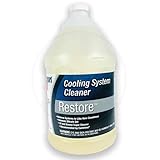
Overview: Fleetguard Cummins Coolant Plus is a professional-grade cooling system cleaner targeting heavy-duty diesel engines, particularly Cummins applications. Formulated for commercial and industrial use, it addresses scale, rust, and deposits in demanding cooling systems prone to extreme contamination. What Makes It Stand Out: Engineered specifically for the harsh conditions of diesel engines (common in trucks, buses, and equipment), it tackles high-temperature scaling and heavy soot contamination often ignored by consumer products. Its robust formula ensures compatibility with Cummins-specific materials and extended-life coolants. Value for Money: Positioned as a premium industrial product, its price reflects concentrated efficacy in severe-duty scenarios. For fleet operators, the cost is justified by preventing costly downtime and engine repairs, offering superior ROI compared to repurposed consumer cleaners in heavy-use contexts. Strengths and Weaknesses: Strengths: Optimized for diesel engines and Cummins systems; handles extreme scaling/soot; reduces maintenance intervals; trusted in commercial fleets. Weaknesses: Overly aggressive for standard passenger cars; limited consumer availability; higher cost unnecessary for light-duty vehicles; requires professional handling knowledge. Bottom Line: An essential tool for diesel fleet maintenance, especially Cummins engines. Strongly recommended for commercial users but not cost-effective or necessary for typical passenger vehicles.
6. Rislone Hy-per Cool Cleaner & Super Flush, 11.5 oz

Overview: Rislone’s Hy-per Cool Cleaner & Super Flush is an 11.5 oz concentrate designed for a rapid, thorough cleaning of automotive cooling systems. It targets harmful deposits, gel, and acid buildup that impede heat transfer and cause overheating, suitable for all vehicle types and cooling system materials, including sensitive aluminum and plastic components.
What Makes It Stand Out: Its standout feature is the promised complete cleaning cycle in 30 minutes or less, significantly faster than many competitors. The formula uniquely neutralizes corrosive acids while removing existing deposits and preventing future scale, preparing the system perfectly for its companion Hy-per Cool Super Coolant to maximize heat transfer and corrosion protection immediately after flushing.
Value for Money: Priced competitively for a single-use 11.5 oz bottle, it offers solid value for routine maintenance or targeted cleanings. While larger capacity options exist, its speed and dual action (cleaning + acid neutralization) justify the cost for drivers needing a quick, effective solution, especially when used preventatively before coolant changes.
Strengths and Weaknesses: Strengths: Fast-acting (30 min), safe for all metals/plastics, neutralizes acids, prevents scale, ideal prep for fresh coolant. Weaknesses: Smaller 11.5 oz size may require multiple bottles for large systems (e.g., trucks), instructions emphasize needing the specific Super Coolant afterward for full “priming” benefit, potentially increasing total cost.
Bottom Line: An excellent, efficient choice for quick cooling system maintenance, particularly when paired with Rislone’s Super Coolant. Its speed and acid-neutralizing capability make it a strong value for preventing overheating, though system size may necessitate multiple purchases.
7. Prestone AS105 Total Cooling System Cleaner for Radiator, Heater Core, and Hoses, 22 oz., 6 pack
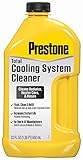
Overview: Prestone AS105 is a heavy-duty 22 oz. cooling system cleaner sold in a practical 6-pack. Formulated for both light flushing and deep cleaning, it tackles the grime, rust, and metal oxides clogging radiators, heater cores, and hoses to restore proper coolant flow and prevent overheating across all vehicle types.
What Makes It Stand Out: The key differentiator is its versatile 2-in-1 formula effective for routine maintenance flushes or severe contamination. Its non-toxic, non-acidic composition is exceptionally safe for all cooling system metals (aluminum, copper, brass, steel) while being powerful enough to draw out stubborn metal oxides and restore peak cooling efficiency without risk of damage.
Value for Money: The 6-pack format offers exceptional long-term value, making it cost-effective for fleet maintenance or multiple personal vehicles. At roughly $1-2 per application, it’s significantly cheaper per use than single bottles, providing heavy-duty cleaning capability at a budget-friendly price point for regular preventative care.
Strengths and Weaknesses: Strengths: Highly versatile (light/heavy duty), safe non-acidic formula, excellent metal oxide removal, 6-pack value, easy to use. Weaknesses: Larger 22 oz. size per bottle might be excessive for small engines, requires a full system drain/flush cycle (not a “add-and-drive” product), results may vary on extremely neglected systems.
Bottom Line: A top-tier value proposition for mechanics and owners performing regular maintenance. The 6-pack ensures you’re always prepared, and its safe yet powerful formula makes it a reliable, cost-effective choice for keeping cooling systems clean and efficient.
8. Design Engineering Radiator Relief Cooling System Flush 16 oz – Engine Radiator Cleaner and Cooling System Flush Treatment for Improved Cooling Performance and Rust Removal

Overview: Design Engineering’s Radiator Relief is a 16 oz. high-performance cooling system flush specifically engineered to eliminate rust, scale, and deposits. It enhances heat transfer to lower engine temperatures, prevent overheating, and extend engine life, compatible with all coolant types and suitable for automotive, marine, and industrial applications.
What Makes It Stand Out: Radiator Relief excels with its comprehensive protection package: advanced corrosion inhibitors, anti-foaming agents, and pH balancers work alongside the cleaning action. This multi-functional formula not only cleans but actively protects diverse metals (cast iron, copper, brass, aluminum) and seals/hoses during and after the flush, promoting sustained system health beyond just cleaning.
Value for Money: Priced mid-range for a 16 oz. bottle, it delivers strong value through its dual cleaning/protection role and broad compatibility. The precise 1 oz per quart dosage ensures minimal product is needed per use, and its effectiveness in preventing costly overheating damage justifies the investment for serious vehicle upkeep.
Strengths and Weaknesses: Strengths: Excellent rust/scale removal, integrated corrosion/foam/pH protection, safe for all metals/seals, versatile (auto/marine/industrial), easy dosing. Weaknesses: Slightly higher price point than basic cleaners, requires full system flush (not continuous use), may need repeated applications for severe neglect.
Bottom Line: A premium, highly recommended flush for those seeking thorough cleaning and proactive system protection. Its balanced formula makes it a smart investment for maintaining optimal cooling performance and longevity across diverse applications.
9. Liqui Moly Radiator Cleaner | 300 ml | Cooler additive | SKU: 2051

Overview: Liqui Moly Radiator Cleaner (300 ml / ~10.1 oz) is a concentrated German-engineered additive designed to dissolve sludge, rust, and scale within automotive cooling systems. It aims to restore efficient heat transfer, prevent overheating, and protect vital components like the radiator, water pump, and heater core during routine maintenance.
What Makes It Stand Out: Liqui Moly’s reputation for high-quality European formulations is its primary strength. While specific features are sparse, the brand is known for advanced chemistry that effectively cleans without damaging sensitive aluminum components or seals, and it’s typically compatible with all coolant types (OAT, HOAT, IAT), offering broad applicability in a compact bottle.
Value for Money: Positioned as a premium product, its value lies in Liqui Moly’s trusted performance and concentration. The 300 ml size treats standard passenger vehicles, offering good mileage per bottle. While pricier per ounce than some basics, the reliability and potential to prevent costly repairs justify the cost for discerning owners prioritizing quality.
Strengths and Weaknesses: Strengths: Trusted German engineering, effective sludge/rust removal, safe for aluminum and seals, broad coolant compatibility, compact size. Weaknesses: Limited feature details provided, higher cost than economy brands, smaller 300 ml volume may require multiple bottles for larger systems (e.g., SUVs/trucks), lacks explicit mention of pH balancing or anti-foam agents.
Bottom Line: A reliable, high-quality choice for effective cooling system maintenance, especially valued by those loyal to the Liqui Moly brand. Best suited for standard passenger cars where its concentration delivers strong cleaning power safely.
10. BlueDevil Products Radiator Flush – 32 oz | Deep Cleaning Coolant System Flush | Removes Rust, Scale & Grime

Overview: BlueDevil’s 32 oz Radiator Flush is a potent concentrate formulated for deep cleaning automotive cooling systems. It aggressively targets and removes rust, scale, and stubborn grime buildup in radiators, heater cores, and hoses, aiming to restore optimal coolant flow, reduce engine temperatures, and extend overall vehicle life.
What Makes It Stand Out: The standout feature is its highly concentrated formula delivering “Advanced Cleaning Power” specifically designed for severe contamination. Its 32 oz size offers substantial capacity for thorough system cleaning in most vehicles in a single application, effectively tackling heavy deposits that milder flushes might miss, directly addressing overheating caused by blockages.
Value for Money: Offering significant volume (32 oz) at a competitive price point, it provides excellent value for deep-cleaning needs. Its concentration means a little goes a long way for heavy-duty jobs, making it cost-effective compared to buying multiple smaller bottles. It’s a smart investment when facing serious cooling system issues or as preventative maintenance for older vehicles.
Strengths and Weaknesses: Strengths: Powerful concentrated formula for heavy rust/scale, large 32 oz size covers most systems, effectively improves heat transfer/performance, promotes vehicle longevity. Weaknesses: Aggressive formula may require extra caution on very old/delicate systems (though generally safe), requires full drain/flush cycle, not intended for continuous use as an additive.
Bottom Line: An outstanding choice for tackling neglected or severely contaminated cooling systems. Its potent cleaning ability and generous size offer great value for resolving overheating issues and restoring critical cooling performance, highly recommended for deep maintenance.
Understanding Coolant System Sludge: The Root of the Problem
What Exactly is Coolant Sludge?
Coolant sludge is a viscous, often dark brown or black, tar-like substance that forms inside the cooling system over time. It’s not merely dirt or debris but a chemical reaction product. As coolant ages, its protective additives deplete, allowing the base fluid (usually ethylene or propylene glycol) to oxidize and polymerize. This degraded coolant then binds with rust particles, scale deposits from hard water, oil contaminants from minor internal leaks, and even degraded rubber from hoses or seals, creating a stubborn, adherent mess.
Common Causes of Accelerated Sludge Formation
Several factors significantly speed up sludge creation. Using the wrong coolant type or mixing incompatible formulations is a major culprit, triggering chemical reactions that produce sludge rapidly. Neglecting regular coolant flushes allows contaminants to accumulate unchecked. Operating the engine at consistently high temperatures (due to other cooling system faults) accelerates coolant breakdown. Additionally, introducing tap water instead of distilled water during top-ups introduces minerals that form scale, which then binds with degraded coolant to create sludge.
Visible Signs Your System is Suffering from Sludge
Don’t wait for a breakdown. Key indicators include a noticeably thicker, slimy, or gritty texture when inspecting the coolant (often visible in the overflow reservoir), reduced heater output even when the engine is warm, persistent overheating issues that resist basic troubleshooting, and discolored coolant that appears muddy or has visible suspended particles instead of being relatively clear. Severe cases might show residue around the radiator cap or inside the overflow tank.
How Effective Coolant Cleaners Work Chemically
The Role of Chelating and Sequestering Agents
Modern, high-quality cleaners rely heavily on chelating agents. These specialized molecules act like tiny claws, grabbing onto dissolved metal ions (like copper, iron, and aluminum) that contribute to scale and sludge formation. By binding these ions, chelating agents prevent them from re-depositing as scale and help break down existing deposits by dissolving the metallic components within the sludge matrix, making it easier to flush away.
Surfactants and Solubilizers: Breaking the Bond
Surfactants are crucial for tackling the oily and greasy components often found in sludge, especially if oil contamination is present. They reduce the surface tension of the coolant, allowing it to penetrate deep into sludge deposits. Solubilizers work alongside them, helping to dissolve organic materials and resins within the sludge, effectively liquefying the gunk and suspending it in the coolant flow for removal during the flush.
Neutralizing Acidity and Preventing Re-deposition
As coolant degrades, it often becomes acidic, accelerating corrosion and sludge formation. Effective cleaners contain buffers to neutralize this acidity, restoring a more neutral pH environment during the cleaning process. Furthermore, advanced formulations include temporary corrosion inhibitors and anti-redeposition agents. These prevent the dissolved contaminants from immediately re-sticking to clean metal surfaces as the system is flushed, ensuring the gunk actually leaves the system.
Key Features to Evaluate in Any Cleaner
Compatibility with All Coolant Types and Materials
This is non-negotiable. The cleaner must be explicitly formulated to be safe for use with all common coolant types (IAT, OAT, HOAT, SILOX) and compatible with every material in your cooling system: aluminum engine blocks and heads, cast iron, copper, brass, solder, plastic reservoirs, and modern rubber hoses and seals. Using an incompatible cleaner can cause rapid seal deterioration or chemical reactions that worsen the problem.
Effectiveness on Diverse Sludge Compositions
Sludge isn’t uniform. A truly effective cleaner must tackle the full spectrum: inorganic scale (mineral deposits), organic sludge (degraded coolant polymers), and oily residues. Look for formulations that specifically mention efficacy against “mixed contaminants” or “stubborn deposits.” Avoid cleaners that only target rust or only target oil, as real-world sludge is usually a complex blend.
Flushing Efficiency and Residue Prevention
The cleaner’s job isn’t done when the sludge dissolves. It must keep the contaminants effectively suspended in the coolant throughout the entire flush cycle, preventing them from re-settling in hard-to-reach areas like the heater core. Check product descriptions for terms like “suspends contaminants,” “prevents redeposition,” or “ensures complete removal.” A cleaner that dissolves sludge but leaves residue behind is only half effective.
The Step-by-Step Cleaning Process Demystified
Pre-Cleaning System Assessment and Prep
Before adding any cleaner, perform a basic check. Inspect coolant level and condition in the overflow tank. Look for obvious leaks, coolant discoloration, or floating debris. Ensure the engine is completely cool. Check your owner’s manual for any specific warnings about using aftermarket cleaners. Gather distilled water for the flush and the correct type of fresh coolant for refilling. Never skip this prep step.
Correct Application: Dosage and Circulation Time
Precise dosage is critical—too little is ineffective, too much can be harmful. Always follow the cleaner’s instructions based on your system’s total coolant capacity (usually 1-2 quarts for most passenger vehicles). Add the cleaner to the radiator or reservoir (as directed) with the existing coolant. Start the engine and run it at idle with the heater on maximum for the exact duration specified (typically 10-30 minutes). Do not rev the engine. This gentle circulation ensures the cleaner reaches all passages without forcing dislodged debris into sensitive areas.
Executing a Thorough Flush and Final Refill
After circulation, turn off the engine and let it cool completely. Locate and open the radiator drain plug and, if accessible, the engine block drain plug(s). Flush the system vigorously with clean, warm (not hot) running water until the water runs completely clear out of both drains – this often takes 10-20 minutes. Never skip the thorough flush! Refill carefully with a 50/50 mix of the correct coolant type and distilled water, burping the system to remove air pockets as per your vehicle’s procedure.
Proactive Maintenance to Prevent Future Buildup
Establishing a Realistic Coolant Flush Schedule
Don’t wait for problems. Consult your vehicle’s owner manual for the manufacturer’s recommended coolant change interval—this is your baseline. However, consider shortening this interval if you drive in severe conditions (frequent stop-and-go, towing, extreme temperatures, dusty environments). As a general rule of thumb, most modern vehicles benefit from a coolant flush every 30,000 to 60,000 miles, or every 2-5 years, whichever comes first. Regular changes prevent the chemical breakdown that leads to sludge.
The Critical Importance of Using Distilled Water
Tap water contains minerals (calcium, magnesium) that form hard scale inside the cooling system, especially when heated. Scale provides a surface for sludge to adhere to and accelerates its formation. Always use distilled or deionized water when mixing coolant or topping off. The small cost difference compared to tap water is negligible against the cost of repairs caused by mineral deposits.
Monitoring Coolant Health: Beyond Just Level Checks
Regularly inspect your coolant’s condition, not just its level. Check the overflow reservoir when the engine is cold. Healthy coolant should be relatively clear and bright (green, orange, pink, or blue depending on type) and free of oil sheens, floating debris, or a thick, slimy texture. If it looks murky, smells burnt, or feels gritty, it’s a sign of degradation and potential sludge formation, signaling it’s time for a flush—possibly even before your scheduled interval.
Recognizing When Professional Help is Necessary
Identifying Severe Internal Blockages
If you experience persistent overheating despite a recent flush, or significantly reduced heater performance that doesn’t improve after cleaning, you likely have severe internal blockages. These might be in the heater core (causing no heat) or deep within the engine block passages. Dislodging these often requires specialized reverse-flushing equipment and expertise that DIY methods lack, making professional intervention essential to avoid engine damage.
Dealing with Underlying Leaks or Combustion Contamination
Sludge is often a symptom, not the root cause. If you repeatedly get sludge buildup shortly after a flush, investigate underlying issues. Combustion gases leaking into the cooling system (from a failed head gasket or cracked head) contaminate coolant and accelerate sludge formation dramatically. Similarly, oil leaking into the coolant (from a bad intake manifold gasket or oil cooler) creates a mayonnaise-like sludge that standard cleaners can’t fully resolve. Diagnosing and fixing these leaks must come before any cleaning attempt.
The Value of Professional Pressure Testing and Diagnostics
A qualified technician can perform a comprehensive cooling system pressure test to check for leaks, a combustion leak test (like a block dye test) to detect exhaust gases in the coolant, and potentially use borescope cameras to inspect internal passages. They also have industrial-strength flushing machines that provide much higher flow rates and reverse-flush capabilities than a garden hose, essential for clearing stubborn obstructions that home methods can’t touch.
Frequently Asked Questions
How do I know if I need a coolant system cleaner versus just a regular flush?
If your coolant appears visibly murky, slimy, or has floating particles, or if you’re experiencing reduced heating/cooling performance that a simple coolant change didn’t fix, a dedicated cleaner is likely necessary before a thorough flush. Regular maintenance flushes are preventative; cleaners are for active sludge remediation.
Can using a coolant cleaner damage my water pump or thermostat?
High-quality, compatible cleaners used according to instructions pose minimal risk. However, aggressive, acidic cleaners or those used in excessive concentrations can potentially harm seals over time. Always choose a cleaner specifically labeled as safe for water pumps, thermostats, and all system materials, and strictly adhere to dosage and dwell time.
Is it safe to use a coolant cleaner if I have a small leak?
No. Adding any cleaner to a system with an active leak is ineffective and potentially wasteful, as the cleaner will leak out. Worse, if the leak is internal (like a head gasket issue allowing combustion gases in), the cleaner won’t address the root cause and sludge will return quickly. Fix leaks first.
How long should I run the engine with the cleaner in the system?
Always follow the specific product instructions. Typically, it’s 10-30 minutes at idle with the heater on maximum. Running it longer than recommended won’t improve results and could potentially overstress components. Never drive the vehicle with cleaner in the system.
Can I use a radiator flush product interchangeably with a coolant system cleaner?
Not necessarily. Some “radiator flushes” are very mild and designed only for light maintenance, not heavy sludge. True coolant system cleaners are formulated to tackle the entire circuit (engine block, heater core, radiator) and are generally more potent. Check the product description for “system cleaner” and sludge-specific claims.
Will a coolant cleaner fix overheating caused by a clogged radiator?
It can help if the clog is primarily soft sludge or scale. However, if the radiator is physically blocked by external debris (bugs, dirt) or has internal corrosion that’s structurally damaged the fins/tubes, a cleaner won’t fix it. Severe radiator clogs often require physical cleaning or replacement.
Do I need to remove the thermostat to clean the system?
Generally, no. Modern cleaners are designed to work effectively with the thermostat in place during the circulation phase. Removing it isn’t recommended as it can disrupt normal coolant flow patterns needed for thorough cleaning and makes proper system burping after refill more difficult.
Can I mix different brands of coolant cleaners?
Absolutely not. Mixing different chemical formulations can cause dangerous reactions, create harmful precipitates, or neutralize the cleaning agents, rendering both products ineffective and potentially creating new blockages. Always use one cleaner at a time, followed by a complete flush before adding anything else.
How soon after using a cleaner can I add new coolant?
Only after completing a thorough flush with water until it runs completely clear. Residual cleaner mixed with new coolant can compromise the new coolant’s additive package and protective properties. Ensure all traces of the old coolant and cleaner are gone before refilling.
Are there any long-term effects of using coolant system cleaners regularly?
Used occasionally as part of necessary maintenance (e.g., when sludge is diagnosed), quality cleaners are safe. However, they are not a substitute for regular coolant changes. Relying on cleaners too frequently instead of proper flush intervals can stress system components and indicates an underlying issue (like contamination) that needs fixing. Use them as a targeted solution, not a routine additive.
See Also
- 10 Cooling System Maintenance Kits That Solve Sludge Buildup in 2026
- We Tested 50 Coolant System Cleaners - Here are the 10 Best for Complete Flushes
- 10 Affordable Coolant System Cleaners That Don’t Sacrifice Quality in 2026
- 10 Best Budget Coolant System Cleaners Under $50 for Routine Maintenance
- 10 Best Coolant Exchange Kits That Solve Coolant Contamination in 2026