Table of Contents
Ever felt that sinking dread when your temperature gauge spikes during rush hour traffic? That familiar wave of panic as steam begins to curl from under the hood is a scenario no driver wants to experience. Overheating isn’t just an inconvenience—it’s a potential ticket to expensive engine repairs, warped components, or even complete system failure. While many focus on coolant levels or thermostat function, the critical role of maintaining proper system pressure often flies under the radar. Understanding and verifying this pressure isn’t just for seasoned mechanics; it’s a fundamental skill for any vehicle owner serious about preventing catastrophic breakdowns and extending their engine’s life. Ignoring the pressure integrity of your cooling system is like ignoring the foundation of a house—it might seem fine until disaster strikes.
The cooling system operates under significant pressure for a vital reason: it raises the boiling point of the coolant, allowing the engine to run hotter and more efficiently without the fluid turning to vapor. When this pressure seal is compromised—whether by a worn cap, a tiny crack in the radiator, or a failing hose—the entire system’s effectiveness plummets. Suddenly, coolant boils off at lower temperatures, steam pockets form, and critical engine components are left vulnerable to extreme heat damage. A reliable pressure tester is your first line of defense, transforming guesswork into concrete data. It empowers you to catch small leaks before they become big problems, verify cap performance, and ensure your radiator, water pump, and hoses are holding strong against the stresses of everyday driving. This isn’t just preventative maintenance; it’s an investment in peace of mind and engine longevity.
Top 10 Coolant Pressure Testers
Detailed Product Reviews
1. HZAUTOS 18PCS Radiator Pump Pressure Tester Kit, Pressure Leak Tester Tool Kit for Automotive Cooling System Water Tank Leakage Detection

Overview:
This 18-piece kit is a budget-focused solution for diagnosing cooling system leaks in cars and light trucks. It centers on a hand-pump pressure tester with a large 3-inch gauge (0-35 psi) to identify radiator, hose, or head gasket failures before they cause engine overheating.
What Makes It Stand Out:
Its standout feature is the comprehensive adapter set: 10 anodized aluminum caps for cars and 3 chromed steel caps for trucks, all color/number-coded for quick selection. The durable aluminum pump cylinder, brass fittings, and 21" reinforced hose ensure reliability during testing, while the integrated relief valve on the quick coupler enhances safety.
Value for Money:
Priced accessibly, it offers excellent value for DIYers needing basic leak detection. The inclusion of a thermometer, universal rubber adapter, and sturdy carrying case adds utility beyond cheaper 5-10 piece kits, though the lack of vacuum-refill capability limits its scope compared to premium alternatives.
Strengths and Weaknesses:
Strengths: Durable construction; intuitive color-coded adapters; clear gauge readability; compact case. Weaknesses: Plastic adapters may crack over time; no vacuum function for bleed-free refills; incompatible with BMW e46 expansion tanks; thermometer is basic.
Bottom Line:
A solid, no-frills entry-level kit ideal for occasional home mechanics tackling common radiator leaks. While lacking advanced features, its durability and well-organized adapters justify the price for straightforward diagnostics.
2. HZAUTOS 14PCS Pressure Leak Tester Tool Kit, Radiator Pump Pressure Tester for Automotive Cooling System, Water Tank Leakage Detection Tool Set

Overview:
This streamlined 14-piece variant from HZAUTOS delivers core leak-testing functionality for automotive cooling systems. It shares the same robust pressure gauge and hand pump design as its 18-piece counterpart but with a reduced adapter count tailored for simpler applications.
What Makes It Stand Out:
The kit prioritizes truck compatibility with 4 chromed steel cap adapters (vs. 3 in the 18PC), making it slightly better suited for heavier vehicles. The identical aluminum pump, 3" gauge, and color-coded system ensure reliable, quick leak checks in under 10 minutes, highlighting its user-friendly design.
Value for Money:
It offers slightly better value for truck owners due to the extra steel adapter, though the total piece count (8 plastic car caps + 4 steel truck caps) is lower than competing kits. The omission of connectors and a universal rubber adapter (included in the 18PC) reduces versatility, but the core pressure-testing function remains cost-effective.
Strengths and Weaknesses:
Strengths: Enhanced truck adapter count; durable chrome-plated coupler; simple operation; compact case. Weaknesses: Fewer total adapters limit vehicle coverage; lacks universal rubber adapter and connectors; no vacuum functionality; BMW e46 incompatible.
Bottom Line:
A practical choice for truck-focused users needing reliable pressure testing at a modest price. While less versatile than the 18PC kit for cars, its truck-optimized adapters make it a niche standout for specific fleets.
3. Orion Motor Tech Coolant Pressure Tester Kit, 33pc Master Coolant Vacuum Refill Kit with 23 Radiator Adapters, Radiator Cooling System Pressure Tester Kit with Vacuum Pump Vacuum Purge & Refill Tool

Overview:
Orion Motor Tech’s 33-piece kit is a professional-grade solution that combines pressure leak testing with vacuum-assisted coolant refilling. Designed for comprehensive cooling system maintenance, it targets air pockets and leaks across radiators, head gaskets, and heater cores.
What Makes It Stand Out:
Its dual functionality is unmatched: the vacuum pump enables air-free coolant refills, preventing overheating from trapped air—a critical upgrade over basic pressure testers. The 23 color-coded adapters (including a universal) cover BMW, Mercedes, and other European brands, while the custom-molded case ensures perfect organization.
Value for Money:
Priced higher than entry kits, it delivers exceptional value for frequent users. The vacuum system eliminates costly coolant waste and repeated bleeding, while the aluminum/brass construction ensures longevity. Professionals will recoup the investment through time savings and reduced error risk.
Strengths and Weaknesses:
Strengths: Vacuum purge/refill capability; broad European compatibility; premium materials; excellent case organization; 23 adapters. Weaknesses: Steeper learning curve for beginners; heavier than basic kits; vacuum hose connections may require careful sealing.
Bottom Line:
A top-tier investment for serious DIYers and pros who demand precision. The vacuum functionality and extensive adapter range justify the cost for those committed to thorough cooling system maintenance.
4. KOOPOOL 30PCS Radiator Pressure Tester Kit, Coolant Pressure Tester and Vacuum Refill Kit for Automotive Cooling System Water Tank Leakage Detection

Overview:
KOOPOOL’s 30-piece kit bridges the gap between affordability and advanced features, offering both pressure testing and vacuum-assisted coolant refilling. It targets a global market with adapters for Japanese, European, and American vehicles, emphasizing ease of use for all skill levels.
What Makes It Stand Out:
The upgraded vacuum refill system features a metal valve for superior suction stability and dual-pressure gauges (psi/bar), simplifying precise refills. Its 17 color-coded test caps and 3 covers provide exceptional versatility, while dual rubber rings on the aluminum pump enhance seal reliability during pressure tests.
Value for Money:
Competitively priced, it outperforms basic kits with vacuum functionality typically found in pricier models. The metal vacuum components and broad compatibility reduce the need for future tool purchases, making it a smart long-term investment for home garages handling diverse vehicles.
Strengths and Weaknesses:
Strengths: Robust vacuum refiller; universal vehicle coverage; clear dual-scale gauges; durable pump construction; responsive customer support. Weaknesses: Adapters lack size markings (unlike Orion); case organization less refined; vacuum gauge range (-30 inHg) slightly narrow for some applications.
Bottom Line:
An outstanding mid-range option that balances vacuum capability, durability, and global compatibility. Ideal for DIYers seeking professional results without Orion’s premium price tag.
5. WNZ Coolant Pressure Tester Kit, 28PC Radiator Pressure Tester Kit, Radiator Cooling System Pressure Tester Kit with Vacuum Pump Vacuum Purge & Refill Tool

Overview:
WNZ’s 28-piece kit is a versatile 3-in-1 system focused on leak detection, coolant replacement, and air purging. Marketed for effortless use, it includes professional accessories like gloves and a custom toolbox, targeting both novice DIYers and mobile technicians.
What Makes It Stand Out:
The “3-in-1” functionality—pressure testing, vacuum refilling, and air bleeding—is executed with intuitive simplicity. The blow-molded case with dedicated slots prevents lost parts, while 22 universal caps claim 95%+ coverage. Included professional gloves and a quick wrench add unexpected practicality.
Value for Money:
Excellent value for the piece count and included extras (gloves, wrench, thermometer). The vacuum pump’s stability and corrosion-resistant build surpass budget kits, and the all-in-one design eliminates the need for separate tools, saving long-term costs despite a moderate initial outlay.
Strengths and Weaknesses:
Strengths: True 3-in-1 utility; exceptional case organization; gloves/wrench included; wide cap compatibility; beginner-friendly. Weaknesses: Aluminum pump slightly lighter than Orion’s; vacuum gauge lacks bar units; thermometer accuracy unverified.
Bottom Line:
A highly recommendable kit for DIYers prioritizing convenience and completeness. Its user-centric design, robust case, and multi-functionality make it the best all-rounder for hassle-free cooling system maintenance.
6. Orion Motor Tech Coolant Pressure Tester Kit, 31pc Master Coolant Vacuum Refill Kit with 23 Radiator Adapters, Radiator Cooling System Pressure Tester Kit with Vacuum Pump Vacuum Purge & Refill Tool

Overview: This 31-piece master kit is a professional-grade solution for diagnosing cooling system leaks and performing air-free coolant refills across a vast range of vehicles, featuring an extensive adapter set and integrated vacuum technology. What Makes It Stand Out: Its comprehensive 23-radiator-adapter selection ensures compatibility with nearly all major brands, while the included vacuum pump and purge/refill tool uniquely enable precise, air-pocket-free coolant replacement—a critical feature often missing in basic kits. The probe thermometer adds diagnostic depth. Value for Money: Priced higher than entry-level kits, it justifies the cost through its dual functionality (leak testing and professional vacuum refilling) and exceptional adapter coverage. For frequent users or professionals, it eliminates the need for multiple tools, offering significant long-term savings over buying separate vacuum systems. Strengths and Weaknesses: Strengths: Unmatched adapter variety; durable aluminum/brass construction; vacuum system ensures thorough refills; excellent organized case. Weaknesses: Steeper learning curve for vacuum operation; bulkier than simpler kits; potential overkill for occasional DIYers needing only basic pressure tests. Bottom Line: An essential investment for serious mechanics or enthusiasts tackling complex cooling systems. Its vacuum capabilities and vast compatibility make it the most versatile and future-proof option here, despite the premium price.
7. Orion Motor Tech Coolant Pressure Tester Kit, 19pc Radiator Pressure Tester Kit with 15 Radiator Adapters & Wrench, Cooling System Pressure Tester Kit with Vacuum Pump & Probe Thermometer

Overview: A streamlined 19-piece pressure tester kit designed for reliable leak detection and basic vacuum-assisted coolant refills, balancing essential features with a more accessible size and price point than Orion’s larger master kit. What Makes It Stand Out: It efficiently combines a manual vacuum pump for air-free refills with a clear 2.5-inch pressure gauge (rated to 35 psi) and 15 versatile adapters. The color-coded adapters and included probe thermometer enhance usability for common diagnostic tasks without overwhelming complexity. Value for Money: Offers excellent value for DIYers and mobile mechanics needing core functionality. It provides the crucial vacuum feature at a lower cost than the 31pc kit, though with fewer adapters. Beats cheaper kits lacking vacuum capability for those prioritizing proper refills. Strengths and Weaknesses: Strengths: Reliable vacuum pump for purge/refill; accurate, protected gauge; well-organized case; robust aluminum/nylon build; sufficient adapters for most common vehicles. Weaknesses: Limited to 15 adapters (may miss some niche models); vacuum process is manual (slower than powered systems); no universal adapter included. Bottom Line: The ideal mid-tier choice for competent DIYers and professionals needing dependable leak testing and vacuum-assisted refills without the bulk or cost of the largest kits. Highly recommended for general use.
8. VAGNEUS 18 Pcs Universal Radiator Pressure Tester Kit,Coolant Pressure Tester kit with 13 Radiator Adapters,Precise Coolant Leak Detector for All Vehicle Cooling System

Overview: An 18-piece universal kit focused on straightforward pressure testing and leak detection across diverse vehicles, emphasizing simplicity and core functionality for identifying cooling system faults like head gasket failures. What Makes It Stand Out: Its key strength is the clear, step-by-step operation: select adapter, connect pump, pressurize (0-35 psi), and monitor for pressure drops. The 13 corrosion-resistant aluminum adapters cover widespread compatibility, and the design prioritizes ease of use for fundamental diagnostics. Value for Money: Represents solid value for budget-conscious users needing reliable basic leak detection. It’s competitively priced against similar adapter-count kits, though it lacks the vacuum refill capability found in pricier Orion models, making it best for pure testing, not coolant service. Strengths and Weaknesses: Strengths: Simple, intuitive operation; rust/corrosion-resistant adapters; durable high-tenacity materials; compact size; covers major vehicle brands effectively. Weaknesses: No vacuum pump for air-free refills (limits functionality); gauge details unspecified; fewer adapters than top-tier kits; case organization less emphasized. Bottom Line: A dependable, no-frills pressure tester for DIYers focused solely on leak detection. Choose this for affordability and simplicity if vacuum-assisted refills aren’t required; skip it if comprehensive coolant service is a priority.
9. Astro Pneumatic Tool 7856 Universal Air Powered Cooling System Pressure Tester
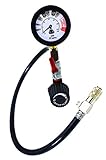
Overview: A specialized, air-powered pressure regulator tool designed for rapid, high-volume cooling system testing using shop air, prioritizing speed and consistent pressure application over manual operation. What Makes It Stand Out: Its air-powered design sets it apart, enabling near-instant pressurization of large systems and maintaining constant pressure to pinpoint leak sources—ideal for shop environments. The quick connector ensures broad compatibility, and the built-in 30 psi max safeguard prevents system damage. Value for Money: Excellent value only for well-equipped shops with air compressors. It drastically speeds up testing compared to manual pumps, justifying its niche cost for professionals. However, it holds no value for DIYers without air tools, as it’s entirely compressor-dependent. Strengths and Weaknesses: Strengths: Unmatched speed for filling large systems; constant pressure aids leak tracing; simple, rugged design; 30 psi safety limit; versatile quick connector. Weaknesses: Absolutely requires an air compressor (useless without one); no adapters or case included; no vacuum or refill capability; limited to pressure testing only. Bottom Line: A highly efficient shop tool for rapid pressure testing, but irrelevant for manual or vacuum-based tasks. Only recommend for professional mechanics with air systems; DIYers should look elsewhere.
10. Wenzhon Radiator Pressure Tester Kit, Coolant Pressure Tester and Vacuum Refill Kit for Automotive Cooling System Water Tank Leakage Detection (Universal Fit 28PCS)
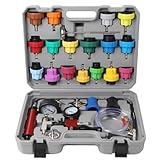
Overview: A 28-piece universal kit combining pressure testing, leak detection, and vacuum-assisted coolant refilling, featuring a robust case and a focus on multi-functionality for comprehensive cooling system service. What Makes It Stand Out: It emphasizes multi-functionality—testing leaks, replacing coolant, and removing air bubbles—supported by 17 radiator test caps/adapters. The thick blow-molded case ensures tool security, while high-quality aluminum alloy construction promises durability and better sealing. Value for Money: Positioned as a value-packed alternative to premium brands. The inclusion of 17 caps (vs. fewer adapters in others) and vacuum capability at a competitive price offers good bang-for-buck, though material quality may slightly trail Orion. Ideal for cost-focused users needing refill functionality. Strengths and Weaknesses: Strengths: High adapter/cap count (17 pieces); secure, protective case; vacuum refill capability; multi-functional (test, refill, de-air); strong customer service promise. Weaknesses: Build quality potentially less refined than Orion; adapter organization details vague; vacuum pump specifics unclear; brand recognition lower. Bottom Line: A strong, feature-rich budget option for DIYers needing vacuum-assisted refills and broad compatibility. Recommended for value seekers, though professionals might prefer Orion’s proven durability.
Understanding Coolant System Pressure Fundamentals
Why Pressure Matters More Than You Think
Your car’s cooling system isn’t just a passive reservoir; it’s a pressurized thermodynamic circuit. Operating typically between 13-18 psi, this pressure elevates the coolant’s boiling point significantly above 212°F (100°C), often to 265°F (129°C) or higher. This is crucial because modern engines run hotter for efficiency and emissions control. Without adequate pressure, coolant boils prematurely, creating insulating steam pockets that prevent heat transfer from the engine block. This rapid loss of cooling capacity is a primary trigger for sudden, severe overheating events, even if coolant levels appear normal. Pressure isn’t optional—it’s the linchpin of thermal management.
Common Pressure Failure Points Explained
Leaks aren’t always dramatic gushes of coolant; often, they’re subtle pressure losses that only manifest under operating temperature. The radiator cap is the most frequent culprit—a worn seal or faulty spring mechanism allows pressure to bleed off gradually. Hoses can develop micro-cracks at clamps or along seams, especially as rubber ages and becomes brittle. The radiator itself might have pinhole leaks in tanks or seams, while the water pump’s weep hole or gasket can seep under pressure. Heater cores, often buried deep within the dashboard, are notorious for developing slow leaks that are hard to detect without pressure testing. Each of these points represents a potential breach in your system’s critical pressure seal.
The Direct Link Between Pressure Loss and Overheating
When system pressure drops below specification, the boiling point of the coolant drops proportionally. For example, losing just 5 psi can lower the effective boiling point by 15-20°F. This means coolant that should remain liquid at 250°F might start vaporizing at 230°F—well within normal operating ranges for many engines. Steam pockets form rapidly in the cylinder head or block, acting as insulators that trap immense heat. Metal components like cylinder heads can warp in minutes under these localized hot spots, leading to head gasket failure—a repair that often costs thousands. Consistent pressure loss, even if minor, accelerates wear on the water pump and thermostat, creating a vicious cycle of declining cooling efficiency.
Selecting the Right Pressure Tester for Your Needs
Core Components and How They Work Together
A quality pressure tester is fundamentally simple but elegantly functional. The core components include a hand pump (usually with a built-in pressure gauge), a selection of adapter fittings, and a cap depressor tool. The pump generates controlled pressure, the gauge provides precise measurement, and the adapters secure the tool to various radiator or expansion tank necks. The depressor tool safely releases pressure from the cap before removal for testing. Understanding how these parts interact—pumping to simulate operating pressure, holding to check for leaks, and depressurizing safely—is key to effective use. Don’t underestimate the importance of a clear, easy-to-read gauge with fine刻度 divisions.
Critical Gauge Specifications to Prioritize
The pressure gauge is the heart of the tool, and its specifications make or break accuracy. Look for a gauge with a measurement range that comfortably exceeds your vehicle’s specified pressure (e.g., 0-30 psi for most passenger cars). Accuracy is paramount—aim for a gauge certified to within ±1% or better; cheap gauges with large tolerances give false confidence. A dampened gauge mechanism prevents needle vibration, ensuring stable readings. Size matters too: a 2.5-inch diameter gauge offers significantly better readability than a tiny 1.5-inch version, especially in poor light. Analog gauges remain popular for their durability and immediate visual feedback, though some digital options exist for specific applications.
Adapter Compatibility: Avoiding the #1 Frustration
Nothing derails a pressure test faster than realizing you lack the correct adapter for your vehicle’s unique radiator or coolant reservoir neck. Modern cars use a bewildering array of cap designs—twist-lock, push-pull, side-release, and varying diameters. A worthwhile tester kit includes a comprehensive set of adapters (often 10-15+) covering common domestic, import, European, and Asian patterns. Pay special attention to newer vehicles with pressurized expansion tanks instead of traditional radiators; you’ll need specific adapters for those plastic reservoir necks. Check if the kit includes a universal sealing cone for unusual configurations. Skimping on adapters guarantees you’ll hit a vehicle you can’t test properly.
Mastering the Pressure Testing Process
Pre-Test Safety and System Preparation Steps
Never attempt a pressure test on a hot engine or a system under pressure. Allow the engine to cool completely—overnight is ideal—to prevent scalding from ejected coolant or steam. Visually inspect the system first: check hoses for cracks or soft spots, look for obvious coolant stains, and examine the radiator cap for damage. Ensure the coolant level is at the proper “cold” mark in the overflow reservoir. Remove any debris from the radiator fins that could impede cooling later. Most crucially, confirm the system is cold enough that you can comfortably rest your hand on the radiator cap for 10 seconds. Safety glasses are non-negotiable—pressure can propel debris or fluid unexpectedly.
Step-by-Step Pressurization and Leak Detection
Begin by securely attaching the correct adapter to the radiator neck or coolant reservoir, using the depressor tool to hold the cap mechanism down if testing with the cap installed. Pump steadily to reach the pressure specified on your vehicle’s cap (usually stamped on the cap itself, e.g., “16 psi”). Avoid rapid pumping, which can cause inaccurate gauge readings. Once at target pressure, stop pumping and observe the gauge for 10-15 minutes. A healthy system should hold pressure within 1-2 psi of the target. Simultaneously, meticulously inspect every component: trace hoses by hand feeling for dampness, peer under the water pump for drips, examine radiator seams, and check heater hoses near the firewall. Listen for faint hissing—a sign of a small air leak.
Interpreting Results: What Gauge Movement Really Means
Steady pressure holding firm? That’s the best outcome—your system is tight. A slow, steady drop (more than 2-3 psi over 15 minutes) indicates a small, persistent leak, likely from a hose, gasket, or minor crack. A rapid drop points to a significant leak—check obvious places like the radiator base or water pump first. If pressure won’t build at all, the cap seal is likely failing, or there’s a major breach like a disconnected hose. Sometimes, pressure holds initially but drops only after the engine warms slightly—this suggests a heat-sensitive leak, often a failing head gasket allowing combustion gases into the cooling system (which requires further testing like a block tester). Never ignore even minor pressure loss; it will worsen over time.
Beyond Basic Leak Checks: Advanced Diagnostic Uses
Verifying Radiator Cap Performance Accurately
The radiator cap is a precision valve, not just a plug. Its dual functions—maintaining system pressure and relieving excess pressure—are critical. Testing it off the vehicle is essential. Use a cap tester attachment that seals directly onto the cap. Pump slowly: the cap should hold the rated pressure (e.g., 16 psi) without dropping for at least 60 seconds. Then, continue pumping; it should vent excess pressure at or very near its rated value (e.g., venting precisely at 16-17 psi, not at 12 psi). A cap venting too low causes premature boiling; one that vents too high risks rupturing a hose or tank. Caps are cheap insurance—replace them proactively every 2-3 years or if test results are marginal.
Diagnosing Internal Combustion Leaks Indirectly
While not a replacement for a proper combustion leak test (like a block checker), pressure testing can provide early clues about head gasket or cylinder head issues. If you pump the system to pressure cold and it holds fine, but pressure rapidly spikes or the gauge needle becomes erratic as the engine warms slightly (without running), it suggests combustion gases are being forced into the cooling system. This pressurizes the coolant circuit abnormally high, often causing coolant to be expelled violently from the overflow. If you observe this pattern—stable cold pressure followed by rapid, unexplained pressure rise upon warming—suspect an internal leak and pursue further diagnostics immediately.
Assessing Coolant Hoses Under Realistic Stress
Visual inspection of hoses only tells half the story. Pressure testing reveals weaknesses hidden beneath the surface. As you pressurize the system, carefully squeeze and gently twist each major hose (upper radiator, lower radiator, heater hoses). A healthy hose should feel firm and resilient, with no soft spots, bulges, or seepage. A hose that feels spongy, expands noticeably under pressure, or weeps fluid at a clamp is a failure waiting to happen. Pay special attention to areas where hoses bend sharply or rub against other components—these are common failure points under pressure. Replacing a suspect hose during a pressure test is far cheaper than being stranded roadside.
Maximizing Tool Longevity and Accuracy
Essential Calibration and Maintenance Routines
Like any precision instrument, pressure testers drift over time and with use. Annual calibration is ideal, especially if used frequently. Many auto parts stores offer this service for a small fee. Between uses, always depressurize the gauge completely by opening the relief valve—leaving pressure trapped stresses the gauge mechanism. After each test, wipe down all components with a clean, dry cloth; never store the tool wet, as moisture attracts grime and can corrode fittings. Store adapters in their case to prevent damage. Periodically check the pump’s O-rings and seals for dryness or nicks; a small tube of silicone grease keeps them supple. A well-maintained tester delivers reliable results for a decade or more.
Proper Storage to Prevent Damage and Inaccuracy
How you store your pressure tester directly impacts its future performance. Avoid tossing it loosely into a toolbox where gauges can get crushed or adapters bent. Use the provided storage case religiously. Store the pump with the relief valve open and pressure fully released—this prevents the internal spring from taking a set and ensures consistent pumping effort next time. Keep it in a cool, dry place away from extreme temperatures or direct sunlight, which can warp plastic components and degrade seals. Never hang the tester by its hose; this can misalign internal parts. Treating it as the precision diagnostic tool it is, rather than just another wrench, pays dividends in accuracy and lifespan.
Recognizing When It’s Time for Replacement
Even the best tools eventually wear out. Key signs your pressure tester needs replacement include a gauge needle that sticks or doesn’t return to zero when depressurized, inconsistent pressure holding during tests (when the vehicle system is known to be good), cracked or leaking pump housings, or stripped adapter threads. If the gauge glass is fogged or the dial is damaged, readability suffers, increasing the risk of misdiagnosis. Don’t gamble on critical engine diagnostics with a questionable tool. Investing in a new, high-quality tester is trivial compared to the cost of misdiagnosing an overheating issue and causing engine damage. When in doubt, get it calibrated or replaced.
Integrating Pressure Testing into Your Maintenance Strategy
Creating a Proactive Testing Schedule
Don’t wait for an overheating crisis. Build pressure testing into your seasonal maintenance rhythm. Test before summer heat hits—this is prime overheating season. Also, test in the fall to catch issues before cold weather makes leaks harder to spot (coolant evaporates faster in heat, masking minor seepage). If you tow heavy loads, drive in mountainous terrain, or frequently idle in traffic (like delivery drivers), test every 6 months. For most daily drivers in moderate climates, an annual test coinciding with your coolant flush is sufficient. Always test after any cooling system repair (hose, thermostat, water pump) to verify the fix. Consistency turns this from a emergency tool into a true preventative powerhouse.
Complementing Pressure Tests with Other Coolant Checks
Pressure testing is powerful, but it’s one piece of the coolant health puzzle. Always pair it with a visual inspection of coolant color and clarity—milky coolant suggests oil contamination (head gasket), while rusty fluid indicates corrosion or old age. Check the freeze/boil point with a refractometer; proper concentration is vital for pressure effectiveness. Inspect the thermostat operation by feeling upper radiator hose warmth after startup. Listen for water pump bearing noise. Monitor coolant level trends in the overflow tank—consistent top-offs signal a hidden leak, even if pressure holds. Combining pressure integrity with fluid quality and component function gives a complete picture of cooling system health.
Documenting Results for Future Reference
Treat your pressure test results like medical records for your car. Note the date, ambient temperature, target pressure, how long pressure was held, and any observed drop (e.g., “Held 16 psi for 15 min, dropped to 14.5 psi”). Record any minor leaks found and their locations. This baseline is invaluable. Next year, if pressure drops faster (e.g., to 12 psi in 15 min), you know a leak is developing and can address it before failure. If you sell the car, documented preventative maintenance boosts buyer confidence. A simple log in your maintenance notebook or digital file takes seconds but provides critical historical context for diagnosing evolving issues.
Frequently Asked Questions
How often should I perform a coolant pressure test on my vehicle?
Annual testing is generally sufficient for most passenger vehicles under normal driving conditions. However, test before peak summer temperatures, after any cooling system repair, or immediately if you notice overheating symptoms, coolant loss without visible leaks, or steam from the engine bay.
Can I pressure test the system without a special tool?
While makeshift methods exist (like using compressed air), they are unsafe and unreliable. Proper pressure testers are designed to safely simulate operating pressure without exceeding system limits. Using improvised tools risks damaging components, causing injury from sudden failure, or providing inaccurate results. Investing in the correct tool is essential for safety and accuracy.
What pressure should I test my system to?
Always test to the pressure specification stamped on your vehicle’s radiator cap (e.g., “16 PSI”). This value is engineered specifically for your cooling system’s design. Never exceed this pressure, as it could damage hoses, seals, or the radiator tank. If the cap is missing, consult your vehicle’s service manual for the correct specification.
My pressure holds when cold but drops when the engine warms up slightly—what does this mean?
This pattern often indicates an internal leak, such as a failing head gasket or cracked cylinder head. Combustion gases entering the cooling system pressurize it abnormally as the engine heats, causing the gauge to drop when the external heat source is removed. Further diagnostics, like a block tester for combustion gases in the coolant, are necessary.
Is it safe to pressure test an old or high-mileage vehicle?
Yes, but with caution. Start by pumping slowly to a pressure slightly below the cap rating (e.g., 12 psi instead of 16 psi). If it holds, gradually increase to the target. Older systems may have brittle components; testing at full pressure could cause a weak hose or seam to fail. This controlled approach identifies weaknesses before they cause roadside breakdowns.
Can a pressure test damage my cooling system?
When performed correctly using the specified pressure, it should not cause damage. The system is designed to handle this pressure during normal operation. Damage typically only occurs if you significantly exceed the cap’s rated pressure, use a faulty tester that over-pressurizes, or test a system already weakened by severe corrosion or prior damage.
Why does my pressure tester gauge fluctuate while pumping?
Minor needle bounce is normal due to the mechanics of hand pumping. Ensure you’re pumping smoothly and steadily. Significant fluctuations often indicate air trapped in the tester hose or a poor seal between the adapter and radiator neck. Double-check the adapter is fully seated and the cap depressor is correctly engaged before pumping.
Do I need to test the radiator cap separately?
Yes, absolutely. The cap is a critical valve component. Test it independently using a cap-specific tester attachment. It must hold the rated pressure without significant drop and vent at the specified pressure. Cap failure is a common cause of pressure loss and overheating, even if the rest of the system is sound.
Can I test the system if I suspect a major leak?
You can attempt it, but significant leaks (like a burst hose) will prevent building pressure. Focus first on visible major leaks. If pressure won’t build at all, inspect for obvious breaches before assuming the tester is faulty. For suspected minor leaks, pressure testing is the ideal diagnostic method to locate them.
How long should a healthy system hold pressure during the test?
A fully intact cooling system should hold pressure within 1-2 psi of the target (e.g., 16 psi) for at least 15-20 minutes. A drop exceeding this indicates a leak. Holding perfectly steady is ideal but not always necessary; consistent, minimal loss is acceptable. Rapid or continuous drops require immediate investigation.
See Also
- 10 Most Durable Coolant Pressure Testers Based on Real User Reviews in 2026
- 10 Top-Rated Coolant Pressure Testers According to Experts in 2026
- The 10 Most Revolutionary Coolant Pressure Testers of 2026
- How to Solve Coolant Leaks with the 10 Best Coolant Pressure Testers in 2026
- 10 Best Coolant Flush Kits for Preventing Corrosion in 2026