Table of Contents
Ever wondered why your trusty old car suddenly feels sluggish, coughs out blue smoke, or just won’t start with its usual pep? More often than not, the culprit lurks deep within the engine’s core – specifically, in the critical balance of air, fuel, and compression happening inside each cylinder. For the savvy DIYer, mastering the art of engine diagnostics isn’t just about saving money at the mechanic’s shop; it’s about truly understanding the heartbeat of your vehicle. Compression testing is that fundamental pulse check, a surprisingly straightforward procedure that reveals more about your engine’s internal health than almost any other single test you can perform at home. Skipping this essential step is like trying to diagnose a fever without ever checking the thermometer.
Think of engine compression as the unsung hero of your car’s power. When everything’s working perfectly, the pistons create immense pressure during the compression stroke, squeezing the air-fuel mixture tight and ready for a powerful, efficient explosion. But when valves wear out, piston rings crack, or head gaskets fail, that pressure leaks away, robbing your engine of power, fuel economy, and smooth operation. The beauty for the home mechanic? Pinpointing these issues doesn’t require a six-figure diagnostic scanner. A reliable compression tester, wielded with basic knowledge, transforms you from a confused owner into an empowered problem-solver. It’s the definitive tool to answer the burning question: “Is my engine fundamentally sound, or is it time for serious repairs?” Let’s dive into what makes these tools indispensable and how to choose the best one for your garage.
Top 10 Engine Compression Testers
Detailed Product Reviews
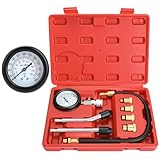
1. BETOOLL HW0130 8pcs Petrol Engine Cylinder Compression Tester Kit Automotive Tool Gauge
Overview:
This 8-piece kit offers a practical solution for DIYers and mechanics testing petrol engine compression. It includes a dual-scale gauge (0-300psi/0-20bar), two rubber cone adapters, and four threaded adapters (10mm–18mm) on a 17.7" hose, compatible with cars, motorcycles, and ATVs.
What Makes It Stand Out:
The side-mounted pressure release button simplifies safe disconnection, reducing fuel-injection risks. The 3" dual-color gauge ensures quick, accurate readings in varied lighting, while the rubber cones enable thread-free spark plug well access—ideal for tight spaces without damaging threads.
Value for Money:
Priced competitively, it outperforms basic single-adapter kits. The inclusion of both rubber cones and multiple threaded adapters covers broader applications than budget alternatives, though it lacks the durability of premium kits like OTC.
Strengths and Weaknesses:
Strengths: Easy one-click pressure release; versatile rubber cones; clear dual-scale gauge; compact hose for accessibility. Weaknesses: Adapters lack nickel plating (potentially prone to corrosion); no hard case for storage; hose length slightly shorter than OTC’s.
Bottom Line:
A capable, affordable kit for casual use on petrol engines. Ideal for DIYers prioritizing convenience over heavy-duty resilience; avoid for diesel or high-mileage professional workshops.
2. Clatoon 8pcs Petrol Engine Cylinder Compression Tester Kit, Small Engine Compression Tester Automotive Tool Gauge 0-300PSI for Testing Car Motorcycle Outboard Motor Snowmobile Chainsaw

Overview:
Clatoon’s kit delivers reliable petrol engine diagnostics with rust-resistant construction. It features a 300psi/20bar gauge, two rubber cones, four metal adapters, and a 14" hose—suited for motorcycles, snowmobiles, and small marine engines.
What Makes It Stand Out:
The acrylic dial with scratch-resistant coating and rubber protective cover enhances durability and readability. Universal rubber cones adapt to varied spark plug depths, while the quick-connect coupler streamlines setup. Rust/corrosion prevention treatment extends tool life significantly.
Value for Money:
Offers excellent longevity for its price, bridging budget and professional tiers. The protective coatings justify a slight premium over bare-metal kits, though it lacks specialty adapters for niche engines like OTC’s Ford Triton offering.
Strengths and Weaknesses:
Strengths: Superior corrosion resistance; robust gauge protection; intuitive quick-connect coupler; comprehensive manual. Weaknesses: Shorter hose limits access in cramped engines; adapters not nickel-plated; unsuitable for diesel or 6+ cylinder engines.
Bottom Line:
A durable, user-friendly choice for small-engine enthusiasts. Recommended for occasional use on motorcycles or marine engines where rust resistance matters most.
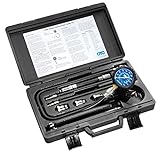
3. OTC 5605 Deluxe Compression Tester Kit
Overview:
OTC’s professional-grade kit excels in versatility with specialized adapters for complex gasoline engines. It includes recessed-plug and Ford Triton-specific connectors, a 25" flex hose, and corrosion-resistant nickel-plated components housed in a rugged hard case.
What Makes It Stand Out:
The 25" extra-long hose and deep-well/Ford Triton adapters solve niche accessibility issues in modern engines. Nickel plating prevents corrosion, while the blow-molded case ensures organization and portability—critical for mobile mechanics.
Value for Money:
Justifies its higher cost through specialized engineering. Mechanics servicing diverse fleets will value the Ford-specific adapter and long hose, though DIYers may find it overkill compared to simpler kits.
Strengths and Weaknesses:
Strengths: Unmatched adapter versatility; industrial nickel plating; exceptional hose length; secure hard-case storage. Weaknesses: Premium price; over-engineered for basic tasks; no rubber cones for thread-free testing.
Bottom Line:
The top pick for professional garages handling varied gasoline engines. Essential for technicians working on Ford Triton or recessed-plug systems; less cost-effective for hobbyists.
4. 8 pcs Compression Tester Kit, Petrol Pressure Tester Range of 0-300 Psi Engine Compression Tester Kit for Automotive Cars and Motorcycles, Compression Tester Small Engine with Portable Storage Box

Overview:
This budget-friendly kit targets petrol engine diagnostics (up to 5 cylinders) with a focus on portability. It includes a dual-scale gauge, two rubber tapers, four brass fittings, and a 14" hose—all stored in a compact hard-shell box.
What Makes It Stand Out:
The portable storage box keeps components organized and protected, a rarity in entry-level kits. Dual rubber tapers (straight/curved) accommodate diverse spark plug angles, while the dual-color gauge simplifies pressure interpretation during repeated tests.
Value for Money:
Exceptional for casual users due to the included case and dual rubber tapers. It matches Clatoon’s features at a lower price but sacrifices corrosion resistance and hose length, making it best for light-duty use.
Strengths and Weaknesses:
Strengths: Integrated hard-shell storage; versatile rubber tapers; clear dual-color gauge; affordable. Weaknesses: Brass fittings may corrode faster; unsuitable for diesel/6+ cylinder engines; no pressure release button.
Bottom Line:
Perfect for DIYers needing a tidy, no-fuss kit for motorcycles or small cars. Skip if you require diesel compatibility or heavy workshop use.
5. Mityvac MV5530 Engine Compression Test Kit, Manual Pressure Release, 2-3/4 in. Bourdon Tube Gauge, Quick-Disconnect Coupler, Includes Threaded Adapters for Motorcycles, Marine and Small Engines

Overview:
Mityvac’s professional kit excels in precision diagnostics for small engines, featuring a 2.75" Bourdon tube gauge, manual pressure release, and threaded adapters for motorcycles, marine, and equipment like chainsaws.
What Makes It Stand Out:
The large, easy-read gauge and manual pressure release ensure accurate peak-pressure capture. Quick-disconnect couplers enable rapid adapter swaps, while threaded connections guarantee leak-proof seals—critical for wet/dry tests diagnosing ring or valve issues.
Value for Money:
Worth the investment for frequent users. Its professional components (e.g., air-hold adapter for valve repairs) outperform cheaper kits, though casual users may prefer more budget-oriented options like BETOOLL.
Strengths and Weaknesses:
Strengths: Industrial-grade accuracy; efficient quick-disconnect system; manual release for precise readings; comprehensive adapter range. Weaknesses: No rubber cones for thread-free use; pricier than entry kits; case not included.
Bottom Line:
A must-have for mechanics specializing in small engines. Optimal for marine or motorcycle workshops prioritizing diagnostic reliability over cost savings.
6. AZUNO Compression Tester Automotive, Digital Compression Gauge 200 PSI for Petrol Engine Cylinder Compression Tester Kit with Adapter & Hose

Overview: The AZUNO Digital Compression Tester is a precision tool designed for accurate petrol engine cylinder diagnostics, featuring a digital display and comprehensive accessory kit housed in a durable case.
What Makes It Stand Out: Its standout feature is the high-resolution digital gauge (0.1 PSI resolution, ±1% accuracy) with a backlit LCD for clear readings in any light. The integrated side bleeder valve enables quick, repeated tests without hose disconnection, and the deluxe case includes four adapters plus a 16-inch flex hose for versatile use.
Value for Money: Priced competitively, it offers exceptional value over analog kits due to superior accuracy and time-saving digital functionality. The inclusion of multiple adapters and a robust case justifies the cost for both DIYers and professionals seeking reliable diagnostics without frequent recalibration.
Strengths and Weaknesses: Strengths: Unmatched digital precision; intuitive bleeder valve; premium steel/brass construction; excellent case organization. Weaknesses: Requires batteries (potential failure point); limited to 200 PSI (less suitable for high-performance engines).
Bottom Line: Highly recommended for users prioritizing accuracy and modern convenience; ideal for thorough engine health checks where digital reliability outweighs minor battery dependency.
7. AUTOWN Professional Compression Tester Kit with Fluorescent Gauge – 300 PSI Triple-Scale, 2 Spark Plug Testers, 13-Piece Set for Car, Truck, ATV & Small Gas Engines

Overview: The AUTOWN kit is a professional-grade analog compression tester focused on visibility and versatility for gasoline engines, featuring a high-contrast fluorescent gauge and extensive accessories.
What Makes It Stand Out: The triple-scale fluorescent gauge (0-300 PSI/20 Bar/21 kg/cm²) ensures readability in dim garages, while the quick-release safety valve allows one-handed pressure release. Its 13-piece set includes five metal adapters, two spark plug testers, and a durable case, covering most petrol applications.
Value for Money: Excellent value for the price, offering robust diagnostics without digital complexity. The fluorescent dial and comprehensive adapter range surpass basic kits, making it cost-effective for mechanics needing reliable, frequent use across diverse vehicles like ATVs and trucks.
Strengths and Weaknesses: Strengths: Superior low-light visibility; safe quick-release valve; wide adapter selection; durable all-metal build. Weaknesses: Analog gauge less precise than digital; incompatible with diesel engines (clearly stated).
Bottom Line: A top pick for hands-on mechanics wanting a no-fuss, highly visible analog solution; best for petrol engine diagnostics where speed and safety are paramount.
8. BETOOLL 8pcs Petrol Engine Cylinder Compression Tester Kit Automotive Tool Gauge

Overview: BETOOLL delivers a straightforward, brass-focused compression tester kit emphasizing durability and leak-free performance for petrol engines, with a triple-range gauge and protective case.
What Makes It Stand Out: Its all-solid-brass adapters (10mm–18mm) resist corrosion and ensure airtight seals, avoiding common plastic/aluminum failures. The 16-inch hose with push-button release and dual universal shafts (45°/straight) simplifies access to tight spark plugs, while the triple-scale gauge (0-300 PSI/20 Bar/21 kg/cm²) enables quick checks.
Value for Money: Represents strong value through material quality—brass components prevent leaks that plague cheaper kits. The 8-piece set (including case) is affordably priced for reliable, long-term use, outperforming budget options prone to stripping or leakage.
Strengths and Weaknesses: Strengths: Corrosion-resistant brass construction; versatile hose/shaft design; clear triple-scale gauge; portable case. Weaknesses: Push-button valve less robust than side bleeder types; no backlight for dark spaces.
Bottom Line: Recommended for users seeking a dependable, no-frills kit where brass durability justifies the cost; ideal for routine maintenance on standard petrol vehicles.
9. DAYUAN Professional Petrol Engine Compression Tester Kit Set for Automotives and Motorcycles

Overview: DAYUAN’s compact kit specializes in motorcycle and automotive petrol engine testing, featuring dual rubber cone ends for rapid checks and essential metric adapters.
What Makes It Stand Out: The inclusion of two rubber cone adapters enables quick, thread-free compression checks—perfect for motorcycles or delicate spark plug threads. Its 3" dual-color gauge (0-300 PSI/20 Bar) and targeted adapter set (M10–M18 with O-rings, plus 14mm/18mm spark plug fittings) cater specifically to small-engine versatility.
Value for Money: Excellent value for motorcycle owners and small-engine specialists, as the rubber cones eliminate adapter threading time. The focused accessory range avoids unnecessary extras, making it a cost-efficient solution for niche applications compared to bulkier kits.
Strengths and Weaknesses: Strengths: Unique rubber cone adapters for speed; compact gauge; O-ring fittings prevent leaks; motorcycle-optimized. Weaknesses: Limited to smaller engines; fewer adapters than competitors; no hose extension for deep plugs.
Bottom Line: Best suited for motorcycle technicians or riders needing fast, non-invasive tests; skip if working primarily on large trucks or requiring extensive adaptability.
10. Orion Motor Tech Engine Compression Tester Kit, 11 pc Cylinder Compression Tester Kit with Spark Plug Tester, Engine Cylinder Pressure Gauge for Gas Petrol Engines

Overview: Orion Motor Tech’s 11-piece kit is a versatile, user-friendly solution for comprehensive petrol engine diagnostics, combining a shockproof gauge with practical troubleshooting tools.
What Makes It Stand Out: Its standout versatility covers everything from lawnmowers to trucks via push-on connectors and M10–M18 adapters. The dual-movement shockproof gauge, included spark plug tester, and extension hose simplify ignition checks and hard-to-reach plugs, while the push-button release valve ensures safe operation.
Value for Money: Outstanding value as an all-in-one diagnostic toolkit. The durable construction resists corrosion and impact, and the broad vehicle compatibility (cars, ATVs, motorcycles) justifies the price by replacing multiple specialized tools for home garages or mobile mechanics.
Strengths and Weaknesses: Strengths: Exceptional vehicle coverage; integrated spark plug tester; robust shockproof design; easy push-button release. Weaknesses: Gauge clarity lags behind fluorescent/digital rivals; case quality is functional but not premium.
Bottom Line: Highly recommended for DIYers and pros needing one reliable kit for diverse petrol engines; a versatile, durable investment for thorough engine assessments.
Understanding Engine Compression Testing Fundamentals
Before investing in any tool, it’s crucial to grasp why compression testing matters and what it actually measures. This isn’t just about getting a number; it’s about interpreting the story that number tells about your engine’s internal condition. Compression testing provides a direct window into the mechanical integrity of the combustion chamber.
How Compression Relates to Engine Performance
The pressure generated when the piston travels upwards on the compression stroke is vital for efficient combustion. Higher, consistent compression across all cylinders translates directly to better power output, improved fuel efficiency, and smoother engine operation. Low or uneven compression disrupts this delicate balance, leading to misfires, hard starts, excessive emissions, and that dreaded loss of pep. Understanding this core principle helps you appreciate why the test is non-negotiable for serious diagnostics.
What a Compression Test Actually Reveals
This test measures the maximum pressure (in PSI or bar) achieved within each cylinder during the compression stroke. The key insights come from two things: the absolute pressure value compared to the manufacturer’s specifications, and the consistency of those values across all cylinders. Significant deviations between cylinders often point to localized problems like a burnt valve or broken ring in a specific cylinder, while uniformly low readings suggest systemic issues like widespread ring wear or incorrect valve timing.
Common Symptoms Pointing to a Needed Test
Don’t wait for a complete breakdown. Key warning signs that scream “time for a compression check!” include persistent hard starting (especially when the engine is warm), noticeable loss of power during acceleration, excessive exhaust smoke (particularly blue or white), rhythmic misfiring that doesn’t resolve with basic tune-ups, and unusually high oil consumption. If your engine exhibits any of these, a compression test is the logical, cost-effective first diagnostic step.
Choosing the Right Compression Tester for Your Garage
Selecting the ideal tool isn’t about finding the most expensive model; it’s about matching the tester’s capabilities and design to the specific vehicles you own and your comfort level with mechanical tasks. The market offers various styles, each with distinct advantages depending on your typical projects and workspace constraints. Making an informed choice ensures the tool becomes a trusted ally, not a frustrating obstacle.
Analog vs. Digital Gauges: Weighing the Pros and Cons
Analog (dial) gauges remain popular for their simplicity, durability, and lack of need for batteries. They provide a clear, immediate visual readout and are generally very robust. Digital gauges, however, offer potential benefits like easier reading in tight spaces, data hold functions to capture peak pressure, and sometimes backlighting for low-light conditions. Consider your working environment and whether the slight complexity of digital (and potential battery dependency) is worth the features for your needs.
Determining the Necessary Pressure Range
Engines vary significantly in their required compression pressures. Standard gasoline engines typically operate between 125-165 PSI, while high-performance or diesel engines can require testers capable of measuring 500 PSI or more. Always check your vehicle’s service manual specifications before purchasing a tester. Choosing a gauge with a maximum range comfortably exceeding your engine’s expected pressure (e.g., a 300 PSI gauge for a 160 PSI engine) ensures accuracy and prevents damaging the instrument during testing.
Hose Length and Flexibility: Practical Workspace Considerations
The hose connecting the gauge to the spark plug adapter is more critical than it seems. A hose that’s too short creates immense frustration trying to maneuver the gauge into a readable position, especially in engines with crowded valve covers. Look for hoses at least 18-24 inches long. Equally important is the hose’s flexibility; a stiff hose kinks easily and transmits engine vibration directly to the gauge, making readings difficult. A braided nylon or flexible rubber hose offers the best combination of durability and movement.
Adapter Types and Universal Fitment
Compression testers come with various spark plug thread adapters (e.g., 14mm, 18mm) to fit different vehicle makes and models. A truly versatile tester includes a comprehensive set of these adapters, often stored neatly within the gauge case. Crucially, ensure the main adapter that screws into the spark plug hole has a mechanism (like a rubber seal or spring-loaded valve) to create an airtight seal without requiring excessive force that could damage aluminum threads. Universal kits are generally the most practical for DIYers working on multiple vehicles.
Build Quality and Durability Factors
This tool will live in your toolbox, exposed to oil, grease, temperature swings, and occasional drops. Prioritize testers with robust metal gauge housings (not cheap plastic), reinforced hose connections, and high-quality brass or steel fittings. Check that the gauge face is clearly marked with easy-to-read increments. While not the cheapest option, investing in solid construction pays off in longevity and consistent, reliable readings over years of use.
Mastering the Compression Testing Procedure
Owning the right tool is only half the battle; using it correctly is paramount to getting accurate, actionable results. A poorly executed test can lead to false conclusions and wasted time and money. Understanding the precise steps, the importance of engine preparation, and how to interpret the numbers turns the tester from a simple gauge into a powerful diagnostic instrument.
Essential Pre-Test Engine Preparation Steps
For an accurate reading, the engine must be at normal operating temperature. A cold engine gives falsely low readings due to increased piston-to-cylinder wall clearance. Ensure the battery is fully charged, as weak cranking speed directly impacts the measured compression. Disable the fuel system (pull the fuel pump fuse or relay) and ignition system (remove the coil pack fuse or spark plug wires from the coil) to prevent the engine from starting during cranking. Remove all spark plugs to reduce starter load and ensure consistent cranking speed across cylinders.
Step-by-Step Testing Protocol for Reliable Results
Start with the first cylinder. Screw the tester adapter securely into the spark plug hole by hand, then give a very slight snug with a wrench – overtightening risks stripping threads. Have an assistant fully depress the accelerator pedal (to open the throttle plate for maximum air intake) and crank the engine using the starter for 4-6 compression strokes (you’ll hear the gauge pressure stop climbing significantly). Record the peak PSI reading. Repeat this exact process for each cylinder, ensuring consistent cranking speed and duration. Always test all cylinders, even if one seems obviously bad.
Interpreting Your Results: More Than Just the Number
The raw PSI number matters, but context is king. First, compare each cylinder’s reading to the vehicle manufacturer’s specified range (found in a repair manual). Then, examine the variation between cylinders. A difference of more than 10-15% between the highest and lowest reading usually indicates a problem. A single low cylinder suggests an issue localized to that cylinder (valve, ring). Two adjacent low cylinders often point to a faulty head gasket between them. Uniformly low readings across all cylinders typically indicate widespread wear, like piston ring issues. Also, note how quickly pressure builds; slow build-up often means ring problems, while a sudden jump then drop can indicate valve issues.
Identifying Common Failure Patterns from Readings
Beyond the numbers, the behavior of the gauge needle during cranking offers clues. A steady, rapid climb to the final pressure suggests healthy rings and valves. A slow, gradual climb often points to worn piston rings. If you add a small amount of oil (a “wet test”) to the cylinder and the compression jumps significantly, it confirms worn rings are the primary issue. If the compression doesn’t increase with oil, the problem is likely faulty valves or a head gasket. Listen for air escaping – hissing from the throttle body suggests an intake valve problem, while hissing from the oil filler cap points to worn rings.
Maintaining Your Tester for Long-Term Accuracy
Like any precision measuring tool, a compression tester requires basic care to deliver trustworthy results year after year. Neglecting simple maintenance can lead to inaccurate readings, potentially causing misdiagnosis and costly mistakes down the line. Treating your tester well ensures it remains a reliable diagnostic partner.
Proper Cleaning and Storage Techniques
After each use, thoroughly clean the adapter tip, hose connection, and gauge threads of any oil, carbon deposits, or moisture. Wipe the gauge face clean. Store the tester disassembled (hose detached from gauge) in its protective case, if provided, or wrap it loosely to prevent kinks. Keep it in a cool, dry place away from extreme temperatures or direct sunlight, which can damage the gauge mechanism or hose material. Never store the hose tightly coiled under tension.
Checking for Gauge Accuracy and Calibration
Over time, gauges can drift out of calibration, especially if subjected to shock or extreme pressure. Periodically verify accuracy by comparing readings against a known-good tester on the same engine, or by using a specialized calibration tool (available from some tool suppliers). If readings seem consistently off or the needle doesn’t return perfectly to zero when not in use, the gauge may need professional recalibration or replacement. Don’t rely on a tester you suspect is inaccurate.
Replacing Worn Components Proactively
Rubber seals and O-rings on the adapters are consumable items. Inspect them before each major use for cracks, flattening, or tears. A damaged seal causes air leaks, leading to falsely low readings. Keep spare seals on hand (many kits include extras) and replace them at the first sign of wear. Similarly, inspect the hose for cracks, bulges, or kinks that could restrict airflow or cause leaks. Addressing these small component failures promptly preserves the tool’s overall functionality.
Beyond Basic Compression: Advanced Diagnostic Insights
While a standard compression test is incredibly valuable, understanding its relationship with other tests and limitations provides a more complete diagnostic picture. Knowing when to employ complementary techniques helps pinpoint problems that a basic compression test alone might not fully reveal.
The Role of Leak-Down Testing as a Complement
A compression test measures the pressure built up during cranking. A leak-down test, however, measures the percentage of pressure lost when the piston is held at top dead center (TDC) on the compression stroke. This is done by applying regulated shop air to the cylinder. Leak-down testing is superior for locating where compression is being lost (e.g., listening for air escaping past intake valves, exhaust valves, piston rings, or the head gasket). It’s often the next logical step if a compression test reveals a problem but doesn’t definitively show the cause.
Understanding Limitations of Standard Compression Tests
Standard cranking compression tests have inherent limitations. They are heavily dependent on consistent, high cranking speed (a weak battery ruins accuracy). They provide a snapshot of dynamic pressure during cranking but don’t isolate where the leak is occurring as effectively as a leak-down test. They can sometimes miss intermittent issues or problems that only manifest under operating temperature and load. Recognizing these limitations prevents over-reliance on a single data point and encourages a more thorough diagnostic approach when symptoms persist.
When to Seek Professional Interpretation
While DIYers can confidently perform and interpret many compression tests, some scenarios warrant professional insight. If results are confusing, contradictory to symptoms, or indicate severe engine damage (like near-zero compression in multiple cylinders), consulting a knowledgeable mechanic is prudent. They have access to advanced diagnostics, service histories, and experience interpreting complex failure patterns. Knowing when to call in the experts saves time, money, and potential frustration.
Frequently Asked Questions
Frequently Asked Questions
How much should I expect to spend on a reliable DIY compression tester? What’s the single most important feature to prioritize when buying? Can one tester work on both gasoline and diesel engines? How often should I perform a compression test as preventative maintenance? What does it mean if one cylinder reads significantly lower than the others? Is a “wet test” always necessary if I get a low reading? Why did my compression readings change when I retested the same cylinder? Can a compression test damage my engine if done incorrectly? What’s the biggest mistake DIYers make when performing this test? How do I know if my tester’s gauge is giving accurate readings?
See Also
- 10 Essential Engine Compression Testers Every Home Mechanic Needs in 2026
- The 10 Best Engine Compression Testers Every Performance Enthusiast Needs This Year
- How to Choose the 10 Best Engine Compression Testers for Older Vehicles in 2026
- 10 Essential Professional Timing Lights Every Mechanic Needs in 2026
- 10 Essential In-Dash Exhaust Gas Temperature Gauges Every Tuner Needs in 2026