Table of Contents
Navigating the dimly lit underhood space of your vehicle after sunset shouldn’t feel like an expedition into uncharted territory. Whether you’re performing a routine oil check, troubleshooting an elusive leak, or tackling a complex repair, adequate illumination is non-negotiable for safety, accuracy, and sheer convenience. Poor lighting leads to dropped tools, misdiagnosed issues, and even injuries – turning a simple task into a frustrating, time-consuming ordeal. The right underhood lighting solution transforms your engine bay from a shadowy puzzle into a clearly defined workspace, making every maintenance session faster, safer, and significantly less stressful.
Gone are the days when mechanics relied solely on cumbersome handheld flashlights or awkwardly positioned shop lamps. Modern underhood light bars offer targeted, powerful, and often intelligent illumination designed specifically for the unique contours and challenges of an engine compartment. But with a vast array of options flooding the market, how do you cut through the marketing hype to find the solution that delivers truly wide, even coverage without glare, complexity, or the risk of damaging sensitive components? This guide cuts to the chase, focusing not on fleeting “top 10” lists, but on the essential features, technical considerations, and practical wisdom you need to make an informed, future-proof decision for your specific vehicle and needs in 2026 and beyond. Let’s illuminate the path to the perfect underhood lighting setup.
Top 10 Underhood Light Bars
Detailed Product Reviews
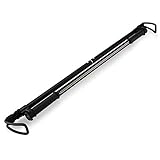
1. NEIKO 40447A Rechargeable Cordless Underhood Work Light, 202 SMD LED Light Bar with Max 1,200 Lumens, Li-Ion Battery, and 2 Brightness Modes
Overview:
The NEIKO 40447A is a dedicated cordless underhood work light designed for automotive mechanics. It features a telescoping arm, magnetic hooks, and a high-lumen LED bar to illuminate engine bays during repairs, eliminating reliance on corded alternatives.
What Makes It Stand Out:
Its standout features include a robust 8,000-mAh Li-ion battery offering 3–6 hours of runtime, an extendable arm (47"–76") with scratch-proof foam hooks, and impact-resistant polycarbonate housing. The 202 SMD LEDs deliver focused 1,200-lumen brightness ideal for detailed engine work, while dual brightness modes adapt to task needs without draining power unnecessarily.
Value for Money:
Priced mid-range, it competes well against cheaper models with shorter runtimes or flimsier builds. The inclusion of a UL-certified charger, overcharge protection, and long-lasting battery reduces long-term costs versus disposable-battery lights, though premium brands offer higher lumens.
Strengths and Weaknesses:
Strengths: Excellent battery life; durable construction; versatile arm length; secure, non-marring hooks.
Weaknesses: Max 1,200 lumens lags behind newer 2,000+ lumen competitors; no magnetic mounting beyond hooks; fixed 2 brightness modes lack fine-tuning.
Bottom Line:
A reliable, durable choice for hobbyists and pros needing extended cordless runtime and hood compatibility. Ideal for routine repairs, though those prioritizing max brightness may prefer higher-lumen alternatives.
2. Aaleds Underhood Work Light, 2000LM Super Bright, 5200mAh Rechargeable LED Work Lights for Mechanics, Magnetic Automotive Under Hood Light Bar Cordless Touble Light for Car Repairing/Garage/Workshop

Overview:
The Aaleds Underhood Work Light delivers intense 2,000-lumen output in a cordless, magnetic design. Engineered for mechanics, it features an extendable arm, dual charging cables, and versatile mounting to tackle auto repairs and home projects.
What Makes It Stand Out:
Its 2,000 lumens outshine many rivals, while the spring-loaded telescopic arm (52"–80.3") adjusts tension to protect hoods. Unique dual charging cables (1.9ft + 9.8ft) enable continuous use during long jobs. Strong magnets, rubber-wrapped J-hooks, and 360° rotation add exceptional flexibility for positioning.
Value for Money:
Competitively priced for its brightness and accessories, it offers better utility than basic models. The long cable eliminates mid-task charging, but the 5,200-mAh battery (3.3 hrs high mode) falls short versus NEIKO’s 8,000-mAh option, slightly reducing value for marathon repairs.
Strengths and Weaknesses:
Strengths: Superb 2,000-lumen clarity; innovative dual-cable system; sturdy magnetic/hooks combo; broad 80.3" reach.
Weaknesses: Shorter high-mode runtime; rubber hooks may wear over time; no brightness customization beyond high/low.
Bottom Line:
An excellent budget-friendly pick for well-lit, versatile workspace illumination. Its brightness and cable solution make it ideal for most DIYers, though professionals needing marathon runtime should consider higher-capacity batteries.
3. SYLSTAR Mechanic Work Light Bar with Upgraded Sensor Control - 2400LM LED, 4400mAh Rechargeable Underhood Work Light with Hooks & Magnetic Base for Car Repairing, Garage Workshop, Emergency

Overview:
The SYLSTAR light combines dual independent LED units into one adaptable underhood bar, offering 2,400 lumens of brightness. Its sensor control, magnetic bases, and modular design cater to mechanics seeking hands-free operation and flexible lighting.
What Makes It Stand Out:
The dual-light system (2,400 lumens combined) can split into two handheld units or lock together for max output. Infrared wave sensor activation and three modes (high/low/strobe) enable tool-free control. IP54 waterproofing, 360° rotation, and concealed hooks enhance versatility in wet or confined spaces.
Value for Money:
Mid-priced with premium features like sensor tech and dual-functionality, it outperforms single-bar rivals. The 4,400-mAh battery (4 hrs high mode) is adequate but trails NEIKO’s capacity. Warranty and build quality justify the cost for frequent users prioritizing adaptability.
Strengths and Weaknesses:
Strengths: Innovative split-light design; intuitive sensor control; strong magnets + hooks; durable IP54 rating.
Weaknesses: Moderate 4-hour high-mode runtime; sensor may misfire in dusty conditions; Type-C charging lacks fast-charge support.
Bottom Line:
A top recommendation for tech-savvy mechanics wanting customizable, hands-free lighting. Its modularity and sensor ease offset average battery life, making it perfect for detailed work in varied environments.
4. ATD Tools atd-80357 2000 Lumen LED Corded/Cordless Underhood Light with 25’ Removable Cord, 1 Pack,red / black / LED,Large

Overview:
The ATD Tools 80357 merges corded reliability with cordless convenience via a removable 25’ power cord. This 2,000-lumen underhood light targets professionals needing flexible power options for garage or workshop use.
What Makes It Stand Out:
Its hybrid design shines with a 25’ detachable cord for corded operation or standalone cordless use. The large 2,000-lumen output covers expansive engine bays, while the red/black aesthetic aligns with ATD’s professional tool branding. Portability meets workshop-grade durability.
Value for Money:
Priced higher than pure cordless models, its dual-power capability adds niche value for shops with both mobile and fixed needs. However, the short 1.6-hour cordless runtime (high mode) limits true cordless utility, making it less cost-effective than dedicated cordless rivals for fieldwork.
Strengths and Weaknesses:
Strengths: Hybrid corded/cordless flexibility; bright 2,000-lumen output; robust workshop build; long power cord.
Weaknesses: Very short cordless runtime; heavy (3.6kg); no magnet/hooks specified; impractical for hood-mounted use without accessories.
Bottom Line:
Best suited for stationary garage use where the cord is always accessible. Avoid if true cordless mobility is essential; dedicated cordless lights offer better runtime and mounting for underhood tasks.
5. Milwaukee 2125-20 M12 LED Bare Underhood Light (Tool Only)

Overview:
Milwaukee’s M12 Underhood Light is a professional-grade, battery-powered work light designed for mechanics. Sold as a “bare tool,” it leverages Milwaukee’s M12 battery ecosystem for cordless convenience in automotive and industrial settings.
What Makes It Stand Out:
As part of Milwaukee’s trusted M12 platform, it promises seamless integration with existing REDLITHIUM batteries (not included). Expect compact ergonomics, rugged construction, and focused beam patterns typical of Milwaukee’s pro lineup. The “bare tool” model emphasizes cost savings for owners of M12 batteries.
Value for Money:
Priced competitively for trade users invested in Milwaukee’s ecosystem, it avoids battery redundancy. However, newcomers must buy a battery separately, inflating initial costs. Superior durability and performance may justify the investment over budget lights for daily professional use.
Strengths and Weaknesses:
Strengths: M12 battery compatibility; pro-tier durability; compact portability; trusted brand reliability.
Weaknesses: Battery not included (added cost); limited mounting details; likely shorter runtime than larger standalone lights.
Bottom Line:
A smart buy for Milwaukee M12 battery owners needing a rugged, portable underhood light. Newcomers should compare total costs with all-inclusive kits, but pros will appreciate its seamless integration and build quality.
6. MechaniLite Under Hood Work Light Bar, 3000LM LED Magnetic Light Bar with Hooks, 5200mAh Cordless Rechargeable Hood Light for Mechanic/Car Repairing/Garage-Yellow

Overview:
This cordless magnetic LED light bar delivers intense illumination for automotive repairs. Featuring 81-LED COB technology and a robust 5200mAh battery, it targets mechanics needing reliable under-hood lighting without power cords.
What Makes It Stand Out:
Its 3000LM output cuts through engine bay shadows effectively, while the dual 360°-rotating legs and magnetic base offer versatile positioning on steel surfaces. The 6.5-hour runtime on low mode and USB-C fast charging (3.5 hours) outperform many competitors. Impact-resistant construction ensures durability in harsh workshops.
Value for Money:
Priced mid-range, it justifies cost with exceptional runtime and brightness consistency. While cheaper alternatives exist, they typically lack the magnetic strength, battery capacity, or ruggedness, making this a cost-effective long-term investment for frequent users.
Strengths and Weaknesses:
Strengths: Superior 3.5-hour high-brightness runtime; versatile 3-in-1 mounting (magnetic/hooks/stand); fast USB-C charging; overcharge/discharge protection.
Weaknesses: Magnets fail on aluminum hoods; no emergency/SOS mode; hooks lack stability on thin wires.
Bottom Line:
A top-tier choice for professional mechanics prioritizing runtime and adaptability. Avoid if working primarily on aluminum vehicles, but otherwise highly recommended for garage reliability.
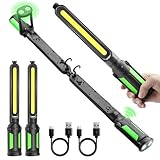
7. Sylsmart Rechargeable Mechanic Light, Single or Dual Use Underhood Work Light with Magnet and Sensor, 2400LM Magnetic Light Bar for Car, Inspection, Workshop, Garage, Emergency (2 Pack)
Overview:
This innovative 2-pack modular light system functions as single handheld units or combines into a dual-light bar. Designed for automotive repairs, it integrates motion sensors and multi-surface mounting for hands-free operation.
What Makes It Stand Out:
The unique snap-together dual-light configuration doubles coverage for large engine bays, while the wave-activated motion sensor eliminates dirty-hand contact. The 2400LM output with red emergency mode adds versatility beyond standard work lights.
Value for Money:
Offering two lights at near-single-light pricing, it provides exceptional value. The dual functionality replaces multiple tools, though slightly lower brightness than rivals may deter users needing maximum lumens for deep shadows.
Strengths and Weaknesses:
Strengths: Modular dual-light design; intuitive motion sensor; IPX4 waterproofing; includes red emergency mode; fluorescent housing improves visibility.
Weaknesses: 2400LM brightness lags behind 3000LM competitors; sensor range limited; individual units lack extended runtime (3hrs high).
Bottom Line:
Ideal for DIYers and pros valuing adaptability and clean operation. The sensor and dual-mode flexibility outweigh moderate brightness limits, making it a smart buy for versatile workshop lighting.
8. Mechanic Work Light, 3000LM Magnetic Work Lights, 5200mAh Rechargeable LED Work Light Bar, Portable Cordless Underhood Work Lights with Hooks for Inspection Workshop Emergency

Overview:
A budget-friendly 3000LM magnetic work light with essential features for automotive and emergency use. Its dual magnets, swivel hooks, and USB output port target mechanics needing reliable, portable illumination.
What Makes It Stand Out:
Hidden 180° swivel hooks enable secure overhead hanging, while the USB output doubles as a power bank—a rare feature in this segment. The 3 brightness levels (25%-50%-100%) and SOS mode cover diverse scenarios from repairs to emergencies.
Value for Money:
Competitively priced, it delivers core functionality without frills. Though less durable than premium models, the included USB charging/power bank capability offers tangible savings versus buying separate accessories.
Strengths and Weaknesses:
Strengths: USB output port for device charging; intuitive 3-level brightness; 4-hour charging time; effective swivel hooks; SOS emergency mode.
Weaknesses: Magnets unreliable on thin metal; rubber ends wear quickly; no motion sensor; IPX4 rating limits heavy-rain use.
Bottom Line:
A practical, no-nonsense option for casual users prioritizing value and utility. Best for occasional repairs where extreme durability isn’t critical, but power-bank functionality is a clear plus.
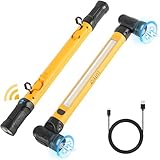
9. LUTEC 3000LM LED Work Light, 5200mAh Rechargeable Magnetic Under Hood Work Light Bar with Hooks, Cordless Portable Mechanic Light for Car Repairing/Inspection/Garage/Emergency-Yellow
Overview:
This feature-rich light combines high output with smart controls for professional automotive environments. Its infrared sensor, multi-angle adjustability, and extended runtime cater to mechanics seeking precision and convenience.
What Makes It Stand Out:
The infrared motion sensor (3.54-inch activation) enables truly hands-free operation—a standout for greasy tasks. Coupled with 360° body rotation, 180° base swivel, and 4-level battery indicators, it offers superior usability over basic magnetic lights.
Value for Money:
Mid-to-high priced but justifies cost with sensor tech and 10-hour low-mode runtime. Competitors at this tier often omit motion controls, making LUTEC a premium yet reasonable investment for efficiency-focused workshops.
Strengths and Weaknesses:
Strengths: Reliable infrared sensor; exceptional 10-hour runtime on low; 4-level battery indicator; robust ABS housing; versatile mounting.
Weaknesses: Sensor requires precise hand positioning; magnets ineffective on aluminum; no USB output/power bank function.
Bottom Line:
Highly recommended for pros needing touchless operation and extended runtime. The sensor is a game-changer for messy jobs, though aluminum-hood users should consider alternatives.
10. JINLITE Magnetic Work Light - 3000LM Rechargeable LED Work Light Bar, 5200mAh Under Hood Mechanic Light for Garage, Workshop, Vehicle Inspection (1 Pack Green)

Overview:
Engineered for extreme conditions, this industrial-grade light merges 3000LM brightness with ruggedized build quality. Its IP54/IK07 ratings and power-bank function target professionals working in demanding environments.
What Makes It Stand Out:
IK07 impact resistance and IP54 waterproofing outclass most competitors, surviving heavy rain and drops. The dual-role as a power bank (via USB output) and scratch-free silicone magnets add unique practicality for field mechanics.
Value for Money:
Premium-priced but delivers unmatched durability. For users in construction or outdoor settings, its resilience offsets higher cost versus cheaper lights that fail under stress, offering long-term savings.
Strengths and Weaknesses:
Strengths: IK07 impact/IP54 waterproof ratings; power-bank capability; N50 magnets with silicone base; 6-hour fade-free runtime; SOS mode.
Weaknesses: Higher price point; no motion sensor; limited to two brightness modes (excludes mid-level).
Bottom Line:
The definitive choice for harsh-job-site reliability. If budget allows, its toughness and utility make it indispensable for professional mechanics facing wet, rugged conditions daily.
Understanding the Critical Role of Wide Engine Bay Coverage
Why Uniform Illumination Matters More Than Raw Brightness
It’s not just about how bright the light can be; it’s about where that light actually lands. A blindingly bright spotlight creates harsh shadows and glare, obscuring critical areas like the firewall, transmission bellhousing, or the underside of the intake manifold. Wide, even coverage ensures every bolt, hose, and sensor is clearly visible without constantly repositioning the light source, reducing eye strain and significantly improving diagnostic accuracy during critical tasks.
The Pitfalls of Inadequate Coverage Scenarios
Imagine trying to trace a vacuum leak deep near the throttle body while your light casts long shadows from the alternator, or attempting to replace a spark plug wire on the rear bank of a V-engine with only a narrow beam. Inadequate coverage forces awkward angles, increases the risk of dropping tools into inaccessible spaces, and can lead to missed details that cause recurring problems. Consistent light across the entire bay is fundamental to professional-grade results, even in a home garage.
Defining “Wide Coverage” for Modern Engine Designs
Engine compartments are increasingly packed, with complex turbo setups, intricate wiring harnesses, and tight spaces between the hood and components. “Wide coverage” means the light bar’s beam pattern effectively floods this entire three-dimensional space – from the front radiator support to the rear firewall, and side-to-side across the engine – without significant dark zones. Consider the specific layout of your vehicle; a compact inline-four has different needs than a wide V8.
Essential Technical Specifications Decoded
Lumens vs. Lux: Understanding True Illumination Power
Raw lumen output (total light emitted) is often overemphasized. Lux (lumens per square meter) measures the actual usable light on the surface you’re working on. A light bar with moderate lumens but excellent optics focusing that light precisely onto the engine bay can deliver far higher, more useful lux levels than a high-lumen bar scattering light inefficiently. Prioritize manufacturers providing lux measurements at specific distances relevant to engine bays.
Color Temperature: Optimizing for Clarity and Eye Comfort
Measured in Kelvin (K), color temperature dramatically affects visibility. Lights around 5000K-6000K (pure white to slightly cool white) offer the best balance: they mimic natural daylight, providing high contrast for seeing fine details, oil leaks, or wiring colors, without the harsh blue tint of overly cool lights (6500K+) that causes eye fatigue during prolonged use. Avoid warm yellows (3000K-4000K) as they reduce contrast in mechanical environments.
Beam Pattern Engineering: Beyond Simple Flood or Spot
The magic lies in the optical design. Advanced light bars utilize specific reflector or TIR (Total Internal Reflection) lens geometries to create a tailored “engine bay pattern.” This isn’t just a wide flood; it’s a controlled spread that throws light deep into the bay’s recesses while maintaining intensity across the width, minimizing spill onto the hood (which causes glare) or the ground. Look for descriptions detailing this specific engineering, not just generic “flood beam.”
Durability and Environmental Resistance Requirements
IP Rating Demystified: What You Truly Need Underhood
The Ingress Protection (IP) rating is crucial. Underhood environments are brutal: oil mist, coolant splashes, road grime, and high heat. An absolute minimum is IP67 (dust-tight and withstands immersion up to 1m for 30 mins), but IP68 (continuous immersion protection) or IP69K (high-pressure, high-temperature washdown resistance) is highly recommended for longevity, especially near potential leak points or for vehicles used off-road or in harsh conditions. Don’t settle for vague “water-resistant” claims.
Temperature Tolerance: Surviving Extreme Engine Heat
Engine compartments can easily exceed 200°F (93°C), especially near exhaust manifolds or turbochargers. The light bar’s operating temperature range must comfortably exceed this, typically requiring components rated for at least 250°F (121°C). Pay attention to the operating range, not just storage. Components like cheap plastics or poorly rated LEDs will degrade rapidly in sustained high heat.
Vibration Resistance: Handling the Road’s Punishment
Constant engine vibration is a silent killer of electronics. Look for units specifically designed and tested for automotive vibration resistance (often referencing standards like SAE J551). This involves secure internal component mounting, flexible wiring harnesses, and robust soldering. Avoid units with loose internal parts or flimsy construction that will fail prematurely on rough roads.
Power, Wiring, and Installation Practicalities
Voltage Compatibility: 12V Systems and Beyond
While most passenger vehicles use 12V systems, ensure compatibility. Crucially, verify the light bar handles typical automotive voltage fluctuations (9V-16V) without flickering or damage. This is vital for stable operation during cranking or when electrical loads shift. Some advanced units incorporate wider input ranges or built-in regulators for exceptional stability.
Simplifying the Wiring Harness: Plug-and-Play vs. Hardwire
Consider your skill level and desired permanence. True plug-and-play harnesses that connect directly to existing underhood sockets (like fog light connectors) are ideal for simplicity and reversibility. However, many quality units require hardwiring to the battery (via an in-line fuse) for maximum reliability and to avoid overloading accessory circuits. A well-designed harness with clear instructions, quality connectors, and proper gauge wire is non-negotiable for safety and ease of installation.
Mounting Solutions: Flexibility for Diverse Engine Layouts
One-size-fits-all rarely works underhood. The best solutions offer versatile mounting: adjustable brackets, multiple attachment points (hood latch, radiator support, strut towers), and perhaps even flexible gooseneck arms. Magnetic bases can be useful but often lack the holding power needed on dirty, uneven metal surfaces common in engine bays. Consider how the mount secures without risking damage to sensitive components or hoses.
Control and User Experience Features
Switching Options: Convenience Meets Safety
How you turn the light on matters. Integrated switches on the bar itself are convenient but can be awkward to reach mid-repair. A dedicated dash-mounted switch offers easy access but requires extra wiring. Wireless remote controls (RF or Bluetooth) provide significant flexibility, allowing activation before opening the hood or during use without reaching. Ensure any switch is clearly labeled and positioned for intuitive, safe use.
Dimming Capabilities: Adapting to Task and Environment
The ability to dim the light is unexpectedly valuable. Full brightness might be overwhelming for delicate tasks like sensor replacement or when working in a well-lit garage. Gradual dimming allows you to tailor the intensity to the specific job and ambient conditions, reducing glare and eye strain during extended sessions. Avoid single-brightness-only options for maximum versatility.
Memory Function and Auto-Off: Preventing Battery Drain
An essential safety feature is an auto-shutoff timer (e.g., 30-60 minutes) to prevent accidentally draining your vehicle’s battery if you forget to turn the light off after closing the hood. Bonus points for models that remember your last brightness setting, so you don’t have to readjust every time.
Compatibility and Vehicle-Specific Considerations
Hood Clearance and Physical Dimensions
Measure twice, buy once. Account for the space between the top of your engine components and the underside of the closed hood. Light bars and their mounting hardware must fit within this clearance without pressing against the hood liner or components, especially when the hood vibrates. Low-profile designs are often essential for modern, tightly packed engine bays.
Avoiding Interference with Sensitive Components
Never mount a light bar directly over or in close proximity to critical sensors (MAF, O2 sensors), air intakes, or plastic coolant reservoirs. Intense heat from the light or potential electromagnetic interference (EMI) from poorly shielded electronics could cause malfunctions. Maintain a safe distance (consult manual if unsure) and ensure wiring routes away from hot exhaust parts or moving components like belts.
Considering Hood Type: Conventional, Liftback, or Hoodless Designs
The shape of your vehicle’s hood significantly impacts mounting. Conventional hoods offer standard mounting points near the latch. Liftbacks or fastback designs might require creative mounting on the cowl or windshield frame. Some performance vehicles have very short hoods; verify the light bar’s mounting footprint suits your specific vehicle architecture.
Future-Proofing Your Investment for 2026+
Emerging Trends in Underhood Lighting Technology
Look for signs of forward-thinking design. Integration with vehicle diagnostics via Bluetooth (showing light status or battery drain on a phone app) is becoming more common. Advanced thermal management systems using materials like aluminum cores or passive heatsinks ensure consistent output and longevity as LED technology evolves. Wireless control ecosystems might expand for seamless garage integration.
The Importance of Serviceability and Repairability
Avoid disposable lights. Seek units where critical components like LEDs or drivers are replaceable or where the manufacturer offers robust repair support. A light bar that can be serviced extends its usable life far beyond cheaper, sealed units that become e-waste at the first failure. Check warranty terms and parts availability.
Evaluating Manufacturer Support and Warranty
A strong warranty (3+ years) signals confidence in the product’s durability under harsh conditions. Equally important is responsive customer support – can you easily get technical help or replacement parts? Research the brand’s reputation for standing behind their products, especially regarding issues arising from heat or vibration failure, which are common underhood stressors.
Making the Final Selection: A Practical Checklist
Prioritizing Your Specific Workflow Needs
Be brutally honest about how you use your garage. If you only check oil occasionally, a simple, affordable bar suffices. For frequent, complex repairs, invest in superior coverage, durability, and features like dimming. If you work primarily at night in a dark driveway, maximum lux and wide spread are paramount. Tailor your choice to your actual usage patterns.
Balancing Budget Against Long-Term Value
While the cheapest option is tempting, consider cost-per-use. A $50 light failing after two oil changes is worse value than a $120 unit lasting five years of regular maintenance. Factor in potential costs of failure (like battery drain causing a no-start situation). Invest proportionally to how critical reliable underhood lighting is for your routine.
Verifying Real-World Performance Through User Insights
Look beyond manufacturer specs. Seek out detailed user reviews focusing on coverage in real engine bays (especially similar vehicle models), longevity claims (“still working after 2 years of weekly use”), and ease of installation without professional help. Pay attention to recurring complaints about hotspots, dark zones, or mounting difficulties – these reveal practical shortcomings specs might hide.
Frequently Asked Questions
What’s the single most important feature for wide engine bay coverage?
Achieving truly wide, even coverage hinges primarily on the beam pattern design and optics, not just raw brightness. Look for light bars specifically engineered with an “engine bay” or “wide flood” pattern using precise reflectors or TIR lenses that distribute light effectively across the entire three-dimensional space of a typical engine compartment, minimizing harsh shadows and dark spots.
Can an underhood light bar really drain my car battery?
Yes, if left on accidentally. Always choose a model with a reliable auto-shutoff timer (typically 30-60 minutes). This critical feature prevents battery drain if you forget to turn the light off after closing the hood. Ensure the timer activates correctly during testing before relying on it.
How do I know if a light bar will fit my specific car?
Measure the available clearance between your highest engine component and the closed hood. Compare this to the light bar’s total height including its mounting hardware. Consult vehicle-specific forums or installation galleries (if available from the seller) for real-world fitment examples on your make and model. Low-profile designs are often essential for modern vehicles.
Is higher lumen count always better for underhood work?
Not necessarily. While sufficient brightness is needed, excessive lumens without proper beam control create glare and harsh shadows that actually reduce visibility. Focus on the lux measurement (light intensity on the surface) at relevant distances and the quality of the beam pattern for even engine bay illumination. Moderate lumens with excellent optics often outperform blindingly bright, poorly focused lights.
What color temperature is safest and most effective under the hood?
A color temperature between 5000K and 6000K (pure white to slightly cool white) is ideal. It provides the highest contrast for seeing fine details, fluid leaks, and wiring colors, closely mimicking natural daylight. Avoid very warm (3000K-4000K, yellowish) lights which reduce contrast, and overly cool lights (6500K+, very blue) which cause significant eye fatigue during extended use.
How critical is the IP rating for an underhood light?
Extremely critical. The underhood environment exposes lights to oil mist, coolant splashes, road grime, and high heat. An absolute minimum IP67 rating (dust-tight and protected against temporary immersion) is required. For maximum longevity and resilience, especially near potential leak points or on off-road vehicles, seek IP68 or IP69K (high-pressure washdown) rated units. Avoid vague “water-resistant” claims.
Can vibration really damage an underhood light bar?
Absolutely. Constant engine vibration is a major cause of premature failure in automotive lighting. Look for units explicitly designed and tested for automotive vibration resistance (often referencing standards like SAE J551). This involves secure internal component mounting, flexible wiring harnesses, and robust construction. Units not rated for vibration will likely develop internal faults quickly.
Are magnetic mounts reliable under the hood?
Magnetic mounts are often not the most reliable solution under the hood. Engine bay surfaces are typically uneven, coated in oil/grime, and subject to vibration – all of which drastically reduce magnetic holding power. They can shift or fall unexpectedly. For safety and reliability, prioritize mechanical mounting solutions (brackets, screws) designed specifically for underhood use, even if they take slightly longer to install.
Should I choose plug-and-play wiring or hardwire to the battery?
Plug-and-play harnesses (connecting to existing sockets like fog lights) offer simplicity and reversibility but may overload circuits not designed for constant accessory use. Hardwiring directly to the battery (via an in-line fuse) is generally more reliable and safer for sustained operation, preventing electrical issues. If opting for plug-and-play, ensure the circuit has sufficient capacity and isn’t shared with critical systems.
How can I prevent the light from causing glare on the hood?
Glare occurs when light reflects off the underside of the hood. Choose a light bar with a well-engineered beam pattern that minimizes upward spill (often achieved through precise optics). Position the light bar as low as possible within the engine bay, typically near the front radiator support or lower cowl, aiming the beam slightly downward towards the engine components rather than straight up. Avoid mounting it too high near the hood latch.
See Also
- 10 Expert-Recommended Underhood Light Bars for Commercial Garages in 2026
- 10 Best Value Underhood Light Bars for Extended Coverage in 2026
- 10 Best LED Underhood Lights for Clear Engine Bay Visibility This Year
- Top 10 Best Underhood Lights for Tight Engine Compartments in 2026
- Best Underhood Lights for Classic Cars: 10 Expert Picks for 2026