Table of Contents
Precision is the difference between a good build and a championship-winning performance. When you’re assembling high-compression pistons, securing titanium connecting rods, or fastening carbon fiber intake components, guesswork isn’t just risky—it’s catastrophic. Modern performance tuning has evolved beyond simple bolt-ons into a realm where every fastener must meet exact specifications, and that’s where micrometer torque wrenches have become the undisputed champions of the toolbox.
As we push further into 2026, the technology behind these precision instruments has reached new heights, offering features that would have seemed like science fiction just a few years ago. Whether you’re building a forced-induction street monster, fine-tuning a track-day weapon, or restoring a classic with modern reliability, understanding what makes these tools truly game-changing will transform your approach to mechanical assembly. This guide breaks down everything you need to know about selecting and using professional-grade micrometer torque wrenches for performance applications—no brand bias, just pure technical insight.
Top 10 Micrometer Torque Wrenches
Detailed Product Reviews
1. TEKTON 1/4 Inch Drive 90-Tooth Dual-Direction Micrometer Torque Wrench (20-200 in-lb) | TRQ50402

Overview: The TEKTON TRQ50402 is a precision 1/4-inch drive torque wrench engineered for low-torque applications ranging from 20-200 inch-pounds. Designed for technicians and serious DIYers, this tool delivers professional-grade accuracy for delicate fasteners found in electronics, automotive interiors, and small engines. The micrometer-style adjustment and dual-direction calibration make it exceptionally versatile for tasks requiring finesse.
What Makes It Stand Out: The 90-tooth ratchet mechanism with a 4-degree swing arc is a standout feature, allowing operation in tight spaces where traditional wrenches struggle. Its dual-direction accuracy within ±3% is certified to ISO standards, complete with a serialized calibration certificate—a feature typically reserved for premium brands costing twice as much. The high-contrast laser markings on the satin handle ensure easy reading even in poor lighting.
Value for Money: At its price point, this wrench competes with tools costing significantly more. The inclusion of an ISO calibration certificate and dual-direction accuracy provides professional validation without the Snap-on premium. For precision work, it’s an investment that pays dividends in preventing stripped threads and ensuring proper assembly.
Strengths and Weaknesses: Strengths include exceptional accuracy, smooth ratchet action, certified calibration, and compact swing arc. The reversible dual-direction capability eliminates guesswork. Weaknesses are its limited range unsuitable for heavy-duty applications, and the 1/4-inch drive restricts socket compatibility for larger fasteners.
Bottom Line: For precision torque applications, the TEKTON TRQ50402 is an outstanding choice that delivers professional features at a consumer-friendly price. It’s ideal for automotive electronics, bicycle components, and any task requiring accurate low-torque values.
2. TEKTON 3/8 Inch Drive 90-Tooth Dual-Direction Micrometer Torque Wrench (10-100 ft-lb) | TRQ51402
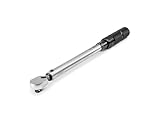
Overview: The TEKTON TRQ51402 brings the same engineering excellence to medium-duty applications with its 3/8-inch drive and 10-100 foot-pound range. This torque wrench serves as a versatile workhorse for automotive maintenance, motorcycle repair, and general mechanical work. The robust construction and precise calibration make it suitable for critical fasteners like lug nuts, cylinder heads, and suspension components.
What Makes It Stand Out: Like its 1/4-inch sibling, the 90-tooth ratchet head provides an ultra-tight 4-degree swing arc—perfect for engine bays and confined spaces. The dual-direction ±3% accuracy with ISO certification ensures reliable readings whether tightening or loosening. The serialized calibration certificate provides traceability that professional shops demand, while the satin-finished handle with laser-etched markings offers superior visibility and corrosion resistance.
Value for Money: This wrench strikes an excellent balance between professional performance and affordability. While premium alternatives from Snap-on or Proto can cost three times as much, the TRQ51402 delivers comparable accuracy and build quality. The 10-100 ft-lb range covers most automotive tasks, eliminating the need for multiple wrenches.
Strengths and Weaknesses: Strengths include the precise 90-tooth mechanism, certified dual-direction accuracy, comfortable grip, and versatile torque range. The included certificate adds professional credibility. Weaknesses include the lack of a protective case (sold separately) and that 100 ft-lb maximum may be insufficient for some truck lug nuts or heavy-duty applications.
Bottom Line: The TEKTON TRQ51402 is an exceptional value for serious DIYers and professional technicians alike. Its combination of accuracy, quality, and price makes it a go-to tool for medium-torque applications where precision matters.
3. Powerbuilt 3/8-Inch Micrometer Torque Wrench, 5-80 Foot/Pounds and 0.7-11.2 Meter/Kilograms, Reversible Ratchet Clicks, Lockable - 644998

Overview: The Powerbuilt 644998 torque wrench offers a practical 5-80 foot-pound range in a 3/8-inch drive configuration, targeting DIY enthusiasts and semi-professional users. This tool provides reliable torque control for automotive repairs, power equipment maintenance, and light industrial applications. The reversible ratchet and locking handle design prioritize user convenience and consistent results.
What Makes It Stand Out: The unusually low 5 ft-lb minimum torque setting distinguishes this wrench, making it versatile enough for both delicate and medium-strength fasteners. The integrated lock screw prevents accidental setting changes—a feature often missing at this price point. Built to ANSI standards and manufactured in Taiwan, it represents a solid middle-ground between budget and premium options.
Value for Money: With ±4% accuracy and professional features like the locking handle and reversible ratchet, this wrench delivers strong value. It’s priced competitively for hobbyists who need better-than-basic performance without professional-tool investment. The 5-80 ft-lb range covers most common tasks while the locking mechanism prevents costly errors.
Strengths and Weaknesses: Strengths include the wide usable torque range, secure locking handle, reversible ratchet for efficiency, and ANSI compliance. The Taiwan manufacturing suggests decent quality control. Weaknesses are the slightly lower ±4% accuracy versus ±3% competitors, less refined ratchet mechanism, and absence of a calibration certificate. The finish and markings may wear faster than premium brands.
Bottom Line: The Powerbuilt 644998 is a solid workhorse for home mechanics and semi-pro users seeking reliable performance without premium pricing. Its locking handle and wide range make it particularly suitable for varied DIY projects where consistency matters.
4. CRAFTSMAN Torque Wrench, 3/8" Drive (CMMT99433)

Overview: The CRAFTSMAN CMMT99433 torque wrench represents the brand’s entry into the consumer-grade precision tool market. This 3/8-inch drive wrench features a 10-100 foot-pound range suitable for common automotive and household tasks. The bi-material handle and durable storage case emphasize user comfort and tool protection for occasional use scenarios.
What Makes It Stand Out: CRAFTSMAN’s legendary warranty and brand recognition provide peace of mind for homeowners. The stamped dual-scale (inch/metric) markings are permanently visible and won’t fade like painted markings. The locking adjustment mechanism ensures settings remain secure during use, while the included blow-molded case offers convenient storage and portability—features often sold separately with competitors.
Value for Money: Positioned as an affordable option for DIYers, this wrench delivers essential functionality without professional-grade pricing. It’s ideal for homeowners who torque fasteners a few times yearly rather than daily. While lacking certified calibration, it meets ASME specifications, making it reliable for non-critical applications like lawn equipment, furniture assembly, and basic auto maintenance.
Strengths and Weaknesses: Strengths include the comfortable bi-material grip, protective case, clear dual-scale markings, strong brand warranty, and locking mechanism. The price point is attractive for occasional users. Weaknesses include unspecified accuracy ratings, basic ratchet mechanism (likely 36-45 teeth), absence of calibration certificate, and less durable construction than professional tools. Precision work may require verification.
Bottom Line: For homeowners and casual DIYers, the CRAFTSMAN CMMT99433 offers reliable performance at an accessible price. It’s best suited for non-critical tasks where certified accuracy isn’t mandatory but consistent torque is still desired.
5. VANPO 1/4-inch Drive Click Torque Wrench, 20-240 in. lb/2.3-27.1 Nm, Inch Pound Torque Wrench Set with 1/4" to 3/8" Adapter, 10cm Extension Bar, Small Bike Torque Wrench for MTB, Bicycle Maintenance
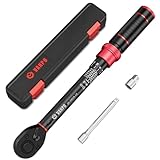
Overview: The VANPO 1/4-inch torque wrench kit targets cyclists and hobbyists with its compact 20-240 inch-pound range and included accessories. This click-type wrench comes packaged with a 1/4" to 3/8" adapter and 10cm extension bar, providing immediate versatility for bicycle maintenance, electronics, and small machinery. The aluminum shaft construction keeps weight down while maintaining adequate strength for light-duty applications.
What Makes It Stand Out: The comprehensive kit approach distinguishes VANPO from competitors selling accessories separately. The dual-range scale (in-lb/Nm) caters specifically to bike component specifications, while the 24-month warranty exceeds industry norms. The aluminum shaft offers better fatigue resistance than comparably priced steel alternatives, and the included storage case keeps everything organized.
Value for Money: This set delivers exceptional value for budget-conscious users. The inclusion of adapter and extension eliminates immediate additional purchases, making it ready-to-use for most bicycle repairs. While not professional-grade, the price-to-accessories ratio is unmatched for hobbyists and cyclists who need occasional precision without investing in premium tools.
Strengths and Weaknesses: Strengths include the accessory bundle, bike-specific design, lightweight aluminum construction, clear click mechanism, and generous warranty. The dual-scale markings are practical. Weaknesses include lower precision than premium brands, less durable ratchet mechanism, unknown long-term reliability, and limited torque range unsuitable for automotive work. The brand lacks professional recognition.
Bottom Line: Perfect for cyclists and hobbyists, the VANPO torque wrench set provides everything needed for bike maintenance at an unbeatable price. It’s an excellent entry-level option for precision tasks where professional certification isn’t required but consistent performance is valued.
6. TEKTON 1/2 Inch Drive 90-Tooth Dual-Direction Micrometer Torque Wrench (40-200 ft-lb) | TRQ52402
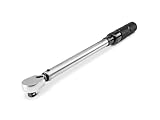
Overview: The TEKTON TRQ52402 is a professional-grade 1/2-inch drive micrometer torque wrench covering 40-200 ft-lb range. Featuring a 90-tooth ratchet mechanism, this tool delivers exceptional precision for automotive and heavy equipment applications where accurate torque is critical. The dual-direction functionality makes it versatile for various mechanical tasks.
What Makes It Stand Out: The 90-tooth ratchet head provides a mere 4-degree swing arc, perfect for tight engine bays where space is limited. Its dual-direction calibration maintains ±3% accuracy clockwise and counterclockwise—a rare feature typically found in premium tools costing significantly more. The ISO standard calibration with serialized certificate provides traceability for professional shops. Laser-etched micrometer scales on a satin finish eliminate glare, ensuring easy reading in any lighting condition.
Value for Money: Priced in the mid-range category, the TEKTON offers features rivaling tools costing twice as much. The included calibration certificate and dual-direction accuracy alone justify the price point, making it an intelligent investment for serious DIYers and professional mechanics who need reliable precision.
Strengths and Weaknesses: Strengths include exceptional ratchet smoothness, certified accuracy, easy micrometer adjustment, and robust construction that withstands daily shop use. The 90-tooth mechanism prevents skipping under load. Weaknesses are limited to the lack of digital features some modern users prefer and the 40 ft-lb minimum may be high for certain delicate applications.
Bottom Line: For those seeking professional-grade precision without premium brand pricing, the TEKTON TRQ52402 delivers outstanding performance and reliability that will serve automotive enthusiasts and professional technicians for years of dependable service.
7. Hairich Upgrade 3/8 Inch Drive Digital Torque Wrench 5-100FT-LB/0-135N.M, Torque Range Accurate to ±2%,Electric Torque Wrench car with Buzzer and LED Flash Notification for Bike/Motorcycle/Auto Repair

Overview: The Hairich Digital Torque Wrench brings modern technology to the 3/8-inch drive category with a 5-100 ft-lb range and digital precision. This electric torque wrench features an LCD display and multiple notification systems for accurate fastener tightening in automotive and motorcycle applications where precision matters.
What Makes It Stand Out: With ±2% accuracy surpassing most mechanical wrenches, this tool offers five measurement units (kg-cm, kg-m, Nm, in-lb, ft-lb) instantly switchable on the LED screen. The buzzer and LED flash alerts at 80% and 100% of preset torque prevent over-tightening, invaluable in noisy workshops. The memory function stores 500 peak torque readings, providing documentation for quality control and professional service records that meet modern standards.
Value for Money: This digital wrench competes with premium brands at a mid-range price point. The data logging capability alone saves time on documentation, while the multi-unit versatility eliminates conversion errors, offering excellent value for professional mechanics and serious enthusiasts who work on various vehicle types.
Strengths and Weaknesses: Strengths include superior accuracy, digital convenience, audible/visual alerts, and extensive data storage. The ergonomic handle enhances comfort during extended use. Weaknesses involve battery dependency—dead batteries halt work—and potential long-term durability concerns with electronic components in harsh shop environments compared to purely mechanical alternatives.
Bottom Line: Ideal for tech-savvy users and professional mechanics requiring documentation, the Hairich digital wrench combines precision with smart features that streamline workflow, though traditionalists may prefer mechanical simplicity.
8. Craftsman 9-31423 25-250 in.lbs 3/8" Drive Microtork Torque Wrench

Overview: The Craftsman 9-31423 Microtork is a straightforward 3/8-inch drive mechanical torque wrench offering 25-250 in-lbs range. This traditional micrometer-style wrench focuses on simplicity and reliability for general-purpose fastening tasks without unnecessary complexity. It represents Craftsman’s entry-level approach to torque tools for the mass market.
What Makes It Stand Out: Craftsman’s legendary lifetime warranty provides peace of mind unmatched by most competitors. The stamped scales displaying both inch and metric settings remain visible without wearing off, ensuring long-term readability even after years of use. The twist-lock ring prevents accidental setting changes during use—a simple but effective feature that enhances reliability in practical applications.
Value for Money: Positioned as a budget-friendly option, this wrench delivers essential torque functionality at an accessible price point. The lifetime warranty effectively makes it a one-time purchase, offering exceptional long-term value for homeowners and occasional users who don’t require professional-grade certification or extreme precision.
Strengths and Weaknesses: Strengths include affordable pricing, trusted brand reputation, simple operation, and effective warranty coverage. The mechanical design requires no batteries and withstands typical shop abuse. Weaknesses are notable: ±4% accuracy trails most competitors, lacks a calibration certificate, and the basic features pale against modern alternatives. The stamped scales can be difficult to read in low light conditions.
Bottom Line: Perfect for DIYers and homeowners performing occasional automotive or equipment maintenance, the Craftsman Microtork provides reliable basic functionality without breaking the bank, though professionals will want higher precision and certified accuracy.
9. GEARWRENCH 1/2" Drive Micrometer Torque Wrench 30-250 ft/lbs. - 85066

Overview: The GEARWRENCH 85066 is a robust 1/2-inch drive micrometer torque wrench delivering 30-250 ft-lbs of torque for heavy-duty automotive and industrial applications. This professional-grade tool combines traditional mechanical reliability with user-friendly features for efficient workflow in busy shop environments where time is money.
What Makes It Stand Out: The pull adjustment collar enables remarkably quick torque setting changes compared to traditional twist-handle designs, saving valuable time during complex jobs with multiple specifications. The tool maintains ±3% clockwise accuracy across its primary range, meeting professional standards for most applications. GEARWRENCH’s reputation for durable construction ensures this wrench withstands daily shop abuse while delivering consistent performance year after year.
Value for Money: Competitively priced against premium brands like Snap-on or Mac Tools, this wrench offers professional features without the premium cost. The quick-adjust collar alone provides significant time savings that justify the investment for busy technicians, while the wide torque range covers most automotive applications from lug nuts to suspension components.
Strengths and Weaknesses: Strengths include rapid adjustment mechanism, solid construction, good accuracy, and extensive torque range. The tool feels substantial and inspires confidence during use. Weaknesses include single-direction accuracy rating (clockwise only) and lack of a mentioned calibration certificate, which may concern some professional users requiring traceability. The 30 ft-lb minimum is higher than some competitors.
Bottom Line: A workhorse tool ideal for professional mechanics needing quick adjustments and reliable performance, the GEARWRENCH 85066 balances speed and accuracy effectively, though certification seekers should verify documentation before purchase.
10. LEXIVON Inch Pound Torque Wrench 1/4-Inch Drive | 20200 in-lb/2.2622.6 Nm (LX-181)
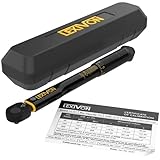
Overview: The LEXIVON LX-181 is a precision 1/4-inch drive torque wrench designed for delicate fasteners requiring 20-200 in-lbs of accurate torque. Manufactured in Taiwan, this tool targets technicians working on small engines, bicycles, and electronics where over-tightening can cause catastrophic damage. Its compact size makes it ideal for tight spaces.
What Makes It Stand Out: The pre-calibrated ±4% accuracy comes with a traceable calibration certificate—a surprising inclusion at this price point that adds professional credibility. The proprietary Electro-Black finish provides superior corrosion resistance compared to standard chrome plating, ensuring longevity. The patent-pending dual-range scale features high-contrast yellow markings on black background, offering excellent visibility even in dimly lit workspaces common in professional shops.
Value for Money: Positioned as a mid-range precision tool, the LEXIVON delivers features typically found in more expensive instruments. The included certificate, durable finish, and quality construction provide strong value for technicians needing reliable inch-pound measurements without premium brand pricing, essentially offering professional documentation at DIY prices.
Strengths and Weaknesses: Strengths include the calibration certificate, durable alloy steel construction, reversible ratchet head, comfortable knurled grip, and excellent scale readability. The corrosion-resistant finish extends service life significantly. Weaknesses include ±4% accuracy which, while acceptable, trails some competitors offering ±3% or better. The 1/4-inch drive limits its application to smaller fasteners only, requiring additional tools for larger jobs.
Bottom Line: An excellent choice for precision work on motorcycles, bicycles, and small engines, the LEXIVON LX-181 combines quality manufacturing with thoughtful features, making it ideal for detail-oriented technicians who value accuracy and durability in a specialized tool.
Why Micrometer Torque Wrenches Dominate Performance Tuning
The Precision Advantage in High-Performance Engines
Performance engines operate on razor-thin margins of tolerance. A fastener torqued even 5% beyond specification can strip threads in aluminum blocks, crush bearing surfaces, or warp cylinder heads. Micrometer torque wrenches provide the repeatability and accuracy that beam-type or dial indicators simply cannot match. The internal click mechanism activates at precisely the set value, giving tactile and audible feedback that eliminates operator interpretation errors. This becomes critical when you’re working with exotic materials like Inconel studs or magnesium valve covers that demand exact clamping forces.
How Micrometer Mechanisms Work
Unlike basic click wrenches, micrometer-style tools feature a threaded adjustment sleeve that moves in precise increments, typically allowing settings in 1-inch-pound or even 0.5 Newton-meter steps. When you rotate the handle to your desired torque value, you’re actually preloading a spring mechanism against a pivoting pawl. As you apply force, the pawl rides up a cam until it reaches the tripping point, creating that distinct “click” that signals you to stop immediately. This design provides both the fine resolution needed for delicate components and the robust construction required for high-torque applications.
Key Features That Define Professional-Grade Tools
Accuracy and Tolerance Standards
Professional-grade micrometer torque wrenches for performance work should maintain accuracy within ±3% clockwise and ±6% counterclockwise throughout their range. Look for tools that specify conformance to ASME B107.300 or ISO 6789 standards, which require rigorous testing protocols. Some advanced models now feature dual-direction calibration, crucial for left-hand threads found in certain crankshaft bolts and camshaft sprockets. The best instruments maintain this accuracy across their entire scale, not just in the middle range where manufacturers often focus their testing.
Drive Size Selection for Different Applications
Performance tuning requires multiple drive sizes. 1/4-inch drive wrenches handle delicate tasks like throttle body bolts and valve cover fasteners, typically covering 20-200 inch-pounds. The 3/8-inch drive is your workhorse for most engine internals, offering 5-80 foot-pounds of range—perfect for main caps, rod bolts, and cylinder head studs. For heavy-duty applications like crankshaft damper bolts and flywheel fasteners, 1/2-inch drive models provide the necessary leverage and 30-250 foot-pound capacity. Smart shops invest in all three sizes to avoid using adapters, which can skew torque readings by up to 15%.
Handle Ergonomics and Grip Materials
Extended tuning sessions demand comfortable, slip-resistant handles. Modern tools feature dual-material grips with soft-touch overmolding that reduces hand fatigue during repetitive tasks. Look for handles with finger grooves and a diameter between 1.25 and 1.5 inches for optimal control. Some advanced designs incorporate vibration-dampening materials that help prevent numbness when torquing dozens of fasteners in sequence. The handle length should provide adequate leverage without requiring excessive force—typically 12-18 inches for 3/8-inch drive models.
Scale Visibility and Lighting Solutions
Reading torque settings in dim engine bays or under-dash areas has always been challenging. Current-generation tools address this with laser-etched scales filled with high-contrast paint that remains visible even with oily hands. Some feature integrated LED lighting that illuminates the scale when adjusting values, while others use photoluminescent materials that glow in low-light conditions. Quick-release buttons positioned near the adjustment mechanism allow one-handed operation, keeping your other hand free to stabilize the tool.
Materials and Construction Quality
The internal components separate premium tools from budget options. Look for heat-treated alloy steel construction in the ratchet mechanism and chrome vanadium or chrome molybdenum for the shaft. Premium models use sealed ratchet heads that prevent debris ingress, extending service life in dirty shop environments. The adjustment threads should be precision-machined and coated with anti-corrosion treatments like nickel or black oxide. Avoid tools with plastic internal components, which can deform under load and compromise accuracy over time.
Click Mechanism Reliability
The heart of any micrometer torque wrench is its tripping mechanism. High-end models use multiple pawl designs that distribute load more evenly, reducing wear and maintaining consistency through thousands of cycles. The click should be crisp and audible even in noisy shops—some tools now incorporate mechanical amplification that increases click volume by 20-30 decibels. The mechanism should reset instantly after tripping, allowing immediate retorquing without having to back off the setting.
Digital vs Click-Type Micrometer Wrenches
When Digital Displays Make Sense
Digital micrometer torque wrenches integrate strain gauges and microprocessors to provide real-time torque display, often with programmable target values and progressive alerts. These excel when working with torque-to-yield fasteners common in modern performance engines, where you need to track both torque and angle in sequence. The digital readout eliminates parallax errors and provides exact values to 0.1 foot-pound resolution. However, they require battery management and can be vulnerable to shop fluids and extreme temperatures.
Traditional Click-Type Benefits
Click-type micrometer wrenches offer simplicity and reliability that many professional engine builders prefer. With no batteries to die mid-job and no electronic components to fail, they work in any environment from freezing garages to hot pits. The tactile feedback develops muscle memory, allowing experienced technicians to feel the click through the handle before hearing it. These tools typically cost 40-60% less than digital equivalents while offering comparable accuracy. The mechanical nature also means they can be fully rebuilt, often lasting decades with proper maintenance.
Advanced Features for 2026 Performance Work
Angle Measurement Integration
Modern performance fasteners, especially in boosted applications, require torque-plus-angle specifications. Advanced micrometer wrenches now incorporate electronic angle gauges that measure rotation after initial torque is reached. This eliminates the need for separate protractors or visual estimation. The system typically beeps at each 30-degree increment, ensuring precise stretch on torque-to-yield head bolts. Some models store multiple angle sequences, perfect for multi-stage tightening patterns on aluminum blocks.
Memory and Data Logging Functions
For professional builders documenting work for clients or race teams, data logging capabilities have become invaluable. High-end digital models can store hundreds of torque events with timestamps, allowing you to prove every fastener met specification. This data can be exported via Bluetooth or USB for inclusion in build sheets and technical inspections. The feature proves particularly useful when building multiple identical engines, ensuring consistency across all units.
Multi-Unit Measurement Systems
Performance tuning often involves mixing metric and imperial fasteners, especially in engine swaps or when combining aftermarket parts. Premium micrometer wrenches offer instant unit conversion between foot-pounds, inch-pounds, Newton-meters, and kilogram-centimeters. Some display all units simultaneously, preventing costly conversion errors. This flexibility proves essential when working with Japanese, European, and American performance parts in the same build.
Torque Wrench Selection by Performance Tuning Task
Engine Internal Assembly
Building a high-performance short block demands extreme precision. For main cap bolts, select a 1/2-inch drive wrench with a range of 50-250 foot-pounds, ensuring it can handle both inner and outer bolt specifications. Connecting rod bolts typically require 3/8-inch drive tools in the 15-75 foot-pound range, with some aftermarket rods needing inch-pound measurements. Always use a wrench with a low-end accuracy of at least ±2% for these critical fasteners—variations here can lead to spun bearings or catastrophic failure.
Suspension and Chassis Components
Suspension fasteners require careful consideration of thread lubrication and bolt stretch. Control arm bolts and strut mounts often need 25-85 foot-pounds, making 3/8-inch drive ideal. The key is selecting a wrench with good mid-range accuracy, as most suspension specs fall in the middle of typical tool ranges. For subframe and cage mounting, step up to 1/2-inch drive with at least 100 foot-pound capacity. Remember that suspension components see dynamic loads, so proper torque is critical to prevent loosening under vibration.
Brake System Precision
Caliper bracket bolts and rotor set screws demand exact torque to prevent warping and ensure proper pad alignment. A 3/8-inch drive wrench covering 15-80 foot-pounds handles most brake hardware. The tool should have fine increments for brake work—1 foot-pound resolution helps when torquing sliding pin bolts that require 25-32 foot-pounds. Digital models with angle measurement prove valuable for modern vehicles using torque-to-yield caliper bracket bolts.
Exhaust and Turbo Installations
Turbocharger hardware experiences extreme thermal cycling, making proper initial torque crucial. Exhaust manifold studs typically need 18-25 foot-pounds, while turbo mounting bolts range from 30-45 foot-pounds. The challenge is accessing these fasteners in tight engine bays. Look for micrometer wrenches with flex-head ratchets that allow 15-degree angle adjustments. The tool should have a slim profile to reach between exhaust runners and around turbo housings.
Motorcycle vs Automotive Applications
Motorcycle performance tuning introduces unique challenges due to space constraints and lighter fasteners. A quality 1/4-inch drive micrometer wrench becomes essential for cam cap bolts, valve adjusters, and case halves that often spec below 10 foot-pounds. The tool must have excellent low-end accuracy and a very fine click mechanism that activates gently to avoid over-torquing delicate aluminum threads. For sportbike wheels and swingarm bolts, a compact 3/8-inch drive with a shorter handle provides better clearance around bodywork.
Proper Usage Techniques for Accuracy
Calibration and Pre-Use Checks
Always store micrometer torque wrenches with the setting backed off to the lowest value after use. Before each critical assembly job, verify the tool at 20% and 80% of its range using a calibration tester or known weight. Check that the ratchet functions smoothly in both directions and that the adjustment sleeve moves without binding. If the tool has been dropped or stored improperly, have it professionally calibrated before trusting it with engine internals.
Proper Stroking Speed and Technique
The rate at which you apply force significantly affects accuracy. Pull the handle steadily at approximately 1-2 seconds per foot-pound of torque, avoiding jerky motions. For a 25 foot-pound specification, this means a smooth 3-5 second pull. Position yourself to pull directly on the handle centerline—side loading can alter readings by 10% or more. When possible, keep the wrench at a 90-degree angle to the fastener to maximize leverage and minimize error.
Storage and Handling Best Practices
Never use a micrometer torque wrench as a breaker bar to loosen fasteners—this damages the internal mechanism. Store tools in their original cases or on dedicated racks, away from moisture and temperature extremes. For mobile tuning at track events, use padded tool bags that prevent jostling during transport. If a tool must be stored for extended periods, set it to 50% of its range to maintain spring tension without causing permanent set.
Maintenance and Calibration Schedules
Signs Your Wrench Needs Service
Listen for changes in the click sound—a dull or inconsistent click indicates worn pawls or spring fatigue. If the adjustment sleeve becomes difficult to turn or feels gritty, internal contamination may be present. Any tool that has been used beyond its maximum rating, even once, requires immediate recalibration. Professional race teams recalibrate their primary engine-building wrenches after every major assembly, while hobbyists should do so annually or every 5,000 cycles.
DIY vs Professional Calibration
While DIY calibration using a known weight and measurement arm is possible, it requires extreme precision and doesn’t account for directional accuracy. For performance work, professional calibration using certified equipment traceable to NIST standards is worth the $25-50 cost. Most manufacturers offer calibration services that include full disassembly, cleaning, and replacement of worn components. This typically costs 20-30% of a new tool’s price but restores factory accuracy.
Common Mistakes That Ruin Precision
Over-Torquing and Component Damage
The most frequent error is continuing to pull after the click. Even a quarter-turn beyond the click can exceed specifications by 15-25%. Train yourself to stop instantly when you hear or feel the mechanism trip. For critical fasteners, practice on scrap components to develop the reflex. Some builders mark fasteners with paint after torquing to ensure they haven’t been double-torqued accidentally.
Using Extensions Incorrectly
Extensions change the effective length of your torque wrench, altering the applied force. When you must use an extension, position it at a 90-degree angle to the wrench handle to minimize error. For straight extensions, calculate the corrected torque value using the formula: Corrected Torque = Desired Torque × (Handle Length + Extension Length) ÷ Handle Length. Better yet, invest in crows-foot or flare-nut adapters that attach directly to the ratchet head without extending the lever arm.
Environmental Factors
Temperature affects both the tool and the fastener. Always torque to specifications at room temperature (68-72°F) when possible. Cold fasteners contract, requiring less torque to achieve the same clamping force, while hot components expand and may yield unexpectedly. If working in extreme conditions, allow the tool and parts to normalize to the same temperature. High humidity can cause internal corrosion—use desiccant packs in storage cases in coastal or humid climates.
Investment Considerations for 2026
Price vs Performance Trade-offs
Entry-level micrometer torque wrenches suitable for occasional performance work start around $80-120, offering ±4% accuracy and basic features. Mid-range tools at $150-250 provide ±3% accuracy, better ergonomics, and more durable construction—ideal for serious enthusiasts. Professional-grade instruments exceeding $300 deliver ±2% accuracy, advanced features like angle measurement, and rebuildable designs. For engine internals, never compromise below the mid-range tier; the cost of one damaged cylinder head far exceeds the price difference.
Warranty and Support Expectations
Quality manufacturers back their tools with 1-2 year warranties covering accuracy and mechanical failure. Some offer lifetime warranties on mechanical components with free annual calibration for the first three years. Before purchasing, verify that replacement parts like ratchet pawls and springs are available. The best companies provide detailed service manuals and calibration procedures for their tools. Consider the manufacturer’s reputation for customer service—when a tool fails before a race weekend, responsive support becomes invaluable.
Frequently Asked Questions
What’s the difference between a micrometer torque wrench and a regular click-type wrench? Micrometer torque wrenches feature fine-threaded adjustment sleeves that allow precise setting in small increments, typically 1 inch-pound or 0.5 Nm. Regular click-type wrenches often have coarser adjustments and less precise scales, making them unsuitable for performance engine work where exact specifications matter.
How often should I recalibrate my torque wrench for performance tuning? For professional engine building, recalibrate after every major assembly or every 90 days. For enthusiast use, annual calibration is sufficient, or after 5,000 cycles. Always recalibrate if the tool has been dropped, stored improperly, or used beyond its maximum rating.
Can I use a torque wrench to loosen bolts? Never use a micrometer torque wrench as a breaker bar. The loosening direction typically lacks the precision mechanism, and forcing it backward can damage the internal click mechanism, spring, and calibration. Use a dedicated ratchet or breaker bar for removal.
Why do some fasteners require torque-plus-angle specifications? Torque-plus-angle ensures proper bolt stretch and clamping force, especially on torque-to-yield fasteners. The initial torque seats the fastener, while the angle rotation provides controlled stretch. This method is common on modern head bolts and critical in high-boost applications where standard torque values can’t guarantee sufficient clamping.
What’s the best drive size for engine building? You’ll need multiple sizes: 1/4-inch drive for small fasteners (valve covers, sensors), 3/8-inch drive for most engine internals (rod bolts, head studs), and 1/2-inch drive for main caps and crank bolts. Avoid adapters as they introduce measurement errors.
How do temperature changes affect torque wrench accuracy? Extreme temperatures affect both the tool’s internal spring and the fastener’s properties. Store and use torque wrenches at room temperature when possible. Cold tools may read slightly high, while hot tools read low. Allow everything to normalize to the same temperature before critical work.
Should I buy a digital or click-type micrometer torque wrench? Click-type wrenches offer simplicity, reliability, and lower cost with no batteries required. Digital models provide exact readouts, data logging, and angle measurement but cost more and require power. For most performance work, a quality click-type suffices; digital excels for torque-to-yield fasteners and documentation.
What causes a torque wrench to lose accuracy? Dropping the tool, using it beyond maximum capacity, improper storage (not backing off the setting), corrosion, wear on internal pawls, and spring fatigue all degrade accuracy. Always store properly and handle with care to maintain precision.
Can I use extensions with my torque wrench without affecting accuracy? Straight extensions aligned with the wrench handle don’t significantly affect readings. However, any extension that changes the effective length or creates an angle introduces error. When necessary, calculate corrected values or use adapters that mount directly to the ratchet head.
What’s the proper way to store a micrometer torque wrench? Always return the setting to the lowest value after use to relieve spring tension. Store in its original case or on a rack away from moisture, extreme temperatures, and vibration. Never leave it set at a high torque value, as this causes spring set and permanent accuracy loss.
See Also
- 10 Game-Changing Micrometer Torque Wrenches for Professional Use in 2026
- 10 Game-Changing Electronic Torque Wrenches for High-Torque Applications in 2026
- 10 Game-Changing Adjustable Torque Wrenches for Home Garages in 2026
- 10 Game-Changing Adjustable Torque Wrenches for Multi-Use Workshops in 2026
- 10 Premium Digital Torque Wrenches for High-Performance Engines (Worth the Investment)