Table of Contents
Precision in professional mechanical work isn’t just a preference—it’s the difference between equipment that performs flawlessly and catastrophic failure. As we move through 2026, micrometer torque wrenches have evolved from simple click-type tools into sophisticated instruments that blend mechanical excellence with digital intelligence. These aren’t your grandfather’s torque wrenches; today’s professional-grade options offer accuracy levels that were laboratory-grade just five years ago, with features designed to prevent human error and extend tool life in demanding environments.
The landscape of professional torque application has transformed dramatically, with industries from aerospace to automotive demanding tighter tolerances and better documentation. Whether you’re a veteran technician or building your professional toolkit, understanding what makes a micrometer torque wrench truly “game-changing” will directly impact your work quality, efficiency, and reputation. This comprehensive guide explores the revolutionary features, selection criteria, and maintenance practices that define the professional standard for 2026 without getting lost in brand-specific marketing claims.
Top 10 Micrometer Torque Wrenches
Detailed Product Reviews
1. TEKTON 1/4 Inch Drive 90-Tooth Dual-Direction Micrometer Torque Wrench (20-200 in-lb) | TRQ50402

Overview: The TEKTON TRQ50402 is a precision 1/4-inch drive torque wrench engineered for low-torque applications demanding exacting standards. With a calibrated range of 20-200 inch-pounds, it serves professional technicians, gunsmiths, and bicycle mechanics who require verified accuracy for delicate fasteners where over-tightening risks catastrophic component damage. The compact design excels in tight workspaces.
What Makes It Stand Out: This tool’s 90-tooth ratchet mechanism delivers an exceptionally tight 4-degree swing arc, crucial for accessing fasteners in confined engine compartments and equipment housings. Its dual-direction ±3% accuracy certification—backed by individual ISO-standard calibration and a serialized certificate—sets it apart from consumer-grade alternatives that only guarantee clockwise calibration. The satin-finished handle reduces glare under bright shop lighting.
Value for Money: Priced competitively against premium brands like Snap-on or Proto, the TEKTON offers professional-tier features at a DIY-friendly price point. The included calibration certificate alone adds $30-50 of value compared to wrenches requiring third-party verification, making it ideal for serious hobbyists seeking professional validation without paying professional prices. The ISO standard exceeds ASME requirements.
Strengths and Weaknesses: Strengths include the ultra-fine ratchet engagement with nine teeth contacting the gear at all times, clear laser-etched scales that resist wear, and comprehensive calibration documentation. Weaknesses center on the limited 20-200 in-lb range, which won’t suit heavy automotive work, and the plastic handle feels less robust than metal alternatives in harsh shop environments.
Bottom Line: For precision assembly work requiring certified accuracy and documentation, this wrench delivers exceptional professional value without the premium brand tax, making it a smart investment for serious DIYers and professionals alike.
2. TEKTON 3/8 Inch Drive 90-Tooth Dual-Direction Micrometer Torque Wrench (10-100 ft-lb) | TRQ51402
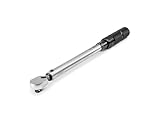
Overview: The TEKTON TRQ51402 represents the 3/8-inch drive sweet spot for automotive and mechanical work, offering a versatile 10-100 foot-pound range that covers most under-hood and chassis applications. This mid-range torque wrench handles everything from intake manifolds to suspension components, making it the most frequently reached-for size in professional and advanced DIY toolboxes where versatility is paramount.
What Makes It Stand Out: Sharing the same premium 90-tooth ratchet head as its 1/4-inch sibling, this wrench provides superior access in engine bays with its 4-degree swing arc. The dual-direction ±3% ISO certification with serialized documentation ensures accuracy for both tightening and loosening torque-verification tasks, a critical feature for professional liability protection and quality assurance protocols.
Value for Money: At a price point well below comparable professional tools, this wrench democratizes high-end features for serious enthusiasts. The full-range calibration eliminates the need for professional verification before critical use, saving both time and money while providing liability protection for professional mechanics. This represents a 40-60% savings over Snap-on equivalents.
Strengths and Weaknesses: Strengths include the optimal torque range for most automotive fasteners, exceptional ratchet smoothness, and certified bidirectional accuracy. The micrometer-style adjustment locks securely with positive detents. Weaknesses include the lack of flex-head capability for extreme angles and the plastic grip that may degrade with heavy chemical exposure in professional shop environments.
Bottom Line: An outstanding all-purpose torque wrench that bridges the gap between consumer and professional tools with verifiable accuracy, making it ideal for automotive enthusiasts and professional technicians.
3. Powerbuilt 3/8-Inch Micrometer Torque Wrench, 5-80 Foot/Pounds and 0.7-11.2 Meter/Kilograms, Reversible Ratchet Clicks, Lockable - 644998

Overview: The Powerbuilt 644998 targets budget-conscious buyers needing reliable torque measurement without premium frills. Its 5-80 foot-pound range covers most light-to-medium automotive and motorcycle maintenance tasks, positioning it as an accessible entry point for home mechanics building their first serious tool collection. The Taiwan manufacturing ensures consistent quality control at a lower price point.
What Makes It Stand Out: This wrench’s standout feature is its exceptional low-end range starting at just 5 ft-lbs, making it suitable for delicate aluminum components often damaged by higher-range wrenches. The integrated lock screw prevents accidental setting changes—a critical safety feature absent in many economy torque wrenches that can lead to costly errors on sensitive fasteners.
Value for Money: Representing significant savings over calibrated competitors, the Powerbuilt sacrifices marginal accuracy (±4% vs ±3%) for affordability. For non-critical applications like interior trim, valve covers, or oil pans, this trade-off delivers acceptable precision at roughly half the cost of certified alternatives, making it sensible for occasional users.
Strengths and Weaknesses: Strengths include the wide usable range, positive locking mechanism, and reversible ratchet convenience. Weaknesses include the lower ±4% accuracy rating, less refined scale markings that can be difficult to read in low light, and absence of individual calibration documentation, making it unsuitable for professional liability requirements.
Bottom Line: A capable homeowner-grade wrench that delivers essential functionality for occasional use without breaking the bank, best suited for non-critical maintenance tasks.
4. CRAFTSMAN Torque Wrench, 3/8" Drive (CMMT99433)

Overview: The CRAFTSMAN CMMT99433 leverages decades of brand trust to offer a straightforward, no-nonsense 3/8-inch torque wrench for general-purpose use. Designed for homeowners and occasional DIYers, it provides reliable performance for basic automotive maintenance and assembly projects without overwhelming users with professional-grade complexity or premium pricing.
What Makes It Stand Out: This wrench’s bi-material handle delivers superior comfort during extended use compared to all-metal competitors. The stamped dual-scale markings (inch and metric) remain visible even after years of shop wear, and the included durable storage case protects the tool between uses—features often omitted in this price class but appreciated by casual users.
Value for Money: Positioned as a mid-tier option, CRAFTSMAN charges a modest premium for brand recognition and ergonomic touches. While lacking individual calibration certificates, the ASME-compliant design meets standards for non-critical applications, representing solid value for users prioritizing comfort and convenience over certified precision in their home garage.
Strengths and Weaknesses: Strengths include excellent grip comfort, clear permanent markings, protective case, and trusted brand warranty support. The locking adjustment is intuitive and quick. Weaknesses include unspecified directional accuracy, potentially plastic internal components that may affect long-term durability, and less precise scale resolution compared to micrometer-style competitors.
Bottom Line: A reliable, comfortable choice for homeowners seeking a trusted brand name for occasional torque tasks, delivering peace of mind without professional-level investment.
5. VANPO 1/4-inch Drive Click Torque Wrench, 20-240 in. lb/2.3-27.1 Nm, Inch Pound Torque Wrench Set with 1/4" to 3/8" Adapter, 10cm Extension Bar, Small Bike Torque Wrench for MTB, Bicycle Maintenance
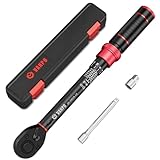
Overview: The VANPO 1/4-inch torque wrench specifically targets bicycle mechanics and electronics technicians needing precision in the 20-240 inch-pound range. This specialized kit includes a 3/8-inch adapter and extension bar, providing immediate versatility for MTB and road bike maintenance where carbon fiber components demand exact torque values to prevent expensive damage.
What Makes It Stand Out: Beyond the inclusive accessory package, this wrench features an aluminum shaft for reduced weight and fatigue during all-day bike shop use. The distinct click mechanism provides both audible and tactile feedback, while the 24-month warranty and dedicated customer support address reliability concerns typically associated with emerging tool brands in the specialty market.
Value for Money: This kit represents exceptional value by bundling accessories that would cost $15-25 separately. The dual-range scales accommodate both domestic and metric specifications, eliminating conversion errors. For cyclists, the bike-specific design and warranty protection make it a smarter investment than generic low-torque wrenches that lack proper scale resolution for bicycle applications.
Strengths and Weaknesses: Strengths include the complete accessory set, lightweight construction, clear Nm/in-lb scales, and reassuring warranty. The chromium-molybdenum handle resists corrosion in damp bike shop environments. Weaknesses include unknown long-term durability compared to established brands, potential accuracy drift without certified calibration, and limited application beyond light-torque scenarios.
Bottom Line: An ideal specialty tool for cyclists and electronics techs seeking a complete, warranty-backed solution that addresses their specific low-torque needs with included accessories.
6. TEKTON 1/2 Inch Drive 90-Tooth Dual-Direction Micrometer Torque Wrench (40-200 ft-lb) | TRQ52402
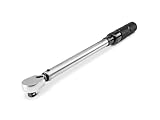
Overview: The TEKTON TRQ52402 is a professional-grade 1/2-inch drive torque wrench delivering 40-200 ft-lb range for automotive and mechanical work. Its 90-tooth ratchet mechanism and dual-direction calibration distinguish it from conventional wrenches, ensuring precision in both clockwise and counterclockwise operations for critical fasteners.
What Makes It Stand Out: The 90-tooth ratchet provides a tight 4-degree swing arc, invaluable in cramped engine bays where standard 60-tooth wrenches cannot operate. Dual-direction ±3% accuracy certified to ISO standards comes with a serialized calibration certificate, guaranteeing traceability. High-contrast laser-etched micrometer scales on a satin-finished handle eliminate glare, enabling precise adjustments even under bright shop lighting.
Value for Money: Mid-range priced yet offering premium features, the TEKTON includes calibration certification that budget alternatives lack. It competes with tools costing twice as much, making it an excellent investment for serious DIYers and professionals needing reliable secondary equipment without premium brand pricing.
Strengths and Weaknesses: Pros: Exceptional 90-tooth mechanism for confined spaces; certified dual-direction accuracy; serialized calibration certificate; glare-resistant finish; robust construction. Cons: 40 ft-lb minimum unsuitable for delicate tasks; heavier than compact models; satin finish may wear over time.
Bottom Line: The TEKTON TRQ52402 excels for medium to heavy-duty applications where space is limited. Its certified dual-direction accuracy and tight swing arc make it indispensable for automotive professionals and dedicated home mechanics prioritizing precision and versatility.
7. Hairich Upgrade 3/8 Inch Drive Digital Torque Wrench 5-100FT-LB/0-135N.M, Torque Range Accurate to ±2%,Electric Torque Wrench car with Buzzer and LED Flash Notification for Bike/Motorcycle/Auto Repair

Overview: The Hairich digital torque wrench modernizes torque measurement with electronic precision and intelligent features. This 3/8-inch drive tool covers 5-100 ft-lb with superior ±2% accuracy, ideal for motorcycles, bicycles, and automotive work. The digital display eliminates mechanical scale interpretation errors, while five unit modes accommodate diverse specifications.
What Makes It Stand Out: Progressive alerts via buzzer and LED flash at 80% target torque provide clear warnings before reaching final value, crucial in noisy environments. The memory function stores 500 peak readings for quality control documentation. Five measurement modes (kg-cm, kg-m, Nm, in-lb, ft-lb) instantly convert units on the LED screen, eliminating manual calculations and error potential.
Value for Money: Digital wrenches typically demand premium pricing, but Hairich delivers professional features at a competitive mid-range cost. The ±2% accuracy and data logging capabilities justify the investment for technicians requiring documentation or working across measurement systems, outperforming mechanical wrenches in versatility.
Strengths and Weaknesses: Pros: Superior ±2% accuracy; five unit conversions; audible/visual alerts; 500-reading memory; ergonomic handle; clear LED display. Cons: Requires battery power; electronics vulnerable to shop impacts; lacks traditional tactile feedback; digital components may have shorter lifespan.
Bottom Line: Perfect for tech-savvy users and professionals needing precise, documented torque values. The Hairich digital wrench excels in multi-disciplinary environments where versatility and accuracy outweigh mechanical simplicity, though traditionalists may prefer analog feedback.
8. Craftsman 9-31423 25-250 in.lbs 3/8" Drive Microtork Torque Wrench

Overview: The Craftsman Microtork is an entry-level 3/8-inch drive torque wrench designed for light-duty applications. With a 25-250 inch-pound range, it targets DIY enthusiasts and homeowners performing basic automotive maintenance and bicycle assembly. The straightforward mechanical design emphasizes accessibility and ease of use over advanced features.
What Makes It Stand Out: Craftsman’s brand heritage ensures reliable warranty support and parts availability. The twist ring lock/unlock mechanism securely maintains torque settings, preventing accidental drift during storage or handling. Stamped scales displaying both inch and metric units directly on the housing eliminate conversion calculations for common fasteners, simplifying operation for novice users.
Value for Money: Budget-priced for occasional users, this wrench provides essential torque functionality without financial barrier. It’s substantially cheaper than professional alternatives, making it accessible for homeowners. However, the ±4% accuracy and basic construction reflect its entry-level positioning. For infrequent use, it delivers acceptable value, though regular users should consider higher-grade options.
Strengths and Weaknesses: Pros: Affordable price; simple mechanical operation; dual-unit stamped scales; trusted Craftsman brand; twist-lock prevents drift. Cons: Lower ±4% accuracy; stamped scales difficult to read in low light; no calibration certificate; limited features; basic construction.
Bottom Line: The Craftsman Microtork serves casual DIYers adequately for occasional projects. It’s a solid starter tool for learning proper torque technique, but professionals or serious enthusiasts will quickly outgrow its limitations and should invest in higher-accuracy alternatives.
9. GEARWRENCH 1/2" Drive Micrometer Torque Wrench 30-250 ft/lbs. - 85066

Overview: The GEARWRENCH 85066 is a professional-grade 1/2-inch drive micrometer torque wrench engineered for demanding automotive and industrial applications. Its 30-250 ft-lb range covers most passenger vehicle lug nuts, suspension bolts, and drivetrain components. The tool balances robust construction with efficient adjustment mechanisms for productive shop environments.
What Makes It Stand Out: The pull adjustment collar enables remarkably quick torque setting changes compared to traditional screw-type micrometers, saving valuable time during multi-specification assemblies. The ±3% clockwise accuracy meets professional standards, while clearly marked scales provide confident setting identification. GEARWRENCH’s reputation for durable shop tools ensures the internal mechanism withstands repeated cycling in commercial settings.
Value for Money: Competitively priced with other mid-tier professional tools, the 85066 offers excellent value for daily shop use. The time-saving adjustment collar alone justifies the modest premium over budget brands. While lacking dual-direction calibration, its solid construction and reliable performance deliver strong ROI for professional mechanics and serious DIYers who primarily work clockwise.
Strengths and Weaknesses: Pros: Rapid pull-collar adjustment; wide 30-250 ft-lb range; professional ±3% accuracy; durable construction; clear scale markings; trusted brand reputation. Cons: Single-direction accuracy only; no calibration certificate mentioned; fewer teeth than premium models; heavier than compact alternatives.
Bottom Line: The GEARWRENCH 85066 is an excellent workhorse for automotive professionals prioritizing speed and reliability. The quick-adjust collar excels in shops frequently switching between specifications, though those requiring counterclockwise accuracy should consider dual-direction alternatives.
10. LEXIVON Inch Pound Torque Wrench 1/4-Inch Drive | 20200 in-lb/2.2622.6 Nm (LX-181)
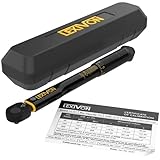
Overview: The LEXIVON LX-181 is a precision 1/4-inch drive torque wrench engineered for delicate fastening tasks requiring ounce-inch accuracy. With a 20-200 inch-pound range, it serves bicycle mechanics, small engine technicians, and electronics assemblers working with soft metals and fragile components. The compact design prioritizes control and finesse over brute force.
What Makes It Stand Out: Manufactured in Taiwan with a heat-treated Chrome Vanadium alloy steel head, the tool offers durability uncommon in this drive size. The proprietary Electro-Black finish provides superior corrosion resistance compared to standard chrome plating. The patent-pending dual-range scale features high-contrast yellow markings on a gloss black background, dramatically improving readability in dimly lit engine bays or under-dash work areas where lighting is poor.
Value for Money: The LEXIVON delivers premium materials and finishes at a mid-range price point. For technicians specializing in small fasteners, the durability and readability justify the cost over bargain brands. While ±4% accuracy trails some competitors, it’s adequate for most inch-pound applications where consistency matters more than absolute precision. The reversible head adds versatility without complexity.
Strengths and Weaknesses: Pros: Durable CV steel construction; excellent corrosion-resistant finish; highly readable dual-scale design; reversible ratchet head; comfortable knurled grip; quality manufacturing. Cons: ±4% accuracy lower than premium options; 1/4" drive limits application scope; no calibration certificate; gloss background may reflect in bright conditions.
Bottom Line: The LEXIVON LX-181 excels for precision work on motorcycles, bicycles, and small engines. Its robust construction and superior readability make it ideal for technicians in low-light conditions with small fasteners, though those requiring certified accuracy should verify calibration independently.
Understanding Micrometer Torque Wrench Fundamentals
The Precision Engineering Behind Click-Type Mechanisms
The heart of any micrometer torque wrench lies in its click-type mechanism, which has undergone significant refinement for 2026 applications. This system uses a spring-loaded pawl and cam arrangement that disengages at your preset torque value, creating the distinctive “click” that signals you to stop applying force. Modern professional versions now incorporate multi-stage engagement systems that provide tactile feedback earlier in the rotation, giving you a split-second warning before the final click. This advancement prevents the common problem of over-torquing that occurs when users apply too much momentum.
How Micrometer Scales Enhance Accuracy
Unlike beam-type or dial indicators, micrometer scales allow for precise, repeatable settings down to fractions of an inch-pound. The vernier-style markings on professional 2026 models feature laser-etched numbers with high-contrast fills that remain visible even in poorly lit engine bays. The adjustment mechanism now typically includes a locking collar that prevents drift during use—a critical improvement over older designs where vibration could cause the setting to creep upward. Understanding how to properly read and set these scales is fundamental to achieving the consistency that professional work demands.
Revolutionary Features Defining 2026 Standards
Digital Integration and Smart Connectivity
The most significant shift in professional micrometer torque wrenches is the seamless integration of digital technology without sacrificing mechanical reliability. Modern tools feature embedded angle sensors that measure degrees of rotation after initial torque is applied—essential for stretch-to-yield bolt applications. Bluetooth connectivity now comes standard on professional models, allowing torque values to be logged directly to digital work orders via smartphone apps. This eliminates paperwork errors and provides verifiable documentation for warranty work and liability protection.
Advanced Materials and Construction
Professional-grade wrenches in 2026 utilize aerospace-grade alloys that reduce weight while increasing strength. The ratchet heads now feature titanium or carbon composite components where appropriate, cutting fatigue during all-day use. These materials also resist corrosion better than traditional chrome vanadium steel, particularly important for technicians working in marine or chemical environments. The drive mechanisms use proprietary surface treatments that reduce friction and wear, extending calibration intervals by up to 40% compared to previous generation tools.
Multi-Directional Ratchet Systems
Game-changing micrometer torque wrenches now offer true reversible ratchets that maintain accuracy in both clockwise and counterclockwise directions—a feature that eliminates the need for separate left-hand thread tools. The pawl mechanisms have been redesigned with asymmetrical tooth profiles that engage more positively while reducing backlash to less than 1.5 degrees. This precision is crucial when working in tight spaces where swing arc is limited, allowing you to maintain torque accuracy even with minimal handle movement.
Ergonomic Design Innovations
Professional use means hours of continuous operation, and 2026 designs reflect this reality with ergonomics that prevent repetitive strain injuries. Handles now feature variable-density elastomer grips with anti-slip patterns that channel away oil and coolant. The grip diameter tapers to match natural hand closure, while the balance point has been shifted closer to the head to reduce wrist torque. Some models incorporate vibration-dampening inserts that absorb shock from air tool impacts in adjacent workstations, protecting your hands and improving accuracy.
Enhanced Torque Range Versatility
The professional standard now demands wider usable ranges within a single tool. Where older wrenches might have a 4:1 ratio between minimum and maximum values, 2026 professional models achieve 6:1 or even 8:1 ratios without sacrificing accuracy at either extreme. This is accomplished through dual-spring mechanisms that automatically adjust based on the set torque value. For professionals, this means carrying fewer tools while maintaining capability across more applications—from delicate carbon fiber bicycle components to heavy-duty diesel engine assembly.
Critical Selection Criteria for Professional Use
Accuracy Ratings and Tolerance Standards
When evaluating professional micrometer torque wrenches, accuracy specifications tell only part of the story. Look for tools rated at ±3% or better in the clockwise direction from 20% to 100% of full scale. More importantly, examine the consistency specification—how much variation occurs between sequential applications at the same setting. Professional-grade tools now guarantee ±1% repeatability, ensuring that every bolt in a sequence receives identical clamping force. Be wary of tools that only advertise accuracy at mid-range; true professional instruments maintain tolerance across their entire operational spectrum.
Calibration and Certification Requirements
Professional work often requires traceable calibration certificates from ISO 17025 accredited laboratories. The best micrometer torque wrenches for 2026 come with initial certification and feature design elements that simplify recalibration. Internal adjustment mechanisms accessible through the handle allow technicians to recalibrate in the field using known standards, reducing downtime and service costs. Look for tools with tamper-evident seals that maintain warranty coverage while allowing necessary adjustments. The calibration interval should be clearly stated, with professional models typically rated for 5,000 to 7,500 cycles between services under normal use.
Durability in High-Frequency Use
Professional environments subject tools to daily abuse that would destroy consumer-grade equipment. Evaluate the construction of the ratchet head—fully forged bodies with minimal parting lines withstand impact better than cast or assembled heads. The pivot pin should be secured with roll pins or threaded fasteners rather than simple C-clips that can pop loose. Professional tools also feature reinforced adjustment collars that won’t crack if the wrench is dropped. Consider the service life expectancy; premium professional wrenches are designed for 50,000+ cycles with proper maintenance, representing years of daily use.
Environmental Resistance Factors
Modern workshops expose tools to chemicals, temperature extremes, and moisture that affect performance and longevity. Professional micrometer torque wrenches now feature sealed adjustment mechanisms that prevent oil, brake fluid, and cleaning solvents from contaminating internal springs. Look for IP54 or better ingress protection ratings, which guarantee the tool can withstand splashing liquids and dust. Temperature compensation is another critical feature—quality tools maintain accuracy from -10°F to 140°F, essential for technicians working in unheated shops or outdoor heavy equipment service.
Warranty and Service Support
A manufacturer’s warranty reveals their confidence in product quality. Professional-grade tools should carry at least a one-year warranty covering accuracy and mechanical failure, with some manufacturers offering two-year coverage. More important than warranty length is the service network—can the tool be repaired locally, or must it be shipped cross-country? Look for brands with authorized service centers that stock common wear parts like springs and pawls. Some manufacturers now offer loaner programs that provide a replacement tool while yours is being serviced, minimizing work disruption.
Professional Applications and Industry-Specific Demands
Automotive Precision Assembly
Modern vehicles use lightweight materials and critical torque-sensitive fasteners that demand precise, documented tightening. Engine components like aluminum cylinder heads and plastic intake manifolds require exact torque sequences with specific values. Professional micrometer torque wrenches with angle measurement capability are essential for torque-to-yield bolts used in connecting rods and main bearing caps. The ability to store and recall multiple torque settings speeds up assembly line work while ensuring each fastener receives the correct specification.
Aerospace Component Installation
Aerospace applications demand the highest accuracy and traceability standards. Torque wrenches used in this field must provide digital documentation for every fastener, with data including date, time, operator ID, torque value, and angle rotation. Professional tools for aerospace feature redundant measurement systems—both mechanical click and electronic strain gauge—to ensure failsafe operation. The tools must also be non-magnetic and non-sparking for certain applications, requiring specialized materials that maintain calibration despite being lightweight and corrosion-resistant.
Industrial Manufacturing and Maintenance
Factory environments require torque wrenches that integrate with production management systems. Professional tools now feature RFID tags and barcode scanners that automatically pull torque specifications from work instructions. The ability to program tolerance windows that alert operators when values approach limits prevents defects before they occur. For maintenance applications, durability becomes paramount—tools must survive drops onto concrete floors and exposure to cutting fluids while maintaining accuracy for safety-critical assemblies like press guards and conveyor systems.
Bicycle and Small Engine Specialty Work
High-end carbon fiber bicycles and small engines require low-torque precision that challenges many professional tools. Game-changing micrometer torque wrenches now offer dedicated low-range models accurate from 2-20 Nm with 0.1 Nm resolution. These feature smaller drive heads and slender handles that fit into tight frame clearances. The click mechanism is tuned for lighter forces, providing clear feedback without requiring excessive hand strength. For professional bicycle mechanics, the ability to quickly switch between Newton-meters and inch-pounds without recalculating is a significant time-saver.
Maintenance and Longevity Best Practices
Proper Storage and Handling Protocols
Professional tools represent significant investments that require proper care. Always return torque wrenches to their lowest setting after use to relieve spring tension and prevent set. Store tools in their original cases or wall-mounted racks that protect them from impact and environmental contamination. Never use a torque wrench as a breaker bar or cheater pipe—these applications exceed design limits and instantly destroy calibration. For mobile technicians, padded tool rolls with individual compartments prevent rattling and impact damage during transport.
Regular Calibration and Verification
Even the best professional tools drift over time. Implement a verification schedule using a torque analyzer or known standard every 90 days for daily-use tools. This simple 5-minute check can identify problems before they cause rework or failures. Professional shops should maintain a calibration log tracking each tool’s performance over time, which helps predict when formal recalibration is needed. When sending tools for service, choose labs that provide before-and-after data, allowing you to see how much drift occurred and adjust your verification intervals accordingly.
Cleaning and Lubrication Guidelines
Keep micrometer torque wrenches clean by wiping them down with a lint-free cloth after each use. Avoid pressure washing, which can force contaminants past seals. If the tool becomes contaminated with chemicals, clean with mild solvent and dry immediately. The ratchet mechanism requires occasional lubrication—use only manufacturer-specified grease applied sparingly to avoid attracting grit. The adjustment threads benefit from a single drop of light machine oil annually, applied with the tool set to mid-range and cycled through its full adjustment several times to distribute evenly.
Investment and Value Considerations
Price Versus Performance Balance
Professional-grade micrometer torque wrenches range from $200 to over $600, with price reflecting features, accuracy, and durability. Entry-level professional tools offer ±4% accuracy and basic mechanical operation suitable for general automotive work. Mid-range options at $300-400 provide digital angle measurement and data logging, ideal for shops handling modern engine assembly. Premium tools above $500 offer the highest accuracy, widest temperature ranges, and advanced connectivity for aerospace or manufacturing environments. Consider your specific applications—investing in features you’ll never use wastes money, while under-buying leads to premature failure and inaccurate work.
Total Cost of Ownership Analysis
The purchase price is only part of the investment. Factor in calibration costs ($50-100 per service), potential downtime during service, and replacement of wear parts. Tools with field-adjustable calibration save money over time compared to those requiring factory service. Consider also the cost of errors—inaccurate torque can lead to comebacks, warranty claims, or safety issues that far exceed tool cost. A $400 torque wrench that prevents one major comeback has paid for itself. Calculate the cost per use over a five-year life expectancy to compare true value across options.
Frequently Asked Questions
What makes a micrometer torque wrench “professional grade” compared to consumer models?
Professional-grade tools maintain accuracy across their entire range, withstand daily use in harsh environments, and provide traceable calibration certificates. They feature all-metal construction, sealed mechanisms, and typically carry warranties of one year or more. Consumer models often specify accuracy only at mid-range, use plastic components, and lack the durability for high-frequency professional applications.
How often should I calibrate my torque wrench with daily professional use?
For daily professional use, verify accuracy every 90 days using a torque analyzer and schedule formal calibration annually or every 5,000 cycles, whichever comes first. If you notice inconsistent clicks, visible damage, or the tool has been dropped, recalibrate immediately. Tools used for safety-critical applications like aerospace or suspension work may require more frequent service.
Can I use my micrometer torque wrench for both tightening and loosening fasteners?
Micrometer torque wrenches are designed for applying torque, not removal. While modern reversible models can turn fasteners counterclockwise, they only provide accurate measurement and click feedback in the clockwise direction. Using them as breaker bars for loosening can damage the internal mechanism and void calibration. Always use a separate ratchet or breaker bar for removal.
What’s the difference between torque and torque-angle specifications?
Torque specifications measure rotational force (ft-lbs or Nm), while torque-angle adds a degree measurement after initial torque is reached. Torque-angle is used for stretch-to-yield bolts that must rotate a specific amount to achieve proper clamp load. Modern professional wrenches measure both simultaneously, providing digital angle readouts after the initial torque click.
Should I choose a digital or purely mechanical micrometer torque wrench?
This depends on your work requirements. Mechanical wrenches are more durable, never need batteries, and suffice for general automotive repair. Digital models offer angle measurement, data logging, and programmable tolerances essential for modern engines and warranty documentation. Many professionals own both—a mechanical backup for reliability and a digital primary for advanced applications.
How do I know if my torque wrench is still accurate?
Perform a simple verification monthly by setting the wrench to a known value (like 25 ft-lbs) and applying it to a calibrated torque analyzer or a known weight hung at a measured distance. If the click occurs more than ±4% from the set value, schedule professional calibration. Also listen for changes in the click sound—muffled or inconsistent clicks indicate internal wear.
What’s the best way to store a micrometer torque wrench between uses?
Always return the setting to the lowest value after use to relieve spring tension. Store in the original protective case or on a padded rack away from extreme temperatures, moisture, and chemicals. Never leave tools in direct sunlight or near heaters, which can affect calibration. For mobile technicians, use padded tool rolls that prevent impact damage during transport.
Can temperature affect torque wrench accuracy?
Yes, significant temperature variations impact spring tension and metal expansion. Quality professional tools are compensated for temperatures from -10°F to 140°F, but extreme cold or heat still affect accuracy. Allow tools to acclimate to ambient temperature for 30 minutes before use if they’ve been in a hot vehicle or cold storage. Never use torches to heat fasteners while using a torque wrench.
Why do some professional torque wrenches cost twice as much as others?
Price differences reflect accuracy ratings, materials, features, and service support. Premium tools offer ±2% accuracy versus ±4%, sealed mechanisms for harsh environments, digital connectivity, and better ergonomics. They also include longer warranties and faster service support. For professional use, the higher initial cost often reduces total ownership expenses through longer service life and fewer calibrations.
Is it worth buying a low-range torque wrench for small fasteners?
For professionals working on bicycles, small engines, or electronics, a dedicated low-range wrench (2-20 Nm) is essential. Standard automotive wrenches don’t provide accurate feedback at low settings, and their large heads won’t fit tight spaces. The investment prevents stripped threads and broken fasteners, paying for itself quickly by avoiding component replacement costs and comebacks.
See Also
- 10 Game-Changing Micrometer Torque Wrenches for Performance Tuning in 2026
- 10 Game-Changing Adjustable Torque Wrenches for Multi-Use Workshops in 2026
- 10 Game-Changing Electronic Torque Wrenches for High-Torque Applications in 2026
- 10 Game-Changing Adjustable Torque Wrenches for Home Garages in 2026
- The 10 Ultimate Best Micrometer Torque Wrenches for Engine Builders in 2026