Table of Contents
Keeping your engine running at optimal temperatures isn’t just about preventing overheating—it’s about unlocking performance while safeguarding your investment. Exhaust gas temperature (EGT) gauges serve as your engine’s early warning system, providing real-time data that can mean the difference between a perfectly tuned machine and catastrophic failure. Whether you’re building a track-ready monster or a reliable daily driver that can handle occasional spirited driving, understanding what your exhaust gases are telling you is fundamental to modern vehicle optimization.
Single EGT gauges offer a focused, cost-effective approach to monitoring your engine’s health without the complexity of multi-probe systems. They give you a direct window into combustion efficiency, allowing you to spot lean conditions, detect pre-detonation risks, and make informed tuning decisions before damage occurs. This guide will walk you through everything you need to know about selecting the right single EGT gauge for your specific build, from understanding core technologies to evaluating features that match your performance goals and budget.
Top 10 Single Exhaust Gas Temperature Gauges
Detailed Product Reviews
1. ZHSYMX Exhaust Gas Temperature EGT Gauge Kit 2‑1/16in 52mm Ultra Thin 0‑1800℉ Red LED with Sensor and Dashboard Pod

Overview:
The ZHSYMX EGT Gauge Kit delivers essential exhaust temperature monitoring in a compact 52mm package. Designed for real-time engine protection, this ultra-thin gauge helps prevent catastrophic overheating by providing continuous temperature feedback from 0-1800°F. The kit includes everything needed for installation, making it accessible for DIY mechanics who want professional-level monitoring without shop labor costs.
What Makes It Stand Out:
The rotation installation system sets this gauge apart, allowing flexible mounting without additional sensor purchases. The red LED display with white background offers excellent visibility, while the dual-button interface enables programming of alarm points, peak memory, and threshold warnings. The sweeping LED needle provides at-a-glance trend monitoring that digital-only displays cannot match.
Value for Money:
This mid-range kit offers significant savings over professional installation while delivering comparable functionality. The inclusion of a matched EGT sensor eliminates compatibility guesswork, and the ABS housing provides adequate durability for most environments. It’s priced competitively against entry-level gauges while offering more features and a higher temperature range than budget alternatives.
Strengths and Weaknesses:
Strengths include the complete kit design, user-friendly programming interface, and clear visual display. The 1800°F range covers most applications from stock to moderately modified engines. Weaknesses involve the ABS plastic construction, which may not match the durability of metal-housed alternatives, and the limited single-color display option compared to multi-color competitors.
Bottom Line:
An excellent choice for enthusiasts seeking reliable EGT monitoring without professional installation costs. The plug-and-play nature and comprehensive feature set make it ideal for most gasoline and diesel applications where straightforward, dependable data is paramount.
2. JJCOCO 1800°F Pyrometer Exhaust Gas Temp Gauge Kit with 1/8NPT Type K EGT Sensor & Bracket LED Digital Display Exhaust Gas Temperature Meter for Car & Truck 2-1/16" (52mm)

Overview:
The JJCOCO Pyrometer represents a professional-grade approach to exhaust gas temperature monitoring, engineered for serious automotive enthusiasts and commercial applications. This 1800°F gauge kit provides laboratory-grade accuracy with its Type-K thermocouple sensor, delivering precise data for engine tuning and protection across gasoline, diesel, and modified vehicles that demand exact temperature management.
What Makes It Stand Out:
Multi-layered warning systems differentiate this unit, featuring flashing displays, audible buzzers, and red needle warnings when temperatures exceed programmed limits. The 90° bend sensor withstands extreme vibration and heat in turbo-downpipe locations. One-touch peak recall and trend visualization through the sweeping analog needle provide immediate diagnostic feedback for tuning decisions.
Value for Money:
While priced at the premium end, the industrial-grade sensor accuracy (±1.5%) and comprehensive alarm system justify the investment for those who depend on precise temperature management. The robust wiring with heat shielding and included anti-seize paste ensures long-term reliability, reducing replacement costs and downtime in critical applications.
Strengths and Weaknesses:
Major strengths include exceptional accuracy, durable 90° sensor design, and proactive triple-mode warnings. The self-installation design saves labor costs. Potential weaknesses include complexity that may overwhelm casual users and a price point higher than basic monitoring needs require, making it specialized rather than universal.
Bottom Line:
Best suited for performance tuners, diesel truck owners, and those requiring precise emissions compliance data. The professional features and bulletproof sensor design make it worth the premium for critical applications where temperature accuracy directly impacts engine longevity and performance.
3. ZHSYMX Exhaust Gas Temperature EGT Gauge Kit 2‑1/16in 52mm Ultra Thin 0‑1800℉ Red LED with Sensor and Dashboard Pod
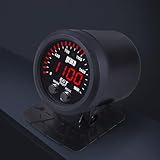
Overview:
This ZHSYMX EGT monitoring solution provides comprehensive exhaust temperature tracking in a streamlined 52mm diameter gauge. Engineered for real-time engine protection, the system continuously monitors temperatures from 0-1800°F to prevent overheating-related failures. The all-inclusive kit approach ensures compatibility and simplifies the installation process for vehicle owners performing their own diagnostics and monitoring.
What Makes It Stand Out:
The innovative rotation mounting system allows 360-degree positioning flexibility, eliminating installation constraints found in fixed-mount designs. The intelligent two-button interface grants access to programmable alarm points, peak memory functions, and threshold warnings without requiring external controllers. The combination of red LED numerals and sweeping needle provides both precise readings and trend visualization in a single glance.
Value for Money:
Positioned in the competitive mid-tier segment, this package delivers professional monitoring capabilities at a fraction of shop installation costs. The integrated sensor design removes compatibility concerns, while the high-temperature ABS construction offers sufficient durability for most operating environments without the premium of metal alternatives, representing smart economics for budget-conscious enthusiasts.
Strengths and Weaknesses:
Key strengths encompass the complete kit configuration, intuitive programming, and excellent display clarity. The 1800°F measurement range handles most performance applications. Primary weaknesses center on the plastic housing material, which may degrade under sustained extreme heat, and the lack of multi-color display options available in competitor units that offer greater dashboard customization.
Bottom Line:
A solid performer for DIY installers wanting reliable EGT data without complexity. The convenient packaging and straightforward operation make it appropriate for both novice and experienced enthusiasts who need dependable temperature monitoring without paying for professional-grade features they won’t utilize.
4. GlowShift Black 7 Color 1500F Pyrometer Exhaust Gas Temp Gauge Kit - Includes 1/8-27 NPT Type K EGT Probe & Wiring - Multi-Color Display - Black Dial - Clear Lens - for Diesel Trucks - 2-1/16" 52mm
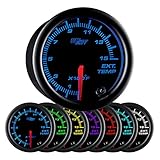
Overview:
GlowShift’s Black 7 Color Pyrometer brings customizable style to diesel truck EGT monitoring. Established since 2004, this 1500°F gauge kit focuses on dashboard integration and user experience. The 52mm gauge monitors exhaust temperatures to protect against engine damage while offering extensive personalization options to match factory or custom interiors, backed by a company with nearly two decades of gauge manufacturing experience.
What Makes It Stand Out:
Seven solid color modes and two cycling options provide unmatched dashboard coordination capability. The dimmer wire feature automatically reduces brightness by 30% when headlights activate, preventing nighttime distraction. The comprehensive accessory package includes a gauge visor, multiple harnesses, and detailed instructions, reflecting the brand’s installation experience and commitment to customer success.
Value for Money:
The GlowShift premium reflects established brand reliability, free lifetime technical support, and a one-year warranty. While limited to 1500°F, this range adequately covers most diesel applications. The color customization and support infrastructure justify the cost over budget alternatives lacking backing, making it a long-term investment rather than a disposable component.
Strengths and Weaknesses:
Strengths include exceptional display customization, proven brand reputation, and extensive support resources. The aluminum housing provides superior durability over plastic alternatives. Weaknesses involve the lower temperature ceiling compared to 1800°F competitors and diesel-specific marketing that may deter gasoline performance users despite universal compatibility.
Bottom Line:
Ideal for diesel truck owners prioritizing dashboard aesthetics and manufacturer support. The color-matching capability and GlowShift’s service commitment make it the top choice for those wanting seamless integration with professional backup, particularly for users who value long-term technical support and warranty protection.
5. LKRXW Car Exhaust Gas Temperature Gauge 12V Auto Exhaust Gas Temp Gauge Celsius 2" 52mm Car EGT Temp Gauges Meter Digital Blue Light Gauge Instruments with Sensor

Overview:
The LKRXW EGT Gauge addresses the metric market with a Celsius-based display reading 0-1200°C, equivalent to approximately 0-2200°F. This 52mm digital gauge targets international users and those preferring metric measurements. The smoked lens design reduces glare while blue LED illumination ensures readability across viewing angles in low-light conditions, making it practical for daily drivers and import vehicles.
What Makes It Stand Out:
The automatic self-check calibration sequence upon startup ensures ongoing accuracy, a feature often missing in budget gauges. The 900°C warning light provides clear over-temperature alerts without complex programming. The smoked surface treatment minimizes reflections better than clear lenses found on competing units, improving visibility during both day and night driving.
Value for Money:
As a budget-conscious option, this gauge delivers essential monitoring for entry-level applications. The metric display eliminates mental conversion for international users, adding practical value. However, the lower temperature range and basic feature set position it as an introductory product rather than a professional solution, though the price reflects this appropriately for casual monitoring needs.
Strengths and Weaknesses:
Strengths include metric calibration, self-check functionality, and effective glare reduction. The 12V universal compatibility suits various vehicles. Weaknesses comprise a less-known brand, limited 1200°C range restricting high-performance use, and minimal programming options compared to feature-rich alternatives that offer peak recall and customizable alarms.
Bottom Line:
Suitable for metric-system users seeking fundamental EGT monitoring on a budget. The self-check feature and clear display make it a competent entry-level choice, though performance enthusiasts may require higher-range alternatives with more advanced warning systems for demanding applications.
6. GlowShift Tinted 7 Color 2400F Pyrometer Exhaust Gas Temp Gauge Kit - Includes 1/8-27 NPT Type K EGT Probe & Wiring - Multi-Color Display - Black Dial - Smoked Lens - for Car & Truck - 2-1/16" 52mm

Overview: The GlowShift Tinted 7 Color 2400°F Pyrometer represents a premium approach to exhaust gas temperature monitoring, combining analog gauge aesthetics with modern LED customization. This comprehensive kit monitors critical EGT ranges from 0-2400°F, helping prevent catastrophic engine damage from overheating. The 2-1/16" gauge features a black dial with illuminated red needle and smoked lens, suitable for both performance cars and heavy-duty trucks requiring reliable temperature data under extreme conditions.
What Makes It Stand Out: The seven solid color modes and two cycle modes set this gauge apart, allowing perfect integration with factory dashboard lighting or custom interior themes. The included dimmer wire automatically reduces brightness by 30% when headlights activate—a thoughtful touch for night driving. GlowShift’s complete package includes a Type K probe, multiple harnesses, mounting hardware, and detailed instructions, backed by a company in business since 2004 with established customer support infrastructure.
Value for Money: While priced higher than budget alternatives, the GlowShift offers exceptional value through its lifetime technical support and one-year warranty. Comparable gauges with similar color customization often cost 30-40% more. The 2400°F range covers virtually any application, from stock diesels to highly modified performance engines, eliminating the need for future upgrades and making it a cost-effective long-term solution.
Strengths and Weaknesses: Strengths include unmatched color customization, comprehensive installation kit, established brand reputation, and robust warranty support. The analog needle design provides quick visual reference while maintaining digital flexibility. Weaknesses include the 2400°F range being excessive for mildly modified vehicles, and the analog display may lack the precise digital readout some tuners prefer. The smoked lens can reduce daylight visibility in certain conditions.
Bottom Line: The GlowShift is ideal for enthusiasts seeking customizable aesthetics without sacrificing reliability. Its comprehensive kit and stellar support justify the premium price, making it a smart long-term investment for serious performance applications where both function and form matter equally.
7. ZHSYMX Exhaust Gas Temperature EGT Gauge Kit 2‑1/16in 52mm Ultra Thin 0‑1800℉ Red LED with Sensor and Dashboard Pod

Overview: The ZHSYMX EGT Gauge Kit delivers digital monitoring capabilities in an ultra-thin 2-1/16" package, measuring exhaust temperatures from 0-1800°F. Designed for real-time engine protection, this budget-friendly solution features a red LED display against a white background, providing clear visibility for most driving conditions. The kit targets DIY installers seeking straightforward temperature monitoring without the complexity or cost of professional-grade equipment.
What Makes It Stand Out: The rotation installation method simplifies mounting in tight dashboards, while two programmable buttons enable peak memory recall and alarm point setting—features typically found in pricier units. The ultra-thin profile allows placement where traditional gauges won’t fit. The integrated alarm system provides audible or visual warnings when temperatures exceed safe thresholds, offering essential engine protection for the price.
Value for Money: This represents one of the most affordable digital EGT solutions available, often costing 50-60% less than premium brands. However, the 1800°F maximum may limit its use in heavily modified applications. For stock or lightly tuned diesels and gasoline performance cars, it provides essential protection at a fraction of the cost, though long-term durability remains unproven compared to established competitors with longer market presence.
Strengths and Weaknesses: Strengths include the ultra-thin design, easy rotation mounting, programmable alarm functions, and budget price point. The ABS plastic housing offers adequate heat resistance for normal operation. Weaknesses include the limited 1800°F range, single red color display lacking customization, less established brand reputation, and basic wiring harnesses that may require extension for larger vehicles or complex installations.
Bottom Line: The ZHSYMX is a solid entry-level choice for budget-conscious users needing basic EGT monitoring. Its programmable features and slim design add unexpected value, but serious performance builds or high-heat applications should consider higher-range alternatives with proven reliability and more robust construction.
8. JJCOCO Exhaust Gas Temperature EGT Gauge 1000 ℃ Pyrometer Kit - LED Digital Display with EGT Sensor for Diesel Car Motorcycle ATV

Overview: The JJCOCO 1000°C Pyrometer Kit provides professional-grade exhaust gas temperature monitoring with exceptional ±0.5% accuracy across a 0-1000°C range. This compact digital gauge suits engine tuners, emissions testing, and industrial diagnostics where precision matters more than flashy features. The 2-1/16" unit features a sunlight-readable LED display and water-resistant housing built for harsh environments where consumer-grade equipment would fail.
What Makes It Stand Out: The laboratory-level calibration accuracy distinguishes this from consumer-grade gauges, providing data reliable enough for professional tuning decisions. The universal Type K probe design offers flexibility across vehicles and machinery. Its extreme operating temperature tolerance (-20°C to 80°C) ensures functionality in severe climates, while the water-resistant construction protects against moisture and engine bay contaminants that destroy lesser gauges.
Value for Money: Positioned in the mid-range price bracket, this gauge delivers professional features at enthusiast prices. While more expensive than basic units, the accuracy and build quality rival gauges costing twice as much. The compact 2×1.3×0.5-inch dimensions allow installation in tight spaces where traditional gauges fail, adding versatility that justifies the investment for specialized applications requiring precise data.
Strengths and Weaknesses: Strengths include exceptional accuracy, rugged water-resistant construction, universal sensor compatibility, and extreme climate tolerance. The compact size enables unique mounting options. Weaknesses include the Celsius-only display potentially confusing US users, minimal color customization options, and lack of advanced features like data logging. The small physical size may reduce readability for some drivers or older eyes.
Bottom Line: Perfect for professional tuners and technical users prioritizing accuracy over aesthetics. The JJCOCO 1000°C gauge offers laboratory precision in a durable, compact package that withstands extreme conditions, making it ideal for serious diagnostics and performance optimization where data integrity is non-negotiable.
9. JJCOCO Exhaust Gas Temperature EGT Gauge 1832 ℉ Pyrometer Kit - LED Digital Display with EGT Sensor for Diesel Car Motorcycle ATV

Overview: The JJCOCO 1832°F Pyrometer Kit delivers the same professional accuracy as its Celsius counterpart but in Fahrenheit for the North American market. Measuring 32-1832°F with ±0.5% precision, this digital gauge serves diesel enthusiasts, tuners, and commercial vehicle operators requiring reliable exhaust temperature data. The compact LED display remains readable in direct sunlight while resisting water intrusion in demanding engine bay environments.
What Makes It Stand Out: The Fahrenheit calibration eliminates mental conversion errors during critical tuning sessions or while monitoring under load. The 1/8" NPT Type K probe ensures leak-proof installation across car, truck, marine, and off-road applications. Its ability to withstand vibration, shock, and extreme temperatures (-4°F to 176°F operating range) makes it suitable for industrial and commercial environments where consumer gauges fail catastrophically.
Value for Money: This gauge offers professional-tier accuracy at a price point accessible to serious enthusiasts. While lacking the color customization of premium brands, the ±0.5% tolerance provides data quality essential for preventing piston meltdown in high-performance diesels. The complete kit includes everything needed for installation, representing significant savings over buying components separately from industrial suppliers.
Strengths and Weaknesses: Strengths include professional-grade accuracy, Fahrenheit display, robust water-resistant housing, universal sensor compatibility, and extreme durability. The compact size fits virtually any dashboard configuration. Weaknesses include no color customization, basic display without advanced graphics, and absence of programmable alarm features found in some competitors. The brand recognition is lower than established names like GlowShift or AutoMeter.
Bottom Line: An excellent choice for diesel truck owners and performance tuners needing precise Fahrenheit readings without paying premium brand prices. The JJCOCO 1832°F gauge balances professional accuracy, durability, and value, making it ideal for serious applications where reliability trumps flashy features and brand prestige.
10. JJCOCO Exhaust Gas Temperature EGT Gauge 1832 ℉ Pyrometer Kit - LED Digital Display with EGT Sensor for Diesel Car Motorcycle ATV

Overview: The JJCOCO 1832°F Pyrometer Kit appears to be a duplicate SKU of Product 9, offering identical specifications: ±0.5% accuracy across 32-1832°F with a sunlight-readable LED display. This professional-grade EGT monitor targets diesel performance and commercial vehicle markets, providing critical exhaust temperature data for engine protection and tuning optimization in a compact 2-1/16" package designed for harsh operating conditions.
What Makes It Stand Out: Like its counterpart, this gauge’s primary distinction is professional-level calibration accuracy typically reserved for laboratory equipment. The universal Type K probe with 1/8" NPT threading ensures compatibility across diverse applications from ATVs to marine diesel engines. The water-resistant housing and extreme shock/vibration resistance make it suitable for off-road racing and industrial equipment where gauge failure can result in catastrophic engine damage.
Value for Money: With pricing identical to Product 9, this gauge delivers exceptional value for users requiring precision over brand prestige. The complete kit eliminates hidden costs, while the durable construction reduces replacement frequency. For fleet operators or professional tuners buying multiple units, the consistent performance and mid-tier pricing enable cost-effective monitoring across several vehicles without sacrificing the data quality essential for engine longevity.
Strengths and Weaknesses: Strengths mirror Product 9: outstanding accuracy, Fahrenheit display, rugged build quality, and universal compatibility. The compact dimensions allow creative mounting solutions in space-constrained applications. Weaknesses include limited aesthetic customization, basic feature set without data logging, and minimal brand recognition. Potential buyers should verify this isn’t a discontinued SKU, as identical listings sometimes indicate inventory clearance or alternate distribution channels.
Bottom Line: Functionally identical to Product 9, this JJCOCO gauge is a reliable, accurate choice for discerning buyers focused on performance data rather than brand names. Its professional-grade precision and durable construction make it suitable for commercial, racing, and heavy-duty applications where accurate EGT monitoring prevents costly engine failures and optimizes performance reliably.
Understanding Exhaust Gas Temperature Monitoring
What Is an EGT Gauge and Why It Matters
An exhaust gas temperature gauge measures the heat of gases exiting your combustion chambers, providing critical insight into what’s happening inside your engine. This data reveals combustion efficiency, air-fuel mixture quality, and potential trouble spots long before they show up on other instruments. For performance builds, turbocharged applications, and diesel trucks, single EGT monitoring becomes an indispensable tool for both safety and optimization.
How EGT Gauges Work
The system consists of a probe sensor placed in the exhaust stream and a display unit that interprets the signal. The probe contains a thermocouple that generates a voltage proportional to temperature, which the gauge converts into a readable format. Modern digital displays offer precise readings, while analog gauges provide at-a-glance monitoring during high-performance driving. Understanding this relationship helps you appreciate why probe quality and gauge accuracy are equally important.
The Difference Between Single and Multi-Probe Systems
Single EGT gauges monitor one cylinder bank or collector location, offering simplicity and lower cost. Multi-probe systems track individual cylinders, providing more granular data but requiring significantly more complex installation and higher expense. For most street-performance and moderate race applications, a strategically placed single probe delivers 90% of the benefits with a fraction of the complexity.
Key Benefits of Installing a Single EGT Gauge
Preventing Engine Damage
Excessive exhaust gas temperatures can melt pistons, destroy turbochargers, and crack cylinder heads within seconds. A quality EGT gauge provides immediate visual feedback when temperatures climb toward danger zones, giving you time to back off the throttle before irreversible damage occurs. This is especially critical during dyno tuning, hill climbing, or towing when engines are under sustained load.
Optimizing Performance Tuning
Tuners rely on EGT data to dial in air-fuel ratios and ignition timing for maximum safe power. Watching temperature responses to incremental changes reveals the sweet spot between performance and reliability. Without this data, you’re essentially guessing—potentially leaving power on the table or pushing components beyond their thermal limits.
Improving Fuel Efficiency
Surprisingly, EGT monitoring helps economy too. Lean mixtures burn hotter and can indicate wasted fuel or incomplete combustion. By maintaining optimal temperatures, you ensure fuel is being used efficiently rather than just creating excess heat. Diesel owners particularly benefit, as EGT data helps balance the trade-off between power and mileage.
Extending Engine Lifespan
Consistent high-temperature operation accelerates wear on everything from valve seats to turbo bearings. By keeping temperatures in check, you reduce thermal stress cycles that cause metal fatigue. A single EGT gauge acts as a long-term health monitor, helping you maintain conditions that promote maximum component longevity.
Critical Features to Evaluate
Display Type and Readability
Digital displays offer precise numerical readings and programmable warning lights, perfect for data-focused drivers. Analog gauges provide intuitive visual feedback with sweeping needles that are easier to monitor peripherally during aggressive driving. Consider your typical driving environment—dark interiors, bright sunlight, and mounting location all affect readability.
Temperature Range and Accuracy
Look for gauges covering at least 0-1600°F for gasoline applications and 0-2000°F for diesel or high-boost setups. Accuracy within ±1-2% ensures you’re making decisions based on reliable data. Pay attention to how the gauge performs at the extremes—some budget models lose accuracy above 1200°F where you need it most.
Probe and Sensor Quality
The thermocouple probe endures extreme conditions. Type K thermocouples are industry standard, but sheath material matters. Inconel probes withstand higher temperatures and chemical corrosion better than stainless steel. Probe response time—how quickly it reflects actual temperature changes—should be under 10 seconds for effective monitoring.
Response Time and Refresh Rate
Gauge refresh rate determines how quickly the display updates. For street use, 1-2 second updates suffice. Track applications benefit from faster 0.5-second refresh rates that catch brief temperature spikes during gear changes or lift-throttle events. Slow-responding gauges can miss critical events.
Build Quality and Durability
Vibration resistance is crucial for automotive use. Look for gauges with solid-state electronics and robust housings. Waterproof ratings matter if you’re mounting in exposed locations. The probe’s cable should be high-temperature rated with proper shielding to prevent electromagnetic interference from ignition systems.
Wiring and Installation Complexity
Some gauges require only power, ground, and probe connections—ideal for DIY installers. Others need calibration boxes, external warning modules, or ECU integration. Consider your comfort level with automotive wiring. Plug-and-play harnesses save time but may limit customization options.
Compatibility with Your Vehicle
Probe thread sizes must match your exhaust system—common sizes include 1/8" NPT and M10x1.25. Verify gauge voltage requirements match your electrical system (12V vs. 24V for some diesel trucks). Physical gauge diameter should fit your pod or dash opening without modification.
Installation Considerations
Probe Placement Strategies
Mount the probe 2-4 inches from the cylinder head in the exhaust runner for gasoline engines. Diesel applications often place probes post-turbo for drivability monitoring. The probe tip should extend into the exhaust stream center for accurate readings without obstructing flow. Avoid placement near weld seams or bends that create turbulence.
Electrical Wiring Best Practices
Route probe wires away from ignition components and high-heat sources. Use proper crimp connectors or solder joints with heat-shrink tubing. Ground the gauge directly to the chassis near the installation point to prevent ground loop issues. Install an inline fuse on the power wire sized appropriately for the gauge’s draw.
Gauge Mounting Options
Pillar pods place gauges at eye level for quick reference. Dash mounts integrate cleanly but may require cutting. Steering column mounts work for smaller gauges. Consider sun exposure—direct sunlight can wash out displays. Ensure the gauge is easily visible during normal driving without requiring head movement.
Calibration Requirements
Most modern gauges come pre-calibrated for type K thermocouples. Some allow user calibration for specific probe types or offset adjustments. Verify calibration annually using a known heat source. Improper calibration can lead to false confidence in dangerously high temperatures.
Understanding Temperature Ranges
Normal Operating Temperatures
Naturally aspirated gasoline engines typically run 600-900°F during cruise, climbing to 1100-1300°F under heavy load. Turbocharged gasoline engines operate slightly higher, with 1400-1600°F acceptable during full boost. Diesel engines run cooler at 500-800°F normal operation but can spike above 1200°F when towing.
Danger Zones to Watch For
Sustained temperatures above 1600°F in gasoline engines indicate dangerous lean conditions. Brief spikes to 1700°F during gear changes are acceptable, but sustained operation at this level causes immediate damage. Diesel engines should never exceed 1400°F for extended periods. Learn your specific engine’s limits from the manufacturer or reputable builders.
Temperature Variations by Engine Type
Rotary engines run inherently hotter—normal operation can reach 1600°F. High-compression naturally aspirated race motors may tolerate 1500°F briefly. Forced induction engines with water-methanol injection can safely operate at higher temperatures due to charge cooling. Always research your specific engine combination’s thermal limits.
Maintenance and Troubleshooting
Regular Maintenance Tasks
Inspect probe connections quarterly for corrosion or loose terminals. Clean gauge faces with appropriate cleaners that won’t damage anti-glare coatings. Verify warning light functionality monthly. Check probe integrity during oil changes—look for physical damage or carbon buildup on the tip.
Common Issues and Solutions
Erratic readings often indicate poor ground connections or damaged probe wires. Consistently low readings suggest probe fouling or placement too far from the heat source. Gauge readings that don’t change with engine load point to a failed thermocouple. Interference from ignition systems can be solved by rerouting wires or adding shielding.
When to Replace Sensors
Probes typically last 3-5 years under normal use but can fail sooner in racing applications. Replace immediately if you notice response lag or suspect accuracy issues. Physical damage, corrosion at the connector, or consistent reading drift all warrant replacement. Keep a spare probe on hand for critical applications.
Cost vs. Value Analysis
Budget-Friendly Options
Entry-level gauges provide basic temperature monitoring without frills. They typically use simpler displays and standard probes. While functional, they may lack fast refresh rates or extreme temperature accuracy. These suit daily drivers with mild modifications where basic monitoring suffices.
Mid-Range Features
Mid-tier gauges offer digital displays, programmable warnings, and better build quality. Probes usually feature faster response times and higher-grade materials. This category represents the sweet spot for most enthusiasts, balancing cost with features that genuinely improve safety and usability.
Premium Gauge Characteristics
High-end models include data logging, multiple probe inputs for future expansion, and exceptional accuracy. They often feature customizable displays, integration modules for ECU connectivity, and race-proven durability. These justify their cost in high-boost applications or professional tuning environments where precision is paramount.
Integration with Other Monitoring Systems
Data Logging Capabilities
Some gauges output signals for external data loggers or standalone ECUs. This allows correlating EGT data with RPM, boost pressure, and air-fuel ratios. Look for 0-5V analog outputs or CAN bus compatibility if you plan to integrate with a broader monitoring system.
Compatibility with ECU Systems
Modern engine management systems can use EGT input for safety strategies or closed-loop control. Verify your gauge provides a compatible output signal. Some standalone ECUs require specific thermocouple amplifiers. Professional tuning shops can integrate EGT data into your ECU’s fuel and ignition maps.
Working with AFR Gauches
EGT and air-fuel ratio gauges complement each other perfectly. AFR tells you the chemical ratio while EGT reveals the thermal result of that mixture. Lean conditions show as both high AFR and high EGT. Together they provide a complete picture of combustion efficiency that either gauge alone cannot.
Legal and Safety Considerations
Emissions Regulations
Some jurisdictions restrict modifications to exhaust systems, including probe installation. Check local laws before drilling into catalytic converters or emissions equipment. Post-catalytic converter probe placement is generally acceptable. Pre-cat installation may violate emissions tampering laws in some areas.
Safety Precautions During Installation
Always install probes in a cold exhaust system to prevent burns. Use proper drilling and tapping equipment to avoid creating exhaust leaks. Wear eye protection when working under vehicles. Ensure probe wires don’t contact hot surfaces after installation. Follow all manufacturer torque specifications to prevent probe ejection.
Warranty Implications
Drilling your exhaust manifold may void manufacturer warranties on emission components. Some vehicle warranties specifically exclude damage caused by aftermarket monitoring equipment. Consider clamp-on probe adapters that don’t require permanent modification if warranty preservation is critical. Document professional installations to demonstrate proper workmanship.
Frequently Asked Questions
What temperature should I consider dangerous for my gasoline engine? Sustained temperatures above 1600°F indicate dangerous lean conditions requiring immediate attention. Brief spikes to 1700°F during gear changes are acceptable, but anything sustained at this level will cause piston damage within minutes.
How far should the probe extend into the exhaust pipe? The probe tip should reach approximately one-third to halfway into the exhaust stream for accurate readings. Too shallow placement reads cooler than actual, while too deep can obstruct flow and read artificially high from boundary layer effects.
Can I install an EGT gauge myself or do I need a professional? If you’re comfortable with basic automotive wiring and have tools for drilling/tapping exhaust pipe, DIY installation is straightforward. Most enthusiasts can complete it in 2-3 hours. Professional installation ensures optimal probe placement and clean wiring.
Why does my EGT reading fluctuate at idle? Minor fluctuations at idle are normal as the engine hunts for stoichiometric balance. Large swings may indicate vacuum leaks, erratic fuel delivery, or a failing oxygen sensor. The thermocouple’s natural response to pulsating exhaust flow also causes small variations.
How often should I calibrate my EGT gauge? Most gauges maintain calibration for years. Verify accuracy annually using a known heat source like a propane torch with a verified temperature. Recalibrate if you suspect damage, after any electrical system work, or if readings seem inconsistent with engine behavior.
Will an EGT gauge work with my factory catalytic converter? Yes, but probe placement is critical. Install the probe before the catalytic converter for tuning accuracy, or after the cat for monitoring catalyst efficiency. Pre-cat installation provides more responsive data but may not be legal in all jurisdictions.
What’s the difference between Type K and Type J thermocouples? Type K (chromel-alumel) is standard for automotive EGT applications, handling temperatures up to 2300°F. Type J (iron-constantan) is older technology with lower temperature limits and poorer corrosion resistance. Always choose Type K for exhaust monitoring.
Can I use one EGT probe for both gauge and ECU input? Some gauges offer a pass-through output, but most require a dedicated probe for each device. Sharing a probe can create ground loop issues and electrical interference. Use a dual-element probe or separate probes for reliable operation.
How long do EGT probes typically last? In daily-driven vehicles, expect 3-5 years of service. Racing applications may require replacement every 1-2 seasons due to thermal cycling stress. Probes can fail suddenly, so consider keeping a spare for critical applications.
Do I need an EGT gauge if I already have an AFR gauge? Yes—they measure different parameters. AFR shows the chemical mixture ratio while EGT reveals the thermal result. You can have correct AFR but high EGT due to timing issues, or low EGT with dangerous lean conditions. Together they provide complete combustion analysis.
See Also
- 2026’s Top 10 Single Exhaust Gas Temperature Gauges for Budget Builds
- How to Choose the 10 Best Exhaust Gas Temperature Gauges for Turbocharged Engines in 2026
- How to Choose the 10 Best Exhaust Gas Temperature Gauges for Engine Safety in 2026
- 10 Must-Have Wireless Exhaust Gas Temperature Gauges for Modern Tuning in 2026
- We Tested 50 Waterproof Exhaust Gas Temperature Gauges - Here are the 10 Best for Wet Conditions