Table of Contents
Imagine plugging a sleek device into your car’s dashboard and getting more than just a cryptic error code—it diagnoses the root cause, predicts when parts might fail, and even guides you through repairs using augmented reality. That’s not science fiction anymore; it’s the reality shaping up for 2026’s digital OBD2 scanners. These tools have evolved far beyond simple code readers, transforming from reactive problem-solvers into proactive vehicle health guardians. For everyday drivers, DIY mechanics, and even fleets managing dozens of vehicles, understanding this leap is crucial. The right scanner isn’t just about fixing today’s “check engine” light—it’s about preventing tomorrow’s costly breakdowns and unlocking deeper insights into your vehicle’s performance.
Gone are the days when OBD2 scanners meant squinting at monochrome screens in a parking lot. Today’s innovations blend artificial intelligence, seamless connectivity, and user-friendly design to put dealership-level diagnostics in your pocket. But with so many features flooding the market, how do you cut through the hype to find what truly matters for your needs? Whether you’re troubleshooting a persistent issue, optimizing fuel efficiency, or simply wanting peace of mind on long trips, the “best” scanner depends entirely on your priorities. Let’s cut through the noise and explore the transformative features defining the next generation of OBD2 technology—without getting lost in brand names or fleeting trends.
Top 10 Digital OBD2 Scanners
Detailed Product Reviews
1. BlueDriver Bluetooth Pro OBDII Scan Tool for iPhone & Android - No Subscription Fee - OBD2 Car Scanner and Code Reader - Diagnose Check Engine, ABS, SRS, Airbag & 7000+ Issues on Vehicles 1996+

Overview:
The BlueDriver Bluetooth Pro is a wireless OBD2 scanner that transforms smartphones into professional-grade diagnostic tools. It connects via Bluetooth to read and clear engine, ABS, SRS, and airbag codes for vehicles from 1996 onward, eliminating subscription fees while offering real-time data monitoring and repair guidance through its companion app.
What Makes It Stand Out:
Its standout feature is comprehensive system coverage—unlike basic scanners, it diagnoses ABS, airbag, and TPMS issues alongside engine faults. The app provides unlimited repair reports with step-by-step video tutorials and live data streaming, making complex diagnostics accessible to DIYers. Wireless operation and a clean interface further distinguish it from clunky wired alternatives.
Value for Money:
Priced mid-range, it outperforms cheaper scanners (which lack ABS/SRS support) and rivals expensive professional tools. The absence of subscription fees saves long-term costs, while repair videos reduce unnecessary mechanic visits. For those needing multi-system diagnostics without recurring charges, it offers exceptional value.
Strengths and Weaknesses:
Strengths: Full system compatibility (engine/ABS/SRS), intuitive app with repair guidance, wireless convenience, no subscriptions.
Weaknesses: Requires smartphone dependency (no standalone display), limited to iOS/Android (no PC support), occasional Bluetooth pairing issues reported.
Bottom Line:
Ideal for tech-savvy owners seeking professional-level diagnostics without subscriptions. Its multi-system coverage and repair resources justify the investment, though smartphone reliance may deter some. Highly recommended for comprehensive home diagnostics.
2. MOTOPOWER MP69033 Car OBD2 Scanner Code Reader Engine Fault Scanner CAN Diagnostic Scan Tool for All OBD II Protocol Cars Since 1996, Yellow

Overview:
The MOTOPOWER MP69033 is a budget-friendly, standalone OBD2 scanner with a built-in 2.8" LCD display. Designed for essential engine diagnostics, it reads/clears codes, displays live data, and checks emissions readiness for 1996+ US and 2000+ EU/Asian vehicles, powered directly via the OBDII port.
What Makes It Stand Out:
Its self-contained design eliminates smartphone dependency—unlike Bluetooth scanners, it operates independently with a clear backlit screen and physical buttons. The multi-functionality (freeze frame, I/M readiness, VIN lookup) at this price point is notable, alongside language flexibility (six options) and rugged cable construction.
Value for Money:
As an entry-level tool under $50, it excels for basic check-engine light issues. Cheaper than app-based alternatives with similar core features, it’s perfect for occasional users who prioritize simplicity over advanced diagnostics. However, it lacks ABS/SRS support, limiting value for comprehensive repairs.
Strengths and Weaknesses:
Strengths: No phone/app required, bright adjustable display, multi-language support, durable cable, affordable.
Weaknesses: Cannot diagnose ABS/airbag systems, no live data graphing, limited to engine-related codes (no transmission support), basic interface.
Bottom Line:
A reliable, no-frills solution for straightforward engine diagnostics. Best for beginners or emergency use but insufficient for complex repairs. For pure check-engine light fixes on a budget, it’s worthwhile—just confirm your vehicle’s OBDII compatibility first.
3. FOXWELL NT301 OBD2 Scanner Live Data Professional Mechanic OBDII Diagnostic Code Reader Tool for Check Engine Light

Overview:
The FOXWELL NT301 is a dedicated handheld OBD2 scanner focused on engine diagnostics. It reads/clears codes, displays live sensor data with graphing, and checks emissions readiness for 1996+ US and 2000+ EU/Asian vehicles, targeting DIYers needing precise engine health insights.
What Makes It Stand Out:
Real-time data graphing is its crown jewel, allowing users to visualize sensor trends (e.g., coolant temperature spikes) for nuanced troubleshooting. The color-coded I/M readiness LEDs simplify smog check prep, while its robust build and protocol versatility (CAN, KWP2000) ensure broad compatibility without smartphone reliance.
Value for Money:
Priced moderately, it bridges basic and professional tools. Cheaper scanners lack graphing capabilities, while pricier models add unnecessary systems (ABS/SRS) it omits. For engine-specific diagnostics, its data visualization justifies the cost—especially for frequent users avoiding mechanic fees.
Strengths and Weaknesses:
Strengths: Live data graphing/logging, accurate code reading, clear emissions status LEDs, no subscriptions, durable design.
Weaknesses: Zero ABS/SRS/transmission support, no repair guidance, requires manual menu navigation, limited to engine diagnostics.
Bottom Line:
An excellent choice for engine-focused diagnostics where data trends matter. Skip if you need airbag/ABS scans, but for smog checks or persistent engine issues, its graphing prowess delivers strong ROI for semi-pro users.
4. FOXWELL Car Scanner NT604 Elite OBD2 Scanner ABS SRS Transmission, Check Engine Code Reader for Cars and Trucks, Diagnostic Scan Tool with SRS Airbag, Automotive Diagnostic Tool with Live Data
Overview:
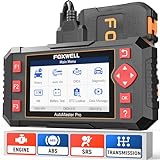
The FOXWELL NT604 Elite is a premium all-in-one diagnostic scanner supporting engine, ABS, SRS, and transmission systems. Its 2026 updated version offers plug-and-play functionality for 60+ global car brands, featuring AUTOVIN recognition, live data, and a protective case—positioned as a near-professional solution for serious DIYers.
What Makes It Stand Out:
True multi-system coverage (engine/ABS/SRS/transmission) sets it apart from budget tools. The AUTOVIN feature instantly identifies vehicles, while the included protective case and lifetime software updates add rarity for its class. Unlike BlueDriver, it operates standalone without phone dependency.
Value for Money:
Though pricier, it competes with $300+ professional tools by covering critical safety systems (ABS/SRS) typically excluded in sub-$100 scanners. The lifetime updates and case eliminate hidden costs, making it cost-effective for owners tackling complex repairs—especially since airbag diagnostics often require dealer visits.
Strengths and Weaknesses:
Strengths: Comprehensive system support (ABS/SRS/transmission), no software fees, robust case, AUTOVIN efficiency, print/data playback features.
Weaknesses: No maintenance resets (e.g., oil/service lights), setup can be fiddly for novices, bulkier than Bluetooth options.
Bottom Line:
The top pick for owners needing deep diagnostics beyond engine codes. Its ABS/SRS capability saves hundreds in dealer fees, justifying the premium. Essential for advanced DIYers—but confirm compatibility with your specific vehicle model first.
5. VDIAGTOOL VD10 OBD2 Scanner Code Reader Car Diagnostic Tool Engine Fault Code Reader for Turn Off CEL with Freeze Frame/I/M Readiness for All OBDII Protocol Cars, OBD2 Scanner Diagnostic Tool
Overview:
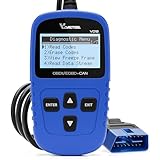
The VDIAGTOOL VD10 is a user-friendly handheld OBD2 scanner focused on check-engine light resolution. It reads/clears codes, displays freeze frame data, and checks emissions readiness via a built-in TFT screen, targeting beginners with its intuitive interface and instant DTC definitions.
What Makes It Stand Out:
Its standout trait is the onboard 3,000+ code library—unlike app-dependent tools, it shows code definitions directly on-screen without internet. Freeze frame retrieval and live sensor data (e.g., misfire counts) aid intermittent issue diagnosis, while the smog-check readiness feature simplifies annual inspections.
Value for Money:
At an entry-level price, it outperforms ultra-cheap scanners with its detailed code explanations and freeze frame capability. Cheaper than BlueDriver but lacking ABS support, it’s ideal for budget-conscious users needing reliable engine diagnostics without subscriptions or phone pairing.
Strengths and Weaknesses:
Strengths: On-device DTC definitions, freeze frame analysis, smog-check focus, compact design, no app needed.
Weaknesses: Engine-only diagnostics (no ABS/SRS), basic live data display, no repair guidance, limited to OBDII systems.
Bottom Line:
A superb starter tool for quick check-engine light fixes and smog prep. While not for complex repairs, its self-sufficient code explanations and freeze frame make it the smartest budget buy for engine-specific issues—perfect for rental fleets or casual DIYers.
6. KONNWEI KW206 Car OBD2 HUD Digital Meter Gauge All in One Automotive Trip Computer Smart OBD Speedometer Water Temperature Fuel Pressure Tester for All 2003 and Newer Cars
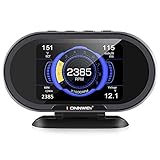
Overview: The KONNWEI KW206 merges a Head-Up Display (HUD) with a comprehensive OBD2 scanner. This plug-and-play device projects critical real-time engine data onto your windshield via a 3.5-inch color screen, targeting drivers seeking enhanced safety and diagnostics without dealer visits.
What Makes It Stand Out: Its integrated HUD design minimizes distraction by displaying speed, RPM, coolant temp, and fuel data directly in your line of sight. Unique safety features include customizable alarms for RPM, speed, coolant temp, and voltage, alongside DTC reading/erasing and automatic sleep mode. The all-in-one trip computer functionality eliminates the need for separate gauges.
Value for Money: Priced mid-range, it offers exceptional utility for daily drivers. Combining HUD safety, diagnostic scanning, and trip metrics surpasses basic code readers. While not a pro-level scanner, its lifetime updates and reliability justify the cost for homeowners prioritizing convenience and preventative maintenance.
Strengths and Weaknesses: Pros: Intuitive plug-and-play setup; vital data projection improves safety; robust alarm system; no subscription fees; universal OBD2 compatibility. Cons: Limited to basic engine diagnostics (no ABS/SRS); smaller screen than dedicated scan tools; alarm customization requires menu navigation.
Bottom Line: An ideal choice for safety-conscious drivers wanting real-time engine insights without glancing down. Its HUD focus and reliable diagnostics make it a high-value daily driver essential, though professionals may need deeper diagnostic capabilities.
7. Innova 5210 OBD2 Scanner & Engine Code Reader, Battery Tester, Live Data, Oil Reset, Car Diagnostic Tool for Most Vehicles, Bluetooth Compatible with America’s Top Car Repair App

Overview: The Innova 5210 is a versatile, Bluetooth-enabled OBD2 scanner designed for DIYers and enthusiasts. It combines engine diagnostics with battery/alternator testing, oil reset, and smog check readiness, linking to the free RepairSolutions2 app for guided repairs.
What Makes It Stand Out: Dual functionality as an engine code reader and battery tester is rare at this price. The RepairSolutions2 app—backed by ASE-certified mechanics—provides verified fixes, parts lists, and cost estimates without subscriptions. Oil reset and I/M readiness features add significant workshop utility.
Value for Money: Excellent for its price point. The battery testing alone saves trips to mechanics, while the app’s repair guidance replaces costly subscriptions. Covers 95% of vehicles post-1996, making it a cost-effective all-rounder for routine maintenance and basic diagnostics.
Strengths and Weaknesses: Pros: No app subscription fees; accurate battery/alternator diagnostics; easy oil reset; trusted repair guidance; broad vehicle coverage. Cons: Bluetooth pairing can be finicky; ABS/SRS coverage varies; app requires smartphone; no physical screen on device.
Bottom Line: A top pick for beginners seeking actionable repair insights. Its battery diagnostics and subscription-free app deliver unmatched practical value, though those needing standalone operation should consider screen-equipped alternatives.
8. BLCKTEC 460T OBD2 Scanner Car Code Reader Engine ABS SRS Transmission Diagnostic Tool, 12 Reset Services, Oil/TPMS/EPB/BMS/SAS/DPF/Throttle Reset, ABS Bleeding, Battery Test, Auto VIN, Free Update
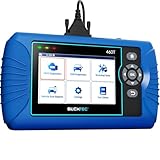
Overview: The BLCKTEC 460T is a professional-grade OBD2 scanner targeting serious DIYers and technicians. It supports full-system diagnostics (Engine, ABS, SRS, Transmission) and 12+ advanced reset functions, positioning itself as a near-dealer alternative.
What Makes It Stand Out: Unmatched reset capabilities—including DPF, EPB, SAS, and ABS bleeding—rival shop tools. AutoVIN, AutoScan, and 3x faster data retrieval streamline diagnostics. The ability to graph/overlay four live data streams aids complex troubleshooting, while free lifetime updates ensure longevity.
Value for Money: Premium-priced but justified for its workshop-level features. The 12 reset functions eliminate $100+ dealer service fees, and OEM live data depth surpasses entry tools. For those performing advanced maintenance, it pays for itself quickly versus subscription-based apps.
Strengths and Weaknesses: Pros: Extensive reset/service functions; fast, detailed diagnostics; no subscription fees; cloud scan storage via RepairSolutions2 app; intuitive AutoScan. Cons: High learning curve; vehicle-specific feature limitations; requires app for full functionality; costly for casual users.
Bottom Line: A powerhouse for enthusiasts tackling complex repairs. If you need DPF resets or ABS bleeding, it’s indispensable—though overkill for basic check-engine light clearing. Verify vehicle compatibility before purchase.
9. AUTOPHIX 3210 OBD2 Scanner Bluetooth, Wireless Code Reader for Car - Check Engine Light & Battery - Easy DIY Car Diagnostic Scanner Tool for 1996+ Vehicles, No Subscription Fee for iPhone & Android

Overview: The AUTOPHIX 3210 is a wireless Bluetooth OBD2 scanner focused on simplicity and smog prep. It connects to smartphones for live data, code reading, and a unique HUD mode, emphasizing emissions testing readiness and user-friendly diagnostics.
What Makes It Stand Out: Its “At-Home Smog Check” I/M readiness testing and EVAP leak detection help avoid failed inspections. The HUD mode projects data onto windshields, while direct Google DTC lookup demystifies error codes. Broad 99% compatibility covers most global vehicles from 1996+.
Value for Money: Outstanding for emissions-focused users. The smog prep features alone save inspection retest fees, and the free app eliminates subscriptions. At its price, it’s the most accessible tool for DIY smog checks and basic diagnostics.
Strengths and Weaknesses: Pros: Excellent smog/I/M readiness support; intuitive HUD projection; seamless DTC-to-Google integration; no fees; wide vehicle coverage. Cons: Cannot clear ABS/SRS/transmission codes; app-dependent; Bluetooth may disconnect; limited advanced diagnostics.
Bottom Line: The go-to scanner for passing emissions tests independently. Perfect for eco-conscious drivers prioritizing smog readiness and simplicity, but avoid if you need transmission/SRS diagnostics.
10. Panlong OBD2 Scanner Bluetooth OBDII Diagnostic Tool Car Code Reader Turn Off Check Engine Light Support Android Torque App

Overview: The Panlong OBD2 is a budget Bluetooth scanner designed exclusively for Android users. It leverages popular third-party apps like Torque to deliver basic diagnostics, targeting cost-conscious Android owners needing essential code reading.
What Makes It Stand Out: Its affordability and compatibility with free Android apps (Torque, Dashcommand) provide extensive customization. ELM327 compliance ensures broad protocol support, while the plug-and-play design requires zero setup—ideal for Torque app enthusiasts.
Value for Money: Exceptionally cheap for core functionality. At a fraction of competitors’ prices, it reliably reads/clears engine codes and displays live sensor data via free apps. However, it lacks built-in features (e.g., oil reset), relying entirely on external software.
Strengths and Weaknesses: Pros: Ultra-low cost; seamless Torque app integration; ELM327 reliability; simple operation; supports hybrids via Dr. Prius. Cons: Android-only (no iOS); no native app or screen; limited to engine codes (no ABS/SRS); basic functionality only.
Bottom Line: A barebones, wallet-friendly entry point for Android users already invested in Torque. Skip if you need iOS support, advanced resets, or standalone operation—but perfect for Torque veterans on a budget.
Key Technological Shifts Reshaping OBD2 Scanners
Artificial Intelligence Integration
Modern scanners now leverage AI to analyze complex sensor data patterns, moving beyond basic code definitions. Instead of just telling you “P0171 System Too Lean,” advanced systems cross-reference multiple parameters—like oxygen sensor readings, fuel trims, and throttle position—to pinpoint whether the issue stems from a vacuum leak, faulty injector, or clogged air filter. This contextual intelligence reduces guesswork and false diagnoses, saving time and unnecessary part replacements.
Real-Time Predictive Maintenance Capabilities
The most significant leap lies in predictive analytics. Next-gen scanners continuously monitor wear-and-tear indicators—such as subtle changes in transmission shift patterns or gradual increases in coolant temperature fluctuations—to forecast potential failures weeks in advance. Think of it as a “health forecast” for your vehicle, alerting you when a timing belt shows early signs of stress or when brake pads are nearing critical wear, based on actual usage data rather than generic mileage estimates.
Enhanced Cloud Connectivity and Data Syncing
Reliable 5G and Wi-Fi 6E integration ensures seamless, automatic data uploads to secure cloud platforms. This allows for remote diagnostics sharing with mechanics, historical trend analysis across thousands of similar vehicle models, and instant access to updated repair procedures. No more manual data transfers—your scanner silently builds a comprehensive vehicle health timeline accessible from any device.
User Experience and Interface Innovations
Augmented Reality Repair Guidance
Overlaying step-by-step repair instructions onto your actual engine bay via smartphone or smart glasses is no longer niche. Top-tier scanners now integrate AR to highlight exact component locations, demonstrate tool positioning, and even animate complex procedures like serpentine belt replacement. This turns intimidating repairs into manageable tasks, bridging the knowledge gap for novice users.
Intuitive Mobile App Ecosystems
The scanner itself is often just the hub; the real magic happens in companion apps. Expect fluid interfaces with customizable dashboards, voice-command navigation (“Show live fuel pressure”), and personalized maintenance reminders based on driving habits. Apps now prioritize glanceable insights—like color-coded health scores—so you grasp vehicle status in seconds, not minutes.
Multilingual Voice Feedback and Diagnostics
Real-time voice narration in multiple languages transforms the scanning process, especially when hands are busy under the hood. Advanced models describe fault codes conversationally (“The oxygen sensor before the catalytic converter is reporting inconsistent readings”), provide safety warnings, and guide troubleshooting sequences verbally, making complex diagnostics accessible to non-technical users.
Performance and Diagnostic Depth
Comprehensive Bi-Directional Control
Beyond reading data, leading scanners now offer robust bi-directional testing—activating components like fuel pumps, solenoids, or EV battery heaters directly through the app. This allows for targeted system checks (e.g., verifying EGR valve movement) without specialized dealer tools, crucial for validating repairs and diagnosing intermittent issues.
Extended Protocol Support Beyond OBD2
While OBD2 covers emissions-related systems, 2026’s scanners universally support manufacturer-specific protocols (like CAN FD, KWP2000, and UDS) for accessing advanced modules. This unlocks diagnostics for hybrid battery management, ADAS calibration, infotainment glitches, and even tire pressure system recalibration—systems previously locked behind dealership firewalls.
High-Frequency Data Streaming for Performance Tuning
For enthusiasts, millisecond-level data logging captures rapid fluctuations in boost pressure, air-fuel ratios, or ignition timing during acceleration. This precision enables fine-tuning modifications safely, with scanners syncing seamlessly to tuning software. Real-time graphs replace laggy, outdated scan tools, making track-day adjustments or dyno sessions dramatically more efficient.
Connectivity and Compatibility Advances
Universal Vehicle Coverage with Adaptive Learning
No more compatibility headaches. New scanners automatically detect vehicle make, model, and year upon connection, adapting protocols on the fly. They support everything from vintage OBD1 systems (with adapters) to the latest electric vehicles, learning quirks of older models to deliver accurate readings where generic tools fail.
Mesh Networking for Multi-Vehicle Fleets
Fleet managers benefit from scanners that create local mesh networks, allowing one device to broadcast diagnostics across multiple vehicles simultaneously. This enables rapid pre-trip checks for entire fleets and centralized reporting, turning hours of manual scans into minutes of coordinated data gathering—ideal for logistics or rental companies.
Secure Over-the-Air Firmware Updates
Security and functionality evolve constantly. Regular, encrypted OTA updates patch vulnerabilities, add new vehicle models, and introduce features—like adapting to new EV battery chemistries—without requiring hardware replacements. This future-proofs your investment against obsolescence.
Practicality and Durability Features
All-Weather and Ruggedized Design
Scanners now withstand extreme conditions: IP67-rated casings resist water jets and dust, operate in -20°C to 70°C temperatures, and survive 6-foot drops. Magnetic mounts, glove-friendly touchscreens, and glove compartment-friendly sizes make them practical for roadside emergencies or daily workshop use.
Extended Battery Life with Rapid Charging
Ditch the anxiety of a dead scanner mid-diagnosis. Innovations like graphene batteries deliver 48+ hours of continuous use and charge to 80% in 15 minutes via USB-C. Some models even harvest power from the vehicle’s OBD port during operation, eliminating battery dependence entirely.
Modular Accessory Ecosystems
Expand functionality with snap-on modules—a Bluetooth extender for hard-to-reach ports, a thermal camera for overheating checks, or a wireless dongle for permanent installation. This “scanner as a platform” approach lets you customize tools for specific needs without buying entirely new devices.
Security and Privacy Considerations
End-to-End Data Encryption
With vehicles generating gigabytes of sensitive data, top scanners encrypt all communications between the device, app, and cloud. This prevents unauthorized access to location history, driving behavior, or vehicle identification numbers, addressing growing privacy concerns in connected car ecosystems.
User-Controlled Data Permissions
You decide what gets shared. Granular privacy settings let you block specific data points (like GPS coordinates) from cloud syncs or anonymize reports before sharing with mechanics. Transparent data policies ensure your vehicle’s digital footprint stays under your control.
Frequently Asked Questions
Will next-gen scanners work with my older vehicle (pre-2010)?
Yes, most modern scanners include backward compatibility for OBD1 and early OBD2 protocols, often using optional adapters, though some advanced features may be limited on very old systems.Do I need an internet connection for basic diagnostics?
No—core code reading and live data functions work offline. Internet is only required for cloud features like predictive analytics updates or remote data sharing.Can these scanners reset service lights (like oil change reminders)?
Many support bi-directional control for resetting maintenance indicators, but capabilities vary by vehicle manufacturer; always verify compatibility for your specific make/model.How accurate are the predictive maintenance alerts?
Accuracy depends on data quality and AI training. Systems using real-world fleet data from similar vehicles typically achieve 85-90% reliability for common wear items like brakes or batteries.Are AR repair guides practical for complex jobs?
AR excels for visual tasks (e.g., locating sensors), but complex repairs still require mechanical skill. It’s a powerful aid, not a replacement for expertise or service manuals.Can I use one scanner for both my gas car and electric vehicle?
Most universal scanners support both, but verify EV-specific protocol coverage (like high-voltage system diagnostics), which isn’t standard on all models.How often do firmware updates occur?
Reputable brands push updates quarterly or bi-monthly, with critical security patches released immediately—check manufacturer support policies before purchasing.Is cloud data storage secure against hacking?
Leading platforms use banking-grade encryption and zero-knowledge architecture, meaning even the provider can’t access your raw vehicle data.Do these scanners drain my car battery when left plugged in?
Quality devices draw minimal power (<50mA) and auto-sleep after inactivity; most won’t noticeably affect a healthy battery during short parking periods.Can I share diagnostic reports directly with my mechanic?
Yes—most apps generate PDF summaries with code explanations, live data logs, and predictive insights, streamlining communication and reducing diagnostic guesswork at the shop.
See Also
- The 10 Most Revolutionary Universal OBD2 Scanners of 2026
- The 10 Most Revolutionary Touchscreen OBD2 Scanners of 2026
- The 10 Most Revolutionary Basic OBD2 Scanners of 2026
- Stop Wasting Time on Faulty Readings with the 10 Best Digital OBD2 Scanners This Year
- 10 Digital OBD2 Scanners That Solve False Error Code Alerts in 2026