Table of Contents
Modern vehicles are evolving at breakneck speed, transforming from purely mechanical systems into sophisticated networks of electronics, sensors, and software. This technological leap means diagnosing issues isn’t just about checking spark plugs or battery voltage anymore. Today’s drivers and technicians need tools that can keep pace with complex hybrid powertrains, intricate infotainment systems, and advanced driver-assistance features. A standard multimeter from a decade ago simply can’t cut it when faced with the nuanced electrical demands of contemporary automobiles. The right diagnostic tool has become less of a luxury and more of a fundamental necessity for accurate, efficient troubleshooting.
Gone are the days when a basic voltage check solved most car problems. We’re now navigating an era where a single faulty sensor can trigger a cascade of seemingly unrelated issues, or where intermittent electrical gremlins hide within miles of wiring harnesses. This complexity demands multimeters that offer precision, intelligence, and safety features far beyond simple resistance or continuity testing. Choosing the right instrument isn’t just about getting a reading; it’s about gaining actionable insights quickly, safely, and reliably, whether you’re a seasoned professional in a busy shop or a knowledgeable DIYer tackling weekend projects. Understanding what truly sets modern automotive multimeters apart is the first step toward smarter diagnostics.
Top 10 Multimeters for Cars
Detailed Product Reviews
1. Neoteck 6000 Counts Digital Multimeter with NCV and TRMS Auto Range Multimeter for AC/DC Voltage&Current,Resistance,Capacitance,Frequency,Temperature,Duty Ratio,Continuity Voltmeter for Car Circuit

Overview:
The Neoteck 6000 Counts Digital Multimeter is a versatile tool for automotive and electrical diagnostics, targeting DIYers and professionals. It measures AC/DC voltage/current, resistance, capacitance, frequency, temperature, and features NCV detection for live wires. Its CAT III 600V safety rating and rugged silicone cover prioritize user protection during circuit testing.
What Makes It Stand Out:
This multimeter excels with its high 6000-count resolution, TRMS accuracy for fluctuating signals, and comprehensive functionality—including temperature measurement and a built-in flashlight. The auto/manual range switching, data hold, and 45-degree stand enhance usability in tight or dark spaces, while dual fuses and overload protection ensure durability.
Value for Money:
Positioned mid-range, it offers exceptional breadth for its price, outperforming basic models with professional-grade features like TRMS and CAT III safety. While pricier than entry-level options, its versatility for car repairs and home use justifies the investment compared to specialized single-function tools.
Strengths and Weaknesses:
Strengths: Wide measurement range, robust safety features, LCD backlight, and user-friendly design (flashlight, stand). Ideal for complex diagnostics. Weaknesses: Slightly bulky due to protective casing; temperature probe sold separately; manual could be more detailed for beginners.
Bottom Line:
A highly capable, safety-focused multimeter that delivers professional functionality at an accessible price. Recommended for serious DIYers and technicians needing reliable, all-in-one diagnostics for automotive or household electrical systems.
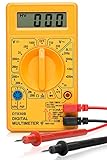
2. HILTEX 40508 Digital Multimeter Diode & Transistor Tester AC DC Volt Test Voltmeter, Automotive Multimeter Meter Tester, Measure Voltage Test, Car Battery Tester, Analog Multimeter Kit, Volt Meter
Overview:
The HILTEX 40508 is a no-frills digital multimeter designed for basic automotive and household electrical troubleshooting. It measures voltage, resistance, continuity, and tests diodes/transistors, targeting beginners and casual users for tasks like battery checks or fuse verification.
What Makes It Stand Out:
Its standout trait is simplicity: a large, clear 3.5-digit LCD (1999-count) with overload/low-battery indicators ensures foolproof operation. The compact size, dual leads, and focus on core functions (voltage, continuity) make it ideal for quick, everyday checks without overwhelming novices.
Value for Money:
An excellent budget option under $20. It lacks advanced features (e.g., capacitance, TRMS) but reliably handles fundamental tasks better than cheaper analog meters. For users needing only basic voltage/resistance checks, it’s unmatched in affordability and ease of use.
Strengths and Weaknesses:
Strengths: Intuitive interface, rugged build, essential safety protections, and portability. Perfect for quick car battery or household circuit tests. Weaknesses: Limited to 1999 counts (less precision), no backlight or advanced modes (e.g., frequency), and shorter leads than competitors.
Bottom Line:
A dependable, entry-level multimeter for straightforward automotive or home electrical tasks. Best suited for beginners or as a secondary tool where simplicity and cost trump advanced functionality.
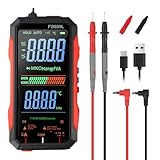
3. FS899L Digital Multimeter with Color Screen, USB C Rechargeable Electrical Testing, 6000 Counts True RMS AC/DC Voltage Tester, NCV, Capacitance, Non Voltage Detector for Car, Home(FS899L)
Overview:
The FS899L modernizes electrical testing with a vibrant 4.8-inch color screen and USB-C charging. This 6000-count TRMS multimeter handles AC/DC voltage, capacitance, NCV detection, and temperature, aiming at tech-savvy DIYers and professionals needing clarity in low-light environments.
What Makes It Stand Out:
The high-resolution color display is revolutionary for multimeters, showing real-time data visually (e.g., temperature graphs). USB-C recharging (8 hours runtime per 2-hour charge) eliminates battery swaps, while the integrated flashlight and seismic protection enhance field usability.
Value for Money:
Priced mid-to-high, it justifies cost with future-proof features. The color screen reduces reading errors, and USB-C convenience surpasses models requiring disposable batteries. Competes well against pricier professional tools but may be overkill for casual users.
Strengths and Weaknesses:
Strengths: Unmatched screen visibility, eco-friendly charging, robust safety (CAT III), and comprehensive measurement suite. Weaknesses: Bulky form factor; color screen drains power faster than monochrome; lacks tach/dwell settings for deep automotive work.
Bottom Line:
A forward-thinking choice for users prioritizing display clarity and sustainability. Highly recommended for professionals in dim settings, though budget-focused buyers might prefer simpler alternatives.
4. Performance Tool W2972 Automotive Digital Multimeter with Large LCD Display and UL Listed Probes for Standard Electrical Testing on Cars and Benches

Overview:
This Performance Tool model is a specialized automotive multimeter focused on car diagnostics. It features tachometer and dwell angle functions alongside standard voltage/resistance testing, catering to mechanics for ignition system checks and battery diagnostics.
What Makes It Stand Out:
Its automotive-specific features set it apart: tach/dwell settings for timing adjustments and 42-inch UL-listed probes for safe, strain-free access in engine bays. The extra-large LCD ensures readability during complex repairs, emphasizing practicality over versatility.
Value for Money:
Excellent value for auto enthusiasts at $30–$40. While lacking home-electrical features (e.g., NCV), it outperforms general-purpose meters for vehicle work. UL-listed probes and durability make it a cost-effective upgrade from basic kits.
Strengths and Weaknesses:
Strengths: Purpose-built for cars, robust probes, simple operation, and large display. Ideal for ignition diagnostics. Weaknesses: No advanced functions (capacitance, TRMS); basic safety rating (CAT II); no backlight for dark garages.
Bottom Line:
A niche, reliable tool for automotive-specific tasks. Essential for car owners tackling ignition systems but limited for broader electrical work—prioritize if vehicle diagnostics are your sole need.
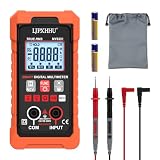
5. Digital Multimeter Volt Meter TRMS 4000 Counts Auto-Range NCV Voltage Multi Tester Smart Electrical Car Battery Voltmeter AC/DC Volt, Ohm Resistance, Continuity with Test Leads Large LED Backlight
Overview:
This smart multimeter combines auto-ranging convenience with robust safety features for home and automotive use. Its 4000-count TRMS accuracy handles AC/DC voltage, resistance, continuity, and NCV detection, targeting DIYers seeking professional results without complexity.
What Makes It Stand Out:
Intelligent auto-ranging eliminates manual mode switches, while dual-signal NCV detection (
6. Digital Multimeter FS899L Upgraded - USB Rechargeable 6000 Counts True RMS Tester with Color Screen, Auto-Ranging for Home/Industrial/Car Electrical Testing (FS899C)

Overview:
The FS899L is a professional-grade USB-rechargeable multimeter designed for versatile electrical diagnostics across automotive, industrial, and household settings. It boasts a 6000-count True RMS measurement system, comprehensive testing capabilities, and modern safety features for reliable performance in demanding environments.
What Makes It Stand Out:
Its standout features include a large 4.8-inch backlit color display with integrated torch for low-light work, USB-C rechargeability (2-hour charge, 8-hour runtime), and dual-fuse overload protection rated up to 1000V. The auto-ranging functionality covers AC/DC voltage, current, resistance, capacitance, frequency, temperature, and non-contact voltage detection, eliminating manual range switching.
Value for Money:
Priced competitively against disposable-battery multimeters, its USB-C rechargeability and robust safety certifications (CE/FCC) offer long-term savings and convenience. While not the cheapest entry-level option, its industrial durability, True RMS accuracy, and all-in-one functionality justify the cost for professionals and serious DIYers.
Strengths and Weaknesses:
Strengths: Exceptional visibility in dark spaces; eliminates battery waste; wide measurement range; comprehensive safety features; rapid charging. Weaknesses: Bulkier than pocket-sized models; color screen may drain power faster than monochrome alternatives; no Bluetooth/data logging for advanced diagnostics.
Bottom Line:
A reliable, future-proof investment for electricians and automotive technicians seeking precision, safety, and eco-friendly operation. Highly recommended for frequent use despite minor portability trade-offs.
7. How To Use A Multimeter For Beginners: A Practical Step-by-Step Guide to Using Your Digital Multimeter to Measure Current, Voltage, Resistance, and Troubleshoot and Fix Almost Anything

Overview:
This concise guide demystifies multimeter usage for novices, focusing on practical, real-world applications. It systematically walks readers through measuring voltage, current, resistance, and troubleshooting common electrical issues without overwhelming technical jargon.
What Makes It Stand Out:
Its strength lies in accessibility—transforming complex concepts into digestible steps with clear illustrations. Unlike dense technical manuals, it prioritizes hands-on learning, covering safety protocols, interpreting readings, and diagnosing problems in household appliances or automotive systems through relatable scenarios.
Value for Money:
At an affordable price point, it delivers exceptional value for absolute beginners. While free online resources exist, this guide’s structured, error-averse approach saves hours of frustration. It’s ideal for new multimeter owners who need foundational confidence before tackling projects.
Strengths and Weaknesses:
Strengths: Intuitive, jargon-free language; actionable troubleshooting flowcharts; strong emphasis on safety; applicable to most entry-level multimeters. Weaknesses: Lacks advanced diagnostics for professionals; no multimeter hardware included; minimal coverage of True RMS or specialized tools.
Bottom Line:
An indispensable primer for DIYers and hobbyists. If you’ve ever felt intimidated by your multimeter’s probes, this guide is worth every penny—start here before buying your first tester.
8. ZOYI Battery Internal Resistance Tester 2 in 1 multimeter Battery Voltage Meter Car Battery Tester for AAA AA Model 0.1mΩ-200Ω

Overview:
The ZOYI XR1 merges a battery internal resistance tester with a 25,000-count digital multimeter, targeting technicians who prioritize battery health assessment. It excels in measuring internal resistance (0.1mΩ–200Ω) alongside standard electrical parameters, using Kelvin clips for precision.
What Makes It Stand Out:
Its dual functionality is unique: simultaneously display battery resistance/voltage to gauge degradation, while doubling as a full-featured DMM. The 4-wire Kelvin clips minimize contact errors, and the TFT color screen offers adjustable brightness—critical for distinguishing worn batteries in automotive or solar applications.
Value for Money:
Though pricier than basic multimeters, its battery-analysis specialization justifies the cost for auto shops or renewable energy specialists. Replacing standalone battery testers and entry-level DMMs, it consolidates tools without sacrificing 25,000-count accuracy or Type-C charging convenience.
Strengths and Weaknesses:
Strengths: Unmatched battery diagnostics; Kelvin clip accuracy; vibrant TFT display; configurable auto-shutdown; USB-C charging. Weaknesses: Limited to 100V max input (unsuitable for high-voltage industrial use); no True RMS for AC measurements; manual ranging may deter beginners.
Bottom Line:
A niche powerhouse for battery-centric workflows. Choose this if you routinely test EVs, UPS systems, or power tools—but opt for a True RMS meter if AC precision is primary.
9. Automotive Multimeter Engine Analyzer, AIOMEST Digital DMM Meter AI-770K to Measure Car Dwell Angle, RPM Tach, Injection Pulse, AC/DC Amp Voltage Ohm True-RMS 6000 Count Multi Tester

Overview:
The AIOMEST AI-770K is a specialized automotive multimeter engineered for engine diagnostics, combining True RMS electrical testing with unique engine-parameter analysis like dwell angle, RPM, and fuel-injection pulse width for mechanics.
What Makes It Stand Out:
It transcends typical multimeters with pro-grade engine analytics: measuring RPM (via optional clamp), pulse width (0.1–10ms), and dwell angles for 4–8 cylinder engines. The 6000-count True RMS accuracy, auto-backlight LCD, and PeakHold mode capture transient signals critical for modern vehicle diagnostics.
Value for Money:
While the mandatory $30–$50 inductive clamp adds cost, the AI-770K’s diagnostic depth rivals tools twice its price. For garage professionals, it replaces multiple tools (dwell meter, tachometer, DMM), offering robust ROI through faster, accurate engine troubleshooting.
Strengths and Weaknesses:
Strengths: Comprehensive engine diagnostics; True RMS reliability; durable industrial build; NCV detection; 365-day warranty. Weaknesses: RPM clamp sold separately; complex features may overwhelm DIYers; no color screen like competitors.
Bottom Line:
A must-have for auto technicians tackling fuel systems or ignition timing. DIYers should assess skill level first, but pros will find it indispensable for efficient, precise repairs.
10. True RMS 6000-Count Digital Voltmeter, FS899L Digital Multimeter USB Rechargeable with Color Screen, Smart Auto-Ranging Electrical Tester for Home, Industrial & Car Electrical Testing (1pcs)

Overview:
This FS899L variant emphasizes versatility as a True RMS 6000-count voltmeter for cross-industry use, featuring auto-ranging, USB-C charging, and a protective color display. It targets users needing one tool for home circuits, automotive systems, and light industrial tasks.
What Makes It Stand Out:
The large 4.8-inch color screen with real-time temperature display and integrated flashlight ensures readability in any environment. USB-C rechargeability (with included cable) and seismic protection differentiate it from battery-dependent rivals, while NCV detection and wire recognition enhance safety during live testing.
Value for Money:
Positioned as a mid-range workhorse, it outperforms budget multimeters with True RMS accuracy and CE/FCC certifications. The reusable battery eliminates ongoing costs, making it economical for frequent use—though industrial users may prefer higher voltage ratings.
Strengths and Weaknesses:
Strengths: Vibrant color display; no battery replacements; comprehensive safety features; intuitive auto-ranging; broad application range. Weaknesses: Plastic/metal build feels less rugged than all-metal counterparts; included test leads lack premium durability; no data logging.
Bottom Line:
An excellent all-rounder for hobbyists and technicians who value clarity and convenience. Ideal for home/auto use, though heavy industrial sites might seek more robust alternatives.
Core Capabilities for Modern Vehicle Diagnostics
Precision Measurement for Sensitive Electronics
Today’s car computers and sensors operate on incredibly precise voltage levels. A multimeter must offer high resolution (often down to 0.1mV or better) and true RMS accuracy to reliably measure these signals without distortion, especially on non-linear loads common in modern ignition systems and fuel injectors. Inaccurate readings can lead to misdiagnosis and wasted time replacing perfectly good components.
Advanced Automotive-Specific Functions
Beyond basic voltage, resistance, and current, look for features explicitly designed for cars. This includes dedicated modules for testing cranking amps, alternator ripple voltage (critical for diagnosing failing diodes), and fuel injector pulse width. Some advanced models even offer variable frequency measurement essential for interpreting signals from modern crankshaft and camshaft position sensors.
High Current Measurement Without Blown Fuses
Measuring starter motor current draw or alternator output requires safely handling high amperage (often 300A+). Clamp-style current probes (both AC/DC) integrated into or compatible with the multimeter are invaluable. They eliminate the need to break the circuit, reducing error risk and preventing dangerous sparking, especially crucial around modern vehicle batteries with immense cold cranking amps.
Data Logging for Intermittent Faults
The bane of automotive diagnostics is the elusive intermittent fault. Multimeters with robust data logging capabilities can capture voltage, current, or frequency readings over extended periods (hours or even days). This allows you to monitor a circuit while driving or under specific conditions, capturing spikes, drops, or anomalies that a quick snapshot would miss, providing concrete evidence for hard-to-pinpoint issues.
Safety: Non-Negotiable for Automotive Environments
CAT Ratings Tailored to Vehicle Systems
Always verify the multimeter’s Category (CAT) safety rating. Automotive work often involves circuits connected directly to the battery, which falls under CAT III. Ensure your meter is rated CAT III 600V or higher to withstand potential voltage transients and surges specific to vehicle electrical systems, protecting both the user and the tool from catastrophic failure.
Robust Fuse Protection and Design
High-energy automotive circuits demand meters with high-quality, adequately rated fuses (like HRC types) specifically designed for the amperage ranges used in cars. Cheap fuses or poor internal design can lead to dangerous arc flashes if a fault occurs during current measurement. Look for meters where the fuse design and placement are explicitly engineered for automotive high-current safety.
Insulated Test Leads and Probes
Standard test leads aren’t sufficient. Automotive multimeters require leads with thick, durable insulation rated for the meter’s CAT level, along with shrouded banana plugs and finger guards on the probes. Needle-tip probes designed for piercing insulation (safely!) on wiring harnesses are also a valuable feature, but must be used with extreme caution and only on the correct circuits.
Connectivity and User Experience Enhancements
Seamless Bluetooth Integration
Wireless connectivity via Bluetooth allows real-time data streaming to a smartphone or tablet. This is transformative for automotive work: view live readings on a larger screen while under the hood, record data sessions hands-free, and generate professional reports directly from your diagnostic session, improving accuracy and documentation.
Intuitive Interface for Gloved Hands
Working in a garage often means wearing gloves. Meters need large, well-spaced buttons, clear backlit displays readable in bright sunlight or dim engine bays, and menu systems that are logical and quick to navigate. Touchscreens, while potentially useful, can be problematic with oily gloves or in cold weather; physical buttons often prove more reliable.
Cloud-Based Data Management
Beyond simple phone apps, the most advanced solutions sync logged data to secure cloud platforms. This enables long-term trend analysis across multiple vehicles, sharing diagnostic findings securely with colleagues or customers, and building a historical record of vehicle electrical health – invaluable for preventative maintenance insights.
Future-Proofing Your Investment
Adaptable for Electric and Hybrid Vehicles
As electrified vehicles dominate, your multimeter must safely and accurately handle high-voltage systems (often 400V-800V DC). This requires specific safety certifications (like CAT III 1000V), insulated tools rated for HV, and measurement capabilities that won’t be damaged by the unique characteristics of EV battery packs and power electronics. Don’t assume standard automotive meters are sufficient.
Software Updates for Evolving Standards
Vehicle communication protocols and electrical architectures keep changing. Choose a meter from a manufacturer committed to long-term firmware updates. This ensures compatibility with new vehicle models, adds emerging diagnostic functions, and patches any potential security or performance issues, extending the tool’s useful life significantly.
Modularity and Expandable Sensors
The best investment is a platform, not just a meter. Look for systems that support interchangeable sensor heads – perhaps adding a thermal camera module for spotting overheating connections, or a specialized harness for direct OBD-II communication. This modularity lets you adapt the tool to new challenges without replacing the entire unit.
Practical Considerations for Real-World Use
Ruggedness for the Workshop Environment
Drops, grease, moisture, and temperature extremes are part of automotive life. Your multimeter needs a solid IP rating (IP67 is excellent for dust/water resistance), a durable rubber overmold, and the ability to withstand being tossed in a toolbox. A bright display that remains readable in direct sun is non-negotiable.
Battery Life That Lasts a Full Shift
Complex features and wireless connectivity drain power. Prioritize meters with long-lasting, user-replaceable batteries (like standard AA/AAA) or robust rechargeable packs that offer a full day’s work on a single charge. Nothing halts diagnostics faster than a dead meter mid-test.
Ergonomic Design for Extended Use
Holding a meter for hours during complex diagnostics requires comfort. Consider weight distribution, grip texture, and whether the meter can be securely propped up or magnetically mounted near the work area. A comfortable tool reduces fatigue and improves focus on the diagnostic task.
Calibration and Long-Term Reliability
Understanding Calibration Needs
Precision degrades over time and with use. Understand the manufacturer’s recommended calibration interval and the cost/availability of certified calibration services. Some professional-grade meters offer self-diagnostics or calibration reminders. Factor this into your long-term cost of ownership.
Build Quality vs. Cost
While budget is a factor, the cheapest meter is often the most expensive in the long run due to inaccuracy, fragility, or lack of safety features. Invest in the best quality and safety rating you can justify, prioritizing reliability and precision over minor cost savings, especially when working on complex, high-value vehicles.
Frequently Asked Questions
Can I use a standard hardware store multimeter for modern car diagnostics?
While basic checks like battery voltage might work, standard meters often lack the precision, safety ratings (CAT III), and specific automotive functions (like ripple testing or high-current clamps) needed for reliable diagnosis on complex modern or hybrid vehicles, risking inaccurate results or safety hazards.
Why is true RMS important for automotive work?
True RMS accurately measures the voltage of non-standard AC waveforms found in many modern vehicle systems (like ignition circuits or sensor outputs), whereas average-responding meters give false readings on these signals, leading to incorrect diagnoses.
How crucial is Bluetooth connectivity really?
Bluetooth is highly valuable for hands-free data logging, viewing readings on a larger screen while working, and generating professional reports, significantly improving efficiency and accuracy, especially for intermittent faults requiring extended monitoring.
What’s the minimum CAT rating I need for car work?
For most 12V automotive systems connected to the battery, a CAT III 600V rating is the essential minimum safety standard. For hybrid/electric vehicle work, CAT III 1000V or higher is mandatory.
Can I measure hybrid/electric vehicle battery voltage with a regular multimeter?
Absolutely not. Standard meters lack the necessary high-voltage safety certifications and insulation. Specialized, high-voltage rated meters and probes designed explicitly for EV/HV work are required to prevent catastrophic failure and ensure personal safety.
How often should I calibrate my automotive multimeter?
Typically annually, but always follow the manufacturer’s recommendation. Heavy use, exposure to extremes, or dropping the meter may necessitate more frequent calibration to maintain accuracy, especially for critical measurements.
Are clamp meters better than in-line for automotive current measurement?
Clamp meters (especially AC/DC types) are generally safer and more convenient for measuring high currents (like starter draw) as they don’t require breaking the circuit. However, for very low current drain tests (parasitic drain), a high-sensitivity in-line meter might be necessary.
What’s the biggest mistake people make when choosing a car multimeter?
Prioritizing low cost over essential safety ratings (CAT III) and the specific precision/features needed for modern vehicle electronics, leading to unreliable diagnostics and potential safety risks.
Do I need a separate scope for car work, or can a multimeter replace it?
While advanced multimeters with graphing or fast logging help, they cannot fully replace a dedicated oscilloscope for visualizing rapid signal changes, waveform shapes, or very high-frequency noise critical for deep electrical diagnostics on complex systems.
How can I verify my multimeter is accurate enough?
Perform basic sanity checks: measure a known good 1.5V battery (should read ~1.6V fresh), check a standard household outlet (should be ~120V AC RMS), and verify continuity on a known short circuit. Significant deviations indicate potential calibration issues.
See Also
- The 10 Ultimate Best Multimeters for Cars for Precision Electrical Diagnostics in 2026
- The 10 Ultimate Best Multimeters for Cars for Precision Testing in 2026
- 10 Premium Multimeters for Cars for Professional Technicians (Worth the Investment)
- Stop Wasting Money on Unnecessary Repairs with the 10 Best Multimeters for Cars This Year
- The 10 Most Revolutionary Universal OBD2 Scanners of 2026