Table of Contents
Imagine plugging a device into your car and getting more than just a cryptic error code—it diagnoses the why behind the problem, predicts potential failures weeks in advance, and even guides you through repairs with augmented reality overlays on your phone screen. This isn’t science fiction; it’s the reality unfolding in the world of OBD2 scanners as we move deeper into 2026. The days of simple code readers that merely spit out P0300-series trouble codes are fading fast. Today’s cutting-edge diagnostic tools are evolving into intelligent co-pilots for your vehicle, leveraging breakthroughs in AI, connectivity, and user interface design to transform how drivers and technicians interact with their cars’ complex computer systems.
What makes this shift truly revolutionary isn’t just the technology itself—it’s how accessible it’s becoming. Forget the bulky, expensive professional tools confined to dealership service bays. The latest universal OBD2 scanners bridge the gap between deep diagnostic capability and everyday usability, putting insights once reserved for experts into the hands of conscientious car owners. Whether you’re troubleshooting a persistent check engine light, optimizing performance, or simply wanting to understand your vehicle better, the right scanner in 2026 empowers you with unprecedented clarity. Choosing one, however, requires understanding the real innovations that matter—not the flashy marketing claims.
Top 10 Universal OBD2 Scanners
Detailed Product Reviews
1. ANCEL AD310 Classic Enhanced Universal OBD II Scanner Car Engine Fault Code Reader CAN Diagnostic Scan Tool, Read and Clear Error Codes for 1996 or Newer OBD2 Protocol Vehicle (Black)
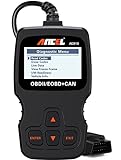
Overview: The ANCEL AD310 is a best-selling, entry-level OBD2 scanner designed for DIYers and occasional users. Recommended by mechanic Scotty Kilmer, it focuses on core functionality: reading and clearing engine fault codes, viewing live data, freeze frames, and I/M readiness for 1996+ OBD2-compliant vehicles. Its straightforward design prioritizes reliability over advanced features.
What Makes It Stand Out: Its standout qualities are exceptional durability with a thick 2.5-foot cable, universal protocol support (including CAN), and plug-and-play simplicity requiring no batteries. The large, clear screen and well-labeled buttons enhance usability, while its compact size (8.9 x 6.9 x 1.4 inches) ensures portability. Scotty Kilmer’s endorsement adds significant trust.
Value for Money: Priced affordably, the AD310 delivers excellent value for basic diagnostics. It outperforms cheaper scanners with unreliable connections or limited protocol support, making it a cost-effective tool for checking engine lights and preventing unnecessary mechanic visits. While lacking advanced diagnostics, it covers essential needs reliably.
Strengths and Weaknesses:
Strengths: Extremely durable build; universally compatible; intuitive interface; fast code reading/clearing; no power source needed.
Weaknesses: Limited to engine codes (no ABS/SRS); no advanced system tests; basic monochrome display.
Bottom Line: An ideal, no-frills scanner for beginners seeking reliability and ease of use. It excels at core OBD2 tasks without complexity, making it a worthwhile investment for basic car health checks and minor repairs.
2. UJS 2026 Enhanced Universal OBD2 Scanner, Check Engine Code Reader - 45000+ Fault Codes, Live Data, I/M Readiness, Battery Voltage Check, Read & Clear Error Codes for All OBDII Protocol Car 1996+

Overview: The UJS 2026 (SAFESCAN) is a feature-rich OBD2 scanner targeting users who need comprehensive diagnostics without professional-grade complexity. It emphasizes speed and interpretation, boasting a massive 45,000+ DTC database and a vibrant color screen for clear, immediate fault analysis on all post-1996 OBD2 vehicles.
What Makes It Stand Out: Its exceptional 45,000+ built-in DTC lookup library eliminates online searches for code meanings, while the large 2.8" color display significantly enhances readability. Expert mechanic endorsements, printer compatibility for reports, and support for 9 OBDII protocols (including CAN) solidify its versatility. The ultra-compact size (6.1 x 3.4 x 0.94 in) is unmatched.
Value for Money: Justifying its mid-range price, the UJS 2026 offers superior diagnostics over budget scanners. The extensive DTC database, color screen, and fast diagnostics provide tangible time savings and accuracy, making it a smart buy for serious DIYers or small garages needing reliable, detailed insights.
Strengths and Weaknesses:
Strengths: Massive DTC database; bright color display; extremely portable; fast diagnostics; printer compatibility.
Weaknesses: Shorter cable than some rivals; limited language support despite multilingual claims; no advanced system-specific tests (e.g., EVAP).
Bottom Line: A top-tier choice for users prioritizing clear diagnostics and comprehensive code explanations. Its portability, speed, and rich database make it highly recommended for informed, efficient troubleshooting beyond basic code reading.
3. VDIAGTOOL VD10 OBD2 Scanner Code Reader Car Diagnostic Tool Engine Fault Code Reader for Turn Off CEL with Freeze Frame/I/M Readiness for All OBDII Protocol Cars, OBD2 Scanner Diagnostic Tool
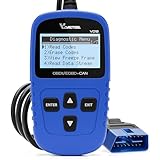
Overview: The VDIAGTOOL VD10 is a user-friendly OBD2 scanner tailored for beginners and hobbyists. It simplifies car diagnostics with intuitive plug-and-play operation, focusing on core functions like reading/clearing codes, live data, freeze frame data, and I/M readiness checks for smog tests on all OBD2 vehicles.
What Makes It Stand Out: Its standout feature is the built-in database of 3,000+ DTC definitions displayed instantly on the TFT screen, eliminating online lookups. Strong emphasis on freeze frame data aids in diagnosing intermittent issues, while the I/M readiness function is crucial for passing emissions tests. Its “must-have for DIYers” positioning highlights exceptional ease of use.
Value for Money: Offering solid value at an entry-level price, the VD10 provides essential diagnostics reliably. While its DTC database is smaller than premium models (3,000 vs. 40k+), it covers common faults adequately. It’s a cost-effective alternative to basic scanners lacking freeze frame or clear code definitions.
Strengths and Weaknesses:
Strengths: Simple DIY-friendly interface; instant DTC definitions; excellent freeze frame utility; good I/M readiness focus; compact design.
Weaknesses: Limited DTC database size; no advanced system tests (EVAP, O2 sensors); screen clarity may lag behind color displays.
Bottom Line: Highly recommended for novice users needing a straightforward, reliable tool for basic engine diagnostics and smog test prep. Its focus on clarity and freeze frame data makes it a practical, budget-conscious choice for essential car health monitoring.
4. MOTOPOWER MP69033 Car OBD2 Scanner Code Reader Engine Fault Scanner CAN Diagnostic Scan Tool for All OBD II Protocol Cars Since 1996, Yellow

Overview: The MOTOPOWER MP69033 is a functional, budget-oriented OBD2 scanner in a distinctive yellow casing. It delivers core diagnostic capabilities—reading/clearing codes, live data, freeze frame, I/M readiness, and vehicle info—for 1996+ US, EU, and Asian vehicles, prioritizing practicality and ease of use for casual owners.
What Makes It Stand Out: Its standout features include a bright 2.8" white-backlit LCD with contrast adjustment for excellent visibility and a robust 2.5-foot cable. The multi-function design covers essential diagnostics like data flow graphs and real-time curves, while supporting six languages broadens accessibility. The vibrant color aids in quick identification in a toolkit.
Value for Money: Exceptional value for the price, offering reliable core functionality where cheaper scanners often fail. The clear display, sturdy cable, and broad protocol support make it a sensible upgrade from ultra-budget tools, ideal for users needing dependable basics without advanced features.
Strengths and Weaknesses:
Strengths: Large, adjustable display; durable long cable; multi-language support; comprehensive basic functions; very affordable.
Weaknesses: Excludes ABS/Airbag/Oil Service codes entirely; limited to engine diagnostics; no color screen or advanced tests; basic UI.
Bottom Line: A highly recommended budget workhorse for users focused solely on engine diagnostics. Its reliability, clear display, and low cost make it perfect for occasional use, though those needing system-wide coverage should look elsewhere.
5. ANCEL AD410 Enhanced OBD2 Scanner, Vehicle Code Reader for Check Engine Light, Automotive OBD II Scanner Fault Diagnosis, OBDII Scan Tool for All OBDII Cars 1996+, Black/Yellow

Overview: The ANCEL AD410 is a step-up OBD2 scanner building on ANCEL’s reputation, targeting users needing more than basic code reading. Endorsed by Scotty Kilmer, it supports all OBD2 protocols and adds advanced diagnostics like EVAP leak and O2 sensor tests for 1996+ vehicles, alongside core functions like DTC reading/clearing and I/M readiness.
What Makes It Stand Out: Advanced EVAP system leak testing and O2 sensor diagnostics are its key differentiators, enabling fuel efficiency and emission optimizations rarely found in this class. The 2.4" QVGA color display (262K colors) and intuitive UI significantly improve usability over monochrome models, while the 42,000+ DTC library provides instant code definitions.
Value for Money: Priced moderately higher than entry models, the AD410 justifies its cost with unique advanced diagnostics. The EVAP and O2 tests offer tangible savings on fuel and repairs, making it a smart investment for proactive owners. It bridges the gap between basic scanners and expensive professional tools.
Strengths and Weaknesses:
Strengths: Advanced EVAP/O2 sensor tests; vibrant color display; large DTC database; user-friendly interface; Scotty Kilmer-approved.
Weaknesses: Still limited to engine codes (no ABS/SRS); requires issue resolution before clearing codes; slightly bulkier than ultra-compact rivals.
Bottom Line: Highly recommended for users seeking deeper engine insights beyond basic code reading. Its unique diagnostic capabilities and color display provide exceptional value for informed DIYers aiming to optimize performance and avoid costly repairs.
6. FOXWELL NT301 OBD2 Scanner Live Data Professional Mechanic OBDII Diagnostic Code Reader Tool for Check Engine Light

Overview:
The FOXWELL NT301 is a no-frills OBD2 scanner targeting DIYers and basic mechanics needing essential diagnostics. It reads/clears engine codes, displays live data, checks emissions readiness, and retrieves VINs for 1996+ US and 2000+ EU/Asian vehicles.
What Makes It Stand Out:
Its dedicated S-mog check helper with color-coded LEDs and audio feedback simplifies emissions testing, while live data graphing helps spot sensor anomalies. The compact design and intuitive menu navigation (OBDII > Read Codes) ensure quick plug-and-play functionality without complex setup.
Value for Money:
Priced affordably under $50, it outperforms ultra-cheap scanners in reliability but lacks advanced features. For basic check-engine light resolution and emissions checks, it’s a cost-effective alternative to pricier tools—though professionals needing ABS/SRS diagnostics should look elsewhere.
Strengths and Weaknesses:
Strengths: Reliable code reading/clearing, accurate live data streaming, emissions-focused I/M readiness display, and broad compatibility with 12V gasoline/diesel vehicles. Weaknesses: No support for ABS, SRS, or transmission systems; limited to basic OBD2 functions; requires precise menu selection to avoid errors.
Bottom Line:
Ideal for budget-conscious users tackling simple check-engine issues or emissions tests, but too limited for complex diagnostics. A solid entry-level choice if your needs align strictly with core OBD2 functionality.
7. OBD2 Scanner Diagnostic Tool, Check Engine Code Reader OBD2 Scanner with Reset, Mode 6, Mode 8 & I/M Readiness, Auto Check Engine Light Car Diagnostic Scan Tool for All OBDII Car Since 1996

Overview:
This WEJOWE OBD2 scanner delivers professional-grade diagnostics at a consumer price, supporting code reading/clearing, live data, freeze frames, and I/M readiness checks for 1996+ vehicles. Its standout feature is an extensive built-in DTC library.
What Makes It Stand Out:
With 35,901 fault code definitions (tripling cheaper models), it instantly explains issues without internet searches. The data-printing function—via Type-C cable—lets users document faults to avoid repair shop disputes, while lifetime free updates ensure longevity.
Value for Money:
At $60–$70, it offers exceptional value. The massive DTC database, multi-language support (10 languages), and printing capability rival tools twice its price. Though not wireless, its comprehensive diagnostics justify the cost for serious DIYers avoiding subscription-based apps.
Strengths and Weaknesses:
Strengths: Unmatched DTC lookup depth, emission-test-ready I/M tracking, compact design, and repair-time-saving printing. Weaknesses: Occasional Bluetooth connectivity hiccups; printing requires a computer; no wireless operation.
Bottom Line:
A top-tier value pick for DIY mechanics wanting detailed, self-sufficient diagnostics. The printing feature and vast code library make it indispensable for transparent repair workflows.
8. BlueDriver Bluetooth Pro OBDII Scan Tool for iPhone & Android - No Subscription Fee - OBD2 Car Scanner and Code Reader - Diagnose Check Engine, ABS, SRS, Airbag & 7000+ Issues on Vehicles 1996+

Overview:
BlueDriver redefines OBD2 scanning with wireless Bluetooth connectivity and deep system access. Unlike basic tools, it diagnoses ABS, SRS, and airbag systems via a smartphone app, covering 7,000+ vehicle issues for 1996+ models.
What Makes It Stand Out:
It’s the only tool here offering full ABS/SRS diagnostics without subscriptions. The app provides repair reports with step-by-step videos, live data monitoring, and cloud-based code explanations—transforming smartphones into professional-grade scanners.
Value for Money:
Priced at $100, it costs more upfront than wired scanners but eliminates recurring fees. For accessing manufacturer-level diagnostics (e.g., airbag resets) typically reserved for dealerships, it delivers unmatched long-term savings and versatility.
Strengths and Weaknesses:
Strengths: Wireless convenience, comprehensive system coverage (ABS/SRS/TPMS), repair guidance videos, and no subscriptions. Weaknesses: Requires iOS/Android device; app dependency limits offline use; setup slightly steeper for non-tech users.
Bottom Line:
The premium choice for tech-savvy owners seeking dealership-level insights. If you prioritize depth over simplicity and own a smartphone, it’s worth every penny.
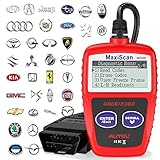
9. Autel OBD2 Scanner MS309 Universal Car Engine Fault Code Reader, Check Engine Light and Emission Monitor Status, OBDII CAN Diagnostic Scan Tool
Overview:
Autel’s MS309 is a streamlined OBD2 scanner focused on core diagnostics: reading/clearing codes, displaying DTC meanings on-screen, and retrieving freeze frame data for 1996+ standard OBD2 vehicles.
What Makes It Stand Out:
Its built-in database shows real-time code definitions (1,000+ DTCs) without internet searches—a rarity in budget tools. Freeze frame data and VIN retrieval add value for used-car checks, while plug-and-play simplicity ensures immediate use.
Value for Money:
At $45, it’s competitively priced but hampered by critical limitations. While ideal for basic code clearing, its incompatibility with post-2017 FCA vehicles (Chrysler/Dodge/Jeep) narrows its appeal. Better suited for older non-FCA models.
Strengths and Weaknesses:
Strengths: On-screen DTC explanations, freeze frame support, intuitive interface, and reliable emissions checks. Weaknesses: No FCA support after 2017; excludes ABS/SRS/TPMS; limited to generic codes on newer cars.
Bottom Line:
A competent entry-level scanner if your vehicle isn’t FCA-branded. Verify compatibility first—otherwise, its value diminishes against more versatile rivals.
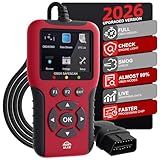
10. UJS 2026 Enhanced Universal OBD2 Scanner, Check Engine Code Reader - 45000+ Fault Codes, Live Data, I/M Readiness, Battery Voltage Check, Read & Clear Error Codes for All OBDII Protocol Car 1996+(Red)
Overview:
The UJS 2026 packs 45,000+ fault codes, live data, and I/M readiness checks into a palm-sized scanner. It targets emission-test preparation and rapid diagnostics for all OBD2-compliant 1996+ vehicles.
What Makes It Stand Out:
Boasting the largest DTC library here (45k+ codes), it diagnoses obscure issues others miss. A vibrant 2.8" color screen, 1-minute full scans, and printer compatibility—paired with emission-test-focused I/M indicators—make it a workshop staple.
Value for Money:
Priced near $70, it outperforms similarly priced tools with its colossal code database and speed. The printer function (for repair documentation) and 10-language support add professional utility, though wireless capability would elevate it further.
Strengths and Weaknesses:
Strengths: Industry-leading DTC coverage, rapid diagnostics, color display clarity, and emission-test optimization. Weaknesses: Occasional protocol mismatches on European cars; printer requires PC connection.
Bottom Line:
The best all-rounder for emission-focused diagnostics and complex code resolution. Its speed and depth justify the price for enthusiasts and technicians needing confidence in every scan.
Understanding the Core Evolution of OBD2 Technology
The foundation of modern vehicle diagnostics has shifted dramatically. Early OBD2 standards focused on emissions compliance, offering limited data access primarily for regulatory purposes. Today’s universal scanners must contend with vehicles packed with dozens of interconnected electronic control units (ECUs) managing everything from infotainment to advanced driver-assistance systems (ADAS). This complexity demands tools that go beyond basic protocol support.
Expanded Protocol Compatibility Beyond Basic OBD2
Modern scanners must handle not just the standard OBD2 protocols (like CAN, ISO, and KWP2000), but also newer, manufacturer-specific protocols used for advanced systems. Look for devices that explicitly support UDS (Unified Diagnostic Services) and K-Line protocols, which are essential for deep diagnostics on powertrain, ABS, airbag, and transmission modules in vehicles manufactured after 2018. Without this breadth, critical systems remain invisible.
Real-Time Data Depth and Sampling Rates
Gone are the days when monitoring basic parameters like engine RPM and coolant temperature sufficed. Revolutionary scanners now capture high-frequency data streams—think 10+ samples per second—from dozens of sensors simultaneously. This granularity is crucial for diagnosing intermittent issues (like misfires under specific load conditions) or verifying repairs by observing how systems react in real-world driving scenarios, not just static idling.
Vehicle-Specific Data Interpretation
Generic code definitions are increasingly inadequate. The most advanced tools incorporate extensive, vehicle-make-and-model-specific knowledge bases. They don’t just tell you “P0171 - System Too Lean (Bank 1)”; they explain common causes for your specific vehicle, considering its year, engine type, and known service bulletins. This contextual intelligence saves hours of guesswork and misdiagnosis.
The AI and Predictive Diagnostics Revolution
Artificial intelligence is no longer a buzzword in diagnostics—it’s a functional necessity. The sheer volume of data modern cars generate requires intelligent processing to extract meaningful insights, moving scanners from reactive tools to proactive guardians of vehicle health.
Beyond Code Reading: Root Cause Analysis
The true leap forward is AI-driven root cause identification. Instead of presenting a list of possible culprits for a single code, advanced scanners analyze correlations across multiple live data streams and historical logs. If a misfire code appears, the AI might pinpoint a failing ignition coil by cross-referencing misfire counts with cylinder-specific fuel trims, knock sensor data, and even recent driving patterns, significantly narrowing the diagnostic path.
Predictive Failure Alerts
Revolutionary scanners now monitor subtle trends in sensor data and component behavior over time. By establishing baseline performance for your specific vehicle, they can flag deviations indicating impending failures—like a fuel pump showing gradually increasing voltage draw or a thermostat sticking slightly longer than normal during warm-up. This predictive capability shifts maintenance from calendar-based or symptom-driven to truly condition-based.
Learning Driver Behavior and Adaptation
Top-tier tools incorporate machine learning to understand your driving habits. They learn your typical routes, acceleration profiles, and even ambient conditions you frequently encounter. This allows the scanner to contextualize data anomalies—flagging a potential issue only when a deviation occurs outside your normal driving pattern, reducing false positives and increasing diagnostic accuracy.
Connectivity and Integration Capabilities
The standalone scanner is becoming obsolete. The most transformative devices seamlessly integrate into your digital ecosystem, turning diagnostic data into actionable insights wherever you are.
True Multi-Platform Synchronization
Look for scanners that offer flawless, real-time data streaming to iOS, Android, and desktop applications without proprietary dongles or complex setup. Revolutionary models sync live data, stored trouble codes, and freeze frame records instantly across all your devices. Your phone shows AR repair guides while your tablet displays live graphing—simultaneously, from the same scan session.
Cloud-Based Data Logging and Analysis
Continuous monitoring is key. Advanced scanners automatically upload anonymized (or user-controlled) diagnostic data to secure cloud platforms. This enables long-term trend analysis (“Your oxygen sensor efficiency has declined 15% over 6 months”) and allows technicians to review comprehensive vehicle health histories remotely, streamlining professional consultations.
Smart Home and Assistant Integration
The bleeding edge connects diagnostics to your broader smart environment. Imagine your scanner triggering a routine maintenance reminder via your smart speaker when oil life hits 10%, or automatically notifying a trusted mechanic (with your permission) if a critical fault like low brake fluid is detected while you’re away from the vehicle. This level of ecosystem integration enhances safety and convenience.
User Experience and Accessibility Innovations
Power is meaningless without usability. The scanners redefining the market prioritize intuitive interfaces that democratize complex diagnostics, making them valuable for everyone from novice car owners to seasoned technicians.
Augmented Reality Repair Guidance
This isn’t just overlaying arrows on a generic engine image. Leading scanners use your phone’s camera to recognize your specific engine bay and then project step-by-step repair instructions directly onto the relevant components—highlighting the exact fuse location, showing torque sequences for bolts, or animating the removal path for a stubborn air filter housing. This drastically lowers the barrier for DIY repairs.
Voice-Controlled Diagnostics
Hands-free operation is essential when you’re under the hood. Revolutionary scanners integrate deeply with voice assistants, allowing commands like “Show live oxygen sensor data” or “Clear pending codes” without touching your phone. Context-aware voice navigation understands diagnostic jargon naturally, adapting to your workflow.
Customizable Data Dashboards
One-size-fits-all data displays are outdated. The best tools let you build personalized dashboards showing only the parameters you care about—grouping related sensors (e.g., all turbocharger metrics), setting custom alert thresholds, and choosing between gauges, graphs, or numerical readouts. This focus prevents information overload and speeds up diagnosis.
Durability, Security, and Future-Proofing
In an era of sophisticated vehicle electronics, reliability and security are non-negotiable. Truly revolutionary scanners are built to last and evolve alongside your vehicle’s technology.
Military-Grade Build and Environmental Resistance
Don’t underestimate the importance of physical robustness. Top scanners feature IP67-rated dust/water resistance, shock-absorbing casings, and connectors designed to withstand repeated plugging into tight, greasy OBD2 ports—surviving drops, spills, and extreme garage temperatures that would cripple cheaper alternatives.
End-to-End Data Encryption and Privacy Controls
Your vehicle data is sensitive. Leading devices implement bank-level encryption for all data transmissions (both to your phone and to the cloud) and provide granular privacy controls. You decide what data is stored, where it’s sent, and for how long—critical as vehicles become increasingly connected and data privacy regulations tighten globally.
Modular Hardware and Over-the-Air Updates
The best investment protects against obsolescence. Look for scanners with modular designs where core processing units can receive significant capability upgrades via secure over-the-air (OTA) firmware updates. This ensures compatibility with new vehicle models, protocols, and diagnostic features rolling out after your purchase, extending the tool’s useful life by years.
Making the Right Choice for Your Needs
Selecting a scanner isn’t about finding the “best” overall—it’s about identifying the tool that aligns with your specific priorities, technical comfort level, and vehicle complexity. The most revolutionary features only matter if they solve your problems.
Assessing Your Technical Proficiency Honestly
Be realistic about your diagnostic skills. If you’re a beginner, prioritize intuitive interfaces, robust AR guidance, and clear explanations over raw data depth. If you’re a technician or advanced DIYer, focus on deep protocol access, live data customization, and professional-grade reporting features. The right tool should stretch your abilities slightly, not overwhelm or underwhelm you.
Matching Scanner Capabilities to Your Vehicle Fleet
Consider all vehicles you’ll diagnose. Older cars (pre-2010) often need robust support for legacy protocols like ISO9141. Newer luxury or performance models demand UDS and ADAS calibration support. If you service hybrids or EVs, verify specific high-voltage system diagnostics and readiness monitor capabilities. Universal doesn’t always mean truly universal—check compatibility meticulously.
Evaluating Long-Term Value Beyond the Price Tag
A scanner is a long-term investment. Factor in subscription costs (for cloud services or advanced features), update frequency, build quality, and expected lifespan. A slightly higher upfront cost for a device with free, frequent OTA updates and a rugged build often provides far better value than a cheap scanner that becomes obsolete or breaks in a year. Consider the cost of not having the right tool when a critical issue arises.
Frequently Asked Questions
Frequently Asked Questions
What’s the biggest difference between 2026 scanners and older models? The integration of AI for predictive diagnostics and root cause analysis, moving far beyond simple code reading to provide actionable insights and forecast potential issues before they cause breakdowns.
Do I need professional training to use these advanced scanners? No. While deep-level diagnostics still benefit from expertise, the most revolutionary tools feature intuitive interfaces, AR guidance, and plain-language explanations designed specifically for capable DIYers without formal training.
Can these scanners work on hybrid or electric vehicles? Yes, but verify specific compatibility. Leading 2026 scanners support high-voltage system diagnostics, battery health monitoring, and regenerative braking analysis for modern hybrids and EVs—essential features not found in basic tools.
How often do I need software updates for the scanner to stay useful? Top models receive meaningful over-the-air updates monthly or quarterly, adding new vehicle support, diagnostic features, and interface improvements. Check the manufacturer’s update history before purchasing.
Are cloud features mandatory, or can I use the scanner offline? You can always use core diagnostics offline. Cloud features (long-term logging, remote sharing, advanced analytics) are optional value-adds; prioritize tools giving you full control over what data, if any, is uploaded.
Will a high-end scanner replace a mechanic for major repairs? No. These tools empower diagnosis and minor fixes, but complex repairs (engine rebuilds, transmission work, ADAS recalibration) still require specialized tools, training, and safety equipment only professionals possess.
How secure is my vehicle data with these connected scanners? Reputable brands use end-to-end encryption and clear privacy policies. Always choose scanners allowing you to disable data sharing and review exactly what information is transmitted—never assume security.
Can one scanner handle everything for multiple cars of different ages? “Universal” support varies. Scanners strong on modern protocols (UDS) might lack depth for pre-2005 vehicles. For mixed fleets, prioritize scanners explicitly listing extensive legacy protocol coverage alongside cutting-edge features.
Is the AR repair guidance actually useful for beginners? Yes, when well-implemented. The best systems use actual camera recognition of your engine bay, not generic images, providing precise, context-aware steps that significantly boost DIY success rates for common tasks.
What should I prioritize if I mostly want to clear check engine lights? Look beyond code clearing. Focus on scanners that explain why the light came on with vehicle-specific causes and verify if the repair fixed the underlying issue—not just the code—using readiness monitors and live data.
See Also
- The 10 Most Revolutionary Touchscreen OBD2 Scanners of 2026
- Stop Wasting Money on Mechanics with the 10 Best Universal OBD2 Scanners This Year
- The 10 Most Revolutionary Digital OBD2 Scanners of 2026
- 10 Game-Changing Universal OBD2 Scanners for Multi-Vehicle Use in 2026
- The 10 Most Revolutionary Basic OBD2 Scanners of 2026