Table of Contents
Classic car restoration demands precision that modern tools often overlook, and nowhere is this more critical than in the torque specifications that hold these mechanical masterpieces together. Unlike contemporary vehicles with their standardized components, vintage automobiles feature engineering from an era when every fastener told a story and every specification mattered to the vehicle’s longevity. Beam torque wrenches emerge as the unsung heroes in this niche, offering visual feedback and mechanical simplicity that digital gadgets can’t replicate when you’re working on a numbers-matching 1967 Mustang or a concours-ready Jaguar E-Type.
As we look toward 2026, the landscape of available tools continues to evolve while the fundamental needs of classic car enthusiasts remain unchanged. The right beam torque wrench collection becomes an extension of your mechanical intuition, providing the confidence to tighten that cylinder head on your Triumph TR6 or adjust the connecting rods in your Corvette Stingray without fear of over-torquing irreplaceable components. Understanding which styles and sizes deserve space in your toolbox isn’t about brand loyalty—it’s about matching the right tool characteristics to the unique challenges vintage metal presents.
Top 10 Beam Torque Wrenches
Detailed Product Reviews
1. Neiko 03727A 1/4-Inch-Drive Beam Torque Wrench, SAE and MM Bicycle and Automotive Wrench, Reads in 0–80 Inches/Pounds and 0–9 Newton/Meter Increments

Overview:
The Neiko 03727A is a precision 1/4-inch beam torque wrench engineered for light-duty applications requiring finesse over force. It delivers dual-scale readings from 0-80 inch-pounds and 0-9 Newton-meters, making it indispensable for bicycle maintenance, automotive interior trim, and small engine repairs. The beam-style design ensures calibration stability without the mechanical complexity of click-type mechanisms.
What Makes It Stand Out:
Bidirectional operation sets this wrench apart—most beam tools only work clockwise. The ball detent socket retention and chamfered ends prevent frustrating fastener drops, while the distinctive ball-end handle provides ergonomic comfort during extended use. Large, high-contrast markings remain legible in dimly lit garage environments, reducing reading errors.
Value for Money:
Positioned in the mid-budget range, the Neiko eliminates long-term recalibration costs inherent to click wrenches. Its +/- 4% accuracy rivals premium brands at a fraction of the price. For hobbyists and professionals needing reliable low-torque measurements, this tool pays for itself after a few uses compared to shop service fees.
Strengths and Weaknesses:
Pros:
- Dual SAE/metric scales prevent conversion mistakes
- Bidirectional functionality increases versatility
- Maintenance-free beam design retains accuracy indefinitely
- Comfortable grip reduces hand fatigue
Cons:
- 1/4-inch drive unsuitable for heavy-duty automotive work
- Requires direct line-of-sight during use
- 80 in-lb range insufficient for suspension components
Bottom Line:
A reliable, user-friendly precision tool that excels at light automotive and bicycle tasks while offering compelling long-term value.
2. Tooluxe 03703L Dual Drive Beam Style Torque Wrench | 3/8” & ½” Drives | 17” Length | 0-150 Ft-Lbs | SAE | Premium Steel Alloy
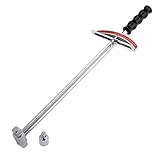
Overview:
The Tooluxe 03703L combines 3/8-inch and 1/2-inch drives in a single robust beam torque wrench, delivering 0-150 ft-lbs of measuring capacity. Its 17-inch length provides ample leverage for automotive applications from lug nuts to engine mounts. Constructed from premium steel alloy with a mirror-chrome finish, it withstands professional shop environments while maintaining precise calibration.
What Makes It Stand Out:
The dual-drive head eliminates the need for multiple wrenches, saving toolbox space and investment. A graduated indicator tip prevents parallax errors—a critical feature ensuring accurate readings from oblique angles. The scale calibrates bidirectionally from zero, providing intuitive torque verification without mental calculations.
Value for Money:
This mid-priced tool essentially delivers two wrenches for the price of one, undercutting separate 3/8" and 1/2" click-type alternatives significantly. The beam design’s immunity to calibration drift means zero maintenance costs over its lifetime, making it a fiscally smart choice for DIYers and professionals alike.
Strengths and Weaknesses:
Pros:
- Dual drive sizes maximize application range
- Parallax-error prevention enhances accuracy
- Durable steel alloy construction ensures longevity
- No recalibration requirements
Cons:
- Beam style demands visual attention during use
- Heavier than single-drive counterparts
- Lacks metric scale markings
Bottom Line:
A versatile, cost-effective solution for medium-torque applications that prioritizes reliability and long-term savings over convenience features.
3. FALOSI 1/4-inch Drive Beam Torque Wrench - 0-80 Inch/Pounds and 0-9 Newton/Meter Torque Wrench - High Visibility Markings for Easy Readings

Overview:
The FALOSI beam torque wrench specializes in precision low-torque applications, offering 0-80 in-lb and 0-9 Nm ranges perfect for bicycles, motorcycles, and delicate automotive components. Its deflection beam mechanism maintains accuracy indefinitely without the wear associated with click-type designs. The rugged steel construction with mirror-chrome finish ensures durability in humid or corrosive environments.
What Makes It Stand Out:
High-visibility markings with 2.5 in-lb increments provide exceptional control for sensitive tasks like carbon fiber bike assembly. The textured black handle delivers superior grip security compared to smooth chrome alternatives, particularly when hands are oily. This thoughtful ergonomics combined with lifetime accuracy makes it a standout in its class.
Value for Money:
Among the most affordable precision torque tools available, the FALOSI delivers professional-grade accuracy without premium pricing. The maintenance-free design eliminates calibration service costs, making it ideal for occasional users who refuse to compromise on precision. It matches competitor specifications while significantly undercutting market prices.
Strengths and Weaknesses:
Pros:
- High-contrast markings enhance readability
- Textured grip improves handling safety
- Beam design guarantees lifetime accuracy
- Dual-scale convenience
Cons:
- 2.5 in-lb increments less precise than 1 in-lb options
- Restricted to light-torque applications
- No bidirectional capability specified
Bottom Line:
A rugged, budget-friendly precision wrench prioritizing visibility and grip security, though slightly less refined than premium alternatives.
4. MILMUMU 1/4" Drive Beam Torque Wrench Precision Instrument-Compatible with SAE and MM Bicycle and Automotive Wrench -0-80 Inch-Pounds, 0-9 Newton Meters

Overview:
The MILMUMU beam torque wrench is a no-nonsense precision tool for light-duty fastening, reading 0-80 inch-pounds and 0-9 Newton-meters. Designed for bicycle mechanics and small engine repair, it focuses on essential functionality without superfluous features. The graduated indicator tip eliminates parallax error, ensuring accurate readings from various viewing angles.
What Makes It Stand Out:
Simplicity defines this wrench—its straightforward beam design prioritizes reliability over complexity. The textured black handle provides confident grip, while the rugged steel construction with mirror-chrome finish offers unexpected durability for its budget tier. The parallax-correction feature is remarkably sophisticated for such an affordably priced tool.
Value for Money:
This is arguably the best value in precision torque wrenches, delivering core accuracy at a price that makes professional torque accessible to any DIYer. The zero-maintenance beam mechanism means no hidden costs, and the tool essentially pays for itself by preventing a single overtightening disaster. It democratizes precision without compromising quality.
Strengths and Weaknesses:
Pros:
- Graduated tip prevents reading errors
- Extremely budget-friendly pricing
- Durable steel construction exceeds expectations
- Simple, reliable mechanism
Cons:
- Basic feature set lacks premium refinements
- Markings less prominent than high-visibility alternatives
- Minimal documentation included
Bottom Line:
An outstanding entry-level precision torque wrench that trades fancy features for unwavering reliability and exceptional affordability.
5. TEKTON 1/2 Inch Drive 72-Tooth Split Beam Torque Wrench (40-250 ft.-lb.) TRQ62203

Overview:
The TEKTON TRQ62203 revolutionizes torque application with its 72-tooth split beam design, spanning 40-250 ft-lbs for heavy-duty automotive and industrial use. Unlike traditional beam wrenches, it combines click-type convenience with beam-style reliability. Each serialized unit ships with ASME B107.300-2010 certification and a detailed calibration certificate, meeting professional traceability requirements.
What Makes It Stand Out:
The split beam mechanism allows indefinite storage at any setting without accuracy loss—a critical advantage for busy shops. The 72-tooth ratchet engages with just 5 degrees of swing, accessing confined spaces impossible for beam wrenches. A locking thumbscrew cover prevents accidental torque value changes during critical applications.
Value for Money:
Priced at a premium over beam wrenches, the TEKTON justifies its cost through time-saving features and certified accuracy. Professional mechanics recover the investment through faster setups and eliminated recalibration downtime. The included certificate, case, and conversion chart add tangible value absent in budget alternatives.
Strengths and Weaknesses:
Pros:
- ASME certification with traceable documentation
- Stores at any setting without accuracy drift
- Fine-tooth ratchet excels in tight spaces
- Wide torque range covers most automotive needs
Cons:
- Significantly higher price than beam wrenches
- Requires periodic verification despite design advantages
- Substantial weight may cause fatigue
Bottom Line:
A professional-grade torque wrench that earns its premium through certified precision, innovative storage capability, and superior versatility in demanding environments.
6. Uharbour Split Beam Torque Wrench 1/2 Drive, 30-250 ft.lb Split Beam Torque Wrench, 1/2 Drive with Flexible Head, Suitable for Car, Motorcycle

Overview: The Uharbour Split Beam Torque Wrench is a robust 1/2-inch drive tool designed for professional automotive and motorcycle maintenance. With a torque range of 30-250 ft-lbs, it handles everything from lug nuts to critical engine fasteners. The split beam mechanism offers enhanced durability over traditional click-type designs, making it suitable for daily shop use.
What Makes It Stand Out: The 15° flexible head distinguishes this wrench, providing crucial access to confined spaces like wheel wells and engine bays. The ±3% accuracy exceeds many competitors in this price bracket, while the ergonomic comfort grip reduces fatigue during extended use. The split beam design maintains calibration longer than spring-loaded mechanisms, reducing maintenance downtime.
Value for Money: Positioned in the mid-range price segment, this wrench delivers professional-grade features without premium brand pricing. Comparable flex-head split beam wrenches from Snap-on or Mac Tools cost significantly more. For serious DIY enthusiasts and professional mechanics, the durability and accuracy justify the investment over cheaper beam-style alternatives that lack precision.
Strengths and Weaknesses: Strengths include excellent accuracy, flexible head access, durable construction, and comfortable grip. The wide torque range covers most automotive applications. Weaknesses include the 1/2-inch drive limitation for smaller fasteners, potential overkill for casual users, and a learning curve for those accustomed to click-type wrenches. The tool requires careful handling to maintain its precision.
Bottom Line: This Uharbour wrench is an excellent choice for automotive enthusiasts and professionals seeking reliable torque application in tight spaces. Its combination of accuracy, flexibility, and durability makes it a worthwhile investment for regular use, though occasional DIYers may find simpler options more cost-effective.
7. Presa 3/8 in. Drive 10-80 ft-lbs Beam Torque Wrench

Overview: The Presa Beam Torque Wrench is a straightforward, no-frills tool for basic torque applications. This 3/8-inch drive wrench covers 0-80 ft-lbs, making it suitable for light automotive work, lawn equipment, and general maintenance tasks where precise torque is needed but extreme accuracy isn’t critical. Its simple beam design prioritizes reliability over convenience.
What Makes It Stand Out: Its simplicity is the main selling point. The beam design eliminates complex internal mechanisms, ensuring reliability without calibration concerns. The graduated indicator tip prevents parallax reading errors, while dual-scale markings in ft-lbs and Nm add versatility. The mirror-chrome finish provides decent corrosion resistance for occasional use in home garages.
Value for Money: This is among the most affordable torque wrenches available, making it accessible to homeowners and casual DIYers. While it lacks the convenience of click-type mechanisms, it provides reliable measurements at a fraction of the cost. For users who torque fasteners a few times yearly, it offers reasonable precision without ongoing calibration expenses that professional tools require.
Strengths and Weaknesses: Strengths include low cost, simple maintenance-free design, durable steel construction, and straightforward operation. The textured handle improves grip. Weaknesses include the beam style’s inferior user experience compared to click wrenches, limited 80 ft-lb capacity, no flexible head, and lower precision than professional tools. Reading the scale in poor lighting can be challenging.
Bottom Line: The Presa beam wrench serves budget-conscious users needing occasional torque measurement. It’s ideal for basic maintenance but unsuitable for critical applications requiring high precision. Serious mechanics should invest in a click-type or split beam wrench instead.
8. ARES 70214-3/8-inch Drive Beam Torque Wrench - 0-800 Inch/Pounds and 0-90 Newton/Meter Torque Wrench - High Visibility Markings for Easy Readings
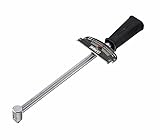
Overview: The ARES 70214 is a specialized beam-style torque wrench measuring 0-800 inch-pounds (0-90 Nm), designed for precision work on motorcycles, bicycles, and light automotive tasks. Its deflection beam technology ensures consistent accuracy without the wear associated with spring-loaded mechanisms, making it a reliable long-term addition to any tool collection.
What Makes It Stand Out: High-visibility markings enhance readability in dim garages or under vehicles. The tool’s deflection beam design theoretically maintains accuracy indefinitely, eliminating calibration drift. ARES backs this with a performance assurance warranty and highlights their ASPCA Business Ambassador partnership, appealing to pet-owning consumers who value corporate responsibility.
Value for Money: This mid-priced beam wrench offers excellent long-term value since it won’t require periodic recalibration like click-type tools. For users prioritizing lasting accuracy over convenience, it’s a smart investment. However, comparable click-style wrenches with similar accuracy are available at slightly higher prices, making the value proposition dependent on user preference for beam-style simplicity.
Strengths and Weaknesses: Strengths include maintenance-free accuracy, high-contrast scale, versatile 3/8-inch drive size, and reliable warranty support. The beam design eliminates internal failure points. Weaknesses include the less intuitive beam reading process, ±4% accuracy (lower than some premium click wrenches), limited to 90 Nm maximum, and the inch-pound scale may confuse users accustomed to foot-pounds.
Bottom Line: This ARES wrench suits technicians who value calibration stability and simplicity. It’s perfect for bike mechanics and light automotive work but requires patience to read accurately. Those preferring convenience should consider click-type alternatives despite higher long-term maintenance needs.
9. TEKTON 3/8, 1/2 Inch Drive 72-Tooth Split Beam Torque Wrench Set with Cases, 2-Piece (20-100 ft-lb, 40-250 ft-lb) | TRQ99902

Overview: TEKTON’s two-wrench set provides comprehensive torque coverage for serious automotive enthusiasts and professional mechanics. The set includes both 3/8-inch (20-100 ft-lbs) and 1/2-inch (40-250 ft-lbs) split beam torque wrenches, addressing nearly all common fastening specifications in modern vehicles with professional-grade precision.
What Makes It Stand Out: Both wrenches feature 72-tooth ratchet mechanisms for excellent access in tight spaces. The innovative storage-lock design allows leaving the wrench set at any torque value without accuracy degradation—a significant advantage over traditional click wrenches. Each tool is serialized with an individual calibration certificate meeting ASME B107.300-2010 standards, providing documented traceability for professional use.
Value for Money: Purchasing this set saves approximately 15-20% compared to buying the wrenches individually. TEKTON delivers professional-grade features—certified accuracy, split beam durability, and convenient adjustment—at a price point well below premium brands. The included protective cases add further value, making this set economical for users needing both drive sizes.
Strengths and Weaknesses: Strengths include comprehensive torque range coverage, certified calibration, storage flexibility, quality construction, and excellent ratchet engagement. The thumbscrew adjustment with locking cover is intuitive and secure. Weaknesses include the ±4% accuracy (slightly less than some high-end singles), substantial upfront cost for casual users, and potential redundancy if you already own one size.
Bottom Line: This TEKTON set represents outstanding value for mechanics requiring reliable torque tools across multiple applications. The certified accuracy and storage-friendly design make it a professional-grade choice at a mid-range price. Casual DIYers may find a single wrench sufficient, but serious users will appreciate the matched pair.
10. TEKTON 3/8 Inch Drive 72-Tooth Split Beam Torque Wrench (20-100 ft.-lb.) | TRQ62103

Overview: TEKTON’s 3/8-inch drive split beam torque wrench offers professional-grade torque control in a compact package. Covering 20-100 ft-lbs, it’s ideal for engine work, suspension components, and other mid-range automotive fasteners where precise torque is critical. The tool combines certified accuracy with user-friendly features in a single-drive configuration.
What Makes It Stand Out: The 72-tooth ratchet mechanism provides a minimal 5-degree swing arc, accessing bolts in cramped engine bays. The thumbscrew adjustment with flip-up locking cover ensures precise, secure torque setting. Like its larger sibling, it can be stored at any setting without accuracy loss—unlike traditional click wrenches requiring return to minimum after use, preventing spring fatigue.
Value for Money: This wrench sits in the sweet spot between cheap beam wrenches and overpriced premium brands. For a certified, serialized tool with ASME B107.300-2010 compliance, it offers exceptional value. The included case and calibration certificate justify the moderate price premium over non-certified alternatives, making it a wise investment for quality-conscious users who need reliable performance.
Strengths and Weaknesses: Strengths include certified ±4% accuracy, convenient adjustment mechanism, storage flexibility, smooth ratchet action, and comprehensive documentation. The ergonomic handle provides good control. Weaknesses include the 3/8-inch drive limitation for high-torque applications, 20-100 ft-lb range unsuitable for lug nuts, and ±4% accuracy trails some premium competitors. The plastic case feels slightly flimsy.
Bottom Line: This TEKTON wrench is an excellent choice for DIY mechanics and professionals needing reliable mid-range torque control. Its certified accuracy and user-friendly features make it superior to budget options, while the price remains accessible. Consider the 1/2-inch drive version for heavy-duty applications.
Understanding Beam Torque Wrenches for Classic Car Restoration
What Makes Beam Torque Wrenches Ideal for Vintage Vehicles
Beam torque wrenches operate on a beautifully simple principle: a bending beam and a pointer that indicates torque values directly on a calibrated scale. This mechanical honesty resonates with classic car enthusiasts who appreciate tools that function without batteries, circuit boards, or digital displays that could fail during a critical assembly session. The visual nature of beam wrenches allows you to watch the torque increase in real-time, providing tactile and visual feedback that’s particularly valuable when working with aged fasteners that might have compromised threads or corrosion concerns.
The reliability factor cannot be overstated when you’re investing hundreds of hours into a frame-off restoration. Beam wrenches don’t suffer from the drift that can affect click-type mechanisms over time, and they require minimal maintenance beyond occasional cleaning and visual inspection. For vintage vehicles where torque specifications might range from fragile 5-inch-pound settings on carburetor bolts to robust 150-foot-pound requirements for axle nuts, the straightforward calibration of beam wrenches ensures consistent performance across decades of use.
How Beam Style Differs from Click-Type and Digital Models
While click-type torque wrenches dominate modern automotive shops with their audible feedback and preset capabilities, they present limitations for classic car work. The internal cam mechanism can wear unevenly, especially when used frequently at the lower end of their range—a common scenario when rebuilding vintage engines with multiple small fasteners. Digital models, despite their impressive accuracy and memory functions, introduce unnecessary complexity and battery dependency that feels antithetical to the vintage restoration philosophy.
Beam torque wrenches excel in situations requiring incremental tightening sequences, such as torquing cast iron cylinder heads that predate modern gasket technology. The continuous scale reading lets you approach final torque in smaller, more controlled stages, crucial for preventing warpage in irreplaceable vintage components. Additionally, beam wrenches typically offer better “feel” at low torque values, helping you detect when a fastener is beginning to bind due to thread damage or debris—an early warning system that could save an unobtainium part from destruction.
The 10 Essential Beam Torque Wrench Categories for Your Restoration Arsenal
The 3/8-inch drive beam torque wrench serves as your daily driver in the restoration shop, handling the majority of assembly tasks on engines, transmissions, and interior components. This versatile size covers torque ranges typically spanning 5 to 80 foot-pounds, encompassing everything from intake manifold bolts to water pump fasteners on most pre-1980 vehicles. The moderate length provides adequate leverage without becoming unwieldy in tight engine bays where vintage cars often pack components densely.
When selecting a 3/8-inch drive model, prioritize one with a clearly marked dual-scale that displays both foot-pounds and Newton-meters, as many European classic cars specify torque in metric units. The pointer should be thin enough for precise reading yet robust enough to withstand occasional impacts against chassis components. Consider models with a satin chrome finish that reduces glare under shop lights while providing corrosion resistance for the decades of service ahead.
Large-displacement vintage engines from the muscle car era demand a 1/2-inch drive beam torque wrench capable of handling 20 to 150 foot-pound specifications. This powerhouse tackles main bearing caps, cylinder head bolts on big-block engines, and suspension components where substantial clamping force ensures safety and longevity. The longer handle on these wrenches—typically 18 to 24 inches—delivers the mechanical advantage needed for high-torque applications without requiring excessive operator effort that could compromise accuracy.
The beam thickness on heavy-duty models deserves careful evaluation. Thicker beams provide greater durability but reduce sensitivity at lower torque values. For restoration work, a medium-thickness beam with a high-contrast scale offers the best compromise, allowing you to accurately torque smaller fasteners within the wrench’s range while maintaining structural integrity for those occasional 140-foot-pound axle nut specifications. Look for models with a sturdy pivot point that won’t develop play after repeated high-load applications.
Vintage carburetors, distributor hold-downs, and interior trim components require a 1/4-inch drive beam torque wrench that reads in inch-pounds rather than foot-pounds. These precision instruments typically cover ranges from 20 to 200 inch-pounds, translating to just 1.6 to 16.6 foot-pounds—far too delicate for larger drive sizes to measure accurately. The compact head design navigates tight spaces around SU carburetors or Zenith-Stromberg units found on British classics, where over-tightening can crack castings or strip brass threads.
The scale readability on these smaller wrenches presents a unique challenge. Opt for models featuring an anti-parallax pointer design that minimizes reading errors from different viewing angles. Some premium 1/4-inch drive beam wrenches incorporate a magnifying lens over the scale, invaluable when working under dashboards or in dimly lit engine compartments. The handle should be ergonomically shaped despite the tool’s smaller size, as precision work often requires extended holding periods while you verify specifications in shop manuals.
Beyond the standard 1/4-inch drive, dedicated low-range inch-pound beam torque wrenches that measure from 0 to 75 inch-pounds prove indispensable for specific vintage applications. Early fuel injection systems from the 1960s, delicate brass fittings on brake master cylinders, and small fasteners on aluminum thermostat housings demand this level of finesse. The ultra-sensitive beam on these wrenches deflects visibly with minimal force, providing feedback that prevents snapping small bolts on irreplaceable castings.
These specialized tools often feature a shorter overall length—around 10 to 12 inches—which enhances control during delicate operations. The scale increments should be no more than 1 inch-pound apart, allowing you to hit exact specifications like 28 inch-pounds for a Weber carburetor float bowl screw. Consider models with a zero-adjustment feature that lets you calibrate the pointer to exactly zero before each use, compensating for any slight beam set that might occur during storage.
Classic car suspension systems, particularly those using torsion bars or heavy leaf springs, require torque values exceeding typical engine fastener specs. A high-range beam torque wrench covering 50 to 250 foot-pounds handles leaf spring shackles, control arm bolts, and strut rod fasteners on vehicles from the 1950s and 1960s when metallurgy allowed higher clamp loads. The extended beam length—often 30 inches or more—provides the leverage needed while maintaining measurement accuracy through a robust, thick beam construction.
The pointer mechanism on these high-capacity wrenches must be particularly durable, as the substantial forces involved can damage delicate indicators. Look for models featuring a protected pointer that runs in a channel rather than being fully exposed, preventing accidental bending when maneuvering around brake lines and steering components. The scale should have major increments at 10-foot-pound intervals with clear numbering, as fine gradations become less critical at these higher torque levels where specifications typically allow broader tolerances.
Restoring a collection that spans multiple countries demands a dual-scale beam torque wrench that displays both SAE (foot-pounds) and metric (Newton-meters) simultaneously. British, German, and Italian classics from the 1960s and 1970s often mixed measurement systems even within the same vehicle, requiring you to switch mental gears frequently. A quality dual-scale wrench eliminates conversion calculations and reduces the risk of critical errors when you’re tired during a long assembly session.
The scale layout varies significantly between manufacturers. The most readable designs position the Newton-meter scale above the foot-pound scale, with both sharing the same pointer. Avoid models where scales are on opposite sides of the beam, forcing you to flip the tool to read different units. The conversion accuracy should be mathematically precise, not approximate—a specification detail worth verifying by comparing a few known conversions before relying on the tool for final assembly.
Vintage engine bays weren’t designed with modern serviceability in mind, making flexible head beam torque wrenches invaluable for accessing hard-to-reach fasteners. These tools feature a pivoting head that locks at various angles, allowing you to torque intake manifold bolts hidden under carburetor mounting pads or cylinder head nuts obscured by exhaust headers. The flexible joint must be robust enough to maintain accuracy when locked, with minimal play that could affect torque readings.
The locking mechanism quality determines the tool’s usefulness. Cam-lock designs provide positive engagement at set angles, while friction-based systems can slip under load. For restoration work, choose models offering 15-degree increment adjustments with clear detents you can feel and hear. The beam should be straight and true when the head is locked at 0 degrees, ensuring baseline accuracy isn’t compromised by the flexible feature. Remember that angle affects leverage—always position the beam perpendicular to the fastener axis for accurate readings.
While traditional beam wrenches use a simple pointer and scale, micrometer-style variants incorporate a sliding reference marker that you set to your target torque value. This visual target system proves invaluable when working in awkward positions where reading a scale directly might be difficult. As you apply force, the main pointer moves toward your preset marker, allowing peripheral vision to indicate when you’re approaching the correct torque without requiring precise scale reading.
These enhanced beam wrenches typically feature finer scale graduations, often marking half-unit increments that help achieve exact specifications on critical components like aluminum cylinder heads or magnesium valve covers. The micrometer adjustment should move smoothly without binding, with a lock screw that prevents accidental movement once set. This style bridges the gap between simple beam wrenches and click-type tools, offering visual target setting without mechanical complexity that could drift out of calibration.
Some beam torque wrenches feature telescoping or extendable handles that allow you to adjust leverage based on the application. This adaptability serves classic car restoration perfectly, where you might need maximum torque for crankshaft bolts one moment and controlled leverage for transmission pan bolts the next. The extension mechanism must lock securely at various lengths, typically offering 6 to 8 inches of adjustment while maintaining the beam’s structural integrity and calibration accuracy.
The weight distribution changes significantly when extended, requiring practice to develop a consistent pulling technique. Quality extendable models use internal locking pins rather than simple friction fits, ensuring the beam won’t collapse under load. For restoration shops with limited storage, one well-chosen extendable wrench can replace two or three fixed-length models, though purists often prefer dedicated tools for each range to eliminate any variables that might affect precision.
Not every restoration occurs in a fully equipped shop. Field repairs at vintage racing events, concours preparation in parking lots, or barn-find rescues demand a compact beam torque wrench that stores easily in a tool roll. These models feature detachable handles or folding designs that reduce overall length by 50% for transport while maintaining full functionality when assembled. The compromise typically involves a slightly reduced maximum torque capacity, but the trade-off proves worthwhile when you need reliable torque measurement away from your main workshop.
The assembly mechanism must be tool-free and foolproof, allowing quick setup without losing small parts in grass or gravel. Magnetic handle connections or robust bayonet locks provide secure assembly that doesn’t affect calibration. Consider models that include a protective case with dedicated slots for the wrench components and your most commonly used sockets, creating a mobile torque system that travels to where vintage iron awaits rescue.
Key Features to Evaluate When Selecting Your Beam Torque Wrenches
Material Quality and Durability Considerations
The beam material fundamentally determines a torque wrench’s accuracy and longevity. High-carbon steel beams, properly heat-treated and stress-relieved, maintain their calibration characteristics through decades of use and temperature variations typical in unheated garages. Chrome vanadium steel offers superior corrosion resistance, important in humid climates where tools might sit for weeks between restoration sessions. Avoid models with painted beams, as paint can chip and create imbalance that subtly affects readings.
The pointer mechanism deserves equal scrutiny. Stainless steel pointers resist bending and maintain their fine tip profile, essential for accurate scale reading. Some premium models use beryllium copper pointers that offer enhanced flexibility without permanent deformation if accidentally impacted. The pivot point where pointer meets beam should use a jeweled bearing or precision bushing that eliminates play while allowing smooth movement. Examine the finish quality—rough edges or visible machining marks suggest manufacturing shortcuts that could compromise long-term accuracy.
Accuracy Specifications and Calibration Standards
Beam torque wrenches typically advertise accuracy within ±2% to ±4% of reading, but this specification requires careful interpretation. The percentage applies to the measured value, not the full scale, meaning a 4% error at 10 foot-pounds represents just 0.4 foot-pounds—potentially critical on small fasteners. For classic car restoration, aim for wrenches with ±3% or better accuracy across their entire range, verified by checking the scale markings against known standards.
Calibration stability sets beam wrenches apart from other types. Quality models maintain accuracy indefinitely unless physically damaged, unlike click-type wrenches that require annual recalibration. However, you should still verify your beam wrenches periodically using a calibration tester or by comparing readings across multiple tools. Some restoration shops create a master reference wrench that never leaves a climate-controlled cabinet, using it quarterly to verify the working tools haven’t drifted. The scale should be etched or engraved rather than printed, ensuring markings remain legible through decades of shop wear and solvent exposure.
Handle Comfort and Grip Design for Extended Use
Restoration projects involve hours of repetitive torquing operations, making handle ergonomics crucial for accuracy and operator comfort. Traditional wooden handles, while aesthetically pleasing, can become slippery with oil and sweat. Modern composite handles with knurled or textured surfaces provide secure grip even when wearing nitrile gloves. The handle diameter should match your hand size—too large and you’ll struggle with low-torque applications; too small and high-torque work becomes uncomfortable.
Some advanced models feature rotating handles that reduce friction against your palm during application, particularly beneficial when torquing multiple fasteners in sequence. The handle-to-beam connection must be absolutely rigid; any flex or wobble introduces measurement errors. Test this by gripping the handle firmly and attempting to twist it relative to the beam—quality tools show zero movement. For extended sessions, consider adding a removable comfort grip sleeve that cushions your hand without permanently altering the tool’s balance or calibration.
Storage Solutions and Maintenance Requirements
Proper storage extends beyond simply hanging wrenches on a pegboard. Beam torque wrenches should be stored unloaded—never left with force applied to the beam—to prevent permanent set in the metal. Custom-fitted foam inserts in tool drawers protect the pointer and scale from impacts while keeping each wrench readily accessible. For mobile restoration work, rigid cases with cutouts for each drive size prevent tools from knocking against each other during transport.
Maintenance involves minimal but critical steps. Clean the beam and pointer after each use with a solvent-free cleaner that won’t attack scale markings. Apply a light oil to the pivot point annually, using just enough to lubricate without attracting dust. Inspect the pointer for straightness monthly, gently bending it back into alignment if necessary—though this should be rare with quality tools. Store wrenches away from magnetic fields that could affect the beam’s metallic properties, and never use them as breaker bars or for disassembly, as sudden shock loads can permanently alter calibration.
Advanced Techniques for Using Beam Torque Wrenches
Reading the Scale Correctly in Poor Lighting Conditions
Classic car restoration often occurs in dimly lit corners of garages or under-carriage work where shadows obscure scale markings. Develop a technique of positioning your body to maximize ambient light on the scale, or invest in a headlamp with a narrow beam that illuminates the pointer without creating glare. Some restorers paint the pointer tip with a small dot of fluorescent paint, enhancing visibility without adding significant weight that could affect calibration.
Parallax error represents the most common reading mistake—viewing the pointer from an angle rather than directly perpendicular to the scale. Train yourself to position your eye directly in line with the pointer tip and scale marking, moving your head rather than the wrench to achieve proper alignment. For critical specifications, take multiple readings from slightly different positions, averaging the results to eliminate personal bias. In extreme low-light situations, use your phone’s camera in macro mode to photograph the scale at torque, allowing you to verify the reading in better light before releasing tension.
Compensating for Angle and Extension Adaptors
Universal joints, wobble extensions, and angle adaptors change the effective length of your torque wrench, requiring mathematical compensation to achieve accurate fastener torque. The formula is straightforward: actual torque = indicated torque × (effective length ÷ wrench length). For classic car work, create a reference chart for your commonly used extensions, laminating it and keeping it near your torque wrenches for quick consultation.
When using angle adaptors for applications like torquing intake manifold bolts on V12 Jaguars or Ferrari engines, position the adaptor at 90 degrees to the wrench beam to minimize error. For extensions, keep them as short as possible—every inch added increases potential inaccuracy. Some veteran restorers mark their extension sockets with correction factors using an engraving tool, creating a permanent reference that travels with the tool. Remember that wobble extensions introduce more variability than solid extensions; use them only when access absolutely demands it, and always verify final torque with a second pass.
Maintaining Consistency Across Multiple Fasteners
Sequential torquing patterns, essential for cylinder heads and intake manifolds, require consistent technique to ensure even clamping. Develop a repeatable stance and pull technique, using the same hand position on the handle and applying force at the same angle for each fastener. Some restorers mark their wrench handle with tape to indicate optimal hand placement, ensuring muscle memory develops around a consistent grip position.
For critical assemblies, consider using a cheater pipe or torque multiplier for the initial low-torque passes, removing it for the final specification. This approach ensures each fastener starts from the same baseline friction point, reducing the impact of thread condition variations. Document your torquing sequence with photos or detailed notes, especially when working on rare engines where factory specifications might be ambiguous. The visual nature of beam wrenches allows an assistant to photograph each fastener at torque, creating a permanent record that you’ve achieved proper specifications—a valuable asset if questions arise during engine break-in or at concours judging.
Integrating Beam Torque Wrenches into Your Restoration Workflow
Creating a Torque Specification Reference System
Organize your classic car’s torque specifications into a dedicated reference system that travels with your tools. Create laminated cards for each vehicle, listing every fastener specification by system (engine, suspension, brakes, etc.) and including both original and updated values if you’ve upgraded to aftermarket components. Color-code ranges to match your wrench sizes—yellow for 1/4-inch drive, blue for 3/8-inch, red for 1/2-inch—allowing instant tool selection without consulting manuals repeatedly.
Digital photos of original specification plates, shop manual pages, and factory service bulletins stored on a tablet create a mobile reference library. For multi-year restoration projects, maintain a logbook documenting every torqued fastener, the wrench used, date, and any observations about thread condition or anomalies. This meticulous record-keeping proves invaluable during troubleshooting and demonstrates your restoration quality to potential buyers or show judges who appreciate attention to original specifications.
Proper Cleaning and Storage Protocols
After each restoration session, wipe down beam torque wrenches with a lint-free cloth dampened with a mild solvent like isopropyl alcohol. Avoid aggressive cleaners that could attack scale markings or handle materials. Inspect the pointer for straightness and the beam for any signs of bending or impact damage. Store wrenches horizontally in a dedicated drawer or vertically in a rack that supports the beam along its length—never hang them by the handle, which can cause gradual beam deformation.
For long-term storage between projects, apply a light coat of rust-preventative oil to the beam, wiping it thoroughly to prevent attracting dust. Place silica gel packets in your tool storage to control humidity, particularly important in coastal regions where salt air accelerates corrosion. If a wrench suffers an impact or drop, immediately check calibration against a known standard before using it on critical components. Many restoration shops maintain a “quarantine” area for tools awaiting verification, preventing accidental use of potentially compromised equipment.
When to Recalibrate Your Vintage Tool Collection
Unlike click-type torque wrenches that require annual recalibration, beam wrenches maintain accuracy indefinitely unless physically damaged. However, establishing a verification schedule demonstrates professional diligence. Test your beam wrenches against a master calibration device or a recently certified click-type wrench at three points: 25%, 50%, and 75% of full scale. If readings deviate more than the specified accuracy, retire the wrench from critical work until professionally recalibrated.
Signs that a beam torque wrench needs attention include pointer that doesn’t return to zero when unloaded, visible bending or deformation in the beam, or loose pivot points that allow pointer wobble. For vintage beam wrenches inherited from previous owners or purchased at estate sales, assume they need verification before trusting them on your classic car. Many metrology labs offer torque wrench certification at reasonable rates, providing documentation that adds credibility to your restoration work. Consider creating a calibration certificate binder that travels with your tool collection, especially valuable if you perform restorations for clients who value documented precision.
Frequently Asked Questions
What makes beam torque wrenches better than digital models for classic cars?
Beam torque wrenches offer mechanical simplicity, battery-free operation, and visual feedback that digital models cannot replicate. Their calibration remains stable indefinitely, making them ideal for restoration projects that span months or years. The continuous scale reading allows incremental tightening crucial for vintage components, while the lack of electronic components eliminates failure risks during critical assemblies.
Can I use one beam torque wrench for my entire restoration project?
While a single 3/8-inch drive beam torque wrench covers many applications, comprehensive restoration requires multiple drive sizes. Small carburetor screws need 1/4-inch drive precision, while suspension components demand 1/2-inch drive capacity. A three-wrench set (1/4, 3/8, and 1/2-inch drives) handles approximately 95% of classic car fasteners accurately and safely.
How do I read a beam torque wrench accurately in poor lighting?
Position yourself to maximize ambient light on the scale, use a focused headlamp to illuminate the pointer without glare, and view the pointer perpendicular to the scale to eliminate parallax error. Some restorers apply a tiny dot of fluorescent paint to the pointer tip for enhanced visibility. For critical readings, photograph the scale with your phone’s macro mode to verify the value in better lighting.
What torque range do I need for most classic car engine work?
Most vintage engines require torque values between 5 and 85 foot-pounds for general assembly. A quality 3/8-inch drive beam torque wrench covering 5-80 foot-pounds handles cylinder heads, intake manifolds, water pumps, and accessory brackets. Supplement this with a 1/2-inch drive wrench for main bearing caps and a 1/4-inch drive model for carburetors and delicate components.
How often should I calibrate my beam torque wrenches?
Beam torque wrenches require calibration only after physical damage or impact, unlike click-type wrenches needing annual service. Establish a quarterly verification routine by checking readings against a master standard at 25%, 50%, and 75% of full scale. If the pointer doesn’t return to zero when unloaded or shows visible damage, recalibrate before using on critical components.
Are extensions and adapters safe to use with beam torque wrenches?
Extensions are safe when you compensate for the changed effective length using the formula: actual torque = indicated torque × (effective length ÷ wrench length). Solid extensions introduce minimal error, while wobble extensions require careful technique. Always position angle adaptors at 90 degrees to minimize inaccuracy, and keep extensions as short as possible for best results.
What’s the difference between inch-pound and foot-pound beam torque wrenches?
Inch-pound wrenches measure lower torque values for small fasteners, with 12 inch-pounds equaling 1 foot-pound. Classic car carburetors, distributors, and interior trim typically require inch-pound specifications (20-200 inch-pounds). Foot-pound wrenches handle larger fasteners like cylinder heads and suspension components. Using the wrong scale risks over-torquing and damaging irreplaceable vintage parts.
Can beam torque wrenches be repaired if damaged?
Minor pointer bends can be carefully straightened without affecting calibration, but beam deformation requires professional repair. Jeweled bearings in the pivot point can be replaced, and scales can be refurbished if markings become worn. However, significant beam damage usually means replacement is more cost-effective than repair. Always test a repaired wrench against known standards before trusting it on critical assemblies.
How should I store my beam torque wrenches between restoration sessions?
Store beam torque wrenches unloaded, horizontally in foam-lined drawers or vertically in racks that support the beam length. Never hang them by the handle or leave force applied to the beam. Clean with mild solvent after use, apply light rust preventative oil for long-term storage, and keep silica gel packets in your tool storage to control humidity. Inspect pointers monthly for straightness.
What features should I prioritize when buying beam torque wrenches for vintage vehicles?
Prioritize etched or engraved scales over printed markings, jeweled pivot bearings for smooth pointer movement, and ergonomic handles that provide secure grip with gloves. Look for dual-scale models (foot-pounds and Newton-meters) for international vehicles, and choose appropriate drive sizes: 1/4-inch for precision work, 3/8-inch for general assembly, and 1/2-inch for heavy-duty applications. Verify accuracy specifications of ±3% or better across the entire range.
See Also
- 10 Must-Have Beam Torque Wrenches for Classic Car Enthusiasts in 2026
- We Tested 50 Beam Torque Wrenches - Here are the 10 Best for Classic Car Restoration
- Best Torque Wrenches for Classic Car Restoration: 10 Expert Picks for 2026
- 10 Must-Have Beam Torque Wrenches for Reliable Tightening in 2026
- 10 Must-Have Beam Torque Wrenches for Reliable Accuracy in 2026