Table of Contents
Ever stared at a flickering check engine light, frustrated because your basic code reader only spits out cryptic P0301 trouble codes without explaining why? You’re not alone. In today’s hyper-connected vehicles packed with dozens of computer modules controlling everything from emissions to infotainment, a simple code puller is like bringing a spoon to a sword fight. Modern diagnostics demand a tool that speaks the full language of your car—not just the engine’s whispers, but the entire vehicle’s complex symphony of data. Full-system OBD2 scanners have evolved from niche pro tools into essential gear for anyone serious about understanding their ride, whether you’re troubleshooting a mysterious warning symbol or preparing for preventative maintenance.
Gone are the days when “OBD2” meant only engine diagnostics. Today’s sophisticated automobiles—hybrids, EVs, and even mainstream ICE models—generate terabytes of data across networks like CAN FD, LIN, and Ethernet. A true full-system scanner acts as your universal translator, accessing modules buried deep in the chassis, body control, battery management, and ADAS systems. This isn’t about chasing check engine lights anymore; it’s about proactive health monitoring, recalibrating sensors after repairs, or even resetting service intervals without a dealership markup. Ignoring this diagnostic depth leaves you vulnerable to misdiagnosis, wasted parts, and that sinking feeling when the same light returns weeks after a “fix.” Let’s unpack what actually makes a scanner capable of handling your vehicle’s entire electronic nervous system.
Top 10 Full-System OBD2 Scanners
Detailed Product Reviews
1. ANCEL DS200 Full System OBD2 Scanner with 15+ Reset Services - Oil/BMS/Brake Reset, DPF Regen, Injector Coding, ABS Bleeding, Free Lifetime Updates, Online Customer Service
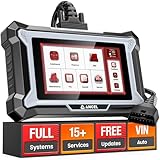
Overview: The ANCEL DS200 delivers professional-grade diagnostics for mechanics and serious DIYers, focusing on comprehensive system access and critical reset functions at a sub-$300 price point. It targets users needing shop-level capabilities without recurring fees.
What Makes It Stand Out: Its standout feature is the inclusion of 15+ advanced reset services—like DPF regeneration, ABS bleeding, and BMS resets—typically reserved for dealers. Lifetime free updates and integrated live expert support via in-tool chat provide unmatched long-term value and troubleshooting confidence.
Value for Money: Priced at $299.99, it eliminates costly shop visits for resets alone, justifying its cost quickly. Compared to tools charging annual update fees, the lifetime updates make it a smarter long-term investment for universal 12V vehicle coverage.
Strengths and Weaknesses: Strengths: Extensive reset capabilities; genuine full-system scanning; no subscription fees; responsive live support. Weaknesses: Lacks wireless connectivity; screen size and processing speed lag behind premium competitors; limited active testing depth.
Bottom Line: An exceptional value for budget-conscious professionals needing reliable resets and full diagnostics. Ideal for those prioritizing essential functions over cutting-edge hardware—skip it only if wireless or advanced bi-directional control is non-negotiable.
2. TOPDON Bidirectional Scan Tool, 2026 New ArtiDiag900 Lite Automotive Diagnostic Tool for Full System, Scanner for Car with Active Test, 8 Reset, Wireless OBD2 Scanner Diagnostic Tool for All Vehicles

Overview: The TOPDON ArtiDiag900 Lite is a 2026-upgraded wireless diagnostic tablet offering full-system scans, bi-directional control, and 8+ reset functions. It targets workshops and tech-savvy DIYers seeking speed and convenience.
What Makes It Stand Out: Its 8-inch touchscreen, Android 11 OS, and 5x faster CPU enable smooth operation, while Bluetooth 5.0 wireless (33ft range) eliminates cable clutter. Bi-directional control for precise component testing (e.g., injectors, wipers) and DTC repair guides for select brands enhance diagnostic efficiency.
Value for Money: At its price tier, the hardware specs (10,000mAh battery, 12-hour runtime) and included wireless features offer strong ROI for frequent users. Though costlier than basic scanners, it undercuts professional tools while delivering comparable active testing.
Strengths and Weaknesses: Strengths: Excellent wireless stability; robust hardware; intuitive bi-directional tests; extensive reset functions. Weaknesses: DTC guides limited to older Chrysler/Fiat; no lifetime updates (subscription model unclear); European coverage lags behind rivals.
Bottom Line: A top pick for workshops valuing wireless freedom and speed. Best for users focused on American/Asian vehicles—opt for ANCEL or XTOOL if European support or lifetime updates are critical.
3. TOPDON TopScan Lite OBD2 Scanner Bluetooth, Bi-Directional Scanner Wireless All System Diagnostic Tool for iOS & Android, 8+ Hot Reset, Repair Guides, Check Engine Car Code Reader, Performance Test

Overview: TOPDON’s TopScan Lite is a smartphone-based wireless OBD2 scanner offering bi-directional control and 8+ resets via a mobile app. It’s designed for DIYers and mobile mechanics prioritizing affordability and portability.
What Makes It Stand Out: Seamless smartphone integration (iOS/Android) enables bi-directional commands (e.g., testing windows, sunroofs) and features like gateway unlocks for FCA/Renault/Nissan. The first-year-free subscription includes repair guides, TSB bulletins, and fault-code databases.
Value for Money: The low upfront cost is appealing, but the mandatory post-first-year subscription (quarterly/yearly) adds long-term expense. It’s cost-effective for occasional use but less so for pros needing uninterrupted access to premium features.
Strengths and Weaknesses: Strengths: Highly portable; strong mobile app experience; useful repair guides; broad reset functionality. Weaknesses: Subscription model creates recurring costs; limited offline functionality; no standalone tablet for shop use.
Bottom Line: A solid entry-level choice for DIYers with compatible phones. Avoid if you dislike subscriptions—consider XTOOL D7 for a subscription-free alternative with similar features.
4. XTOOL D7 Bidirectional OBD2 Scanner: 2026 Scan Tool with 64GB Latest Ver., Ai-Assisted, 36+ Resets, Full System Auto Scanner Diagnostic Tool, Injector Test, Crank Sensor Relearn, FCA, CANFD & DoIP
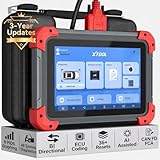
Overview: The XTOOL D7 is a 2026-upgraded professional scanner with 64GB storage, AI assistance, and 36+ reset functions. It bridges DIY and shop use with extensive bi-directional control and protocol support.
What Makes It Stand Out: Unmatched reset breadth (36+ services, including SRS and crank sensor relearn) and true bi-directional PIDs for live sensor monitoring set it apart. FCA AutoAuth, CAN FD/DoIP support, and 8-PID graphing deliver near-OE diagnostics at half the cost of Snap-on tools.
Value for Money: Its $400–$500 range saves users $500+/year versus dealer tools. Lifetime value is enhanced by 3-year updates and compatibility with endoscopes. The 64GB storage and battery voltage pre-check add practical utility.
Strengths and Weaknesses: Strengths: Industry-leading reset functions; deep bi-directional analysis; excellent protocol coverage; no subscription fees. Weaknesses: Smaller screen than MUCAR/TOPDON; 3-year updates require renewal; complex for absolute beginners.
Bottom Line: The most versatile prosumer scanner here. Essential for mechanics needing advanced resets and bi-directional depth—DIYers should consider if budget allows for future-proofing.
5. MUCAR 892BT AI-Assisted Bidirectional Scan Tool, Full System OBD2 Scanner, Bi-Directional OBD2 Scanner Diagnostic Tool,ECU Coding, 35 Services, FCA Autoauth, CANFD and DOIP, Free Lifetime Upgrade

Overview: The MUCAR 892BT combines an 8-inch display, Android 10, and AI assistance for full-system diagnostics across 140+ brands. It targets pros seeking a tablet-style tool with smart troubleshooting.
What Makes It Stand Out: Its AI chatbot analyzes fault codes and offers real-time repair guidance—a rarity in this segment. The large screen, 64GB storage, and 35+ services (including ECU coding) provide a premium, user-friendly experience with lifetime updates.
Value for Money: Competitive with XTOOL D7, it justifies cost via AI support and no update fees. The robust hardware specs offer better longevity than phone-based tools, though AI reliability in complex scenarios remains unproven.
Strengths and Weaknesses: Strengths: AI troubleshooting; excellent display and storage; lifetime updates; strong bi-directional controls. Weaknesses: AI accuracy may vary; less brand coverage than XTOOL; fewer resets than D7 (35 vs. 36+).
Bottom Line: A compelling AI-enhanced option for tech-forward users. Ideal if AI guidance appeals to you—but choose XTOOL D7 for marginally broader functionality and reset depth.
6. TOPDON Carpal OBD2 Scanner Bluetooth - Scanner for Car, AI-Assisted All System Diagnostic Tool for iOS & Android, Vehicle Health Check, 6 Maintenance Services, Smog Check, Repair Guide

Overview: The TOPDON Carpal is a wireless OBD2 scanner targeting DIYers and casual car owners, offering AI-assisted diagnostics via Bluetooth to iOS/Android devices. It focuses on simplifying vehicle health checks and routine maintenance.
What Makes It Stand Out: Its AI-driven fault severity assessment (minor/severe) and tailored repair guides demystify diagnostics for non-experts. The inclusion of 6 essential reset services (Oil, TPMS, BMS, EPB, Throttle, DPF) and unique features like Smog Check pre-tests and 0-60mph Performance Tests add exceptional versatility for its price bracket.
Value for Money: Priced mid-range, it outperforms basic code readers by covering comprehensive system checks and critical resets typically found in pricier tools. The lifetime free updates and no-subscription model ensure long-term savings compared to rivals with recurring fees.
Strengths and Weaknesses: Strengths: Intuitive mobile app, visual live data (graphs/gauges), compact portability, and practical maintenance functions. Weaknesses: Limited bidirectional control for advanced repairs; Smog Check accuracy may vary by region; Android/iOS dependency excludes standalone use.
Bottom Line: An excellent entry-to-mid-level tool for routine checks and resets. Ideal for cost-conscious owners prioritizing ease of use over deep ECU control, though professionals may need more advanced features.
7. 2026 LAUNCH Creader Elite for Mercedes-Benz MB Sprinter Maybach Full System OBD2 Scanner, Bidirectional Diagnostic Scan Tool, All Service Code Reader,ECU Code, AutoVin, Lifetime Free Update

Overview: The LAUNCH Creader Elite is a Mercedes-Benz-specialized OBD2 scanner engineered for comprehensive diagnostics on Mercedes, Maybach, and Sprinter models, featuring full-system access and OE-level bidirectional control.
What Makes It Stand Out: Unmatched Mercedes-specific depth: full bi-directional control (e.g., window/mirror/horn activation), ECU coding, and 16+ specialized resets (AFS, Gear, ABS Bleeding). AutoVIN recognition and simultaneous 4-PID live data (vs. standard 2) streamline complex diagnostics, while printable reports enhance professionalism.
Value for Money: A premium investment justified for Mercedes owners/technicians. While costly, its lifetime free updates, avoidance of dealership fees, and capability to replace multiple specialty tools offset the price. Non-Mercedes owners should seek universal alternatives.
Strengths and Weaknesses: Strengths: OEM-grade Mercedes compatibility, extensive reset/services, robust bidirectional testing, and update longevity. Weaknesses: Brand-locked utility (minimal non-MB use); complex menu navigation may overwhelm beginners; reset functions vary significantly by model year.
Bottom Line: The definitive choice for Mercedes enthusiasts or technicians needing deep, brand-specific diagnostics. Avoid if you own non-Mercedes vehicles, but invaluable for targeted, professional-grade Benz servicing.
8. ANCEL DS500BT Bidirectional Scan Tool, Full-System Automotive Diagnostic Scanner with 28+ Services, Injector Coding, DPF/Brake/BMS/Oil/Gear/Throttle Functions, CAN FD Support, Lifetime Free Updates

Overview: The ANCEL DS500BT is a professional-grade, Android 10-powered bidirectional scanner with a 7" touchscreen, targeting technicians needing speed, full-system coverage, and advanced reset functions across all major vehicle brands.
What Makes It Stand Out: Blazing-fast Android 10 quad-core performance enables instant one-touch access to 28+ services (e.g., Injector Coding, DPF Regeneration) and over 3,000 bi-directional controls. CAN FD support ensures compatibility with modern vehicles, while lifetime free updates eliminate recurring costs.
Value for Money: Justifies its higher price with no-subscription model and unparalleled speed. Outperforms slower, subscription-based rivals (e.g., Autel) for daily professional use, though casual users might find it over-specified. The long-term savings on updates are substantial.
Strengths and Weaknesses: Strengths: Exceptional processing speed, comprehensive bidirectional tests, extensive reset functions, and future-proof CAN FD. Weaknesses: Bulky form factor vs. phone-based tools; some advanced resets require vehicle-specific compatibility checks; steep learning curve for novices.
Bottom Line: A top-tier tool for professional mechanics prioritizing efficiency and depth. DIYers should consider if the cost aligns with their technical skill and usage frequency, but it’s a future-proof workhorse for workshops.
9. BlueDriver Bluetooth Pro OBDII Scan Tool for iPhone & Android - No Subscription Fee - OBD2 Car Scanner and Code Reader - Diagnose Check Engine, ABS, SRS, Airbag & 7000+ Issues on Vehicles 1996+

Overview: BlueDriver is a minimalist Bluetooth OBD2 scanner that pairs with smartphones to deliver user-friendly diagnostics for check engine lights and key systems (ABS, SRS, Airbag) on 1996+ vehicles, emphasizing simplicity and repair guidance.
What Makes It Stand Out: Its standout feature is unlimited, detailed repair reports with cause/fix suggestions and instructional repair videos—uncommon in budget tools. The intuitive app, wireless convenience, and coverage of 7,000+ issues make it exceptionally approachable for beginners.
Value for Money: Excellent for casual users at its price point. The no-subscription model and repair guidance add significant value over basic code readers, though it lacks advanced resets/bidirectional control found in pricier tools.
Strengths and Weaknesses: Strengths: Effortless setup, superb repair assistance, clean live data display, and broad compatibility. Weaknesses: No maintenance resets (e.g., oil/TPMS); limited to OBD2-standard systems (no body/chassis); repair videos may not cover all edge cases.
Bottom Line: The best entry-level choice for DIYers seeking clarity on check engine lights and basic diagnostics. Not suitable for maintenance resets, but unmatched in user education and simplicity for troubleshooting common issues.
10. OBD2 Scanner Bluetooth VDIAGTOOL D200, Bidirectional Scan Tool - Lifetime Free Updates, 26 Resets (Upgradeable to 49+), Full System Car Scanner Diagnostic Tool for iOS & Android, FCA AutoAuth & CAN-FD
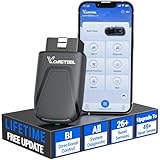
Overview: The VDIAGTOOL D200 is a versatile Bluetooth scanner offering full-system diagnostics, 26+ resets, and bidirectional control via smartphone, with optional upgrades for advanced functions, targeting both DIYers and technicians.
What Makes It Stand Out: Its modular upgrade path (26 base resets → 49+ via $169 add-on) and 8-PID real-time graphing provide rare flexibility. FCA AutoAuth simplifies Chrysler diagnostics, while lifetime base updates and CAN FD support ensure longevity.
Value for Money: Smart tiered pricing: the base model covers essential resets affordably, while the upgrade option avoids overspending on unused features. Beats subscription tools long-term, though the add-on cost is notable for advanced needs.
Strengths and Weaknesses: Strengths: Balanced base functionality, expandable capabilities, strong graphing, and no mandatory fees. Weaknesses: Critical advanced resets (e.g., AdBlue) require costly add-ons; smartphone dependency; some resets model-specific.
Bottom Line: A highly adaptable tool for evolving needs. Ideal for DIYers starting basic who may later tackle complex repairs, or pros wanting a secondary scanner. Choose if you value future expandability over all-in-one pricing.
Understanding Full-System OBD2 Capabilities
What “Full-System” Really Means Beyond Engine Codes
“Full-system” isn’t just marketing fluff—it’s a hard technical requirement. While basic scanners read Powertrain Control Module (PCM) codes, true full-system access reaches into the Body Control Module (BCM), Transmission Control Module (TCM), ABS, airbag systems, and increasingly, high-voltage battery controllers in EVs. If your tool can’t reset a TPMS sensor and diagnose a malfunctioning power seat in the same session, it’s not full-system. Modern vehicles share data across domains; ignoring non-engine modules often means missing root causes, like a failing battery sensor triggering erratic transmission behavior.
The Critical Shift From OBD2 to Unified Diagnostic Services
OBD2 standards (SAE J1979) only cover emissions-related engine diagnostics. Full-system diagnostics rely on Unified Diagnostic Services (UDS), a protocol suite (ISO 14229) that unlocks all vehicle modules. UDS enables advanced functions like software flashing, parameter resets, and security access—capabilities absent in legacy OBD2 tools. Without UDS support, you’re locked out of 70% of modern vehicle diagnostics, especially for post-2018 models where UDS has become the industry backbone.
Essential Features for Comprehensive Diagnostics
Bi-Directional Control: Talking With Your Car, Not Just Listening
Basic scanners are passive—they read data but can’t actuate components. Bi-directional control lets you command modules: cycle fuel injectors to test flow, open/closed throttle bodies, or activate ABS pumps for leak-down tests. This is non-negotiable for verifying repairs (e.g., confirming a new oxygen sensor heater circuit responds) and diagnosing intermittent faults that only appear under specific conditions.
Live Data Streaming Across Multiple Modules Simultaneously
Watching a single PID (Parameter ID) like coolant temperature is useless when diagnosing complex issues. Full-system scanners must display synchronized live data streams from multiple modules—engine RPM, transmission fluid temp, battery voltage, and brake pressure—all updating in real-time. This correlation reveals hidden relationships, like how a sagging 12V system destabilizes ADAS cameras during cold starts.
Advanced Graphing and Data Logging for Intermittent Faults
That “check engine” light that only appears on rainy Tuesdays? Advanced graphing plots sensor data over time (e.g., fuel trims vs. MAF readings), while extended logging captures hours of data to trap elusive glitches. Look for tools supporting CSV exports—this lets you share logs with specialists or analyze trends in spreadsheet software, turning guesswork into data-driven conclusions.
Compatibility and Technical Requirements
Vehicle Year/Make/Model Coverage Depth Matters More Than Breadth
A scanner claiming “works on all 1996+” vehicles is lying. Full-system coverage requires manufacturer-specific protocols: GM’s GMLAN, Ford’s SCP, Toyota’s CAN, and VW Group’s K-Line variants. Verify the tool’s database includes deep coverage for your specific brand—some support 200+ module functions for German cars but only surface-level access for Asian models. Always check update frequency; databases stale for 6+ months will miss new VIN-specific calibrations.
Handling Modern Communication Protocols Like CAN FD and Ethernet
As vehicles generate more data, older CAN bus (500kbps) systems are being replaced by CAN FD (2Mbps+) and automotive Ethernet. Entry-level scanners often lack CAN FD support, crippling diagnostics on 2020+ models for modules like ADAS or infotainment. If your scanner can’t communicate at these speeds, critical systems will appear “unavailable” during scans.
VIN-Specific Calibration and Parameter Identification
Your VIN isn’t just a serial number—it’s a key to module-specific calibration files. Advanced scanners auto-identify your exact configuration (e.g., turbo vs. non-turbo engine, trim level sensors) to display relevant PIDs and service functions. Without this, you might see generic options that don’t apply to your vehicle, wasting time and risking incorrect procedures.
Practical Usage Scenarios and Flexibility
DIY Enthusiast vs. Professional Workshop Needs
Casual users need intuitive interfaces with guided workflows (“Fix this code step-by-step”), while pros prioritize scriptable routines and OEM-level security access levels. Consider whether you’ll mainly clear codes after sensor replacements or perform complex adaptations like steering angle recalibrations. The right tool balances capability with usability—overly complex pro tools frustrate beginners, while simplified apps lack critical functions.
Mobile Integration: When Bluetooth/Wi-Fi Adds Real Value
Wireless connectivity isn’t just for convenience. Bluetooth/Wi-Fi scanners let you monitor live data streams on a tablet while under the hood, or share diagnostics with remote experts via video call. However, verify connection stability—dropouts during critical procedures (e.g., ECU reprogramming) can brick modules. Wired USB remains more reliable for advanced operations.
Software Ecosystem and Update Policies
Hardware is just the shell; the software defines the experience. Evaluate the vendor’s update policy: Are protocol expansions and module support added via free firmware updates, or hidden behind subscription walls? Tools requiring $50/month for “premium” ADAS features after purchase are landmines. Prioritize vendors with transparent, one-time-cost update models.
Evaluating True Value and Avoiding Pitfalls
The Hidden Cost of “Free” Subscription Models
Beware scanners marketed at $150 with “free basic features” but mandatory subscriptions for critical functions (e.g., airbag resets or transmission adaptations). Calculate the 3-year cost—$15/month subscriptions quickly exceed the price of all-inclusive tools. True value means paying once for full functionality, not renting diagnostics.
Accuracy of Component Activation and Service Functions
Not all bi-directional controls work reliably. Testimonials often reveal tools that claim to support fuel injector cleaning but lack the precise voltage control to avoid damaging circuits. Research whether the tool executes functions via SAE-standard procedures or risky “hacks.” Inaccurate actuation can cause more harm than the original problem.
Build Quality and Environmental Durability
This isn’t a phone app—it’s a tool for greasy garages. Look for IP-rated housings (dust/water resistance), ruggedized cables, and automotive-grade connectors that won’t corrode. A scanner that dies after two oil changes isn’t worth $50, regardless of features. Pro-grade tools often feature replaceable cables—a small detail that extends lifespan exponentially.
Frequently Asked Questions
Can a full-system scanner diagnose electric vehicles (EVs) and hybrids?
Yes, but verify specific high-voltage system coverage. EVs require tools that access battery management systems (BMS), DC-DC converters, and regenerative braking modules using EV-specific protocols. Not all “full-system” scanners support these yet—check for explicit EV/hybrid compatibility.
Why do some scanners cost $50 while others exceed $1,000?
Price reflects diagnostic depth, not just hardware. Budget tools often lack UDS protocol support, bi-directional control, or module coverage beyond the engine. High-end scanners invest in OEM-level software licensing, multi-protocol hardware, and rigorous testing across vehicle platforms.
Will this clear “permanent” OBD2 codes after a repair?
Only if the scanner supports I/M readiness monitors reset. Permanent codes (Type C) require completing specific drive cycles to clear—but your tool must first verify all readiness monitors have run successfully post-repair.
Can I use a full-system scanner to reset after installing new parts?
Absolutely—this is critical. Replacing modules (e.g., ABS sensors) often requires electronic registration or adaptation. Generic tools might clear codes but leave systems in “limp mode” until proper module coding is performed.
Do I need special training to use these scanners effectively?
Basic code reading is intuitive, but advanced functions (e.g., parameter adjustments) require understanding vehicle systems. Start with guided diagnostics, then gradually explore deeper features using manufacturer service manuals as references.
Are cloud-based scanners reliable for critical diagnostics?
Cloud tools excel at code interpretation but often lack real-time control. For live data streaming or bi-directional functions, locally processed tools are faster and more reliable—cloud dependency risks lag or disconnections during procedures.
How often should I update my scanner’s software?
At minimum, quarterly updates for coverage of new models. If your vehicle is 1-2 years old, monthly updates may be needed for the latest calibrations. Stale databases miss manufacturer-specific trouble codes and service procedures.
Can these scanners harm my vehicle if used incorrectly?
Yes—especially during ECU reprogramming or security access. Always follow procedures exactly; incorrect firmware flashes or parameter changes can disable critical systems. Start with non-invasive functions (live data) before attempting adaptations.
Why won’t my scanner connect to all modules?
Common issues include incompatible protocols (e.g., missing CAN FD support), weak vehicle battery voltage (<12.4V), or outdated scanner software. Ensure your car’s ignition is in “ON” mode (not cranking) and the tool supports your specific module protocols.
Are tablet-based scanners as powerful as dedicated handhelds?
Tablet apps can match functionality if paired with professional-grade hardware dongles. However, standalone handhelds typically offer better durability, faster response times, and direct control without phone/tablet distractions during complex diagnostics.
See Also
- 2026’s Top 10 Full-System OBD2 Scanners for Advanced Diagnostics
- 10 Must-Have Touch Screen OBD2 Scanners for Quick Fault Detection in 2026
- 10 Must-Have Handheld OBD2 Scanners for Quick Code Reading in 2026
- 10 Must-Have Handheld OBD2 Scanners for Mobile Auto Repair in 2026
- 10 Expert-Recommended Full-System OBD2 Scanners for Professional Use in 2026