Table of Contents
Ever tried diagnosing an electrical gremlin or changing a serpentine belt under the dim glow of a dying phone flashlight? It’s frustrating, inefficient, and frankly, a safety hazard. Working on vehicles at night without proper illumination turns routine maintenance into a high-stakes game of hide-and-seek with critical components. Shadows obscure oil leaks, reflections blind you from spotting frayed wires, and the constant need to reposition an unstable light source wastes precious time you could spend actually fixing the problem. The right underhood lighting isn’t just a convenience; it’s the difference between a confident, professional repair and a costly mistake made in the dark.
Rechargeable underhood lights have evolved dramatically, moving far beyond simple magnetic flashlights. Today’s solutions offer intelligent features designed specifically for the unique challenges of automotive work – from intense, shadow-free illumination that mimics daylight to rugged builds that withstand engine bay heat, grease, and vibration. Choosing the right one means understanding the critical features that transform your nighttime workflow, ensuring you see every detail clearly without constantly fussing with batteries or unstable mounts. Forget squinting through the gloom; let’s dive into what truly matters when selecting your essential night-work lighting companion.
Top 10 Rechargeable Underhood Lights
Detailed Product Reviews
1. NEIKO 40447A Rechargeable Cordless Underhood Work Light, 202 SMD LED Light Bar with Max 1,200 Lumens, Li-Ion Battery, and 2 Brightness Modes
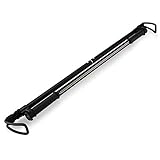
Overview:
The NEIKO 40447A is a telescoping cordless work light designed for automotive mechanics, featuring a 202-SMD LED bar powered by an 8,000mAh Li-ion battery. Its adjustable arm (47"-76") and magnetic/hooks mounting system target hands-free engine bay illumination.
What Makes It Stand Out:
The standout feature is its extensive reach and secure mounting: foam-cushioned end hooks prevent hood scratches, while dual magnet hooks offer flexible positioning. The 1,200-lumen output evenly floods engine compartments, and the impact-resistant polycarbonate housing ensures durability in workshops. The long runtime (6 hours on low) outperforms basic corded alternatives.
Value for Money:
Priced competitively, it replaces bulky corded lights and disposable-battery models. The UL-certified charger and overcharge protection enhance longevity, making it a cost-effective upgrade for DIYers and pros who prioritize reach and scratch-free operation over ultra-high brightness.
Strengths and Weaknesses:
Strengths: Exceptional adjustability for large hoods; robust build; ample runtime; scratch-proof foam hooks. Weaknesses: Only two brightness modes limit versatility; 1,200 lumens lags behind newer rivals; no USB power bank functionality.
Bottom Line:
Ideal for mechanics needing reliable, scratch-safe illumination in deep engine bays, though brightness seekers may prefer higher-lumen options. A practical, durable investment for routine repairs.
2. 2 PCS Work Light Magnetic,2600ML LED Mechanic Lights, Rechargeable Light, Underhood Light with Hooks for Car Repairing/Garage/Workshop/Emergency/Inspection
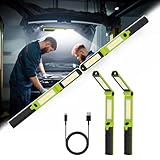
Overview:
LANKA’s dual magnetic work lights deliver 2,600 lumens of adjustable brightness via 6500K LEDs, targeting mechanics and outdoor users. Each unit features Type-C charging, USB power bank capability, and versatile mounting options for garages or emergencies.
What Makes It Stand Out:
The 2,600-lumen output with a 180° beam angle ensures wide workspace coverage, while four lighting modes (including SOS) suit diverse scenarios. Strong magnets and a swivel hook enable secure metal-surface attachment, and the USB output port doubles as a power bank—unique in this category.
Value for Money:
Despite the two-pack format, it offers exceptional versatility per dollar. The power bank function eliminates extra gear, and the rugged ABS/rubber build (5ft drop-tested) justifies a mid-range price for users needing multi-environment reliability.
Strengths and Weaknesses:
Strengths: Brightest dual-light setup here; USB power bank adds utility; excellent beam width; robust waterproofing (IPX4). Weaknesses: Magnets fail on aluminum surfaces; no telescoping bar limits hood coverage; runtime not specified per mode.
Bottom Line:
Highly recommended for mechanics requiring maximum brightness and emergency versatility, though aluminum-bodied vehicle owners should verify magnet compatibility first.
3. SYLSTAR Mechanic Work Light Bar with Upgraded Sensor Control - 2400LM LED, 4400mAh Rechargeable Underhood Work Light with Hooks & Magnetic Base for Car Repairing, Garage Workshop, Emergency

Overview:
SYLSTAR’s innovative 2,400-lumen work light splits into two handheld units or combines for unified use. Featuring infrared sensor control, magnetic bases, and a 4400mAh battery, it targets detail-oriented mechanics needing adaptable lighting.
What Makes It Stand Out:
The dual-light design and motion-sensor activation (wave-to-toggle) excel in greasy environments where touch controls fail. Three brightness modes plus strobe, concealed hooks, and 360° rotation offer unmatched flexibility. The IP54 rating handles wet conditions better than most rivals.
Value for Money:
Mid-priced but packed with premium features, it outvalues single-unit competitors. The split functionality replaces two tools, and the 1-year warranty adds confidence—ideal for pros seeking efficiency in tight spaces without overspending.
Strengths and Weaknesses:
Strengths: Unique sensor control; modular two-in-one design; strong magnets/hooks combo; reliable waterproofing. Weaknesses: 4-hour max runtime on high mode; sensor may trigger accidentally; lower battery capacity than some.
Bottom Line:
A top pick for meticulous mechanics valuing hands-free operation and modular versatility, though heavy users should monitor battery life during prolonged tasks.
4. Mechanic Work Light, 3000LM Magnetic Work Lights, 5200mAh Rechargeable LED Work Light Bar, Portable Cordless Underhood Work Lights with Hooks for Inspection Workshop Emergency

Overview:
This 3,000-lumen COB LED light bar boasts a 5,200mAh battery and dual strong magnets, targeting mechanics needing intense, focused illumination. Its swivel hooks and IPX4 rating support garage, emergency, or outdoor use.
What Makes It Stand Out:
The COB LED achieves exceptional 3,000-lumen intensity in an 8.3-inch form, outshining rivals. Dual swivel hooks (180°) and 360° light rotation allow precise angling, while USB/Type-C ports enable power bank functionality. The fluorescent ABS housing enhances visibility in dark spaces.
Value for Money:
Competitively priced for its brightness tier, it justifies cost with industrial-grade durability and dual charging ports. Outperforms lower-lumen models for users prioritizing raw output over modular features, especially in budget-conscious workshops.
Strengths and Weaknesses:
Strengths: Highest lumens here; robust COB LED; versatile 360° adjustment; USB power bank support. Weaknesses: No sensor controls; magnets incompatible with aluminum; runtime (2-8 hours) varies widely by mode.
Bottom Line:
Best for mechanics requiring blinding-bright, focused light for intricate repairs—skip if you work primarily on aluminum-bodied vehicles.
5. Aaleds Underhood Work Light, 2000LM Super Bright, 5200mAh Rechargeable LED Work Lights for Mechanics, Magnetic Automotive Under Hood Light Bar Cordless Touble Light for Car Repairing/Garage/Workshop

Overview:
Aaleds’ telescoping 2,000-lumen light extends to 80.3" with rubber-cushioned J-hooks, targeting hood-mounted use. Its 5,200mAh battery and dual charging cables cater to all-day mechanics.
What Makes It Stand Out:
The 80.3" max extension (longest reviewed) accommodates massive hoods effortlessly. Dual charging cables (1.9ft + 9.8ft) enable continuous use during long jobs—a rarity. Spring-loaded tension prevents hood damage, while hidden swivel hooks add mounting flexibility.
Value for Money:
Excellent value for large-vehicle specialists. The extended cable solves runtime anxiety better than power banks, and the scratch-proof J-hooks justify cost for luxury/classic car owners.
Strengths and Weaknesses:
Strengths: Unmatched extension range; dual cables for uninterrupted work; superior hood protection; reliable 6+ hour runtime. Weaknesses: 2,000 lumens is modest vs. competitors; no sensor controls; magnets ineffective on aluminum.
Bottom Line:
Essential for trucks/SUVs with wide engine bays, though brightness-focused users may prefer alternatives. The cable solution alone makes it a workshop staple.
6. SYLSTAR Work Light for Mechanic, 2400LM LED, 4400mAh Rechargeable, Magnetic, Underhood Work Light with Hooks for Car Repairing/Inspection/Garage/Workshop/Emergency

Overview: The SYLSTAR Work Light is a versatile dual-unit magnetic LED light designed for mechanics and DIYers. It functions as two independent 1200-lumen handheld lights or combines into a single 2400-lumen bar via a top lock mechanism. Its ultra-thin, rubber-armored design ensures durability for garage, underhood, or emergency use. What Makes It Stand Out: Unique dual-light flexibility allows independent use or combined high-brightness operation. Dual powerful magnets, concealed 360° rotatable hooks, and three lighting modes (high/low/red flash) cater to diverse scenarios. The 4400mAh battery offers 4+ hours runtime, while IP54 rating handles wet conditions, and four power indicators prevent unexpected shutdowns. Value for Money: Priced competitively, it eliminates the need for multiple tools by serving as two lights in one. The rechargeable design avoids disposable battery costs, and robust build quality justifies investment over cheaper, less durable alternatives. The 1-year warranty adds peace of mind. Strengths and Weaknesses: Pros: Exceptional versatility (dual/single use), strong magnets/hooks, long runtime, IP54 rating, clear power indicators. Cons: Aluminum surfaces incompatible, 4-hour high-brightness runtime lags behind some rivals, no USB power bank feature. Bottom Line: An outstanding, adaptable work light for mechanics needing flexible illumination. Its dual-unit design, durability, and balanced features make it a top value pick for garages and emergencies despite minor runtime limitations.
7. Sylsmart Rechargeable Mechanic Light, Single or Dual Use Underhood Work Light with Magnet and Sensor, 2400LM Magnetic Light Bar for Car, Inspection, Workshop, Garage, Emergency (2 Pack)
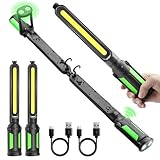
Overview: The Sylsmart Rechargeable Mechanic Light is a two-pack system offering single or dual-light configurations. Each unit provides 2400 lumens when combined, featuring magnetic mounting, motion sensor control, and multi-scenario adaptability for automotive or workshop tasks. What Makes It Stand Out: Hands-free motion sensor activation is a game-changer for greasy mechanics. The 360° horizontal and 330° vertical rotation enables precise positioning, while dual-mode functionality (single handheld or snapped-together bar) and IPX4 waterproofing enhance utility. Three lighting modes (including red emergency flash) cover diverse needs. Value for Money: The 2-pack delivers exceptional value, effectively doubling your lighting setup. Motion sensor convenience reduces fumbling, and durable ABS/rubber construction ensures longevity. While runtime isn’t class-leading, the sensor and flexibility justify the cost for professionals. Strengths and Weaknesses: Pros: Innovative motion sensor, superb articulation, strong dual-magnet hold, compact dual-light system, IPX4 rating. Cons: Sensor can be overly sensitive, 4-hour high-brightness runtime is modest, no power indicators, limited to magnetic surfaces. Bottom Line: Highly recommended for mechanics prioritizing hands-free operation. The motion sensor and dual-configuration versatility make it indispensable in busy workshops, though budget buyers might prefer simpler alternatives.
8. Work Light, 2500LM Bright LED Work Lights, 5200mAh Rechargeable Magnetic Underhood Work Light with Hooks, Cordless Battery Powered Mechanic Light for Car Repairing/Inspection/Garage/Workshop/Emergency

Overview: The Ropelux Work Light delivers 2500 lumens of crisp 7500K light via a 9.6-inch COB board, powered by a substantial 5200mAh battery. Its military-grade build targets durability for garages, construction sites, and emergencies, with magnetic and hook mounting options. What Makes It Stand Out: The standout feature is the massive 5200mAh battery, offering 9-10 hours on low mode—ideal for extended jobs. Military-grade shock resistance (5ft drop tested), swiveling 180° bases, and 360° middle rotation provide unmatched positioning. Green casing ensures high visibility in cluttered spaces. Value for Money: Excellent long-term value due to exceptional battery life and rugged construction. The rechargeable design avoids recurring costs, and 5200mAh capacity outperforms many competitors. Built to last, it’s cost-effective despite a slightly higher initial price. Strengths and Weaknesses: Pros: Industry-leading battery life, ultra-durable military-grade build, bright 2500LM output, versatile 180°/360° swivels, green visibility. Cons: Only two brightness levels, no emergency SOS mode, magnet ineffective on aluminum, lacks power bank functionality. Bottom Line: A top choice for professionals needing endurance and toughness. The unmatched runtime and ruggedness justify the investment for frequent users, though casual DIYers might not need its full capacity.
9. Work Light for Mechanic,3200LM LED Work Lights,5400mAh Rechargeable Magnetic Light bar,Portable Automotive Tools Cordless Underhood Light with Hooks for Car Garage Workshop Emergency,Present for Him

Overview: The LANKA Work Light sets a new brightness standard with 3200LM output from 52 LEDs and a COB panel. Featuring a 5400mAh battery, USB power bank capability, and 4 lighting modes, it’s engineered for mechanics requiring intense, adaptable illumination. What Makes It Stand Out: Boasts the highest brightness (3200LM) and widest 180° beam angle in this group, flooding workspaces evenly. Unique USB power bank functionality charges devices, while 4 lighting modes (including SOS) enhance versatility. The aluminum heat-dissipation plate extends LED lifespan significantly. Value for Money: Premium pricing is justified by class-leading brightness, power bank utility, and robust ABS/rubber construction. The 5400mAh battery offers solid runtime, and dual charging/output ports add unexpected value. A practical yet thoughtful gift for tech-savvy mechanics. Strengths and Weaknesses: Pros: Brightest output (3200LM), USB power bank feature, 4 lighting modes, superior heat management, 5400mAh capacity. Cons: High-mode runtime is shortest (2.5 hours), aluminum compatibility issues, slightly bulkier than rivals. Bottom Line: Highly recommended for mechanics needing maximum brightness and emergency power backup. Its innovative features and durability make it worth the premium, especially for roadside or remote repairs.
10. MechaniLite Under Hood Work Light Bar, 3000LM LED Magnetic Light Bar with Hooks, 5200mAh Cordless Rechargeable Hood Light for Mechanic/Car Repairing/Garage-Green

Overview: The MechaniLite Work Light delivers 3000LM brightness via an 81-LED COB board, powered by a 5200mAh battery. Designed specifically for underhood clarity, it features rugged construction and versatile 360° positioning for automotive or outdoor use. What Makes It Stand Out: Excels in targeted engine bay illumination with its intense 3000LM beam. The 360° main light rotation and 180° leg swivels allow precise angling, while dual hooks and magnets enable 3-in-1 use (magnetic bar, hanging light, or ground stand). Fast-charging tech replenishes the 5200mAh battery in 3.5 hours. Value for Money: Competitive pricing for its high brightness and battery capacity. Fast charging minimizes downtime, and robust housing ensures longevity in harsh workshops. Lacks some premium features (e.g., power bank), but excels at core functionality for the price. Strengths and Weaknesses: Pros: Powerful 3000LM output, rapid 3.5-hour charging, exceptional 360°/180° articulation, workshop-tough build, green visibility. Cons: No multi-mode lighting (only high/low), no power indicators, magnets ineffective on aluminum. Bottom Line: An excellent, no-nonsense choice for mechanics prioritizing brightness and positioning flexibility. Its ruggedness and fast charging make it a reliable workhorse, ideal for daily garage use despite limited lighting modes.
Understanding Your Underhood Lighting Needs
Defining the Core Challenge: Why Standard Lights Fail
Standard flashlights or work lights often fall short in the engine bay. Their narrow beams create harsh shadows exactly where you need to see – deep within the engine compartment. Magnetic bases might not grip securely on modern composite or aluminum hoods, leading to dangerous drops onto sensitive components. Poor heat resistance is another critical flaw; lights not designed for the engine environment can overheat, malfunction, or even become fire hazards when placed near hot exhaust manifolds or radiator components. The specific geometry of an open hood demands a light engineered for that space.
The Rechargeable Advantage Over Disposable Batteries
Relying on disposable batteries for frequent night work is both impractical and costly. Imagine mid-repair, draining the last of your AAAs just as you need to trace a wiring harness. Rechargeable systems eliminate this anxiety, offering consistent, full power output until depleted. Modern lithium-ion batteries provide significantly higher energy density, meaning longer runtime on a single charge compared to older NiMH tech. Furthermore, the environmental and economic benefits are substantial – reducing constant battery purchases and waste. USB-C charging adds universal convenience, allowing you to top up from power banks, car ports, or standard wall adapters.
Essential Brightness and Beam Quality Features
Lumens vs. Real-World Usability: Beyond the Number Game
While higher lumen counts sound impressive, raw numbers alone are misleading for underhood work. A 500-lumen light with a harsh, narrow spotlight creates blinding glare on shiny metal surfaces while leaving deep shadows in valve covers or alternator housings. What matters more is balanced, diffuse illumination. Look for lights specifically designed with wide flood beams (often 120 degrees or more) that wash light evenly across the entire engine bay. This eliminates hotspots and minimizes reflections, revealing details in low-contrast areas like rubber hoses or wiring looms that a spotlight would miss.
The Critical Role of Color Temperature and CRI
The quality of the light is as crucial as its quantity. Cool white light (5000K-6500K) closely mimics daylight, enhancing contrast and making it easier to distinguish between similarly colored wires, fluid types (oil vs. coolant), or subtle corrosion. Crucially, prioritize high Color Rendering Index (CRI) – ideally 90+ (Ra9). A high CRI means the light accurately reveals the true colors of components. Low CRI lights can make red wires look brown or hide coolant leaks against dark plastic, leading to misdiagnosis. Don’t settle for lights that distort the colors you need to see accurately.
Power and Runtime Considerations
Realistic Runtime Expectations for Automotive Tasks
Manufacturer runtime claims are often based on the lowest brightness setting in ideal lab conditions. For practical underhood use, focus on runtime at the medium or high setting you’ll actually need for detailed work. A light claiming “10 hours” but only delivering 45 minutes on high brightness is useless for a transmission swap. Look for models providing clear runtime specs across multiple brightness levels. Also, consider how runtime degrades as the battery depletes; some lights maintain near-full brightness until sudden cutoff, while others dim gradually. Consistent output is key for precision tasks.
Advanced Battery Management and Charging Tech
Next-generation lights incorporate smart battery features you shouldn’t overlook. Look for precise battery level indicators (not just vague 1-4 bar lights), which prevent being caught mid-job with a dead light. Fast charging (reaching 80% capacity in under an hour) minimizes downtime between jobs. Some models feature pass-through charging, allowing you to use the light while it’s plugged in – invaluable for extended diagnostics. Crucially, verify the light uses a quality lithium-ion cell with built-in protection against overcharging, deep discharge, and short circuits, ensuring long-term battery health and safety.
Mounting Systems and Flexibility
Engineered for the Hood: Magnetic Strength and Design
Not all magnetic mounts are equal. The magnet needs sufficient pull force (measured in pounds/kg) to securely hold the light’s weight even when the hood vibrates during engine operation. Neodymium magnets are the standard for strength. However, sheer strength isn’t enough. The magnet housing should be non-marring (often rubber-coated) to protect painted or delicate hood surfaces. Consider the magnet’s shape – a wide, flat base distributes force better than a small, powerful puck, reducing the chance of the light tipping. Some lights feature secondary mounting options like hooks or clips for non-magnetic surfaces.
Multi-Position Articulation for Shadow Elimination
The ability to precisely aim the light beam is non-negotiable. Fixed lights create unavoidable shadows from suspension components, airboxes, or the hood itself. Opt for lights with flexible goosenecks (minimum 18 inches recommended) made from durable, heat-resistant materials that won’t sag over time. Ball-joint mounts offer even greater precision, allowing 360-degree rotation and infinite tilt angles. This flexibility lets you position the light source above the component you’re working on, eliminating parallax shadows that obscure details directly under your tools – a common frustration with poorly positioned fixed lights.
Durability and Environmental Resistance
Surviving the Engine Bay: Heat and Chemical Resistance
The engine compartment is a hostile environment. Lights must withstand sustained temperatures exceeding 140°F (60°C) near exhaust components without melting, warping, or losing magnetic strength. Look for housings made from high-temperature thermoplastics (like ABS or polycarbonate blends) and internal components rated for automotive use. Equally important is resistance to common automotive fluids – spilled oil, coolant, brake fluid, and degreasers shouldn’t damage the housing, lens, or controls. An IPX4 splash rating or higher is essential to handle condensation, light rain if working outside, and accidental spills during cleaning.
Impact and Vibration Tolerance for Workshop Realities
Drops happen. A light slipping off a hood onto concrete needs to survive. Look for housings with reinforced corners or protective bumpers. More subtly, constant engine vibration can loosen screws, crack solder joints, or cause flickering in poorly built lights. Quality underhood lights undergo vibration testing to ensure internal components remain secure. Check for robust construction – minimal seams, secure lens mounting, and quality switches that won’t rattle loose. This durability translates directly to longer lifespan and reliability when you need it most.
User Experience and Practical Features
Intuitive Controls for Gloved Hands
Working under the hood often means wearing mechanics’ gloves. Controls need to be large, tactile, and easily operable with thick fabric between your fingers and the buttons. Avoid tiny, recessed switches that require precise fingernail pressure. Rotary dials or large, raised rocker switches are ideal. Controls should be logically placed and resistant to accidental activation – the last thing you need is the light turning off or changing modes while adjusting its position. Backlit buttons are a bonus for quick identification in total darkness.
Portability and Storage Considerations
While permanently mounted workshop lights have their place, the best underhood lights are designed for portability. They should be compact enough to fit in a toolbox without taking excessive space yet substantial enough to feel stable when mounted. A removable battery (less common now but still found) offers redundancy – swap in a fresh pack if runtime runs short. Consider the charging cable length and whether the light includes a storage pouch to protect the lens and magnet from dust and debris when not in use. Easy portability means you’ll actually use it wherever the job takes you.
Future-Proofing Your Investment
Emerging Technologies to Watch
While specific 2026 models can’t be named, trends indicate where underhood lighting is heading. Expect wider adoption of tunable white light, allowing mechanics to switch between cooler (5000K+) for detail work and warmer (3000K) for less harsh ambient lighting during longer sessions. Integrated task lighting – smaller secondary LEDs focused on the immediate work area – combats the “halo effect” where the main beam illuminates the bay but leaves the immediate tool zone in shadow. Enhanced connectivity, like simple Bluetooth pairing for remote brightness control via a phone app (without complex setup), is also on the horizon for professional-grade tools.
Prioritizing Repairability and Longevity
The most sustainable and cost-effective light is one that lasts years, not seasons. Investigate the manufacturer’s stance on serviceability. Are replacement parts like goosenecks, magnets, or charging ports available? Does the company offer reasonable repair options instead of forcing a full replacement for a single failed component? Lights built with modular designs inherently last longer. While not always the cheapest upfront, this focus on longevity saves money and reduces waste in the long run, aligning with the professional mechanic’s need for reliable, long-term tools.
Frequently Asked Questions
How many lumens do I realistically need for underhood work?
Focus on beam quality over raw lumens. A well-diffused 300-500 lumen light with a wide flood beam and high CRI is far more effective for detailed engine bay work than a 1000-lumen spotlight creating harsh shadows and glare.
Can I safely leave a rechargeable underhood light attached to the hood while the engine is running?
Generally, yes, if the light is specifically designed for automotive use with heat-resistant materials and secure mounting. However, always position it away from direct contact with extremely hot components like exhaust manifolds and ensure the magnet won’t interfere with any hood latches or sensors.
Why is Color Rendering Index (CRI) so important for mechanics?
High CRI (90+) ensures colors appear true to life. This is critical for accurately identifying wire colors, distinguishing between fluid types (e.g., coolant vs. oil leaks), spotting corrosion, and seeing subtle details on components that low-CRI lights would distort or hide.
How do I prevent the magnetic base from scratching my hood?
Choose lights with thick, non-marring rubber or silicone coatings on the magnet housing. Always ensure the hood surface is clean (free of grit or metal shavings) before placing the light, as debris can cause scratches even with a coated magnet.
What’s the biggest runtime mistake mechanics make?
Relying solely on the highest brightness setting for extended periods. Using medium brightness often provides ample light for many tasks while significantly extending runtime. Always check the runtime specs for the brightness level you plan to use most.
Are USB-C charging lights truly better than older micro-USB?
Absolutely. USB-C offers faster charging speeds, a reversible plug (no fumbling in the dark), and is the modern universal standard, ensuring compatibility with virtually any current power source – from car ports to power banks to laptop chargers.
Can vibration really damage an underhood light?
Yes, constant engine vibration can loosen internal components, crack solder joints, cause flickering, or make switches fail prematurely in poorly constructed lights. Quality lights undergo specific vibration testing to ensure reliability in the automotive environment.
What does an IPX4 rating actually mean for underhood use?
IPX4 means the light is protected against water splashes from any direction. This is essential for handling condensation inside the engine bay, light rain if working outdoors, and accidental spills of fluids like coolant or degreaser during cleaning.
Why do some lights have a gooseneck while others have a ball joint?
Goosenecks offer flexible, fluid positioning over a wide range. Ball joints provide more precise, locked positioning at specific angles. Ball joints are often preferred for maintaining a fixed beam angle during intricate work, while goosenecks excel at quick repositioning.
How can I tell if a light’s battery management is good?
Look for accurate, multi-level battery indicators (e.g., 25%, 50%, 75%, 100%) rather than simple low/medium/high bars. Quality lights also maintain consistent brightness until near depletion and have protection circuits to prevent overcharging or deep discharge damage.
See Also
- 10 Must-Have Rechargeable Underhood Lights for Cord-Free Repairs in 2026
- 10 Must-Have Magnetic Underhood Lights for Hands-Free Work in 2026
- 10 Most Durable Rechargeable Underhood Lights Based on Real User Reviews in 2026
- 10 Best Value Rechargeable Work Lights for Weekend Projects in 2026
- 2026’s Top 10 Rechargeable Underhood Lights for Eco-Friendly Mechanics