Table of Contents
Gone are the days of squinting at tiny monochrome displays and memorizing button sequences just to read a trouble code. Today’s touch screen OBD2 scanners have transformed vehicle diagnostics from a cumbersome chore into an intuitive, efficient process that feels more like using a smartphone than traditional shop equipment. As we head into 2026, these smart devices are becoming essential tools for everyone from weekend DIYers to professional technicians who need instant access to vehicle data.
The shift toward touch screen interfaces isn’t just about looking modern—it’s about fundamentally changing how quickly you can identify and solve problems. When your check engine light flashes at the worst possible moment, every second counts. A responsive touch screen lets you navigate through menus, view live data graphs, and perform active tests with the speed and precision that old-school scanners simply can’t match. Understanding what features truly matter will help you make a smart investment that saves time, money, and frustration for years to come.
Top 10 Touch Screen OBD2 Scanners
Detailed Product Reviews
1. OBD2 Scanner TOPDON AD600S Scan Tool, Code Reader, Diagnostics Scanner for ABS/SRS/AT/Engine, 9 Reset Services, Oil/Brake/BMS/SAS/DPF/TPMS/ETS Reset/ABS Bleeding/Injector Coding, Free Lifetime Upgrade

Overview: The TOPDON AD600S represents a significant upgrade in the brand’s diagnostic line, positioning itself as a versatile 9-service reset tool combined with four-system diagnostics. Designed for home mechanics and DIY enthusiasts, this scanner provides access to ABS, SRS, transmission, and engine systems while offering comprehensive maintenance resets. Its 5-inch color touchscreen running Android 11.0 delivers an intuitive interface that simplifies complex diagnostic procedures.
What Makes It Stand Out: The AD600S distinguishes itself with nine reset functions including oil, brake, TPMS, throttle adaptation, SAS, BMS, ABS bleeding, DPF regeneration, and the newly added injector coding. The FCA Gateway Access (AutoAuth) is a standout feature, allowing diagnostics on 2018+ Chrysler vehicles that typically block aftermarket tools. Lifetime free Wi-Fi updates ensure the tool evolves with new vehicle releases without additional costs.
Value for Money: At its price point, the AD600S delivers exceptional value by combining dealer-level reset capabilities with broad vehicle coverage spanning 90+ brands from 1996 onward. The absence of subscription fees means the tool pays for itself after just 2-3 dealership visits, making it a sound investment for multi-vehicle households.
Strengths and Weaknesses: Pros include comprehensive reset functions, Android 11.0 speed, wide compatibility, lifetime updates, and FCA access. Cons are the 5G incompatibility, inconsistent AutoVIN functionality across all vehicles, and function availability that varies by make and model.
Bottom Line: The TOPDON AD600S is an excellent choice for serious DIYers who need reset capabilities beyond basic code reading. While some limitations exist, its feature set and update policy make it a compelling alternative to professional-grade scanners.
2. TOPDON Bidirectional Scan Tool, 2026 New ArtiDiag900 Lite Automotive Diagnostic Tool for Full System, Scanner for Car with Active Test, 8 Reset, Wireless OBD2 Scanner Diagnostic Tool for All Vehicles

Overview: The 2026 TOPDON ArtiDiag900 Lite emerges as a flagship bidirectional scanner targeting workshops and advanced DIYers. This wireless diagnostic tool combines full-system coverage with active testing capabilities, enabling users to command vehicle components directly from the 8-inch touchscreen. With Android 11.0 and a 10,000mAh battery providing 12 hours of operation, it’s built for intensive professional use.
What Makes It Stand Out: Bidirectional control represents the killer feature, allowing technicians to activate injectors, coolant pumps, windows, and other components to isolate faults quickly. The Bluetooth 5.0 VCI offers true wireless freedom up to 33 feet, eliminating cable clutter. The DTC repair guide provides brand-specific troubleshooting steps for Chrysler, Dodge, Jeep, and Fiat models, a rarity in this class.
Value for Money: While priced higher than entry-level scanners, the AD900 Lite justifies its premium through time-saving active tests and comprehensive system coverage. For professional shops, the diagnostic efficiency gains offset the initial investment within weeks. The inclusion of eight reset functions adds maintenance revenue opportunities.
Strengths and Weaknesses: Pros include professional bidirectional capability, large 8-inch display, robust wireless connection, extensive battery life, and full-system diagnostics. Cons involve a steeper learning curve for novices, premium pricing that may exceed casual user needs, and limited DTC guide compatibility.
Bottom Line: The ArtiDiag900 Lite is a legitimate workshop-grade tool masquerading at a enthusiast price point. For those needing bidirectional control and wireless convenience, it’s arguably the best value in its category.
3. Launch OBD2 Scanner CRP123X V3.0 Elite, 2026 Lifetime Free WiFi Update Scan Tool, FCA SGW, CANFD&DoIP, SAS/Throttle/Brake/BMS/D-P-F/Oil/ABS Service Multi Systems Car Scanner, Battery Test, Auto VIN

Overview: Launch’s 2026 CRP123X V3.0 Elite targets the sweet spot between advanced capability and user-friendliness. This multi-system scanner adds seven reset functions and cutting-edge protocol support to its proven diagnostic platform. Compatible with over 90 vehicle brands from 1996 onward, it addresses modern diagnostic challenges including FCA security gateways and newer CAN-FD/DoIP architectures.
What Makes It Stand Out: The protocol support is genuinely impressive—CAN-FD for 2020+ GM/Chrysler and DoIP for Volvo, Land Rover, and BMW F/G chassis put this ahead of most competitors. Integrated FCA AutoAuth bypasses the security module on 2018+ vehicles without additional subscriptions. Monthly update cycles demonstrate Launch’s commitment to keeping pace with new models.
Value for Money: This scanner punches above its weight class by offering 2026 vehicle protocol support at a mid-range price point. The lifetime free update policy eliminates the hidden costs that plague many competitors. For owners of newer vehicles, the advanced protocol compatibility alone justifies the investment over basic OBD2 readers.
Strengths and Weaknesses: Pros include cutting-edge protocol support, frequent updates, comprehensive reset functions, intuitive Android 8.1 interface, and multi-graph live data display. Cons require extra cables for CAN-FD/DoIP functionality, occasional AutoVIN failures, and feature variance across vehicle models.
Bottom Line: The CRP123X V3.0 Elite excels for drivers of newer vehicles requiring advanced protocol support. Its combination of future-proof connectivity and zero update costs makes it a smart long-term diagnostic companion.
4. LAUNCH OBD2 Scanner CRP123I V3.0 Elite, 2026 Lifetime Free WiFi Update Scan Tool, FCA SGW, CANFD&DoIP, SAS/Throttle/Brake/BMS/DPF/Oil/ABS Service Multi Systems Car Scanner, Battery Test, Auto VIN

Overview: The Launch CRP123I V3.0 Elite builds upon its predecessor with enhanced hardware and expanded functionality for 2026. This 5-inch touchscreen scanner delivers seven reset services alongside multi-system diagnostics for engine, transmission, ABS, and SRS systems. Its integration of CAN-FD/DoIP protocols and FCA SGW support ensures compatibility with the latest vehicle architectures.
What Makes It Stand Out: Real-time battery voltage graphing provides continuous monitoring during diagnostics, a practical feature often omitted in this price tier. The scanner works seamlessly with Launch’s optional BST360 battery tester and i-TPMS tools, creating an expandable diagnostic ecosystem. Dual-band 2.4/5GHz WiFi accelerates updates and data transfers significantly.
Value for Money: Covering 100+ brands and 10,000+ models from 1996-2026, the CRP123I offers exceptional breadth for its price. The lifetime update policy and absence of subscription fees make it economically attractive for both pros and serious hobbyists. The optional accessory integration allows staged investment as needs grow.
Strengths and Weaknesses: Pros include comprehensive reset functions, battery voltage monitoring, wide vehicle coverage, dual-band WiFi, and free lifetime updates. Cons feature the older Android 8.1 OS, requirement for separate adapters with CAN-FD/DoIP, and a smaller screen compared to premium alternatives.
Bottom Line: The CRP123I V3.0 Elite is a well-rounded mid-range scanner with particular strengths in reset capabilities and battery monitoring. Its expandable design and broad compatibility make it a versatile choice for growing workshops.
5. FOXWELL Car Scanner NT604 Elite OBD2 Scanner ABS SRS Transmission, Check Engine Code Reader for Cars and Trucks, Diagnostic Scan Tool with SRS Airbag, Automotive Diagnostic Tool with Live Data
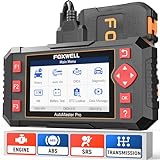
Overview: FOXWELL’s 2026 NT604 Elite positions itself as the ultimate entry-level diagnostic tool for car owners seeking clarity without complexity. This 5-in-1 scanner focuses on the four critical systems—ABS, SRS, transmission, and engine—plus OBDII functions. Pre-loaded with current software, it delivers immediate functionality straight from the protective case without tedious setup procedures.
What Makes It Stand Out: The inclusion of a solid protective case at this price point defies category norms where flimsy plastic bags are typical. The AUTOVIN feature rapidly identifies vehicles, eliminating manual VIN entry frustration. Its straightforward interface prioritizes essential functions over overwhelming users with rarely-used features, making it genuinely accessible for non-technical owners.
Value for Money: As one of the most affordable scanners offering ABS, SRS, and transmission diagnostics, the NT604 Elite democratizes professional-grade code reading. Lifetime updates and zero subscription fees enhance its long-term value proposition. The protective case alone represents a $20-30 savings over purchasing separately.
Strengths and Weaknesses: Pros include immediate out-of-box readiness, intuitive operation, solid case, lifetime updates, and good 60+ brand coverage. Cons limit users to code reading only—no reset or relearn functions, restricted to four systems, and lacks advanced bidirectional capabilities.
Bottom Line: The NT604 Elite excels for beginners wanting reliable diagnostic information without a learning curve. While it won’t perform maintenance resets, its accuracy, simplicity, and included case make it the best value for basic troubleshooting needs.
6. ANCEL DS100 OBD2 Scanner - ABS, SRS, Transmission & Check Engine Code Reader with 7 Reset, Oil/Brake/BMS/SAS/ETS Reset, ABS Auto Bleeding, Gear Learning, Lifetime Free Update, Online Customer Service

Overview: The 2026-upgrade ANCEL DS100 delivers professional-grade diagnostics through a 5-inch intuitive touchscreen interface. This scanner provides comprehensive coverage of four major vehicle systems—engine, transmission, ABS, and SRS—while offering seven essential reset functions including ABS bleeding, oil reset, brake reset, and steering angle calibration. Designed for both DIY enthusiasts and professional technicians, it supports over 100 brands and 100,000+ models from 1996 to present.
What Makes It Stand Out: The smartphone-like touchscreen eliminates tedious menu navigation, allowing one-tap access to all reset functions directly from the main screen. The AutoVIN feature automatically identifies vehicle specifications in seconds, preventing manual entry errors. Unique to this price range, the one-click PDF report generation creates professional documentation you can share via Bluetooth or email, streamlining communication with clients or repair shops.
Value for Money: At its price point, the DS100 eliminates hundreds of dollars in diagnostic fees. The lifetime free updates protect your investment indefinitely, ensuring compatibility with new models without subscription costs. Compared to basic code readers, the seven reset functions alone justify the premium, saving $50-100 per shop visit for routine maintenance resets.
Strengths and Weaknesses: Strengths include the responsive touchscreen interface, comprehensive reset suite, automatic VIN recognition, and professional reporting. The four-system diagnostics provide deeper insights than entry-level scanners. Weaknesses involve a steeper learning curve for absolute beginners, and some users may need to verify compatibility for specific vehicle trims. The 5-inch screen, while clear, may feel small for those accustomed to tablet-sized scanners.
Bottom Line: The ANCEL DS100 is an exceptional value for serious DIY mechanics and mobile technicians who need professional reset capabilities without the professional price tag. Its user-friendly touchscreen and lifetime updates make it a smart long-term investment.
7. OBD2 Scanner TOPDON AD500, Oil SAS Throttle TPMS BMS EPB Reset, Engine ABS SRS Transmission, Diagnostic Scan Tool, AutoVIN, Car Check Engine Code Reader with Battery Test, Lifetime Wi-Fi Free Update

Overview: TOPDON’s ArtiDiag500 positions itself as a step-up from basic OBD2 scanners, targeting DIY enthusiasts with four-system diagnostics and six maintenance reset functions. This compact tool reads and clears codes from engine, transmission, ABS, and SRS systems while offering essential resets including oil, SAS, TPMS, BMS, EPB, and throttle adaptation. Supporting 67+ brands and 10,000+ models globally, it includes a battery test function and provides lifetime Wi-Fi updates.
What Makes It Stand Out: The AD500 distinguishes itself through its global language support (12 languages) and integrated battery testing capability—features often missing in budget scanners. Its Smart AutoVIN remembers manual selections to streamline subsequent diagnostics on the same vehicle. The tool visualizes live data in chart form, simplifying complex information for DIY users who need to monitor vehicle health trends over time.
Value for Money: This scanner hits the sweet spot for entry-level users seeking more than code reading without breaking the bank. The six reset functions cover most routine maintenance needs, potentially saving $400+ annually in shop visits. Lifetime Wi-Fi updates eliminate future costs, while the battery test adds diagnostic value typically requiring a separate tool.
Strengths and Weaknesses: Strengths include multilingual support, battery testing, intuitive data visualization, and cost-effective reset capabilities. The AutoVIN feature, while helpful, requires initial manual input unlike automatic systems. Weaknesses center on limited brand coverage compared to competitors (10,000 vs 100,000+ models) and fewer reset options than mid-tier alternatives. Some users report slower processing speeds during deep scans.
Bottom Line: The TOPDON AD500 is an excellent entry-level to mid-range scanner for budget-conscious DIYers who prioritize essential maintenance resets and battery health monitoring. It’s particularly valuable for multi-language households or those managing several family vehicles.
8. TOPDON Upgraded AD600S OBD2 Scanner, Diagnostic Tool, ABS SRS Transmission Engine Code Reader, 9 Reset Services Scan Tool, Oil/Brake/BMS/SAS/DPF/TPMS/ETS Reset, Injector Coding, Lifetime Free Update

Overview: The upgraded AD600S builds upon TOPDON’s foundation with Android 11.0 OS, enhanced 32GB storage, and a crisp 5-inch HD display (1280x720). This scanner delivers professional four-system diagnostics while expanding reset functions to nine, adding DPF regeneration and injector coding to the AD500’s capabilities. Supporting 67+ brands and 10,000+ models, it targets DIYers and small shops needing advanced maintenance functions without professional-tier pricing.
What Makes It Stand Out: The Android 11 operating system provides a modern, responsive interface with faster performance and ample storage for data logging. The HD display ensures excellent readability in garage environments. Injector coding distinguishes it from most competitors under $300, allowing precise calibration after injector replacement—a critical function for modern direct-injection engines.
Value for Money: The AD600S justifies its modest price increase over the AD500 through meaningful upgrades: three additional resets, modern OS, HD screen, and injector coding. This combination saves $600+ in specialized shop services, particularly for diesel owners needing DPF resets. Lifetime free Wi-Fi updates maintain long-term value.
Strengths and Weaknesses: Strengths include the modern Android platform, high-resolution display, comprehensive nine-reset suite, and injector coding capability. The DTC Lookup function provides on-the-spot code analysis. Weaknesses mirror the AD500: limited model database compared to some rivals, and brand coverage requires verification. The enhanced features may overwhelm casual users who only need basic code reading. Some report occasional Wi-Fi connectivity issues during updates.
Bottom Line: The TOPDON AD600S is a compelling mid-range choice for experienced DIYers and small shops seeking modern performance and advanced reset capabilities. Its Android backbone and injector coding make it future-ready for complex vehicle systems.
9. 2026 FOXWELL NT716 Bidirectional OBD2 Scanner- ABS, SRS & Transmission & Check Engine Code Reader with 9 Resets, ABS Bleeding, Auto VIN, Upgraded from NT604/NT614, Lifetime Free Updates, Black
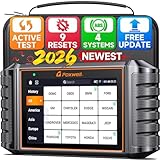
Overview: FOXWELL’s NT716 emerges as a feature-packed bidirectional scanner priced just over $200, offering active test capabilities typically found in $300-500 tools. This 2026 model reads and clears codes across four major systems while providing nine reset functions including ABS bleeding, DPF regeneration, and injector coding. The 5.5-inch HD touchscreen, powered by a built-in 4000mAh battery, delivers Android 9.0 performance with lifetime free updates for over 100 brands.
What Makes It Stand Out: Bidirectional control sets the NT716 apart, allowing users to actively test components like injectors, cooling fans, and fuel pumps—verifying repairs rather than just reading codes. The larger 5.5-inch display and internal battery provide true portability without tethering to the OBD port for power. Nine resets surpass most competitors in this price bracket, while the upgrade path to bidirectional functionality offers scalability.
Value for Money: This scanner delivers exceptional value, packing premium bidirectional capabilities and nine resets at a mid-range price. The battery-powered design eliminates vehicle dependency during diagnostics. Lifetime updates and 100+ brand coverage protect your investment, potentially saving $800+ annually in diagnostic fees for active testing alone.
Strengths and Weaknesses: Strengths include bidirectional functionality, large battery-powered screen, comprehensive reset suite, and extensive vehicle coverage. The built-in DTC library clarifies fault codes instantly. Weaknesses include the active test requiring a paid upgrade, lack of key programming support, and Android 9.0 being slightly dated. Some users note the initial setup process requires patience.
Bottom Line: The FOXWELL NT716 is the best value for advanced DIYers and independent technicians seeking bidirectional capabilities without premium pricing. Its battery power and expansive features make it a versatile garage companion.
10. XTOOL D5S OBD2 Scanner - 2026 Code Reader for Cars & Trucks with 16 Resets, Crank Sensor Relearn, Throttle Relearn, EPB, FCA AutoAuth, CAN FD for GM, Engine ABS SRS Transmission Car Diagnostic Tool

Overview: The XTOOL D5S positions itself as the reset-function champion with an impressive 16 maintenance services, including specialized functions like crank sensor relearn and suspension adjustment. This scanner provides comprehensive four-system diagnostics alongside full OBD2 functionality, CAN FD protocol support, and FCA AutoAuth for newer Chrysler/Fiat vehicles. Designed for home mechanics to small shops, it delivers professional-grade resets for complex modern vehicles.
What Makes It Stand Out: The unmatched 16-reset suite addresses virtually every post-maintenance requirement, from gearbox matching to window initialization. CAN FD and FCA AutoAuth protocols ensure compatibility with 2020+ GM and FCA vehicles—critical for accessing secure modules. The ability to display up to four live data graphs simultaneously aids in complex diagnosis, while specialized functions like crank relearn solve problems most scanners cannot.
Value for Money: Despite higher pricing, the D5S justifies every dollar through its extensive reset library and modern protocol support. Each specialized function could cost $100+ at a dealership, making this scanner pay for itself with one or two uses. The comprehensive coverage eliminates the need for multiple brand-specific tools.
Strengths and Weaknesses: Strengths include the industry-leading reset count, modern protocol support, multi-graph live data, and dealership-level functions. The tool handles integrated transmission/engine systems gracefully. Weaknesses involve significant complexity requiring study, potential compatibility issues requiring pre-purchase verification, and some vehicles displaying only three systems. The learning curve challenges casual users.
Bottom Line: The XTOOL D5S is the ultimate choice for serious DIY mechanics and professional shops managing diverse modern vehicle fleets. Its unmatched reset capabilities and protocol support justify the investment for those who regularly perform complex maintenance.
Why Touch Screen OBD2 Scanners Are Revolutionizing Vehicle Diagnostics
The Evolution from Basic Code Readers to Smart Diagnostic Tools
The automotive diagnostic landscape has undergone a dramatic transformation over the past decade. Early OBD2 scanners served a single purpose: reading and clearing generic trouble codes. They offered minimal information and required you to cross-reference cryptic alphanumeric codes with service manuals or online databases. Modern touch screen scanners have evolved into comprehensive vehicle health monitoring systems that provide real-time insights, predictive maintenance alerts, and guided troubleshooting procedures. This evolution mirrors how smartphones replaced feature phones—not just adding a screen, but completely reimagining the user experience and expanding capabilities exponentially.
How Touch Screen Interfaces Speed Up Your Workflow
Touch screen technology eliminates the tedious button-mashing that slows down diagnostics. Instead of scrolling through line-by-line menus using arrow keys, you can tap directly on the function you need, pinch-to-zoom on data graphs, and swipe between different vehicle systems instantly. This tactile efficiency is crucial when you’re working in challenging conditions—whether it’s a dimly lit garage, a busy shop floor, or troubleshooting on the roadside. The ability to quickly switch between viewing freeze frame data, checking live sensor readings, and accessing wiring diagrams on a single responsive display cuts diagnostic time by up to 60% compared to traditional button-operated tools.
Key Features That Define Modern Touch Screen OBD2 Scanners
Display Quality and Responsiveness
The screen is your primary interface with the vehicle’s computer systems, so quality matters immensely. Look for high-resolution displays with at least 720p clarity that remain visible in direct sunlight and dim conditions. Capacitive touch technology (like your smartphone uses) responds to light taps and supports multi-touch gestures, while resistive screens require firmer pressure and often feel clunky. Screen size typically ranges from 5 to 10 inches—larger displays show more data simultaneously but sacrifice portability. Anti-glare coating and automatic brightness adjustment are practical features that prevent eye strain during extended diagnostic sessions.
Processing Power and Speed
A scanner’s internal processor determines how quickly it boots up, reads codes, and refreshes live data streams. Quad-core processors have become the standard for smooth performance, allowing you to run multiple diagnostic functions simultaneously without lag. Insufficient processing power creates frustrating delays when you’re trying to view real-time data or perform active tests. Pay attention to RAM specifications as well—at least 2GB ensures the device can handle complex graphing and store substantial amounts of freeze frame data without slowing down. Faster processors also enable quicker system scans, which is invaluable when diagnosing intermittent issues that require multiple test drives.
Wireless Connectivity Options
Modern vehicles and repair environments demand flexible connectivity. Bluetooth 5.0 or higher provides stable connections to your smartphone or tablet for remote monitoring and data sharing. Wi-Fi capabilities enable automatic software updates and cloud-based report storage without connecting to a computer. Some advanced units feature NFC (Near Field Communication) for instant pairing with vehicles or accessories. These wireless features let you step away from the vehicle while monitoring live data during road tests, or share diagnostic reports with customers or colleagues instantly. Ensure the scanner supports both 2.4GHz and 5GHz Wi-Fi bands for maximum compatibility with different network environments.
Battery Life and Power Management
Nothing halts a diagnostic session faster than a dead scanner battery. Premium touch screen units offer 8-12 hours of continuous operation on a single charge, with intelligent power management that puts the device to sleep when not actively communicating with a vehicle. Some models include replaceable batteries, letting you swap in a spare during long workdays. Consider whether the scanner can be powered directly through the OBD2 port—this feature is essential for extended monitoring sessions but may drain the vehicle’s battery if left connected overnight. Fast-charging USB-C ports have become standard, providing several hours of use from just 30 minutes of charging.
Software Update Policies
The automotive industry evolves rapidly, with new vehicle models and protocols released annually. Your scanner’s usefulness depends on receiving regular software updates that expand vehicle coverage and fix bugs. Reputable manufacturers provide free lifetime updates for basic OBD2 functions and at least 2-3 years of complimentary updates for manufacturer-specific codes and advanced functions. After that period, subscription models typically cost $100-300 annually. Be wary of devices that lock features behind paywalls or discontinue support after just one year. Cloud-based update systems are most convenient, automatically downloading new software when connected to Wi-Fi.
Advanced Diagnostic Capabilities to Look For
Live Data Streaming and Graphing
Professional-grade touch screen scanners display live sensor data from multiple vehicle modules simultaneously. Look for tools that can graph at least 4-6 parameters at once with customizable colors and scales. The ability to record and playback data streams is crucial for diagnosing intermittent problems that only occur under specific driving conditions. Advanced graphing features include XY plotting (comparing two sensors against each other) and automatic reference range highlighting that shows when values fall outside normal parameters. Touch controls let you pinch to zoom into specific timeframes or tap data points for exact values, making pattern recognition far more intuitive than static displays.
Bi-Directional Control and Active Tests
This feature transforms your scanner from a passive code reader into an active diagnostic tool. Bi-directional control lets you command vehicle components directly from the touch screen—activating fuel pumps, cycling ABS solenoids, opening EGR valves, or running cooling fan tests. These functions help isolate faulty components without manual intervention. The interface should present these controls clearly with safety warnings and step-by-step guidance. For example, when testing an EVAP system, the scanner might display a diagram showing which valves it’s opening and what pressure readings to expect, turning complex procedures into guided workflows.
Special Functions and Service Resets
Modern vehicles require electronic resets after routine maintenance that go beyond simply clearing trouble codes. Oil service resets, brake pad replacement calibrations, steering angle sensor resets, and battery registration are now standard procedures. A capable touch screen scanner organizes these functions by vehicle make and model, preventing you from performing the wrong procedure. The best interfaces include instructional videos or animations showing the physical steps required before running the electronic reset. Diesel vehicle support should include DPF regeneration and injector coding capabilities, while hybrid systems need battery pack balancing functions.
Coverage for Multiple Vehicle Makes and Models
True versatility means covering domestic, Asian, and European vehicles from 1996 through 2026 model years. This includes all OBD2 protocols (CAN, ISO, KWP2000) plus manufacturer-specific systems for ABS, airbag, transmission, and body control modules. Some scanners achieve this through comprehensive built-in databases, while others use VIN-specific software downloads. The touch interface should make vehicle selection foolproof—either by automatic VIN reading or through intuitive year/make/model menus with photos. Be sure the device explicitly covers the brands you work on most frequently, as some tools skimp on luxury European or emerging EV manufacturers.
EV and Hybrid Vehicle Compatibility
As electric vehicles become mainstream, your scanner needs to speak their language. This includes reading high-voltage battery pack health, monitoring cell balancing, and diagnosing charging system faults. The interface should display battery state-of-health percentages, range estimates, and thermal management data in easy-to-understand visual formats. Safety is paramount—good scanners include prominent warnings about high-voltage systems and guide you through proper de-energization procedures using the touch screen. Look for tools that support both the standard OBD2 port and manufacturer-specific diagnostic ports found on many EVs.
User Experience Factors That Matter
Interface Design and Navigation
The best diagnostic tool is worthless if you can’t find the functions you need. Intuitive interfaces use clear icons, logical menu hierarchies, and a persistent navigation bar. Customizable home screens let you pin frequently used functions for one-tap access. Dark mode options reduce eye strain during nighttime diagnostics. Gesture controls—like swiping left to return to the previous menu or pulling down to refresh data—should feel natural and responsive. The system should provide contextual help at every level, explaining what each function does and when to use it without requiring you to dig through manuals.
Portability and Build Quality
Professional use demands equipment that survives harsh shop environments. Look for scanners with rubberized bumpers, IP-rated dust and water resistance, and screens made from toughened glass that withstands drops and chemical splashes. Weight matters when you’re carrying the tool around a shop all day—premium devices balance screen size with lightweight materials like magnesium alloys. Consider the carrying case quality and whether it has dedicated compartments for cables and adapters. Some units feature built-in stands or magnetic backs that free your hands during testing.
Multilingual Support
In our global automotive market, diagnostic tools must speak multiple languages. Quality scanners offer 15+ language options for both the interface and code definitions, crucial for multilingual shops or technicians working on imported vehicles. The touch screen should make language switching simple, and translations should be accurate—not the confusing machine-translated text that plagues cheaper tools. This extends to measurement units, allowing you to toggle between metric and imperial systems for temperature, pressure, and distance readings with a single tap.
Integration with Mobile Apps and Cloud Services
Modern diagnostics extend beyond the scanner itself. Companion smartphone apps let you view live data on a larger tablet screen, generate customer-friendly reports, or even receive remote assistance from senior technicians. Cloud services enable you to store vehicle histories, track recurring issues across fleets, and access technical service bulletins directly on the device. Look for scanners with robust data export options—PDF reports, CSV data files, or integration with shop management software. The touch screen should seamlessly sync with these platforms, displaying QR codes for quick app pairing or sharing diagnostic sessions via email with a few taps.
Customer Support and Warranty
Even the most reliable tools encounter issues. Manufacturers offering 24/7 technical support, comprehensive online knowledge bases, and active user forums provide far more long-term value. Warranty periods range from one to three years, with some premium brands offering accidental damage protection. The best companies provide loaner devices while yours is being repaired. Check whether firmware updates and new vehicle coverage are included during the warranty period. Touch screen scanners with remote diagnostic capabilities sometimes allow manufacturer support technicians to view your screen and guide you through complex procedures, turning a potential return into a learning opportunity.
Making the Right Investment Decision
Understanding Price Tiers and Value
Touch screen OBD2 scanners fall into three main price categories. Entry-level models ($150-300) offer basic code reading and limited live data on smaller screens, suitable for DIY enthusiasts. Mid-range tools ($400-800) provide professional-grade diagnostics for most vehicle systems with excellent display quality and regular updates. Premium scanners ($900-2000+) deliver comprehensive bi-directional control, advanced special functions, and robust construction for daily commercial use. Consider cost-per-use rather than upfront price—a $600 tool that prevents one unnecessary dealership visit has already paid for itself. Avoid budget options under $100, as they typically use resistive screens, lack update support, and provide inaccurate data that leads to misdiagnosis.
Professional vs. DIY User Considerations
Your usage pattern dramatically influences which features matter most. Professional technicians need lightning-fast boot times, rugged construction, and broad vehicle coverage to handle whatever rolls into the shop. They benefit most from bi-directional controls and advanced graphing capabilities. DIY users should prioritize intuitive interfaces, clear code definitions, and helpful repair videos over esoteric functions they’ll never use. However, buying a tool you can grow into makes sense—many hobbyists eventually tackle more complex repairs. Consider how often you’ll use the scanner monthly; occasional users might prefer subscription-based models with lower upfront costs, while daily users should invest in owned hardware with included updates.
Future-Proofing Your Purchase for 2026 and Beyond
The automotive industry is accelerating toward electrification and connectivity. Your scanner purchase should anticipate these trends. Ensure the device has hardware capable of handling future software updates for at least 5 years—this means sufficient RAM, storage, and processor headroom. Modular designs that allow adding new adapters or modules extend usefulness as new protocols emerge. Consider scanners that support over-the-air updates directly from vehicle manufacturers, a feature becoming standard for EV diagnostics. Investing in tools that actively develop their software ecosystem—adding new features like AI-driven diagnostic suggestions or integration with emerging vehicle technologies—protects your investment from rapid obsolescence.
Frequently Asked Questions
What makes a touch screen OBD2 scanner better than a traditional button-operated model?
Touch screen scanners offer faster navigation, intuitive graph manipulation, and clearer data visualization. They reduce diagnostic time by allowing direct access to functions with single taps rather than scrolling through menus. The ability to pinch, zoom, and swipe through data makes pattern recognition easier, while larger, high-resolution displays show more information simultaneously. Most importantly, they provide contextual help and guided procedures that button-based models cannot display effectively.
How large should the screen be for comfortable use?
For most users, a 7-8 inch screen offers the optimal balance between portability and readability. This size displays multiple graphs clearly while remaining lightweight enough for extended handheld use. Professional technicians who primarily work at a service bay might prefer 10-inch models that show extensive data without scrolling. DIY users who store the tool in a glove compartment should consider 5-6 inch models that sacrifice some display area for compactness.
Do I need Wi-Fi and Bluetooth connectivity in my scanner?
Wireless connectivity has become essential for modern diagnostics. Wi-Fi enables automatic software updates and cloud backup without connecting to a computer. Bluetooth allows you to monitor live data during road tests while keeping the scanner safely positioned, or share reports directly from your phone. For professional use, these features are non-negotiable. DIY users benefit from easier updates and access to larger screens via tablet casting.
What is bi-directional control, and do I really need it?
Bi-directional control lets you actively command vehicle components from the scanner—like turning on a fuel pump or cycling an ABS valve—to test their operation. Professional technicians rely on this daily to isolate faults without manual testing. DIY users may not need it initially but will appreciate it when tackling complex issues. If you plan to perform your own repairs beyond basic maintenance, bi-directional capability prevents unnecessary parts swapping and saves significant diagnostic time.
How often should I update my scanner’s software?
Check for updates monthly if you work on newer vehicles, as manufacturers release new protocols and bug fixes regularly. Most modern scanners can be set to auto-update when connected to Wi-Fi. At minimum, update quarterly to ensure coverage for recently released models and safety recalls. Never ignore update prompts before working on a vehicle that’s new to you, as missing vehicle-specific software can lead to incomplete diagnostics or false readings.
Can one scanner work on both my gasoline car and electric vehicle?
Yes, but you must verify EV compatibility before purchasing. Many scanners cover basic OBD2 functions across all vehicle types but lack high-voltage battery diagnostics for EVs. Look for tools that explicitly list EV and hybrid support, including battery pack health analysis and charging system tests. The interface should display EV-specific parameters like cell voltage balancing and thermal management data in clear, understandable formats with appropriate safety warnings.
What’s the difference between generic OBD2 codes and manufacturer-specific diagnostics?
Generic OBD2 codes (P0xxx) are federally mandated and consistent across all vehicles from 1996 onward, covering basic emissions-related faults. Manufacturer-specific codes (P1xxx and beyond) provide deep access to proprietary systems like transmission, ABS, airbag, and body control modules. Premium scanners read both types, while budget tools only access generic codes. For accurate diagnosis of modern vehicles, manufacturer-specific coverage is essential as most serious faults trigger proprietary codes first.
How do I know if a scanner’s vehicle coverage includes my car?
Reputable manufacturers provide searchable vehicle coverage lists on their websites. Before purchasing, verify your specific year, make, and model is listed for the functions you need. Many scanners can read the VIN automatically and identify the exact vehicle, downloading specific software if needed. For professional shops, look for tools offering “global” coverage that includes European luxury brands, Asian imports, and domestic models with regular updates for new releases.
What should I do if my scanner shows a code but no description?
This indicates incomplete software or lack of manufacturer-specific coverage. First, ensure your scanner is fully updated. If the code remains undefined, note the exact code number and search online databases or manufacturer service information. Quality scanners rarely show undefined codes for covered vehicles. Persistent undefined codes suggest you need a more comprehensive tool or that the vehicle uses a very new protocol not yet supported by your device.
Are expensive scanners worth the investment for home mechanics?
For DIY users who work on multiple family vehicles or plan to keep cars long-term, a mid-range scanner ($400-600) typically pays for itself within 1-2 years by avoiding dealership diagnostic fees. The key is buying a tool that matches your skill level but offers room to grow. Premium features like bi-directional control and advanced graphing become valuable as you tackle more complex repairs. Consider it an investment that saves money and provides peace of mind through accurate, immediate diagnostics whenever warning lights appear.
See Also
- 10 Must-Have Touch Screen OBD2 Scanners for Quick Fault Detection in 2026
- 10 Must-Have Touch Screen OBD2 Scanners for Easy Navigation in 2026
- 10 Must-Have Handheld OBD2 Scanners for Quick Code Reading in 2026
- 10 Must-Have Handheld OBD2 Scanners for Mobile Auto Repair in 2026
- 10 Must-Have Full-System OBD2 Scanners for Complete Vehicle Diagnostics in 2026