Table of Contents
Working on modern engines often feels like performing surgery through a keyhole. With increasingly complex designs, turbochargers nestled against firewall bulkheads, and components crammed into every conceivable inch of space, accessing critical fasteners has become one of the biggest challenges for both professional mechanics and dedicated DIY enthusiasts. In these cramped quarters, a standard torque wrench becomes about as useful as a sledgehammer for watch repair—this is precisely where compact, precision-engineered torque tools transform from luxury items into essential equipment.
Investing in premium compact torque wrenches isn’t just about convenience; it’s about protecting thousands of dollars in engine components from damage caused by improper fastening. While budget options might tempt you with their price tags, professional-grade compact torque wrenches deliver accuracy that holds up under daily use, ergonomic designs that reduce fatigue during extended jobs, and durability that turns a one-time purchase into a lifetime tool. The upfront cost quickly pays for itself when you avoid stripping a single aluminum cylinder head or cracking a thermostat housing in an impossible-to-reach location.
Top 10 Compact Torque Wrenches
Detailed Product Reviews
1. LEXIVON Inch Pound Torque Wrench 1/4-Inch Dr. | 72-Tooth Gear Dual-Direction Click Type | Micro-Adjustment 10150 in-lb (1.116.9 Nm) | Zippered Protective Case (LX-180)
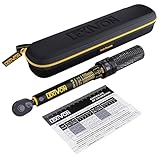
Overview: The LEXIVON LX-180 is a precision 1/4-inch drive torque wrench engineered for applications demanding inch-pound accuracy. With a range of 10-150 in-lb (1.1-16.9 Nm), it excels at delicate tasks like bicycle component assembly, small engine repair, and electronics work where over-torquing can cause catastrophic damage. The 72-tooth ratchet mechanism allows operation in confined spaces with just a 5-degree swing arc, while the click-type design provides both audible and tactile feedback when reaching the preset value.
What Makes It Stand Out: The micro-adjustment feature enables fine-tuning in precise increments, essential for sensitive fasteners on carbon fiber bike parts or electronic housings. Its dual-direction capability adds versatility uncommon in this price tier, while the included zippered protective case ensures safe storage and transport. The compact head design navigates tight engine bays and equipment enclosures where larger wrenches cannot fit.
Value for Money: Positioned in the upper-budget range, this wrench offers professional features without premium pricing. The Chrome Vanadium steel construction and protective case provide better value than bare-bones competitors. While brands like Snap-On offer tighter tolerances, the LX-180 delivers sufficient accuracy for most precision applications at a fraction of the cost.
Strengths and Weaknesses: Pros include excellent low-range precision, compact 72-tooth head, dual-direction functionality, and clear scale markings. The inch-pound scale is perfect for small fasteners. Cons involve the limited torque range unsuitable for automotive lug nuts, and the 1/4-inch drive restricts compatibility with larger sockets. The brand lacks the long-term reputation of established toolmakers.
Bottom Line: An excellent choice for bicycle mechanics, electronics technicians, and hobbyists working on small equipment. For heavy automotive applications, consider a higher capacity alternative, but for precision work, this tool delivers outstanding performance.
2. LEXIVON 3/8-Inch Drive Click Torque Wrench 1080 Ft-Lb/13.6108.5 Nm (LX-182)

Overview: The LEXIVON LX-182 is a robust 3/8-inch drive click torque wrench designed for automotive and motorcycle maintenance. Covering 10-80 ft-lb, it handles most common tasks from spark plugs to suspension components. The tool ships pre-calibrated to ±4% accuracy with a traceable serial number certificate, giving professionals and serious DIYers immediate confidence in their work without requiring initial calibration.
What Makes It Stand Out: The proprietary Electro-Black finish treatment provides superior corrosion resistance compared to traditional chrome plating, extending tool life in humid environments. The highlighted yellow dual-range scale remains highly visible even in dim garage lighting. The reinforced ratchet head, constructed from heat-treated Chrome Vanadium alloy steel, withstands regular professional use without premature wear.
Value for Money: This wrench occupies the sweet spot between budget and premium brands. The included calibration certificate and advanced finish treatment justify the modest price premium over basic models, while costing significantly less than Snap-On or Mac Tools equivalents. For home mechanics seeking professional reliability, it represents a smart investment.
Strengths and Weaknesses: Strengths include certified accuracy, excellent scale readability, durable construction, and a reversible ratchet head. The primary weakness is that torque measurement only functions clockwise, limiting utility for left-hand thread applications. The 80 ft-lb maximum may also prove insufficient for some truck lug nuts or heavy-duty suspension bolts.
Bottom Line: A reliable workhorse for automotive enthusiasts and home mechanics. The calibration certificate and durable finish make it a smart investment for those valuing precision without premium pricing. Consider your specific torque requirements before purchasing.
3. SUERCUP 3/8-Inch Drive Click Torque Wrench - 5-45 Ft-Lb/6.8-61Nm, Dual-Direction Adjustable 72 Tooth Click Torque Wrench for Bike, Motorcycle and Car Repair
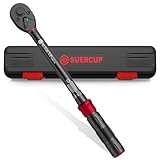
Overview: SUERCUP’s 3/8-inch drive torque wrench targets the bicycle and motorcycle maintenance market with a versatile 5-45 ft-lb range. After enduring 20,000 calibration tests, it maintains ±3% accuracy, placing it among reliable mid-tier tools. The dual-direction measurement capability distinguishes it from many competitors that only measure clockwise torque, significantly expanding its versatility for different applications and thread types.
What Makes It Stand Out: The red anodized tail plug improves corrosion resistance while providing a visual quality indicator uncommon in this category. The knurled handle, inspired by flashlight designs, offers superior grip compared to smooth finishes, especially with oily hands. The 72-tooth ratchet, made from chromium molybdenum steel, delivers smooth operation in tight engine bays and requires only 5 degrees of swing arc.
Value for Money: This wrench offers professional-grade accuracy at a hobbyist price point. The included storage case and bidirectional functionality provide exceptional value compared to single-direction wrenches from established brands. For cyclists and DIY mechanics, it delivers capabilities typically found in tools costing twice as much.
Strengths and Weaknesses: Pros include impressive accuracy validation, comfortable ergonomic handle, bidirectional measurement, and a versatile torque range for most light automotive tasks. Cons involve the lesser-known brand reputation and potentially inconsistent quality control between production batches. The plastic storage case, while functional, may not withstand heavy shop use.
Bottom Line: Ideal for cyclists, motorcycle owners, and DIY mechanics seeking precision without premium pricing. The bidirectional feature and proven accuracy make it a versatile addition to any toolbox. Perfect for home garage use where extreme durability is less critical.
4. MESGS 3/8-Inch Drive Torque Wrench, 5–45 Ft-Lb (6.8–61 Nm), ±3% Accuracy, 72-Tooth Dual-Direction Mini Torque Wrench with Reversible Head, Quick Release, Dual Scale for Bike (3/8-Inch, 5-45 FT.LB)

Overview: MESGS delivers a compact 3/8-inch drive torque wrench with a 5-45 ft-lb range engineered for precision work in tight spaces. Having survived 50,000+ calibration tests while maintaining ±3% accuracy, this tool demonstrates exceptional reliability. The laser-etched dual-scale markings on a black background ensure permanent readability in any lighting condition, from bright workshops to dim garage corners, eliminating the fading issues common with painted scales.
What Makes It Stand Out: The crisp 45dB click notification is noticeably louder than many competitors, eliminating guesswork in noisy environments. The black-orange anodized handle provides excellent grip while resisting solvents and oils. The quick-release button and 72-tooth reversible ratchet make socket changes fast and enable work in extremely tight spaces with just a 5-degree swing arc, perfect for modern engine bays.
Value for Money: While priced slightly above budget options, the extensive testing documentation and premium features justify the cost. The laser etching ensures permanent scale visibility, and the validated durability means fewer replacements over time. For serious hobbyists, the modest premium pays dividends in reliability.
Strengths and Weaknesses: Strengths include industry-leading test validation, superior scale visibility, compact head design, and loud audible feedback. The limited 45 ft-lb maximum restricts its use for larger automotive fasteners like suspension components or lug nuts. The orange color scheme may not appeal to traditionalists preferring classic chrome.
Bottom Line: Perfect for bicycle mechanics, motorcycle enthusiasts, and automotive technicians focusing on engine work. The validated durability and clear feedback make it worth the modest premium for those who prioritize precision and longevity in a compact package.
5. DANGKIY Torque Wrench, 1/4-Inch Lightweight Dual-direction Drive Click Torque Wrench 20-240IN.LB/2.3-27.1N.M, 72 tooth High Precision Bike Torque Wrenches with Dual Range Scales for bicycle

Overview: DANGKIY’s 1/4-inch drive torque wrench offers 20-240 in-lb capacity in a lightweight package designed for bicycle maintenance and light assembly work. After 30,000 verification tests confirming ±3% accuracy, this tool targets users prioritizing portability and precision. The 3-degree ratchet curved head provides exceptional access to recessed fasteners found on modern bike components and tight electronic enclosures.
What Makes It Stand Out: The aluminum-titanium alloy handle reduces weight while maintaining durability, significantly reducing fatigue during extended use. The square knurled texture ensures positive grip even with oily hands. The standout feature is the three-year unconditional warranty, demonstrating manufacturer confidence rarely seen in this price category and providing buyer peace of mind.
Value for Money: Positioned competitively, the warranty and lightweight construction offer compelling value. The quick-release button and dual-range scales add convenience typically found in pricier models. For cyclists and home assemblers, the combination of features and warranty protection makes it a low-risk purchase.
Strengths and Weaknesses: Pros include excellent ergonomics, verified accuracy, lightweight design, and industry-leading warranty coverage. The 1/4-inch drive limits applications to smaller fasteners, making it unsuitable for automotive or heavy machinery work. As a newer brand, long-term durability in professional environments remains unproven compared to century-old manufacturers.
Bottom Line: An excellent choice for cyclists, home assemblers, and technicians working on electronics or small equipment. The warranty and ergonomic design make it a risk-free purchase for specialized low-torque applications. Don’t expect it to handle lug nuts, but for its intended purpose, it excels.
6. VANPO 1/4-inch Drive Click Torque Wrench, 20-240 in. lb/2.3-27.1 Nm, Inch Pound Torque Wrench Set with 1/4" to 3/8" Adapter, 10cm Extension Bar, Small Bike Torque Wrench for MTB, Bicycle Maintenance
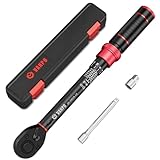
Overview: The VANPO torque wrench is a specialized 1/4-inch drive tool engineered for precision tasks on bicycles, electronics, and light machinery. With a dual-range scale of 20-240 in.lb (2.3-27.1 Nm), it targets the lower torque spectrum where accuracy is critical for preventing damage to delicate components like carbon fiber frames or aluminum threads.
What Makes It Stand Out: Its aluminum shaft construction delivers superior fatigue resistance compared to traditional steel designs, while the chromium-molybdenum steel handle ensures rust prevention and durability. The click-type mechanism provides both audible and tactile feedback when reaching the preset torque, a crucial feature for bike maintenance. The easy torque setting system with a locking knob simplifies adjustments, and the included storage case keeps everything organized.
Value for Money: As a single-drive wrench, it offers excellent value for cyclists and hobbyists who don’t need multiple sizes. The inclusion of a 1/4" to 3/8" adapter and 10cm extension bar expands its utility without requiring separate purchases. The 24-month warranty provides peace of mind that competitors often charge extra for.
Strengths and Weaknesses: Pros: Lightweight yet durable aluminum shaft, precise click feedback, easy-to-read dual scales, convenient locking mechanism, comprehensive storage solution, strong warranty support. Cons: Limited to 1/4-inch drive only, maximum 240 in.lb may be insufficient for automotive work, plastic case feels utilitarian rather than premium.
Bottom Line: For bicycle maintenance and light-duty precision work, the VANPO is an excellent specialized tool that delivers reliability without the cost of a full set. Its targeted design serves its intended audience perfectly.
7. BULLTOOLS 1/4-inch Drive Click Torque Wrench Set Dual-Direction Adjustable 90-tooth Torque Wrench with Buckle (20-200in.lb / 2.26-22.6Nm)
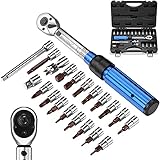
Overview: The BULLTOOLS torque wrench set is a professional-grade 1/4-inch drive tool offering 20-200 in.lb (2.26-22.6 Nm) range with certified ±3% accuracy. The 90-tooth ratchet mechanism requires only 4 degrees of rotation, making it ideal for confined spaces where movement is restricted.
What Makes It Stand Out: The industrial-grade calibration certificate included is rare in this price class, verifying its ±3% accuracy. The 90-tooth ratchet head is exceptionally fine-toothed, providing superior access compared to standard 72-tooth designs. Its hardened chromium-molybdenum alloy head is stronger than typical chromium-vanadium steel, while the aluminum-titanium alloy handle offers an excellent grip with anti-corrosion properties.
Value for Money: This set includes 16 sockets, a 3/8" conversion head, extension bar, universal joint, and longer Allen key—essentially a complete starter kit. The professional calibration and premium materials justify its slightly higher price point compared to basic models, eliminating the need for immediate upgrades.
Strengths and Weaknesses: Pros: Certified ±3% accuracy, ultra-fine 90-tooth ratchet, comprehensive accessory package, quick-release button, dual-direction capability, premium alloy construction. Cons: 200 in.lb maximum may limit some applications, 1/4-inch drive only, included sockets may not be the highest quality, slightly heavier than aluminum-only models.
Bottom Line: A professional-ready set that delivers exceptional precision and access in tight spaces. The BULLTOOLS wrench is ideal for serious DIYers and technicians who value certified accuracy and comprehensive accessories.
8. DISEN 9PCS Click Torque Wrench Set 1/4" 3/8" 1/2" Drive 20-220 In.lb, 5-45 Ft.lb, 10-170 Ft.lb with 6 Adapters, ±3% Accuracy, 72-Tooth, Dual Scale, Storage Case for Bike, Motorcycle, Car, Truck Repair

Overview: The DISEN 9-piece set provides a complete torque solution with three drive sizes (1/4", 3/8", 1/2") covering ranges from 10-220 in.lb up to 10-170 ft.lb. This versatility makes it suitable for everything from delicate bike components to automotive lug nuts and light truck maintenance.
What Makes It Stand Out: Offering three calibrated wrenches in one package is the primary advantage, eliminating the need to purchase separate tools for different applications. The 72-tooth ratchet provides a smooth 5-degree arc swing, while the quick-release button ensures secure socket changes. The set includes six essential adapters, all housed in a sturdy portable case that keeps the workshop organized.
Value for Money: This set represents exceptional value, essentially providing three torque wrenches for roughly the price many brands charge for one. The ±3% factory calibration with included certificate, combined with 24-month support, makes it a cost-effective solution for DIY enthusiasts needing comprehensive coverage without professional-grade individual tool costs.
Strengths and Weaknesses: Pros: Three drive sizes cover all common applications, factory-calibrated accuracy, comprehensive adapter set, loud audible click, durable Cr-V steel construction, excellent storage case. Cons: Individual wrenches may feel less robust than single-purpose premium models, click sound is subtler at lower torque settings, larger case requires more storage space.
Bottom Line: The DISEN set is the ultimate all-in-one solution for home mechanics tackling diverse projects. Its versatility and completeness make it an unbeatable value for those needing multiple drive sizes.
9. SUZUME 3PCS Torque Wrench Set 72 Teeth Dual-Direction Adjustable Torque Wrench Dual-Scales 1/4 & 3/8 & 1/2-Inch ±3% Accuracy Click Torque Wrenches for Bicycle, Motorcycle, Car,Maintenance

Overview: The SUZUME three-piece set includes 1/4", 3/8", and 1/2" drive torque wrenches, each engineered for ±3% accuracy even after 10,000+ uses. The chrome-plated CR-V steel construction provides a mirror-like finish while ensuring durability across bicycles, motorcycles, and automotive applications.
What Makes It Stand Out: The combination of CR-V steel with chrome plating and lightweight aluminum handles creates an optimal balance of durability and usability. The bi-directional ratchet heads work in both directions, while the clear “click” sound accompanied by vibration provides unmistakable feedback. Laser-printed scales resist wear, maintaining readability through years of use.
Value for Money: As a three-wrench set, it offers comprehensive coverage at a mid-range price point. The durability testing (10,000+ cycles) suggests long-term reliability that justifies the investment over cheaper alternatives that may require frequent recalibration. It’s positioned as a gift-worthy set, indicating confidence in its presentation and quality.
Strengths and Weaknesses: Pros: Three drive sizes for complete coverage, proven durability (10,000+ cycles), attractive chrome finish, dual-direction ratchets, vibration-enhanced click feedback, laser-etched scales. Cons: No mentioned calibration certificate, included accessories are minimal compared to competitors, chrome finish may show scratches over time, marketing as “gift” may not appeal to professional users.
Bottom Line: The SUZUME set balances aesthetics, durability, and functionality, making it ideal for hobbyists and DIYers who want reliable performance across multiple applications without breaking the bank.
10. MESGS 1/4-Inch Drive Click Torque Wrench, 20-240 In-Lb / 2.3-27.1 Nm Mini Torque Wrench, Dual-Direction 72 Tooth, Dual Scale for Bike, Motorcycle, Car Repair (1/4-Inch, 20-240 IN.LB)
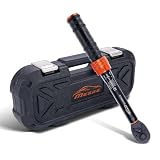
Overview: The MESGS mini torque wrench is a precision 1/4-inch drive tool offering 20-240 in-lb (2.3-27.1 Nm) range with professional ±3% accuracy verified through 50,000+ tests. Its compact design targets bike components, motorcycles, and automotive spark plugs where space is limited and precision is paramount.
What Makes It Stand Out: The extreme testing protocol (50,000+ cycles) demonstrates exceptional reliability. The 72-tooth reversible ratchet provides smooth operation in tight spaces, while the laser-etched dual scales (Ft-Lb and Nm) ensure permanent readability. The crisp 45dB click sound is specifically engineered to be audible even in noisy workshop environments, eliminating guesswork.
Value for Money: As a single-drive wrench, it competes directly with specialized bike tools but offers higher durability ratings than most. The professional calibration and extensive testing justify its price premium over entry-level models, making it a “buy once” solution for serious enthusiasts who prioritize longevity.
Strengths and Weaknesses: Pros: Extreme durability testing (50,000+ cycles), excellent audible feedback (45dB), laser-etched permanent scales, compact 72-tooth ratchet, quick-release mechanism, ergonomic anodized handle. Cons: Single 1/4-inch drive limits versatility, maximum 240 in.lb may not cover all automotive needs, no included accessories or storage case mentioned, higher price for a single wrench.
Bottom Line: The MESGS wrench is a premium single-drive tool built for longevity and precision. It’s perfect for dedicated cyclists and mechanics who need reliable, audible feedback in a compact package and are willing to invest in durability.
Understanding Torque Wrench Fundamentals
What Makes a Torque Wrench “Premium”?
Premium torque wrenches distinguish themselves through superior materials, tighter manufacturing tolerances, and advanced mechanisms that maintain accuracy over thousands of cycles. Unlike economy models that might lose calibration after a few dozen uses, professional-grade tools feature hardened steel construction, precision-machined internal components, and quality control that meets international standards. The “premium” designation also extends to user experience—smooth adjustment mechanisms, clear scale markings that don’t fade, and tactile feedback that you can trust even when you can’t see the tool head in a dark engine bay.
The Physics of Torque in Tight Spaces
Applying correct torque in confined areas introduces unique challenges that premium compact wrenches specifically address. When you’re working at awkward angles with limited swing room, the mechanical advantage changes dramatically. Shorter handles mean less leverage, which requires more sensitive internal mechanisms to detect the precise moment of torque achievement. Premium tools compensate for this with optimized gear ratios and more sophisticated click mechanisms that engage reliably even when you’re applying force at less-than-ideal angles. Understanding this relationship helps you appreciate why a well-engineered compact wrench outperforms simply cutting down a standard wrench handle.
Why Compact Design Matters for Modern Engines
How Modern Engine Design Demands Smaller Tools
Today’s engine bays pack more technology into smaller footprints than ever before. Turbochargers, direct injection systems, variable valve timing actuators, and complex emissions equipment have eliminated the generous clearances found in older vehicles. Manufacturers optimize for packaging efficiency, not serviceability. This means fasteners on water pumps, intake manifolds, and timing components often sit recessed between obstacles with less than 90 degrees of swing clearance. Compact torque wrenches with slim profiles and shortened heads can access these fasteners without requiring extensive component removal, saving hours of labor and reducing the risk of disturbing adjacent systems.
The Cost of Component Removal vs. Proper Tool Access
Every time you remove additional components to access a single fastener, you introduce new risks and costs. Each removed part requires new gaskets, potential fluid loss, and additional torque specifications to remember during reassembly. A $200 premium compact torque wrench that lets you reach that hidden timing cover bolt directly can save you $500 in gaskets, fluids, and labor time on a single job. The math becomes even more compelling when you factor in the risk of damaging delicate sensors, vacuum lines, or wiring harnesses during unnecessary disassembly.
Key Features That Justify Premium Pricing
Precision Engineering and Manufacturing Tolerances
Premium manufacturers hold tolerances to ±3% or better in the primary direction of use, compared to ±4% or ±5% for standard tools. This might seem like a small difference, but when you’re tightening aluminum components or working with modern stretch bolts, that extra precision prevents both under-torquing (which causes leaks and failures) and over-torquing (which strips threads and cracks castings). The internal mechanism achieves this through precision-ground pawl systems, high-quality springs with consistent force curves, and anti-backlash designs that maintain setting integrity even when the tool gets bumped around in your toolbox.
Advanced Scale Visibility and Adjustment Mechanisms
In dark, cramped engine bays, you can’t afford to guess your torque setting. Premium compact wrenches feature laser-etched or deeply stamped scales with high-contrast markings that remain readable after years of oil and solvent exposure. The adjustment mechanism itself operates smoothly without sticking or jumping, often incorporating micro-adjustment features that let you dial in exact specifications rather than approximating between marked values. Some advanced models include locking mechanisms that prevent accidental setting changes when you’re wrestling the tool into position—a critical feature when you can’t see the scale during use.
Materials and Construction Quality
High-Grade Steel Alloys and Durability
The metallurgy of premium torque wrenches directly impacts their longevity and consistency. Chrome-vanadium steel alloys provide the ideal balance of strength, flexibility, and corrosion resistance. The best tools use this material not just for the handle and head, but for internal components like the pawl and cam mechanism. This prevents wear that gradually degrades accuracy. Look for fully hardened construction rather than surface-hardened parts, as the latter can wear through at contact points, creating slop in the mechanism that destroys precision. The finish matters too—quality chrome plating or protective coatings prevent rust without adding excessive thickness that could compromise clearance.
Weight Balance and Fatigue Reduction
A well-balanced torque wrench reduces arm fatigue during extended use, which indirectly improves accuracy as your hand remains steady. Premium compact models achieve optimal balance by distributing mass along the handle and using lightweight but strong materials for non-stressed components. The pivot point between handle and head receives special attention—excessive weight here makes the tool feel clumsy and increases the risk of the head dropping onto fragile components if you lose your grip. The best designs position the center of gravity slightly back from the head, giving you better control in vertical or overhead applications.
Accuracy and Calibration Standards
Certification Standards to Look For
Professional-grade torque wrenches should carry certifications from recognized bodies like ASME (American Society of Mechanical Engineers) or ISO (International Organization for Standardization). ASME B107.300 and ISO 6789 represent the gold standards, requiring rigorous testing and periodic recalibration verification. Tools meeting these standards include individual calibration certificates with test results at multiple points across their range. This documentation proves invaluable in professional settings where liability concerns demand verified accuracy, and it gives DIY users confidence that their investment will perform as specified.
Calibration Intervals and Procedures
Even premium tools require periodic recalibration, but quality construction significantly extends the interval. While economy wrenches might need annual recalibration with light use, premium models typically maintain accuracy for 5,000 cycles or 12 months of professional use before requiring service. The best designs incorporate features that protect calibration, such as mechanisms that release tension on internal springs when stored at zero setting. Some advanced models even include wear indicators or built-in calibration check features that let you verify accuracy without sending the tool out for service—a huge advantage when you’re in the middle of a critical job.
Ergonomics and User Experience
Handle Design and Grip Technology
When you’re applying 20-30 foot-pounds of torque with a 10-inch handle, grip comfort directly impacts your ability to apply force smoothly. Premium compact wrenches feature ergonomic handles with materials that maintain grip even when covered in oil or coolant. Dual-material construction—firm inner core for stability with softer outer layer for comfort—prevents hand fatigue and slippage. The grip pattern matters too; subtle texturing provides secure hold without being abrasive to your hands during repeated use. Some designs incorporate finger grooves or flared ends that prevent your hand from sliding forward during the critical final turn.
Tactile and Audible Feedback Quality
The “click” moment defines torque wrench operation, and premium tools deliver feedback you can both hear and feel, even in noisy shops. High-quality mechanisms produce a crisp, distinct click that resonates through the handle, while economy models often give a mushy, ambiguous sensation. In tight spaces where you might not see the mechanism engage, this clear feedback prevents over-torquing. The best designs also provide subtle pre-click tension changes that experienced users learn to detect, giving them advanced warning that they’re approaching the target torque.
Size and Profile Considerations
Head Profile and Access Angles
The head profile determines whether you can actually reach that fastener buried behind the alternator. Premium compact wrenches feature ultra-slim heads with optimized gear arrangements that reduce thickness without sacrificing strength. The transition from head to handle uses gentle curves rather than sharp angles, allowing the tool to snake around obstacles. Some designs incorporate offset heads or pivoting mechanisms that let you approach fasteners from the only available angle. The most versatile options maintain a low profile even with sockets attached, using thin-wall designs that don’t add unnecessary bulk.
Overall Length and Swing Clearance
Compact torque wrenches typically range from 8 to 14 inches in overall length, trading maximum leverage for accessibility. The sweet spot for engine work usually falls between 10 and 12 inches—short enough for tight spots but long enough to generate sufficient torque without excessive effort. Premium designs optimize this length-to-torque ratio through handle geometry that maximizes your mechanical advantage. The handle shape might taper or include grip zones that let you choke up for control on low-torque fasteners or slide back for leverage on higher-torque applications.
Drive Sizes and Their Applications
1/4-inch, 3/8-inch, and 1/2-inch Drive Comparisons
Compact torque wrenches come in three primary drive sizes, each serving specific engine applications. The 1/4-inch drive handles fasteners from 20 to 200 inch-pounds—perfect for throttle bodies, valve covers, and interior components where over-torquing easily damages threads. The 3/8-inch drive represents the most versatile option for engine work, covering 5 to 80 foot-pounds and handling most intake manifold, water pump, and accessory bracket bolts. The 1/2-inch compact models, though less common, provide access to main bearing caps and cylinder head bolts in tight diesel applications where standard 1/2-inch wrenches simply don’t fit. Premium manufacturers often produce all three sizes with identical quality standards and ergonomic features.
Socket Retention and Quick-Release Mechanisms
In confined spaces, you can’t afford for sockets to fall off and disappear into the abyss of the engine bay. Premium compact wrenches feature robust ball-detent retention systems with enough grip to hold sockets securely but release easily when you press the quick-release button. The button itself should sit flush or slightly recessed to prevent accidental activation when you’re wrestling the tool into position. Some advanced designs include locking mechanisms that require deliberate action to release, providing extra security when you’re working overhead or in vertical orientations where gravity works against you.
Click-Type vs. Digital Mechanisms
Pros and Cons of Each Mechanism Type
Traditional click-type mechanisms dominate the premium compact market for good reason—they’re simple, reliable, and provide immediate feedback without batteries. The best designs use multiple pawls for smoother engagement and longer life. Digital torque wrenches, while bulkier, offer advantages in tight spaces: programmable target torque with visual and vibration alerts, peak hold functions that show you the exact torque achieved, and angle measurement for stretch bolts. However, they require battery changes and typically cost 50-100% more than comparable click-type models. For most engine work, a high-quality click-type wrench provides the best balance of reliability, size, and cost.
Durability in Harsh Environments
Engine bays subject tools to extreme temperature swings, chemical exposure, and constant vibration. Premium click-type mechanisms use sealed designs that keep out oil, coolant, and cleaning solvents that could degrade internal springs and pivot points. Digital models require additional protection—look for IP ratings that certify dust and moisture resistance, and consider how display screens hold up to UV exposure and impacts. The battery compartment should seal securely, and buttons need protective membranes that prevent fluid intrusion while maintaining tactile response. In professional settings, many mechanics keep both types: click-type for daily reliability and digital for specialized procedures requiring documentation.
Storage and Maintenance Best Practices
Proper Storage Solutions
How you store your torque wrench directly impacts its lifespan and accuracy. Premium tools deserve premium storage—dedicated cases or wall-mounted holders that protect them from impacts and maintain them at zero setting. Never store a torque wrench with tension on the spring, as this causes permanent set and accuracy drift. The best compact models include storage tubes or pouches designed specifically for their dimensions, preventing them from rattling around in your toolbox with heavier tools that could damage the adjustment mechanism. For mobile mechanics, consider cases with foam cutouts that hold the wrench securely during transport.
Cleaning and Protection Protocols
After each use, wipe down your torque wrench with a clean cloth to remove oil, grease, and solvents that could degrade seals or markings. Avoid aggressive cleaners that strip lubricants from internal mechanisms—a mild soap solution suffices for most contamination. Periodically check the head and adjustment mechanism for smooth operation; any grinding or sticking indicates contamination that requires professional service. The best maintenance schedule includes annual professional cleaning and recalibration for heavy use, or biennial service for occasional DIY applications. This preventative care costs far less than replacing a damaged engine component due to inaccurate torque.
Safety Considerations in Confined Spaces
Avoiding Component Damage
In tight engine bays, a slipped torque wrench can cause catastrophic damage to adjacent components. Premium designs incorporate features that minimize this risk: non-marring finishes on the head and handle, smooth contours that won’t catch on wiring or hoses, and secure grip surfaces that maintain control even with oily hands. The most important safety feature remains the reliable click mechanism—knowing exactly when to stop prevents you from applying that extra half-turn that cracks a thermostat housing or strips a cam cap bolt. Always practice the motion path before applying torque to ensure the wrench won’t contact anything fragile during the final degrees of rotation.
Personal Safety and Ergonomic Risks
Working in confined spaces forces awkward body positions that increase injury risk. Compact torque wrenches reduce this by allowing more natural hand positions, but you must still respect biomechanics. Never use cheater bars or extend handles on compact wrenches—the shorter design assumes specific force application that extensions compromise. When working overhead or in vertical orientations, maintain three points of contact with the vehicle and consider using a step stool to improve your angle. The premium price includes ergonomic research that reduces repetitive strain injuries, making these tools cheaper than physical therapy in the long run.
Investment Value and Long-Term Benefits
When to Invest in Professional-Grade Tools
If you’re turning wrenches more than twice a month, upgrading to premium compact torque wrenches makes financial sense. The cost difference amortizes quickly over multiple uses, and the peace of mind when working on expensive components is invaluable. For professional mechanics, the decision is clear—your livelihood depends on reliable tools that maintain calibration and don’t fail during critical jobs. DIY enthusiasts should consider the value of the vehicles they’re working on: if you’re maintaining a late-model car with aluminum components and tight tolerances, the investment protection alone justifies the cost. Even for older vehicles, the time saved by accessing fasteners directly rather than removing components adds up significantly.
Budget Considerations and ROI
A quality compact torque wrench set spanning 1/4-inch to 3/8-inch drives typically costs between $300 and $600—substantially more than budget alternatives at $50-100 each. However, consider the replacement cost of a stripped cylinder head thread ($800-1500 repair), a cracked intake manifold ($400-800), or a damaged turbocharger flange ($2000+). The ROI becomes positive the first time you prevent one major component failure. Additionally, premium tools retain 50-70% of their value on the used market, while budget tools become worthless once accuracy drifts. Some professional-grade manufacturers offer trade-in programs or extended warranties that further improve the investment equation.
Common Mistakes to Avoid
Misapplication of Tool Capabilities
The most common error involves using a compact torque wrench outside its intended torque range. These tools excel in the 5-80 foot-pound range but shouldn’t replace full-size wrenches for applications like lug nuts or main bearing caps. Using the wrong size tool forces you to apply excessive effort, compromising smooth force application and potentially damaging the internal mechanism. Similarly, avoid using compact wrenches for initial fastener seating or breakaway torque—this abuse accelerates wear on the precision click mechanism. Always start fasteners by hand, then use a ratchet to snug them before final torque with your precision tool.
Ignoring Maintenance Schedules
Even the best torque wrench becomes inaccurate without proper care. Many users invest in premium tools then neglect annual calibration checks, assuming the quality construction makes them immune to drift. In reality, regular use, temperature cycling, and occasional drops all affect accuracy over time. Another critical mistake involves storing wrenches at their maximum setting, which permanently compresses the reference spring. Always return the tool to its lowest setting after use. Finally, resist the temptation to disassemble the tool yourself—internal mechanisms require precise assembly and lubrication that factory service centers provide.
Making Your Final Decision
Evaluating Your Specific Needs
Before purchasing, audit the vehicles you work on most frequently. Measure access clearance on the tightest fasteners you regularly encounter—this determines the maximum head thickness and overall length your situations demand. Consider the torque specifications you see most often; if you primarily work on Japanese four-cylinder engines, you’ll need different ranges than someone servicing diesel trucks. Professional mechanics should prioritize calibration certification and warranty support, while DIY users might emphasize versatility and storage solutions. Create a checklist of must-have features versus nice-to-have options to avoid paying for capabilities you’ll never use.
Building Your Compact Torque Wrench Strategy
Most users benefit from starting with a premium 3/8-inch drive compact torque wrench covering 5-80 foot-pounds, as this handles the majority of engine fasteners. Add a 1/4-inch drive model for smaller fasteners and interior work. Consider whether you need overlapping ranges between tools or if you can cover all applications with two carefully selected models. Some manufacturers offer modular systems with interchangeable heads that convert a single handle into multiple configurations—excellent for maximizing value while minimizing toolbox bulk. Whatever strategy you choose, invest in quality first; a single premium tool outperforms three inaccurate economy models.
Frequently Asked Questions
How often should I calibrate my premium compact torque wrench?
For professional daily use, calibrate annually or every 5,000 cycles. For occasional DIY use, every two years suffices. Always calibrate after any drop onto concrete or exposure to extreme overload. Many premium manufacturers offer free or discounted calibration services to maintain your tool’s certification.
Can I use extensions or universals with compact torque wrenches without affecting accuracy?
Extensions that keep the socket in line with the drive (straight extensions) don’t affect torque readings. However, wobble extensions and universal joints change the torque applied to the fastener. As a rule, add 5-10% to your setting when using universals, and always return to a straight alignment for the final torque. Premium manufacturers provide guidelines for their specific tool designs.
Why do premium torque wrenches cost so much more than standard ones?
The price reflects precision-machined internal components, higher-grade materials, rigorous calibration testing with certification, and ergonomic research. You’re paying for accuracy that holds up over thousands of cycles, reliability that prevents costly mistakes, and durability that makes the tool a lifetime investment rather than a disposable item.
Is a digital compact torque wrench worth the extra cost for engine work?
For most applications, a quality click-type wrench provides better value and reliability. Digital models excel when you need to document torque values, work with angle-torque specifications, or require visual/vibration alerts in noisy environments where audible clicks get lost. Consider digital if you regularly work on modern engines with stretch bolts that require angle measurement.
What’s the minimum torque range I need for engine work?
Most engine fasteners require 5-80 foot-pounds, with many critical specifications falling between 15-25 foot-pounds. Your compact torque wrench should accurately read down to at least 5 foot-pounds for proper low-torque fastener seating. Models that claim accuracy below this often lose precision at the bottom of their range.
Can one compact torque wrench handle all my engine bay needs?
A single 3/8-inch drive compact wrench covers approximately 80% of engine fasteners. However, you’ll need a 1/4-inch drive for smaller fasteners (valve covers, throttle bodies, sensors) and occasionally a 1/2-inch drive for larger diesel components. Two wrenches—1/4-inch and 3/8-inch—handle 95% of typical engine work.
How do I know if my torque wrench is still accurate?
Test it on a known weight using the formula: torque = weight (pounds) × distance (feet). Hang a 20-pound weight exactly one foot from the drive center; the wrench should click at 20 foot-pounds. Alternatively, compare readings between multiple wrenches on the same fastener. Any significant deviation indicates need for professional calibration.
What’s the best way to store compact torque wrenches in a crowded toolbox?
Use the storage case provided or mount them on a dedicated tool board with individual holders. Never store them loose where heavier tools can impact the adjustment mechanism. Always return the setting to the lowest value after use to relieve spring tension. For mobile mechanics, foam-lined cases with cutouts prevent damage during transport.
Do I need different torque wrenches for different drive sizes?
Yes, each drive size covers a specific torque range optimally. A 1/2-inch drive wrench won’t accurately measure the low torque values needed for 1/4-inch fasteners, and a 1/4-inch drive tool can’t handle the stress of 1/2-inch applications. Invest in separate premium wrenches for each drive size you regularly use rather than compromising with adapters that reduce accuracy.
Are lifetime warranties on premium torque wrenches actually meaningful?
Quality manufacturers back their tools with substantial warranties because they build them to last. These warranties typically cover manufacturing defects and accuracy drift under normal use, but exclude abuse like over-torquing beyond range or using cheater bars. Read the fine print—some warranties require annual factory calibration to remain valid, which actually benefits you by ensuring ongoing accuracy.
See Also
- 10 Best Compact Torque Wrenches for Tight Engine Spaces in 2026
- 10 Expert-Recommended Compact Torque Wrenches for Tight Engine Spaces in 2026
- 10 Premium Digital Torque Wrenches for High-Performance Engines (Worth the Investment)
- 10 Premium Digital Torque Wrenches for Aerospace Technicians (Worth the Investment)
- 10 Expert-Recommended Compact Torque Wrenches for Tight Spaces in 2026