Table of Contents
Fleet managers know the sting all too well: a critical truck sits idle, engines silent, while precious minutes bleed into costly hours. That single dead battery isn’t just an inconvenience; it’s a direct hit to your bottom line, disrupting schedules, straining customer relationships, and burning through operational budgets at an alarming rate. For fleets where uptime is everything, relying on the old method of chasing down another vehicle for a jump start is a gamble you simply can’t afford. The modern solution isn’t just convenient—it’s a strategic asset designed to keep your entire operation moving with minimal disruption. Imagine regaining control over those unexpected stalls, turning potential chaos back into productive miles within minutes, all from the palm of your hand.
The days of bulky jumper cables and dependent coordination are fading. Today’s premium jump starters for commercial fleets represent a quantum leap in reliability, power, and intelligence, engineered specifically for the harsh realities of heavy-duty diesel and large gasoline engines. These aren’t your grandfather’s battery packs; they’re sophisticated power management tools built to withstand extreme temperatures, constant vibration, and the demanding schedules of professional drivers. Investing in the right unit transcends mere convenience—it becomes a proactive strategy for minimizing costly downtime, enhancing driver safety and autonomy, and safeguarding your fleet’s reputation for on-time performance. Let’s explore what truly separates a worthwhile investment from a costly afterthought in the world of fleet power solutions.
Top 10 Truck Jump Starters for Fleet Operators
Detailed Product Reviews
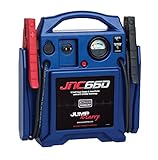
1. Clore Automotive Jump-N-Carry JNC660 1700 Peak Amp 12 Volt Jump Starter , Blue
Overview:
This rugged, lead-acid jump starter targets professionals and serious DIYers needing reliable 12V battery boosts. Built around a robust 22Ah Proformer battery, it delivers 1,700 peak amps through heavy-duty 46" #2 AWG cables, making it suitable for trucks, SUVs, and work vehicles. Its inclusion of a voltmeter and DC outlet adds utility beyond basic jump-starting.
What Makes It Stand Out:
The JNC660 distinguishes itself with industrial-grade cables (#2 AWG) far thicker than typical consumer models, ensuring minimal voltage drop during cranking. The integrated voltmeter provides instant charge status visibility, while the durable build and 12V accessory port enhance its workshop or fleet vehicle versatility.
Value for Money:
Priced mid-range, it offers exceptional durability and cable quality often found in pricier units. Though heavier than lithium alternatives, its reliability and straightforward functionality justify the cost for users prioritizing cable robustness over portability, outperforming cheaper kits with flimsy connections.
Strengths and Weaknesses:
Strengths: Extremely durable cables, accurate voltmeter, solid 1,700A peak output, reliable lead-acid battery performance.
Weaknesses: Bulky and heavy (typical of lead-acid), slower recharge times, no USB ports or modern safety features like reverse-polarity protection.
Bottom Line:
Ideal for mechanics or fleet managers needing a no-nonsense, cable-dominant jump starter. Avoid if portability or multi-functionality are priorities; choose for pure, rugged starting power in a workshop setting.
2. Primedura DM1264 Heavy Duty Truck Jump Starter, 30000A Peak 12V Lithium Battery Booster Pack for Semi Trucks,Starts All Gasoline Engines and Diesel Engines up to 50L in 1 Second at -40°F.

Overview:
Engineered for extreme commercial use, this lithium powerhouse targets semi-trucks, heavy machinery, and marine applications. With a staggering 30,000A peak output and -40°F capability, it promises instant starts for massive diesel engines (up to 50L) even from 0V batteries, backed by advanced safety and multi-functional design.
What Makes It Stand Out:
Its unmatched 30,000A peak current and ability to start dead batteries in freezing conditions (-40°F) set it apart. The integrated 64,000mAh power station (with 45W USB-C), 2,000-lumen LED safety lights, and 12-layer BMS protection transform it from a jumper into a critical roadside assistance hub for fleets.
Value for Money:
Premium-priced but justified for commercial users. Its 3-year standby charge, 4-hour recharge, and durability in harsh environments reduce long-term costs versus frequent replacements. Outperforms cheaper units in extreme reliability, making it cost-effective for professional operations despite the high initial outlay.
Strengths and Weaknesses:
Strengths: Unrivaled cold-weather starting, exceptional safety features, versatile power station/lighting, rapid recharge, rugged all-weather build.
Weaknesses: Very high cost, overkill for passenger vehicles, weight may challenge some users.
Bottom Line:
The definitive choice for trucking fleets, agriculture, or emergency services needing guaranteed starts in brutal conditions. Not for casual drivers, but indispensable for professionals where downtime costs thousands.
3. Schumacher Electric DSR ProSeries Car Battery Jump Starter - 4400 Peak Amp 12V/24V Car Starter, Jump Box & Portable Power Station - Digital Display, Heavy-Duty Booster Cables - DSR166

Overview:
A professional-grade 12V/24V solution designed for mechanics and serious enthusiasts. Delivering 4,400 peak amps, it handles everything from compact cars to 24V semi-trucks. Its dual-voltage capability, digital display, and heavy-duty construction emphasize reliability for daily workshop or roadside use.
What Makes It Stand Out:
The dual-voltage (12V/24V) support is rare at this tier, expanding its utility for commercial fleets. Combined with 60" 2 AWG cables, reverse-polarity protection, and a clear digital display showing real-time diagnostics, it bridges the gap between consumer kits and industrial units.
Value for Money:
Offers strong mid-to-high-tier value for pros. The 24V functionality and Schumacher’s reputation justify its price over basic 12V models. While pricier than entry-level kits, its durability and versatility prevent the need for separate 12V/24V tools, saving long-term costs for workshops.
Strengths and Weaknesses:
Strengths: True 24V support, excellent cable length/gauge, intuitive digital display, robust safety features, professional build quality.
Weaknesses: Bulky lead-acid battery, limited portability, lacks USB-C or high-wattage device charging.
Bottom Line:
Highly recommended for auto shops or diesel owners needing a single tool for both 12V and 24V systems. Skip if you only drive standard passenger cars; essential for commercial technicians.
4. GOOLOO A3 Jump Starter with Air Compressor, 3000A Portable Car Battery Booster (9.0 Gas/6.5L Diesel) with 150PSI Auto-Shutoff Tire Inflator, 12V Supersafe Lithium Jump Box Car Battery Jumper Starter

Overview:
This innovative 3,000A lithium jump starter integrates a high-speed tire inflator, targeting drivers who value multi-functionality. It supports gas engines up to 9.0L and diesels up to 6.5L, with a smart compressor that auto-stops at preset pressures, all in a compact, safety-focused package.
What Makes It Stand Out:
The seamless integration of a powerful 150PSI air compressor (35L/min flow) is its game-changer. The 5 inflation modes, customizable pressure settings, and rapid Tesla tire inflation (30→36 PSI in 60 seconds) make it indispensable for road trips, eliminating the need for separate inflator tools.
Value for Money:
Excellent value as a 2-in-1 solution. While jump starters and inflators sell separately for similar prices, combining them saves space and cost. The 1,000+ charge cycles and extreme temperature tolerance (-4°F to 140°F) enhance longevity, outperforming single-function competitors.
Strengths and Weaknesses:
Strengths: Best-in-class integrated inflator, versatile 7-in-1 functionality, bright pressure display, comprehensive 10-layer safety, compact design.
Weaknesses: Lower peak amps than heavy-duty rivals, inflator runtime limited to 45 mins per charge.
Bottom Line:
Perfect for everyday drivers and adventurers prioritizing tire maintenance alongside jump-starting. Choose this over pure jump starters if you frequently check tire pressures or drive remote routes.
5. YESPER 78,000mAh Heavy Duty Jump Starters - 6000A Car Jump Starter Pack for All 12V Diesel & Gas (Trucks, SUVs, RVs, etc.) SuperSafe Jump Box, Powerful Force Start Jumper Pack (-40°F to 140°F)

Overview:
A lightweight lithium jump starter built for extreme conditions, targeting truckers and RV owners. With 6,000A peak power and -40°F capability, it promises reliable starts for large diesel engines. Its massive 78,000mAh capacity also serves as a high-output power bank for extended trips.
What Makes It Stand Out:
The exceptional energy density (78,000mAh in an 8.4lb unit) enables 152 jump starts per charge and 15+ phone charges. The “BOOST” mode for dead batteries, combined with arctic-temperature resilience and ultra-portability (vs. bulky lead-acid units), makes it ideal for emergency storage in trucks or RVs.
Value for Money:
High value for its niche. Though expensive, its dual role as a jump starter and high-capacity power station justifies the cost for frequent travelers. Outperforms similarly priced units in portability and sustained output, especially for diesel/RV applications where reliability is non-negotiable.
Strengths and Weaknesses:
Strengths: Unmatched portability for power class, exceptional cold-weather performance, high-capacity power bank, 3-mode LED light, compact storage.
Weaknesses: Lower peak amps than industrial competitors, BOOST mode may stress weak batteries.
Bottom Line:
A top pick for RVers, overlanders, and diesel truck owners needing a lightweight, all-weather emergency power solution. Avoid for semi-truck fleets; ideal for personal heavy-vehicle owners prioritizing space savings.
6. AVAPOW 6000A Car Battery Jump Starter(for All Gas or up to 12L Diesel) Powerful Car Jump Starter with Dual USB Quick Charge and DC Output,12V Jump Pack with Built-in LED Bright Light

Overview: The AVAPOW A68 is a high-capacity portable jump starter targeting a wide range of 12V vehicles, from compact cars to large diesel trucks and recreational vehicles, boasting an impressive 6000A peak current rating. It integrates emergency power bank functionality and versatile lighting. What Makes It Stand Out: Its standout feature is the claimed ability to jump-start even fully drained batteries in 2 seconds for engines up to 12L diesel. The 8-layer safety protection system with intelligent clamp indicators prevents user error, while the triple-mode (Lighting/Flash/SOS) ultra-bright LED light adds significant emergency utility beyond basic starting. Value for Money: Priced competitively for its class, the A68 offers exceptional value by supporting massive engines typically requiring bulky units, plus dual USB ports (including Quick Charge) and a comprehensive accessory kit. It undercuts professional-grade units while exceeding most consumer models in peak power. Strengths and Weaknesses: Strengths: Unmatched peak current for portability; robust safety suite; versatile LED light; includes essential accessories like storage case and Type-C cable. Weaknesses: AC adapter not included; “2-second start” depends heavily on battery/condition; very high peak amps may not reflect sustained cranking power for large diesels. Bottom Line: An outstanding, feature-rich jump starter for drivers of large vehicles or those seeking maximum power in a portable package. Its safety, lighting, and accessory bundle justify the price, making it a top recommendation for versatile emergency preparedness.
7. Clore Automotive Truck PAC ES6000 3000 Peak Amp 12V Jump Starter

Overview: The Clore ES6000 is a rugged, industrial-focused 12V jump starter designed explicitly for heavy-duty trucks and commercial vehicles, delivering reliable starting power in demanding environments where portability is secondary to durability. What Makes It Stand Out: Engineered for the worksite, it features robust 54-inch #4 gauge cables and industrial-grade Hot Jaw clamps that ensure superior conductivity and secure connections on large, corroded terminals – critical for cold-weather truck starting where standard jumper cables often fail. Value for Money: While significantly heavier and less portable than lithium consumer models, its industrial build quality and proven reliability in extreme conditions offer strong value for fleet managers or owner-operators. It’s an investment in consistent performance where failure isn’t an option, outlasting cheaper alternatives. Strengths and Weaknesses: Strengths: Exceptional cable quality and clamp design for reliable heavy-duty starts; built for harsh industrial use; high cranking amps (800A) for sustained power. Weaknesses: Bulky and heavy (lead-acid based); lacks modern extras like USB ports or LED lights; limited to 12V systems; not suitable for passenger car glove boxes. Bottom Line: A no-nonsense, workhorse jump starter ideal for truckers, mechanics, and fleet operations needing dependable cranking power for large diesel engines. Its industrial durability makes it worth the weight for professional use, though impractical for everyday passenger vehicle emergencies.
8. Clore Automotive Truck PAC ES1224 3000/1500 Peak Amp 12/24V Jump Starter
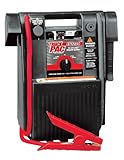
Overview: The Clore ES1224 is a versatile industrial jump starter engineered for professional use on both standard 12V and heavy-equipment 24V electrical systems, common in large trucks, buses, and agricultural machinery. What Makes It Stand Out: Its key differentiator is true dual-voltage capability (12V/24V), delivering 3000 peak amps on 12V and 1500 peak amps on 24V systems. Combined with extra-long 60-inch #2 gauge cables and industrial Hot Jaw clamps, it provides unmatched connectivity and power for diverse heavy machinery. Value for Money: For professionals working across mixed-voltage fleets (e.g., trucking companies, construction sites), this unit delivers exceptional value. The ability to handle both systems eliminates the need for two separate jump starters, justifying its cost through operational efficiency and rugged reliability. Strengths and Weaknesses: Strengths: Essential dual-voltage operation; superior cable length/gauge for hard-to-reach terminals; industrial Hot Jaw clamps prevent slippage; built for continuous professional use. Weaknesses: Very heavy and non-portable (lead-acid); lacks modern consumer features (USB, lights); significantly more expensive than single-voltage units; overkill for passenger vehicles. Bottom Line: An indispensable tool for mechanics and operators in commercial transport or heavy equipment industries requiring a single, robust solution for both 12V and 24V starting emergencies. Its professional-grade build ensures reliability where it matters most.
9. S ZEVZO ET03 Car Jump Starter 4000A Jump Starter Battery Pack for Up to 8.0L Gas and 7.0L Diesel Engines, 74Wh Portable 12V Jump Box with USB Ports, LCD Display, Storage Case, and LED Light

Overview: The ZEVZO ET03 is a feature-packed portable lithium jump starter targeting drivers of larger vehicles, offering strong 4000A peak power for gas (up to 8.0L) and diesel (up to 7.0L) engines, combined with power bank and emergency lighting functions. What Makes It Stand Out: Its “Force Start” function claims to revive 0V dead batteries, a rare capability. The inclusion of a clear LCD battery status display, 10 intelligent safety protections, and a bright 500-lumen LED light with three modes significantly enhances usability and safety over basic models. Value for Money: Competitively priced, the ET03 delivers excellent value with its high capacity (74Wh), LCD screen, robust safety suite, and included storage case. It bridges the gap between budget units and premium brands like NOCO, offering more features per dollar for mid-size to large vehicles. Strengths and Weaknesses: Strengths: Effective “Force Start” for dead batteries; informative LCD display; comprehensive 10-point safety; bright, multi-mode LED light; good accessory bundle. Weaknesses: Peak amps (4000A) lower than AVAPOW; “0V” start requires jump starter to be fully charged; LCD adds complexity vs. simpler indicators. Bottom Line: A highly capable and safe choice for owners of SUVs, trucks, or performance cars needing reliable jumps for larger engines. Its balance of power, smart features, and value makes it a compelling alternative to top-tier brands.
10. NOCO Boost GB40: 1000A UltraSafe Jump Starter – 12V Lithium Battery Booster Pack, Portable Jump Box, Power Bank & Jumper Cables - for 6.0L Gas and 3.0L Diesel Engines
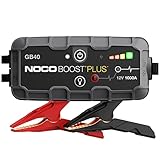
Overview: The NOCO GB40 is a premium, ultra-compact lithium jump starter renowned for its safety and portability, designed for everyday drivers of smaller to mid-size vehicles (up to 6.0L gas / 3.0L diesel), easily fitting in glove boxes or emergency kits. What Makes It Stand Out: NOCO’s patented UltraSafe technology, featuring spark-proof connections and foolproof reverse polarity protection, sets the industry standard for user safety. Its remarkably compact size (2.5 lbs) and integrated 100-lumen 7-mode LED flashlight prioritize convenience without sacrificing essential reliability. Value for Money: Positioned at a premium price point, the GB40 justifies its cost through exceptional build quality, best-in-class safety, and remarkable portability. While less powerful than larger units, it offers unmatched peace of mind for its target vehicle class and doubles as a fast-charging power bank. Strengths and Weaknesses: Strengths: Unbeatable safety features; incredibly compact and lightweight; very fast recharge (3 hours); reliable for stated engine sizes; excellent integrated flashlight. Weaknesses: Limited to smaller engines (not for large trucks/SUVs); lower peak amps (1000A) restricts use cases; premium price; fewer USB features than some rivals. Bottom Line: The definitive choice for drivers prioritizing safety, portability, and reliability for everyday passenger vehicles. Its premium cost is warranted for those seeking the most user-friendly, glove-box-ready emergency solution for common cars and light trucks.
Understanding Fleet-Specific Power Demands
Decoding Cranking Power for Heavy-Duty Engines
Standard passenger vehicle jump starters often lack the sheer muscle required for large displacement diesel or gasoline engines common in commercial trucks. Fleets must prioritize units measured in thousands of peak amps (not just cold cranking amps for smaller engines). Diesel engines, especially multi-cylinder configurations or those with advanced emissions systems, demand significantly higher surge current to overcome compression and turn over reliably, particularly in cold weather. Understanding the specific cranking amp requirements of your fleet’s most common engine types is the non-negotiable first step.
The Critical Role of Battery Chemistry and Capacity
While lithium-ion dominates the market, not all chemistries are equal for fleet use. Lithium Iron Phosphate (LiFePO4) batteries offer superior advantages for commercial applications: dramatically longer cycle life (often 2000+ cycles vs. 500 for standard lithium-ion), enhanced thermal stability crucial for under-hood temperatures, and consistent power delivery even as the battery depletes. Capacity, measured in watt-hours (Wh), directly impacts how many jumps a single charge can deliver and the ability to handle multiple large-engine starts or extended accessory use. Fleets need substantial capacity reserves to avoid being stranded after the first jump.
Voltage Requirements Beyond 12V Systems
Many modern commercial vehicles, especially Class 8 trucks, utilize dual 12V battery systems or even 24V systems for specific components. Premium fleet jump starters must explicitly support these configurations. Attempting to jump a 24V system with a 12V-only device is ineffective and potentially dangerous. Ensure the unit clearly states compatibility with 12V, 24V, or dual-battery setups common in your specific fleet composition to guarantee universal usability across all your assets.
Durability and Reliability for Harsh Environments
Industrial-Grade Construction Standards
Fleet jump starters live in the real world: tossed in toolboxes, exposed to road grime, extreme temperatures, and constant vibration. Look beyond consumer-grade plastics. Units built with reinforced polymer housings, robust internal bracing, and conformal-coated circuit boards resist shock, moisture ingress (aim for at least IP65 rating), and corrosive elements. The build quality should inspire confidence that it will survive daily abuse in a cab or toolbox without failing when needed most.
Temperature Tolerance: From Arctic Cold to Desert Heat
Battery performance plummets in freezing conditions, precisely when starting is hardest. Premium fleet units incorporate advanced battery management systems (BMS) with integrated heating elements specifically designed to maintain optimal battery temperature in sub-zero environments, ensuring reliable cranking power down to -20°F or lower. Conversely, they must also safely operate and charge in high-heat conditions common under hoods or in sun-baked cabs without thermal shutdown or degradation.
Long-Term Performance and Cycle Life Expectancy
Fleets need longevity, not just initial power. A unit that degrades significantly after 100 jumps becomes a liability. Focus on LiFePO4 chemistry and manufacturers providing clear cycle life specifications (e.g., 80% capacity retained after 2000 cycles). This translates directly to years of reliable service, minimizing replacement frequency and the associated administrative and operational costs of constantly sourcing new units.
Safety and Operational Intelligence
Multi-Layered Safety Protocols
Safety isn’t optional with high-power devices. Premium units integrate multiple redundant protections: reverse polarity alarms with automatic shutdown (preventing sparks and damage if clamps are connected wrong), short-circuit protection, over-current protection, over-charge/discharge protection, and thermal runaway safeguards. These features protect the jump starter, the vehicle’s sensitive electronics, and, most importantly, the operator from potentially hazardous situations.
Smart Diagnostics and Health Monitoring
Beyond just starting the engine, advanced units provide valuable fleet intelligence. Built-in voltage meters accurately diagnose whether a battery is truly dead or just drained, preventing unnecessary jumps. Some offer state-of-charge indicators for both the jump starter itself and the vehicle battery, helping drivers make informed decisions. Post-jump diagnostics can even flag potential underlying battery or charging system issues, enabling proactive maintenance before the next failure.
Ease of Use Under Pressure
When a driver is stressed and time is critical, complexity is the enemy. Intuitive design is paramount: clearly labeled, color-coded clamp connectors (red/black, often with large grips), unambiguous status indicators (LEDs or digital displays), and simple, foolproof operation sequences. Features like built-in, bright LED work lights are essential for safe operation during nighttime breakdowns or in poorly lit yards.
Integration and Fleet Management Considerations
Seamless Charging and Power Maintenance
Fleet units need hassle-free recharging integrated into existing workflows. Look for flexible charging options: standard AC wall adapters, 12V DC vehicle charging (for topping up during long hauls), and increasingly, USB-C PD input for fast charging from common power banks or car chargers. Critical for infrequently used units is an ultra-low self-discharge rate and potentially a maintenance charging mode to keep the unit perpetually ready without constant manual recharging.
Portability vs. Power: Finding the Fleet Balance
While compactness is desirable, it shouldn’t come at the expense of necessary power for your largest trucks. Evaluate the physical size and weight in the context of where it will be stored (cab, toolbox, service vehicle) and who will deploy it (driver, mechanic). Some fleets opt for larger, more powerful units kept in service trucks, while others prioritize smaller, ultra-rugged units carried in every cab. There’s no universal answer; it depends on your specific operational model and vehicle mix.
Standardization Across the Fleet
Deploying multiple incompatible jump starter models creates training headaches, inventory complexity, and potential operational errors. Standardizing on a single, well-vetted model across your entire fleet streamlines procurement, simplifies driver training (one set of instructions), ensures consistent performance, and makes spare part management (like replacement clamps) significantly easier. Consistency breeds reliability in fleet operations.
Maximizing Return on Investment
Calculating True Cost of Downtime Avoidance
The upfront cost of a premium jump starter is dwarfed by the cost of even a single hour of unexpected downtime for a revenue-generating truck. Factor in driver wages, lost freight revenue, potential late fees, and the cost of emergency roadside service calls. A reliable jump starter that gets a truck moving in 10 minutes instead of waiting 2 hours for help represents an immediate and substantial ROI. View it as insurance with a very high payoff probability.
Reducing Reliance on Costly Roadside Services
Frequent calls to third-party roadside assistance drain budgets and create dependency. Empowering drivers with the right tool to resolve common dead-battery situations independently slashes these recurring expenses. Over the lifespan of a single jump starter resolving just a few incidents, it can easily pay for itself multiple times over while simultaneously improving on-time delivery performance.
Enhancing Driver Morale and Safety
Stranded drivers face stress, potential safety risks (especially on highways), and frustration. Providing them with a reliable, easy-to-use solution to regain control of the situation boosts confidence, morale, and perceived safety. Knowing they have the means to quickly resolve a common issue reduces anxiety during breakdowns and fosters a sense of empowerment, contributing positively to driver retention.
Total Cost of Ownership Beyond Purchase Price
Evaluate the entire lifecycle cost. A cheaper unit that fails after a year, has poor cold-weather performance requiring workarounds, or lacks safety features leading to damage incidents carries hidden costs. Factor in expected lifespan (cycle life), reliability in your operating environment, warranty coverage (length and terms), and potential costs from failures. The unit with the higher initial price but superior durability and performance often delivers the lowest true cost per jump over time.
Frequently Asked Questions
Frequently Asked Questions
How do I determine the correct cranking amps needed for my specific fleet vehicles?
Evaluate the manufacturer’s specifications for the largest diesel or gasoline engine in your fleet, particularly focusing on cold cranking amps (CCA) requirements. For heavy-duty diesels, you’ll often need jump starters capable of delivering 1500-3000+ peak amps. Consult your vehicle OEM documentation for precise engine starting demands.
Can a single jump starter handle both large diesel trucks and smaller fleet vans?
Yes, high-capacity premium units designed for commercial use typically cover a wide voltage range (12V) and deliver sufficient power for everything from large Class 8 trucks down to passenger vans and cars. Ensure the unit explicitly states compatibility with your smallest and largest vehicle types.
What’s the biggest advantage of LiFePO4 over standard lithium-ion for fleets?
LiFePO4 chemistry offers significantly longer cycle life (often 3-4x more charges), superior thermal stability (safer in extreme temps), consistent power output throughout discharge, and better performance in cold weather – all critical for the high-usage, demanding environment of fleet operations.
How often should fleet jump starters be recharged if not used?
Even with low self-discharge rates, it’s best practice to check and recharge fleet jump starters every 3-6 months. Units with maintenance charging modes can be left plugged into a vehicle’s 12V port for indefinite readiness, but periodic physical checks are still recommended.
Are built-in air compressors necessary for fleet jump starters?
While convenient for tire inflation, integrated compressors significantly increase size, weight, and cost. For most fleets focused purely on battery jump-starting, a dedicated, more powerful portable air compressor might be a better separate investment unless space allows and the dual function is frequently needed.
How do I train drivers to use these safely and effectively?
Provide concise, visual step-by-step guides (laminated cards in cabs) focusing on critical safety steps: verifying vehicle ignition is OFF, connecting clamps in the correct order (positive first to dead battery, then good battery, negative to engine block), and understanding safety alarms. Emphasize reverse polarity protection but stress it’s not foolproof.
What warranty terms should I prioritize for fleet purchases?
Look for minimum 2-3 year comprehensive warranties covering defects and battery degradation. Warranties specifically mentioning commercial/fleet use are ideal, as some consumer warranties are voided by business application. Clear terms on battery capacity retention over time are also valuable.
Can these units safely jump-start vehicles with sensitive electronics (like modern ECUs)?
Yes, premium units designed for professional use incorporate sophisticated voltage regulation and surge protection within their battery management systems (BMS) to prevent voltage spikes that could damage modern vehicle electronics, unlike older or poorly made jump starters.
How do I store jump starters properly in fleet vehicles for longevity?
Store them in a cool, dry place within the cab (not the hot trunk/bed) if possible. Avoid direct sunlight and extreme temperature exposure. Ensure the unit is partially charged (around 50-70%) for long-term storage. Use protective cases if stored loose in toolboxes.
Do fleet jump starters require special disposal procedures?
Yes, all lithium-based batteries must be recycled properly at end-of-life through designated battery recyclers or hazardous waste facilities. Never dispose of them in regular trash. Factor in the availability of local recycling options when making your purchase decision.
See Also
- 10 Premium Truck Jump Starters Worth the Investment for Long Haul Drivers in 2026
- 10 Premium Truck Jump Starters for Off-Road Adventures (Worth the Investment)
- 10 Premium Jump Starters for Luxury Vehicles (Worth the Investment) in 2026
- 10 Premium Jump Starters with Diagnostic Features for Luxury Vehicles (Worth the Investment)
- 10 Premium Jump Starter Chargers for SUV and Truck Owners (Worth the Investment)