Table of Contents
Pushing your off-road vehicle to its limits means every component faces extreme stress, especially when you’re crawling through mud fording streams, or tackling dusty desert trails. Your engine works harder under these conditions, and exhaust gas temperatures can spike dangerously high without warning signs visible on your factory dashboard. That’s where a premium waterproof exhaust gas temperature gauge becomes your engine’s lifeline, providing real-time data that helps you prevent catastrophic damage before it happens.
Investing in a quality EGT gauge isn’t just about monitoring numbers—it’s about gaining peace of mind when you’re miles from civilization. While standard gauges might work fine on paved roads, off-road environments demand rugged construction that can withstand water immersion, severe vibration, and temperature extremes. The difference between a budget option and a premium waterproof model often means the difference between reliable data when you need it most and a failed sensor leaving you blind to potentially engine-destroying temperatures.
Top 10 Waterproof Exhaust Gas Temperature Gauges
Detailed Product Reviews
1. ZHSYMX Exhaust Gas Temperature EGT Gauge Kit 2‑1/16in 52mm Ultra Thin 0‑1800℉ Red LED with Sensor and Dashboard Pod

Overview: This 52mm EGT gauge from ZHSYMX delivers essential exhaust temperature monitoring for gasoline and diesel vehicles. The kit includes everything needed for installation: the gauge, sensor, and dashboard pod. With a 0-1800°F range and bright red LED display, it provides real-time data to prevent engine damage from overheating.
What Makes It Stand Out: The ultra-thin design and 360-degree rotation mounting make it versatile for tight dashboard configurations. The two-button interface enables programming of alarm points, peak memory recall, and threshold warnings without complicated menus. The included Type-K sensor and comprehensive hardware eliminate separate component purchases.
Value for Money: Priced competitively in the entry-level segment, this kit offers exceptional completeness. Competing gauges often require separate sensor purchases or lack mounting pods. The integrated solution saves $20-40 compared to buying components individually, making it ideal for budget-conscious enthusiasts seeking reliable basic monitoring.
Strengths and Weaknesses:
- Strengths: Complete all-in-one kit; intuitive two-button programming; bright, clear LED display; flexible rotation mounting; durable ABS housing.
- Weaknesses: Limited to red LED only (no color customization); no specified warranty period; basic alarm system lacks audible buzzer mentioned in premium alternatives; instruction manual may be sparse for beginners.
Bottom Line: The ZHSYMX gauge is a solid entry-level choice for drivers wanting essential EGT monitoring without breaking the bank. While it lacks advanced customization, its completeness and simplicity make it perfect for first-time gauge installers.
2. JJCOCO 1800°F Pyrometer Exhaust Gas Temp Gauge Kit with 1/8NPT Type K EGT Sensor & Bracket LED Digital Display Exhaust Gas Temperature Meter for Car & Truck 2-1/16" (52mm)

Overview: The JJCOCO pyrometer targets serious enthusiasts with professional-grade exhaust gas temperature monitoring. This 52mm gauge covers 0-1800°F using a lab-grade Type-K thermocouple sensor. The kit includes a 90° bend sensor, mounting bracket, and wiring harness designed for turbocharged and high-performance applications where precision matters most.
What Makes It Stand Out: Multi-stage high-temperature alarms trigger flashing displays, audible buzzers, and red needle warnings simultaneously for immediate driver awareness. The rugged 90° bend sensor withstands extreme vibration and heat in turbo-downpipe locations. One-touch peak recall and ±1.5% accuracy provide tuning-grade data for engine diagnostics and emissions compliance testing.
Value for Money: Positioned in the mid-premium range, this gauge justifies its cost through industrial-sensor accuracy and comprehensive alerting capabilities. While $30-50 more than basic kits, the vibration-resistant construction and triple-mode alarm system prevent costly engine damage, offering superior long-term value for heavily modified vehicles.
Strengths and Weaknesses:
- Strengths: Exceptional ±1.5% accuracy; robust 90° bend sensor; audible/visual alarm combination; gasoline/diesel compatibility; heat-shielded wiring included.
- Weaknesses: Higher price point; 90° sensor may require more complex routing; no dashboard pod included; steeper learning curve for programming.
Bottom Line: For tuned trucks, SUVs, and performance cars, the JJCOCO pyrometer’s accuracy and ruggedness make it worth every penny. The sophisticated alarm system provides peace of mind that cheaper gauges simply cannot match.
3. ZHSYMX Exhaust Gas Temperature EGT Gauge Kit 2‑1/16in 52mm Ultra Thin 0‑1800℉ Red LED with Sensor and Dashboard Pod
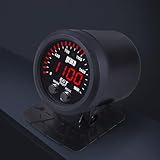
Overview: ZHSYMX offers a straightforward EGT monitoring solution packaged as a complete kit for DIY installers. This 52mm gauge monitors exhaust temperatures from 0-1800°F, helping prevent catastrophic engine failure from lean conditions or turbo overheating. The ultra-thin profile accommodates modern compact dashboards, while the included sensor and pod simplify the entire setup process.
What Makes It Stand Out: The rotational mounting system allows 360-degree positioning for optimal viewing angles, a feature often missing in fixed-mount gauges. Dual programmable buttons provide access to peak memory, alarm thresholds, and metric/imperial switching without requiring external controllers. The high-hardness ABS housing maintains stability across temperature extremes.
Value for Money: This kit delivers remarkable completeness at a budget-friendly price point. Unlike competitors that nickel-and-dime buyers with separate sensor and accessory purchases, ZHSYMX bundles everything required. The value proposition strengthens for novice installers who benefit from the matched components and integrated design, saving approximately 30% over à la carte purchases.
Strengths and Weaknesses:
- Strengths: All-inclusive kit; 360° mounting flexibility; straightforward programming interface; thermostable ABS construction; crisp red LED visibility.
- Weaknesses: Single-color display limits aesthetic integration; no audible alarm mentioned; warranty details absent; installation instructions may lack troubleshooting guidance.
Bottom Line: The ZHSYMX gauge excels as a no-fuss, cost-effective EGT solution. Perfect for daily drivers and lightly modified vehicles, it prioritizes functionality and ease of installation over advanced features, making it an intelligent first-time purchase.
4. Bezel Exhaust Gas Temperature Gauge Kit(Pyrometer) 400-2000℉ Black Indash Brushless Series 2-1/16’’ (52mm) - Include EGT Gauge Probe - Clear Lens - 10 Colors - for car & Truck - JDM - USDM
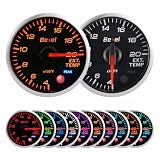
Overview: This Bezel-branded pyrometer elevates EGT monitoring with exceptional customization and an expanded 400-2000°F range. The 52mm gauge features a brushless motor for smooth needle operation and includes a fast-response 1.26-inch probe. Designed for JDM and USDM enthusiasts, it merges performance tracking with extensive aesthetic personalization options.
What Makes It Stand Out: Ten adjustable backlight colors with five brightness levels per mode enable perfect dashboard matching. External control buttons simplify on-the-fly adjustments for peak review, warning thresholds, and color changes. The warning system combines flashing LEDs with an audible buzzer, providing redundant alerts when temperatures exceed user-defined limits.
Value for Money: Mid-range pricing delivers premium features typically found in $200+ gauges. The color customization alone adds significant value for builders focused on cohesive interiors. While slightly more expensive than basic units, the wider temperature range and one-year warranty justify the premium over entry-level alternatives lacking aesthetic flexibility.
Strengths and Weaknesses:
- Strengths: Unmatched 10-color customization; wide 400-2000°F range; external button convenience; dual-mode alerts; included warranty and technical support; fast-response probe.
- Weaknesses: Higher cost than monochrome gauges; 2000°F upper limit may exceed needs for stock vehicles; external buttons require dash panel access; limited brand recognition.
Bottom Line: For enthusiasts prioritizing dashboard aesthetics alongside precise monitoring, this Bezel gauge strikes an ideal balance. The extensive customization and reliable alerts make it a top contender for show cars and modified daily drivers alike.
5. MOTOR METER RACING W Pro Series 52mm 2-1/16" 2 in 1 Turbo Boost 0-60 PSI & Pytometer EGT Exhaust Gas Temperature Gauge 0-1600°F Black Dial White LED Waterproof

Overview: MOTOR METER RACING’s Pro Series redefines gauge efficiency by combining boost pressure (0-60 PSI) and EGT monitoring (0-1600°F) in a single 52mm housing. Engineered for forced-induction applications, this IP67-rated gauge features a high-torque stepper motor, 316 black stainless steel bezel, and waterproof construction. The kit includes both sensors and 250cm harnesses for comprehensive turbo system integration.
What Makes It Stand Out: The 2-in-1 design saves precious dashboard space while reducing wiring complexity versus dual-gauge setups. IP67 waterproofing, UV-resistant lens, and anti-fog coating ensure reliability in open-cockpit or harsh-climate vehicles. The convex clear lens and white LED illumination provide exceptional readability under varying light conditions.
Value for Money: Premium pricing is offset by eliminating a separate boost gauge purchase. Costing roughly 30% less than comparable individual gauges combined, it delivers professional motorsports-grade construction. For turbocharged vehicles requiring both parameters, the space and cost savings create compelling value despite the higher initial investment.
Strengths and Weaknesses:
- Strengths: Space-saving dual function; IP67 waterproof rating; high-quality stepper motor; durable 316 stainless bezel; comprehensive sensor kit; excellent low-light visibility.
- Weaknesses: 1600°F EGT range limits high-performance diesel applications; complex wiring for dual sensors; premium price; no color customization; steeper learning curve.
Bottom Line: This dual-function gauge is essential for turbo builds where dash real estate is limited. The robust construction and combined monitoring capability justify its cost for serious forced-induction enthusiasts seeking clean, professional installations.
6. GlowShift Replacement Exhaust Gas Temperature Gauge EGT Probe Sensor Sending Unit with Waterproof Connector - Current Model

Overview: The GlowShift Replacement EGT Probe is a genuine OEM sensor designed for their exhaust gas temperature gauge systems. This specialized sending unit features a robust waterproof connector and standard 1/8-27 NPT ferrule fitting, making it a direct replacement for damaged or faulty probes in GlowShift monitoring setups.
What Makes It Stand Out: Unlike universal sensors, this probe guarantees seamless compatibility with GlowShift’s 7 Color Series (2400°F and 1500°F models), Elite 10 Color Series, and Digital Dual EGT gauges. The waterproof connector provides superior protection against moisture, oil, and debris in demanding engine environments, reducing failure rates compared to standard connectors.
Value for Money: While priced higher than generic alternatives, this replacement probe includes free lifetime technical support and a one-year limited warranty—benefits typically absent from aftermarket options. For GlowShift users, the assured compatibility eliminates guesswork and potential calibration issues, making it the most cost-effective long-term solution despite the upfront premium.
Strengths and Weaknesses: Strengths include perfect compatibility across multiple GlowShift series, durable waterproof construction, reliable Type K thermocouple accuracy, and exceptional manufacturer support. Weaknesses are its proprietary design limiting use to GlowShift gauges only, and the requirement for precise installation to maintain sealing integrity.
Bottom Line: This is the definitive replacement probe for GlowShift gauge owners. The waterproof connector and comprehensive support justify the investment, ensuring reliable EGT monitoring without compatibility concerns.
7. LKRXW Car Exhaust Gas Temperature Gauge 12V Auto Exhaust Gas Temp Gauge Celsius 2" 52mm Car EGT Temp Gauges Meter Digital Blue Light Gauge Instruments with Sensor

Overview: The LKRXW EGT gauge provides affordable digital monitoring of exhaust gas temperatures from 0-1200°C in a standard 52mm format. Designed for 12V automotive applications, this kit includes the gauge, sensor, and mounting hardware, featuring a smoked lens with blue LED display for enhanced visibility.
What Makes It Stand Out: Its intelligent self-check function automatically calibrates the system at every startup, ensuring reliable readings without manual intervention. The integrated warning system illuminates when temperatures exceed 900°C, offering crucial protection against engine damage. The anti-glare smoked surface design significantly improves readability across various lighting conditions.
Value for Money: This complete kit delivers remarkable affordability, bundling gauge and sensor at a fraction of premium brand costs. While it lacks advanced customization options, it provides essential monitoring capabilities perfect for daily drivers and amateur enthusiasts seeking basic turbo or engine health oversight without breaking the bank.
Strengths and Weaknesses: Strengths include automated self-diagnostics, effective over-temperature alerts, universal 52mm compatibility, glare-reducing lens, and simple installation. Weaknesses involve ABS plastic housing that may compromise long-term durability, absence of stated warranty coverage, and Celsius-only readout that might frustrate users preferring Fahrenheit measurements.
Bottom Line: An excellent entry-level EGT solution for cost-conscious consumers. The self-check feature and warning system offer genuine value, though professional tuners should consider higher-end alternatives with superior build quality and comprehensive support.
8. GlowShift Tinted 7 Color 2400F Pyrometer Exhaust Gas Temp Gauge Kit - Includes 1/8-27 NPT Type K EGT Probe & Wiring - Multi-Color Display - Black Dial - Smoked Lens - for Car & Truck - 2-1/16" 52mm

Overview: GlowShift’s Tinted 7 Color Series EGT gauge kit delivers professional-grade exhaust temperature monitoring from 0-2400°F in a sleek 52mm package. The system features a black dial with illuminated red needle, tinted smoked lens, matte black trim ring, and durable aluminum housing designed for automotive and truck applications.
What Makes It Stand Out: Nine total illumination modes—including seven solid colors and two color cycle options—allow perfect dashboard integration. The innovative dimmer wire automatically reduces gauge brightness by 30% when headlights engage, preventing nighttime distraction. The comprehensive kit includes a Type K probe with 3’ wire, 6’ sensor harness, 2’ power harness, gauge visor, mounting hardware, and step-by-step instructions.
Value for Money: Positioned in the mid-premium segment, this kit offers exceptional value through complete component inclusion and industry-leading support policies. GlowShift’s 2004-established reputation, one-year warranty, lifetime technical support, and 30-day hassle-free returns provide security unmatched by competitors. The all-in-one package eliminates separate component purchases.
Strengths and Weaknesses: Strengths include extensive color customization, wide temperature range, premium aluminum construction, automatic dimming capability, complete installation package, and outstanding post-purchase support. Weaknesses involve a higher price point than basic gauges and potentially overwhelming options for users seeking simplicity.
Bottom Line: An excellent choice for enthusiasts prioritizing customization and reliability. The color versatility and comprehensive warranty justify the investment for serious tuners, diesel truck owners, and show vehicle builders seeking both function and aesthetic appeal.
9. MOTOR METER RACING W Pro Series 52mm 2-1/16" 2 in 1 Turbo Boost 0-60 PSI & Pytometer EGT Exhaust Gas Temperature Gauge 0-1600°F Black Dial White LED Waterproof
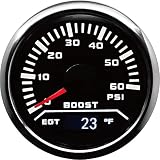
Overview: The MOTOR METER RACING W Pro Series delivers dual-function monitoring in a compact 52mm gauge, simultaneously tracking turbo boost pressure (0-60 PSI) and exhaust gas temperature (0-1600°F). Engineered for 12/24V negative ground systems, this instrument features a black dial with red needle and white LED illumination housed in a rugged waterproof casing.
What Makes It Stand Out: The integrated 2-in-1 design consolidates two critical performance parameters into a single dashboard location, perfect for turbocharged vehicles with limited instrument panel space. Professional stepper motor movement provides smooth, accurate needle response, while the IP67 waterproof rating, 316 stainless steel bezel, and UV-resistant ABS housing ensure survival in harsh engine environments.
Value for Money: Offering two gauges for the price of one mid-range instrument, this unit delivers excellent cost efficiency while preserving precious dashboard real estate. The robust construction and waterproofing justify its pricing, though dedicated single-function gauges would provide larger, more readable displays for each parameter individually.
Strengths and Weaknesses: Strengths include space-efficient dual monitoring, precision stepper motor mechanism, exceptional IP67 waterproofing, corrosion-resistant stainless bezel, comprehensive sensor package with 250cm boost and 200cm EGT harnesses, and convex clear lens. Weaknesses involve the 1600°F EGT range limiting high-performance applications, and the compact display potentially becoming cluttered when both readings are critical.
Bottom Line: An outstanding solution for turbo builds constrained by space. The durable construction and dual-measurement capability provide exceptional utility for performance enthusiasts needing essential data without sacrificing dashboard aesthetics or functionality.
10. JJCOCO Exhaust Gas Temperature EGT Gauge 1832 ℉ Pyrometer Kit - LED Digital Display with EGT Sensor for Diesel Car Motorcycle ATV

Overview: The JJCOCO EGT Gauge Kit delivers professional-grade digital exhaust temperature monitoring from 32-1832°F with impressive ±0.5% accuracy. This versatile pyrometer features a sunlight-readable LED display, water-resistant housing, and NPT 1/8" Type K sensor, making it suitable for diesel cars, trucks, motorcycles, ATVs, and marine applications where space is at a premium.
What Makes It Stand Out: The ultra-bright LED display maintains perfect visibility even in direct sunlight, addressing a common failure point in budget digital gauges. Users can configure custom temperature warnings for both overheating and low-temperature conditions, enabling proactive engine management. The remarkably compact 2×1.3×0.5-inch dimensions allow mounting in confined dashboard areas, glove boxes, or custom panels where traditional 52mm gauges are impractical.
Value for Money: This kit offers remarkable value by delivering laboratory-grade accuracy and advanced features at a mid-range price point. The water-resistant construction, wide temperature range, and extreme operating temperature tolerance (-4°F to 176°F) provide capabilities usually reserved for premium brands. While lacking extensive brand history, the feature set outweighs this for practical users.
Strengths and Weaknesses: Strengths include exceptional ±0.5% calibration accuracy, sunlight-readable display, programmable warning thresholds, robust water-resistant housing, vibration and shock resistance, universal 12V compatibility, and compact form factor. Weaknesses involve limited manufacturer reputation, unspecified warranty terms, and the non-standard size requiring creative mounting solutions.
Bottom Line: An outstanding compact EGT solution for unconventional installations. The professional accuracy and sunlight readability make it perfect for diesel trucks, powersports, and marine applications where space constraints demand a smaller footprint without sacrificing performance.
Why Exhaust Gas Temperature Monitoring Matters for Off-Road Adventures
Your engine’s exhaust gas temperature reveals critical information about its internal health that oil pressure or coolant temperature simply can’t show. When you’re climbing steep grades with a heavy load or running high RPMs in low-range gear, your turbocharger and pistons experience immense heat stress. An EGT gauge acts as an early warning system, alerting you to dangerous conditions like lean fuel mixtures, clogged air filters, or failing injectors before they cause melted pistons or turbocharger failure.
The Critical Role of EGT Data in Engine Protection
Off-road driving patterns create unique thermal cycles that street vehicles rarely experience. Constant throttle modulation, extended periods of high-load operation, and elevation changes all affect combustion efficiency. A premium EGT gauge gives you immediate feedback on these changes, allowing you to adjust your driving style or stop for a cool-down period. The sensor positioned in your exhaust manifold measures temperatures that can exceed 1,600°F during aggressive driving, while normal cruising might show 600-800°F depending on your engine setup.
How Extreme Conditions Affect Exhaust Temperatures
Water crossings introduce a sudden cooling effect that can crack hot exhaust components if temperatures aren’t monitored. Deep mud creates massive engine load as tires fight for traction, causing EGTs to soar. Sand driving requires maintaining momentum in high-RPM ranges, generating sustained heat that can quickly exceed safe limits. Premium gauges designed for these scenarios feature faster sensor response times, updating readings every second rather than every few seconds, giving you crucial real-time data when conditions change rapidly.
Understanding Waterproof Ratings for Off-Road Gauges
Not all “waterproof” claims are created equal, and understanding the technical specifications helps you avoid disappointment when your gauge faces its first river crossing. The Ingress Protection (IP) rating system provides standardized testing results that reveal exactly how much water and dust exposure a device can handle.
Decoding IP Ratings: What Those Numbers Actually Mean
An IP rating consists of two digits: the first indicates dust protection (0-6) and the second shows water resistance (0-9). For serious off-road use, look for IP67 or higher. IP67 guarantees complete dust protection and survival after 30 minutes of immersion in 1 meter of water. IP68 extends the depth and duration, while IP69K withstands high-pressure water jets from any angle—perfect for cleaning mud off your dashboard after a messy trail day. Premium gauges often exceed these minimums with additional sealing methods.
Beyond IP Ratings: Additional Waterproofing Features
Top-tier manufacturers implement multiple defense layers beyond basic IP certification. Conformal coating on internal circuit boards prevents corrosion from humidity even if no liquid water penetrates the housing. O-ring sealed bezels, gasketed lens assemblies, and waterproof connectors at the wiring harness create redundant barriers. Some designs feature vented housings that allow pressure equalization while blocking water molecules, preventing internal condensation when moving between temperature extremes—a common failure point in cheaper units.
Key Features That Define Premium EGT Gauges
What separates a $50 gauge from a $300+ premium model goes far beyond the waterproof rating. The components, engineering, and functionality create a vast performance gap that directly impacts reliability when you’re remote.
Sensor Quality and Response Time
Premium gauges use Type-K thermocouples made from higher-grade materials that resist degradation at extreme temperatures. The probe sheath should be constructed from Inconel rather than stainless steel for superior heat resistance and faster thermal conductivity. Response time—the speed at which the display reflects actual temperature changes—should be under 2 seconds for off-road applications. Budget sensors can lag by 5-10 seconds, providing outdated information when you’re managing a critical climb.
Display Technology and Readability
Your gauge needs to remain visible in direct sunlight and dim enough for night driving without blinding you. Premium models utilize transflective LCDs or high-brightness LED displays with automatic dimming circuits that adjust to ambient light conditions. Anti-glare coatings and polarized lens filters prevent washout when the sun hits your dashboard at harsh angles. Multiple color options for backlighting let you match your existing instrument cluster while maintaining night vision.
Alert Systems and Warning Functions
Audible alarms that trigger at user-settable temperature thresholds provide crucial warnings when you can’t constantly watch the gauge. Premium units offer progressive alerts—a warning beep at 1,250°F and a continuous alarm at 1,400°F, for example. Some include auxiliary output wires that can trigger a check engine light or even reduce engine power automatically. The best models store peak temperature readings, allowing you to review maximum temps reached during a difficult section after you’ve cleared it.
The Importance of Durability in Off-Road Applications
Your gauge faces constant assault from vibration, impacts, and environmental contaminants that would destroy standard automotive electronics. Premium construction isn’t a luxury—it’s a necessity for survival.
Vibration Resistance and Shock Protection
Off-road vehicles transmit severe vibrations through the chassis, especially when running aggressive tire setups or solid axle configurations. Premium gauges feature shock-mounted internal components and potted circuit boards that prevent solder joint fatigue. The sensor probe must include a spring-loaded design that maintains constant pressure against the exhaust manifold while absorbing engine vibrations. Look for MIL-STD-810G certification, which indicates the unit passed military-grade vibration and shock testing.
Corrosion-Proof Materials and Construction
Saltwater exposure from coastal trails or de-icing chemicals used on winter roads accelerates corrosion. Premium housings use marine-grade 316 stainless steel or anodized aluminum rather than painted steel or plastic. Connector pins should be gold-plated to prevent oxidation, and wiring harnesses need to be sheathed in chemical-resistant PTFE or silicone. The probe’s compression fitting that seals it to the exhaust manifold must be made from materials that won’t gall or seize after repeated heat cycles.
Installation Considerations for Off-Road Vehicles
Proper installation determines whether your premium gauge delivers accurate data or fails prematurely. Off-road installations require additional planning compared to street applications.
Probe Placement for Accurate Readings
The thermocouple must be positioned 2-4 inches from the cylinder head exhaust port for gasoline engines, or immediately after the turbocharger on diesel applications. This placement ensures you’re measuring combustion temperature, not catalytic converter or muffler heat. On V-configured engines, install the probe in the hottest cylinder’s runner—typically the rear cylinder on the driver’s side. Avoid placing probes in merge collectors where turbulence creates inaccurate readings. Premium gauge kits include detailed drilling templates and step bits for clean installation.
Wiring and Connection Protection
Use the waterproof connectors provided with premium kits, and seal any splices with heat-shrink tubing that includes internal adhesive. Route wiring away from sharp edges and heat sources—exhaust pipes can exceed 1,000°F and melt standard wire insulation. Secure harnesses with cushioned Adel clamps rather than zip ties, which can cut through insulation over time from vibration. Consider running wires inside flexible conduit for additional protection against abrasion and mud packing.
Gauge Mounting Solutions for Harsh Environments
Panel-mount gauges need rubber isolation grommets to prevent vibration transfer. For pillar or dash pods, use stainless steel hardware with nylon locking nuts that won’t loosen from vibration. Some premium gauges offer remote-mount displays, allowing you to position the sensitive electronics in a protected location while running just the display to your dashboard. This setup provides maximum protection for the main unit while keeping readings visible.
Digital vs Analog: Which Display Type Suits Your Needs?
The debate between digital and analog gauges extends beyond aesthetics into functionality, reliability, and information delivery.
Benefits of Digital Displays in Modern Off-Road Builds
Digital displays provide exact numerical values, eliminating interpretation errors common with analog needles. They can show multiple data points simultaneously—current temperature, peak hold, and temperature trend arrows. Programmable warning lights integrated into the display face offer visual alerts without separate LEDs. However, digital circuits are more complex and potentially more failure-prone in extreme environments, making waterproofing and internal component quality critical.
When Analog Gauges Still Make Sense
Analog gauges offer simplicity and reliability—fewer electronic components mean fewer failure points. The needle’s position becomes intuitively recognizable after time, allowing quick glances without reading numbers. Mechanical analog gauges (bourdon tube designs) require no electrical power, functioning even with complete electrical system failure. However, they lack precision and can’t provide the detailed data logging that modern off-roaders often want for engine tuning.
Wireless Technology in Waterproof EGT Gauges
Bluetooth connectivity and smartphone integration represent the cutting edge of gauge technology, but off-road environments pose unique challenges for wireless systems.
Bluetooth Connectivity and Mobile App Integration
Premium wireless gauges transmit data to your phone or tablet, allowing multiple displays throughout your vehicle. Apps can log temperature data over time, creating performance graphs for post-trail analysis. Some systems integrate with GPS, correlating temperature spikes with specific locations on your trail map. However, wireless signals can be unreliable inside metal vehicle bodies, and phone batteries drain quickly when used as primary displays in remote areas without charging capability.
Reliability Concerns in Remote Locations
Wireless gauges still require physical sensors and power wires, so you’re not eliminating all wiring—just the data cable to the display. The main advantage is flexibility in display placement and data logging. For expedition travel where reliability trumps convenience, traditional wired gauges remain the gold standard. Premium wireless systems include redundant wired connections that activate automatically if the wireless signal drops, ensuring you never lose temperature monitoring.
Calibration and Accuracy: What to Expect from Premium Models
Accuracy specifications reveal the quality of the thermocouple and signal processing circuitry. Understanding these numbers helps you set appropriate warning thresholds.
Temperature Range Specifications
Most premium gauges read from 0-2,000°F with ±1% accuracy across the range. This means at 1,500°F, the displayed temperature could be off by ±15°F. Cheaper units might claim ±2-3% accuracy, creating a 30-45°F uncertainty window that could mean the difference between safe operation and engine damage. The sensor’s maximum continuous temperature rating should exceed 2,000°F, with intermittent spikes up to 2,500°F, ensuring survival during extreme lean conditions.
Long-Term Stability and Drift Prevention
Thermocouples naturally drift over time due to chemical changes in the alloy junctions. Premium sensors use specially treated wires that minimize this drift, maintaining accuracy for 2-3 years of heavy use. The gauge’s cold junction compensation circuit—the component that accounts for ambient temperature at the gauge itself—should be thermally stable and isolated from engine heat. Look for units with user-accessible calibration functions that let you verify accuracy against a known reference.
Power Requirements and Electrical System Compatibility
Off-road vehicles often run modified electrical systems with dual batteries, high-output alternators, and auxiliary power distribution panels. Your gauge must integrate cleanly with these setups.
Voltage Range Considerations for Modified Vehicles
Premium gauges operate reliably from 9-32 volts, covering everything from 12V gasoline systems to 24V diesel setups. They include built-in voltage spike protection that shields the circuitry from load dumps when winches or air compressors cycle on. Some feature low-voltage cutoffs that prevent gauge operation during engine cranking, avoiding false readings when battery voltage drops to 10V. This protection extends to reverse polarity protection, saving the gauge if you accidentally connect power backward during installation.
Battery Drain and Sleep Mode Features
A quality gauge should draw less than 100mA during operation and drop to under 5mA in sleep mode. For vehicles that sit for weeks between trail runs, this prevents unnecessary battery drain. Premium models include ignition-switched power inputs that completely shut down the gauge when the key is off, while maintaining separate memory power to preserve settings and peak values. Some advanced units feature automatic dimming that reduces current draw at night when display brightness is lowered.
Cost Analysis: Why Premium Gauges Command Higher Prices
The price difference between economy and premium EGT gauges reflects substantial differences in component quality, engineering, and long-term support.
Materials and Manufacturing Quality
A $300 premium gauge uses a $75 Inconel thermocouple probe, while a $50 budget unit might include a $10 stainless steel sensor that fails after a few months of heat cycling. The display lens alone can cost $20 more for true glass with anti-reflective coating versus plastic that scratches and yellows. Internal components like the analog-to-digital converter and microcontroller in premium units cost 5-10 times more than the basic chips in cheap gauges, but provide the speed and accuracy needed for reliable off-road use.
Warranty and Customer Support Value
Premium manufacturers typically offer 2-3 year warranties with hassle-free replacement policies. More importantly, they provide technical support from engineers who understand off-road applications, not just call center scripts. This support includes installation guidance, troubleshooting help when readings seem off, and advice on probe placement for unusual engine configurations. The warranty cost is built into the purchase price, but it’s insurance that pays for itself the first time you need a replacement sensor after a particularly brutal trail season.
Maintenance and Longevity Tips
Even the most rugged gauge requires basic maintenance to ensure years of reliable service in harsh environments.
Cleaning Procedures for Waterproof Units
After mud-heavy trail days, rinse the gauge face with clean water—its waterproof rating allows this. Use a soft brush to remove dried mud from around the bezel, taking care not to scratch the lens. Avoid pressure washers directly on the gauge, as the high pressure can exceed even IP69K ratings over time. For the sensor probe, remove it periodically and clean carbon buildup with a brass brush. Never use steel wool, which can damage the protective sheath and create hot spots that read inaccurately.
Sensor Replacement and Service Intervals
Plan on thermocouple replacement every 2-3 years or 50,000 off-road miles, whichever comes first. The extreme heat cycles gradually degrade the alloy wires. Premium gauges make sensor replacement simple with plug-in connectors, while budget units often require cutting and splicing wires. Keep a spare sensor in your trail kit—it’s small, relatively inexpensive insurance against being stranded. The gauge itself should last 5-10 years with proper care, though you may need to replace the internal battery that maintains settings if the unit sits unused for extended periods.
Common Installation Mistakes to Avoid
Many off-roaders invest in premium gauges only to compromise performance through poor installation practices that lead to premature failure or inaccurate readings.
Probe Positioning Errors
Drilling the probe hole too close to the cylinder head can expose the thermocouple to direct flame impingement, causing readings that spike and drop erratically. Too far downstream, and you’re measuring cooled exhaust gas that doesn’t reflect actual combustion temperatures. The ideal location is 2 pipe diameters from the exhaust port, positioned at the 10 or 2 o’clock position to avoid condensation pooling at the bottom of the pipe. Always drill pilot holes and use a step bit to prevent creating metal shavings that fall into the cylinder.
Inadequate Wire Protection
Running sensor wires through the engine compartment without proper sheathing exposes them to 200°F+ ambient temperatures that degrade insulation over time. Use fiberglass or silicone-jacketed wire specifically rated for exhaust system proximity. Never route wires near rotating components like fan belts or steering shafts. Secure harnesses at least every 6 inches to prevent fatigue failure from vibration. Most importantly, leave a service loop with enough slack to remove the probe without cutting wires—a detail often overlooked until the first sensor replacement.
Troubleshooting Common Issues in the Field
When your gauge starts acting up 50 miles from the nearest pavement, knowing how to diagnose problems can save your trip.
Erratic Readings and Interference
Wildly fluctuating readings often indicate a loose connection at the thermocouple junction. Check the compression fitting first—hand-tight plus a quarter-turn with a wrench is usually sufficient. Over-tightening crushes the thermocouple wires, causing failure. Electrical interference from ignition systems or high-power radios can cause readings to jump. Premium gauges include shielded wiring and noise-filtering circuits, but routing the sensor wire away from spark plug wires and coil packs still helps. If readings seem stuck or don’t change with engine load, the thermocouple may have failed open-circuit.
Water Ingress Despite Waterproof Rating
If condensation appears inside the lens after a water crossing, the gauge housing seal has been compromised. This often happens from thermal cycling—heating and cooling cycles cause internal pressure changes that eventually draw moisture past aging seals. Remove the gauge and place it in a sealed bag with desiccant packets for 24 hours to dry it out. Check all O-rings for compression set (flattening) and replace them if they’re no longer round. Never use silicone sealant on gauge housings—it can trap moisture inside and damage display coatings.
Making the Investment Decision: Factors to Weigh
Choosing the right EGT gauge involves balancing features against your specific off-road needs, vehicle modifications, and budget constraints.
Matching Gauge Capabilities to Your Vehicle’s Modifications
A stock engine with minimal modifications may not need a gauge reading to 2,000°F, while a turbocharged diesel running performance tuning absolutely requires that range. Consider your future modification plans—investing in a gauge that handles higher temperatures than you currently need prevents replacement later. If you run nitrous or water-methanol injection, look for gauges with multiple input channels that can monitor both EGT and injection system pressures. For vehicles with engine swaps, ensure the gauge’s temperature range matches your specific engine’s safe operating limits.
Future-Proofing Your Instrumentation
Premium gauges often include expansion capabilities like additional sensor inputs or CAN bus integration that allows them to communicate with modern engine management systems. Some can display data from multiple thermocouples, letting you monitor each cylinder bank individually on V-configured engines. Consider whether the gauge can integrate with a larger data acquisition system if you plan to add more sensors later. Modular designs that accept firmware updates via USB or Bluetooth ensure your gauge stays current as technology evolves.
Frequently Asked Questions
How deep can I submerge a waterproof EGT gauge without damage?
IP67-rated gauges handle 1 meter of water for 30 minutes, while IP68 models survive deeper submersion specified by the manufacturer. However, depth ratings assume static pressure—water pressure from pressure washing can exceed these limits. For river crossings, mount gauges high on the dash and avoid direct water jets during cleaning.
Will extreme cold temperatures affect my gauge’s accuracy?
Premium gauges compensate for ambient temperature from -40°F to 185°F. Below -40°F, LCD displays may respond slowly but will return to normal when warmed. The thermocouple itself functions at any temperature, but ensure wiring insulation remains flexible in extreme cold—silicone-jacketed wires perform best.
How often should I replace the thermocouple probe?
Replace probes every 2-3 years or 50,000 off-road miles. Signs of degradation include slower response times and readings that drift lower than expected. Keep a spare probe in your trail kit—it’s a small investment that prevents being stranded with a failed sensor.
Can I install an EGT gauge myself, or do I need professional help?
If you’re comfortable drilling and tapping your exhaust manifold and working with automotive wiring, self-installation is straightforward with premium kits that include detailed instructions. The critical step is proper probe placement—when in doubt, consult a diesel performance shop familiar with your engine type.
Do I need a separate gauge for each cylinder on a V8 engine?
For most off-road applications, monitoring one cylinder bank is sufficient since problems typically affect all cylinders equally. However, if you’re running a twin-turbo setup or suspect cylinder-specific issues, dual-channel gauges that display both banks are available at premium price points.
What’s the difference between a pyrometer and an EGT gauge?
The terms are interchangeable—both measure exhaust gas temperature using a thermocouple. “Pyrometer” is more common in diesel applications, while “EGT gauge” is universal. Premium models function identically regardless of terminology.
Can I use an EGT gauge designed for diesel engines on my gasoline off-road rig?
Yes, but verify the temperature range suits gasoline engines, which typically run cooler than diesels. Diesel gauges often read up to 1,600°F, while gasoline performance applications may need 1,800-2,000°F capability. Sensor placement differs—gasoline engines measure pre-turbo, while diesels measure post-turbo.
How do I know if my gauge readings are accurate?
Compare readings against known baselines for your engine setup. At idle, expect 300-500°F. Normal cruising should show 600-800°F. If readings seem suspiciously low or don’t respond to throttle changes, check connections first. Premium gauges include calibration functions to verify accuracy against a reference thermometer.
Will adding an EGT gauge void my vehicle’s warranty?
Installing an EGT gauge doesn’t typically void warranties, as it’s a monitoring device that doesn’t alter engine operation. However, drilling the exhaust manifold could technically affect emissions components. Use clamp-on probes for newer vehicles under warranty, or consult your dealer before installation.
Can I connect my EGT gauge to other monitoring systems?
Premium gauges with 0-5V analog outputs or CAN bus connectivity can feed data to engine management systems, data loggers, or multi-function displays. This integration allows you to view EGT alongside other parameters like boost pressure and air-fuel ratio on a single screen, reducing dashboard clutter while maintaining comprehensive monitoring.
See Also
- 10 Best Exhaust Gas Temperature Gauges for Off-Road Vehicles in 2026
- 10 Premium Diesel Exhaust Gas Temperature Gauges for Heavy-Duty Trucks (Worth the Investment)
- 10 Premium Universal Exhaust Gas Temperature Gauges for Custom Installations (Worth the Investment)
- 10 Premium Universal Exhaust Gas Temperature Gauges for Enthusiasts (Worth the Investment)
- We Tested 50 Waterproof Exhaust Gas Temperature Gauges - Here are the 10 Best for Wet Conditions