Table of Contents
Nothing ruins a flawless paint job faster than the telltale swirl marks and ghostly halos of buffer burns. These frustrating defects occur when heat and friction overwhelm your vehicle’s clear coat, leaving permanent damage that often requires costly repainting. Whether you’re a weekend warrior tackling your first detail or a seasoned pro looking to refine your technique, understanding how to prevent these mishaps is crucial for achieving that mirror-like finish.
Variable speed polishers have revolutionized the automotive detailing world by putting precise control back in your hands. Unlike their single-speed predecessors that operated like on/off switches, modern variable speed models allow you to match the tool’s power to the task at hand—whether you’re spreading wax, cutting through heavy oxidation, or applying a final jeweling polish. This adaptability isn’t just convenient; it’s your primary defense against the excessive heat buildup that causes buffer burns.
Top 10 Variable Speed Polishers
Detailed Product Reviews
1. DEWALT Buffer Polisher, 7-in-9-in, 12 amp, Variable Speed Dial 0-3,500 RPM’s, Soft Start Corded Car Buffer (DWP849X)

Overview: The DEWALT DWP849X represents professional-grade power in car detailing, delivering robust 12-amp performance for demanding polishing tasks. This corded workhorse handles both 7-inch and 9-inch backing plates, making it versatile enough for everything from paint correction to heavy oxidation removal on vehicles, boats, and RVs.
What Makes It Stand Out: The combination of a variable speed dial (0-3,500 RPM) and trigger gives unparalleled control, while the soft-start feature prevents product sling. Its all ball-bearing construction with precision-cut steel gears ensures durability, and the replaceable wool ingestion shield is a thoughtful touch that extends tool life. The rubber overmoulded gearcase provides comfortable grip points for two-handed operation.
Value for Money: Positioned at the premium end, this tool justifies its price through exceptional build quality and longevity. For professionals who rely on daily performance, it outlasts cheaper alternatives, making the higher upfront cost a sound investment. DIY enthusiasts serious about results will also find value in its consistent power delivery.
Strengths and Weaknesses: Strengths include professional-grade durability, excellent speed control, comfortable ergonomics, and DEWALT’s service network. Weaknesses are its corded limitation for mobile work, substantial weight during extended use, and premium pricing that may deter casual users. The 12-amp draw also requires a robust power source.
Bottom Line: The DWP849X is an outstanding choice for professional detailers and committed enthusiasts who prioritize power, durability, and precise control over portability. It’s a buy-it-for-life tool that delivers consistent, professional results.
2. GEVEELIFE Buffer Polisher, 6 Inch/7 Inch 1600W Rotary Car Buffer Polisher Waxer, 7 Variable Speed 1000-3500 RPM, Detachable Handle for Car, Boat Sanding, Polishing, Waxing

Overview: GEVEELIFE’s 1600W rotary polisher enters the market as a feature-packed contender aimed at DIY detailers seeking professional capabilities without the premium price tag. Supporting both 6-inch and 7-inch pads, this versatile machine tackles cars, boats, and even household surfaces with its comprehensive accessory bundle.
What Makes It Stand Out: The seven-speed adjustment (1000-3500 RPM) with constant-power control board ensures consistent performance during extended sessions. Weighing just 4.5 pounds, it’s remarkably lightweight for its power class. The detachable D-handle and side handle accommodate various grip preferences, while the safety lock reduces fatigue. The included sponge, wool pads, and sandpaper provide immediate out-of-the-box utility for diverse applications.
Value for Money: This kit delivers exceptional bang for your buck. Comparable performance to entry-level professional tools at a fraction of the cost, plus the extensive accessory package eliminates additional purchases. For home users, it offers near-professional results without the hefty investment.
Strengths and Weaknesses: Strengths include powerful 1600W motor, extensive speed options, lightweight design, comprehensive accessories, and versatility across materials. Weaknesses involve the lesser-known brand’s unproven long-term reliability, M14 thread limitation (not compatible with 5/8-11 discs), and potentially shorter lifespan under heavy professional use.
Bottom Line: An excellent choice for budget-conscious DIYers wanting professional features. While it may not match premium brands for longevity, its performance and accessory package make it a smart value proposition for home detailing enthusiasts.
3. DEWALT 20V MAX* XR Cordless Polisher, Rotary, Variable Speed, 7-Inch, 180 mm, Tool Only (DCM849B)
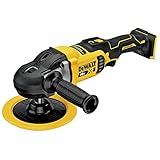
Overview: DEWALT’s DCM849B brings cordless freedom to professional-grade polishing, operating on the popular 20V MAX battery platform. This rotary polisher eliminates cord management hassles while delivering respectable performance for mobile detailers and shop use where wall outlets are inconveniently located or unavailable.
What Makes It Stand Out: The brushless motor maximizes efficiency and runtime, crucial for battery operation. Its dual control system—variable speed trigger and dial—offers precision from 800-2,200 RPM. The rubber gear case overmold reduces surface imperfections and vibration while improving grip comfort significantly. The 7-inch backing plate hits the sweet spot for most detailing applications.
Value for Money: As a tool-only option, value depends on existing DEWALT battery investment. For those already in the ecosystem, it avoids buying redundant batteries. The premium price reflects cordless convenience and build quality. Compared to corded models, you’re trading absolute power for mobility and flexibility.
Strengths and Weaknesses: Strengths include unmatched portability, brushless motor efficiency, excellent speed control, and DEWALT reliability. Weaknesses are the required battery/charger purchase for new users, limited runtime on high-demand jobs, and lower maximum RPM than corded counterparts. Power output can’t match 12-amp corded models.
Bottom Line: Ideal for mobile detailers and DEWALT 20V users prioritizing convenience over maximum power. It’s a capable cordless solution that handles most tasks well, though heavy correction jobs may still require a corded backup.
4. BUCKTOOL 1HP VFD Motor 8-Inch Variable Speed Bench Buffer Polisher, 900-3600 RPM One Button Speed Setting Powerful Benchtop Polisher, Extended Polishing Shaft for Jewelry, Metal Power Bench Grinders
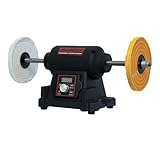
Overview: BUCKTOOL’s benchtop polisher serves a specialized market, delivering precision power for jewelry, metalwork, and detailed polishing tasks. This stationary unit features an integrated VFD motor providing 1 horsepower through an 8-inch wheel configuration, designed for workshop environments where stability trumps portability every single time.
What Makes It Stand Out: The variable frequency drive motor maintains high torque at low speeds—a critical advantage for delicate work. Its one-button speed memory function recalls your last setting after power cycles automatically. The balanced rotor design minimizes vibration for precision finishes, while the extended polishing shaft accommodates larger workpieces. The heavy cast iron base provides exceptional stability and reduces operational vibrations significantly.
Value for Money: While priced higher than consumer polishers, it’s competitive for professional benchtop equipment. The VFD technology, memory function, and robust construction justify the cost for serious hobbyists and professionals. For general car detailing, however, it’s overpriced and impractical for most users.
Strengths and Weaknesses: Strengths include superior stability, precision speed control with memory, low vibration operation, high torque at low RPMs, and professional-grade durability. Weaknesses are its stationary design limiting mobility, specialized application scope, higher price point, and unsuitability for automotive panels.
Bottom Line: Perfect for jewelers, metalworkers, and craftsmen needing precision benchtop polishing capabilities. Automotive detailers should look elsewhere. It’s a specialized tool that excels in its intended domain but offers little versatility outside workshop precision work.
5. Milwaukee 2438-22 M12 Variable Speed Polisher/Sander – Cp/Cp Kit

Overview: Milwaukee’s M12 polisher/sander kit delivers ultra-portable convenience in a compact package powered by the M12 battery system. Designed for light-duty applications and spot polishing, this tool prioritizes accessibility and ease of use over raw power, making it ideal for quick touch-ups and detail work on small surfaces and tight spots.
What Makes It Stand Out: The M12 platform integration offers unmatched portability for users already invested in Milwaukee’s extensive ecosystem. Its variable speed control adapts to both polishing and sanding tasks, while the compact design reaches tight spaces impractical for full-size polishers. The kit includes batteries and charger, providing a complete ready-to-work solution immediately.
Value for Money: The kit pricing includes essential accessories, representing solid value for Milwaukee M12 users. For those outside the ecosystem, the battery commitment adds cost. It’s reasonably priced for a brand-name cordless kit, though capacity limitations restrict its overall scope and capabilities for larger projects significantly.
Strengths and Weaknesses: Strengths include exceptional portability, Milwaukee build quality, dual polishing/sanding capability, kit completeness, and access to tight areas. Weaknesses involve limited power for heavy correction, small pad size restricting efficiency, short runtime on demanding jobs, and ineffectiveness on large surface areas.
Bottom Line: Excellent for Milwaukee M12 users needing a compact polisher for light-duty work and spot correction tasks. It’s not a primary polisher for serious detailers but serves as a valuable supplementary tool for quick jobs and hard-to-reach areas.
6. LDHTHOPI Buffer Polisher, 1600W 7 Inch/6 Inch Rotary Buffer Polisher Waxer, 7 Variable Speed 1000-3500 RPM, Detachable Handle for Car, Boat Sanding, Polishing, Waxing

Overview: The LDHTHOPI Buffer Polisher is a robust 1600W rotary polisher designed for versatile paint correction and finishing tasks. With a 7-inch/6-inch backing plate and seven variable speeds from 1000-3500 RPM, it handles everything from heavy oxidation removal to fine polishing across multiple surfaces including vehicles, boats, and furniture.
What Makes It Stand Out: This kit includes seven different pad types—wool for cutting, foam colors for various polishing stages—eliminating guesswork for beginners. The three-handle configuration (direct, D-handle, side handle) adapts to user preference and job requirements. The manufacturer explicitly notes safety limitations, recommending 15-minute work cycles to prevent motor overheating.
Value for Money: For a complete starter package under professional-grade prices, this polisher delivers exceptional value. Comparable rotary polishers often cost more without the comprehensive pad assortment. While not a premium brand, the included accessories alone would cost $50-75 separately.
Strengths and Weaknesses: Strengths include powerful motor performance, extensive accessory bundle, and ergonomic flexibility. The seven-speed settings provide good control granularity. Weaknesses stem from its rotary design—higher swirl risk for novices, mandatory cool-down periods interrupt workflow, and the pressure warnings indicate potential durability concerns under heavy loads.
Bottom Line: Ideal for intermediate DIY detailers ready to step up from orbital polishers. The learning curve is steep, but the included pads and power make it a cost-effective solution for tackling significant paint defects across multiple vehicles or surfaces.
7. WEN 948 10 Amp Variable Speed Polisher with Digital Readout, 7"
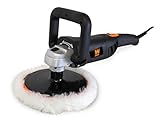
Overview: The WEN 948 10 Amp Variable Speed Polisher brings digital precision to the rotary polisher category. This 7-inch tool spins from 1500-3500 RPM in exact 500-RPM increments, making it suitable for compounding, polishing, waxing, and even sanding when paired with hook-and-loop abrasive discs.
What Makes It Stand Out: The onboard digital readout is the star feature, providing real-time RPM feedback that ensures consistent application across panels—rare in this price bracket. The incremental speed control eliminates guesswork, while the included woolen fleece bonnet and handle get you started immediately.
Value for Money: WEN consistently undercuts competitors while maintaining respectable quality. This model offers professional-like features at a fraction of premium brands’ cost. The ability to convert to a sander adds versatility that multiplies its utility in a home garage.
Strengths and Weaknesses: Strengths include the precise digital display, methodical speed steps, and multi-function capability. The 10 amp motor handles light-to-medium correction adequately. Weaknesses include the rotary mechanism’s inherent swirl risk for beginners, and the motor may bog down on severely neglected paint. The single included pad necessitates immediate additional purchases.
Bottom Line: A smart choice for meticulous hobbyists who value precision feedback. The digital readout justifies the modest price premium over basic models, though novices should practice extensively before tackling their daily driver.
8. Milwaukee 2738-20 M18 18-Volt Fuel Lithium-Ion Brushless Cordless 7 inch Variable Speed Polisher (Tool-Only)
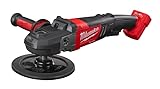
Overview: The Milwaukee 2738-20 M18 Fuel Polisher represents cordless liberation for professional detailers. This 7-inch rotary tool runs on Milwaukee’s M18 battery platform, delivering variable speeds with brushless motor efficiency that the manufacturer claims matches corded performance.
What Makes It Stand Out: True cordless operation eliminates cord management hassles and outlet hunting—game-changing for mobile detailers or large facilities. The brushless motor extends runtime and lifespan while maintaining consistent power delivery. As a bare tool, it integrates seamlessly into existing Milwaukee ecosystems.
Value for Money: The tool-only pricing is deceptive; adding batteries and charger significantly increases investment. However, for professionals already invested in M18 tools, it’s an economical expansion. Standalone, it’s priced comparably to premium corded models but offers unmatched mobility.
Strengths and Weaknesses: Strengths include exceptional portability, professional-grade build quality, and the convenience of cordless operation. The brushless motor ensures efficiency and durability. Weaknesses include runtime limitations on high-demand correction tasks, mandatory battery investment for new users, and the premium price point. The rotary action still requires skill to avoid paint damage.
Bottom Line: Perfect for mobile professionals or Milwaukee loyalists prioritizing freedom of movement over unlimited runtime. DIY users should consider the total battery investment before committing.
9. Dual Speed Bench Buffer Polisher 1.8/3.1A, 8 inch Jewelry Buffer Polisher Machine, 1725/3450 RPM Power Bench Polisher with 2 cotton Wheels for Jewelry, Metal, Wood, Jade, Knife, Plastic
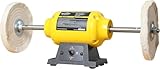
Overview: The Woodskil Dual Speed Bench Buffer is a stationary polishing solution engineered for precision work on jewelry, metal, wood, and knives. This 8-inch benchtop unit features a 1/2HP brushless induction motor delivering two fixed speeds: 1725 RPM for delicate operations and 3450 RPM for aggressive material removal.
What Makes It Stand Out: Unlike handheld polishers, this bench-mounted design provides absolute stability with its weighted iron base and pre-drilled mounting holes. The dual extended shafts accommodate two cotton wheels simultaneously, dramatically increasing throughput for small parts. The brushless induction motor runs quietly with minimal sparking.
Value for Money: For artisans and knife makers, this specialized tool replaces hours of hand-polishing at a fraction of the cost of industrial buffers. While unsuitable for automotive panels, its niche focus delivers exceptional value for its target audience, backed by a two-year warranty.
Strengths and Weaknesses: Strengths include rock-solid stability, dual-wheel efficiency, quiet operation, and motor longevity. The two-speed simplicity is practical for workshop environments. Weaknesses include complete lack of portability, limited to smaller items, and lower power compared to handheld automotive polishers. It’s a one-trick pony—but performs that trick excellently.
Bottom Line: An essential workstation addition for jewelers, metalworkers, and knife enthusiasts. Don’t consider this for car detailing, but for bench-based polishing tasks, it’s a durable, efficient workhorse.
10. PORTER-CABLE Buffer Polisher, Car Polisher for Car Detailing, 6-Inch, Orbital, Variable Speed (7424XP)

Overview: The PORTER-CABLE 7424XP is the gold standard entry-level orbital polisher that revolutionized DIY car detailing. This 4.5 amp, 6-inch random orbit polisher operates at 2,500-6,800 OPM, delivering swirl-free results through its oscillating pattern that mimics hand polishing at machine speed.
What Makes It Stand Out: The random orbit action makes it nearly impossible to burn through paint, earning it legendary status among beginners and professionals alike for finishing work. Its electronic variable-speed dial maintains consistent speed under load, while the proprietary counterweight system reduces vibration for comfortable extended use.
Value for Money: While underpowered for heavy paint correction, its safety margin and reliability justify every penny. It’s widely available, with a massive aftermarket support ecosystem of pads and accessories. This polisher has remained virtually unchanged because the design simply works.
Strengths and Weaknesses: Strengths include foolproof operation, excellent finish quality, low vibration, and proven durability. The random orbit design eliminates swirl marks and paint damage risk. Weaknesses include insufficient power for serious defect removal, 6-inch limitation, and slower correction speed compared to rotary tools. It’s a finisher, not a heavy cutter.
Bottom Line: The undisputed best first polisher for automotive enthusiasts. Master this before considering a rotary. For maintaining paint and applying protection with professional results, it’s unbeatable for the price and safety.
Understanding Buffer Burns: What They Are and Why They Happen
The Science Behind Paint Damage
Buffer burns aren’t actually “burns” in the traditional sense—they’re thermal fractures in your vehicle’s clear coat. When your polishing pad spins too aggressively against the paint surface, friction generates heat that can exceed 180-200°F. At these temperatures, the clear coat softens and deforms, creating microscopic ripples that catch light differently and appear as holograms or swirls. The damage is permanent because you’ve physically altered the paint’s structure, not just scratched the surface.
Heat Generation and Friction Dynamics
Every time your pad contacts the paint, you’re creating a mini friction zone. The faster the pad spins, the more kinetic energy converts to thermal energy. Single-speed tools typically operate at 3,000-3,500 RPM—an aggressive speed suitable only for heavy cutting on hard paints. Most detailing tasks require significantly slower speeds, especially when working on soft, modern clear coats that dominate today’s vehicles. Variable speed polishers let you drop below 1,000 RPM for gentle finishing work, dramatically reducing heat buildup.
Common Scenarios That Lead to Disaster
Buffer burns frequently happen during the final polishing stage when detailers get overzealous. Using high speeds with fine polish on soft paint is a classic recipe for failure. Working on edges, body lines, and high-crown panels requires extra caution—these areas concentrate heat because the pad contacts less surface area. Rushing through a job without proper pad priming or using too much downward pressure compounds the problem, turning a routine polish into a costly mistake.
Variable Speed Polishers: Your Ultimate Defense Against Burns
How Speed Control Prevents Paint Damage
The relationship between pad speed and heat generation is exponential, not linear. Dropping from 3,000 RPM to 2,000 RPM reduces heat production by nearly 60%, not the 33% you might expect. Variable speed polishers give you this critical control, allowing you to start slow for product spreading, increase speed for cutting, then dial back for finishing. This speed modulation keeps paint temperatures in the safe zone—typically under 140°F—while still delivering professional results.
The Advantage of Adjustable RPM Ranges
Quality variable speed polishers offer ranges from 600-3,000 RPM or wider. This spectrum covers every detailing scenario: 600-1,000 RPM for wax application and jeweling, 1,200-1,800 RPM for light polishing and swirl removal, 2,000-2,500 RPM for moderate defect correction, and 2,500+ RPM for heavy cutting on hard paints. Having access to this full range means you never have to compromise between effectiveness and safety—you simply select the appropriate speed for your specific task.
Types of Variable Speed Polishers Explained
Dual-action (DA) random orbital polishers combine rotation and oscillation, making them inherently safer because the pad stops spinning if you apply too much pressure. Forced rotation DA machines maintain pad rotation under pressure, offering more cutting power while still being user-friendly. Rotary polishers spin on a single axis and demand the most skill—they’re powerful but unforgiving. Modern variable speed versions of each type include safety features that make them accessible to enthusiasts while satisfying professional demands.
10 Essential Features That Define Burn-Free Polishers
Wide, Linear RPM Range with Precise Increments
Look for polishers offering at least a 5:1 ratio between minimum and maximum speeds—preferably 600-3,000 RPM or broader. More importantly, the speed control should adjust in small, linear increments (50-100 RPM steps) rather than broad jumps. This granularity lets you fine-tune your speed based on paint temperature feedback, panel contour changes, and polish behavior. Digital displays showing exact RPM are invaluable for replicating successful settings across different vehicles.
Digital Speed Display and Memory Functions
Analog dials are notoriously inaccurate and drift over time. Digital displays provide real-time RPM feedback, eliminating guesswork. Advanced models include memory presets that let you save your favorite speeds for different tasks—one button for spreading, another for cutting, a third for finishing. This feature alone can prevent burns by eliminating the temptation to “eyeball” speed settings when switching between products or panels.
Soft Start Technology for Controlled Engagement
When you pull the trigger, a polisher without soft start instantly jerks to full speed, slinging product and creating instantaneous heat spikes. Soft start mechanisms gradually ramp up to your set speed over 1-2 seconds, allowing you to position the pad and begin spreading product smoothly. This controlled engagement prevents the high-friction “dry buffing” that often causes burns during the first few seconds of pad contact.
Electronic Feedback Control Systems
These intelligent circuits monitor motor load and RPM, automatically adjusting power output to maintain constant speed under pressure. When you bear down on a high spot or edge, the system increases torque instead of letting the pad bog down and then suddenly catch—preventing the speed surges that generate heat. This consistency is crucial for beginners who haven’t mastered feather-light pressure techniques.
Ergonomic Multi-Position Grip Design
Burns happen when you’re uncomfortable and rushing. Look for polishers with multiple grip positions—top handle, side handle, and body grip options. The ability to switch hand positions reduces fatigue and gives you better control over pad angle and pressure. Rubberized, vibration-dampening grips keep your hands steady and sensitive to the subtle feedback that indicates rising temperatures.
Variable Trigger with Speed Lock
A variable trigger lets you modulate speed on-the-fly without reaching for the dial, perfect for feathering speed when approaching edges or complex curves. The speed lock function lets you set a maximum RPM with the dial, then use the trigger to work up to that limit—essentially creating a dynamic speed range that prevents accidentally exceeding safe speeds during critical finishing stages.
Integrated Heat Management Systems
High-end polishers feature internal cooling fans, ventilated motor housings, and thermal cutoff switches. While these protect the tool itself, they also benefit your paint by ensuring the motor runs efficiently without overheating and transferring heat to the pad. Some designs even include air channels that direct cool air across the backing plate, helping dissipate panel heat during extended polishing sessions.
Universal Pad Mounting System Compatibility
Quick-change backing plates that accept multiple pad types (hook-and-loop, bolt-on, vacuum) give you flexibility to use the right pad for each job. Being able to switch from a heavy cutting pad to a finishing pad quickly encourages proper pad selection rather than “making do” with the wrong pad at dangerous speeds. Look for models with standardized 5/16"-24 spindle threads for maximum accessory compatibility.
Advanced Vibration Dampening Technology
Excessive vibration numbs your hands, reducing your ability to feel when the pad is generating too much heat or bouncing on the surface. Premium polishers use counterbalance systems, isolated motor mounts, and weighted backing plates tuned to specific pad sizes. This smooth operation translates to better control, more consistent pad contact, and reduced fatigue—directly correlating to fewer burns.
Overload Protection and Auto-Shutoff
These safety features protect both you and the paint. If the motor detects dangerous overload conditions—like a seized bearing or excessive pressure—it automatically shuts down before generating enough heat to damage paint. Some models include clutch mechanisms that disengage the drivetrain if the pad catches an edge, preventing the violent jerking that can create localized burns.
Mastering RPM: Finding Your Perfect Speed for Every Task
The Speed-to-Task Matching Guide
Start every job at 800-1,000 RPM to spread product evenly and embed polish into the pad fibers. For one-step polishing on moderate swirls, work at 1,200-1,500 RPM on flat panels, dropping to 900-1,100 RPM on edges and body lines. Heavy defect removal might require 2,000-2,500 RPM, but only on hard paints and always with a test spot. Final jeweling and finishing should never exceed 1,200 RPM—many pros finish at 800-900 RPM for maximum safety.
Reading Paint Feedback for Speed Adjustments
Your paint talks to you if you know how to listen. A high-pitched whine indicates dry buffing—immediately add product or reduce speed. The pad feeling “grabby” or sticky signals rising heat—drop 200-300 RPM and lighten pressure. If polish residue turns dark or clumpy, you’re generating excessive heat. Learn to read these signs and adjust speed dynamically rather than rigidly sticking to predetermined settings.
Temperature Monitoring Techniques
Experienced detailers develop a feel for temperature, but you can be more scientific. Infrared temperature guns let you monitor panel surface heat in real-time, keeping it under 140°F. Some advanced polishers now include thermal sensors in the backing plate that wirelessly transmit temperature data to your smartphone. When in doubt, the “back of hand” test—if the panel feels uncomfortably warm to your hand, it’s definitely too hot for the clear coat.
Ergonomic Design: The Hidden Burn Prevention Factor
Weight Distribution and Balance
A well-balanced polisher feels lighter than its actual weight because the mass centers over your hand position. Top-heavy designs force you to fight the tool, leading to inconsistent pressure and rushed movements that cause burns. Look for models with motors positioned low and forward, creating a neutral balance point that lets the tool’s weight work for you, not against you.
Handle Configuration for Different Panels
Different panels demand different grips. Roofs and horizontal surfaces work best with a top handle for vertical pressure control. Vertical panels like doors and fenders benefit from side handles that let you maintain consistent angle. Tight areas around mirrors and spoilers often require gripping the polisher body directly. Multiple handle options mean you can maintain proper ergonomics everywhere, preventing the awkward positioning that leads to pressure spikes and burns.
Vibration and Long-Term Fatigue
Extended polishing sessions numb your hands through vibration white finger syndrome, reducing tactile feedback. By the third hour, you might not feel the subtle temperature changes that precede burns. Anti-vibration systems aren’t luxury features—they’re burn prevention tools that keep your hands sensitive throughout the job. Cordless models often vibrate less than their corded counterparts because they lack the 60Hz hum of AC motors.
Power and Torque: The Delicate Balance
Amperage vs. Real-World Performance
A 15-amp motor sounds impressive, but without proper torque management, it’s just a burn generator. What matters is how the polisher delivers power under load. High-quality tools maintain RPM when you apply pressure rather than bogging down and then surging. This torque consistency prevents the speed fluctuations that create localized hot spots. Look for models with “constant speed control” or “electronic feedback” rather than just high amp ratings.
Battery Technology in Cordless Models
Modern cordless polishers using brushless motors and high-capacity lithium batteries can match corded performance while offering superior control. Battery voltage (18V, 20V, 40V) matters less than the battery’s amp-hour rating and the motor’s efficiency. A 5.0Ah battery on an efficient brushless motor often outperforms a 9.0Ah battery on a brushed design. The freedom of movement with cordless tools reduces cord-drag-induced pressure variations—a subtle but significant burn cause.
Soft Start and Progressive Power Delivery
The initial tool engagement is when most burns occur. Soft start technology prevents the 0-to-3000 RPM jolt that slings product and creates instant friction. Progressive power delivery maintains this smoothness throughout the speed range, eliminating the “power band” surges common in less sophisticated motors. This linear power curve gives you predictable performance, letting you develop muscle memory for safe pressure and speed combinations.
Pad Selection and Compatibility: The Complete System
Backing Plate Size and Weight Considerations
Your backing plate should match your pad size precisely—oversized plates create uneven pressure distribution, while undersized plates reduce stability. Lightweight aluminum or composite plates reduce overall tool weight and heat retention. Some premium plates include ventilated designs that channel air through the pad, actively cooling the paint surface during operation. This simple compatibility choice can drop panel temperatures by 15-20°F.
Pad Material and Density Matching
Soft foam pads generate less heat but cut slower; dense pads cut aggressively but require careful speed management. Variable speed polishers let you optimize this relationship—use soft pads at moderate speeds for general polishing, dense pads at low speeds for heavy correction. The key is matching pad density to polish aggressiveness and paint hardness, then using speed control to fine-tune the heat equation. Never use a heavy cutting pad at high speed on soft paint.
Quick-Change Systems for Efficiency
Burns often happen when detailers get lazy about pad changes. A difficult pad change encourages using the wrong pad “just for a little longer.” Quick-change backing plates let you swap pads in seconds, promoting proper pad selection for each polishing stage. This convenience factor directly impacts technique discipline—the easier it is to do things right, the more likely you are to avoid dangerous shortcuts.
Technique Mastery: The Human Element in Burn Prevention
The Six-Section Rule for Panel Management
Divide every panel into six imaginary sections, working each area completely before moving on. This systematic approach prevents the “rush job” mentality that causes burns. Spend 30-45 seconds per section at consistent speed, using 4-6 slow, overlapping passes. This disciplined timing ensures you don’t overwork any area, and the brief pause between sections lets the paint cool naturally.
Pressure Progression: Start Light, Finish Lighter
Begin with the weight of the polisher and your hand—no additional pressure. Let the tool and product do the work. If you need more cut, increase speed slightly before adding pressure. When finishing, reduce pressure to feather-light and drop speed by 300-500 RPM. This progressive approach prevents the pressure spikes that generate localized heat, especially on edges and body lines where paint is thinner.
Edge and Body Line Protocols
Edges and body lines are paint’s danger zones—less material, more heat concentration. Reduce speed by 20-30% when working within 2-3 inches of any edge. Use smaller pads (3-4 inch) for better control and lighter pressure. Some pros tape off edges with 3/4" painter’s tape as a physical reminder to ease off. The combination of reduced speed, smaller pad, and heightened awareness creates a burn-free zone around these vulnerable areas.
Maintenance: Keeping Your Tool Burn-Preventive
Carbon Brush Replacement Schedules
Worn brushes cause arcing and inconsistent power delivery, creating RPM surges that generate unpredictable heat. Check brushes every 50 hours of use, replacing them when they reach 1/4" length. Brushless motors eliminate this concern entirely, offering maintenance-free operation with superior speed control consistency. This reliability translates directly to safer, more predictable polishing performance.
Bearing and Gear Lubrication
Dry bearings create resistance that makes the motor work harder, generating excess heat that transfers to the pad and paint. Annual lubrication of gearboxes and bearing points ensures smooth operation. Listen for changes in motor tone—a grinding or whining sound indicates it’s time for service. A well-maintained polisher runs cooler, smoother, and more predictably, giving you one less variable to worry about.
Cord and Connection Integrity
Damaged cords cause voltage drops that make motors surge as they struggle to maintain speed. Inspect cords monthly for nicks and fraying, especially near the strain relief. For cordless models, clean battery contacts quarterly with electrical contact cleaner. Stable, consistent power delivery is fundamental to speed control precision—every voltage fluctuation is a potential burn risk.
Common Mistakes That Void Your Speed Control Advantages
Ignoring the Test Spot Protocol
Every vehicle’s paint is different—hardness, thickness, and heat tolerance vary even between panels. Always perform a test spot in an inconspicuous area (inside door jamb, lower rocker panel) using your planned speed, pad, and product combination. Work a 1’x1’ area and inspect under multiple light sources. If you see any hazing or heat marks, reduce speed by 300 RPM before proceeding. This 5-minute step prevents 5 hours of correction work later.
Speed Creep During Long Sessions
As you get comfortable during a multi-hour detail, it’s tempting to gradually increase speed “to save time.” This unconscious speed creep is a major burn cause. Set a timer to check your speed setting every 30 minutes, or use polisher memory functions to lock in your proven speeds. The paint doesn’t get tougher as you progress—your patience just gets thinner.
Dry Buffing and Product Depletion
Running your pad after the polish has broken down or dried is pure friction—no lubrication, no cooling, just heat generation. Learn to recognize when polish is spent (it turns clear and sticky) and stop immediately. Add fresh product or switch pads. At minimum, reduce speed to under 1,000 RPM if you must make a final cleanup pass. Dry buffing at high speed is the fastest path to buffer burn disaster.
Investment Considerations: Price vs. Protection
Entry-Level Features That Actually Matter
Budget polishers under $150 can prevent burns if they nail the basics: reliable speed control, soft start, and a decent RPM range (1,000-3,000). Skip fancy digital displays and focus on smooth, consistent power delivery. Read user reviews specifically mentioning speed stability under load. A simple but accurate tool beats a feature-rich but inconsistent polisher every time when paint safety is the priority.
Professional-Grade Advantages
Polishers above $300 offer refinements that pros rely on: programmable speed memory, thermal protection, superior ergonomics for 8-hour days, and industrial-grade durability. For mobile detailers or shop owners, these features pay for themselves by preventing one repainted panel. The precision and reliability reduce mental fatigue, helping you maintain burn-prevention discipline throughout long workdays.
Total Cost of Ownership Analysis
Factor in backing plates ($30-80), pad sets ($50-150), and potential repair costs. A $200 polisher that prevents burns is cheaper than a $100 polisher plus a $500 repaint. Consider cordless options carefully—batteries need replacement every 2-3 years at $80-120 per pack. Calculate your usage: if you detail monthly, a mid-range corded model offers the best burn-prevention value.
Safety Features That Go Beyond Burn Prevention
Thermal Overload Protection
This circuit shuts down the motor before it reaches temperatures that could damage internal components or create fire hazards. While it protects the tool, it also signals when you’re pushing too hard—frequent shutdowns indicate your technique needs adjustment. Some models include thermal indicators that warn you before shutdown, giving you a chance to correct your approach.
Anti-Kickback Clutches
When a pad edge catches a body line or mirror, a standard polisher can jerk violently, creating localized friction burns. Anti-kickback clutches disengage the drivetrain during sudden resistance spikes, allowing the pad to stop smoothly. This feature is particularly valuable when working on complex modern vehicles with sharp body lines and protruding trim pieces.
GFCI Protection and Electrical Safety
Water and electricity are a dangerous mix in detailing. Built-in GFCI protection prevents shocks if you accidentally spray water near the tool or cord. While not directly preventing buffer burns, this safety feature encourages proper technique by reducing the urge to rush through wet areas—a common scenario where burns occur because visibility is reduced and patience runs thin.
Warranty and Support: Your Long-Term Burn Prevention Partner
What a Strong Warranty Indicates
Manufacturers offering 3-5 year warranties stand behind their speed control electronics and motor quality. A 1-year warranty suggests the maker expects failures. Since speed control reliability is paramount for burn prevention, warranty length becomes a quality indicator. Read the fine print: some warranties exclude “commercial use,” which could void coverage if you’re a pro detailer.
Service Center Availability and Parts Support
A polisher that can’t be repaired is a disposable tool. Check if the manufacturer has authorized service centers within reasonable shipping distance. Availability of replacement parts—especially speed control modules, switches, and gears—means your tool can be restored to factory precision after years of use. This maintainability ensures your burn-prevention features remain accurate over the tool’s lifetime.
Community and Educational Resources
Manufacturers that invest in user education often produce safer tools. Look for brands offering detailed speed charts, technique videos, and active user forums. This ecosystem support helps you master burn-free polishing faster. Some companies even host certification programs that teach advanced speed control techniques, turning your tool purchase into a complete skill-building package.
Future Trends: The Next Generation of Burn Prevention
Smart Polisher Technology Integration
Emerging polishers include Bluetooth connectivity that logs your speed, pressure, and temperature data to a smartphone app. This feedback helps you identify technique flaws that cause burns. Some systems even provide real-time haptic feedback—subtle vibrations in the handle warning you when panel temperature approaches critical levels. As AI develops, expect polishers that automatically adjust speed based on paint hardness sensors.
Advanced Motor Technologies
Brushless motors are becoming standard, offering superior efficiency and speed control. Next-generation linear motors promise even smoother operation with instant torque response and no mechanical wear points. These technologies will make speed control more precise and maintenance-free, eliminating the component wear that causes unpredictable performance and potential burns.
Sustainable Design and Materials
Eco-friendly polishers using recycled materials and energy-efficient motors are entering the market. While environmental benefits are the focus, these designs often run cooler and vibrate less—side benefits that directly prevent burns. Expect to see more water-based lubrication systems in polishers and biodegradable pad materials that maintain consistent performance without heat buildup.
Frequently Asked Questions
What RPM should I use to avoid buffer burns on soft clear coats?
For soft clear coats (common on Japanese and American vehicles), keep your speed between 800-1,200 RPM for polishing and never exceed 1,500 RPM for cutting. Always start at the lower end and increase only if the paint responds well. Soft clear coats begin to deform around 150°F, which is easily reached at high speeds.
Can a cheap variable speed polisher prevent burns as well as an expensive one?
Yes, if it has reliable, consistent speed control. The key features are smooth speed adjustment, soft start, and stable RPM under pressure. Expensive polishers add comfort and durability, but a budget model that maintains accurate speeds prevents burns just as effectively. The operator’s technique matters more than the tool’s price tag.
How do I know if I’m generating too much heat during polishing?
Check the panel temperature frequently with your hand—if it’s uncomfortably warm, it’s too hot. Look for polish residue turning dark or clumpy, and listen for changes in pad sound (high-pitched squealing). Advanced signs include the pad feeling sticky or the paint developing a hazy appearance. When in doubt, stop and let the area cool for 5 minutes.
Should I use a rotary or dual-action polisher to minimize burn risk?
Dual-action polishers are inherently safer due to their oscillating motion, which stalls under excessive pressure. They’re the best choice for beginners and most enthusiasts. Rotary polishers require more skill but can be used safely with proper speed control and technique. If you’re concerned about burns, start with a quality variable speed DA polisher.
How often should I replace polishing pads to prevent burns?
Replace foam pads every 15-20 vehicles or when they show visible wear, compression, or tearing. Worn pads don’t distribute product evenly, creating dry spots that generate localized heat. Clean pads after every use—product buildup in the foam pores reduces cooling efficiency and increases friction. A fresh, clean pad is your best burn prevention tool.
Can buffer burns be fixed without repainting?
Minor holograms from light overheating can sometimes be corrected with an extremely gentle polish at 800-900 RPM using a soft foam pad. However, true buffer burns that have deformed the clear coat cannot be permanently fixed. You can temporarily mask them with glazing oils, but they return after washing. Severe burns always require repainting the affected panel.
What’s the safest speed for polishing edges and body lines?
Reduce your normal speed by 25-30% when working within 3 inches of any edge. For most tasks, this means 900-1,100 RPM maximum. Use a smaller 3-4 inch pad for better control and keep the pad edge at least 1/2 inch away from the actual edge of the panel. Tape off edges as a visual reminder to slow down and lighten up.
Do cordless polishers generate less heat than corded models?
The tool itself doesn’t generate significantly different amounts of heat, but cordless polishers often vibrate less and offer better maneuverability, which can lead to better technique and fewer burns. The real advantage is freedom of movement—no cord drag means more consistent pressure. Modern brushless cordless models provide speed control that’s just as precise as quality corded tools.
How long should I wait between polishing passes to prevent heat buildup?
Work a 2’x2’ section for 30-45 seconds, then move to an adjacent section. By the time you complete the entire panel and return to your starting point, 5-7 minutes have passed, allowing adequate cooling. For soft paints or high temperatures, use the “two-panel rule”—work panel A, then panel B, then return to panel A. Never polish the same area twice in immediate succession.
Are there any paints that are immune to buffer burns?
No paint is completely immune, but some are more resistant. Ceramic coatings and extremely hard ceramic-infused clear coats can withstand more heat, but they can still be burned with aggressive technique. Single-stage paints (common on classic cars) are actually more vulnerable because there’s no clear coat to protect the color layer. Always assume every paint can burn and use appropriate speeds.
See Also
- How to Solve Buffer Burn with the 10 Best Variable Speed Polishers in 2026
- How to Solve Hologram Finish with the 10 Best Variable Speed Polishers in 2026
- How to Solve Hologram Marks with the 10 Best Variable Speed Polishers in 2026
- 10 Best Variable Speed Polishers for Custom Paint Jobs in 2026
- 10 Polishers and Buffers That Solve Buffer Burn Problems in 2026