Table of Contents
Ever felt that unsettling vibration through your steering wheel at a stoplight? That rhythmic shudder, the engine sounding like it’s about to quit entirely, while your car stubbornly refuses to run smoothly? Rough idling isn’t just annoying – it’s your vehicle’s clear distress signal, often whispering (or sometimes shouting) about problems deep within the fuel system. Ignoring it can lead to worse performance, reduced fuel economy, and potentially expensive repairs down the road. While the urge to grab the first bottle promising instant fixes is strong, understanding the real cause and choosing the right solution strategy is crucial for a lasting repair.
The root of many rough idling woes often lies with clogged or malfunctioning fuel injectors. These tiny, precision-engineered components are responsible for spraying a fine, atomized mist of fuel into your engine’s combustion chambers at exactly the right moment. When carbon deposits, varnish, or gum build up on their nozzles or internal parts, this critical spray pattern gets disrupted. Instead of a perfect mist, you get drips, streams, or uneven distribution. The result? An unbalanced air-fuel mixture in one or more cylinders, leading directly to that frustrating rough, uneven idle. Fuel injector treatments can be a powerful tool in your diagnostic and maintenance arsenal, but using them effectively requires knowing how they work and when they’re the appropriate solution, not just a hopeful gamble.
Top 10 Fuel Injector Treatments
Detailed Product Reviews
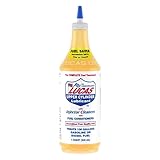
1. Lucas Oil 10003 Fuel Treatment - 1 Quart
Overview:
This 1-quart fuel treatment is a versatile additive designed for both gasoline and diesel engines, positioned as an accessible maintenance solution for everyday drivers seeking improved engine performance and efficiency without professional service.
What Makes It Stand Out:
Lucas Oil’s formula uniquely combines cleaning and lubrication in a single dose, targeting injectors, carburetors, and combustion chambers to reduce carbon deposits. Its dual-fuel compatibility and MPG-boosting claims set it apart as a comprehensive “tune-up in a bottle,” especially for older vehicles prone to sludge buildup.
Value for Money:
Priced moderately for a quart, it offers better longevity than smaller competitors (e.g., Royal Purple’s 6oz). While pricier per ounce than bulk options like the Lucas gallon size (Product 4), it’s ideal for occasional users or those testing the product first, providing solid ROI through extended engine life and reduced fuel costs.
Strengths and Weaknesses:
Strengths: Proven deposit removal, noticeable power improvement, and universal fuel compatibility. Weaknesses: Requires consistent use for full benefits; no explicit ethanol-stabilizing claims like Gumout; quart size may be excessive for small engines.
Bottom Line:
A reliable, entry-level treatment for routine maintenance. Recommended for drivers seeking incremental performance gains without overspending, though bulk users should consider the gallon variant for better value.
2. Lucas Oil 10020 Upper Cylinder Lube/Fuel Treatment - 5.25 fl oz.
Overview:
This compact 5.25 fl oz treatment focuses specifically on upper cylinder lubrication while retaining standard fuel-system cleaning benefits, targeting high-mileage or performance engines needing enhanced piston-ring sealing and compression.
What Makes It Stand Out:
Unlike generic additives, it emphasizes upper cylinder lubrication—a niche feature critical for reducing blow-by, restoring compression, and quieting lifter noise. Its concentrated formula delivers intense treatment in minimal volume, ideal for quick top-ups or pre-inspection tune-ups.
Value for Money:
The smallest Lucas option is cost-effective per application for targeted fixes (e.g., smoothing rough idles). However, it’s less economical for ongoing use than larger sizes. Justifies its price for emergency compression issues but overpriced for routine maintenance compared to quart/gallon alternatives.
Strengths and Weaknesses:
Strengths: Rapid upper-engine lubrication, compact size for storage, and compatibility with all fuel types. Weaknesses: Limited volume necessitates frequent repurchasing; lacks fuel-stabilizing properties for storage; not optimized for full-system cleaning.
Bottom Line:
A specialized solution for compression-related problems. Best reserved for mechanics or DIYers addressing specific upper-cylinder wear, not daily preventative care.
3. Royal Purple 18000 Max Atomizer Fuel Injector Cleaner, 6 fl. oz.

Overview:
Royal Purple’s concentrated 6 fl oz injector cleaner targets gasoline and diesel engines with a focus on maximizing horsepower and responsiveness through advanced deposit control and ethanol stabilization.
What Makes It Stand Out:
Its proprietary “Max Atomizer” technology claims superior fuel atomization for cleaner burns, while explicit ethanol stabilization addresses modern fuel-blend challenges. The dual emphasis on performance (horsepower gains) and fuel preservation distinguishes it from basic cleaners.
Value for Money:
Premium-priced for its size, but the high concentration delivers results in fewer treatments. Competes closely with Gumout but lacks multi-system versatility. Worth the cost for performance enthusiasts prioritizing injector precision over full-system care.
Strengths and Weaknesses:
Strengths: Effective ethanol stabilization, measurable horsepower gains, and quick responsiveness improvements. Weaknesses: Small volume limits treatment frequency; no crankcase/catalytic converter claims; less comprehensive than Gumout’s multi-system approach.
Bottom Line:
An excellent choice for performance-focused drivers needing injector-specific cleaning and ethanol protection, though not ideal for holistic engine maintenance.
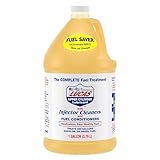
4. Lucas Oil 10013 Fuel Treatment - 1 Gallon
Overview:
The gallon-sized Lucas treatment delivers the same core benefits as its quart counterpart but in a cost-efficient bulk format, catering to fleet operators, heavy diesel users, or frequent treaters seeking long-term savings.
What Makes It Stand Out:
Identical in formulation to Product 1, its standout feature is sheer volume—treating up to 256 gallons of fuel. This makes it uniquely practical for commercial users, diesel trucks, or seasonal equipment storage, where regular dosing is non-negotiable.
Value for Money:
Unbeatable per-treatment cost (under $0.20/oz), slashing long-term expenses by 40% versus the quart. Ideal for high-mileage vehicles or workshops. The initial investment pays off rapidly for users treating fuel monthly or managing multiple engines.
Strengths and Weaknesses:
Strengths: Exceptional cost efficiency, large treatment capacity, and proven deposit control. Weaknesses: Overkill for occasional drivers; heavy weight complicates storage; no added features beyond standard Lucas benefits.
Bottom Line:
The definitive value pick for commercial or high-usage scenarios. Avoid if you drive infrequently, but essential for fleets or diesel-dependant operations.
5. Gumout 510011 Multi-System Tune-Up, Fuel Stabilizer Injector Cleaner & Gas Treatment, 16 oz, Full Fuel System Cleaner - Improves Engine Performance, Cleans & Removes Deposits and Residue

Overview:
Gumout’s 16 oz Multi-System Tune-Up is a holistic fuel system cleaner with PEA-based technology, engineered to clean injectors, stabilize ethanol, and protect the entire fuel pathway from tank to tailpipe.
What Makes It Stand Out:
Its multi-system versatility is unmatched: it cleans GDI injectors, stabilizes ethanol-blended fuels, fights water corrosion, and doubles as a crankcase additive. The inclusion of catalytic converter and carburetor cleaning in one formula addresses gaps left by competitors like Lucas.
Value for Money:
Priced mid-range for 16 oz, it outperforms single-focus additives by consolidating multiple treatments. While Royal Purple matches ethanol stability, Gumout’s broader application scope (tank, crankcase, induction) justifies a slight premium over basic cleaners.
Strengths and Weaknesses:
Strengths: Comprehensive system coverage, strong ethanol/water protection, and emission reduction. Weaknesses: Slightly slower results than Lucas for power gains; PEA formula may require multiple doses for severe buildup.
Bottom Line:
The top recommendation for modern engines using ethanol fuels. Best for eco-conscious drivers seeking all-in-one protection and long-term engine health.
6. Red Line 60103 SI-1 Complete Fuel System Cleaner - 15 Ounce- Fuel Injector Cleaner and Carburetor Cleaner for Corrosion Prevention and Injector, Valve, and Combustion Chamber Deposit Removal

Overview:
This single 15-ounce bottle of Red Line SI-1 is a concentrated fuel additive targeting deposit removal and corrosion prevention across gasoline fuel systems, including injectors, carburetors, valves, and combustion chambers. It’s designed for routine maintenance to restore performance.
What Makes It Stand Out:
Its dual-action formula combines high- and low-temperature detergents to tackle deposits across engine operating conditions. It emphasizes corrosion inhibition—a feature often overlooked in competitors—and claims near-complete cleaning efficiency in one treatment while stabilizing fuel to prevent future gum/varnish buildup.
Value for Money:
Priced moderately for a premium 15oz bottle, it offers solid value for occasional use. While cheaper alternatives exist, its corrosion protection and broad deposit-removal claims justify the cost for owners prioritizing long-term fuel system health over basic cleaning.
Strengths and Weaknesses:
Strengths: Effective multi-component cleaning; corrosion prevention; easy single-treatment application; enhances fuel stability. Weaknesses: Limited volume for larger tanks (treats ~15-20 gallons); no explicit MPG/test data provided; frequent use needed for severe buildup (not a one-time fix).
Bottom Line:
A reliable, well-rounded cleaner for preventive maintenance. Ideal for drivers seeking deposit removal plus corrosion defense, though budget users may prefer cheaper options for basic cleaning.
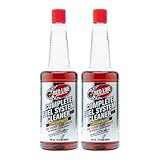
7. Red Line 60103 SI-1 Complete Fuel System Cleaner, Cleans and Prevents Corrosion in Fuel Systems, Cleans Injectors, Carburetors, Valve and Combustion Chamber Deposits - 15 Ounce (2 Pack)
Overview:
This two-pack variant of Red Line’s SI-1 delivers identical 15-ounce formula as Product #6 but doubles the quantity. It targets fuel system deposits and corrosion in gasoline engines, emphasizing one-bottle-per-tank treatment for optimal results.
What Makes It Stand Out:
The core technology—dual-temp detergents for comprehensive deposit removal and corrosion inhibition—remains identical to the single bottle. The standout feature is the 2-pack convenience, reducing cost-per-ounce and ensuring supply for multiple treatments without repurchasing.
Value for Money:
Offers significant savings per ounce versus the single bottle (Product #6). At ~$15-$20 for two bottles, it’s economical for regular maintenance (e.g., every 3,000 miles), outperforming pricier single-use competitors on long-term value.
Strengths and Weaknesses:
Strengths: Same robust cleaning/corrosion protection as #6; cost-effective bulk purchase; easy application; fuel-stabilizing properties. Weaknesses: Still limited to ~15-20 gallons per bottle; no added features beyond quantity; overkill for infrequent users.
Bottom Line:
The best value for Red Line SI-1 buyers. Highly recommended for proactive maintenance due to the price-per-treatment savings, though casual users may not need two bottles immediately.
8. ATS Chemical 505 CRF Fuel System Treatment - 16 oz Powerful Carbon & Injector Cleaner for Gasoline & Diesel Engines - Help Boost MPG, Restore Power, & Reduce Emissions - Easy Pour Bottle

Overview:
ATS 505 CRF is a versatile 16oz cleaner for both gasoline and diesel systems, formulated to remove carbon deposits from injectors (port/direct), induction valves, and ports. It promises restored fuel economy, power, and reduced emissions across 5-20 gallons of fuel.
What Makes It Stand Out:
Its broad compatibility (gas/diesel) and focus on stubborn carbon—especially on modern direct-injection systems—sets it apart. The concentrated formula treats up to 20 gallons, and the easy-pour bottle simplifies precise dosing for varied tank sizes.
Value for Money:
Competitively priced for a dual-fuel 16oz bottle. Treating 20 gallons per bottle undercuts many single-fuel competitors on cost-per-treatment, especially for diesel users seeking carbon-specific cleaning without dedicated products.
Strengths and Weaknesses:
Strengths: Gas/diesel versatility; effective on carbon-heavy deposits; treats large volumes; emission/fuel economy claims backed by user reports. Weaknesses: Less emphasis on corrosion prevention; no cetane/octane boost; vague “proven” claims without third-party data.
Bottom Line:
An excellent choice for multi-vehicle households or carbon-focused cleaning. Prioritize this over single-fuel options if tackling severe carbon buildup in diverse engines.
9. Hot Shot’s Secret Everyday Diesel Treatment (HSSEDT16ZS) 6-in-1 Diesel Fuel Additive - Treats 400 Gallons, Diesel Injector Cleaner, Diesel Fuel System Cleaner, Diesel Additive Boosts Cetane, 16oz

Overview:
This 16oz diesel-specific additive serves as a maintenance treatment, combining injector cleaning, cetane boosting (up to 7 points), corrosion prevention, and fuel stabilization. One bottle treats up to 400 gallons when dosed per fill-up.
What Makes It Stand Out:
The 6-in-1 functionality—including cetane enhancement, demulsifying moisture, and lubricity improvement—makes it a comprehensive daily driver. High treatment capacity (400 gal/bottle) and fill-up frequency cater to high-mileage diesel owners.
Value for Money:
Exceptional long-term value: at ~$20, it costs pennies per gallon treated. Outperforms single-purpose additives (e.g., cetane boosters alone) by bundling critical diesel maintenance into one affordable product.
Strengths and Weaknesses:
Strengths: High treatment volume; boosts cetane/lubricity; prevents corrosion; easy routine use; proven injector cleaning. Weaknesses: Gasoline-incompatible; requires consistent use (not for one-off fixes); cetane claims vary by base fuel.
Bottom Line:
A must-have for daily diesel drivers. Unbeatable for ongoing engine protection and efficiency—prioritize this over periodic cleaners for sustained performance.
10. Hot Shot’s Secret Gasoline Extreme 12 oz – Treats 20 Gallons – Concentrated Fuel Additive for Gasoline Engines, Fuel System and Injector Cleaner, Restores Engine Performance

Overview:
This 12oz gasoline-specific formula focuses on deep cleaning with P.E.A. (polyether amine) technology to dissolve deposits in injectors, valves, pistons, and combustion chambers. One bottle treats 20 gallons or covers 10,000 miles of maintenance.
What Makes It Stand Out:
P.E.A. technology provides aggressive deposit removal (superior to older PIB-based cleaners), while claims of 7.9% MPG gains and rapid idle/smoothness improvements target performance-focused users. The 10,000-mile interval reduces treatment frequency.
Value for Money:
Mid-priced for a 12oz bottle, but high concentration justifies cost. Treating 20 gallons per bottle aligns with competitors, though the 10k-mile interval offers convenience savings versus products requiring every-fill use.
Strengths and Weaknesses:
Strengths: Powerful P.E.A. cleaning; restores power/MPG; convenient long-interval use; dissolves stubborn varnish. Weaknesses: Gasoline-only; no corrosion prevention; 7.9% MPG claim is “up to” (real-world results vary).
Bottom Line:
Top pick for gasoline engine revitalization. Choose this for significant deposit removal and performance recovery, especially if experiencing rough idling or power loss.
Understanding Rough Idling and Its Connection to Fuel Injectors
What Exactly is Rough Idling?
Rough idling manifests as an engine that vibrates excessively, sounds uneven or lumpy, hesitates, or even feels like it might stall when the vehicle is stationary with the engine running (typically in park or neutral). It’s distinct from normal minor engine vibration and indicates a significant imbalance in the combustion process across the engine’s cylinders.
The Critical Role of Fuel Injectors
Fuel injectors are electromechanical valves that open and close rapidly, precisely metering fuel based on signals from the engine control unit (ECU). Their job is to deliver fuel under high pressure in a specific cone-shaped spray pattern optimized for complete and efficient combustion. Any deviation from this precise operation directly impacts engine smoothness, especially at lower RPMs like idle.
How Deposits Cause Injector Malfunction
Over time, especially with frequent short trips, ethanol-blended fuels, or lower-quality gasoline, residues can accumulate:
- Nozzle Tip Deposits: Block the tiny orifice, restricting flow or distorting the spray pattern.
- Internal Deposits: Gum up the injector’s pintle (needle) or seat, causing sticking (staying open or closed too long).
- Varnish Buildup: Creates a sticky film that impedes the injector’s rapid on/off cycling. These issues lead to inconsistent fuel delivery – some cylinders get too much fuel (rich), others too little (lean) – causing misfires and that characteristic rough idle.
Diagnosing the Real Culprit: Is It Really the Injectors?
Beyond Fuel Injectors: Common Rough Idle Causes
While injectors are a frequent offender, rough idling has many potential sources. Jumping straight to a treatment without diagnosis often wastes money and fails to fix the problem. Other common culprits include:
- Vacuum leaks (cracked hoses, intake manifold gaskets)
- Faulty spark plugs or ignition coils
- Malfunctioning idle air control valve (IACV) or throttle position sensor (TPS)
- Dirty or failing mass airflow sensor (MAF)
- Low fuel pressure (weak pump, clogged filter)
- Exhaust gas recirculation (EGR) valve issues
Essential Diagnostic Steps Before Treatment
- Check for Engine Codes: Use an OBD-II scanner. Codes like P0300 (Random Misfire) or cylinder-specific misfire codes (P0301-P0308) can point to injector issues but also indicate spark or compression problems.
- Basic Visual Inspection: Look for obvious vacuum leaks (listen for hissing), damaged spark plug wires, or disconnected sensors.
- Listen and Observe: Note when the roughness occurs (only cold? only hot? all the time?) and if it changes with electrical load (turning on AC, headlights).
- Consider Recent History: Did the problem start after refueling? After a specific repair? Following long-term storage? If injector issues are suspected after ruling out other major causes, then treatment becomes a viable step.
Demystifying Fuel Injector Treatments: How They Actually Work
The Chemistry Behind the Clean
Effective treatments rely on specific detergent and solvent chemistry:
- Polyether Amines (PEA): The gold standard for dissolving stubborn, baked-on carbon deposits (intake valves, combustion chambers, injector nozzles). Highly effective but can be harsh on certain seals if misused.
- Polyisobutylene Amines (PIBA): Excellent for keeping injectors clean and preventing new deposits (fuel system “detergent”). Less aggressive on existing heavy carbon than PEA but gentler on systems.
- Solvents (e.g., Xylene, Naphtha): Help dissolve gum, varnish, and softer deposits, aiding the detergents. Provide quick “feel” but less long-term protection.
- Lubricants: Protect injector components (like the pintle) during operation and cleaning.
What Treatments Can and Cannot Fix
- CAN Fix: Performance loss due to varnish/gum buildup on injector nozzles/pintles; minor flow inconsistencies; some idle quality issues directly caused by dirty injectors.
- CANNOT Fix: Mechanically stuck injectors (bent pintle, severe internal damage); electrical faults within the injector; problems originating outside the fuel injectors (vacuum leaks, spark issues, sensor failures). They are cleaners, not repair kits for broken parts.
The Difference Between “Treatment” and “System Cleaner”
- Fuel Injector Treatment (Concentrated): Typically added to a near-empty tank, then filled with fuel. Higher concentration of active detergents/solvents designed for periodic deep cleaning (e.g., every 3,000-5,000 miles or when symptoms appear).
- Fuel System Cleaner (Maintenance Dose): Often found in retail fuel additives added at every fill-up. Lower concentration, focused on preventing deposit formation rather than removing heavy buildup. Less effective for existing rough idle symptoms.
Choosing the Right Treatment: Key Factors to Consider
Matching Chemistry to Your Problem
- For Severe Carbon/Varnish (Common in Rough Idle): Prioritize products with a high concentration of PEA. This is the heavy lifter for the tough deposits most likely causing flow disruption.
- For Prevention/Maintenance or Mild Symptoms: Products emphasizing PIBA or balanced PEA/PIBA blends are suitable for ongoing use to keep injectors clean.
- Avoid “All-in-One” Miracle Claims: Be skeptical of products claiming to fix compression, oil burning, or transmission issues. Focus on reputable brands specializing in fuel system chemistry.
Concentration is King
The amount of active detergent (PEA/PIBA) per ounce matters significantly. A small bottle treating a full tank (15+ gallons) likely has a much lower effective concentration than one designed for a smaller tank (e.g., 10-12 gallons). Check the treatment ratio on the label – a lower gallon-per-bottle ratio usually indicates higher concentration.
Compatibility with Your Fuel Type
- Gasoline Engines: Most treatments are formulated for gasoline. Ensure compatibility if using E10, E15, or ethanol blends.
- Flex-Fuel Vehicles (E85): Use treatments specifically labeled as safe for high-ethanol content fuels. Standard treatments may not be effective or could cause issues.
- Diesel Engines: Crucially, diesel injector treatments are DIFFERENT. Never use a gasoline injector treatment in a diesel engine, and vice-versa. Diesel requires specific cetane improvers and detergents formulated for its different combustion process and injector design.
Proper Application: Maximizing Effectiveness and Avoiding Pitfalls
The Critical “Empty Tank” Method
For maximum concentration and dwell time:
- Drive until your fuel gauge reads near empty (1/8 tank or less).
- Add the entire bottle of treatment directly into the tank.
- Immediately fill the tank completely with your regular gasoline. This ensures the treatment is highly concentrated as it passes through the injectors first, before being diluted by the full tank. Adding it to a full tank drastically reduces effectiveness.
Patience is Required: How Long Until Results?
- Initial Improvement: You might notice smoother operation within 10-20 miles as lighter deposits dissolve.
- Full Effect: It often takes 50-100 miles of normal driving for the treatment to fully circulate, clean deposits, and for the engine computer to relearn optimal settings. Don’t expect instant miracles after just a few blocks.
- Severe Cases: Extremely clogged injectors might require two consecutive treatments or professional cleaning.
Common Application Mistakes to Avoid
- Adding to a Full Tank: Dilutes the treatment below effective levels.
- Using Half a Bottle: Under-dosing reduces concentration and effectiveness.
- Ignoring Treatment Interval: Using treatments too frequently (e.g., every tank) can potentially wash oil from cylinder walls; too infrequently allows heavy buildup.
- Using Diesel Treatment in Gasoline (or Vice Versa): Can cause damage or poor performance.
When Treatments Aren’t Enough: Knowing the Limits
Signs Your Injectors May Be Beyond Saving
- Persistent Rough Idle/Misfires: After 2 full treatment cycles (using the empty tank method correctly).
- Failed Flow Test: Professional shops can test each injector’s flow rate and spray pattern; significant deviation indicates mechanical failure.
- Visible Damage: Physical inspection revealing cracked bodies or severely clogged, uncleanable nozzles.
- Electrical Faults: Detected via resistance checks or scope testing showing injector circuit problems.
Professional Cleaning vs. Replacement
- Ultrasonic Cleaning: A shop can remove injectors and clean them in a specialized bath. Effective for moderate deposits but won’t fix internal mechanical wear. Usually less expensive than replacement.
- Replacement: Necessary for injectors with internal wear, damaged nozzles, or electrical failure. OEM or high-quality aftermarket replacements are recommended. Often the most reliable long-term solution for severely faulty units.
The Importance of Addressing Root Causes
If rough idling returns quickly after treatment, the underlying cause of the rapid deposit formation needs investigation:
- Frequent Short Trips: Engine never reaches optimal temperature to burn off residues.
- Consistently Low-Quality Fuel: Switch to a TOP TIER detergent gasoline brand.
- Underlying Engine Issue: Oil consumption (burning oil leads to carbon), persistent vacuum leaks, or faulty sensors causing overly rich conditions that promote coking.
Integrating Treatments into a Proactive Maintenance Strategy
Prevention is Far Cheaper Than Cure
Regular use of quality fuel and periodic injector maintenance can prevent most rough idle issues related to deposits:
- Use TOP TIER Detergent Gasoline: These brands (look for the certification) include significantly higher levels of effective detergents than the EPA minimum, helping keep injectors clean between treatments.
- Follow a Scheduled Treatment Plan: Use a concentrated injector treatment every 3,000-5,000 miles, or at least once a year, before symptoms appear. This is especially important for older vehicles or those driven primarily on short trips.
Complementary Maintenance Tasks
- Regular Air Filter Changes: Ensures proper airflow, crucial for the correct air-fuel ratio.
- Spark Plug and Ignition System Service: Worn plugs or coils are a common cause of misfires that mimic injector problems.
- Throttle Body and Idle Air Control Cleaning: Carbon buildup here directly impacts idle stability. Often cleaned during professional injector service.
- Addressing Vacuum Leaks Promptly: Even small leaks disrupt the air-fuel mixture.
Monitoring Your Vehicle’s Health
Pay attention to subtle changes:
- Slight decrease in fuel economy
- Minor hesitation during acceleration
- Rougher-than-normal idle when cold
- Harder starting Addressing these early with a maintenance treatment can prevent full-blown rough idle scenarios.
Separating Marketing Hype from Real Solutions
Beware of Unrealistic Claims
Products promising “instant smooth idle,” “50% more power,” or “fixes any engine problem” are almost always exaggerating. Effective cleaning takes miles, not minutes, and has specific limitations. Reputable brands focus on deposit removal and performance restoration, not impossible gains.
Understanding “As Tested” Claims
Manufacturer claims like “cleans 95% of deposits” are usually based on specific, controlled lab tests (e.g., BMW or CEC test protocols) that may not perfectly mirror real-world, decade-old carbon buildup in your specific engine. Manage expectations accordingly.
The Value of Independent Testing (When Available)
While rare for consumers, some automotive publications or technical organizations occasionally conduct independent tests comparing the deposit-removal efficacy of different treatments under standardized conditions. Look for these as more reliable indicators than manufacturer ads.
Frequently Asked Questions
Frequently Asked Questions
Can a fuel injector treatment fix a rough idle immediately?
No, effective cleaning takes time. You may notice gradual improvement over 50-100 miles of normal driving as deposits dissolve and the engine computer adapts. Immediate “fixes” are usually placebo or unrelated.
How often should I use a fuel injector treatment?
For preventative maintenance, use a concentrated treatment every 3,000-5,000 miles, or at least once a year. If addressing existing symptoms, one treatment cycle (using the empty tank method) is standard; repeat only if symptoms persist after 100 miles.
Will any fuel injector treatment work for my car?
No. You must use a treatment specifically formulated for gasoline engines if you have a gas car, or a diesel-specific treatment if you have a diesel. Using the wrong type can be ineffective or cause damage. Check compatibility with ethanol blends if applicable.
Can injector treatments harm my engine or catalytic converter?
Reputable, correctly used treatments pose minimal risk. However, extremely high concentrations of certain solvents could potentially affect older rubber seals. More importantly, dislodged large chunks of carbon could theoretically reach the combustion chamber – but this is rare with modern, properly dosed treatments. Follow label instructions.
Do I need to use the “empty tank” method?
Yes, for maximum effectiveness when treating existing problems. Adding the treatment to a full tank dilutes it significantly, reducing its cleaning power. Drive down to 1/8 tank, add treatment, then fill up completely.
Can injector treatments fix a misfire code?
Only if the misfire is directly caused by dirty injectors disrupting fuel delivery. Misfires can also be caused by spark issues, vacuum leaks, or compression problems, which treatments won’t fix. Diagnose the cause first.
Are expensive treatments significantly better than cheap ones?
Generally, yes. Higher cost often correlates with a higher concentration of effective detergents (like PEA). Very cheap treatments may contain minimal active ingredients, mostly solvents that provide a temporary “feel” but little lasting cleaning. Check the treatment ratio (gallons per bottle).
Can I use multiple additives at once (e.g., injector treatment + fuel stabilizer)?
It’s not recommended. Combining products can lead to chemical interactions that reduce effectiveness or potentially cause issues. If you need multiple treatments (e.g., for storage), use them separately, spaced by a full tank of fuel.
Will a treatment help if my check engine light is on?
Only if the light is on due to a misfire caused by dirty injectors. The treatment might resolve the underlying cause, turning the light off after several drive cycles. However, the light could indicate many other problems that a treatment won’t fix. Always get the code read first.
Can rough idling be caused by something other than fuel injectors?
Absolutely. Vacuum leaks, faulty spark plugs/coils, a dirty throttle body, malfunctioning sensors (MAF, O2, TPS), or a failing idle air control valve are very common causes. Injector issues are frequent, but not the only possibility – proper diagnosis is essential.
See Also
- How to Solve Rough Idling with the 10 Best Fuel Injectors in 2026
- How to Solve Poor Acceleration with the 10 Best Fuel Injector Treatments in 2026
- 10 Fuel Injector Test Kits That Solve Misfire Problems in 2026
- Stop Rough Idling with the 10 Best Gasoline Fuel Injectors This Year
- We Tested 50 Fuel Injector Treatments - Here are the 10 Best for Home Mechanics