Table of Contents
Winter mornings bring a familiar dread for many vehicle owners: the ominous click of a dead battery. As temperatures plummet, that once-reliable engine coughs and sputters, refusing to turn over. Cold weather doesn’t just make starting harder; it actively drains your car’s battery capacity, sometimes by as much as 50% or more. The chemical reactions inside a lead-acid battery slow dramatically in freezing conditions, leaving insufficient power to crank the engine, even if the battery was perfectly healthy just weeks before. This seasonal battery failure isn’t just an inconvenience; it can strand you, disrupt your day, and lead to costly replacements if not managed correctly.
The solution isn’t merely a stronger jump start or hoping for warmer weather. Proactive maintenance is key, and that’s where understanding the right kind of charging technology becomes essential. While jump starters offer a temporary fix, they don’t address the root cause of winter-induced battery degradation. What you truly need is a reliable way to keep your battery consistently topped up and chemically stable throughout the coldest months, preventing the sulfation and capacity loss that cold weather accelerates. This isn’t about quick fixes; it’s about implementing a smart, long-term strategy to safeguard your vehicle’s power source when you need it most. The right approach transforms winter from a battery killer into just another season your vehicle handles effortlessly.
Top 10 Trickle Chargers
Detailed Product Reviews
1. NOCO GENIUS1: 1A 6V/12V Smart Battery Charger – Automatic Maintainer, Trickle Charger & Desulfator with Overcharge Protection & Temperature Compensation – for Lead-Acid & Lithium Batteries

Overview:
The NOCO GENIUS1 is a compact, intelligent charger designed for 6V/12V lead-acid and lithium (LiFePO4) batteries. It combines charging, maintenance, trickle charging, and desulfation in a single unit, targeting automotive, marine, and powersport applications with a focus on safety and precision.
What Makes It Stand Out:
Its standout features include temperature compensation for optimal charging in all climates, the ability to revive dead batteries (as low as 0V via Force Mode), and seamless compatibility with both lead-acid and lithium chemistries. The 35% smaller footprint and enhanced power output over predecessors offer significant space and efficiency gains.
Value for Money:
Priced at a premium, it justifies cost through versatility (lithium support rare in this class), robust build quality, and indefinite maintenance capability. While cheaper alternatives exist, the GENIUS1’s reliability and advanced features deliver superior long-term value for users with mixed battery types.
Strengths and Weaknesses:
Strengths: Exceptional safety protections; precise temperature-adaptive charging; effortless dead-battery recovery; silent operation; lithium compatibility.
Weaknesses: Higher price point; no LCD display for real-time metrics; 1A output slower for large batteries.
Bottom Line:
An elite all-rounder for discerning users needing lithium support and climate-resilient charging. Ideal for maintaining high-value vehicles or marine batteries despite the cost, earning strong recommendation for reliability-focused buyers.
2. 2-Pack Smart Fully Automatic 6V 12V Battery Charger Maintainer for Car, Marine, Motorcycle, Lawn Mower

Overview:
This NEXPEAK 2-pack offers budget-friendly, fully automatic charging for 6V/12V lead-acid batteries. Targeting cars, motorcycles, and marine use, it integrates charging, maintenance, desulfation, and monitoring via an LCD screen in a compact form.
What Makes It Stand Out:
The dual-unit pack provides exceptional value, while the intuitive LCD displays real-time metrics (voltage, current, charge %). Its 7-stage charging program includes pulse-based desulfation, and the forced 12V mode handles deeply depleted batteries—features uncommon at this price.
Value for Money:
Outstanding value for multi-vehicle households or workshops. At roughly half the cost per unit of premium brands, the 2-pack delivers comprehensive protection and LCD visibility. The 2-year warranty and included connectors enhance affordability without sacrificing core functionality.
Strengths and Weaknesses:
Strengths: Clear LCD interface; robust 7-stage charging; versatile connector kit; forced 12V mode; excellent multi-pack pricing.
Weaknesses: No lithium support; maintains at 13.6V (slightly high for some AGM); plastic housing feels less durable than NOCO.
Bottom Line:
A pragmatic, feature-rich choice for lead-acid battery owners needing multiple units. Its LCD clarity and desulfation tech make it a top budget pick, though lithium users should look elsewhere. Highly recommended for cost-conscious buyers.
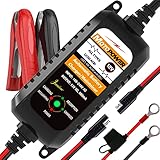
3. MOTOPOWER MP00205A 12V 800mA Automatic Battery Charger, Maintainer, Trickle and Desulfator
Overview:
The MOTOPOWER MP00205A is a no-frills 12V-only maintainer targeting standard lead-acid batteries. With ETL certification and automatic desulfation, it prioritizes safety and simplicity for cars, motorcycles, and lawn equipment.
What Makes It Stand Out:
Its ETL/UL certification ensures rigorous safety compliance, while the 24-hour timer intelligently shifts from charge to maintenance mode at 14.4V. Zero-standby power drain and spark-proof connections enhance safety—a rarity in budget units.
Value for Money:
Excellent value under $25 for certified safety and desulfation. Though less powerful (800mA) than competitors, it’s ideal for small batteries where slow, gentle charging prevents damage. Cheaper than NOCO but lacks multi-voltage or lithium support.
Strengths and Weaknesses:
Strengths: ETL safety certification; spark-free operation; energy-efficient standby; automatic desulfation; compact size.
Weaknesses: 12V-only (no 6V); slow 800mA rate; no display or forced mode; limited to lead-acid.
Bottom Line:
A reliable, safety-focused maintainer for occasional use on small 12V batteries. Best for budget buyers prioritizing certified safety over speed or versatility. Recommended for lawn mowers or vintage cars where gentle charging is essential.
4. NOCO GENIUS2: 2A 6V/12V Smart Battery Charger – Automatic Maintainer, Trickle Charger & Desulfator with Overcharge Protection & Temperature Compensation – for Lead-Acid & Lithium Batteries

Overview:
NOCO’s GENIUS2 builds on the GENIUS1 with 2A output and refined tech. This premium charger supports 6V/12V lead-acid and lithium batteries, emphasizing climate adaptability and advanced maintenance for automotive and marine use.
What Makes It Stand Out:
Double the amperage (2A) accelerates charging over the GENIUS1, while “recondition every 24h” proactively combats sulfation. Force Mode revives 0V batteries, and temperature compensation ensures precision in extreme conditions—elevating it beyond basic “set-and-forget” units.
Value for Money:
Pricier than entry models, but justified by faster charging, lithium support, and NOCO’s proven durability. Outperforms competitors in extreme temps and dead-battery recovery. Ideal for users needing speed without sacrificing the GENIUS1’s reliability.
Strengths and Weaknesses:
Strengths: 2A speed; daily reconditioning; superior temperature response; compact yet powerful; seamless lithium compatibility.
Weaknesses: No display for charge metrics; premium cost; similar footprint to GENIUS1 despite higher output.
Bottom Line:
The definitive upgrade for GENIUS1 owners or those prioritizing speed and climate resilience. Worth the investment for frequent users or harsh environments. Unreservedly recommended for performance-focused battery care.
5. [4-Pack]1.75-Amp Car Battery Charger, 6V and 12V Smart Fully Automatic Battery Charger Maintainer, Trickle Charger, Battery Desulfator for Car, Lawn Mower, Motorcycle, Boat, Marine Lead Acid Batteries
![[4-Pack]1.75-Amp Car Battery Charger, 6V and 12V Smart Fully Automatic Battery Charger Maintainer, Trickle Charger, Battery Desulfator for Car, Lawn Mower, Motorcycle, Boat, Marine Lead Acid Batteries](https://m.media-amazon.com/images/I/51rc2qpU9VL._SL160_.jpg)
Overview:
NEXPEAK’s 4-pack delivers high-volume value with 1.75A smart chargers for lead-acid batteries. Featuring LCD screens and 7-stage charging, it targets multi-vehicle owners needing reliable maintenance for cars, boats, and ATVs.
What Makes It Stand Out:
The quad-pack offers unmatched scalability, while LCD screens provide detailed charging data (voltage, current, %). Its 7-stage program includes pulse desulfation, and forced 12V mode handles low-voltage batteries—making it versatile for neglected equipment.
Value for Money:
Exceptional per-unit cost for four robust chargers. The LCD interface and comprehensive protection justify the price, especially for fleets or workshops. Slightly lower maintenance voltage (12.5V) suits some AGM batteries better than competitors’ 13.6V.
Strengths and Weaknesses:
Strengths: Four units at bulk pricing; clear LCD metrics; forced 12V mode; broad lead-acid compatibility; strong safety suite.
Weaknesses: No lithium support; 12.5V maintenance may undercharge some batteries; build quality less premium than NOCO.
Bottom Line:
The smart choice for managing multiple lead-acid batteries affordably. Its LCD clarity and pack value outweigh minor voltage quirks. Highly recommended for garages, farms, or rental businesses needing scalable, monitorable charging.
6. NOCO GENIUS5: 5A 6V/12V Smart Battery Charger – Automatic Maintainer, Trickle Charger & Desulfator with Overcharge Protection & Temperature Compensation – for Lead-Acid & Lithium Batteries

Overview: The NOCO GENIUS5 is a premium, compact smart charger designed for versatility across 6V/12V lead-acid (AGM, Gel, flooded) and lithium (LiFePO4) batteries. It integrates charging, maintenance, desulfation, and recovery into one unit, targeting automotive, marine, and powersport users needing reliable battery care. What Makes It Stand Out: Its standout features include exceptional power density (34% smaller than predecessors with 65% more power), the ability to revive dead batteries as low as 0V via Force Mode, and precise temperature-compensated charging. Full lithium support and indefinite float maintenance without overcharging set it apart from budget competitors. Value for Money: Priced at the higher end, it justifies cost through durability, advanced lithium compatibility, and dead-battery recovery—features absent in cheaper models. While alternatives exist for basic lead-acid charging, the GENIUS5’s versatility for mixed battery fleets offers superior long-term value. Strengths and Weaknesses: Strengths: Compact yet powerful; handles lithium and deeply discharged batteries; robust safety suite; silent operation. Weaknesses: Premium price; lacks visual display (relying on LED indicators); no multi-pack option for fleet management. Bottom Line: An exceptional investment for enthusiasts and professionals with diverse battery types, especially lithium. Its recovery capabilities and precision make it worth the premium for critical or neglected batteries.
7. Battery Tender Plus 12V 1.25 AMP Car & Motorcycle Battery Charger and Maintainer, Float Charge for Automotive, and ATVs - Smarter Than a Trickle Charger

Overview: The Battery Tender Plus is a trusted 1.25A 12V smart charger focused on maintenance for automotive, motorcycle, and lawn equipment batteries. It emphasizes simplicity and reliability with its 4-step charging program, targeting users seeking “set-and-forget” battery care. What Makes It Stand Out: Its hallmark is the proven 4-step charging algorithm (including recovery and float modes) that optimizes battery health better than basic trickle chargers. The included quick-disconnect harness and decade-long warranty provide unmatched convenience and peace of mind for long-term storage. Value for Money: Competitively priced for its class, it delivers outstanding reliability backed by a 10-year warranty—rare in this segment. While less powerful than 5A units, its focus on gentle, sustained maintenance offers excellent value for seasonal vehicles and smaller batteries. Strengths and Weaknesses: Strengths: Industry-leading warranty; intuitive two-color LED status; seamless quick-disconnect; proven longevity. Weaknesses: Lower 1.25A output slows initial charging; 12V-only (no 6V/lithium support); basic LED indicators lack detail. Bottom Line: A top choice for straightforward, worry-free maintenance of 12V lead-acid batteries in cars, bikes, or lawn equipment. Ideal for users prioritizing reliability and longevity over speed or multi-battery versatility.
8. Foval Automatic Trickle Battery Charger 12V 1000mA Smart Battery Charger
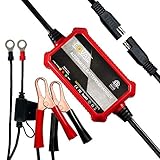
Overview: This ultra-compact 1A 12V charger serves as an affordable maintainer for lead-acid batteries (AGM, Gel, flooded) in cars, motorcycles, and lawn equipment. Its pocket-sized design and simple LED interface target budget-conscious users needing basic float charging. What Makes It Stand Out: Remarkable portability (phone-sized, 10.5oz) and dual connector options (ring/alligator clips) with a 102-inch cable enable versatile mounting. The integrated 4-step charging program and comprehensive safety suite (reverse polarity, over-temp) punch above its price point. Value for Money: Exceptional for the cost, offering core smart-charging features at an entry-level price. While less powerful than 2A+ units, it’s ideal for maintenance—outperforming true trickle chargers. The low cost per unit makes it practical for multiple vehicles. Strengths and Weaknesses: Strengths: Extremely compact/lightweight; broad compatibility; robust safety protections; clear LED indicators. Weaknesses: Slow 1A charge rate; no lithium/6V support; basic status LEDs lack granular detail; plastic build feels less durable. Bottom Line: A highly practical, no-frills maintainer for occasional users or secondary vehicles. Excellent value for basic 12V lead-acid battery upkeep where size and cost matter most.
9. 1.75-Amp Car Battery Charger, 6V and 12V Smart Fully Automatic Battery Charger Maintainer, Trickle Charger, Battery Desulfator for Car, Lawn Mower, Motorcycle, Boat, Marine Lead Acid Batteries

Overview: This 1.75A dual-voltage (6V/12V) charger combines maintenance, desulfation, and repair tech for lead-acid batteries. Its standout feature is an LCD screen showing real-time data, targeting users who want visibility into charging metrics for cars, boats, or lawnmowers. What Makes It Stand Out: The full-color LCD displays voltage, current, charge percentage, and stage—uncommon in this tier. The 7-stage charging program (including pulse desulfation) actively revives degraded batteries, while dual voltage modes add flexibility for vintage or small vehicles. Value for Money: Priced mid-range, it justifies cost with the informative LCD and repair functionality. Faster than 1A units yet affordable, it bridges the gap between basic maintainers and high-end chargers, especially for battery restoration needs. Strengths and Weaknesses: Strengths: Clear LCD interface; effective desulfation; dual voltage support; strong safety suite; 2-year warranty. Weaknesses: LCD may be overkill for simple maintenance; no lithium compatibility; slightly bulkier than micro-chargers. Bottom Line: Highly recommended for users wanting diagnostic insights and battery rehabilitation. The LCD makes it ideal for troubleshooting or extending the life of neglected batteries in garages or workshops.
10. [4-Pack] FOVAL Fully Automatic Trickle Battery Charger, 1000mA 12V Smart Car Battery Charger, Battery Maintainer, Float Charger for Motorcycle Car Lawn Mower Boat ATV Cell Lead Acid Batteries
![[4-Pack] FOVAL Fully Automatic Trickle Battery Charger, 1000mA 12V Smart Car Battery Charger, Battery Maintainer, Float Charger for Motorcycle Car Lawn Mower Boat ATV Cell Lead Acid Batteries](https://m.media-amazon.com/images/I/51z7cL3OlrL._SL160_.jpg)
Overview: This 4-pack offers identical units to Product #8: ultra-compact 1A 12V smart chargers for lead-acid batteries. It targets users with multiple vehicles (e.g., car, bike, mower), emphasizing cost efficiency and portability for simultaneous battery maintenance. What Makes It Stand Out: The multi-pack value proposition is key—four pocket-sized chargers (3.9 x 2.4 inches each) at near-single-unit pricing. Like #8, it features 4-step charging, dual connectors, and safety protections, but the bundle makes it ideal for fleets or households with several battery-powered assets. Value for Money: Exceptional bulk value. Buying four separately would cost significantly more; this pack delivers ~75% savings per unit. Perfect for RV parks, workshops, or families managing multiple seasonal vehicles without sacrificing core smart-charging features. Strengths and Weaknesses: Strengths: Unbeatable per-unit cost; consistent performance across all four; extreme portability; plug-and-forget reliability. Weaknesses: Same limitations as #8 (slow 1A rate, no lithium/6V); basic LED status; minimal build premium. Bottom Line: The definitive choice for maintaining multiple 12V lead-acid batteries affordably. If you own more than one vehicle needing upkeep, this pack offers unmatched convenience and savings.
Understanding Winter’s Impact on Vehicle Batteries
The Chemistry Behind Cold Weather Drain
Cold temperatures significantly slow the electrochemical reactions within a standard lead-acid battery. The electrolyte solution (sulfuric acid and water) thickens, reducing its ability to flow between the lead plates. This sluggish movement directly translates to less available cranking power (CCA - Cold Cranking Amps). Simultaneously, the chemical reaction that generates electricity becomes less efficient. A battery that operates at 100% capacity at 80°F (27°C) might only deliver 40-60% of its rated power at 0°F (-18°C). This inherent power loss makes starting the engine exponentially harder.
Why Sulfation Accelerates in Winter
Sulfation – the formation of hard lead sulfate crystals on the battery plates – is the primary killer of lead-acid batteries. When a battery sits undercharged, especially in cold conditions, sulfation occurs much faster. Winter exacerbates this because:
- Reduced driving time (short trips) prevents the alternator from fully recharging the battery after starting.
- The battery discharges more readily just to power accessories when the engine is off in cold weather.
- The cold itself promotes crystal formation. Once these crystals harden, they cannot be easily converted back during normal charging, permanently reducing capacity and lifespan.
The Limitations of Your Vehicle’s Alternator
Many assume the alternator keeps the battery fully charged during driving. While true for regular commutes, winter creates a perfect storm for alternator inadequacy. Shorter trips mean the engine runs for less time, giving the alternator insufficient opportunity to replenish the significant charge used during the cold start. Furthermore, modern vehicles place heavy electrical demands on the system (heated seats, defrosters, lights, complex electronics), often exceeding the alternator’s output during idling or short drives. This chronic undercharging in winter is a major contributor to premature battery failure.
The Trickle Charger: Your Winter Battery Guardian
Defining Trickle Charging vs. Float Charging vs. Battery Maintainers
The term “trickle charger” is often used generically, but understanding the distinctions is crucial for winter use:
- True Trickle Chargers: Deliver a very low, constant current (typically 1-2 amps) indefinitely. Risk overcharging modern batteries if left connected too long without supervision.
- Float Chargers: Similar low current, but designed to maintain a battery at full charge without overcharging, typically holding voltage around 13.2-13.8V. Better suited for long-term storage than true trickle chargers.
- Smart Battery Maintainers (The Winter Essential): These are microprocessor-controlled. They actively monitor the battery’s state, providing a bulk charge when needed, then switching to an absorption phase, and finally entering a maintenance (float) mode only when full. Crucially, they detect when the battery is depleted and restart the cycle. This intelligence prevents overcharging and undercharging, making them ideal for unattended winter use.
How Smart Maintainers Combat Winter Specific Issues
Smart maintainainers tackle winter battery failure head-on through several key mechanisms:
- Temperature Compensation: The most critical winter feature. As ambient temperature drops, the optimal charging voltage increases slightly. Quality maintainers have built-in temperature sensors that automatically adjust the charging voltage higher in cold weather to ensure a proper charge and prevent undercharging, and lower it in warmth to prevent overcharging and gassing.
- Desulfation/Recovery Mode: Many advanced models include a periodic high-frequency pulse or specific voltage profile designed to break down early-stage sulfate crystals before they harden permanently. This is invaluable for batteries that experience chronic undercharging in winter.
- Automatic Re-Start: If the battery voltage drops significantly (e.g., due to extreme cold or parasitic drain), the maintainer detects this and automatically initiates a new charging cycle, ensuring the battery never stays deeply discharged.
Essential Features for Cold Climate Performance
Temperature Compensation: Non-Negotiable for Winter
This isn’t just a “nice-to-have”; it’s fundamental. Charging a cold battery with a voltage optimized for room temperature results in chronic undercharging. The battery never reaches full capacity, accelerating sulfation. Conversely, charging a warm battery with a cold-optimized voltage risks dangerous overcharging, boiling the electrolyte and damaging plates. A maintainer with accurate temperature compensation dynamically adjusts, ensuring optimal charging regardless of the garage or outdoor temperature.
Weatherproofing and Durability for Outdoor Use
If your vehicle is stored outside or in an unheated garage exposed to elements, the charger itself must withstand the conditions. Look for:
- High IP (Ingress Protection) Rating: IP65 or higher indicates resistance to dust and low-pressure water jets (rain/snow). Avoid basic indoor-only units.
- Cold-Tolerant Cables: Flexible cables that won’t become brittle and crack in sub-zero temperatures.
- Robust Housing: Impact-resistant casing designed for workshop or outdoor environments.
Safety Features to Prevent Hazards
Safety is paramount, especially with unattended charging:
- Reverse Polarity Protection: Prevents damage (and potential sparks/fire) if clamps are accidentally connected wrong.
- Short Circuit Protection: Automatically shuts down if a short is detected.
- Overcharge Protection: Integral to smart maintainers, but verify it’s robust.
- Spark-Proof Connection: Safely connects to the battery without creating sparks, critical in potentially gassy environments near batteries.
Selecting the Right Output Specifications
Matching Amperage to Your Battery Type and Size
While “trickle” implies low amps, the right output matters:
- Standard Flooded Lead-Acid (Most Common Car Batteries): 0.8A to 1.5A is often sufficient for maintenance. Higher amps (2A-5A) can recharge a depleted battery faster initially but must be smart chargers that taper down to maintenance mode.
- AGM (Absorbent Glass Mat) & Gel Batteries: These are very common in modern vehicles (especially European, luxury, and start-stop systems). They require specific charging profiles (voltage and current limits). Using a standard charger can severely damage them. Mandatory: Choose a maintainer explicitly stating compatibility with AGM and/or Gel batteries. Their required maintenance voltage is often slightly higher than flooded batteries.
- Battery Capacity (Ah): Larger batteries (e.g., trucks, RVs) might benefit from a slightly higher amp maintainer (e.g., 2A) for faster recovery from deep discharge, but the smart profile is still key.
Understanding Voltage Requirements
Most automotive batteries are 12V systems. Ensure the maintainer is designed for 12V. Some advanced models also handle 6V (for older motorcycles/tractors) or even 24V systems (larger trucks). For standard passenger vehicles, 12V is essential. Verify the maintainer’s voltage settings match your battery chemistry (flooded, AGM, Gel).
Installation and Usage Best Practices
Where to Place the Charger for Optimal Safety and Performance
Location impacts both safety and effectiveness:
- Ventilation: Batteries can emit hydrogen gas, especially when charging. Always place the charger in a well-ventilated area, never in a fully sealed compartment. Avoid confined spaces like trunks.
- Dry Location: Protect the charger unit and connections from direct exposure to rain, snow, or excessive moisture, even if it’s weatherproofed. Elevation off damp concrete is wise.
- Accessibility: Place it where you can easily see indicator lights and access connections for inspection, but away from foot traffic to prevent cable snags.
- Distance from Battery: Use the longest cable provided or approved extensions to keep the charger unit away from potential battery gassing or leaks. Don’t drape cables over the battery.
Proper Connection Sequence: Avoiding Sparks and Damage
Follow this critical order every time:
- Turn Off Charger: Ensure the charger is unplugged from the wall and switched off.
- Connect to Battery: Attach the RED (positive +) clamp securely to the battery’s positive (+) terminal. Attach the BLACK (negative -) clamp securely to the battery’s negative (-) terminal or, preferably, to a solid, unpainted metal part of the vehicle’s chassis/engine block (a “ground” point). This grounding point is safer as it minimizes sparking near the battery itself.
- Plug In and Turn On: Only after secure connections, plug the charger into the wall outlet and turn it on.
- Reverse when disconnecting: Turn charger OFF, unplug from wall, then remove clamps (Black first, then Red).
Maintenance Schedules for Winter Readiness
Don’t wait until the first freeze:
- Pre-Winter Check: 4-6 weeks before sustained cold weather, test your battery’s health (voltage and load test). Clean terminals. Connect the maintainer.
- During Winter: A smart maintainer can typically stay connected 24/7, all winter. Periodically (monthly) check:
- Indicator lights showing correct mode (e.g., “Maintain” or “Full”).
- Cables and clamps for security, corrosion, or damage.
- Battery terminals for minor corrosion (clean if needed with baking soda/water solution).
- Post-Winter: Disconnect, clean terminals, perform another battery health check. Store the maintainer properly.
Troubleshooting Common Winter Charger Issues
Understanding Indicator Light Patterns
Smart chargers communicate via LED sequences. Learn what yours mean before you need it:
- Solid Green: Typically indicates fully charged/maintenance mode (good).
- Flashing Green/Amber: Often means actively charging.
- Solid Red/Flashing Red: Usually signifies a problem – reverse polarity, bad battery connection, short circuit, or sometimes a battery too dead to recover. Always consult your specific model’s manual for exact light codes; they vary significantly.
Diagnosing a “Failed” Connection
If the charger shows an error (like reverse polarity) but you know connections are correct:
- Double-Check Polarity: Positive clamp on battery positive terminal, negative on negative/ground. It’s easy to mix up, especially in dim light.
- Clean Terminals: Corrosion creates high resistance. Disconnect, clean terminals and clamps thoroughly with a wire brush and baking soda solution, rinse, dry.
- Check Ground Point: If using chassis ground, ensure it’s bare, clean metal directly connected to the engine block. Try connecting negative clamp directly to battery negative terminal instead.
- Test Battery Voltage: A severely depleted battery (<10V) might be outside the charger’s recovery range. Try a jump start first, then connect the maintainer once the engine runs for a few minutes.
When the Battery Still Won’t Hold a Charge
If the maintainer runs but the battery remains dead:
- Confirm Charger Function: Test the charger on a known-good battery if possible.
- Check for Parasitic Drain: Something in the vehicle might be drawing excessive power even when off (faulty module, trunk light, aftermarket alarm). This can overwhelm the maintainer. A multimeter test for parasitic drain is needed.
- Battery Age/Health: Batteries typically last 3-5 years. If old or previously deeply discharged, internal damage (sulfation, shorted cells) may be irreversible. The maintainer can’t fix a dead battery. Load testing is essential.
Advanced Considerations for Specific Vehicles
Managing Start-Stop System Batteries
Vehicles with start-stop technology almost exclusively use AGM or enhanced flooded batteries (EFB). These have very specific charging requirements and are more sensitive to undercharging. Crucially: The maintainer must have a dedicated AGM or EFB mode. Standard “flooded” modes will not charge them correctly, leading to rapid failure. Consult your vehicle manual for the exact battery type.
Solutions for Multiple Battery Setups (RVs, Boats, Trucks)
Vehicles with auxiliary or dual-battery systems (common in RVs, 4x4s, trucks) present unique challenges:
- Isolators/Combiners: These systems often use solenoids or diodes to separate batteries when the engine is off. A standard maintainer connected to the main starting battery won’t charge the auxiliary battery.
- Dedicated Multi-Bank Chargers: The best solution is a maintainer with multiple independent outputs (e.g., 2 banks), each programmable for the specific battery type (e.g., AGM starter, flooded house battery).
- Single Output with ACR: Some maintainers work with Automatic Charging Relays (ACRs), but compatibility must be verified. Simpler setups might require separate maintainers for each battery bank.
Winterizing Classic Cars and Seasonal Vehicles
For vehicles stored for months:
- Full Charge Before Storage: Never store a battery discharged. Give it a full charge with the maintainer before putting the vehicle away.
- Maintainer On, But Monitor: Keep the smart maintainer connected. Check voltage and connections monthly if possible.
- Extreme Cold Storage: If storing in an unheated location below -20°F (-29°C), consider removing the battery and storing it in a cool (not freezing), dry place with the maintainer connected. Freezing a discharged battery can crack the case.
Cost vs. Value Analysis for Winter Protection
Evaluating Long-Term Savings
Viewing a smart maintainer as an investment, not just an expense, shifts the perspective:
- Battery Lifespan Extension: Preventing winter-related sulfation and chronic undercharging can easily extend a battery’s life by 1-2 years. Replacing a $150-$250 battery less often pays for the charger quickly.
- Avoiding Stranding Costs: The cost of an emergency jump start service call, taxi, or missed work/important appointment far exceeds the price of a maintainer.
- Preventing Secondary Damage: A deeply discharged battery can cause issues with sensitive vehicle electronics that rely on stable voltage.
Identifying Quality Within Your Budget
You don’t need the most expensive model, but avoid the absolute cheapest:
- Core Features First: Prioritize temperature compensation, correct battery type compatibility (especially AGM if needed), and essential safety features (reverse polarity, short circuit). Weatherproofing is vital for outdoor use.
- Build Quality: Feel the weight (denser often = better components), check cable thickness and flexibility, examine connector quality. A flimsy unit won’t last winters.
- Warranty: A longer warranty (2-5 years) often indicates manufacturer confidence in durability. Read the fine print regarding battery damage coverage.
Frequently Asked Questions
What’s the biggest difference between a cheap trickle charger and a smart maintainer for winter?
A smart maintainer automatically adjusts charging based on the battery’s real-time needs and temperature, preventing dangerous overcharging and ineffective undercharging. Cheap trickle chargers deliver constant low power regardless of battery state, risking damage over time, especially in fluctuating winter conditions.
Can I leave a smart battery maintainer connected all winter without checking it?
Yes, that’s their primary purpose. Quality smart maintainers are designed for safe, indefinite connection. However, it’s still wise to visually check the indicator lights and connections monthly to ensure everything is functioning correctly and cables aren’t damaged.
Do I really need temperature compensation if my car is in a garage?
Yes. Even in an unheated garage, temperatures can fluctuate significantly (e.g., 20°F to 50°F). Without temperature compensation, the charger will undercharge the battery on colder nights and potentially overcharge it during warmer days, both harming longevity. It’s essential for any non-climate-controlled environment.
Will a maintainer work on my motorcycle, lawn tractor, or boat battery?
Most 12V smart maintainainers are compatible with smaller 12V batteries (like motorcycles) as long as the amperage is appropriate (often 0.8A-1.5A is ideal for small batteries). Ensure compatibility with the specific battery type (flooded, AGM, Gel). Check the charger’s specifications for minimum/maximum battery size.
Can using the wrong charger damage my modern car’s computer systems?
While rare with basic connection/disconnection, using a non-smart charger incorrectly (sparking during connection) can cause voltage spikes. More critically, using a charger not designed for AGM batteries (common in modern cars) can deliver incorrect voltage, potentially stressing the battery management system over time. Always use a charger compatible with your battery type.
How long does it take a smart maintainer to recharge a significantly depleted battery?
It depends on the battery’s capacity (Ah), how depleted it is, and the maintainer’s amperage. Recharging a moderately depleted standard car battery (50Ah) with a 1.5A maintainer might take 24-48 hours to reach full charge before entering maintenance mode. They are designed for maintenance, not rapid recovery from deep discharge.
Is it safe to use a maintainer if my vehicle has a lot of aftermarket electronics (stereo, GPS, etc.)?
Yes. Smart maintainainers provide a stable, low current ideal for maintaining voltage without the spikes that could harm electronics. Ensure connections are clean and secure. The maintainer actually protects against voltage drops from parasitic drain caused by these electronics.
What should I do if my battery is frozen?
Do not attempt to charge a frozen battery. This can cause it to explode. Allow the battery to thaw completely inside at room temperature (unconnected) before even attempting to check its voltage. A frozen battery is almost always permanently damaged and needs replacement.
Can I use a maintainer designed for flooded batteries on my AGM battery?
Generally, no. AGM batteries require a slightly higher charging voltage profile than flooded batteries. Using a charger only set for flooded can chronically undercharge an AGM battery, leading to rapid sulfation and failure. Always use a charger explicitly stating AGM compatibility.
How do I know if my battery is too far gone for a maintainer to help?
If the maintainer runs for 24-48 hours (on the correct setting) but the battery voltage remains very low (<12.0V resting) or the vehicle still won’t start, the battery likely has internal damage (shorted cell, severe sulfation). A professional load test is the definitive way to check battery health; a maintainer cannot revive a physically failed battery.
See Also
- How to Solve Winter Battery Failures with the 10 Best Trickle Chargers in 2026
- How to Solve Dead Battery Woes with the 10 Best Trickle Chargers in 2026
- How to Solve Winter Battery Failures with the 10 Best Jump Starters in 2026
- We Tested 50 Portable Battery Chargers - Here are the 10 Best for Winter Emergencies in 2026
- The 10 Best Car Battery Chargers for Snowbirds and Winter Travelers in 2026