Table of Contents
There’s nothing quite as frustrating as hearing that dreaded “snap” of an overtightened bolt or discovering a critical fastener has vibrated loose because it wasn’t torqued properly. For years, mechanics and DIY enthusiasts alike have played a dangerous guessing game, relying on “feel” and experience rather than precise measurements. That approach might work for hanging a picture frame, but when you’re working on your vehicle, bicycle, or any precision assembly, guesswork is a recipe for expensive mistakes and potential safety hazards.
Enter the reversible torque wrench—a game-changing tool that combines the accuracy of torque measurement with the convenience of a ratcheting mechanism that works in both directions. Unlike traditional beam-type torque wrenches or basic click-types that only tighten, reversible models let you zip off bolts quickly while still providing that critical torque feedback when you’re fastening them back on. This year, the technology has evolved significantly, with better materials, clearer scales, and more reliable mechanisms than ever before. But with so many options on the market, how do you choose the right one without getting overwhelmed by specifications and marketing jargon?
Top 10 Reversible Torque Wrenches
Detailed Product Reviews
1. LEXIVON Torque Wrench 1/2-Inch Drive Click 10150 Ft-Lb/13.6203.5 Nm (LX-183)
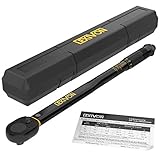
Overview: The LEXIVON LX-183 is a dedicated 1/2-inch drive click-type torque wrench engineered for automotive and heavy-duty applications. With a range of 10-150 ft-lb (13.6-203.5 Nm) and pre-calibrated ±4% accuracy, this Taiwanese-manufactured tool targets users who need reliable performance for lug nuts, suspension components, and engine work. It includes a traceable calibration certificate and features a reinforced Chrome Vanadium alloy steel ratchet head with an Electro-Black finish for corrosion resistance.
What Makes It Stand Out: The patent-pending dual-range scale features high-contrast yellow-on-black markings that remain visible in low-light garage conditions—a practical innovation mechanics will appreciate. The reversible ratchet head drives in both directions while measuring torque clockwise, offering flexibility for various bolt orientations. The ergonomic knurled handle provides a secure, non-slip grip that reduces hand fatigue during extended use.
Value for Money: Priced in the mid-range for a single 1/2-inch torque wrench, the LEXIVON offers solid value through its certified calibration and durable construction. While ±4% accuracy lags slightly behind premium ±3% competitors, the included certificate and serial-number tracking provide professional-level quality assurance that budget alternatives lack.
Strengths and Weaknesses: Strengths include certified accuracy, excellent visibility markings, corrosion-resistant finish, and comfortable grip. The reversible head adds versatility, while the Taiwan manufacturing suggests reliable quality control. Weaknesses are the ±4% accuracy (less precise than some competitors), single drive size limitation, and lack of included accessories like adapters or case.
Bottom Line: For automotive enthusiasts and DIY mechanics primarily needing a 1/2-inch drive for medium-to-high torque applications, the LEXIVON LX-183 delivers dependable performance with professional-grade features at a reasonable price point.
2. Upgraded Torque Wrench Set 8PCS, 1/4 3/8 1/2 inch Drive Click Torque Wrench, 10-230in.lb, 5-50ft.lb, 10-180ft.lb, 72-Tooth Dual Scale, ±3% Accuracy, 5 Adapters, for Bike, Moto, Car Repair and Maint

Overview: This comprehensive 8-piece Matework torque wrench set delivers three drive sizes—1/4-inch, 3/8-inch, and 1/2-inch—covering an impressive torque spectrum from 10-230 in.lb up to 10-180 ft.lb. Each wrench maintains ±3% accuracy and complies with ASME B107.300-2010 and ISO6789-2017 standards, making it suitable for everything from delicate bicycle components to automotive lug nuts. The set includes three extension bars, a drive adapter, and a universal joint, all housed in a blow-molded case.
What Makes It Stand Out: The complete ecosystem approach sets this apart—most competitors sell individual wrenches requiring separate adapter purchases. The 72-tooth ratchet mechanism provides a smooth 5-degree arc swing, crucial for tight engine bays and compact motorcycle frames. The orange quick-release button and reversible heads enhance operational efficiency, while dual-range scales eliminate unit conversion errors.
Value for Money: Exceptional value for serious DIYers and semi-professionals. Purchasing three individual torque wrenches with comparable accuracy and accessories would cost 40-60% more. The included calibration certificates for each wrench and standardized compliance add professional credibility that justifies the investment.
Strengths and Weaknesses: Strengths include comprehensive coverage, certified precision, smooth ratchet operation, extensive accessories, and professional standards compliance. The organized case simplifies transport and storage. Weaknesses include potential overkill for casual users who may only need one drive size, and the bulk of carrying three wrenches for mobile mechanics.
Bottom Line: This Matework set is the ideal one-stop solution for enthusiasts maintaining multiple vehicles types. For those serious about proper torque application across bikes, motorcycles, and cars, the versatility and precision make it an unbeatable package.
3. Hairich 3/8-Inch Torque Wrench, Dual-direction Torque Wrenches 10-100ft.lb/13.6-135.6Nm, 72-Tooth Dual Range Scales Torque Wrench with Quick Release Reversible Head

Overview: The Hairich 3/8-inch torque wrench targets the mid-range automotive and motorcycle market with a 10-100 ft.lb capacity and ±3% calibration accuracy. Its striking black and red aesthetic houses a chrome vanadium steel alloy body with an aluminum titanium alloy handle. The tool features dual-direction torque measurement—a rarity in this price class—making it versatile for both standard and reverse-thread applications. The 72-tooth ratchet mechanism allows operation with just a 5-degree arc swing.
What Makes It Stand Out: Dual-direction measurement capability distinguishes this wrench, measuring torque in both clockwise and counterclockwise directions—most competitors only measure clockwise. The quick-release button and square knurled handle demonstrate thoughtful ergonomics, while the laser-printed dual-scale markings ensure permanent, fade-resistant readability. The fashion-forward design proves professional tools can have visual appeal.
Value for Money: Positioned as a mid-tier single wrench, it offers excellent value for motorcycle and bicycle enthusiasts who primarily use 3/8-inch drive sockets. The dual-direction feature eliminates the need for a separate tool for reverse-thread components, effectively providing two tools in one.
Strengths and Weaknesses: Strengths include ±3% accuracy, dual-direction measurement, compact 5-degree arc, comfortable ergonomic handle, and quick-release functionality. The visual design stands out in a crowded market. Weaknesses include the single drive size limitation, potentially faint click at low torque settings under 5 Nm, and narrower torque range compared to some 3/8-inch competitors.
Bottom Line: For bike and motorcycle mechanics needing a dedicated 3/8-inch wrench with reverse-thread capability, the Hairich delivers professional features and precision at a compelling price point.
4. DISEN 9PCS Click Torque Wrench Set 1/4" 3/8" 1/2" Drive 20-220 In.lb, 5-45 Ft.lb, 10-170 Ft.lb with 6 Adapters, ±3% Accuracy, 72-Tooth, Dual Scale, Storage Case for Bike, Motorcycle, Car, Truck Repair

Overview: DISEN’s 9-piece set provides three click-type torque wrenches covering 1/4-inch, 3/8-inch, and 1/2-inch drives with ranges from 20-220 in.lb to 10-170 ft.lb. Each wrench delivers ±3% accuracy with included calibration certificates. The set includes six adapters—extension bars, universal joint, and drive converters—stored in a sturdy portable case. Hardened Cr-V steel ratchet heads and phosphated adapters pair with aerospace aluminum handles for lightweight durability.
What Makes It Stand Out: The comprehensive 9-piece configuration offers more adapters than typical 8-piece sets, while the 24-month warranty provides uncommon long-term protection. The upgraded loud click mechanism delivers distinct audible feedback, particularly valuable when working in noisy shop environments. Aerospace aluminum handles reduce fatigue without sacrificing strength, and the 72-tooth ratchet enables access to extremely tight spaces.
Value for Money: Strong value proposition with warranty coverage that competitors rarely match. The set costs roughly 30% less than buying equivalent individual wrenches and adapters from premium brands, while offering comparable ±3% accuracy and professional materials. The extended warranty mitigates risk for professional users.
Strengths and Weaknesses: Strengths include comprehensive adapter selection, warranty protection, loud audible feedback, lightweight aluminum handles, and smooth 72-tooth operation. The dual-scale markings are clear and permanent. Weaknesses include slightly lower maximum torque on the 1/2-inch drive (170 ft-lb vs. 180+ on some competitors) and lesser brand recognition compared to established names.
Bottom Line: DISEN’s set is a smart choice for value-conscious professionals and serious DIYers who want warranty-backed reliability. The extensive accessories and clear feedback make it particularly suitable for varied automotive and industrial applications.
5. MESGS 3/8-Inch Drive Torque Wrench, 5–45 Ft-Lb (6.8–61 Nm), ±3% Accuracy, 72-Tooth Dual-Direction Mini Torque Wrench with Reversible Head, Quick Release, Dual Scale for Bike (3/8-Inch, 5-45 FT.LB)

Overview: The MESGS 3/8-inch mini torque wrench specializes in low-to-mid torque applications from 5-45 ft-lb, perfect for bicycles, motorcycles, and precise automotive work like spark plug installation. Each unit undergoes 50,000+ test cycles to verify ±3% accuracy. The compact design features a 72-tooth reversible ratchet head with quick-release mechanism, laser-etched dual-range scales, and an ergonomic black-orange anodized handle. The tool produces a sharp 45dB click when reaching preset torque.
What Makes It Stand Out: The 45dB audible feedback is measurably louder and crisper than typical torque wrenches, eliminating guesswork in noisy environments. The laser-etched scale ensures markings won’t fade after years of chemical exposure and abrasion. Its compact “mini” designation isn’t just marketing—the slim profile genuinely excels in confined engine bays and tight bicycle frames where standard wrenches cannot maneuver.
Value for Money: Excellent value for specialized applications. While limited to 3/8-inch drive and moderate torque, it costs 40% less than premium single-size alternatives while delivering comparable ±3% accuracy and superior feedback. For bike mechanics and DIYers focused on precision over brute force, it eliminates over-torquing risks.
Strengths and Weaknesses: Strengths include exceptional audible feedback, permanent laser-etched markings, compact size for tight spaces, reversible head, and verified durability through extensive testing. The anodized handle provides excellent grip. Weaknesses include limited torque range unsuitable for lug nuts or suspension work, single drive size restriction, and potential need for additional wrenches for comprehensive vehicle maintenance.
Bottom Line: For bicycle enthusiasts, motorcycle owners, and mechanics prioritizing precision in low-torque applications, the MESGS delivers professional-grade feedback and accuracy in a compact, affordable package.
6. LEXIVON 1/2-Inch Drive Click Torque Wrench 25-250 Ft-Lb/33.9-338.9 Nm (LX-184)
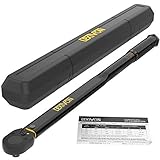
Overview:
The LEXIVON LX-184 is a heavy-duty 1/2-inch drive click torque wrench engineered for professional automotive and industrial applications. With a robust range of 25-250 ft-lb (33.9-338.9 Nm), it capably handles everything from lug nuts to major engine components. The tool arrives pre-calibrated to ±4% accuracy with a traceable calibration certificate, ensuring dependable performance immediately upon unboxing.
What Makes It Stand Out:
The newly invented Electro-Black finish treatment delivers superior rust and corrosion protection beyond traditional chrome plating. The highlighted yellow print dual-range scale provides exceptional visibility in dim garage conditions, eliminating misreading errors. Its reinforced ratchet gear head, constructed from hardened, heat-treated Chrome Vanadium alloy steel, promises exceptional durability under heavy loads. The reversible head adds versatility for various fastening scenarios.
Value for Money:
Positioned in the mid-to-high range, the LEXIVON competes with premium brands like Tekton and GearWrench while offering professional-grade features. The included calibration certificate and protective finish add long-term value, potentially saving recalibration costs. For serious DIYers and professionals, this represents a solid investment over cheaper alternatives that lack certified accuracy and durable finishes.
Strengths and Weaknesses:
Strengths include certified pre-calibration, excellent corrosion resistance, high torque capacity, and superior scale readability. The reversible head adds versatility. Weaknesses include a relatively high minimum torque (25 ft-lb) unsuitable for delicate tasks, and it’s heavier than compact models. The ±4% accuracy, while good, lags behind some competitors offering ±3% precision.
Bottom Line:
The LEXIVON LX-184 is an excellent choice for automotive enthusiasts and professionals needing a reliable, high-capacity torque wrench. Its durability and certified accuracy justify the price for those who demand precision and longevity.
7. HORUSDY 1/2-Inch Drive Click Torque Wrench Set – 10–170 ft-lb / 13.6–230.5 Nm, ±3% Precision, Dual Scale, 72-Tooth Reversible Head with 5" Extension & Adapter for Car, Tire, and Motorcycle Use
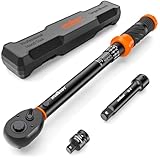
Overview:
The HORUSDY 1/2-Inch Drive Click Torque Wrench Set delivers professional-grade performance in a comprehensive package. Covering 10-170 ft-lb (13.6-230.5 Nm) with ±3% accuracy, this set tackles most automotive tasks from tire changes to engine rebuilds. The inclusion of a 5-inch extension bar and 1/2" to 3/8" adapter makes it immediately versatile for various applications without additional purchases.
What Makes It Stand Out:
The 72-tooth reversible ratchet head requires only 5 degrees of swing arc, making it invaluable in tight engine bays. The reliable click mechanism provides both tactile and audible feedback, ensuring precise torque application every time. Laser-etched dual scales remain legible even after years of shop use, unlike painted markings that fade. The locking knob prevents accidental setting changes during use.
Value for Money:
This set offers exceptional bundle value. Purchasing the wrench, extension, and adapter separately would cost significantly more. Competing sets from established brands often run 30-50% higher for similar specifications. For DIY mechanics and semi-professional users, this represents a smart financial decision without sacrificing core performance or accuracy.
Strengths and Weaknesses:
Strengths include the wide torque range, high accuracy, tight-space accessibility, and complete accessory package. The locking knob prevents accidental setting changes. Weaknesses include a plastic case that may not withstand heavy professional use, and the brand lacks the long-term reputation of industry giants. Some users may prefer a higher maximum torque for heavy-duty truck work.
Bottom Line:
The HORUSDY set is an outstanding value for automotive DIYers and hobbyists seeking professional features. The comprehensive accessories and precision make it a workshop essential that punches above its price class.
8. SUZUME Torque Wrench 3/8 Drive (5-45 Ft. Lb/ 6.8-61 N.m) 72 Tooth Reversible Head Torque Wrench ±3% High Accuracy Dual-Scales Torque Wrenches for Car Bike Moto

Overview:
The SUZUME 3/8 Drive Torque Wrench targets precision work on motorcycles, bicycles, and light automotive applications. With a range of 5-45 ft-lb (6.8-61 Nm) and ±3% accuracy, it’s perfectly calibrated for tasks requiring finesse rather than brute force. The compact design makes it ideal for mobile mechanics and home garages with limited space, delivering professional accuracy in a manageable size.
What Makes It Stand Out:
Tested for over 10,000 cycles without recalibration, this wrench promises exceptional long-term reliability. The electrophoresis finish provides superior protection while the ergonomic aluminum alloy handle reduces fatigue during extended use. The upgraded click mechanism delivers a distinctively loud audible signal and vibration, crucial for noisy shop environments where quieter wrenches might be missed. Dual-scale laser engraving ensures permanent readability.
Value for Money:
Priced competitively in the mid-range segment, it offers features found in premium brands like Snap-on at a fraction of the cost. The durability testing and quality materials provide excellent return on investment for users who need consistent accuracy in the lower torque spectrum. It’s an economical alternative to buying multiple smaller drive wrenches for different applications.
Strengths and Weaknesses:
Strengths include lightweight construction, excellent low-torque accuracy, comfortable grip, bi-directional measurement capability, and loud feedback. The 72-tooth head works in confined spaces. Weaknesses include the limited torque range unsuitable for lug nuts or suspension work, and the lesser-known brand may concern some buyers. The aluminum handle, while comfortable, may not endure shop abuse like steel counterparts.
Bottom Line:
The SUZUME 3/8 torque wrench excels for motorcycle enthusiasts, cyclists, and mechanics specializing in precision assembly. Its reliability and user-friendly features make it a top choice for controlled-torque applications.
9. SUERCUP 3/8-Inch Drive Click Torque Wrench - 5-45 Ft-Lb/6.8-61Nm, Dual-Direction Adjustable 72 Tooth Click Torque Wrench for Bike, Motorcycle and Car Repair
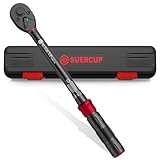
Overview:
The SUERCUP 3/8-Inch Drive Click Torque Wrench offers an accessible entry point into precision fastening for bike and motorcycle owners. Covering 5-45 ft-lb (6.8-61 Nm) with approximately 3% accuracy, this tool handles delicate components where over-tightening risks damage. Its compact form factor suits home mechanics who prioritize occasional use over daily shop wear, providing essential precision at a budget-friendly price.
What Makes It Stand Out:
Having undergone 20,000 calibration tests, the wrench demonstrates impressive quality control for its price tier. The flashlight-inspired knurled handle provides exceptional grip comfort and leverage, a thoughtful design touch rarely seen in budget tools. The red anodized tail plug adds corrosion resistance while creating a distinctive appearance. The 72-tooth ratchet head, made from chromium molybdenum steel, offers durability uncommon in this price range.
Value for Money:
This is among the most affordable torque wrenches offering verified testing and a 72-tooth mechanism. Competing budget models often skip extensive testing and use lower-grade ratchet components. For homeowners and DIYers needing occasional precision, it delivers professional features at a hobbyist price, eliminating the risk of expensive component damage from guesswork while maintaining quality.
Strengths and Weaknesses:
Strengths include the extensive testing validation, comfortable ergonomic handle, bidirectional measurement, clear laser-etched scales, and excellent price point. The included storage case adds value. Weaknesses include unknown long-term brand reliability, plastic components that may age poorly, and the lower torque range limits automotive applications. The “approximately 3%” accuracy lacks the certified precision of professional tools.
Bottom Line:
The SUERCUP torque wrench is perfect for budget-conscious cyclists and motorcycle owners needing reliable precision for periodic maintenance. It offers exceptional value despite minor compromises.
10. Egofine 53 Pieces 1/4 inch Drive Socket Ratchet Wrench Set with 72 Tooth Reversible Ratchet, with Bit Socket Set and Extension Bar for Auto Repairing and Household, with Storage Case

Overview:
The Egofine 53-Piece 1/4-Inch Drive Socket Set is a comprehensive solution for precision fastening tasks in automotive, household, and DIY projects. The 72-tooth reversible ratchet provides exceptional access in tight spaces, while the extensive collection of shallow and deep sockets plus bit drivers covers most small-to-medium fastening needs. Everything packs into a sturdy storage case for organization and portability.
What Makes It Stand Out:
The sheer variety of extensions—including a universal joint, flexible extension, and spinner handle—provides versatility rarely seen in 1/4-inch sets. The 72-tooth ratchet requiring only 5 degrees of swing excels in confined areas like electronics, small engines, and interior trim work. Mirror chrome plating on all sockets ensures durability and corrosion resistance while maintaining a professional appearance throughout the set.
Value for Money:
This set delivers remarkable bundle value, essentially providing six different extension types plus comprehensive socket and bit coverage at a price point where competitors offer far less. For DIYers and homeowners, it eliminates the need for multiple separate purchases. Compared to buying individual pieces from premium brands, the cost savings approach 60-70% while maintaining adequate quality for intermittent use and home projects.
Strengths and Weaknesses:
Strengths include the extensive accessory variety, 72-tooth ratchet precision, organized storage case, and wide application range. The rubber handle provides comfortable grip. Weaknesses include 1/4-inch drive limitations for heavy torque applications, chrome vanadium steel being adequate but not premium-grade, and the case hinges potentially failing under heavy use. Professional mechanics may require higher-grade steel for daily abuse.
Bottom Line:
The Egofine set is an exceptional value for homeowners, DIY enthusiasts, and as a gift for hobbyists. Its comprehensive accessories and thoughtful organization make it a versatile addition to any toolbox.
Understanding Reversible Torque Wrenches
What Makes a Torque Wrench Reversible?
A reversible torque wrench functions as both a precision measuring device and a bidirectional ratchet. The key difference lies in the ratchet mechanism itself, which allows you to flip a lever or dial to change directions—typically clockwise for tightening and counterclockwise for loosening. However, the torque measurement function usually only engages in the tightening direction, which is actually a safety feature preventing accidental over-torquing during removal. The reverse function simply lets you use the tool as a standard ratchet for fastener removal, saving you from constantly switching tools during a job.
How Reversible Mechanisms Work
Inside the head of a quality reversible torque wrench, you’ll find a pawl-and-gear system similar to a standard ratchet but engineered with tighter tolerances. When you engage the torque mechanism, a spring-loaded cam or pivot beam resists rotation until the desired force is reached, at which point it “clicks” or signals you to stop. In reverse mode, this mechanism disengages, allowing free rotation for loosening. The best designs use hardened steel pawls with precise tooth engagement—usually 72 teeth or more—for a minimal swing arc in tight spaces.
Why Precision Matters in Torque Application
The Cost of Over-Tightening
Stripped threads, cracked components, and sheared bolt heads are just the beginning of over-tightening problems. In automotive work, overtightened cylinder head bolts can warp the head, while over-torqued lug nuts can damage brake rotors or wheel studs. The repair costs from a single over-tightened fastener can easily exceed the price of a good torque wrench. Modern materials like aluminum and composite components are particularly unforgiving, requiring exact torque specifications rather than the “good and tight” approach of decades past.
Risks of Under-Tightening
On the flip side, insufficient torque creates its own dangers. Under-tightened connecting rod bolts can lead to catastrophic engine failure, while loose suspension components compromise vehicle safety. Even in non-critical applications like furniture assembly, under-tightening results in wobbly constructions that fail prematurely. The vibration and thermal cycling that components experience in real-world use will quickly loosen fasteners that weren’t properly tensioned from the start.
Industries That Demand Accuracy
Beyond automotive repair, reversible torque wrenches are essential in bicycle maintenance (where carbon fiber components require precise torque), aviation (where lives depend on proper assembly), firearm mounting (to maintain zero on scopes), and even electronics manufacturing. Any application involving gaskets, seals, or sensitive materials benefits from the exact clamping force that only a torque wrench can provide. The reversible feature becomes particularly valuable in production environments where speed and efficiency matter alongside precision.
Key Features to Evaluate in Reversible Torque Wrenches
Drive Size Compatibility
Drive size—typically 1/4-inch, 3/8-inch, or 1/2-inch—determines what sockets you can use and the torque range available. A 1/4-inch drive handles delicate work like small engine repairs and bicycle components, usually up to about 20-30 ft-lbs. The 3/8-inch drive offers the best versatility for general automotive work, covering most specifications from 10-100 ft-lbs. For heavy-duty applications like lug nuts and suspension components, a 1/2-inch drive is essential, with ranges extending to 250 ft-lbs or more. Consider starting with a 3/8-inch model if you’re building your first toolkit.
Torque Range and Increment
The usable range of your wrench should cover your most common applications with some headroom at both ends. Look for a model where your typical torque values fall in the middle third of the wrench’s range for maximum accuracy. Increment resolution matters too—being able to set torque in 1 ft-lb increments versus 5 ft-lb increments can make the difference between a proper seal and a damaged component. Digital models often provide finer resolution, sometimes down to 0.1 ft-lb, which is invaluable for precision work.
Accuracy Ratings and Certifications
Professional-grade tools typically advertise accuracy within ±3% to ±4% of the reading, while budget options might be ±5% or worse. This percentage matters most at the lower end of the range—a 4% error at 10 ft-lbs is only 0.4 ft-lbs, but at 100 ft-lbs, that’s a 4 ft-lbs variance. Look for tools that come with a calibration certificate from the manufacturer, and understand whether the accuracy rating applies to the full range or just the middle portion. Some premium models maintain accuracy across their entire scale, while economy versions may only guarantee precision between 20-100% of capacity.
Scale Readability and Lighting
A scale you can’t read is worthless. High-contrast markings, laser-etched numbers, and color-coded ranges all improve visibility in greasy, poorly lit shop environments. Dual-scale wrenches showing both ft-lbs and Nm save you from conversion calculations. Some modern variants incorporate LED backlighting or digital displays that remain visible even when the wrench is positioned in awkward under-car locations. Consider your typical working conditions—if you’re often under a car or in tight engine bays, illumination becomes a significant advantage.
Ratchet Mechanism Quality
The smoothness and durability of the ratchet mechanism directly impact your daily experience. Fine-tooth ratchets with 72 or 90 teeth require just 5-4 degrees of swing arc respectively, crucial for working in confined spaces. Listen for a crisp, distinct click without grinding or mushiness. The direction selector should move positively between positions without feeling loose or vague. Cheaper mechanisms often use fewer teeth and softer metals, leading to skipped teeth and premature wear, especially when used for high-torque applications.
Material and Build Durability
Chrome vanadium steel bodies resist corrosion and withstand the occasional drop better than aluminum or plastic composites. The finish quality matters too—a matte or satin chrome finish hides scratches and provides better grip than high-polish chrome. Examine the joint between the head and handle; this stress point should show solid construction without wobble. Some professional models use a fully sealed head design to keep out contaminants, extending the tool’s lifespan in dirty environments.
Grip Comfort and Ergonomics
You’ll be applying significant force through this tool, so a comfortable grip prevents fatigue and ensures consistent technique. Soft-grip overlays reduce vibration and improve control, especially with oily hands. The grip diameter should match your hand size—too thick and you’ll lose leverage, too thin and it digs into your palm. Look for models with a flared end to prevent slippage during high-torque applications. Some designs incorporate a pivoting head that adjusts to different angles, reducing wrist strain during extended use.
Audible and Tactile Feedback Systems
The classic “click” is just the beginning. Premium reversible torque wrenches provide both a distinct sound and a physical break in the handle’s resistance when reaching the set torque. This dual feedback is crucial in noisy shop environments where you might not hear the click. Some digital models add vibration alerts or LED signals. Test the mechanism if possible—it should trigger consistently at the same torque value, not vary randomly. The best mechanisms provide a subtle warning just before the final break, giving you a moment to prepare.
Locking Mechanisms for Safety
An accidental torque setting change mid-job can ruin your work. Quality wrenches include a positive locking mechanism—often a pull-down ring or push-button—that prevents the setting from drifting due to vibration or handling. The lock should engage securely without being difficult to operate, even with gloves on. Some models lock automatically when you release the adjustment knob, while others require manual engagement. This feature becomes increasingly important as the tool ages and the adjustment mechanism loosens.
Storage and Maintenance Considerations
A torque wrench is a precision instrument, not a brute-force tool. Look for models that include a protective case, which prevents accidental adjustments and physical damage during storage. The case should have custom foam inserts or molded compartments that hold the wrench securely. Some manufacturers design the case to accommodate the wrench set to its lowest setting, which is the proper storage position for spring-type mechanisms. Consider whether the storage solution fits your available space and protects the tool from temperature extremes and humidity.
Types of Reversible Torque Wrenches
Click-Type Reversible Models
The most common and reliable design uses a spring-loaded cam mechanism that breaks when reaching the set torque, producing the signature click. These require no batteries, work in any weather condition, and typically last for years with proper care. The reversible function operates independently of the torque mechanism, making them simple to understand and use. Look for models with easily adjustable scales and robust locking mechanisms. The main limitation is that you must be able to hear or feel the click, which can be challenging in loud environments or awkward positions.
Digital Reversible Variants
Electronic torque wrenches display the exact torque being applied in real-time, often with programmable target values and multiple alert methods—beeping, vibrating, and LED indicators. They can store torque sequences, measure angle rotation, and some even connect to smartphones for data logging. The reversible function is typically electronic, disabling the alert system in reverse mode. While more expensive and dependent on batteries, they eliminate the guesswork of reading analog scales and provide undeniable proof of proper torque application, which is valuable in professional settings.
Beam and Dial Type Options
Though less common in reversible configurations, beam and dial types offer superior accuracy and don’t require periodic recalibration like spring mechanisms. The dial type uses a precision clock-like gauge to display torque, while the beam type uses a bending pointer. Some dial-type models incorporate a reversible ratchet head, combining the accuracy of a dial with the convenience of ratcheting. These excel in quality control environments but tend to be more expensive and less robust for daily field use.
Slip-Type Reversible Wrenches
A slip-type wrench disengages the drive when reaching torque, physically preventing over-tightening. This design is foolproof—you simply cannot apply more force once it slips. Reversible versions allow you to flip the direction for removal, though the slip mechanism only works in the tightening direction. These are excellent for beginners or production work where consistency is paramount, but they can be frustrating when you need to “sneak up” on a torque value, as they provide no warning before slipping.
How to Use a Reversible Torque Wrench Properly
Setting Your Desired Torque Value
Always start by returning the wrench to its lowest setting after use, but when setting a new value, approach it from below. For example, if you need 25 ft-lbs, turn the adjustment below 25, then carefully dial up to the exact number. This prevents over-stressing the internal spring. Verify the setting by checking both the primary scale and the secondary markings. Some digital models allow you to lock the setting with a PIN code, preventing accidental changes in multi-user environments.
Proper Hand Position and Technique
Grip the handle at its center, applying force smoothly and steadily. Avoid jerky motions or using the wrench at an angle—the force should be perpendicular to the fastener axis. Your hand position affects accuracy; holding too close to the head or end alters the effective lever length. For high-torque settings, use both hands but keep the force centered. The wrench should click or signal at the same point whether you pull or push, but consistency in technique ensures repeatability.
The 90-Degree Rule for Accuracy
For maximum precision, the final torque application should occur with the wrench positioned between 45 and 90 degrees from the fastener. This angle gives you the best leverage and allows you to apply smooth, controlled force. If the geometry of your workpiece forces you to use a shallower angle, consider using a crowfoot adapter or extension to improve your position. Applying torque at extreme angles introduces side loads that affect accuracy and can damage the fastener or component.
When to Stop: Recognizing the Signal
When you hear or feel the click, stop immediately. Continuing to apply force after the mechanism triggers defeats the purpose and can damage both the wrench and the fastener. With digital models, stop when the alert activates—don’t wait for a second beep. If you’re using a slip-type wrench, you’ll feel the drive disengage; do not force it beyond this point. Develop the habit of pausing for a half-second after the signal to ensure you’ve truly reached torque before releasing pressure.
Storage After Use
Always return the wrench to its lowest torque setting before storage. This relieves tension on the internal spring, preventing it from taking a set and losing accuracy over time. Clean the tool with a rag to remove dirt and oil, but never immerse it in solvent or use harsh chemicals that could damage the internal mechanism. Store it in its case in a climate-controlled environment—extreme heat or cold affects calibration. Never use the torque wrench as a breaker bar or general-purpose ratchet; save it for torque-critical applications only.
Calibration and Maintenance Essentials
How Often to Calibrate
Professional shops typically calibrate torque wrenches annually or every 5,000 cycles, whichever comes first. For home users, calibration every 12-18 months is usually sufficient unless you’ve dropped the tool or used it for extreme values. If you notice fasteners consistently coming loose or breaking, it’s time for a check. Some manufacturers recommend more frequent calibration for digital models due to electronic drift. Keep a logbook of calibrations dates and results to track your tool’s performance over time.
Signs Your Wrench Needs Recalibration
Inconsistent clicking, failure to click at the set value, or clicking at obviously wrong values are clear indicators. If the adjustment mechanism feels gritty or loose, or if the scale doesn’t align properly with the indicator, internal damage may have occurred. For digital wrenches, error messages, dim displays, or erratic readings suggest battery or sensor issues. Physical damage like a bent handle or cracked case also necessitates immediate professional inspection, as the tool’s structural integrity affects accuracy.
DIY vs Professional Calibration
While you can perform rough checks using a known weight and a precise ruler, true calibration requires certified equipment and trained technicians. Professional calibration services use deadweight testers or transducer-based systems traceable to national standards. The cost is typically $30-50 per wrench—well worth it for precision work. Some manufacturers offer free calibration for the first year or include it in the warranty. DIY methods can confirm gross errors but shouldn’t replace professional service for critical applications.
Proper Cleaning and Lubrication
Wipe down the wrench after each use with a clean, lint-free cloth. For the ratchet mechanism, a light application of tool-specific lubricant every few months keeps the action smooth—avoid heavy greases that attract dirt. Never lubricate the torque mechanism itself; internal components are factory-lubricated for life. If the wrench gets submerged or contaminated, send it for professional service rather than attempting disassembly. The internal calibration is extremely sensitive to tampering.
Common Mistakes to Avoid
Using as a Breaker Bar
The most frequent abuse of torque wrenches is using them to break loose stuck fasteners. The torque mechanism isn’t designed for the shock loading of breaker bar use and will quickly lose calibration. Always use a dedicated breaker bar or impact wrench for initial fastener removal, then switch to your torque wrench for installation. The reversible function is for convenience, not for high-torque removal of rusted bolts.
Dropping or Impact Damage
Even a short drop onto concrete can shift internal components enough to affect accuracy. The impact forces can bend the precision cam or alter spring tension. If you drop your wrench, check its calibration before trusting it on critical work. Some professional models include shock-absorbing features, but no torque wrench is immune to damage from falls. Treat it like the precision instrument it is, not like a standard hand tool.
Ignoring Temperature Effects
Metal components expand and contract with temperature, affecting calibration. Using a wrench that’s been sitting in a freezing garage on a warm engine bay can introduce errors. Allow the tool to acclimate to the working temperature for at least 30 minutes. Store it indoors if possible, and avoid leaving it in direct sunlight or near heat sources. Digital displays can fail in extreme cold, and battery life suffers in heat.
Improper Storage Practices
Storing a torque wrench at its maximum setting permanently compresses the spring, leading to low readings. Leaving it loose in a toolbox where it bangs against other tools causes wear and potential damage. Avoid storing it with heavy items on top that could bend the handle. The protective case isn’t optional—it’s essential for maintaining accuracy. If you must store it in a drawer, use a dedicated slot or wrap it in a protective cloth.
Making Your Final Selection Decision
Budget vs Professional Grade
Entry-level reversible torque wrenches in the $30-60 range offer acceptable accuracy for occasional home use but may lack durability and fine adjustment. Mid-range options ($80-150) provide better materials, finer ratchet mechanisms, and more consistent accuracy. Professional-grade tools ($200+) feature superior construction, longer warranties, and often include calibration certificates. Consider how frequently you’ll use the tool and the cost of potential mistakes in your work—a $150 wrench is cheap insurance against a $1,000 repair bill.
Warranty and Support Considerations
A lifetime warranty sounds impressive, but read the fine print—many exclude calibration issues and normal wear. Better warranties cover manufacturing defects for life while offering reasonable-cost calibration services. Check whether the manufacturer has a service center network or requires you to ship the tool cross-country. Some premium brands offer loaner programs during service, minimizing downtime. A 1-2 year warranty on the torque mechanism with free recalibration is often more valuable than a “lifetime” warranty that doesn’t cover accuracy.
User Reviews and Community Feedback
While individual reviews can be biased, patterns in feedback reveal real issues. Pay attention to comments about consistency—multiple users reporting the same torque value problem suggests a design flaw. Look for reviews from users in your specific application area (automotive vs bicycle vs industrial). Forum discussions often contain long-term durability reports that professional reviews miss. Be wary of products with only five-star reviews; a mix of ratings often indicates authentic feedback.
Trial and Return Policies
Some retailers allow you to test tools in-store or offer generous return policies. Take advantage of these to verify the wrench feels right in your hand and operates smoothly. Check that the scale is easily readable from your typical working positions. If purchasing online, confirm the return policy covers tools that don’t meet your expectations. A 30-day satisfaction guarantee gives you time to test the wrench on non-critical applications before committing to it for important work.
Frequently Asked Questions
What makes a torque wrench “reversible” and why is this feature useful?
A reversible torque wrench includes a ratchet mechanism that allows you to change direction, typically via a lever on the wrench head. This lets you use the same tool for both removing and installing fasteners. The torque measurement function only works in the tightening direction, while the reverse function operates like a standard ratchet for fast removal. This saves time and reduces tool changes during jobs where you’re disassembling and reassembling components.
How accurate do I really need my torque wrench to be for home automotive work?
For most home mechanics, an accuracy of ±4% is perfectly adequate. This level of precision ensures you’re within the typical tolerance range specified in automotive service manuals. Professional mechanics might demand ±3% for critical engine work, but for brake components, suspension parts, and general assembly, ±4% provides reliable results. The key is consistency—your wrench should deliver the same reading repeatedly at the same setting, even if it’s off by a few percentage points.
Can I use my reversible torque wrench to loosen bolts?
Yes, but only as a convenience for quickly spinning off already-loosened fasteners. Never use the torque wrench as a breaker bar to initially loosen stuck or rusted bolts. The high shock loading can damage the precision torque mechanism and throw off calibration. Use a dedicated breaker bar or impact wrench for stubborn fasteners, then switch to your torque wrench’s reverse function for speedy removal of the remaining threads.
Why do some torque wrenches cost $40 while others cost $400?
Price differences reflect materials, manufacturing tolerances, accuracy certifications, and features. Budget models use adequate but not premium steel, may have coarser ratchet mechanisms (45 teeth vs 90 teeth), and often lack individual calibration certificates. Professional-grade tools feature hardened alloy construction, finer adjustments, sealed mechanisms for durability, and come with traceable calibration documentation. For occasional home use, a mid-range wrench ($80-150) offers the best balance of accuracy and durability.
How do I know what torque range to choose?
Calculate the torque specifications you work with most frequently and choose a wrench where these values fall in the middle third of its range. For general automotive work, a 10-100 ft-lb 3/8-inch drive covers most needs. If you regularly work on engines and suspensions, consider a 20-250 ft-lb 1/2-inch drive model. For bicycles and small equipment, a 2-20 ft-lb 1/4-inch drive is ideal. It’s often worth owning two wrenches—one for low-range precision work and another for high-torque applications.
Should I buy a click-type or digital torque wrench?
Click-type wrenches are more durable, never need batteries, and have proven reliability over decades. They’re ideal for most users and environments. Digital wrenches offer easier reading, programmable targets, data logging, and multiple alert methods (sound, vibration, light). Choose digital if you work in loud environments where clicks are hard to hear, need to document torque values, or have difficulty reading analog scales. For most home mechanics, a quality click-type provides better value and longevity.
How long should a reversible torque wrench last?
With proper care and annual calibration, a professional-grade torque wrench can last 20+ years in daily use. Home-use tools can last a lifetime if stored properly and not abused. The ratchet mechanism typically wears before the torque mechanism fails. Budget models might show accuracy drift after 2-3 years of regular use. The key factors are storage at lowest setting, avoiding drops, and never exceeding the maximum torque rating. Even well-used wrenches can be recalibrated multiple times before replacement is necessary.
What’s the proper way to store a torque wrench?
Always return the wrench to its lowest torque setting before storage to relieve spring tension. Clean it with a dry cloth, don’t immerse it in solvent. Store in its protective case in a climate-controlled area, away from extreme temperatures and humidity. Avoid stacking heavy objects on top of it. For long-term storage, some manufacturers recommend removing batteries from digital models. Never store it at a high setting or loose in a toolbox where it can bang against other tools.
Can temperature affect my torque wrench readings?
Yes, temperature significantly impacts accuracy. Cold temperatures make metal components contract, while heat causes expansion. The internal spring’s tension changes with temperature, affecting the torque reading. Allow your wrench to acclimate to the working environment for at least 30 minutes. Avoid using a wrench that’s been sitting in a hot car or freezing garage on precision work. Digital displays can fail in extreme cold, and battery life suffers in heat. For critical applications, work in a temperature-stable environment.
What should I do if I drop my torque wrench?
Inspect it immediately for visible damage like a bent handle, cracked case, or loose components. Check if the adjustment mechanism still moves smoothly and if the scale aligns properly. Then test it on a non-critical application, comparing the feel and results to a known-good wrench if possible. For peace of mind on important work, send it for professional calibration after any significant drop. Even if it appears fine, internal components may have shifted. Most calibration services include a damage inspection and will advise if repair is needed.
See Also
- Stop Guessing Torque Values with the 10 Best Reversible Torque Wrenches This Year
- Stop Guessing Torque Values with the 10 Best Preset Torque Wrenches This Year
- Stop Guessing Car Issues with the 10 Best OBD2 Code Readers with Live Data This Year
- Stop Transmission Whine with the 10 Best Synthetic Transmission Fluid This Year
- Stop Wasting Time on Faulty Diagnostics with the 10 Best OBD2 Code Readers This Year