Table of Contents
Ignoring low tire pressure is like driving with one hand tied behind your back – you might manage for a while, but the moment something unexpected happens, your control vanishes. That slow leak you dismissed as “not a big deal” isn’t just a minor inconvenience; it’s a silent threat compromising your vehicle’s stability, braking performance, and fuel efficiency. Underinflated tires generate excessive heat, drastically increasing the risk of a sudden blowout, especially during highway driving or in hot weather. The statistics are sobering: millions of preventable accidents and thousands of injuries each year are linked to improper tire inflation. Your tires are the only point of contact between your vehicle and the road; neglecting their pressure is rolling the dice with your safety and the safety of others.
Beyond the immediate safety hazards, consistently low tire pressure quietly drains your wallet and harms the environment. Underinflated tires create more rolling resistance, forcing your engine to work harder and guzzle more fuel – we’re talking potentially 3% or more in increased fuel consumption over time, which adds up significantly at the pump. It also causes uneven and accelerated tire wear, meaning you’ll be replacing expensive sets of rubber far sooner than necessary. Modern vehicles come equipped with Tire Pressure Monitoring Systems (TPMS) for a crucial reason, but understanding how these systems work, particularly the sensors themselves, is key to ensuring they function reliably when you need them most. Don’t wait for a dashboard warning light to become your wake-up call; proactively understanding TPMS technology empowers you to maintain optimal tire health.
Top 10 Direct TPMS Sensors
Detailed Product Reviews
1. A-Premium 4PCS Pre-Programmed TPMS Sensor Tire Pressure Monitoring Sensor - Compatible with Chevy Silverado, GMC Sierra, Cadillac, Buick, Saab, Saturn - 315MHz - Replace 13581558, 13598772, 13598771

Overview:
This 4-pack TPMS sensor kit replaces OE parts for numerous GM, Buick, Cadillac, Saab, and Saturn models (e.g., Silverado, Sierra, Escalade) operating on 315MHz. Pre-programmed for direct fitment, it eliminates coding but requires vehicle-specific relearning.
What Makes It Stand Out:
Extensive compatibility covers 50+ GM-family vehicles, including niche models like Saab 9-5 and Saturn Astra. FCC/IC-certified with an NXP chip ensures SAE J2657-compliant accuracy. The CR2050 battery and aluminum valve support operation from -40°C to 120°C, backed by a 2-year warranty.
Value for Money:
Priced competitively against dealer sensors, it offers identical performance without markup. While third-party alternatives exist, A-Premium’s rigorous testing and broad reference-number coverage (16+ part numbers) justify its cost for DIYers avoiding dealership fees.
Strengths and Weaknesses:
Strengths: Wide vehicle coverage; ultra-durable construction; plug-and-play installation (post-relearn); reliable temperature resilience.
Weaknesses: Relearning process may confuse novices; not compatible with 433MHz GM systems (e.g., newer Silverados).
Bottom Line:
A reliable, cost-effective solution for 315MHz GM vehicles. Ideal for owners replacing worn sensors, though confirm frequency compatibility first.
2. A-Premium 4PCS Pre-Programmed TPMS Sensor Tire Pressure Monitoring Sensor - Compatible with Toyota, Lexus, Scion - Avalon, Camry, Corolla, Highlander, Prius, Rav4,Yaris, ES LS GS Series - 315MHz
Overview:
This kit serves Toyota, Lexus, and Scion models (2012–2024), including hybrids like Prius and luxury variants like Lexus GS350. Operating at 315MHz, it’s pre-programmed but mandates relearning via the vehicle’s reset procedure.
What Makes It Stand Out:
Comprehensive coverage spans 30+ Toyota/Lexus models, notably hybrid-specific compatibility (Prius Prime, ES300h). FCC-certified with NXP chips and CR2050 batteries, it meets SAE J2657 standards for precision. The aluminum valves withstand -40°C to 120°C extremes, supported by a 2-year warranty.
Value for Money:
Offers OEM-equivalent reliability at half the dealership price. Though some competitors match pricing, A-Premium’s rigorous in-house testing and inclusion of niche references (e.g., 42607-0D010) provide superior peace of mind.
Strengths and Weaknesses:
Strengths: Hybrid-vehicle certified; exceptional temperature tolerance; straightforward relearning for most models; robust warranty.
Weaknesses: Relearning may require a scan tool for certain Lexus trims; excludes 433MHz Toyota systems (e.g., 2020+ RAV4).
Bottom Line:
A top-tier choice for Toyota/Lexus owners seeking hassle-free, long-lasting sensor replacement. Verify model-year compatibility before purchase.
3. A-Premium 4PCS Pre-Programmed TPMS Sensor Tire Pressure Monitoring Sensor - Compatible with Chevy, GMC, Cadillac & Buick - Camaro, Cruze, Malibu, Silverado, Sierra, Terrain, Yukon, Lacrosse - 433MHz

Overview:
Tailored for 433MHz GM vehicles (2016–2024), this kit fits newer models like Silverado 1500 LTD and Cadillac XT6. Pre-programmed for direct installation, it still requires post-fitment relearning per the vehicle manual.
What Makes It Stand Out:
Covers 40+ recent GM models, including electric variants (Bolt EV 2022+) and heavy-duty trucks (Silverado 5500 HD). NXP chips and CR2050 batteries ensure accuracy per SAE J2657 standards, while aluminum valves endure -40°C to 120°C. Backed by a 2-year warranty.
Value for Money:
Saves 40% versus dealer pricing for 433MHz systems. Competitors often lack this frequency specificity, making it invaluable for 2019+ GM owners. The broad reference-number list (16+ part numbers) prevents compatibility guesswork.
Strengths and Weaknesses:
Strengths: Essential for newer 433MHz GM fleets; heavy-duty vehicle support; excellent thermal resilience; no coding needed.
Weaknesses: Incompatible with older 315MHz GM models; relearning complexity varies by vehicle.
Bottom Line:
The definitive solution for modern GM 433MHz systems. Confirm your vehicle’s frequency before buying—critical for post-2019 trucks/SUVs.
4. CARORAV TPMS Sensor GM, 4-Pack Tire Pressure Monitoring System Sensor Replacement for GM Chevy GMC Cadillac Buick, 315MHz OE Replaces for 13586335 13581558 13598771 13598772

Overview:
CARORAV’s 315MHz kit replaces GM sensors (e.g., Silverado, Yukon) with pre-programmed units requiring relearning. It emphasizes plug-and-play activation via scan tools but shares core tech with competitors.
What Makes It Stand Out:
Claims “5-year battery life” (exceeding typical CR2050 specs) and wider temperature tolerance (-40°C to +125°C). Lists 24+ OE part numbers, including rare references like 15922396. However, “no programming” is misleading—relearning remains mandatory.
Value for Money:
Slightly cheaper than A-Premium, but inflated claims (e.g., battery longevity) lack proof. Savings are marginal versus rigorously tested alternatives, reducing long-term value despite upfront cost advantage.
Strengths and Weaknesses:
Strengths: Aggressive pricing; extensive OE part-number coverage; broad GM compatibility.
Weaknesses: Overstated battery claims; less transparent quality validation than FCC-certified rivals; vague relearning instructions.
Bottom Line:
A budget option for cost-focused buyers, but A-Premium’s certified reliability makes it a safer investment for critical safety components.
5. A-Premium 4PCS Pre-programmed TPMS Sensor Tire Pressure Monitoring Sensor - Compatible with Ford, Lincoln Models - Bronco, Edge, F-150, Mustang, Ranger, Mark LT, MKC, MKZ, Nautilus, Navigator - 315MHz
Overview:
This kit supports 30+ Ford/Lincoln models (2015–2024), including Bronco, Mustang Mach-E, and F-150. Pre-programmed for 315MHz systems, it requires post-installation relearning but no coding.
What Makes It Stand Out:
Unique coverage for electric (Mach-E) and rugged (Bronco) models. Features NXP chips, CR2050 batteries, and aluminum valves tested to SAE J2657 standards. Operates reliably from -40°C to 120°C, with a 2-year warranty.
Value for Money:
Competitively priced against dealership sensors. While Ford’s OEM parts cost 30% more, this delivers identical performance. Essential for EV/hybrid owners (Mach-E, Fusion Hybrid) where sensor reliability is critical.
Strengths and Weaknesses:
Strengths: EV/hybrid compatibility; rugged temperature resilience; comprehensive model coverage; no coding needed.
Weaknesses: Relearning may demand professional tools for Lincoln models; excludes 433MHz F-150 variants.
Bottom Line:
The best aftermarket choice for Ford/Lincoln 315MHz systems. Prioritize this for Bronco, Mach-E, or luxury Lincoln owners seeking dependable safety tech.
6. Pre-Programmed 315Mhz TPMS, Tire Pressure Sensor Fit for Chevy Silverado(2007-2019)/Equinox(2007-2022), Cadillac Escalade (2007-2020), GMC Terrain(2010-2020)/Sierra(2007-2019) (4PCS)

Overview:
This 4-pack of pre-programmed TPMS sensors delivers direct OE replacement for select GM vehicles (2007–2022), eliminating dashboard warnings with precise 315MHz frequency compatibility for Chevrolet, GMC, and Cadillac models listed.
What Makes It Stand Out:
Manufactured in an ISO-certified OE factory with IP67 waterproofing and extreme temperature tolerance (-40°F to 257°F), it ensures reliability. Pre-programmed for immediate use (requiring only a relearn procedure), it replaces 14+ specific GM part numbers without coding fees or third-party tools.
Value for Money:
Priced competitively against dealership sensors, it offers significant savings while matching OE durability and 5–8 year battery life. The inclusion of four sensors for common GM platforms provides better value than single-sensor purchases for full-wheel replacements.
Strengths and Weaknesses:
Strengths: Genuine OE build quality; extensive vehicle coverage; no programming needed; robust environmental resistance. Weaknesses: Requires manual relearn (not truly “plug-and-play”); battery life shorter than some competitors; limited to GM brands.
Bottom Line:
A trustworthy, cost-effective solution for GM owners needing reliable TPMS replacements. Ideal for DIYers confident in performing the relearn process, though not the simplest option for absolute beginners.
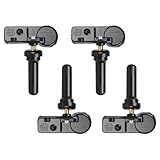
7. TPMS Sensor,GM 315Mhz Tire Pressure Monitoring Sensor Compatible for Chevy Silverado GMC Cadillac Buick Pontiac Saturn Hummber Saab Replace#13598771 13598772 13586335 13581558 4 Pack
Overview:
This 4-sensor set targets GM, Buick, Cadillac, and related brands (2006+), promising hassle-free replacement of OE sensors like 13598771 with pre-programmed 315MHz operation to clear dashboard warnings.
What Makes It Stand Out:
It emphasizes an exceptional 10-year battery life claim and high-temperature resilience (125°C). Marketed as using “same process as OE” manufacturing, it prioritizes longevity and compatibility across a broad GM ecosystem without programming.
Value for Money:
Offers strong value for budget-conscious buyers needing a full set, undercutting dealer prices significantly. The extended battery life claim justifies a slight premium over basic alternatives if proven accurate in real-world use.
Strengths and Weaknesses:
Strengths: Aggressive 10-year battery estimate; wide GM compatibility; no programming required; cost-efficient 4-pack. Weaknesses: Battery claim lacks independent verification; vague “same process as OE” phrasing; minimal environmental specs provided.
Bottom Line:
A solid budget pick for GM owners willing to accept unverified longevity claims. Best suited for those prioritizing affordability over certified specs, though verify fitment carefully before purchase.
8. AOTPAT Pre-Programmed TPMS Sensor 315Mhz Fits for:-Chevy Avalanche 2007-2013, Bolt ev 2017-2021, Camaro 2010-2015, Caprice 2011-2013, Captiva Sport 2012-2015, Colorado 2015-2020 OE#13598771(4Pcs)

Overview:
This 4-pack covers an exceptionally broad range of GM, Buick, Cadillac, Pontiac, Saturn, and Saab models (2004–2022), including EVs like the Bolt, as a pre-programmed replacement for OE#13598771.
What Makes It Stand Out:
Its standout feature is exhaustive multi-brand compatibility—spanning 50+ models across 7 manufacturers. Pre-programmed for immediate installation (relearn required), it replaces numerous OE numbers while supporting EV applications like the Bolt.
Value for Money:
Excellent value for owners of older or niche GM-affiliated vehicles, as it consolidates coverage many competitors exclude. The comprehensive fitment list justifies the price for hard-to-sensor models, though standard GM trucks may find cheaper alternatives.
Strengths and Weaknesses:
Strengths: Unmatched model coverage; includes EV support; pre-programmed; replaces 14+ OE numbers. Weaknesses: Overwhelming fitment list risks user error; lacks detailed durability specs; battery life unspecified.
Bottom Line:
The go-to choice for Saturn, Saab, or older Pontiac owners, or those with EVs like the Bolt. Prioritize fitment verification due to the extensive vehicle list, but ideal where other sensors won’t fit.
9. Masoll TPMS Sensor for GM Chevy Chevrolet Silverado Buick Cadillac GMC, Gen 2 TPMS Sensors Set of 4 with 1 TPMS relearn Tool, External Tire Pressure Sensor, Easy to Install

Overview:
This Gen 2 bundle includes 4 external TPMS sensors and a relearn tool, targeting GM vehicles (2006+) with a DIY-focused installation process requiring no programming.
What Makes It Stand Out:
The included EL-50448 relearn tool is its key differentiator, enabling true self-installation in ~5 minutes. Gen 2 boasts wider coverage (including pickups), replaceable batteries, and 1.5 PSI accuracy—uncommon in budget sets.
Value for Money:
Exceptional value as the only bundle including a professional relearn tool. At a moderate price premium over sensor-only kits, the tool eliminates $50+ scan tool rental fees, making it cost-effective for frequent DIYers.
Strengths and Weaknesses:
Strengths: Comes with essential relearn tool; replaceable batteries; strong truck/SUV compatibility; quick install. Weaknesses: Shorter 2-year battery life; external sensor design may be less durable than stem-mounted OE types.
Bottom Line:
Highly recommended for GM owners lacking diagnostic tools. The included relearn device simplifies setup, offsetting the modest battery life limitation—perfect for practical, tool-free replacements.
10. A-Premium 4PCS Pre-Programmed TPMS Sensor Tire Pressure Monitoring Sensor - Compatible with Toyota Sequoia 2008-2017, Sienna 2006-2020, Tundra 2007-2017 - 315MHz - Replace 426070C070, 4260708010
Overview:
This Toyota-specific 4-pack replaces OE sensors for Sequoia, Sienna, and Tundra (2006–2020) with pre-programmed 315MHz units designed to resolve TPMS warnings after tire service.
What Makes It Stand Out:
Features NXP chips for SAE J2657-certified accuracy, aluminum valves, and rigorous -40°C to 120°C operation. Includes a rare 2-year warranty and clarifies that “pre-programmed” still requires vehicle-specific relearn—a transparency advantage.
Value for Money:
Competitively priced against Toyota dealership parts, with certified reliability justifying the cost. The 5+ year battery and aluminum valves offer longevity that offsets premium pricing versus generic brands.
Strengths and Weaknesses:
Strengths: FCC/IC certified; precise specs (0–900kPa range); aluminum valves; clear relearn expectations; strong warranty. Weaknesses: Toyota-only fitment; relearn still required; no included tool.
Bottom Line:
A top-tier choice for Toyota truck/SUV owners seeking certified reliability. Worth the investment for peace of mind, though pairing with a separate relearn tool streamlines installation.
Understanding the Critical Role of Direct TPMS Sensors
Direct TPMS sensors are the unsung heroes silently monitoring the air pressure inside each of your tires in real-time. Unlike indirect systems that rely on wheel speed sensors and ABS data (which can be less accurate and often require re-calibration after tire rotations or pressure adjustments), direct TPMS uses physical sensors mounted inside the tire/wheel assembly. These small but sophisticated devices constantly measure the actual air pressure and temperature within the tire cavity, transmitting this vital data wirelessly to your vehicle’s onboard computer. When pressure drops below the manufacturer’s recommended threshold – typically 25% below the specified cold inflation pressure – a warning light illuminates on your dashboard, giving you an immediate and unambiguous signal that action is required. This direct measurement provides significantly higher accuracy and reliability compared to indirect methods.
How Direct TPMS Sensors Actually Function
Each sensor, usually housed within the valve stem or strapped to the wheel rim, contains a pressure transducer, a temperature sensor, a small battery, a microprocessor, and a radio frequency (RF) transmitter. As the tire rotates, the sensor periodically wakes up, takes a pressure and temperature reading, processes the data, and broadcasts it via RF signal to a receiver module in the vehicle. The frequency of these readings can vary, often increasing when significant pressure changes or motion are detected. The vehicle’s computer continuously listens for these signals, compares the pressure data against the expected values, and triggers the dashboard warning if a tire falls below the safe threshold. This constant monitoring provides peace of mind that isn’t reliant on driver observation or guesswork.
The Essential Components Inside a Sensor
Breaking down the sensor reveals why it’s a marvel of miniaturized engineering. The pressure transducer is the core component, converting the physical force of the air pressure into an electrical signal. The temperature sensor compensates for pressure fluctuations caused by heat buildup during driving, ensuring the reading reflects true air loss, not just thermal expansion. The microprocessor manages power consumption (crucial for battery life), processes the raw sensor data, handles signal encoding, and controls transmission timing. The RF transmitter sends the encoded data packet, while the small lithium battery (typically non-replaceable) powers the entire unit for its operational lifespan, usually 5-10 years. The robust housing protects these delicate electronics from extreme temperatures, moisture, vibration, and impacts encountered on the road.
Key Factors to Evaluate When Choosing a Sensor
Selecting the right direct TPMS sensor isn’t just about finding a compatible part; it’s about ensuring long-term reliability, accurate readings, and seamless integration with your vehicle’s specific system. Compatibility is paramount, but it extends far beyond simply fitting the valve stem. You need a sensor whose programming and communication protocol perfectly match your vehicle’s make, model, year, and even specific trim level. Modern vehicles often have complex communication networks, and a mismatched sensor might physically fit but fail to communicate correctly with the vehicle’s ECU, rendering the system useless or causing persistent warning lights. Always prioritize sensors explicitly programmed for your exact vehicle identification.
Ensuring Perfect Vehicle Compatibility
Compatibility hinges on several technical factors. The sensor must operate on the correct radio frequency (common bands include 315 MHz and 433 MHz, varying by region and manufacturer). Its unique identification code (ID) must be recognizable by your vehicle’s receiver module, and its data packet structure must be interpretable by your car’s specific software. Some vehicles require sensors with specific motion detection features or temperature reporting capabilities. Using a sensor designed for a different vehicle platform, even from the same manufacturer, often leads to pairing failures, intermittent warnings, or complete system malfunction. The safest approach is to use sensors programmed specifically for your VIN or sourced from a reputable supplier with a comprehensive vehicle database.
The Critical Importance of Sensor Programming
Modern direct TPMS sensors are intelligent devices that require proper initialization or “programming” to work with your specific car. This isn’t just physical installation; it involves electronically configuring the sensor’s unique ID and parameters so your vehicle’s computer recognizes it as a valid component. This process usually requires a specialized TPMS programming tool that can activate the sensor, read its current ID, and either reprogram it with a new, vehicle-specific ID or register the existing ID into the car’s ECU. Using a sensor that hasn’t been correctly programmed for your vehicle will almost certainly result in the TPMS warning light staying on, even if the tire pressure is perfect. Never assume a sensor is “plug-and-play” without verifying the programming requirements for your exact model.
Evaluating Sensor Build Quality and Durability
Given the harsh environment inside a wheel well – constant vibration, extreme temperature swings from sub-zero to over 120°C (250°F), exposure to road salt, moisture, and impacts – sensor durability is non-negotiable. Look for sensors constructed with high-quality, corrosion-resistant materials like brass or aluminum for the valve core and stem, and robust, temperature-stable polymers for the housing. Seals must be of exceptional quality to prevent moisture ingress, which is a primary cause of premature sensor failure. Reputable manufacturers subject their sensors to rigorous testing standards (like ISO 21750) simulating years of real-world abuse. While cheaper alternatives might seem appealing, they often cut corners on materials and sealing, leading to shorter lifespans and unreliable performance when you need it most.
Installation and Integration Considerations
Installing direct TPMS sensors correctly is significantly more complex than simply mounting a standard valve stem. It requires specialized tools, knowledge, and careful handling to avoid damaging the sensitive electronics or compromising the tire’s seal. The process involves demounting the tire from the wheel, carefully removing the old sensor assembly, thoroughly cleaning the valve hole on the wheel, installing the new sensor (often with a new rubber grommet and valve core), remounting the tire, and then inflating it to the correct pressure. Crucially, static balancing of the wheel/tire assembly must account for the weight of the sensor to prevent vibrations.
The Necessity of Professional Installation Expertise
While a skilled DIYer might manage the physical installation, the electronic integration often necessitates professional tools and expertise. After physical installation, the sensors must be activated, their signals verified, and the new sensor IDs registered or “learned” by the vehicle’s ECU. This requires a TPMS diagnostic tool capable of interacting with your specific vehicle system. Mechanics also have the equipment to check for proper torque on the sensor stem (critical to prevent leaks or breakage) and to perform a thorough leak test. Incorrect installation can lead to slow air leaks, sensor damage during tire mounting/dismounting, or failure to properly register the sensors, leaving the TPMS inoperative. The complexity makes professional installation highly recommended for most drivers.
Understanding Sensor Activation and Registration Procedures
The final, critical step after physical installation is getting the vehicle to recognize the new sensors. This process, often called “activation,” “relearn,” or “registration,” varies significantly by manufacturer. Some vehicles require driving above a certain speed for a period, others need a specific sequence of button presses, and many newer models absolutely require a dedicated TPMS scan tool to initiate the registration process and send the new sensor IDs to the car’s computer. This tool wakes up each sensor sequentially (usually by applying a magnetic or RF trigger near the valve stem), captures its unique ID, and transmits that ID to the vehicle’s ECU for storage. Skipping this step or doing it incorrectly means the car won’t know which sensor belongs to which wheel position, leading to inaccurate warnings or a persistent TPMS light.
Maximizing Sensor Longevity and System Reliability
Direct TPMS sensors are designed for longevity, but their lifespan isn’t infinite, primarily due to the sealed internal battery. Understanding the factors that influence their operational life helps manage expectations and plan for eventual replacement. Typical battery life ranges from 5 to 10 years, heavily dependent on usage patterns, climate, and the sensor’s design. Frequent short trips (where the sensor transmits more often as pressure fluctuates rapidly with temperature changes) and exposure to extreme heat can drain the battery faster. Once the battery dies, the entire sensor unit must be replaced, as the battery is not user-serviceable.
Recognizing Signs of Sensor Failure or Degradation
Being alert to potential sensor issues can prevent being caught unaware by a malfunctioning system. Common signs include the TPMS warning light illuminating even when tire pressures are confirmed correct and stable, the light flashing intermittently before staying on, or the system failing to register pressure changes after adjustment. Sometimes, only one specific tire position triggers a warning consistently. Environmental factors like prolonged exposure to road salt in winter climates can accelerate corrosion on the sensor stem, leading to slow leaks or electrical contact issues. If basic troubleshooting (rechecking pressures, driving to allow system reset) doesn’t resolve a persistent warning light, sensor failure is a likely culprit and warrants professional diagnosis.
Essential Maintenance Practices for TPMS Health
Proactive maintenance goes a long way in preserving your TPMS sensors. Always use valve caps – they are not just cosmetic but provide a crucial secondary seal against moisture and dirt ingress into the valve core, which can corrode the sensor stem and cause leaks. When checking or adjusting tire pressure, use a clean, dry air source and avoid forcing the gauge onto the valve, as this can damage the delicate valve core mechanism integrated with the sensor. During tire rotations or replacements, have a technician inspect the sensor stems for cracks, corrosion, or leaks. If replacing tires, consider whether it’s prudent to replace the TPMS sensors simultaneously if they are approaching the 5-7 year mark, avoiding the need for a second tire dismount later. Treating the sensors with care during any wheel service is paramount.
Navigating Replacement and System Calibration
Replacing individual TPMS sensors is a common need as batteries deplete or sensors suffer damage. It’s vital to understand that replacing one sensor often necessitates reprogramming the entire system, as the vehicle expects a specific set of sensor IDs. Simply swapping a failed sensor with an identical-looking new one won’t work unless that new sensor is programmed with the correct ID for that specific wheel position on your vehicle. After any sensor replacement, the registration/activation procedure must be performed to update the vehicle’s ECU with the new sensor information.
Understanding the Calibration Process Post-Replacement
Following sensor replacement or even significant tire pressure adjustments, the TPMS system may require recalibration or reinitialization. This isn’t about calibrating the sensor’s internal accuracy (which is factory-set), but rather resetting the system’s baseline pressure reference points. Many vehicles have a specific procedure, often involving a button press or menu selection within the infotainment system, to “reset” or “relearn” the current tire pressures as the new normal. This step tells the car, “These are the correct cold pressures right now; alert me if they drop significantly below this.” Skipping this reset after correcting low pressure can sometimes prevent the warning light from turning off, even though the pressure is now correct. Always consult your owner’s manual for the precise procedure for your model.
Cost Considerations for Sensor Replacement and Service
Replacing TPMS sensors involves more than just the part cost. The sensor unit itself represents a significant portion of the expense, reflecting the complex electronics and engineering involved. Factor in the labor costs for tire dismounting/mounting, valve service, and the mandatory programming/registration using specialized tools. While it might be tempting to seek the absolute cheapest sensor, remember that inferior quality units can fail prematurely, leading to repeat labor costs and potential safety compromises. Consider the total value proposition: a slightly higher-priced sensor from a reputable brand with proven reliability, installed correctly, often provides better long-term value and peace of mind than the absolute lowest upfront cost. Some tire service centers offer TPMS service packages that bundle sensor replacement with tire services at a better value.
Frequently Asked Questions
Frequently Asked Questions
How long do TPMS sensor batteries typically last? Most direct TPMS sensor batteries are designed to last between 5 to 10 years. Actual lifespan depends heavily on usage (frequent short trips drain batteries faster), climate (extreme heat accelerates drain), and the specific sensor design. Battery depletion is the most common reason for sensor failure.
Can I replace just one TPMS sensor, or do I need to replace all four? You can usually replace just the failed sensor. However, if the other sensors are older (e.g., 7+ years), it’s often cost-effective to replace them simultaneously to avoid multiple tire dismounts down the road. Replacing one always requires reprogramming that specific sensor’s ID into the vehicle.
Why does my TPMS light come on in cold weather, even when pressures were fine? Cold temperatures cause air pressure to drop (about 1 PSI per 10°F decrease). If pressures were borderline low when warm, the cold can push them below the TPMS threshold. Check and adjust pressures to the manufacturer’s spec (found on the driver’s door jamb) when tires are cold for accurate readings.
Do I need special tools to install TPMS sensors? Yes, professional installation is strongly recommended. Specialized TPMS tools are needed to activate sensors, read IDs, register them with the vehicle’s computer, and verify proper operation. Standard tire tools can damage the sensitive electronics during mounting/dismounting.
Can I drive with the TPMS light on? While the vehicle is mechanically drivable, it’s unsafe and inadvisable. The light indicates at least one tire is significantly underinflated, compromising handling, braking, fuel economy, and increasing blowout risk. Address the low pressure immediately.
What happens if a TPMS sensor fails? A failed sensor (dead battery, damaged electronics) won’t transmit data. This usually triggers a persistent TPMS warning light, often accompanied by a specific “Check TPMS” message. The system cannot monitor that tire’s pressure, creating a safety hazard until the sensor is replaced and programmed.
Are aftermarket TPMS sensors as good as OEM ones? Reputable aftermarket sensors designed specifically for your vehicle can be excellent and often more cost-effective than dealership parts. Look for brands meeting ISO 21750 standards and offering programming for your exact VIN. Avoid ultra-cheap, generic sensors with poor quality control.
Can I reset the TPMS light without fixing the low pressure? No, and you shouldn’t try. The light is a critical safety warning. Temporary resets (via a button or menu) only work after you have correctly inflated all tires to the specified pressure. Resetting without correcting the pressure ignores a genuine hazard.
Do TPMS sensors affect tire balancing? Yes, the sensor adds weight to the wheel assembly. A competent technician will account for this weight during the static and dynamic balancing process when mounting tires to prevent vibrations. Using mismatched sensors (e.g., different brands) on the same axle can sometimes cause minor imbalances.
How can I tell which specific tire has low pressure from the dashboard light? Most basic TPMS systems only illuminate a general warning light (often a flat tire symbol). Many newer vehicles display the actual pressure readings for each tire on the dashboard or infotainment screen, clearly identifying the low tire. Consult your owner’s manual for your specific system’s capabilities.
See Also
- Stop Ignoring Low Pressure Warnings with the 10 Best TPMS Monitors This Year
- Stop Ignoring Low Pressure Alerts with the 10 Best TPMS Monitors This Year
- Top 10 Best TPMS Sensors for Accurate Tire Pressure Monitoring in 2026
- How to Solve False Alarms with the 10 Best Direct TPMS Sensors in 2026
- The 10 Most Revolutionary Direct TPMS Sensors of 2026