Table of Contents
Transmission problems can turn a reliable vehicle into an expensive nightmare overnight. Unlike simple check engine lights that might indicate a loose gas cap, transmission issues often lurk beneath the surface until they become critical failures. Modern vehicles have transformed transmission systems into complex networks of sensors, solenoids, and computer-controlled components that require sophisticated diagnostic tools to properly assess.
Finding the right OBD2 scanner for transmission diagnostics means understanding what separates basic code readers from professional-grade diagnostic equipment. While any scanner can pull generic powertrain codes, transmission-specific troubleshooting demands features that can interpret manufacturer-specific data, monitor real-time sensor feedback, and even exercise control over transmission components. This guide walks you through everything you need to know to make an informed decision without getting overwhelmed by technical jargon or marketing hype.
Top 10 OBD2 Code Readers with Transmission Diagnostics
Detailed Product Reviews
1. OBDMATE OBD2 Scanner with ABS SRS Transmission, Reset Fault Lights | Check Engine Code Reader with Full OBDII Functions | DLC Pin Test | Battery Voltage Check, Car Diagnostic Tool

Overview: The OBDMATE OM901 is a 2025-era four-system diagnostic scanner designed for car owners and DIY mechanics seeking comprehensive vehicle analysis beyond basic code reading. This handheld unit delivers professional-grade functionality for ABS, SRS, transmission, and engine systems through a 3.5-inch TFT display, packaged in a rugged silicone case with a hard-shell carrying bag for workshop durability.
What Makes It Stand Out: The OM901 distinguishes itself with four-system coverage typically found in pricier tools, plus unique DLC 16-pin testing capability that checks individual pin voltages—rare at this price point. The one-click I/M readiness feature uses colored graphics for instant emissions compliance verification, while battery voltage monitoring provides real-time electrical system health data. Its plug-and-play operation requires no batteries or initial updates, offering immediate utility.
Value for Money: Positioned in the mid-range segment, the OM901 justifies its cost by bundling multi-system diagnostics with premium accessories like protective cases that competitors often sell separately. Free lifetime updates eliminate hidden fees, and five-language support enhances versatility. Compared to single-system scanners, it delivers quadruple the diagnostic scope without doubling the price.
Strengths and Weaknesses: Strengths include comprehensive four-system coverage, durable construction, intuitive interface, and valuable pin-testing functionality. Weaknesses involve limited advanced service resets compared to professional-grade tools, and potential compatibility gaps with certain vehicle-specific features. The 3.5-inch screen, while adequate, may feel cramped for extensive data stream analysis.
Bottom Line: The OBDMATE OM901 excels as a robust, user-friendly upgrade from basic OBDII readers, perfect for serious DIYers needing reliable multi-system diagnostics without professional tool investment.
2. FOXWELL Car Scanner NT604 Elite OBD2 Scanner ABS SRS Transmission, Check Engine Code Reader for Cars and Trucks, Diagnostic Scan Tool with SRS Airbag, Automotive Diagnostic Tool with Live Data
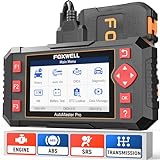
Overview: The FOXWELL NT604 Elite represents the 2026 evolution of consumer diagnostics, targeting car owners frustrated by mysterious warning lights. This five-in-one scanner interprets ABS, SRS, transmission, engine, and OBDII systems without dealership visits, arriving pre-loaded with current software for immediate deployment. The tool aims to democratize vehicle health monitoring through accessible, reliable technology.
What Makes It Stand Out: The NT604 Elite’s AUTOVIN functionality automatically retrieves vehicle identification, eliminating manual entry errors across 60+ global manufacturers. Unlike competitors offering flimsy plastic bags, FOXWELL includes a solid protective case at no extra cost—a practical durability upgrade. The lifetime free update policy stands out in a market where subscription fees are increasingly common, ensuring long-term relevance.
Value for Money: This scanner positions itself above entry-level $50-100 units by delivering five-system diagnostics for a modest premium. The comprehensive DTC library, live data streaming, and playback capabilities provide mechanic-level insights without recurring costs. The included hard case and absence of software fees enhance its financial appeal, making it a one-time investment for multi-vehicle households.
Strengths and Weaknesses: Strengths encompass broad system coverage, robust construction, automatic VIN detection, and transparent pricing. Notable weaknesses include the absence of maintenance reset functions and the explicit limitation as a diagnostic—not repair—tool. Users must still address underlying mechanical issues before clearing codes.
Bottom Line: The FOXWELL NT604 Elite offers exceptional value for owners seeking thorough, hassle-free diagnostics. Its combination of comprehensive scanning, durable design, and zero hidden costs makes it a smart purchase for proactive vehicle maintenance.
3. ANCEL AD310 Classic Enhanced Universal OBD II Scanner Car Engine Fault Code Reader CAN Diagnostic Scan Tool, Read and Clear Error Codes for 1996 or Newer OBD2 Protocol Vehicle (Black)
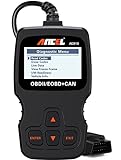
Overview: The ANCEL AD310 is a best-selling entry-level OBDII scanner endorsed by automotive expert Scotty Kilmer, designed for drivers needing straightforward check engine light diagnostics. This compact, lightweight tool focuses exclusively on engine and emission systems for 1996+ OBD2-compliant vehicles, delivering essential troubleshooting capabilities without complexity or unnecessary features.
What Makes It Stand Out: The AD310’s rugged construction features a 2.5-foot heavily insulated cable and robust housing that survives workshop drops—uncommon durability in the budget category. Its broad protocol support includes KWP2000, J1850 VPW/PWM, ISO9141, and CAN, ensuring compatibility across domestic and foreign vehicles. The device powers directly from the OBDII port, eliminating battery concerns while providing instant, accurate code reading and clearing.
Value for Money: As one of the most affordable reliable scanners available, the AD310 delivers professional-grade code reading at a fraction of professional tool costs. Its focused feature set avoids paying for advanced functions casual users won’t utilize. For basic check engine light diagnosis and pre-smog I/M readiness checks, it outperforms smartphone apps and generic readers twice its price.
Strengths and Weaknesses: Strengths include exceptional affordability, sturdy build quality, universal protocol support, and true plug-and-play simplicity. Weaknesses are significant: no ABS, SRS, or transmission diagnostics; basic monochrome display; and lack of advanced features like live data graphing or reset functions. It solves engine codes only.
Bottom Line: The ANCEL AD310 is the quintessential home necessity for budget-conscious drivers. If you simply need to read and clear check engine lights on modern vehicles, this reliable, no-frills tool delivers unmatched value.
4. BLCKTEC 460T OBD2 Scanner Car Code Reader Engine ABS SRS Transmission Diagnostic Tool, 12 Reset Services, Oil/TPMS/EPB/BMS/SAS/DPF/Throttle Reset, ABS Bleeding, Battery Test, Auto VIN, Free Update
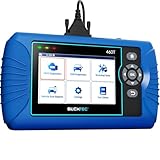
Overview: The BLCKTEC 460T is a professional-grade diagnostic tool bridging the gap between consumer scanners and dealership equipment. Designed for serious DIY mechanics and professionals, it offers all-system diagnostics plus twelve service reset functions. This comprehensive unit handles engine, transmission, ABS, and SRS systems while performing advanced maintenance procedures through a sophisticated interface with real-time data analysis capabilities.
What Makes It Stand Out: The 460T’s twelve reset functions—including oil service, EPB, SAS calibration, DPF regeneration, and ABS bleeding—provide dealer-level capabilities rarely found in portable units. Its intelligent AutoScan and AutoReLink technology automatically detects all ECUs and refreshes data every 30 seconds, delivering three-times-faster diagnostics. Integration with the free RepairSolutions2 app provides verified fixes, OEM warranty data, and recall information from master technicians.
Value for Money: While priced at the high end of consumer scanners, the 460T eliminates costly dealership visits for routine resets and diagnostics. The included app access—free without subscriptions—adds ongoing value through cloud-based report storage and expert repair guidance. For multi-vehicle households or small shops, it pays for itself after a few uses.
Strengths and Weaknesses: Strengths include comprehensive reset functions, lightning-fast scanning, excellent live data graphing, and robust app integration. Critical weakness: function availability varies significantly by vehicle make/year/model, requiring pre-purchase compatibility verification. The complexity may overwhelm casual users, and the premium price exceeds basic needs.
Bottom Line: The BLCKTEC 460T is an exceptional investment for advanced enthusiasts and professionals requiring full-service capabilities. Its speed, depth, and app support make it a formidable alternative to expensive shop equipment.
5. BlueDriver Bluetooth Pro OBDII Scan Tool for iPhone & Android - No Subscription Fee - OBD2 Car Scanner and Code Reader - Diagnose Check Engine, ABS, SRS, Airbag & 7000+ Issues on Vehicles 1996+
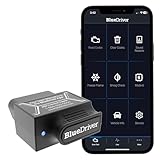
Overview: The BlueDriver Bluetooth Pro revolutionizes diagnostics by transforming smartphones into powerful scan tools. This wireless adapter connects to iOS and Android devices, delivering comprehensive system analysis—including ABS, SRS, airbag, and TPMS codes—without traditional handheld unit constraints. Designed for tech-savvy drivers, it leverages mobile technology for an intuitive, expandable diagnostic experience.
What Makes It Stand Out: BlueDriver’s wireless design eliminates cable clutter while providing repair reports with verified fixes from a master technician database—exceeding basic code definitions. The app integrates repair videos with step-by-step guidance, creating a learning platform alongside diagnostics. Real-time health monitoring during driving captures intermittent issues, and unlimited report generation with cloud storage adds exceptional value.
Value for Money: Competing with mid-range wired scanners, BlueDriver justifies its price through convenience and rich data presentation. The absence of subscription fees distinguishes it from app-based competitors charging monthly for premium features. Smartphone leverage means no dedicated screen costs, while delivering superior graphics and touch interface.
Strengths and Weaknesses: Strengths encompass wireless freedom, excellent app UX, comprehensive code coverage, repair resources, and no subscription model. Weaknesses include smartphone dependency—rendering it useless without a compatible device—and potential Bluetooth connectivity interference. Some users may prefer physical buttons over touchscreen operation in greasy workshop environments.
Bottom Line: BlueDriver excels for modern drivers wanting sophisticated diagnostics without dedicated hardware bulk. Its combination of wireless convenience, expert repair guidance, and smartphone integration makes it the top choice for DIYers comfortable with app-based tools.
6. FOXWELL NT301 OBD2 Scanner Live Data Professional Mechanic OBDII Diagnostic Code Reader Tool for Check Engine Light

Overview:
The FOXWELL NT301 is a focused OBD2 scanner built for professional mechanics and serious DIYers who prioritize reliable check engine light diagnostics and emissions testing. This tool specializes exclusively in powertrain codes, delivering straightforward DTC reading, I/M readiness monitoring, CEL reset, and live data retrieval without the complexity of multi-system functions.
What Makes It Stand Out:
The NT301 distinguishes itself through dedicated I/M readiness hotkeys and an intuitive red-yellow-green LED system that provides instant visual feedback for smog check preparation. Its live data graphing capability allows real-time sensor monitoring, helping identify intermittent faults that basic scanners miss. The tool’s direct approach to engine diagnostics eliminates menu confusion for users who know exactly what they need.
Value for Money:
Positioned in the entry-level price segment, this scanner delivers professional-grade accuracy for engine and emissions work without charging premium prices for unused ABS/SRS functions. The robust construction matches tools costing twice as much, making it a cost-effective choice for shops and home garages focused on powertrain troubleshooting. You pay only for what you’ll actually use.
Strengths and Weaknesses:
Strengths include rapid code retrieval, broad OBDII protocol support (KWP2000, J1850, ISO9141, CAN), clear LED status indicators, and reliable live data logging for tricky diagnostics. The interface is refreshingly simple. However, major weaknesses are the complete absence of ABS, SRS, and transmission diagnostics, no advanced reset functions beyond monitor reset, and a basic monochrome display. It’s strictly limited to engine-related codes, making it unsuitable for comprehensive vehicle scans.
Bottom Line:
The NT301 excels at its intended purpose: engine diagnostics and emissions testing. If your work revolves around check engine lights and smog checks, this scanner is reliable, fast, and represents excellent value. For those needing ABS, airbag, or service reset capabilities, look elsewhere. It’s a specialized tool that delivers precisely what it promises.
7. Professional OBD2 Scanner & Car Diagnostic Tool – Auto Code Reader for All Vehicles, Check Engine Light, ABS, SRS, Transmission, Battery & Emission Test, Live Data & Fix Suggestions

Overview:
This professional-grade OBD2 scanner bridges the gap between basic code readers and dealership equipment, offering comprehensive diagnostics across all major vehicle systems. Supporting engine, transmission, ABS, and SRS from 1996 to present, it serves both professional mechanics and advanced DIY enthusiasts who demand thorough, reliable scanning capabilities for complete vehicle maintenance.
What Makes It Stand Out:
The tool’s intelligent fix suggestion system translates cryptic codes into actionable repair advice, a feature typically reserved for premium equipment. Combined with built-in battery testing, EVAP system monitoring, and a large color display, it provides insights that prevent unnecessary parts replacement. The intuitive menu structure makes complex diagnostics accessible without sacrificing depth.
Value for Money:
Mid-range pricing delivers exceptional long-term value through free lifetime software updates and a three-year warranty with 24/7 customer support. The included carry case and USB cable add practical value. Compared to buying separate single-system scanners, the multi-system capability justifies the investment immediately, especially for independent shops and serious home mechanics.
Strengths and Weaknesses:
Major strengths include extensive system coverage, real-time data streaming, smog check readiness verification, multilingual support, and durable rubberized housing. The update policy ensures compatibility with newer models. Weaknesses include potential information overload for casual users and unspecified brand reputation compared to established names. Advanced bidirectional controls and programming functions are absent, limiting some professional applications.
Bottom Line:
This scanner is ideal for serious DIYers and independent shops needing reliable all-system diagnostics without premium pricing. The combination of comprehensive features, free updates, and strong support makes it a smart long-term investment for regular vehicle maintenance. It delivers professional results at a fraction of dealership tool costs.
8. LAUNCH CRP123 V2.0 OBD2 Scanner-2026 New Model Engine/ABS/SRS/Transmission Diagnostic Scan Tool SRS Airbag Code Reader,3 Reset Oil Service/Throttle Relearn/SAS Reset,Lifetime Free Update

Overview:
The LAUNCH CRP123 V2.0 targets car owners seeking more than basic code reading, offering four-system diagnostics with valuable reset functions at a consumer-friendly price. This scanner tests engine, ABS, SRS, and transmission systems while adding maintenance resets that typically require dealership visits, positioning itself as a cost-effective diagnostic powerhouse for enthusiastic DIYers.
What Makes It Stand Out:
Three newly included reset functions—throttle adaptation, oil service reset, and steering angle sensor calibration—differentiate this tool from competitors in its price class. These capabilities allow users to complete maintenance tasks independently. The data printing function and live data graphing with recording/playback provide professional-level analysis tools rarely seen at this price point.
Value for Money:
With lifetime free updates and multi-system coverage at a sub-premium price, this scanner delivers outstanding value. The reset functions alone can save hundreds in annual service fees. For DIYers comfortable with basic maintenance, the tool pays for itself quickly while providing ongoing savings and convenience.
Strengths and Weaknesses:
Strengths include comprehensive four-system diagnostics, intuitive 4-inch display, full OBDII mode coverage, and the ability to print diagnostic reports. The lifetime update policy ensures future vehicle compatibility. Weaknesses include marketing hyperbole about “2026” models and potential complexity for absolute beginners unfamiliar with reset procedures. Brand recognition lags behind some established competitors.
Bottom Line:
This scanner hits the sweet spot for enthusiastic DIYers wanting reset capabilities without professional-tool pricing. If you perform your own maintenance and need more than basic code reading, the CRP123 V2.0 offers an impressive feature set that justifies every dollar. It’s a practical investment that grows with your mechanical skills.
9. ANCEL FD500 OBD2 Scanner fits for Ford Lincoln Mercury - All Systems Code Reader with Engine, ABS, SRS, Transmission, 4WD Diagnostics - Scan Tool with EPB, Throttle, Oil Reset, Battery Registration

Overview:
The ANCEL FD500 is a specialized diagnostic weapon engineered exclusively for Ford, Lincoln, and Mercury vehicles, providing dealership-level access to all vehicle systems. This tool is purpose-built for Ford enthusiasts and mechanics who need deep system coverage beyond generic OBD2 capabilities, addressing the brand’s unique architectures and service requirements.
What Makes It Stand Out:
Unlike universal scanners, the FD500 provides comprehensive access to Ford-specific modules including HVAC, 4WD, and electronic parking brake systems. Advanced service functions like battery registration and throttle KAM reset address Ford’s proprietary maintenance protocols. This specialization ensures complete coverage where generic tools display “communication error” on critical systems.
Value for Money:
For Ford owners, this scanner delivers exceptional value by providing dealer-level diagnostics at a fraction of the cost. Battery registration and EPB maintenance functions alone save significant service fees. However, its value diminishes substantially for multi-brand households, making it a niche investment rather than a universal solution.
Strengths and Weaknesses:
Strengths include complete Ford system coverage, specialized reset functions, robust construction, and universal OBD2 compatibility for other vehicles when needed. The tool reads manufacturer-specific codes that generic scanners miss. Weaknesses include niche focus limiting versatility, potential overkill for casual Ford owners, and a steeper learning curve due to advanced Ford-specific features.
Bottom Line:
If you own Ford vehicles exclusively, this is arguably the best investment you can make. The FD500’s specialized capabilities justify its purchase immediately through service savings. For mixed-brand garages or occasional DIYers, a universal scanner makes more sense. For Ford loyalty, it’s an indispensable tool that pays dividends with every use.
10. 2026 FOXWELL NT604 OBD2 Scanner, Engine/ABS/SRS/Transmission Car Diagnostic Tool, Code Reader for Cars and Trucks, Precise Scan Tool for All Vehicles, EN/ES, Lifetime Free Update, AutoVIN, Live Data

Overview:
The FOXWELL NT604 represents the brand’s evolved 4-system scanner, combining basic OBDII functions with deep diagnostics for engine, ABS, SRS, and transmission systems. This tool targets users who’ve outgrown entry-level readers but refuse premium professional prices, offering comprehensive capabilities with consumer-friendly economics and no subscription burden.
What Makes It Stand Out:
AutoVIN technology automatically identifies vehicle information, eliminating manual entry errors. Covering over 60 manufacturers and 10,000+ models, it significantly exceeds typical compatibility ranges. Diagnostic report generation provides professional documentation for repair shops, while real-time battery voltage monitoring adds preventive maintenance value rarely included in this class.
Value for Money:
Competitive upfront pricing includes lifetime free updates with no registration, subscription fees, or micro-SD card hassles. This eliminates ongoing costs entirely. Features like AutoVIN and diagnostic reporting typically appear in tools costing twice as much, making the NT604 a financially savvy choice for cost-conscious professionals and advanced DIYers.
Strengths and Weaknesses:
Strengths include lightning-fast diagnostics, extensive vehicle coverage, intuitive user interface, consolidated 4-in-1 data streaming, and excellent build quality. The no-fee update policy is a major advantage. Weaknesses include limited advanced service functions compared to premium scan tools and potential feature overload for basic users. Some obscure Asian models may have incomplete coverage despite broad claims.
Bottom Line:
The NT604 is the smart choice for comprehensive diagnostics without financial strings attached. It perfectly balances capability, ease of use, and long-term value. Whether you’re a home mechanic or small shop owner, this scanner delivers professional results with consumer-friendly economics. Highly recommended for those wanting more than basics without ongoing costs.
Understanding OBD2 and Transmission Systems
What Makes Transmission Diagnostics Different?
Transmission diagnostics go far beyond reading simple trouble codes. Your transmission control module (TCM) communicates with the engine control unit through complex data networks, monitoring everything from fluid temperature and pressure to shift solenoid activation and torque converter lockup. A capable scanner must access these proprietary communication protocols to provide meaningful information about transmission health.
Essential Features for Transmission Scanning
Look for scanners that offer dedicated transmission diagnostics menus rather than just generic OBD2 functions. Key capabilities include reading transmission-specific trouble codes (both generic P-codes and manufacturer-specific codes), viewing live data streams from transmission sensors, and accessing advanced functions like clutch volume index readings or adaptive learning resets. The ability to graph multiple data parameters simultaneously proves invaluable when diagnosing intermittent shifting problems.
Core Capabilities That Matter Most
Live Data Parameters You Should Monitor
Effective transmission diagnosis requires monitoring specific real-time data points. Critical parameters include transmission fluid temperature, line pressure readings, input and output shaft speeds, gear ratio calculations, and shift solenoid duty cycles. A quality scanner displays these values in an organized dashboard format, allowing you to spot anomalies that indicate worn clutches, failing solenoids, or pressure control issues before they cause catastrophic damage.
Understanding Transmission-Specific Codes
Generic OBD2 readers only scratch the surface, typically showing basic P0700 codes that merely indicate “transmission control system malfunction.” Advanced scanners dive deeper into manufacturer-specific codes that reveal exact details about which clutch pack is slipping, which solenoid circuit has failed, or which pressure switch isn’t responding. This specificity transforms vague symptoms into actionable repair directions.
Bi-Directional Control Capabilities
The most powerful diagnostic feature for transmission work is bi-directional control—sending commands to the transmission while monitoring the response. This includes activating individual shift solenoids, commanding gear changes, engaging the torque converter clutch, or running automated transmission tests. These functions help isolate mechanical problems from electrical faults and verify repairs without lengthy road tests.
Choosing the Right Scanner Type
Handheld vs Bluetooth vs PC-Based Units
Handheld scanners offer rugged durability and dedicated interfaces designed for shop environments. Bluetooth adapters paired with smartphone apps provide flexibility and regular software updates but may lack the processing power for intensive diagnostics. PC-based systems deliver the most comprehensive capabilities with large display real estate but require laptop investment and aren’t as portable. Your choice depends on whether you prioritize convenience, depth of functionality, or raw diagnostic power.
Professional-Grade Features Worth Considering
If you’re serious about transmission work, consider scanners with oscilloscope integration, module programming capabilities, and access to technical service bulletins. Some advanced units offer guided fault trees that walk you through specific diagnostic procedures for particular codes. Built-in repair databases with component location diagrams and wiring schematics can save hours of research time.
Budget-Friendly Options for Home Mechanics
You don’t need to spend thousands to get capable transmission diagnostics. Mid-range scanners often include the essential transmission functions needed for most DIY repairs. Focus on units that specifically advertise transmission diagnostics rather than general-purpose code readers. Many affordable options provide live data and code reading but skip bi-directional controls, which might be acceptable if you’re primarily doing maintenance and basic troubleshooting.
Compatibility and Long-Term Value
Vehicle Compatibility and Protocol Support
Modern vehicles use multiple communication protocols including CAN, ISO, and manufacturer-specific systems. Ensure your scanner explicitly supports your vehicle’s protocols and has the capacity to handle both domestic and import applications if you work on multiple brands. Some scanners require annual subscriptions for continued manufacturer-specific access, while others include lifetime updates.
Software Updates and Longevity
Diagnostic technology evolves rapidly as manufacturers introduce new systems. Scanners with regular software updates remain relevant longer, adding support for newer vehicle models and expanding code databases. Investigate update costs and frequency before purchasing—some budget scanners become obsolete quickly when manufacturers stop supporting them. Cloud-connected scanners often receive updates automatically, ensuring you always have the latest diagnostic capabilities.
Practical Application and Best Practices
Reading and Interpreting Live Data Streams
Mastering live data interpretation separates effective diagnostics from parts-swapping guesswork. Learn to identify normal operating ranges for your specific vehicle and recognize patterns that indicate emerging problems. For example, watching line pressure drop during shifts might reveal a failing pump, while erratic input speed sensor readings could indicate internal slippage. Save and compare data snapshots to track degradation over time.
When to Seek Professional Help
Even the best scanner has limitations. Internal mechanical failures, torque converter issues, or valve body problems sometimes require specialized equipment like pressure gauges or borescope inspection. Recognize when scanner data suggests mechanical failure beyond simple electrical repairs. Professional transmission shops have dyno testing capabilities and specialized tools that go beyond what OBD2 scanners can reveal.
Integration with Repair Databases
The most effective diagnostics combine scanner data with technical information. Some advanced scanners integrate directly with online repair databases, providing real-time access to wiring diagrams, component specifications, and technical service bulletins. This integration helps you understand what the codes mean in practical terms and provides step-by-step testing procedures specific to your vehicle’s symptoms.
Making Your Final Decision
Warranty and Support Considerations
Diagnostic equipment represents a significant investment. Look for scanners with at least a one-year warranty and responsive technical support. Check user forums and reviews for feedback on customer service quality. Some manufacturers offer training resources, video tutorials, and active user communities that help you maximize your scanner’s capabilities. Extended warranties and protection plans often prove worthwhile for professional-grade equipment.
Emerging Technologies in Diagnostic Tools
The diagnostic landscape continues evolving with features like AI-powered code interpretation, predictive failure analysis, and augmented reality overlays showing component locations. While these cutting-edge features command premium prices, they represent where the industry is heading. Consider whether investing in forward-compatible hardware makes sense, or if a proven current-generation tool better suits your immediate needs.
Frequently Asked Questions
What’s the difference between a regular OBD2 scanner and one that does transmission diagnostics?
Regular scanners read generic engine codes and basic powertrain information. Transmission-capable scanners access manufacturer-specific modules, read detailed transmission codes, monitor specialized sensors, and often include bi-directional control to test transmission components actively.
Can transmission diagnostics predict failures before they happen?
Yes, by monitoring live data trends like clutch volume indices, pressure control deviations, and shift adaptation values, you can identify components operating outside normal parameters. This allows preventative maintenance before catastrophic failures occur.
Do I need a professional-grade scanner for DIY transmission work?
Not necessarily. Many mid-range scanners offer adequate transmission functions for common repairs like solenoid replacement, fluid changes, and adaptation resets. Professional-grade tools become necessary for complex diagnostics, programming, or working on multiple vehicle brands.
Will these scanners work on both automatic and manual transmissions?
Most scanners focus on automatic transmissions since they have complex electronic controls. Manual transmissions have fewer electronic components, though some modern manuals have clutch position sensors and shift position indicators that scanners can monitor.
How often should I scan my transmission for preventive maintenance?
Scanning during every oil change interval provides a good baseline. More frequently if you notice any shifting irregularities, tow heavy loads, or have high-mileage vehicles. Consistent monitoring helps establish what “normal” looks like for your specific vehicle.
Can scanners diagnose CVT transmissions effectively?
Quality scanners with manufacturer-specific capabilities can diagnose CVTs by monitoring ratio control, belt pressure, and pulley position sensors. CVT diagnostics require more sophisticated tools due to their unique operating characteristics compared to conventional automatics.
What’s the learning curve for using advanced transmission scanners?
Basic code reading is straightforward, but mastering live data interpretation and bi-directional controls typically requires 10-20 hours of practice. Many manufacturers provide training videos and sample data sets to help users develop diagnostic skills.
Are software updates really necessary?
Yes, manufacturers continuously release new codes and diagnostic procedures. Without updates, your scanner may miss new trouble codes or lack procedures for newer vehicles. Updates also fix bugs and improve user interface functionality.
Can I damage my transmission using bi-directional controls?
Used properly, bi-directional controls are safe and designed for diagnostic purposes. However, commanding components while driving or ignoring manufacturer precautions could cause issues. Always follow on-screen prompts and never activate controls while the vehicle is in motion.
Do transmission scanners work on hybrid and electric vehicles?
Modern scanners increasingly support hybrid transmissions, which combine conventional automatics with electric motor generators. Pure electric vehicles don’t have traditional transmissions, though some scanners can diagnose reduction gear systems and cooling circuits in EVs.
See Also
- We Tested 50 OBD2 Code Readers - Here are the 10 Best for Transmission Diagnostics
- We Tested 50 OBD2 Code Readers - Here are the 10 Best for Accurate Diagnostics
- 10 Expert-Recommended Touchscreen OBD2 Scanners for Advanced Diagnostics in 2026
- 10 Best OBD2 Code Readers with Transmission Diagnostics for SUV Owners in 2026
- 10 Expert-Recommended OBD2 Code Readers for Transmission Diagnostics in 2026